
In this answer
Short answer
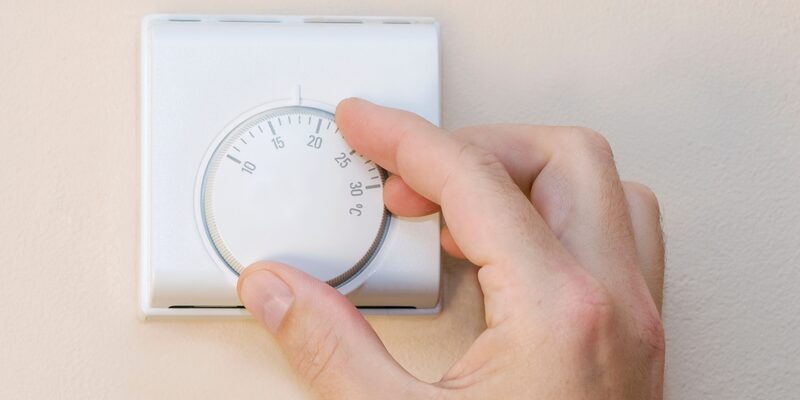
For most UK homes the answer is a room thermostat set between 18°C and 21°C, which the Energy Saving Trust describes as the lowest comfortable temperature for most people1. The same band appears in the Trust's seasonal guidance, in Cadent Gas's energy efficiency advice, and in consumer research, so it is the closest thing to a settled figure in UK heating guidance2.
The second number that matters is the hot water cylinder. Stored water should sit at 60°C or above, with the Energy Saving Trust giving a range of 60 to 65°C for the hot water thermostat1. That is a hygiene requirement as much as a comfort one, and it is separate from the room thermostat setting.
The third is the setback floor. A programmable thermostat can be given a minimum temperature the home should not drop below, and 16°C overnight or when the house is empty is the example the Energy Saving Trust gives1. Below that, the picture changes: the NHS advises at least 18°C for health, and not below 16°C for older people or those with impaired mobility5.
Recommended thermostat temperature: 18 to 21°C
The 18 to 21°C band is repeated across official, independent and supplier guidance, which is unusual for a heating figure. The Energy Saving Trust frames it as the lowest comfortable temperature rather than a target, and the same wording appears in its Christmas energy saving tips and its take control of your heating page1. Cadent Gas gives 18 to 21°C as the setting that keeps a household safe and well4. Consumer guides from Which? and ivie give the same range, with ivie describing it as the ideal comfort and efficiency zone for healthy adults8.
What drives the range rather than a single number is that comfort is personal and depends on age, health, activity and clothing. The lower end suits a healthy adult in a reasonably insulated home; the upper end suits households with babies, older people or anyone who feels the cold. Fuel poverty definitions use 21°C in the living room and 18°C in other rooms for households that do not need an enhanced heating regime, which shows how the two ends of the band map onto different rooms10.
In practice, the setting is a ceiling on the heating system, not a promise. A room thermostat turns the heating on until the room reaches the chosen temperature and then switches it off, so the figure only holds if the radiators and boiler can actually deliver that heat1. Where the home is cold and draughty, raising the thermostat does not fix the cause.
For energy independence, the thermostat is the one control a household can change without touching the boiler, the supplier or the fuel. It sets how much gas or electricity the home draws, and it works the same whether the heat comes from a gas boiler, a heat pump or storage heaters. What it cannot do is reduce dependence on the fuel itself: a lower setting cuts consumption, not the connection.
Finding your lowest comfortable temperature, one degree at a time
The practical method in the guidance is to start at a comfortable setting and reduce it one degree at a time, rather than jumping to a figure. The Energy Saving Trust's approach is to set the thermostat to the lowest temperature the household is comfortable at, which for most people falls in the 18 to 21°C band1. Smart Energy GB makes the same point for renters, noting that reducing the thermostat by one degree can lower bills without sacrificing comfort11.
The size of the saving per degree varies between sources. ivie gives 4 to 8 per cent of the heating bill for every degree the thermostat is lowered9. OFTEC gives 10 per cent per 1° reduction, and the Welsh Government gives up to 10 per cent on heating bills for a 1°C reduction12. The Energy Saving Trust's rented homes guidance gives 10 per cent for a one degree turn down on a wet central heating system14. The spread reflects different assumptions about how long the heating runs and what fuel is used, so the honest reading is that a degree is worth somewhere between 4 and 10 per cent, with most sources clustering at the top of that range.
One degree at a time also protects against overshooting. Dropping straight to 16°C in a home that has been run at 21°C tends to produce a cold house, a household that turns the heating back up, and no saving at all. The stepwise approach lets the household find the point where comfort holds, which is the only setting that will be kept.
Hot water: cylinder and hot water thermostat settings at 60 to 65°C
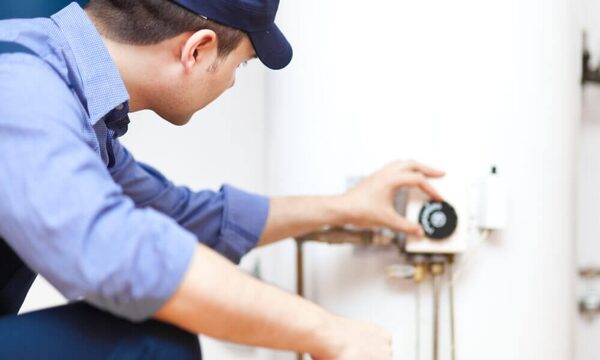
Hot water is a separate control from the room thermostat, and the figures are different. The Energy Saving Trust gives 60 to 65°C for the hot water thermostat1. Age UK gives 60°C as fine for most people15, and Confused.com gives 60°C as the setting that cuts bills7. Citizens Advice states the reason plainly: the cylinder thermostat should be set high enough, at least 60 degrees Celsius, to control bacteria in stored water16.
Which? adds a practical condition: where a home has a hot water cylinder that stores water, the settings need to be set by a boiler engineer and kept hot enough to avoid the build-up of bacteria in the storage tank17. That is a job for someone with the tools and the training, not a dial to be turned on a whim.
Solar water heating is the exception in the figures. OFTEC's guide to solar water heating gives a cylinder thermostat setting of 55 to 60°C, described as the usual setting, because the cylinder thermostat is regulating a different heat source and the solar circuit has its own controls18. That is lower than the 60 to 65°C given for a conventional cylinder, and the two figures should not be mixed.
For independence, the cylinder thermostat is a local control with no cloud dependency. It sits on the tank, it works when the broadband is down, and it does not care which supplier provides the gas. The dependence it leaves is on the boiler or heat source that heats the cylinder, and on the engineer who sets it correctly.
Setback temperatures: how low is too low
A setback temperature is a floor, not a target. The Energy Saving Trust describes it as a minimum temperature the home should not drop below, giving 16°C overnight or when the house is empty as the example1. That is the figure most commonly quoted, and it is the one to treat with care.
The health guidance is firmer than the energy guidance. The NHS recommends heating the home to at least 18°C, and not below 16°C for older people or those with impaired mobility5. Smart Energy GB repeats the NHS advice to keep the home at least 18°C for health19. The Centre for Sustainable Energy's advice for renters is more specific still: households with health concerns, older people or small children should not go below 18°C20. So 16°C is a floor for healthy adults, not a general minimum.
Homes without frost protection need a different setting entirely. Home Energy Scotland advises setting the heating thermostat to 10°C and switching on the programmer, or setting it to 24 hours, to achieve a similar effect21. That is a frost setting, not a comfort one, and it exists to stop pipes freezing rather than to keep anyone warm.
Heat pumps behave differently again. ClimateXchange's work on Scottish housing retrofit describes constant running with minimal setback, for example to 18°C, as the pattern that delivers comfortable conditions in solid wall homes with radiator upgrades22. Storage heaters have their own version: some models have a setback temperature, which is the temperature the heater will try to keep the room at while it is set to heating off23.
The conflict in the guidance is worth stating. One line of advice gives 16°C as the minimum setback; another gives a setback two or three degrees below the comfortable temperature. The two produce different numbers for a home running at 21°C, and the documents do not resolve it. A household choosing between them is choosing between a fixed floor and a relative one.
Where the thermostat is placed matters as much as the setting
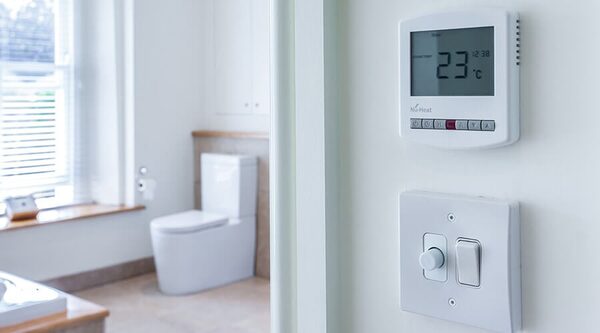
A thermostat measures the air where it is mounted, not the air in the room the household is sitting in. USwitch's guidance on smart thermostats is to place them where the temperature is relatively consistent24. Smart Energy GB's placement advice is more detailed: the thermostat should not be blocked by furniture or curtains, should be kept away from heat sources such as electric fires or heaters, should be protected from draughts, and should be placed away from draught sources such as windows or the front door25.
The most common placement error is a thermostat in a room that is heated separately. USwitch's guidance on heating one room rather than the whole house states that the thermostat should not be in the room with the additional heating, because it will disrupt control, and that a wireless thermostat should be moved out of the locally heated room26. A thermostat sitting next to a log burner or a portable heater will read warm air, switch the rest of the house off, and leave every other room cold.
Hallways and landings are common mounting points and are often the worst. A hallway with a front door, a draught and no radiator behaves nothing like a living room, so the setting that keeps the hall at 20°C may leave the living room at 17°C. This is where zoning and thermostatic radiator valves do work a single thermostat cannot, and where a room thermostat sited properly earns its place.
Placement also decides how much of the home's independence the control actually delivers. A well-sited thermostat responds to the house; a badly sited one responds to the hallway, and the household compensates by raising the setting, which costs money without improving comfort.
Thermostat settings and household energy bills
The bill figures for thermostat reduction are consistent in direction and inconsistent in size. The Energy Saving Trust's rented homes guidance gives 10 per cent on bills for a one degree turn down on a wet central heating system14. Northern Ireland's nidirect guidance gives as much as 10 per cent on heating bills for a one degree Celsius reduction27. Confused.com gives £90 off heating costs for a one degree reduction28, and its energy efficiency guide repeats £90 per year29. USwitch gives as much as £90 per year for a single degree30.
Two figures sit well outside that cluster. East Herts Council's grants and advice page states that reducing the thermostat by 1° could save up to 25 per cent of heating bills and associated carbon31. The Chartered Institute of Plumbing and Heating Engineering gives a further 7 per cent saving from turning the thermostat down to 18°C32. The 25 per cent figure is far above every other source and should be treated as an outlier rather than a planning assumption.
The cash figures also depend on the starting bill, which the sources do not fix. A £90 saving is a larger share of a small bill than a large one, and the percentage figures and the cash figures are not directly comparable. What the sources agree on is that the saving is real, that it scales with how much the heating runs, and that it is largest in homes that were previously run warm.
For a household's energy independence, the thermostat is the cheapest lever available: no installation, no subscription, no app, no supplier. It reduces the volume of fuel the home draws, which matters most where the fuel is bought at a variable price or delivered off the gas grid. It does not change where the fuel comes from, and it does not remove the standing charge or the connection. The heating controls pillar sets out how the thermostat sits alongside programmers, TRVs and zoning in the wider control system.
Sources32 cited
- Thermostats and heating controls, Energy Saving Trust, 2026-02-10
- Christmas energy saving tips, Energy Saving Trust, 2026-05-20
- Take control of your heating at home, Energy Saving Trust, 2026-09-11
- Energy efficiency, Cadent Gas, 2026-09-20
- Common heating mistakes and how to avoid them, Which?, 2026-01-16
- Maintaining the ideal home temperature, Smart Energy GB, 2026-08-17
- Energy saving tips for the home, Confused.com, 2026-09-20
- Tips to reduce your heating bills, Which?, 2026-06-02
- The best way to run your central heating to save money, ivie, 2026-09-20
- Fuel poverty, Energy Action Scotland, 2026-01-30
- Smart meters for renters, Smart Energy GB, 2026-03-16
- 10 top tips for homes to save on heating bills this Christmas, OFTEC, 2024-12-20
- Energy saving tips, Welsh Government, 2023-06-21
- How to save energy and money if you rent your home, Energy Saving Trust, 2026-08
- How to use your heating controls, Age UK, 2026-03-23
- Getting your broken boiler repaired or replaced, Citizens Advice, 2024-08-16
- Make your home more energy efficient in one weekend, Which?, 2026-08-28
- Your home guide to solar water heating, OFTEC, 2026-09-20
- How can I reduce my carbon footprint, Smart Energy GB, 2026-03-16
- Energy saving advice for renters, Centre for Sustainable Energy, 2026-08
- Protect pipes in winter, Home Energy Scotland, 2025-12
- Balancing investment in clean heat and energy efficiency in Scottish housing retrofit, ClimateXchange, 2026-06-03
- A guide to using electric storage heater controls, Energy Saving Trust, 2026-05-21
- What are smart thermostats?, USwitch, 2026-02-05
- Turning down thermostats, Smart Energy GB, 2026-04-22
- Heat the whole house or one room?, USwitch, 2026-08-20
- Insulation, nidirect, 2026-09-02
- Best boilers, Confused.com, 2025-11-03
- Make your home more energy efficient, Confused.com, 2026-07-06
- Free energy saving tips, USwitch, 2025-10-14
- Home and business grants, schemes and advice, East Herts Council, 2026-09-17
- How to save money on energy bills, CIPHE, 2026-09-17
 Thermostat and Room TemperaturesWhat temperature should a thermostat be set to, and does it differ from room to room?
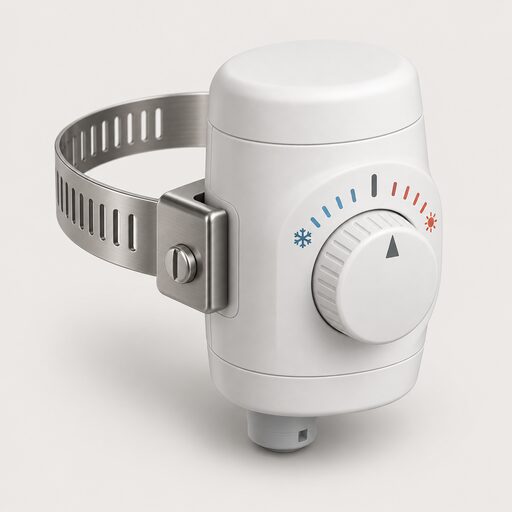 Hot Water Cylinder ControlsWhat temperature should a hot water cylinder thermostat be set to, and does it need its own timer apart from the heating?
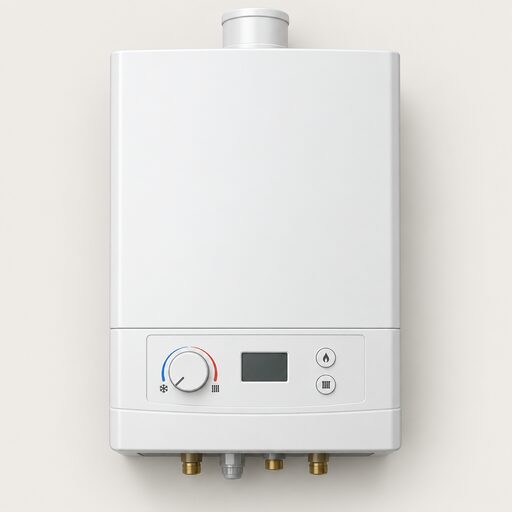 Flow TemperatureTurning down your boiler flow temperature can cut your gas bill, but how low can you go before the house feels cold?
 Changing Habits SavingsWhat the evidence says behavioural change saves: around £90 to £120 a year for one degree off the thermostat, £100 to £110 a year for using a full set of heating controls, and £304 to £351 a year for a bundle of small changes.
 Smart Thermostats ExplainedWhat does a smart thermostat actually do, and is it worth it?
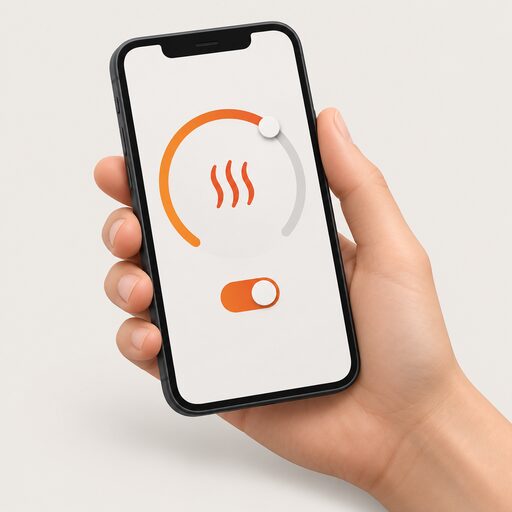 Do Smart Controls Save Money?Do smart heating controls really cut your bills, and by how much?