
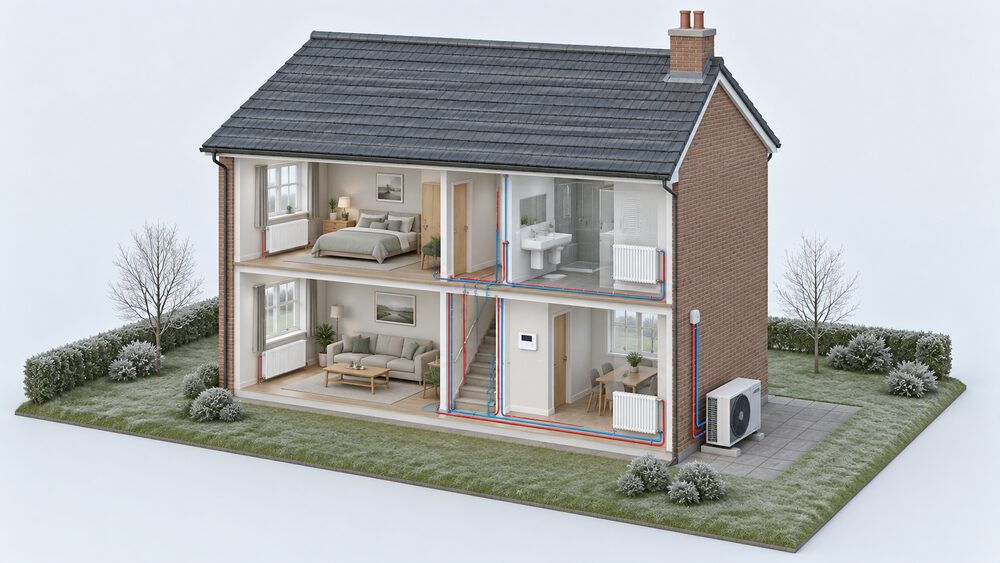
In this answer
Short answer
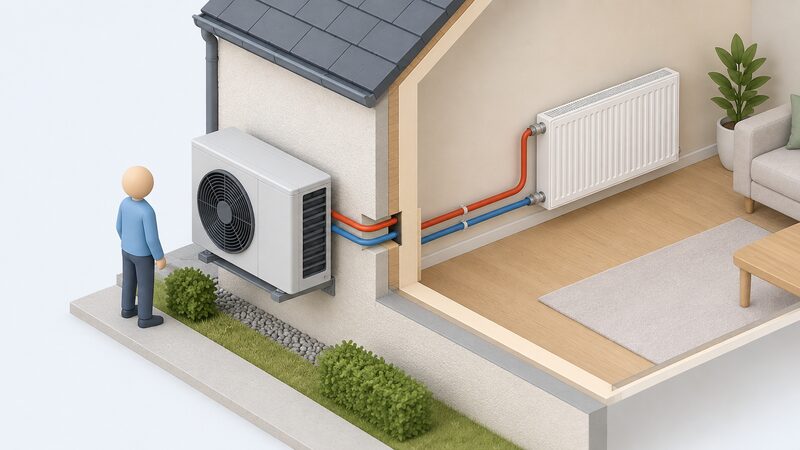
A heat pump's flow temperature is the temperature of the heating water leaving the unit and flowing into the heat distribution system, so it is the water temperature the radiators, underfloor loops or fan coils actually receive1. For space heating, the typical distribution range is 35 to 55°C2. That is far cooler than a gas boiler, and it is the single figure that most determines how efficiently the system runs.
The default is a flow temperature of 55°C, according to official guidance3. Many installers set the heat pump at 55°C by default to guarantee heat, which is a maker's description of common practice4. Independent guidance puts the default for a wet heat distribution system at 58°C5. Both are starting points rather than targets: 45°C can still keep a house warm and improve efficiency4, and Approved Document L Volume 1 requires wet heating systems that are newly installed or fully replaced to be sized so the space heating system can operate at a maximum flow temperature of 45°C or lower6.
What a household actually sees on the controller depends on the outdoor temperature, the emitters and the heat loss of the building. Weather compensation moves the flow temperature up and down through the day, and the achievable figure is set by how much emitter surface the home has.
What flow temperature means, and the range in practice
Flow temperature describes the water leaving the heat pump and entering the heat distribution system1. It is not the outdoor air temperature the unit draws heat from, and it is not the room temperature a thermostat calls for. A return temperature, typically a few degrees lower, is measured as the water comes back to the unit; one official example describes an air source heat pump running at an optimal supply or flow temperature of 45°C with a return temperature of 40°C9.
Across the sources the working range is consistent. The typical space heating distribution temperature range of heat pumps is 35 to 55°C10. A maximum flow temperature of 55°C is typically recommended for efficiency, and well-insulated buildings tend to achieve higher efficiency at the lower end of that band11. Northern Ireland's official advice states that air source heat pumps usually run at lower flow temperatures than a gas boiler12.
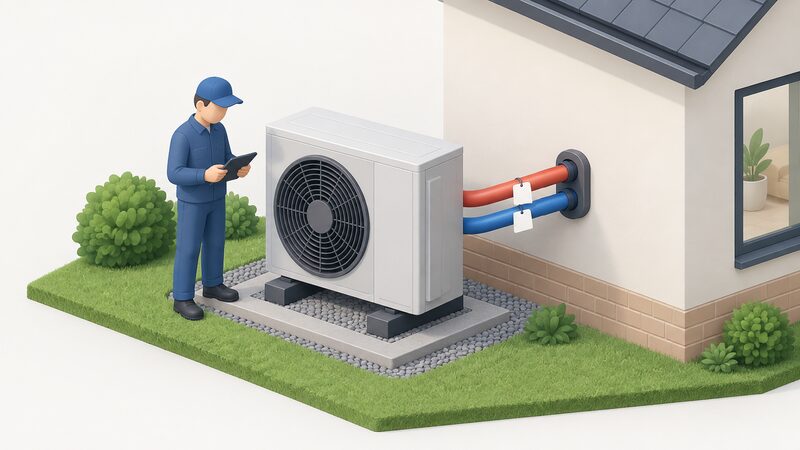
The spread between 35°C and 55°C is not disagreement so much as different design conditions. A well-insulated home with generous emitters can be designed around 35°C. A less insulated home with existing radiators may need 55°C on the coldest days. The commissioning certificate records the design flow water temperature as 45°C or 35°C, rounded to the nearest whole number, which is the figure the system was set up to achieve3.
Weather compensation: how flow temperature follows the outdoors
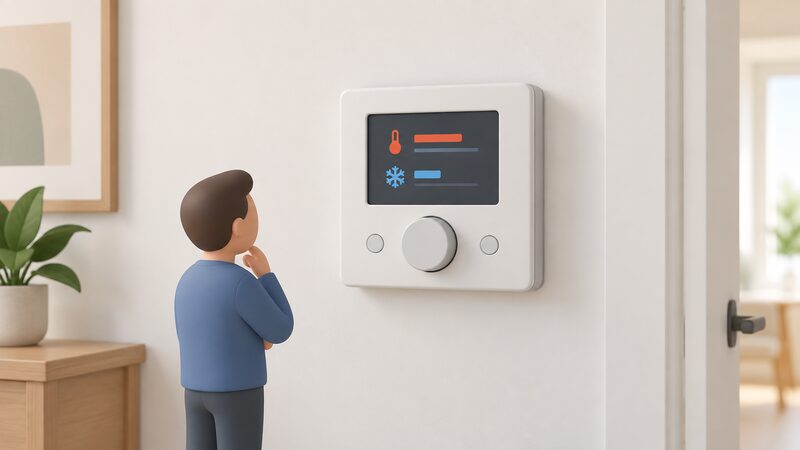
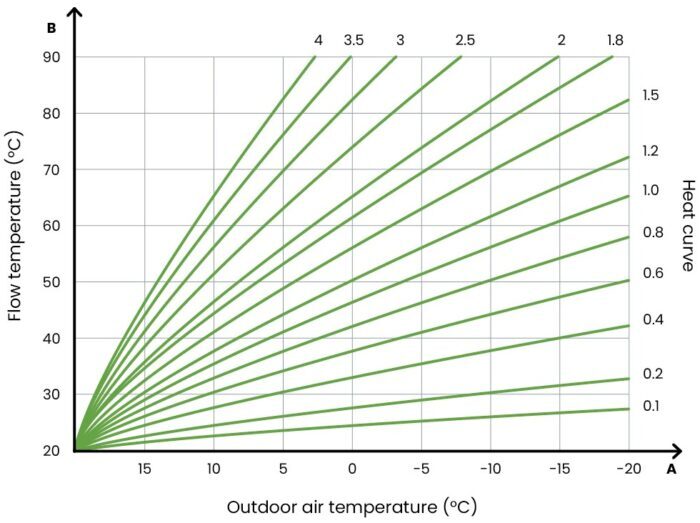
Modern heat pump systems use weather-compensated control, which adjusts flow temperature based on outdoor temperature1. This is also known as outdoor weather compensation13. The control method varies the flow temperature according to the season, and the Energy Saving Trust describes it plainly as weather compensation14. A weather compensation kit or load compensator will change the flow temperature automatically, and a heating engineer can fit one15.
The mechanism is a heating curve, also known as outdoor weather compensation, which includes a means for automatically measuring local outdoor temperature and alters the flow temperature in relation to it16. Weather compensation adjusts the target flow temperature based on outdoor temperature, following a curve set at commissioning16. Mild weather brings a lower flow temperature and cold weather a higher one1. One worked example describes a system that may supply 40°C flow at minus 3°C outside17.
Official guidance on controls describes the same principle for boilers: altering temperature flow from the boiler in relation to the measured outdoor temperature, with a means for automatically measuring local outdoor temperature18. The same logic applies to a heat pump, and it is why the flow temperature on a controller is rarely a fixed number.
"Modern heat pump systems use weather-compensated control, which adjusts flow temperature based on outdoor temperature."
The practical effect is that a household sees the flow temperature fall on a mild afternoon and rise overnight. During winter, the air temperature can drop by 5°C or more overnight, which reduces the heat pump's efficiency because it is heating water to a higher temperature13. Weather compensation is the control that manages that trade-off automatically rather than leaving it to a manual setting.
Efficiency: the COP effect of running cooler
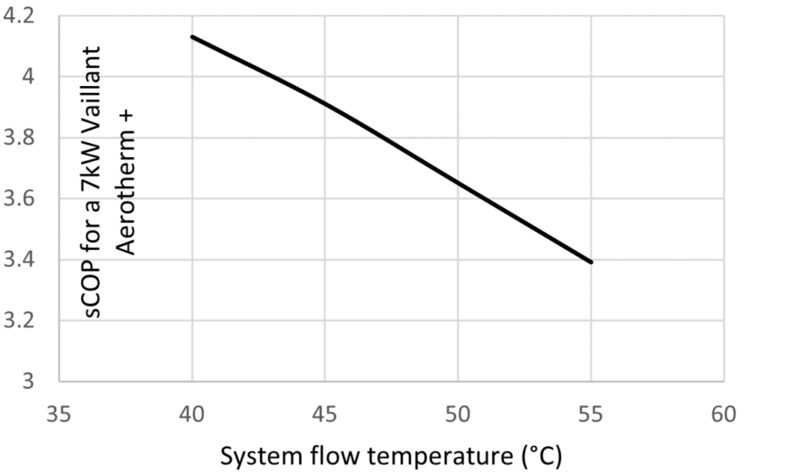
Heat pumps operate more efficiently when the source temperature is higher or the sink temperature is lower, which is the official statement of the relationship19. Lower flow temperatures improve COP, while higher flow temperatures reduce it20. If the same heat pump were tested at 55°C flow temperature instead of 35°C, the COP would be significantly lower1.
The key factor influencing the efficiency of a heat pump system is the temperature difference between the source temperature entering the heat pump and the distribution temperature exiting it; the smaller that difference, the more efficient the system2. Higher flow temperatures generally reduce heat pump efficiency and increase electricity consumption for the same heat output21. Heat pumps operate efficiently at lower temperatures, and the higher the flow temperature, the harder they have to work22.
The published test data shows the shape of this. PCDB records provide efficiency values and maximum output for design flow temperatures of 35°C, 45°C, 55°C and 58°C, and 65°C for high temperature heat pumps5. The Product Characteristics Database records for heat pumps provide values for 35°C, 45°C and 55°C3. Those are the points at which a unit's performance is declared, and they exist precisely because the figure moves with flow temperature.
| Design flow temperature | What it represents |
|---|---|
| 35°C | Coolest declared point; suits underfloor heating and well-insulated homes3 |
| 45°C | New build design target under Approved Document L6 |
| 55°C | Common default and typical maximum recommendation3 |
| 58°C | Default for a wet heat distribution system5 |
| 65°C | Declared point for high temperature heat pumps5 |
Lowering the flow temperature also reduces the reaction time of the heating system, which means it takes longer to bring a home up to temperature, and it has a big impact on running costs13. That is the trade a household lives with: a cooler system responds more slowly but costs less to run for the same heat output. Thermal insulation matters here, because a lower heat load can make lower flow temperature operation possible, which improves heat pump efficiency23.
Emitters and flow temperature: radiators, underfloor heating and fan coils
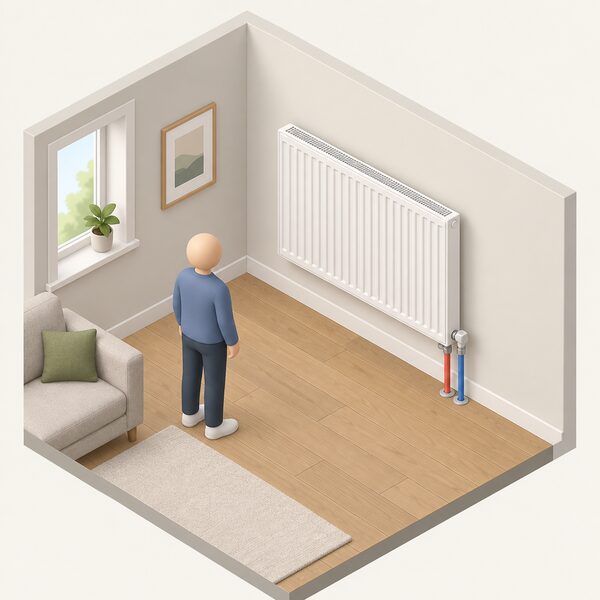
The emitter decides what flow temperature a system can actually use. Air-to-water heat pumps typically send hot water to radiators at a lower temperature than an equivalent fossil fuel central heating system, often between 35 and 45°C24. Radiators sized for a boiler may therefore need to be larger to deliver the same heat. With underfloor heating, the flow temperature could be lower compared with radiators, and this should result in the heat pump running much more efficiently25. Underfloor heating is described with a flow temperature of 35°C to 40°C8.
Fan coil units sit at the cooler end. Supply water temperature to the fan coil units should be in the range 35°C to 45°C, according to official guidance7. In a worked example, the heat pump sends 35°C water to the coil while the fan blows 20°C room air across the fins, absorbing the heat, with 25°C air returned26.
For a system sized around radiators, the emitters set the floor as well as the ceiling: the heat pump can only run cool if the radiator surface area is large enough to give out the heat load at that temperature. The typical space heating distribution range of heat pumps is 35 to 55°C17. Low-temperature heating systems are described as those with radiators and pipework suitable for 55 degree flow temperature or below27.
| Emitter | Typical flow temperature | Source |
|---|---|---|
| Underfloor heating | 35 to 40°C | 8 |
| Fan coil units | 35 to 45°C | 7 |
| Radiators, air-to-water | 35 to 45°C | 24 |
| Radiator system, design maximum | around 45°C | 17 |
| Low-temperature system threshold | 55°C or below | 27 |
High-temperature heat pumps and where the range ends
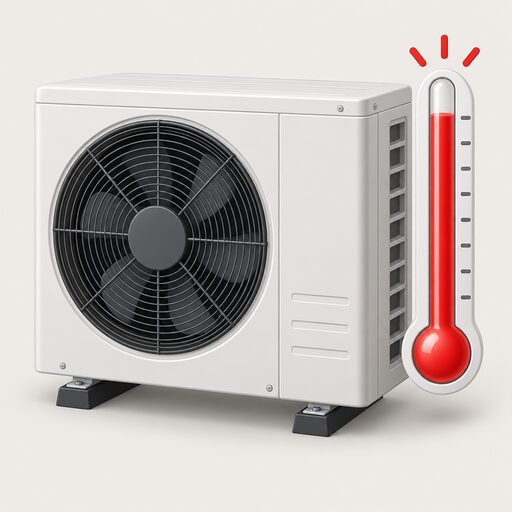
Many high- and mid-temperature heat pumps exist that deliver a flow temperature above 60°C28. High temperature heat pumps can deliver water up to approximately 75°C, even at external temperatures down to minus 10°C29. Independent guidance describes a high temperature heat pump as absorbing heat from the outside air and supplying it to a home at a similar temperature to the current boiler30. Which? describes high temperature units as designed to run at a higher temperature, usually 65 to 80 degrees31.
A maximum figure on a datasheet is not the same as continuous delivery. An air-source heat pump may be advertised with a maximum flow temperature of 70°C, which alone does not prove continuous delivery at 70°C and minus 12°C outdoor temperature32. The declared performance points in the PCDB for high temperature heat pumps sit at 65°C5, which is the figure to compare against a radiator system's design temperature rather than the headline maximum.
For context, many high- and mid-temperature heat pumps deliver a flow temperature above 60°C, and high temperature models can deliver water up to approximately 75°C, even at external temperatures down to minus 10°C11. That is well above the 35 to 55°C domestic distribution range and reflects different emitters and different design rules. For a household, the relevant question is whether the home's radiators can deliver its heat load at the lower end; if they cannot, a high-temperature unit or larger emitters are the two routes, and both change the running cost picture.
What Part L requires, and the four nations
Approved Document L Volume 1 states that all parts of the system, including pipework and emitters, should be sized to allow the space heating system to operate at a maximum flow temperature of 45°C or lower, for wet heating systems newly installed or fully replaced6. Independent guidance notes 45°C for heat pump installations in new build properties33. This is a sizing requirement: the system must be capable of running at 45°C, which in practice means enough emitter surface for the heat load.
The devolved picture differs. Scotland's domestic building services compliance guidance sets out its own energy standards for new buildings7, and Wales publishes its own Approved Document L volume6. Northern Ireland's official heat pump advice describes air source units running at around 45°C12. Where a home is in England, the 45°C sizing rule in Approved Document L Volume 1 applies to newly installed or fully replaced wet systems6; in the other nations the equivalent building standards govern new build and renovation work, and the practical design target is similar even where the document differs.
For an existing home, the requirement bites when a wet heating system is newly installed or fully replaced. A like-for-like radiator swap is not the same as a full system replacement, and the sizing rule is written around the latter. The commissioning certificate records the design flow water temperature as 45°C or 35°C, rounded to the nearest whole number, which is how the design figure is documented3.
What a household should expect in practice
A heat pump's flow temperature is a moving figure, not a fixed setting. It starts from a default of 55°C3, or 58°C for a wet distribution system5, and weather compensation moves it with the outdoor temperature through the day1. A well-insulated home with underfloor heating or generous radiators may run near 35 to 40°C8, while a home with existing radiators may need 45 to 55°C on the coldest days24.
The efficiency consequence is direct. Lower flow temperatures improve COP and higher ones reduce it20, and the temperature difference between source and distribution is the key factor2. Running cooler also slows the system's response, so a home takes longer to warm from cold13. That is why commissioning, emitter sizing and the heating curve all matter as much as the unit's headline efficiency.
For energy independence, the flow temperature is the lever a household can actually influence. A system designed and commissioned to run at 45°C rather than 55°C draws less electricity for the same heat, which reduces exposure to electricity prices and, where solar or a battery is present, makes more of the generated energy usable. The dependence that remains is unchanged: the heat pump still runs on grid electricity from a supplier, and its controls, weather compensation curve and any app-based monitoring sit with the manufacturer. Cooler flow temperatures lower the running cost of that dependence; they do not remove it.
Sources33 cited
- Heat Pump Control, iDM Energiesysteme, 2026
- Introduction to Water Source Heat Pumps, Renewables First, 2026
- Low Temperature Heating, NCM PCDB, 2026
- Heat Pump Maintenance 101, Alpha Innovation, 2025
- SAP 10.3 Full Specification, BRE Group, 2026
- Building Regulations Approved Document L Volume 1, Welsh Government, 2026
- Domestic Building Services Compliance Guide 2022, Scottish Government, 2022
- Heat Pumps, CAT, 2025
- Edinburgh LHEES, City of Edinburgh Council, 2023
- Heat Pump Systems, CIPHE, 2026
- My Property and Heat Pumps, Renewables First, 2026
- Heat Pumps, nidirect, 2025
- How to Ensure a Heat Pump Runs Efficiently, Energy Saving Trust, 2026
- Heat Pump Questions Answered, Energy Saving Trust, 2026
- Should I Turn My Boiler's Flow Temperature Down, Energy Saving Trust, 2026
- Heat Pump Efficiency: Flow Temperature, iDM Energiesysteme, 2026
- Domestic Heat Pump Guide, MCS Certified, 2024
- ECO4 New Measures and Products Guidance, Ofgem, 2026
- HEM TP 12 Heat Pump Methodology, UK Government, 2026
- Heat Emitter Design, iDM Energiesysteme, 2026
- Running Costs, iDM Energiesysteme, 2026
- Avoiding Costly Mistakes, Flexi-Orb, 2025
- Thermal Insulation and Heat Load, iDM Energiesysteme, 2026
- Heat Pump Installation: A Step by Step Guide, Energy Saving Trust, 2026
- Underfloor Heating, Energy Saving Trust, 2025
- Fan Coils, iDM Energiesysteme, 2026
- How to Get Homes More Ready for Heat Pumps, Nesta, 2026
- Connecting to Heat Pumps: Which Emitters Are Suitable, Daikin, 2026
- Heat Pumps and Radiators, Daikin, 2026
- Electrification of Heat: Heat Pump User Guides, Energy Systems Catapult, 2024
- An Introduction to Heat Pumps, Which?, 2025
- Limitations and Boundaries, iDM Energiesysteme, 2026
- An Introduction to Low-Temperature Hydronic Heating Systems, CIPHE, 2026
 High Temperature Heat PumpsHigh-temperature heat pumps deliver flow temperatures of roughly 65 to 80°C, close to boiler levels, so existing radiators can often stay in place.
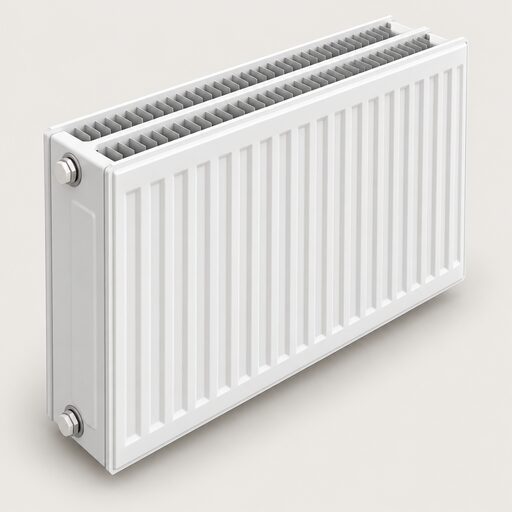 Radiators and Heat EmittersA radiator's real heat output depends on how hot the water inside it is compared with the room, so the figure in a catalogue often overstates what you will actually get.
 Radiators and EmittersWill your radiators still heat the house properly with a heat pump?
 Thermostat and Room TemperaturesWhat temperature should a thermostat be set to, and does it differ from room to room?
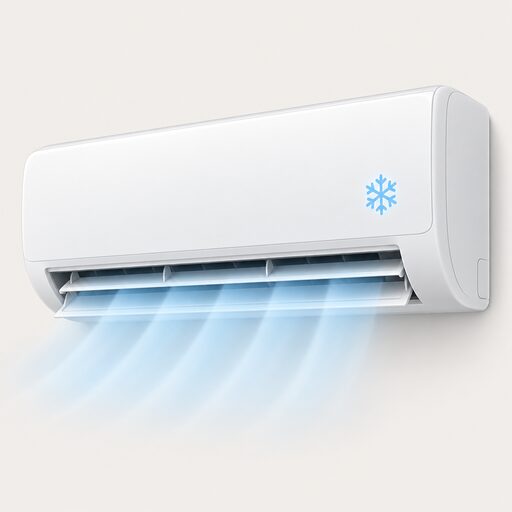 Using a Heat Pump for CoolingCan a heat pump cool your home in summer as well as heat it in winter?
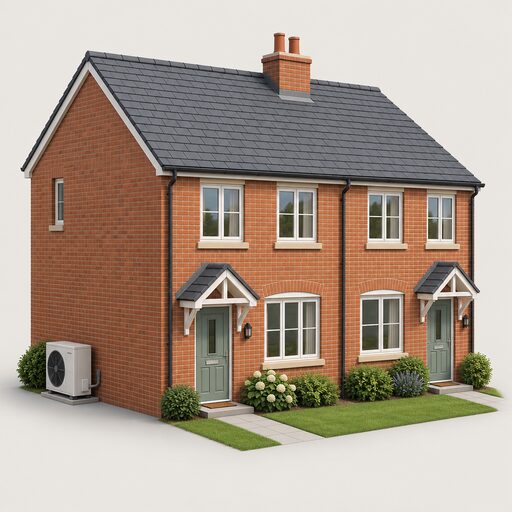 Which Homes Suit a Heat PumpMost UK homes can have a heat pump fitted, so the real question is whether yours makes it easy or expensive.