
In this guide
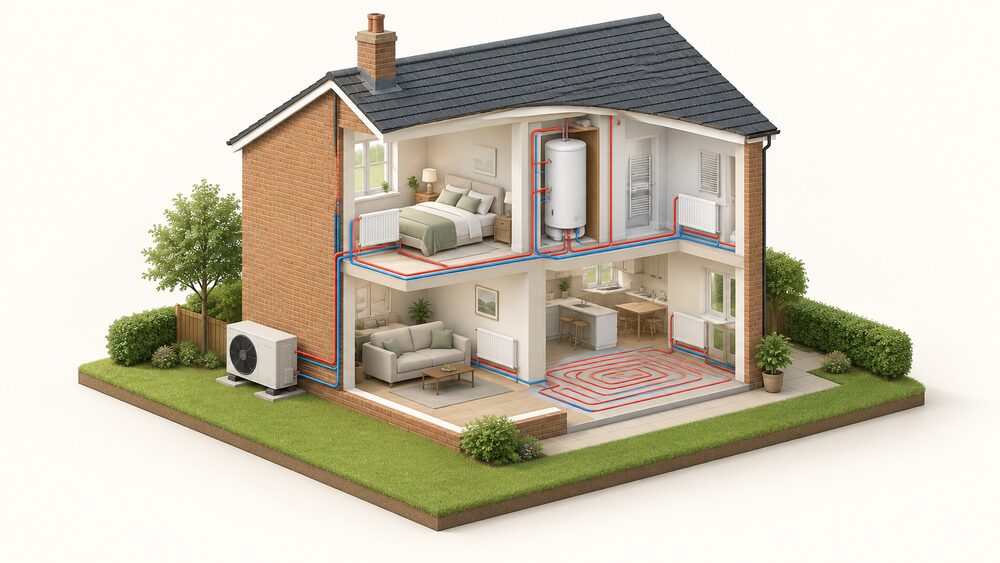
An air-to-water heat pump takes heat from the outside air and moves it into the water of a wet central heating system, so that the same radiators, underfloor pipes and hot water cylinder that a boiler would have served are instead fed by electricity1. Heat drawn from the air is converted into heated water ready for use in the home2, and that water is then distributed through the existing wet circuit3. This is the form of heat pump most people mean when they say "heat pump" in a British context.
It is also the dominant domestic technology here. Air source, meaning air-to-water, heat pumps are the most common type of domestic heat pump in the UK and are suitable for most types of home4. Around 1 per cent of UK homes, roughly 250,000, have one, making them the most widely installed efficient low-carbon heating technology in the country5. Their popularity follows directly from the hydraulics: in UK residential use, air-to-water units are the most popular because they are compatible with wet central heating systems6.
Performance and cost figures sit in fairly consistent ranges. Heat pump efficiency can reach 300 to 400 per cent, against a boiler's combustion efficiency7, meaning one unit of electricity is turned into three to four units of heat. Installed cost is quoted at around £11,000 by the Centre for Sustainable Energy8 and the same figure by the Energy Saving Trust9, while Which? gives an average of £13,00010: the published averages differ, and the spread reflects property size and the pipework and emitter changes each home needs. The Boiler Upgrade Scheme grant of £7,500 is deducted from that by the installer in England and Wales8.
What the machine actually does
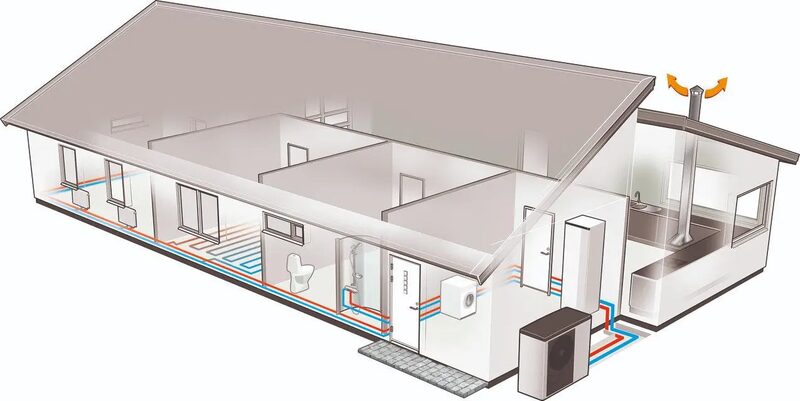
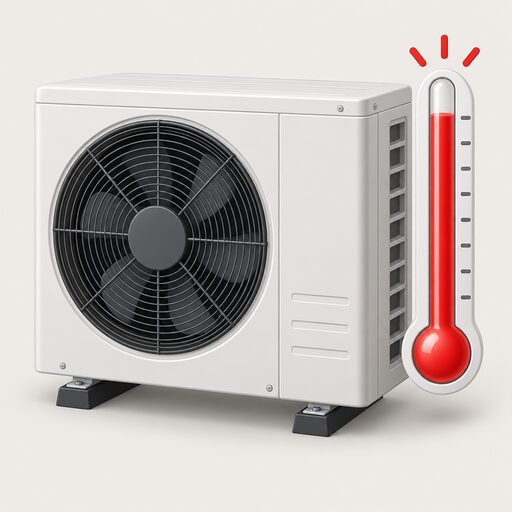
The outdoor unit contains a fan, an evaporator, a compressor and a heat exchanger. Air is drawn across the evaporator, where a refrigerant absorbs low-grade heat and boils; the compressor raises its pressure and therefore its temperature; the heat exchanger passes that heat to the water in the central heating circuit2. The refrigerant then expands and the cycle repeats. Electricity drives the compressor and fans, not the heat itself, which is why the output is several times the input.
From the householder's point of view, what changes is the temperature the water leaves at. A boiler is happy sending water out at 70 or 80 degrees; a heat pump is at its best much lower. The lower the flow temperature, the better the efficiency of the heat pump, and the lower the household's electricity use14. The consequence is that the heat pump warms the home gradually and steadily rather than in short hot bursts.
The distribution side is unchanged in principle: the system warms radiators, underfloor heating, or the hot water tank, depending on the setup15. This is the key practical difference from an air-to-air heat pump, which circulates warm air through fan units and does not normally serve a wet circuit at all.
Why the wet type dominates UK homes
Britain's housing stock is plumbed for water. Most homes already have a boiler, radiators and pipework, so an air-to-water unit replaces one heat source with another and leaves the distribution system in place, adapted rather than ripped out. That compatibility is the reason air-to-water units are the most popular residential type6. NICEIC describes them as the most common type of heat pump currently installed in UK properties15, and Smart Energy GB says the same of air source, or air-to-water, systems across Great Britain.
The second reason is hot water. A wet heat pump can heat a cylinder as well as the rooms, so one appliance covers the whole heating load. Air-to-air systems, by contrast, are most commonly used for commercial premises in the UK and do not provide hot water5.
The third reason is policy. Air-to-water heat pumps are an eligible technology under the Boiler Upgrade Scheme11, which has channelled grant money into this form for years. Air-to-air has only recently been brought into the frame, with a £2,500 grant announced under the Warm Homes Plan16, and certification bodies still need to be ready to assess and certify air-to-air products and installations.
For independence, the wet heat pump moves a household off gas or oil entirely and onto electricity, which can be generated on site or bought from any supplier. The dependence that remains is real: grid electricity, a supplier tariff, and a manufacturer for parts and refrigerant servicing. It is a change of fuel and of supply chain, not the removal of one.
Efficiency: 300 to 400 per cent, and what pulls it down
Heat pumps are 300 to 400 per cent efficient, converting one unit of electricity into three to four units of heat11. Nesta puts the floor for air-to-water at efficiencies of at least 300 per cent5. That figure is not fixed: it varies with outside air temperature, with the flow temperature demanded by the emitters, and with how well the system was designed and commissioned.
Cold weather is the main variable. An air source heat pump will be less efficient in the winter when the air temperature is colder17, and efficiency can drop in extremely cold conditions7. Overnight in winter the air temperature can drop by 5 degrees Celsius or more, which reduces efficiency, particularly when heating water to a high temperature18. The best independent evidence of how far it falls comes from monitored British homes: across 742 domestic heat pump installations in the Electrification of Heat Demonstration project, air-to-water systems achieved a median efficiency of 2.44, or 244 per cent, on the coldest days of the year12. That is a real drop, and it still means two and a half units of heat per unit of electricity on the worst days.
The second variable is under the household's control at design stage. Flow temperature governs efficiency directly14, but lowering it reduces the reaction time of the heating system, so it takes longer to warm rooms, and it has a big impact on running costs18. Nesta found that the running cost gap against gas narrows to 9 to 12 per cent for low flow temperature installations, or for exceptionally efficient heat pumps in a high-quality installation19. Those low flow temperature installations may require radiator or pipework changes, which is where emitter sizing and cost meet.
More on the measurement conventions is on the page for COP, SCOP and SPF, and on winter behaviour in heat pumps in cold weather.
Cost: around £11,000 installed, before the grant
| Source | Figure | Basis |
|---|---|---|
| Centre for Sustainable Energy | around £11,000 | air-to-water install8 |
| Energy Saving Trust | around £11,000 | air source install9 |
| Which? | £13,000 | average air-to-water install10 |
| Low Carbon Hub | £8,000 to £12,000 | typical air source install7 |
| Electricity North West | £7,000 to £13,000 | depends on property size3 |
| Nesta | £10,275 small property, £13,600 large property | before grant deduction5 |
Nesta's figures show the shape clearly: £10,275 for a small property and £13,600 for a large one, falling to £2,775 and £6,100 respectively once the £7,500 Boiler Upgrade Scheme grant is applied5. Home Energy Scotland funding lists air, ground and water to water source heat pumps at £7,500 per improvement20.
Running costs are estimated at around £800 to £1,050 a year, which the Centre for Sustainable Energy describes as one of the cheapest electric heating options8. See heat pump running costs and heat pump grants for the detail.
Radiators or underfloor heating: choosing the emitters
An air-to-water system can work with radiators or underfloor heating, and some types of heat pump can work without either21. What matters is emitter surface area relative to room heat loss, because the water arriving is cooler than a boiler would deliver.
- Existing radiators. May need upgrading or resizing rather than wholesale replacement22. The wet heat pump works well with large radiators15.
- Underfloor heating. Works particularly well with heat pumps because it provides consistent warmth at lower temperatures22. Air or ground source heat pumps are particularly effective when used with wet underfloor heating, because heat pumps are designed to be left on for longer periods and to operate at lower temperatures23.
- Mixed systems. Underfloor downstairs and resized radiators upstairs is a common hydraulic compromise, with the circuit balanced so both run from one flow temperature.
The design decision is a trade: larger emitters cost more up front but allow a lower flow temperature and therefore better seasonal efficiency and lower bills14. Further detail sits on radiators, underfloor heating and emitters for a heat pump.
No hot water on demand: the cylinder explained
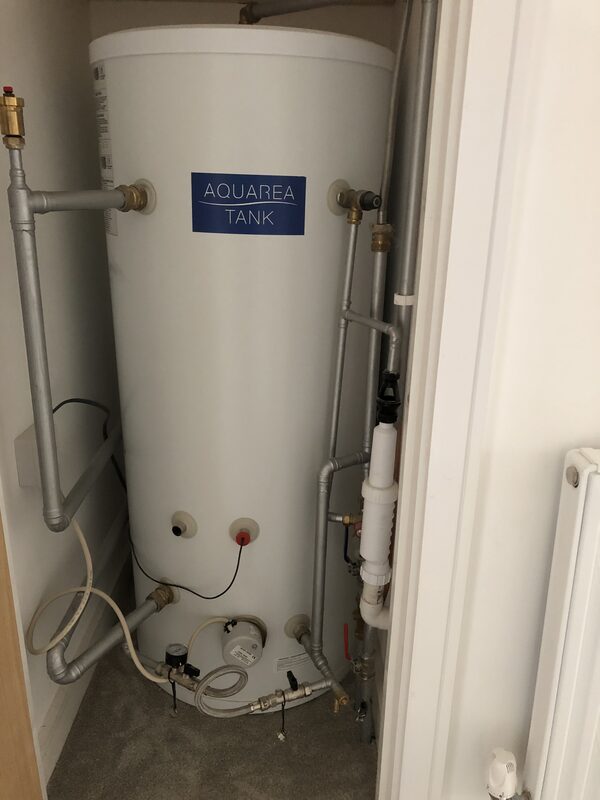
Unlike combi boilers, heat pumps do not provide hot water instantly, so a hot water cylinder is needed13. The installer will usually fit a cylinder to store water heated by the heat pump ready for when it is wanted9. The Energy Saving Trust puts the same point plainly: a standard heat pump does not provide hot water on demand like a combi boiler, so there needs to be a way of storing hot water24.
There is an engineering reason as well as a capacity one. CIBSE notes that most heat pump manufacturers require the use of a cylinder, as it enables the heat pump to run more efficiently by heating the water over a longer period25, and that low-temperature, low-carbon solutions such as heat pumps generally require a cylinder while many homes with gas combination boilers do not25.
"the heat pump will not provide any space heating until water heating demand is satisfied"
That priority rule matters in practice: while the cylinder is reheating, the radiators are not being fed. A well sized cylinder and a sensible reheat schedule keep those periods short and out of the coldest hours. Space for the cylinder, usually an airing cupboard or a loft, is the most common constraint in homes converting from a combi. See hot water cylinders for heat pumps and heat batteries used with heat pumps.
Sizing, siting and clearance for the outdoor unit
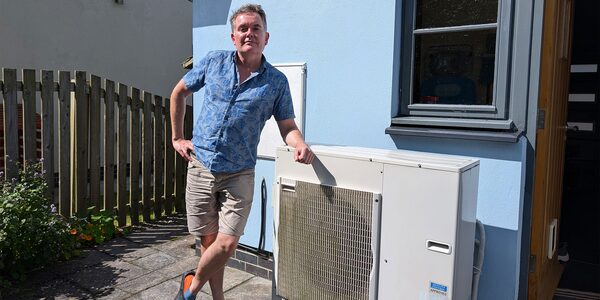
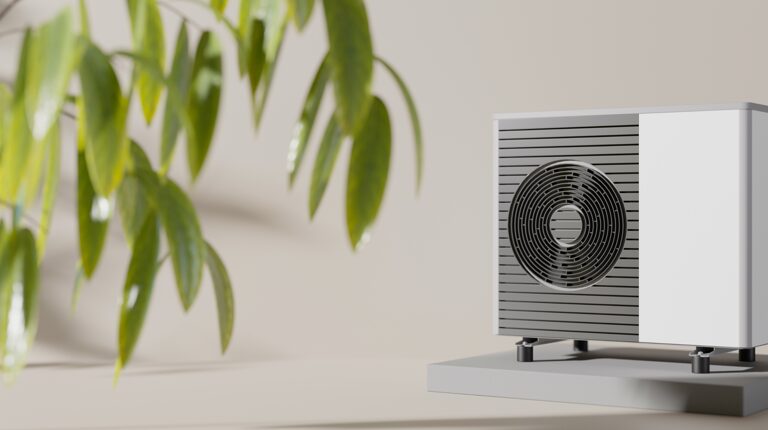
The outdoor unit needs a position on a wall or on the ground with space around it to allow a good flow of air4. External units vary in size but may be as much as 1 metre by 1.5 metres9. For comparison, the Energy Saving Trust notes that air source heat pumps need less outdoor space than two wheelie bins stood side by side, around 1.5 metres wide24.
Clearance is not cosmetic. The unit must draw in a large volume of air and discharge it colder; if that discharged air is recirculated back into the intake by a nearby wall or fence, measured efficiency drops. Noise is the other siting constraint: in the UK the legal noise limit for heat pumps is 42 decibels13.
Sizing is a separate exercise from siting and should follow a room-by-room heat loss calculation rather than the output of the old boiler. Oversizing raises cost and causes short cycling; undersizing leaves the home cold on design days. The detail is on heat pump sizing, where a heat pump outdoor unit can go and how noisy is a heat pump.
Installation, permits and who must do the work
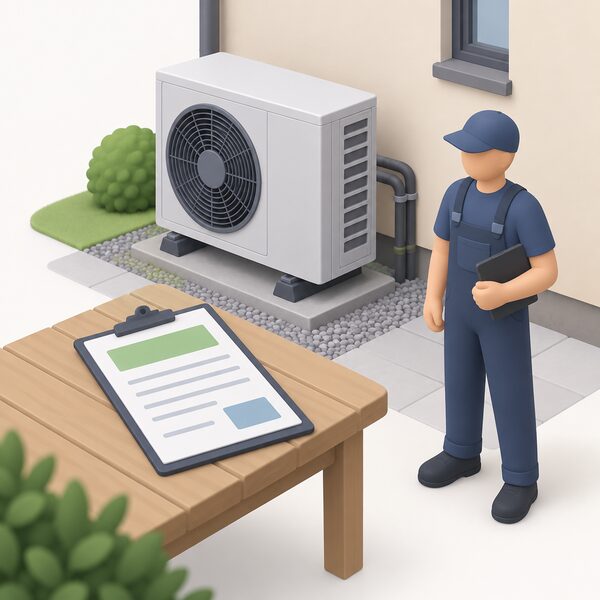
Installation of an air source heat pump is permitted development in the usual case13, meaning no planning application, but the permitted development right carries conditions including the noise limit. Rules differ between the nations: see planning permission in England, Scotland, Wales and Northern Ireland.
Building Regulations apply regardless of planning. Approved Document L requires a registered competent person to install and commission the system to the standards set out in the approved document, and to give the compliance certificate, or a copy of the information on it, to the building control authority27. Where the installer is not registered as a competent person, the Welsh consultation version of the same document states that before work begins the installer must either notify the local authority or arrange for a registered building control approver to oversee the work28.
Grant funding brings its own timetable. Vouchers for air-to-water heat pumps, air-to-air heat pumps and biomass boilers are valid for 3 months, against 6 months for ground source heat pumps29. Ofgem's July 2026 statistics repeat the three-month validity for air-to-water and air-to-air vouchers30.
The process from survey to handover is set out on heat pump installation.
Running and maintaining the system through the year
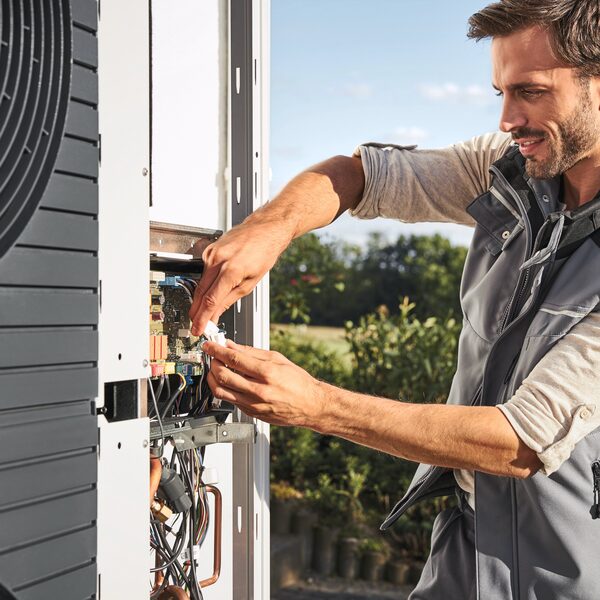
Two things determine whether an installed system performs as designed: how it is controlled, and whether it is serviced. On controls, weather compensation varies the flow temperature according to the season31, so the system sends out cooler water in mild weather and hotter water only when the outside temperature demands it. Because efficiency rises as flow temperature falls14, this is where a large part of the real-world saving is won or lost.
On maintenance, BEAMA states that the heating system should be serviced every year12, and the Department for Energy Security and Net Zero notes that an annual heat pump service will help it remain clean and ensure it runs efficiently and sounds as quiet as possible32. Annual servicing is also required for warranties and for checking refrigerant12. Within the house, the wet side needs the same attention any radiator circuit does: as a general rule radiators should be bled about once a year, ideally before winter when the heating starts to be used more regularly, which takes only a few minutes per radiator33.
Seasonal behaviour differs from a boiler. The system is designed to run for longer periods at lower temperatures, so turning the heating off during the day and blasting it on in the evening works against it. More on this at heat pump controls and servicing and maintenance.
Cooling in summer: possible, but conditional
Some heat pumps can also offer cooling2. For a wet system this is not automatic: the right sort of emitters are needed to make the most of cooling via an air-to-water heat pump system, meaning heat pump convectors and underfloor heating34. Standard radiators are poor cooling emitters, and condensation control has to be handled in the design.
The contrast with air-to-air is sharp. Air-to-air heat pumps can provide cooling as well, which the Centre for Sustainable Energy describes as very useful in a heatwave8, and Which? notes the added benefit of supplying air conditioning to keep a home cool during summer34. Where a household's priority is cooling in a smaller house or flat with relatively few rooms, especially a home that overheats in warm weather, an air-to-air system can be especially cost-effective34, though it will not heat the hot water. A comparison is set out at air-to-air vs air-to-water heat pumps and on using a heat pump for cooling.
Where an air-to-water system falls short
It is worth naming the limits plainly alongside the benefits.
- No instant hot water. The cylinder must be sized, sited and reheated, and space heating pauses while water heating is satisfied26.
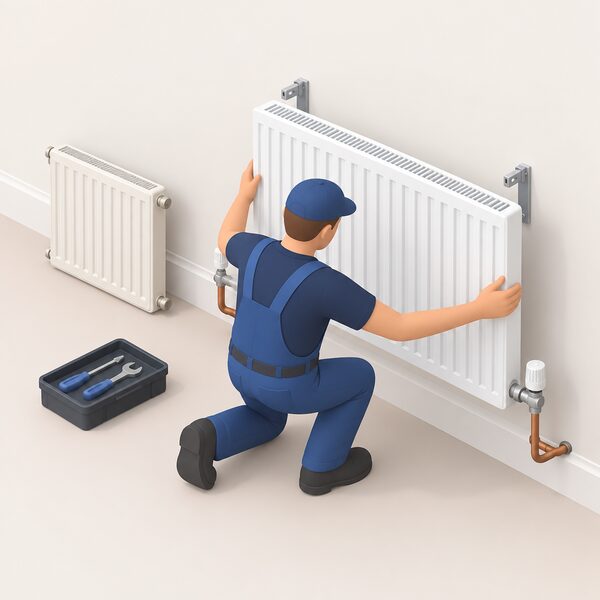
- Emitter work. Existing radiators may need upgrading or resizing22, and low flow temperature installations may require radiator or pipework changes19.
- Cold-weather derating. Median efficiency fell to 2.44 on the coldest days across 742 monitored homes12, though heat can still be extracted at -15°C3.
- Outdoor space and noise. A unit up to 1 metre by 1.5 metres9 with clear air flow, within a 42 decibel limit13.
- Continuing dependence. The household still buys electricity from the grid and a supplier, and still depends on a manufacturer for parts, refrigerant and warranty servicing12.
None of these rules the technology out; each changes what a given house needs to spend and to accommodate. Which homes suit the technology is covered on which homes suit a heat pump, and the wider picture on the heat pumps pillar.
Sources34 cited
- ECO4 New Measures and Products Guidance v3.0, Ofgem, 2026-03-26
- Air source heat pumps for consumers, MCS, 2026-07-24
- Air source heat pumps, Electricity North West, 2026-09-19
- Air source heat pumps advice, Energy Saving Trust, 2026-07-16
- Air source heat pumps (air to water), Nesta, 2025-02-03
- Plumbing with renewables, CIPHE, 2026-09-17
- The real cost of a heat pump, Low Carbon Hub, 2025-10-30
- Electric heating advice, Centre for Sustainable Energy, 2026-06
- Heat pump installation: a step-by-step guide, Energy Saving Trust, 2026-07-15
- Boiler retirement: using trigger points to support homeowners, Which?, 2026-07-10
- Boiler Upgrade Scheme guidance for installers v5.1, Ofgem, 2026-07-21
- Future Homes Standard Phase 1: network to emitter impact report, BEAMA, 2023-04
- Air and ground source heat pumps: retrofit guidance, Croydon Council, 2026-09-17
- Insulation and heat pumps: the perfect pairing, MIMA, 2026-09-20
- How heat pumps work: a guide for homeowners, NICEIC, 2025-09-17
- NAPIT welcomes government announcement on extra technologies in the Boiler Upgrade Scheme, NAPIT, 2025-11-18
- Fact sheet 5: air source heat pumps, Pendle Borough Council, 2026-09-17
- How to ensure a heat pump runs efficiently, Energy Saving Trust, 2026-05-19
- Reduce the cost of heat pumps, Nesta, 2022-03-02
- Grants and loans, Home Energy Scotland, 2026-09-17
- Renewable heat: what is right for your home, Energy Saving Trust, 2026-05-19
- Is your home suitable for a heat pump?, The CPA, 2026-02-18
- Underfloor heating advice, Centre for Sustainable Energy, 2025-11
- Is now a good time to get a heat pump?, Energy Saving Trust, 2025-12-12
- Heating and heat pump factsheets, CIBSE, 2026-09-17
- Home Energy Model technical paper: heat pump methodology, Department for Energy Security and Net Zero, 2026-01
- Approved Document L Volume 1: Dwellings, UK Government, 2026
- Approved Document L Volume 1 consultation version, Welsh Government, 2026-09-17
- Boiler Upgrade Scheme guidance for property owners v5, Ofgem, 2026-03-25
- Boiler Upgrade Scheme statistics, July 2026, Department for Energy Security and Net Zero, 2026-08-27
- Heat pump questions answered, Energy Saving Trust, 2026-05-27
- Heat pumps explained: experts answer your questions, UK Government, 2024-03-28
- How to bleed a radiator, Smart Energy GB, 2026-08-17
- How a heat pump can cool your home, Which?, 2026-07-17
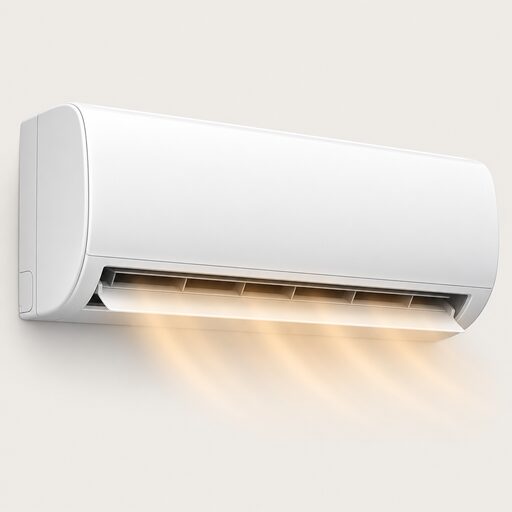 Air-to-Air Heating and CoolingAir-to-air heat pumps deliver warm air through indoor fan units rather than hot water to radiators.
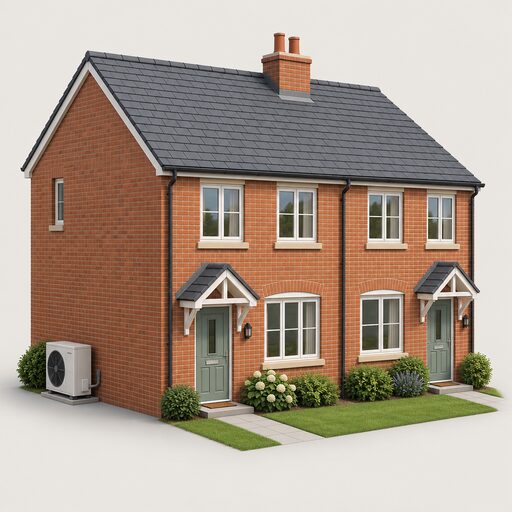 Which Homes Suit a Heat PumpMost UK homes can have a heat pump fitted, so the real question is whether yours makes it easy or expensive.
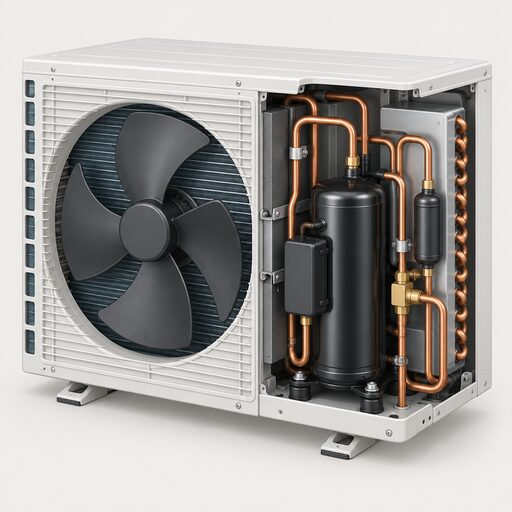 Air Source Heat PumpsHow an air source heat pump takes heat from outdoor air, the difference between air-to-air and air-to-water systems, typical efficiency, the £7,500 Boiler Upgrade Scheme grant, noise and planning limits, and what ownership means for a household's energy independence.
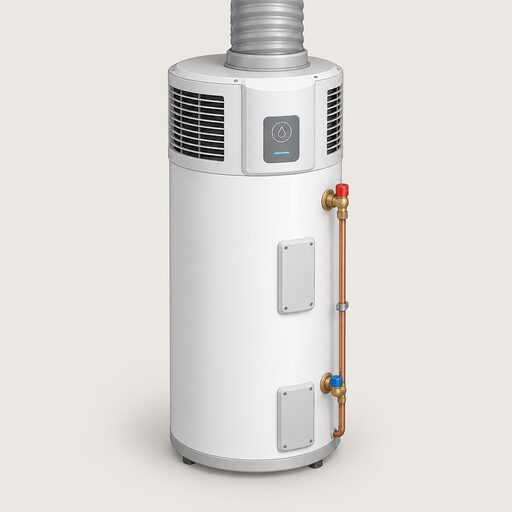 Hot Water Heat PumpsA hot water heat pump heats only the water in your cylinder, using air instead of a boiler flame.
 High Temperature Heat PumpsHigh-temperature heat pumps deliver flow temperatures of roughly 65 to 80°C, close to boiler levels, so existing radiators can often stay in place.
 Using a Heat Pump for CoolingCan a heat pump cool your home in summer as well as heat it in winter?