In this guide
A heat pump does not stop working when the temperature drops. Energy Saving Trust states that heat pumps can perform down to minus 15°C or lower, and notes that the practical limit is not operation but output: there may come a point when the heat pump's output is not enough for the building's demand1. Which? reports that most current models work fine down to about minus 25°C, while some advanced cold-climate heat pumps work in temperatures as low as minus 35°C2. For the UK specifically, Which? describes air source heat pumps designed to work down to minus 10°C, which it calls sufficient for most parts of the country, with models designed for colder regions quoted down to minus 25°C3.
The reason a heat pump keeps running is that it moves heat rather than generating it. MCS describes air source heat pumps as devices that transfer heat from outside the home into the home using electricity, rather than generating the heat itself, and notes that the amount of heat produced is more than the electricity needed to power it4. The colder the outdoor air, the harder that transfer becomes, so efficiency falls even though the unit still runs. Official research cited by government found heat pumps to be more than twice as efficient as fossil fuel heating in cold temperatures5.
What changes in cold weather is therefore the ratio, not the principle. Output falls, the compressor works harder, and a defrost cycle may run periodically to clear frost from the outdoor coil. A correctly sized system, designed against a heat loss calculation for the local design condition, is built to cover that shortfall. This page sets out what the evidence says about cold weather performance, what the low ambient limits actually mean, and what remains dependent on the electricity grid and the tariff behind it.
Do heat pumps work in cold weather? Yes, down to minus 15°C and below
The headline answer is yes, and the evidence base is broader than the UK. Official guidance from the Welsh Government's development bank reports that field data research from the UK, Germany, Switzerland, Canada, the USA and China found heat pumps still performing efficiently and effectively at temperatures far below freezing8. That matters because it moves the question from a single national test to a pattern seen across several climates, including ones considerably colder than the British Isles.
The operating limits quoted by different bodies vary, and the variation is worth understanding rather than treating as contradiction. Energy Saving Trust gives minus 15°C or lower as the point at which performance continues but output may become insufficient for the building1. Which? gives about minus 25°C for most current models and minus 35°C for advanced cold-climate units2. Which? also reports that heat pumps can operate effectively at minus 15°C, although their efficiency drops in very cold weather3. The Welsh Government's guide states heat pumps work efficiently even on cold days, down to temperatures as low as minus 20°C9. Uswitch states they extract heat from the air or ground even at temperatures as low as minus 15°C10.
These are not competing claims about the same measurement. They describe different model ranges, different definitions of "working" (running at all versus meeting full demand), and different test conditions. The figure that matters for a UK household is the design outdoor temperature used in the heat loss calculation, not the lowest number a manufacturer can quote. A unit rated to minus 25°C that is undersized for the building will still struggle in a cold snap, because the constraint is capacity at the design condition rather than the absolute floor of the operating envelope.

Cold weather efficiency: COP and SCOP explained

COP, the coefficient of performance, is the ratio of heat delivered to electricity consumed at a given moment. Which? explains it plainly: a heat pump with an efficiency rating of COP 3.0 can produce three times more heat energy than the electrical energy it consumes3. Which? reports a COP of 4.3 for an air source heat pump at an outside temperature of 15°C3. The National Insulation Association reports that in a well-insulated home a heat pump can usually reach a COP of 3 to 411. Those two figures sit at different outdoor temperatures, which is the whole point: COP is not a fixed property of the machine.
The seasonal version, SCOP, averages performance across a heating season and is the figure that better reflects a real winter. It is lower than a mild-weather COP because it includes the cold hours. Official guidance from Pendle Borough Council states directly that an air source heat pump will be less efficient in the winter when the air temperature is colder12. That is not a defect; it is the physics of a smaller temperature difference between the outdoor air and the refrigerant.
The practical consequence is that a heat pump's running cost in January is not the same as its running cost in October. Energy Saving Trust notes that lowering the flow temperature reduces the reaction time of the heating system and has a big impact on running costs1. A system designed to run at a lower flow temperature, such as 55°C and lower, achieves better efficiency, according to the Welsh Government's draft heat strategy13. The trade-off is that a lower flow temperature takes longer to warm a cold house, which is why the advice is to run the system steadily rather than in short bursts.
"A heat pump with an efficiency rating of COP 3.0 can produce three times more heat energy than the electrical energy it consumes"
Why heat pumps run best at low, steady temperatures
Heat pumps are more efficient when running at a lower temperature, and they usually work best if turned on at a lower temperature for a longer period of time14. This is the single most important operating difference between a heat pump and a gas boiler, and it explains most of the cold weather complaints that turn out to be control problems rather than equipment problems.
A gas boiler can fire hard, raise flow temperature quickly and recover a cold room in minutes. A heat pump at a low flow temperature cannot do that, because the heat it delivers is at a lower temperature than a traditional heating system, as OFTEC explains16. The system is designed to hold a steady temperature rather than to respond to sudden setbacks. Energy Saving Trust advises against heating hot water or the house overnight when outside air temperatures are significantly lower, unless on a time-of-use tariff1. The reason is that the coldest hours are the least efficient hours, so shifting demand into them raises cost for no benefit.
Controls matter here. OFTEC states heat pump systems are typically controlled by the end user via weather compensation or internal temperature control, such as a room thermostat, together with a timer or programmer to control space heating16. Weather compensation adjusts the flow temperature to the outdoor temperature, which is exactly the mechanism that keeps efficiency up in milder weather and accepts lower efficiency in a cold snap without overworking the unit.
The independence angle is worth stating plainly. A heat pump running steadily on electricity is using a fuel that can be generated domestically, but it is still drawing from the grid and still exposed to whatever tariff and supplier sit behind the meter. Running it well reduces the amount of electricity needed; it does not remove the dependence. A time-of-use tariff can shift some of that demand to cheaper hours, and Energy Saving Trust reports that switching to a heat pump time-of-use tariff can reduce running costs significantly17.
Do heat pumps use a defrost cycle in freezing weather?
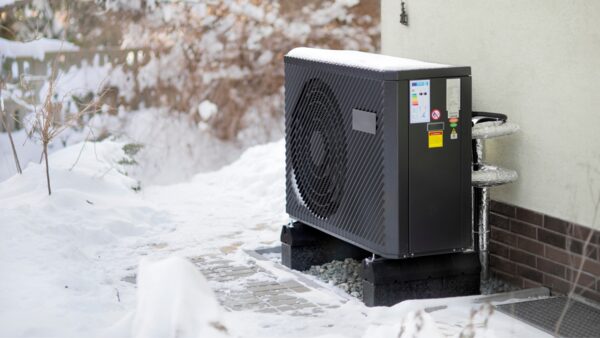
Yes, and it is normal. Baxi states that in colder weather the heat pump will use a defrost cycle to keep the system clear of frost and ice18. Moisture in the outdoor air condenses on the cold coil and freezes; the unit periodically reverses briefly to melt the frost and drain the water away. During that period it is not heating the house, which is one reason cold, damp weather reduces average efficiency more than dry cold.
A defrost cycle is not a fault and does not indicate a problem with the installation. It becomes a problem only if the unit cannot complete it, for example if the condensate cannot drain away and refreezes, or if the outdoor unit is sited where airflow is restricted. MCS notes that air source heat pumps require sufficient space around them to ensure proper airflow4. Siting guidance in England requires all parts of an air source heat pump to be at least one metre from the property boundary for permitted development, and installations on pitched roofs are not permitted development19.
Sizing and design: why a correctly sized heat pump copes with winter
Cold weather performance is a design question before it is an equipment question. Approved Document L states that heat pumps should be selected to meet the full space heating requirement at the design condition chosen for heat loss calculations21. In other words, the unit is sized against a defined cold outdoor temperature for the location, not against an average winter day. Get that calculation right and the system covers the coldest design condition; get it wrong and no amount of cold-climate rating will compensate.
Northern Ireland guidance is explicit about both failure modes: an undersized unit may struggle to meet demand, while an oversized unit may cycle on and off often and lessen efficiency15. The Future Homes and Buildings Standards consultation response states that sizing heat pump systems correctly is vital to reduce the risk of inefficiency and high operating costs22. Approved Document L also sets out requirements that the person carrying out the work is suitably competent, that heat pump systems have been sized appropriately, that the system has adequate controls, and that it meets the system requirements in paragraphs 5.1 to 5.723.
Energy Saving Trust states that a well-designed heat pump system should provide a consistent temperature around the home throughout the year, even during the coldest days2. That is the standard to hold an installation to. It also explains why the emitters matter: air source heat pumps are best suited to underfloor heating systems, or large radiators with a greater surface area, and work best in well-insulated homes with effective insulation and draught-proofing24. A cold weather shortfall is often an emitter shortfall, not a heat pump shortfall.
| Design factor | What the guidance requires | Source |
|---|---|---|
| Sizing basis | Meet the full space heating requirement at the design condition chosen for heat loss calculations | 21 |
| Undersizing risk | Unit may struggle to meet demand | 15 |
| Oversizing risk | Unit may cycle on and off often and lessen efficiency | 15 |
| Competence | The person carrying out the work should be suitably competent | 23 |
| Controls | The system has adequate controls | 23 |

Where a heat pump falls short in cold weather
The limits are real and worth stating as firmly as the benefits, because they are not fixed by choosing a bigger model.
- Output falls as the outdoor temperature falls. Energy Saving Trust notes there may come a point when the heat pump's output is not enough for the building1.
- Efficiency drops in very cold weather, even though the unit keeps running3.
- Defrost cycles interrupt heating in cold, damp conditions to clear frost and ice18.
- A low COP can cost more than a gas boiler. The National Insulation Association states that a heat pump operating at a low COP can end up costing more to run than a gas boiler, in poorly insulated homes and without pricing reform11.
- Standard tariffs work against it. Uswitch reports heat pumps can cost slightly more to run than new gas or oil boilers on standard electricity tariffs, where electricity is nearly four times more expensive than gas6.
- Siting is constrained. Airflow space is required, and permitted development rules limit where the outdoor unit can go4.
Running costs in cold weather, and what changes them
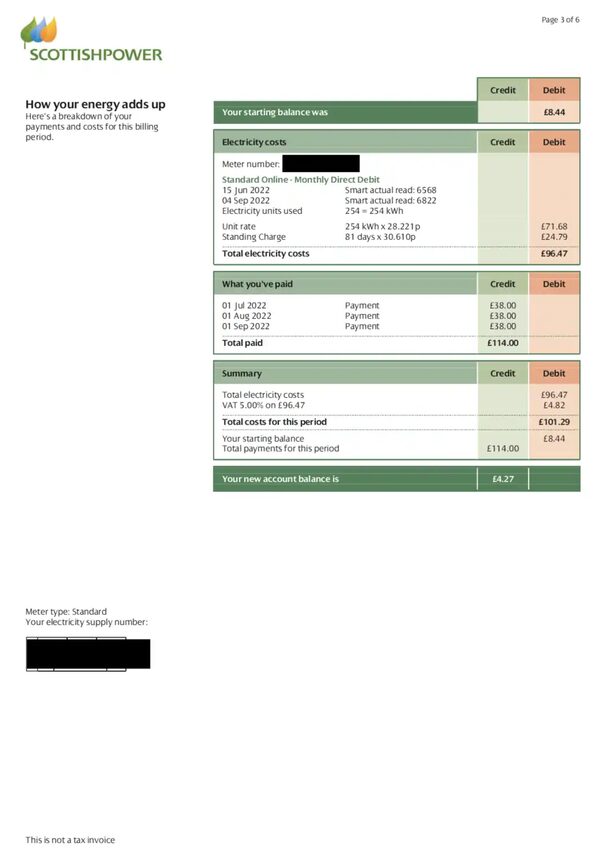
At current energy prices, running costs for heat pumps are around the same as for a new gas boiler2. That is the central comparison, and it is a statement about averages across a heating season, not about the coldest week. On standard electricity tariffs, where electricity is nearly four times more expensive than gas, heat pumps can cost slightly more to run than new gas or oil boilers6. On a heat pump time-of-use tariff, Energy Saving Trust's latest research shows running costs can be reduced significantly17.
The range across sources reflects different assumptions. Which? reports that a household could save as much as 50% and more on running costs with a heat pump compared to a gas boiler, but attaches conditions: high quality installation, high efficiency and a heat pump tariff3. Home Energy Scotland gives a more conservative figure, stating that a well-designed heat pump can save around £80 to £170 a year compared to a gas boiler25. The gap between "as much as 50% and more" and "around £80 to £170 a year" is explained by the conditions attached to each: the first assumes everything is optimised, the second assumes a well-designed system on ordinary running.
Cold weather sits inside all of these figures. A system that performs well in a mild autumn but poorly in a cold snap will land at the wrong end of the range, and the cause is usually one of three things: a low flow temperature that the emitters cannot deliver enough heat from, a sizing error, or a tariff that charges peak rates during the coldest hours. Uswitch notes that an air source heat pump is unlikely to save much money if replacing mains gas, but is likely to be cost-effective if replacing an electric or coal system24.
| Cost scenario | What the evidence says | Source |
|---|---|---|
| Current energy prices | Around the same as a new gas boiler | 2 |
| Standard electricity tariff | Slightly more than new gas or oil boilers | 6 |
| Heat pump time-of-use tariff | Running costs reduced significantly | 17 |
| Well-designed system, annual | Around £80 to £170 saved versus a gas boiler | 25 |
| Optimised system, potential | As much as 50% and more saved, with conditions | 3 |
Grants and support: the Boiler Upgrade Scheme
The Boiler Upgrade Scheme supports air source heat pumps, ground source heat pumps and biomass boilers, according to independent reporting on Ofgem's quarterly scheme data26. Ofgem's installer guidance lists air-to-air heat pumps among the eligible technologies27. Croydon Council's retrofit guidance states that a household may be eligible for a grant under the UK government's Boiler Upgrade Scheme if the home is energy efficient enough28.
The scheme is administered by Ofgem and delivered through installers. That structure matters for cold weather performance because the grant is tied to an installation that meets standards, and standards include sizing and controls. Approved Document L requires that heat pump systems have been sized appropriately and have adequate controls23. A grant-funded installation that fails either test is a poor foundation for winter performance.
Servicing before winter, and what it protects
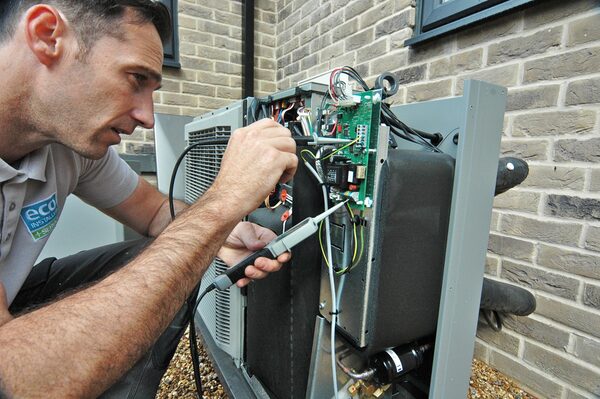
Energy Saving Trust recommends an annual service for heat pumps, preferably before winter7. Which? states that an engineer should service a heat pump according to the manufacturer's advice, usually once a year14. OFTEC states heat pump systems require very little maintenance but should still be checked periodically by an OFTEC registered heat pump installer16. MCS notes it is a good idea to schedule a yearly check-up with a professional4.
The timing is the point. A service carried out in September or October catches the things that turn into winter faults: a partially blocked outdoor coil, a condensate drain that will freeze, refrigerant charge that has drifted, controls that are no longer following the weather compensation curve. None of these show up in a mild month. Most systems come with a two to three-year warranty, according to Home Energy Scotland25, and warranty terms commonly require servicing in line with the manufacturer's schedule, so the annual visit protects both performance and cover.
For a household thinking about independence, servicing is the cheapest form of resilience. It does not remove the dependence on electricity, the grid or a supplier, but it keeps the system running at the efficiency it was designed for, which is what keeps the running cost within the range the evidence describes.
What cold weather performance means for energy independence
A heat pump changes what a household depends on. It replaces a gas or oil supply with electricity, and electricity can be generated domestically, bought on a tariff that reflects when it is cheap, or increasingly stored. That is a real shift in sovereignty: no flue, no fuel delivery, no standing charge to a gas network. But the dependence does not disappear. All air source heat pumps run on electricity4, so the household remains connected to the grid and to a supplier, and the running cost remains exposed to whatever tariff applies during the coldest hours.
Cold weather is where that exposure is greatest, because demand is highest exactly when a heat pump is least efficient. The mitigations are the ones the evidence supports: a well-insulated home, a correctly sized system, emitters that can deliver the required heat at a low flow temperature, weather compensation controls, and a tariff that does not penalise the hours the system needs to run. The National Insulation Association's warning that a low COP can cost more than a gas boiler in poorly insulated homes is the clearest statement of where the dependence bites11.
The wider direction of travel is towards electrified heat. The Energy Innovation Needs Assessment reports that heat pump technologies account for 81% of total GVA in 2040 and 78% in 2050 in the Minimally Constrained and High Hydrogen scenarios, and 40% in 2040 and 72% in 2050 in the High Diversification scenario29. Air source heat pumps represent the most promising export opportunity, contributing 35% of export driven GVA by 205029. Those are modelled figures for the economy, not for a household, but they indicate the direction the technology is expected to take.
For a household, the practical position is this: a heat pump works in cold weather, down to limits well below anything the UK experiences in most years, and it works best when the building, the sizing, the emitters and the controls are all right. Where any of those is wrong, cold weather exposes it. That is the honest version of the independence case, and it is more useful than a claim that cold weather does not matter.
Sources29 cited
- How to ensure a heat pump runs efficiently, Energy Saving Trust, 2026-05-19
- Heat pump fact check, Energy Saving Trust, 2026-07-01
- An introduction to heat pumps, Which?, 2026-04-14
- Air source heat pump, MCS Certified, 2026-07-24
- Heat pumps explained: experts answer your questions, GOV.UK, 2024-03-28
- Air source heat pumps explained, Which?, 2026-07-16
- Is now a good time to get a heat pump, Energy Saving Trust, 2025-12-12
- Specialist ground source heat pumps for homeowners, Development Bank of Wales, 2024-11-07
- Your essential guide to heat pumps, Welsh Government, 2025-02-20
- Different boiler types, Uswitch, 2026-09-18
- The role of insulation in the Warm Homes Plan, National Insulation Association, 2026-03-02
- Fact sheet 5: air source heat pumps, Pendle Borough Council, 2026-09-17
- Draft heat strategy for Wales, Welsh Government, 2023-08
- Heat pump questions answered, Energy Saving Trust, 2026-05-27
- Heat pumps, nidirect, 2025-02-24
- Your home guide to heat pumps, OFTEC, 2026-09-17
- Air source heat pumps, Energy Saving Trust, 2026-07-16
- Questions to ask after a heat pump is installed, Baxi, 2026-02-16
- Planning permission: air source heat pump, Planning Portal, 2026-09-17
- Building regulations renewables guidance, Bedford Borough Council, 2026-09-17
- Approved Document L, Conservation of fuel and power, Volume 1: Dwellings, HM Government, 2026-09-17
- Future Homes and Buildings Standards consultation response, HM Government, 2026-03
- Approved Document L, Volume 1: Dwellings, HM Government, 2026
- Air heat pump, Uswitch, 2026-01-06
- Heat pumps, Home Energy Scotland, 2026-09-20
- Insights from Ofgem's Boiler Upgrade Scheme quarterly report, HIES, 2024-01-18
- Boiler Upgrade Scheme: installers, Ofgem, 2026-09-17
- Air and ground source heat pumps, Croydon Council, 2026-09-17
- Energy Innovation Needs Assessment: heat and buildings, HM Government, 2025
 Using a Heat Pump for CoolingCan a heat pump cool your home in summer as well as heat it in winter?
 Controls and Time-of-Use TariffsCheaper electricity at night only saves money if your heating actually uses it then.
 How They Perform in UK HomesHow well do heat pumps really work in UK homes, and why do some run far better than others?
 Heat Pump Electricity TariffsA heat pump tariff gives you cheaper electricity for part of the day, so running your heating costs less than on a standard rate.
 Energy IndependenceA heat pump runs your heating on electricity instead of gas or oil, so how much does that really cut what you pay and how exposed you are when fuel prices jump?
 The Full Heat Pumps GuideWill a heat pump keep my house warm in winter, and what does one cost to buy and run?