
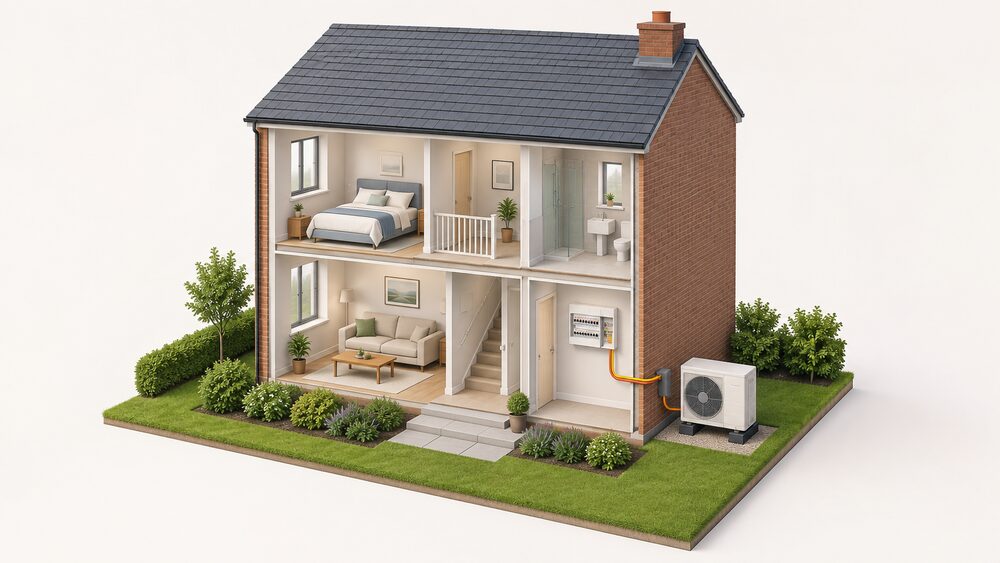
In this guide
A heat pump is an electric appliance, and the question every householder eventually asks is whether the existing supply can carry it. For most homes the answer is yes. Heat pumps over 12 kW typically require 18 amps from a dedicated electrical supply, while smaller units in hybrid arrangements often need only a 6 to 10 amp mains supply1. A typical single-phase domestic connection with a 60 amp or 100 amp main fuse has room for that.
The reason the load is modest is that a heat pump moves heat rather than making it. An air source heat pump will supply 2 to 3 units of heat for one unit of electricity, so the electrical input is a fraction of the heat delivered2. The compressor must be driven by electricity, and that compressor is the main load3. There is no resistive element running continuously, which is what makes a heat pump a far lighter electrical proposition than direct electric heating.
What follows is the practical detail: the amps and phases involved, when the distribution network operator must be told, how the connect and notify route works, what BS 7671 requires of the wiring, and what a power cut means for a home that heats with electricity. The dependence that remains is worth stating at the outset. A heat pump home is still connected to the grid, still buying electricity from a supplier, and still exposed to network constraints and outages. What changes is the fuel, not the reliance on a wire.
What electricity supply a heat pump needs: amps, phases and voltage
The electrical demand of a heat pump is set by its compressor, and the compressor is sized to the heat output of the unit. That is why the headline figure scales with capacity. Heat pumps over 12 kW typically require 18 amps from a dedicated electrical supply1. Below that threshold the draw falls away quickly, and smaller heat pumps require a lower electrical demand, often with only 6 to 10 amp mains supply necessary1.
The dedicated supply matters as much as the amperage. A heat pump should not share a final circuit with other heavy loads, and the supply needs to be rated for continuous rather than intermittent operation. Heat pumps must have a compressor which is driven by electricity, and that compressor runs for long periods in cold weather rather than cycling briefly like a boiler burner3.
Voltage is not a variable in the UK. Domestic supplies are single phase at nominal 230 volts, and the practical questions are the rating of the main fuse, the capacity of the consumer unit, and the size of the cable run to the outdoor unit. Those are installer calculations, made against BS 7671 and the manufacturer's instructions.
The efficiency of the appliance is what keeps the current down. An air source heat pump will supply 2 to 3 units of heat for one unit of electricity, so the electrical input stays well below the heat output at those ratios2. That is a load comparable to an electric shower running continuously, which is why a standard domestic supply usually copes.
Single phase or three phase: which supply fits which heat pump
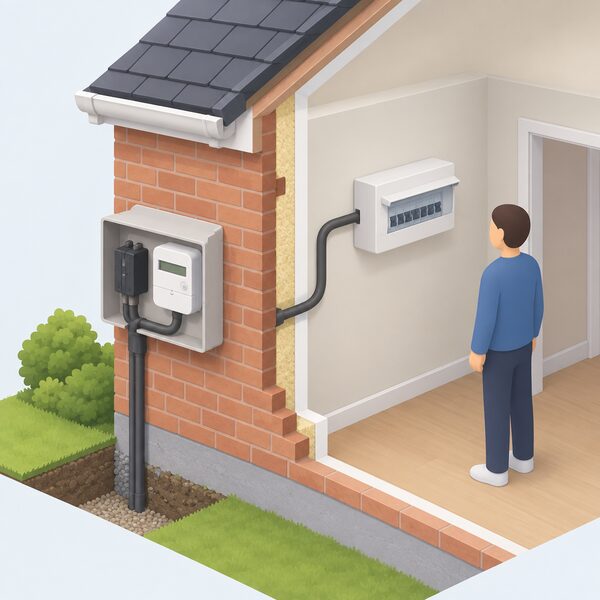
Almost every UK home has a single-phase supply. Three-phase is found in some larger properties, in converted buildings, and where a previous owner needed heavy power for a workshop or an electric heating system. The distinction matters for heat pumps only at the top of the domestic range.
A single-phase supply with a 60 amp or 100 amp main fuse will carry a domestic heat pump comfortably. The constraint appears when the heat pump is large, when it is paired with an immersion heater or a backup electric heater on the same control system, or when the home already has heavy electric loads such as an electric vehicle charger, an electric shower and an electric cooker. In those cases the combined maximum demand can approach the fuse rating.
Three-phase becomes relevant for larger output units and for cascade arrangements. Boiler Upgrade Scheme rules allow a heat pump up to 70kWth when installed as a cascade system, which is well beyond what a single-phase domestic connection would carry5. Air-to-air products above 12 kW and up to 1000 kW fall into a separate output band in the building services compliance guidance, covering air heating, cooling products, high temperature process chillers and fan coil units6.
For a normal house, the practical answer is that single phase is sufficient and three phase is not required. Where a property already has three phase, the installer can spread the load across phases, which reduces the current on any one. That is a design choice rather than a necessity.
Why most homes only need a standard single-phase supply
The reason a standard supply usually suffices is that heat pumps are efficient in a way resistive heaters are not. An air source heat pump will supply 2 to 3 units of heat for one unit of electricity, so the electrical input stays well below the heat output2. A home needing 8 kW of heat at design condition might draw only a fraction of that as electricity, which is within the headroom of a 60 amp fuse.
Hybrid arrangements push the electrical demand down further. Smaller heat pumps require a lower electrical demand, often with only 6 to 10 amp mains supply necessary, and hybrids using a smaller heat pump can still meet 80% of a household's annual energy demand without making changes to the existing hydronic heating system1. Using a smaller heat pump reduces peak power demand and investments in grid reinforcement compared to full electrification1. That is the trade-off a hybrid makes: less electrical load, but a boiler retained for the coldest periods.
The sizing rules reinforce the point. Heat pumps should be selected to meet the full space heating requirement at the design condition chosen for heat loss calculations, with no heat from additional electric heaters within the design external temperature range7. A correctly sized heat pump therefore does not need a large backup element, and the electrical supply does not have to be sized for one.
Where a property does need attention, it is usually because of what else is on the supply rather than the heat pump itself. The Scottish technical feasibility work notes a maximum fuse limit of 100A as the constraint, triggered if peak electrical power consumption exceeds it8. That is a whole-house figure, not a heat pump figure.
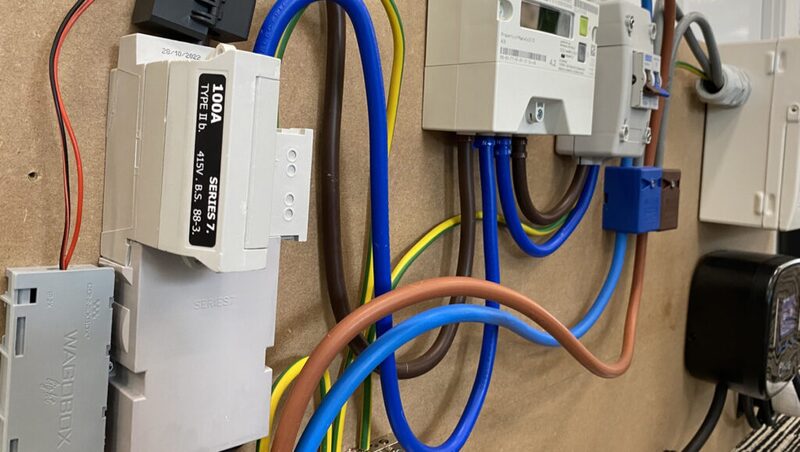
The dedicated supply and fuse sizing: 18 amps for units over 12 kW
The 18 amp figure applies to heat pumps over 12 kW, which typically require 18 amps from a dedicated electrical supply1. That is the top of the domestic range. Below 12 kW the requirement falls, and the 6 to 10 amp band covers smaller hybrid units1.
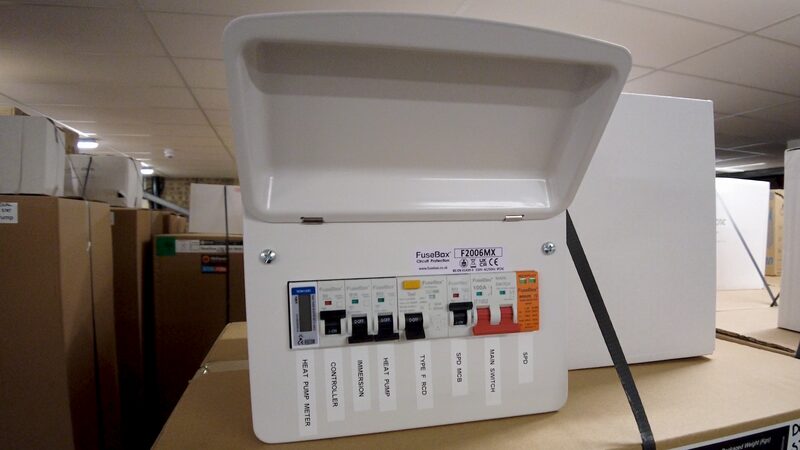
Fuse sizing is not simply the running current. A circuit breaker must accommodate start-up current, the compressor's locked rotor condition, and any supplementary electric heater controlled by the same system. The Boiler Upgrade Scheme metering rules recognise this by requiring meters to record the electricity used by the plant to generate heat, the electrical input into any supplementary electric heater controlled by the same control system as the heat pump, and the electrical input into any immersion heater for a domestic hot water cylinder where that immersion is controlled by the same control system9. Those are the loads that share the supply.
| Load | Typical electrical demand | Notes |
|---|---|---|
| Heat pump over 12 kW | 18 amps from a dedicated supply1 | Top of the domestic range |
| Smaller heat pump in a hybrid | 6 to 10 amp mains supply1 | Lower peak demand, boiler retained |
| Supplementary electric heater | Shares the heat pump control system9 | Counted in the metering arrangement |
| Immersion heater on the cylinder | Shares the heat pump control system9 | Counted in the metering arrangement |
The practical consequence is that the fuse and cable are sized for the worst case the control system can create, not the average winter afternoon. An installer who sizes for the compressor alone and ignores a 3 kW immersion heater on the same controls has sized the circuit wrongly.
How your network operator checks whether the local supply can cope
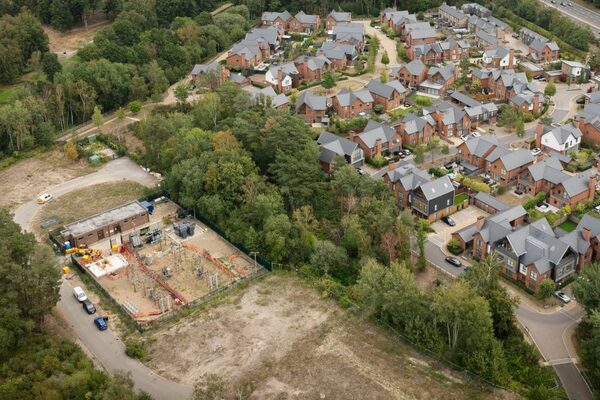
The distribution network operator, or DNO, owns the wires and the local substation. It is the body that decides whether the network can absorb the additional load, and it does so from the maximum demand figure the installer calculates for the property.
The assessment is not about your house alone. A cluster of heat pumps, electric vehicle chargers and solar inverters on the same substation can push a local transformer towards its limit even when each individual property is well within its own fuse rating. That is why the connection process exists at all, and why the notification thresholds are set where they are.
The wider policy picture acknowledges the same constraint. A lack of qualified heat pump installers is a further potential barrier to rollout, as are constraints imposed by planning rules and the need for electricity infrastructure upgrades11. Support is also available for installers and manufacturers to expand supply chains11. The network side is treated as a real constraint on how fast electrification of heat can proceed.
For a household, the check is straightforward in principle. The installer calculates the new maximum demand for the property, including the heat pump and any associated electric heating, and compares it with the thresholds. Below 60A the process is light. Between 60A and 100A it requires an application before installation. Above that, the conversation moves to a supply upgrade.
Heat network consumers sit outside this process. Operators and suppliers of most heat networks will need to meet the authorisation conditions relevant to them, and heat network suppliers and operators are responsible for keeping up to date with the latest version of their requirements12. Where a home is on a heat network rather than an individual heat pump, the electrical supply question belongs to the network operator, not the householder.
Applying for a supply upgrade or new connection: the process step by step
The connection process has two routes, and which one applies depends entirely on the new maximum demand figure.
- Calculate the new maximum demand. The installer works out the total load for the property once the heat pump and any associated electric heating are connected.
- Connect and notify, where the new maximum demand is 60A or less. This scenario applies to properties with new maximum demand of 60A or less meeting all other relevant requirements, and the DNO is notified via the heat pump connection form within 28 days of the installation3.
- Apply to connect, where the new maximum demand is between 60A and 100A inclusive. This applies to premises with new maximum demand between 60A and 100A inclusive, and the application is made prior to installation using the heat pump connection form3.
- Escalate to a supply upgrade where the calculated demand exceeds what the existing connection can carry, or where the DNO's assessment of the local network requires reinforcement.
- Install to BS 7671 once the connection position is settled, with the heat pump on its own circuit and the consumer unit rated accordingly.
The 28 day window in the connect and notify route is the detail installers most often miss. Notification is not optional and it is not open-ended. The form goes to the DNO after the work, within the stated period.
For grant-funded work, the installer handles the paperwork. Your installer will apply for the grant on your behalf through Ofgem, and a quote can be obtained via the MCS find a heat pump installer tool or by contacting an energy supplier14. It is advisable to contact an installer who can provide the necessary advice, preferably one who belongs to either the Microgeneration Certification Scheme or the relevant Competent Person Scheme15. The same installer is normally the person who submits the connection form.

What a supply upgrade costs and who pays for network reinforcement
The material available here does not give a published price for a domestic supply upgrade or for network reinforcement. Those costs are quoted by the distribution network operator for the specific property and the specific local network condition, and they vary with the distance to the nearest suitable connection point and the state of the local substation. Any figure quoted without a site assessment would be guesswork.
What the evidence does show is the direction of travel on cost. Using a smaller heat pump reduces peak power demand and investments in grid reinforcement compared to full electrification1. That is the argument for hybrid systems and for careful sizing: the less peak current a home draws, the less likely it is to trigger reinforcement work at all.
Where grant funding is involved, some schemes can contribute to associated costs. The project cost top up funding available alongside a grant from the Boiler Upgrade Scheme can support costs of the heat pump technology, supply and fitting or labour, as well as associated pipework and radiator costs17. That is a Welsh scheme, and it is described in terms of heat pump technology and installation rather than electrical reinforcement specifically.
The general principle on who pays is that the householder pays for work on their own side of the meter, and the network operator funds reinforcement of its own network where that is needed to accommodate new connections. The boundary between the two is where disputes arise, and it is settled by the DNO's own assessment.
Installation to BS 7671: wiring, fuse box and electrical safety
The wiring standard for a heat pump installation is BS 7671, the eighteenth edition of the Wiring Regulations. In Northern Ireland the electrical safety standards are defined as the standards for electrical installations in the eighteenth edition of the Wiring Regulations, published by the Institution of Engineering and Technology and the British Standards Institution as BS 7671: 201810. That is the benchmark against which the work is certified.
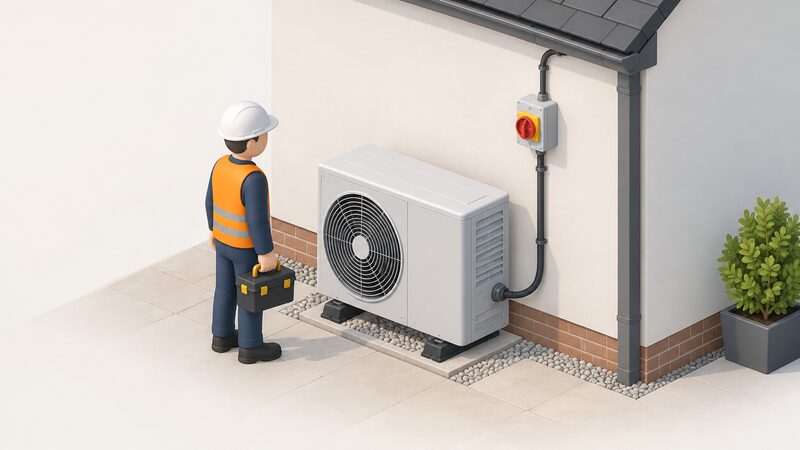
In practice the installation involves a dedicated circuit from the consumer unit to the outdoor unit, an isolator within sight of the unit, and a supply to the controls and any cylinder immersion. The consumer unit must have capacity for the new way, and where it does not, a consumer unit replacement is part of the job.
Building regulations approval runs alongside the electrical work. It is advisable to contact an installer who can provide the necessary advice, preferably one who belongs to either the Microgeneration Certification Scheme or the relevant Competent Person Scheme, and that membership is what allows the work to be certified without a separate building control application in most cases15. Ground source and water source heat pump installations on domestic premises are usually considered to be permitted development, not needing an application for planning permission, and generally heat pumps are permitted development for domestic premises18.
The documentation handed over at the end matters for later work. For heat pump heating systems installed in a new dwelling, the operating and maintenance information provided to the dwelling owner should include the heat loss calculation, the design flow temperature, competent person scheme confirmation, the size of the emitter circuit and the minimum set back temperatures6. Those are the figures a future electrician or installer needs.
What a power cut means for a heat pump home, and how to prepare
A heat pump home loses its heating and hot water the moment the power goes off. There is no stored heat in a cylinder to fall back on for space heating, and no gas burner to light. That is the dependence that remains after electrification, and it is worth being clear about it.
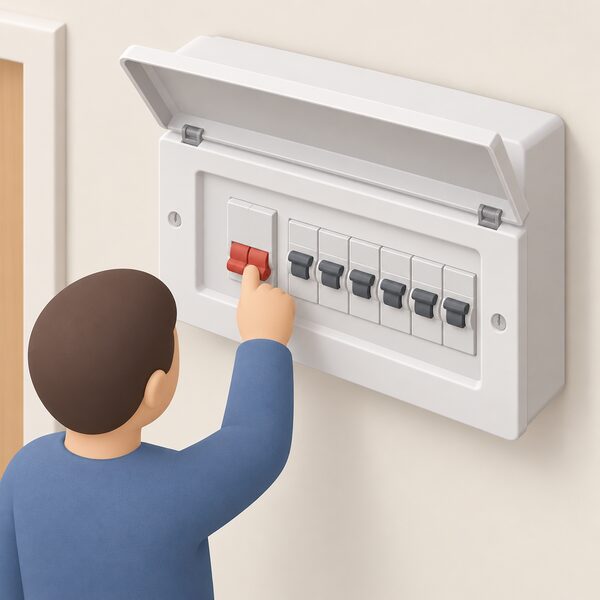
The immediate safety action is at the consumer unit. Electrical Safety First advises switching off the electricity supply at the fusebox, or consumer unit, if it is safe to do so20. That guidance is written for flood damage, where water and live electrics are the hazard, but the principle of isolating at the consumer unit applies whenever there is doubt about the state of the installation.
Reporting is a separate matter from supply. Power cuts and downed lines go to the distribution network operator, the company that owns the wires, not to the energy supplier that bills you. Heat network consumers have an emergencies contact listed among their minimum billing information, alongside the supplier and billing agent contact, the complaints contact and the Energy Ombudsman details12. Keeping those numbers somewhere other than a phone that may be flat is the practical preparation.
Heat network operators carry obligations that individual heat pump owners do not. They must offer appropriate alternative sources of heat to consumers in vulnerable situations during interruptions to supply, maintain a priority register and proactively check in with affected consumers12. A household with its own heat pump has no such backstop.
Living with an electric heating system: consumption factors and running implications
Running a heat pump means buying all of the home's heat as electricity. The running cost figure is £800 to £1,050 a year, which makes heat pumps one of the cheapest electric heating options4. That compares with direct electric heating, where every unit of heat costs a full unit of electricity rather than the 2 to 3 units of heat per unit of electricity a heat pump delivers2.
The consumption factors are the fabric of the building, the flow temperature the system runs at, and the tariff the electricity is bought on. A well insulated home with large emitters can run at a lower flow temperature and return a better seasonal performance. A poorly insulated home with undersized radiators runs hotter and consumes more. Make sure the heat pump is properly sized for your building's heating needs: an undersized unit may struggle to meet demand, while an oversized unit may cycle on and off often and lessen efficiency.
The tariff side is where a heat pump home can recover some independence. For homes with a hot water cylinder, there is the potential to use off-peak electricity for heating and storing hot water to balance the energy supply1. That is the mechanism behind time-of-use tariffs: the cylinder becomes a thermal store, and the heat pump runs when electricity is cheapest.
Metering supports this. A heat pump installation needs an electricity meter arrangement that measures the electricity consumed by the heat pump to generate heat, and the meter must record and display the electricity used by the plant to generate heat, the electrical input into any supplementary electric heater controlled by the same control system, and the electrical input into any immersion heater for a domestic hot water cylinder where that immersion is controlled by the same control system9. Without that measurement, the household cannot see what the heat pump is actually costing.
The independence picture is mixed and worth stating plainly. A heat pump home is not exposed to gas prices, gas network standing charges or the geopolitics of imported gas. It is exposed to electricity prices, to the grid, to a supplier, and to the network operator's assessment of whether the local wires can carry the load. The electrical supply question is the point at which that dependence becomes concrete.
Sources21 cited
- Heat pumps and hybrid heating guidance, HHIC
- Air source heat pumps fact sheet, Pendle Borough Council
- Building regulations renewables guidance, Bedford Borough Council, 2026-09-17
- Electric heating advice, Centre for Sustainable Energy, 2026-06
- Boiler Upgrade Scheme installer guidance, Ofgem, 2026-09-17
- Approved Document L, conservation of fuel and power, HM Government, 2026-09-17
- Technical feasibility of low carbon heating in domestic buildings, Scottish Government, 2020-12-22
- Domestic Renewable Heat Incentive: eligible heating systems, Ofgem, 2026-09-17
- Electrical safety standards regulations (Northern Ireland), legislation.gov.uk, 2024-11-27
- Heat pumps research briefing, Parliamentary Office of Science and Technology, 2026-09-19
- Heat networks regulation and consumer protection, Ofgem, 2026-01-13
- Heat networks policy guidance and resources, Ofgem, 2026-09-17
- Heat pump installation campaign guidance, HM Government, 2026-09-10
- Heat pumps and building regulations, Planning Portal, 2026-09-17
- Building regulations for heat pumps in Wales, Welsh Government, 2026-09-17
- Green Homes Wales, Development Bank of Wales, 2026-09-17
- Heat pumps planning permission, Planning Portal, 2026-09-17
- Renewable energy planning advice, Rother District Council, 2026-09-17
- Flood damage and electrical safety, Electrical Safety First, 2026-09-19
- Heat network metering and billing regulations, House of Commons Library, 2026-09-17
- Heat pumps in Northern Ireland, nidirect, 2025-02-24
 Check Supply Capacity FirstAdding a heat pump, car charger or home battery can push your electricity supply past what it can safely handle.
 Insulation a Heat Pump NeedsWill a heat pump still work if your home is not well insulated, and would you need to add loft, wall or floor insulation first?
 Electrical Safety for HeatingWill your fuse box cope with electric heating, and does it need its own circuit?
 The Full Heat Pumps GuideWill a heat pump keep my house warm in winter, and what does one cost to buy and run?
 Energy IndependenceA heat pump runs your heating on electricity instead of gas or oil, so how much does that really cut what you pay and how exposed you are when fuel prices jump?
 Which Homes Suit a Heat PumpMost UK homes can have a heat pump fitted, so the real question is whether yours makes it easy or expensive.