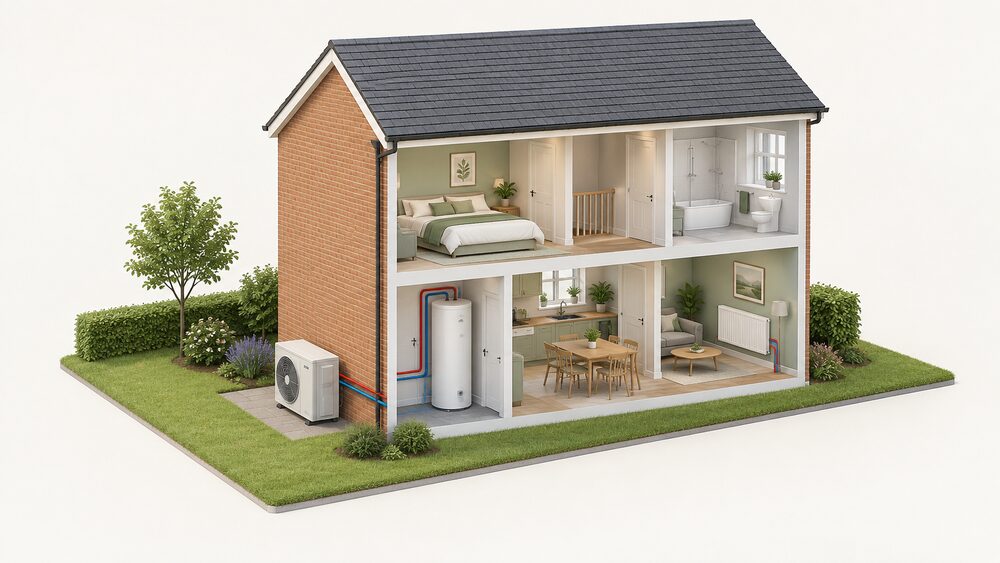
On this page
A heat pump is an efficient, low-carbon heating system that uses electricity to move heat rather than generate it1. Instead of burning gas, oil or LPG to create warmth, it takes heat that already exists in the outside air, the ground or a body of water, concentrates it, and delivers it into your home as warm water for radiators, underfloor heating and a hot water cylinder2. The reason this is worth understanding is the arithmetic: a heat pump typically delivers three to four units of heat for each unit of electricity needed to run it3, so most of the warmth in your home arrives free of any fuel charge.
That single idea explains almost everything else on this page: why heat pumps work in winter, why they want a hot water cylinder, why insulation matters, and why the government is paying households in England and Wales £7,500 to install one4. The technology is not new, either. The vapour compression cycle at its heart has been used commercially in refrigerators and air-conditioning units since the 1850s5.
Moving warmth, not generating it
Every heating system most British homes have ever known works by burning something. A gas boiler ignites fuel; an electric heater pushes current through a resistive element. In both cases the energy you pay for is the energy you get, minus losses. A heat pump breaks that rule, and this is the key to what it does for a household's energy independence.
A heat pump is best understood as a heat-moving device. It extracts energy from the air, ground, or water and converts it into heat10. The heat was already there, free and renewed daily by the sun warming the atmosphere and the ground; the electricity you buy is spent only on the work of collecting and lifting that heat to a temperature warm enough to heat a home. Because the electricity is doing transport work rather than creating heat, a small amount of it can shift a much larger amount of warmth indoors2.
This is also where the dependence and the independence sit. A heat pump removes a household's dependence on gas, oil or LPG deliveries, which is a genuine gain in security: no fuel deliveries, no boiler combustion, no exposure to oil price spikes. What remains is a dependence on electricity, and therefore on the grid and your supplier. That dependence is real, and it is why the running cost of a heat pump tracks the electricity price, and why pairing a heat pump with solar panels and a battery or a time-of-use tariff matters to many households. Many heat pumps use electricity to drive the compression cycle, meaning they can be plugged in and use renewable electricity11, so the electricity itself can come from your own roof.

The refrigeration cycle: how the heat is captured, concentrated and delivered
The machinery behind all of this is the refrigeration cycle, the same physical process that runs a fridge, run in reverse12. In the refrigeration cycle, heat from a low-temperature energy source, such as the air or water, is transported via a refrigerant fluid to a higher temperature energy sink, in this case your heating system13. The heat transfer medium is called refrigerant: a fluid with a very low boiling point, so that it evaporates at temperatures where water would stay liquid12.
The cycle has three working parts, and each has a job a householder can picture. First, the refrigerant absorbs heat from an external source such as air, ground, or water, causing it to evaporate into a gas12. This happens in a heat exchanger called the evaporator. Second, the compressor squeezes that gas, which raises its temperature dramatically, the same way a bicycle pump warms when you compress air. Third, the condensed heat is handed over: the heat pump, via an evaporator, a compressor and a condenser, transfers the heat to a hot water tank which feeds the heating distribution system14. The refrigerant then cools, returns to liquid, and the loop begins again.
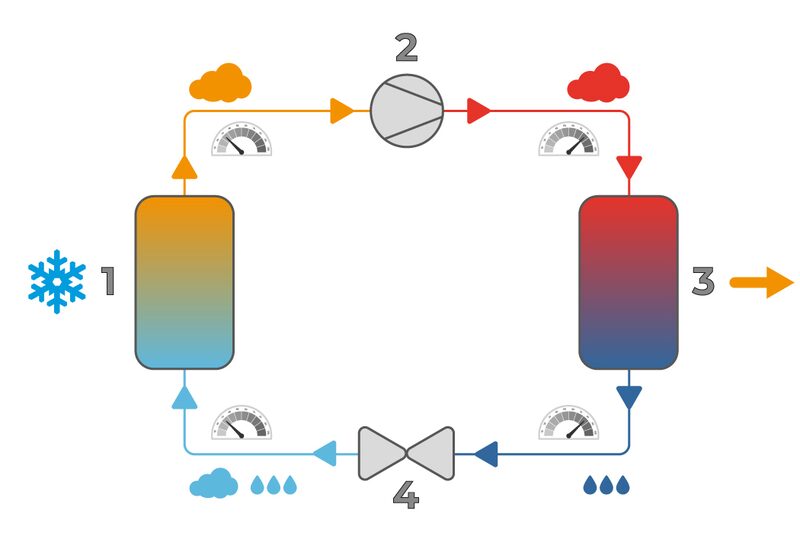
The compressor is the component that consumes almost all of the electricity, and it is where the efficiency is decided. Heat pumps capture heat from air, ground or water which is then passed through a heat exchanger, absorbed by refrigerant gas, compressed to raise temperature, then transferred to water for radiators, underfloor heating and the hot water cylinder15. Modern units vary the compressor's speed rather than simply switching on and off, which lets them match their output to the weather and hold a steady temperature instead of cycling hard. How the parts are arranged differs between monobloc and split heat pumps: in one, all the refrigerant circuit sits in the outdoor unit and only water pipes enter the house; in the other, the refrigerant travels to an indoor unit. The physics is identical.
It is worth saying plainly that this is mature technology. The vapour compression refrigeration cycle has been used commercially in refrigerators and air-conditioning units since the 1850s and has been repurposed for heating buildings5. A heat pump is not an experimental device; it is a fridge that warms instead of cools.
Air, ground or water: where the heat comes from
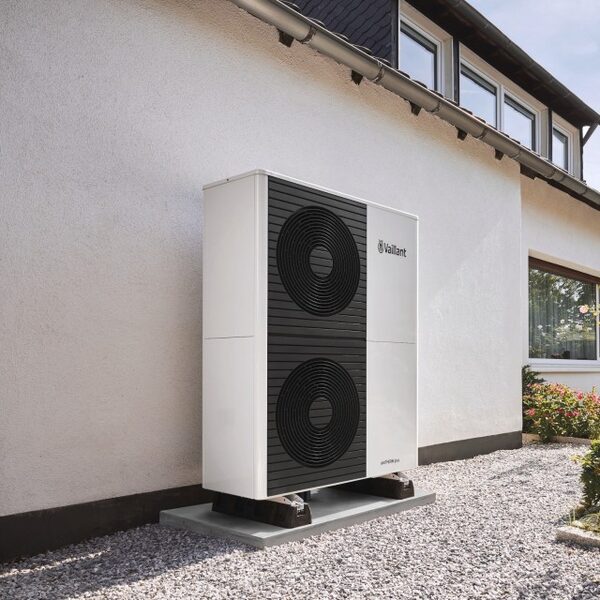
Heat pumps are named after where they collect their heat, and in the UK that means three families of system. Air source heat pumps draw heat from the outside air, while ground source heat pumps extract it from the ground1. Air source heat pumps use the energy in outside air or air from a ventilation system for heating, cooling and heating water11. Water source heat pumps use the energy stored in ground water, surface, or sea or sewage water11. Ground source heat pumps transfer energy from the natural heat stored in the earth to heat the home and domestic hot water16.
| Heat source | Where the heat comes from | Typical form |
|---|---|---|
| Air source | Energy in the outside air, or air from a ventilation system11 | Outdoor unit on or by the wall |
| Ground source | Natural heat stored in the earth16 | Ground loops or boreholes |
| Water source | Energy in ground water, surface water, or sea or sewage water11 | Loop in a pond, river or well |
The practical differences follow from the physics. Air is the easiest source to access: an air source unit needs nothing more than an outdoor box and a clear flow of air around it, which is why the great majority of UK installations are air source. The trade-off is that air temperature swings through the year, so the compressor works harder on the coldest days. The ground holds a steadier temperature, so ground source systems are quieter and offer increased energy efficiency17, but they need ground loops or boreholes, which means digging or drilling and a higher upfront cost. Water source systems share the ground's stability where a suitable body of water exists.
Official guidance also recognises heat pumps that capture heat from ambient air, ventilation exhaust air, or a water or ground heat source18, which is the principle behind exhaust air heat pumps used in very airtight flats. The deeper pages on air source, ground source and water source systems cover each in detail.
Efficiency: several units of heat per unit of electricity
The headline figure is consistent across official and independent sources. Heat pumps typically deliver three to four units of heat for each unit of electricity needed to run them3. Official guidance in Northern Ireland says they can usually deliver three units of heat for every unit of electricity used19, and the same three-to-four range appears in guidance from Wales20 and from industry bodies21. MCS, the certification body for installers, puts it at around 3 units of heat for every unit of electricity15.
What drives this ratio is the temperature lift. The smaller the gap between the heat source and the water feeding your radiators, the less work the compressor must do, and the more heat you get per unit of electricity. That is why flow temperature matters so much: a system designed to run radiators at a lower temperature, or to use underfloor heating, lifts heat less far and runs more efficiently. It is also why the ratio falls on the coldest days, when the outside air is further from the target temperature.
Against a gas boiler the comparison is stark. Heat pumps are typically over three times more efficient than the most efficient gas boilers or electric heaters6, and official statistics put current available heat pump technologies at up to 3 to 5 times more efficient than a natural gas boiler22. A heat pump is up to three times more efficient than a gas boiler23, and Smart Energy GB describes the same relationship: for every unit of electricity a heat pump uses, it produces three units of heat2. The formal measures of this ratio, COP, SCOP and SPF, are covered on their own page.
Cold weather is where the questions concentrate, and the evidence is firm. Heat pumps run on electricity and work efficiently even on cold days, down to temperatures as low as -20°C7. They can operate effectively at -15 degrees, although their efficiency drops in very cold weather3. Official guidance for Scotland states that an air source heat pump will function in the lowest temperatures Scotland experiences24. Research shows that heat pumps are more than twice as efficient as fossil fuel heating in cold temperatures, and they also outperform oil and gas at temperatures approaching -30°C25. Even in below-freezing temperatures, heat pumps are able to extract some of the remaining heat from outside2. The reason is fundamental: even very cold air still contains heat energy, and the refrigerant's low boiling point lets the system collect it. The full picture is on our page about heat pumps in cold weather.
The kinds of homes heat pumps work well in
No heating system suits every house, and a heat pump's efficiency depends more on the building than the box. Air source heat pumps work most efficiently in buildings that are well insulated and draught proofed and have either underfloor or warm air heating26. Heat pumps are more efficient in well-insulated homes, and draughts or poor roof insulation can cause substantial heat loss and wasted energy2. This is not a veto on older housing: heat pumps work well in nearly all types of climate13, and UK trials have included Victorian houses and terraced homes. What insulation changes is how much heat the system must replace, and therefore how much electricity it uses.
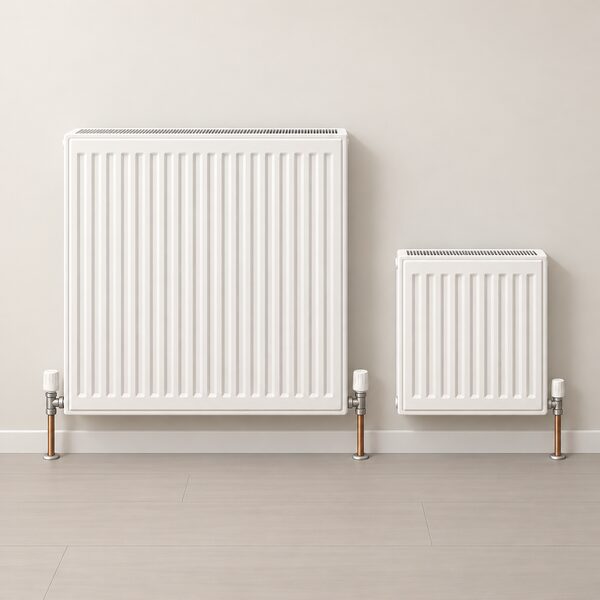
The second factor is the heat delivery system. Because a heat pump is happiest circulating water at a lower temperature than a boiler would, homes with underfloor heating or generously sized radiators get more from one. Where existing radiators are small, the question is whether they need upgrading, which is covered in do I need new radiators for a heat pump. A proper heat loss calculation before installation is what matches the system to the house.
The third factor is space. The outdoor unit needs a suitable position with clearances, covered in where a heat pump outdoor unit can go, and the hot water cylinder needs a home, which is a real consideration for households replacing a combi boiler. None of these are barriers so much as design inputs: the question for any house is not whether a heat pump can work but what size, flow temperature and emitter setup it needs. Our page on which homes suit a heat pump works through the housing types.
Heating, hot water and cooling from one system
A heat pump is a versatile system capable of providing heating, cooling and hot water for homes, commercial buildings and industrial applications10. Despite the name, all heat pumps can provide both heating and cooling13: the same cycle that moves heat indoors in winter can be run the other way to move heat out in summer. Many heat pumps function as heating and cooling systems, and can even provide summer air conditioning21. How much cooling a given system delivers, and which types do it best, is covered in using a heat pump for cooling.
Hot water works differently from a combi boiler, and this is the change most households notice first. Unlike combi-boilers, heat pumps do not provide hot water instantly, so you will need to use a hot water cylinder8. To provide hot water, heat pumps require a water storage cylinder, similar to older generations of gas boiler systems27. If you are replacing a combi boiler with a heat pump, you will probably need to install a hot-water tank or cylinder3. The cylinder is heated by the same cycle that heats the radiators, and the options, including dedicated hot water heat pumps and heat batteries, are covered on their own pages.
There is also a halfway house for homes that cannot or do not want to go fully electric. Hybrid heat pumps can work with another heating system in a building, such as a gas boiler19, running the heat pump for most of the year and the boiler for the coldest spells or for rapid hot water. A hybrid keeps a foot in both camps, which preserves some fuel dependence in exchange for a smaller upfront change; the trade-offs are set out in hybrid heat pumps.
Noise belongs here too, because the outdoor unit sits in the garden. The evidence is reassuring: heat pumps are now very quiet, with sound levels similar to a gas boiler or fridge, and complaints from neighbours are rare28. Heat pumps are located outside and are typically quieter than gas boilers25. Heat pump energy labels display the decibel level both inside and outside the home3, and in a survey of UK heat pump users, 85% were satisfied with noise levels29. The rules on siting and noise are covered in how noisy is a heat pump and the MCS 020 noise assessment.
Grants and finance: the Boiler Upgrade Scheme
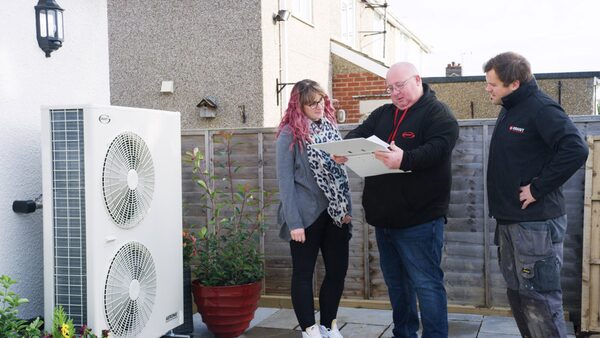
For most households the first question after "how does it work" is "what help is there to pay for it". In England and Wales the answer is the Boiler Upgrade Scheme, which provides upfront capital grants to support the installation of heat pumps and biomass boilers in homes and non-domestic buildings30. Homeowners in England and Wales can get a £7,500 heat pump grant through the Boiler Upgrade Scheme4, and the Welsh government's guidance carries the same figure: upgrade your heating with £7,500 off a heat pump9. The grant is applied for and paid through the installer, so the household never fronts the money and then claims it back.
The scheme's history explains some of the figures you will see quoted. When the scheme launched, grants of £5,000 were available for air source heat pumps and biomass boilers, and grants of £6,000 were available for ground source heat pumps31. The increase to £7,500 came later, and it changed the market: a government review found heat pump applications surged after the increase in the grant28.
The technologies covered matter when choosing a system. Air-to-air heat pumps are listed among the scheme's eligible technologies in the installer guidance32, though the interaction between air-to-air systems and the grant has conditions explained in why air-to-air heat pumps and the Boiler Upgrade Scheme. Eligibility also depends on the property: you may be eligible for a grant under the Boiler Upgrade Scheme if your home is energy efficient enough8, which ties the money back to the insulation points above.
The full cost picture, including what remains to pay after the grant, is in how much does a heat pump cost and heat pump cost with the BUS grant.
What replacing a boiler actually involves
The last practical question is what changes on the day. Heat pumps significantly reduce a property's energy demand when replacing technologies such as gas boilers15. In a survey of UK heat pump owners, the systems most commonly replaced were oil boilers (39% of installations) followed by gas boilers (29%)29, so the typical installation is a direct boiler swap in an ordinary home, not a bespoke new-build project.
The changes a household should expect are three. First, a hot water cylinder appears, unless the home already has one. Second, the outdoor unit is installed and, for air source systems, becomes a visible, audible part of the property, subject to planning permission rules that in most cases allow installation without a full application. Third, the heating runs differently: lower water temperatures, longer running hours and steadier warmth rather than short hot bursts, which is what the system's controls and weather compensation are designed to manage.
For a household's energy independence, the balance sheet reads like this. A heat pump ends dependence on gas, oil or LPG, and with solar and storage it can reduce dependence on the grid too. What remains is the electricity supply, the supplier's tariff, the installer's competence and the manufacturer's reliability, which is why getting several quotes and understanding servicing and warranty matter as much as the physics. The machine itself is simple, proven and, in most British homes, entirely capable of the job.
Sources32 sources
- Energy glossary, Low Carbon Hub, 2026-08-05
- How do heat pumps work, Smart Energy GB, 2026-03-16
- An introduction to heat pumps, Which?, 2025-09-22
- Help to save households money and deliver cleaner heat to homes, Department for Energy Security and Net Zero, 2024-11-21
- Research on electricity network constraints and the 2024 new build heat standard, Scottish Government, 2021-10-07
- Bristol Warm Homes Plan, Bristol City Council, 2025-04
- Your essential guide to heat pumps, Welsh Government, 2025-02-20
- Air and ground source heat pumps, Croydon Council, 2026-09-17
- Heat pumps, Welsh Government, 2026-09-17
- Heat pumps campaign, CIBSE, 2026-09-17
- Types of heat pumps, European Heat Pump Association, 2023-01-11
- How does a heat pump work, Heat Pumping Technologies, 2025-09-26
- About heat pumps: technology, European Heat Pump Association, 2022-11-10
- Heat pumps, Planning Portal, 2026-09-17
- Heat pumps explained: DESNZ talk to industry experts, MCS, 2024-04-03
- VAT energy saving materials and grant funded heating supplies, HMRC, 2026-09-17
- HFC phasedown reform de minimis assessment, Defra, 2025-09-02
- Approved Document L: Conservation of fuel and power, Volume 1 Dwellings, Ministry of Housing, Communities and Local Government, 2021
- Heat pumps, nidirect, 2025-02-24
- Heat pumps: expert guide for homeowners, Development Bank of Wales, 2024-11-07
- Heat pumps vs boilers, The Heating and Plumbing Industry Association, 2025-02-18
- Energy innovation needs assessment: heat and buildings, Department for Energy Security and Net Zero, 2025-06
- Air source heat pump, Warmer Homes, 2026-09-20
- Do air source heat pumps work in cold weather, Local Energy Scotland, 2026-09-20
- Heat pumps explained: experts answer your questions, Department for Energy Security and Net Zero, 2024-03-28
- Air source heat pumps, London Borough of Hammersmith and Fulham, 2026-09-17
- What impact can heat pumps have in domestic heating, Department for Energy Security and Net Zero, 2023-11-21
- Heat pump applications surge after increase in government grant, Department for Energy Security and Net Zero, 2023-11-30
- Heat pumps: a user survey, Nesta, 2023-05-23
- Boiler Upgrade Scheme quarterly report, issue 6, Ofgem, 2023-11-30
- Boiler Upgrade Scheme property owner guidance, Ofgem, 2023-09-25
- Boiler Upgrade Scheme guidance for installers, version 5, Ofgem, 2026-04-28