

In this guide
Grant UK is the brand most off-gas-grid households in Britain meet first when they replace a heating system. It has been designing and manufacturing oil-fired boilers for over 40 years, and the Vortex range covers floor standing, wall hung, boiler house and combi boiler models1. Alongside oil it sells air source heat pumps, hot water cylinders, solar thermal systems, radiators and underfloor heating, so a single supplier can cover a whole off-grid property2.
The company's own history runs back to 1978, and it states that Grant products have been efficiently heating homes since then1. It reports over 35 awards recognising product innovation and support, and has announced a three-year sponsorship deal as Official Partner and Club Sustainability Partner of Bath Rugby1.
For a household, the appeal is straightforward: Grant is the incumbent brand for homes with no mains gas, and its range now spans the fuel transition as well as the fuel. The dependence is equally clear. An oil boiler keeps a home on delivered fuel and a local tank, a heat pump moves it onto electricity and the grid, and the grant money that makes a heat pump affordable is administered through an installer rather than paid to the householder3.
The range at a glance: oil, heat pumps, hybrids and renewables
Grant's product set is built around the off-gas-grid home. The oil side is the Vortex family, sold as floor standing, wall hung, boiler house and combi models1. The heat pump side is the Aerona range, described by an independent product listing as an air to water heat pump built for the next generation6. Between the two sits the hybrid range, which pairs a renewable heat source with a fossil fuel boiler7.
The rest of the catalogue fills in the system around the heat source: hot water cylinders, solar thermal systems, radiators and underfloor heating systems2. That breadth matters for independence because it means one supply chain, one set of compatibility assumptions and one technical support line for a property that may never have had mains gas.
| Product group | What it covers | Fuel or input |
|---|---|---|
| Vortex oil boilers | Floor standing, wall hung, boiler house, combi1 | Kerosene, HVO-compatible on floor standing models1 |
| Aerona heat pumps | Air to water, Quiet Mark certified6 | Electricity |
| Hybrids | Renewable source plus existing fossil fuel boiler7 | Electricity plus gas, oil or LPG7 |
| Cylinders, solar thermal, emitters | Hot water cylinders, solar thermal, radiators, underfloor heating2 | System components |
The wider market context is worth holding in view. Under the Boiler Upgrade Scheme, air source heat pumps have taken the overwhelming share of grants paid: 65,826 grants, or 97.5%, against 1,325 (2.0%) for ground source, 352 (0.5%) for biomass and 33 (0.05%) for shared ground loop ground source, as reported to 26 November 20258. Earlier quarterly figures show the same pattern: 49,619 of 51,109 grants (97.1%) were for air source heat pumps to 30 May 20259, and 42,766 of the total (96.9%) to 28 February 202510. The scheme has also replaced a wide spread of existing systems, with gas at 51.5% and oil second at 18.6% of grants paid to 28 February 202510.

Vortex oil boilers: HVO-compatible and built for off-grid homes
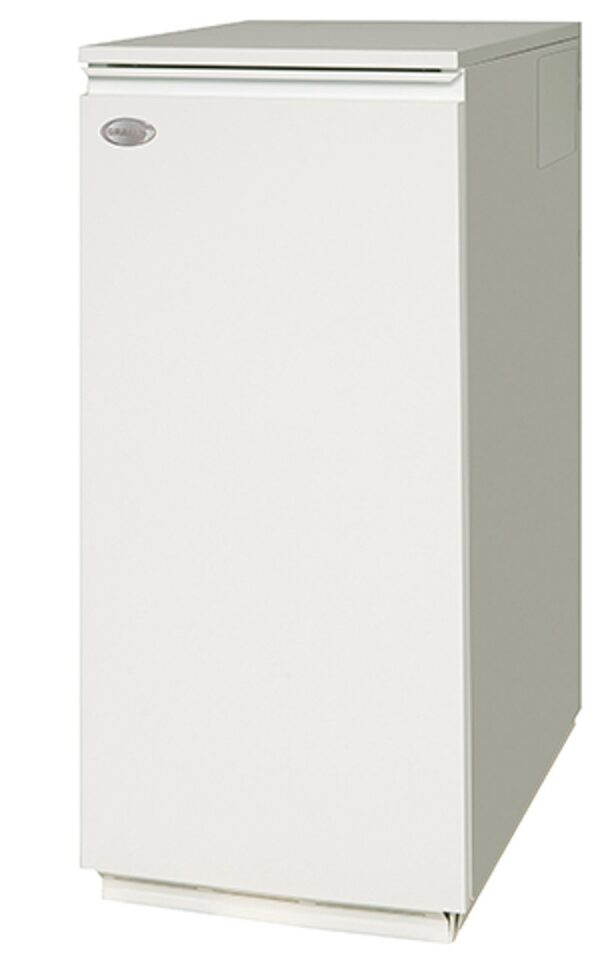
The Vortex is the product that built Grant's position. The range includes floor standing, wall hung, boiler house and combi boiler models, which between them cover the plant room, the kitchen cupboard, the outbuilding and the all-in-one installation1. Grant has been designing and manufacturing oil-fired boilers for over 40 years, and the company's own history begins in 19781.
The compatibility claim that matters most for the future is on fuel. Grant states that all of its Vortex floor standing oil boilers are HVO compatible, which means they can be converted to using Hydrotreated Vegetable Oil biofuel in a few simple steps1. That is a conversion, not a fuel the boiler burns as delivered, and it applies to the floor standing models specifically rather than the whole Vortex family. Grant has also supplied HVO compatible Vortex oil boilers to Colchester Institute for the provision of OFTEC training and assessment, and delivers heat pump training at the institute's Net Zero Training Centre1.
For a household, HVO compatibility is a hedge rather than a current fuel choice. It means the boiler installed today is not necessarily tied to kerosene for its whole life, provided the conversion is carried out and the fuel is available. The dependence that remains is on delivered fuel, a storage tank and a local distributor, none of which the boiler itself removes.
On price, Grant publishes no list price for its oil boilers, so quotations come from local installers after a survey. The grant figures that exist in official sources are for heat pumps and biomass rather than oil: £9,000 off the cost and installation of air-to-water or ground source heat pumps in eligible off-gas grid properties until 31 March 20274, and £5,000 for biomass boilers in limited circumstances5.
Aerona air source heat pumps
The Aerona is Grant's air to water heat pump range, and the Aerona 290 is described in an independent product listing as an air to water heat pump built for the next generation6. It carries Quiet Mark certification, the scheme that recognises low-noise products6. Grant's own guidance for new-build homes sets out why air source heat pumps suit that market, and the same document lists the services the company provides to developers2.
Those services are the practical answer to the design question. Grant UK provides CPD and heat pump product training through to heat loss calculations, SAP reports and underfloor heating system designs2. It also supplies a dedicated handover guide with all of its heat pumps2. For a householder, the route to those services runs through the installer carrying out the work rather than directly, but they are the reason a Grant heat pump installation is specified as a whole system rather than a box swap.
The funding position is the same for any brand. The Boiler Upgrade Scheme provides upfront capital grants to support the installation of heat pumps and biomass boilers in residential and non-residential properties11, and it provides grants for heat pump installations across England and Wales12. The application is installer-led, with the installer applying for the grant on the property owner's behalf13. The grant is applied upfront as a discount to the cost of the installation, and the householder does not receive the grant directly: it is paid to the installer3. Payments are issued into UK bank accounts which accept pound sterling5.
Hybrid systems for harder-to-heat homes

Grant hybrids combine the installation of a renewable heat source alongside a traditional fossil fuel boiler7. Grant describes them as a hybrid heating solution for hard to heat homes, and says a hybrid system provides installers with a solution to help their customers reduce their carbon footprint when installing an entirely renewable heating system is not possible7.
The EvoLink Smart Hybrid System Hub is the control element. It works with an existing fossil fuel heating system such as a gas boiler, oil boiler or LPG boiler7. That is the point of the product: it does not require the existing boiler to be removed, so a property with high heat loss, limited insulation or a radiator system sized for a higher flow temperature can add a heat pump without a full retrofit.
Public funding for hybrids is narrower than for standalone heat pumps. Retrofit and packaged hybrids, where the heat pump and gas boiler components are in separate units, are eligible for the Warm Homes Social Housing Fund, but only for homes currently heated by mains gas, and only the heat pump component can receive funding where a new gas boiler is fitted15. That is a social housing scheme rather than a general household grant, and it does not extend to oil-fired hybrids.
For a household on oil, the hybrid route is therefore a self-funded one. It reduces the volume of oil burned rather than removing the tank, and it keeps the property connected to both a fuel distributor and the electricity grid. The independence it offers is partial by design.
Cylinders, solar thermal and heat emitters
A heat pump installation is a system, not an appliance, and Grant's catalogue reflects that. The company supplies air source heat pumps, hot water cylinders, solar thermal systems, radiators and underfloor heating systems2. A whole-house example is documented: an Aerona 290 air source heat pump, hot water cylinder, solar thermal system and underfloor heating, all supplied by Grant UK, were installed at a new home in Cornwall2.
Solar thermal is the component most often misunderstood. Official guidance for Northern Ireland sets out what a domestic hot water system needs: a heat transfer system and a hot water cylinder16. Solar thermal therefore does not stand alone; it feeds a cylinder, and the cylinder is what makes the collected heat usable at the taps.
The combination matters for independence in a specific way. A cylinder paired with solar thermal and a heat pump lets a property generate and store its own hot water, reducing the volume of delivered fuel or grid electricity needed for that load. What it does not do is remove the cylinder's dependence on a heat source, or the heat pump's dependence on electricity. Grant's own developer support covers underfloor heating system designs alongside heat loss calculations and SAP reports, which is the design work that determines whether the emitters suit a lower flow temperature2.

Support for installers and householders
Grant's support model is built around the trade. The company provides CPD and heat pump product training through to heat loss calculations, SAP reports and underfloor heating system designs2, and it supplies a dedicated handover guide with all of its heat pumps2. It has also supplied HVO compatible Vortex oil boilers to Colchester Institute for OFTEC training and assessment, and delivers heat pump training at the institute's Net Zero Training Centre1.
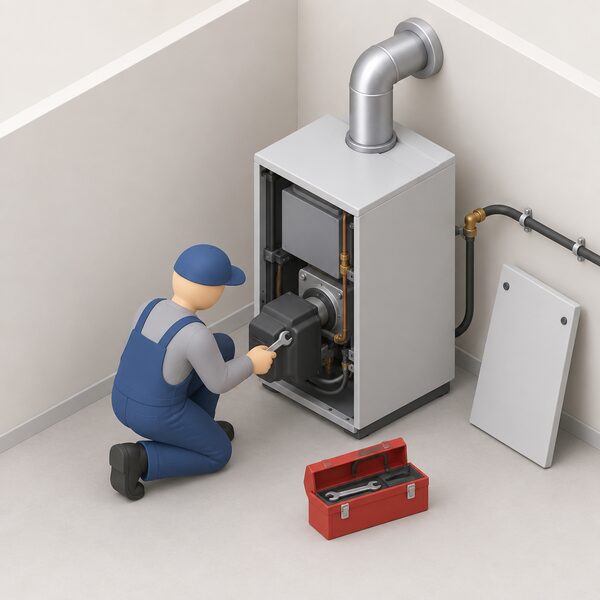
For householders, the practical support is the troubleshooting material. Grant's oil boiler guidance covers what to check if the burner flame is slow to stabilise, and the checks listed are:
- the condition of the fan
- cleaning the boiler heat exchanger
- the condition of the flue
- whether there is insufficient draught
- the nozzle size and type
- the air damper setting17
These are engineer-level checks rather than householder tasks, but they show what a service visit involves and where a fault is likely to sit.
The installer network is the other half. Grant's heat pump work is delivered through accredited installers, and the company has run programmes to bring fossil fuel boiler installers into heat pump work, including a scheme offering installers in England and Wales a fully funded Grant air source heat pump system in their own home with technical support2. It has also partnered to allow installers who are not themselves MCS accredited to provide customers with an MCS certified Grant heat pump installation2.
The company: trading since 1978, Project Zero and awards
Grant UK's own account of itself is long-running and award-heavy. Grant products have been efficiently heating homes since 19781, and the company states it has been designing and manufacturing oil-fired boilers for over 40 years1. It reports over 35 awards recognising product innovation and support1, and has announced a new three-year sponsorship deal as Official Partner and Club Sustainability Partner of Bath Rugby1. A timeline video marking a 30th anniversary is also referenced on the company's site1.
The company's environmental positioning sits under the Project Zero banner, and its public claims are about reducing carbon where a fully renewable system is not possible, which is the framing it uses for hybrids7. That is a maker's claim about its own products and should be read as such.
Two companies that appear in the same space are worth noting for status. SwitchZero and Energy Swap are both listed as Active in the Energy Ombudsman's dispute-raising pages18. Neither is a Grant entity, and the listing is a status note rather than an endorsement.
For a household weighing independence, the company position is stable and long-established, which matters for spare parts and servicing over a boiler's life. What it does not change is the fuel dependence: an oil boiler keeps a home on delivered fuel, and a heat pump moves it onto electricity and the grid.
Owning a Grant product: servicing, faults and contact
Servicing and fault-finding on a Grant oil boiler follow a defined path. Grant's troubleshooting guidance for a burner flame that is slow to stabilise lists the condition of the fan, cleaning the boiler heat exchanger, the condition of the flue, whether there is insufficient draught, the nozzle size and type, and the air damper setting17. These are the checks an engineer works through before replacing parts, and they are the reason an annual service is worth having done properly rather than quickly.
On the heat pump side, the handover guide supplied with every Grant heat pump is the document that records how the system was set up and how it should be run2. Keeping it, along with the commissioning record, is what makes later servicing and any warranty discussion straightforward.
For grant-funded work, the paperwork runs through the installer. The process in order:
- The installer applies for the grant on the property owner's behalf13.
- The installer applies to Ofgem, the scheme administrator, for a grant voucher20.
- The householder's consent is sought by email after the installer provides their details to Ofgem20.
- The installer receives the grant payment from Ofgem on behalf of BEIS21.
Where a dispute arises with an installer or a scheme, the Energy Ombudsman's dispute pages cover named companies including SwitchZero and Energy Swap, both listed as Active18. For a household, the practical sequence is: keep the handover guide and commissioning record, use the installer for anything covered by the grant, and treat any unsolicited request for bank details as fraudulent.
Sources21 cited
- Grant UK, Grant UK, 2026
- Why air source heat pumps are perfect for new build homes, Grant UK, 2025
- Boiler Upgrade Scheme guidance for property owners, Ofgem, 2026
- Boiler Upgrade Scheme, Ofgem, 2027
- Boiler Upgrade Scheme guidance for installers v5.1, Ofgem, 2026
- Grant Aerona 290 6.5kW air source heat pump, Quiet Mark, 2026
- Grant hybrids, Grant UK, 2026
- Boiler Upgrade Scheme Quarterly Report Issue 14, Ofgem, 2025
- Boiler Upgrade Scheme Quarterly Report Issue 12, Ofgem, 2025
- Boiler Upgrade Scheme quarterly report issue 11, Ofgem, 2025
- Boiler Upgrade Scheme guidance for installers, Ofgem, 2026
- £5 million to help Welsh households invest in greener homes, Welsh Government, 2026
- Boiler Upgrade Scheme, Find Government Grants, 2026
- Obtaining funding, Community Energy England, 2026
- Warm Homes Social Housing Fund wave 3 scheme guidance addendum, GOV.UK, 2026
- Solar thermal panels, nidirect, 2024
- What to check if the burner flame is slow to stabilise, Grant UK, 2026
- Raise a dispute: SwitchZero, Energy Ombudsman, 2026
- Raise a dispute: Energy Swap, Energy Ombudsman, 2026
- Boiler Upgrade Scheme leaflet, GOV.UK, 2022
- Summary of updates to Boiler Upgrade Scheme Guidance for Property Owners v2.4, Ofgem, 2023
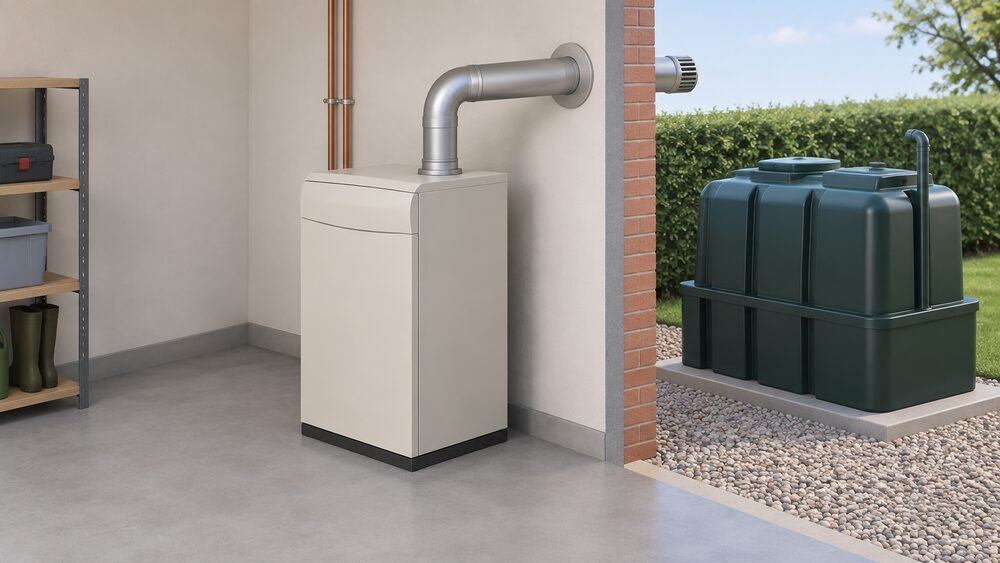 Grant oil boilersGrant oil boilers suit homes with no gas supply, so which Vortex model fits your house, and can it run on greener fuel later?
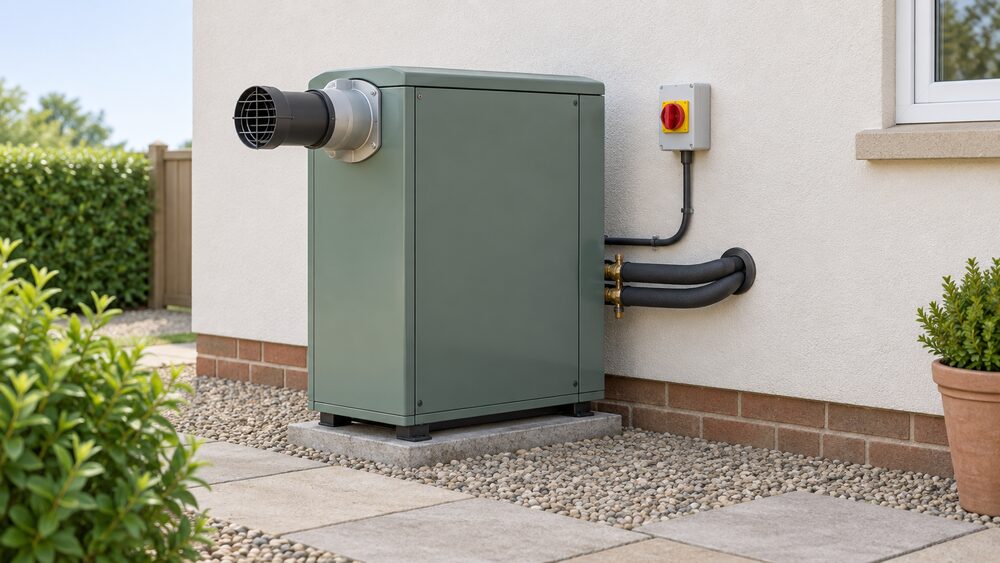 Grant Vortex oil boilerLiving off the gas grid with an oil boiler means you may be comparing a Grant Vortex with a heat pump.
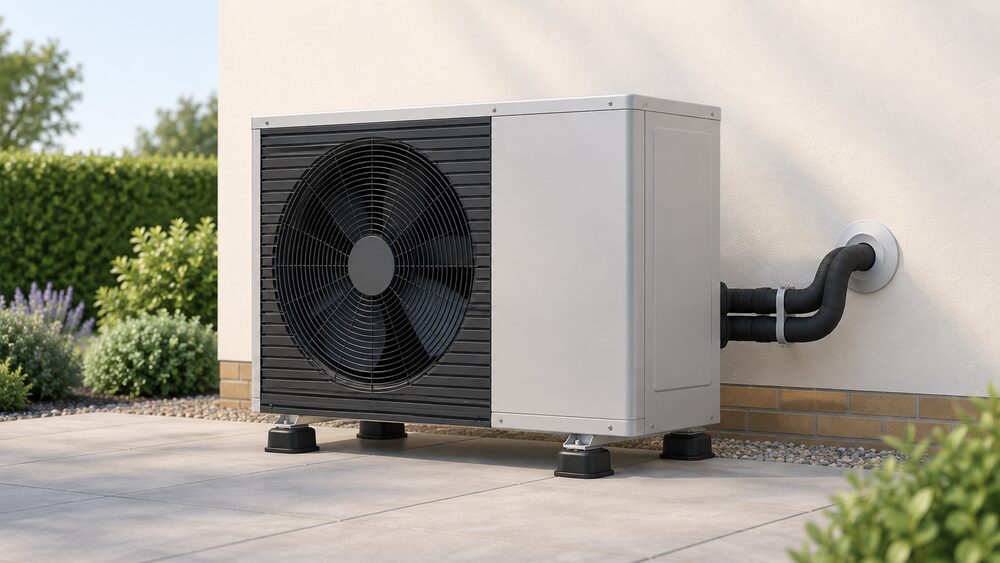 Grant Aerona 290 heat pumpThinking about a Grant Aerona 290?
 Grant heat pumpsGrant air source heat pumps run on electricity and heat your home through radiators or underfloor heating.
 Grant Heating ControlsGrant makes heating controls for its own air source heat pumps, not for boilers.
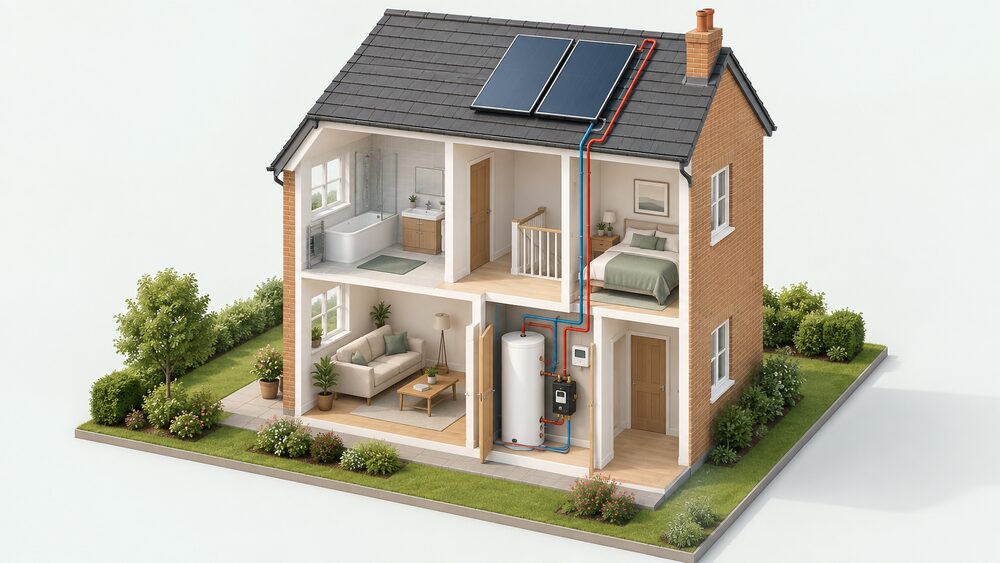 Grant solar thermalGrant solar thermal panels heat your hot water using sunlight, working alongside your boiler rather than replacing it.