
In this guide
An Environmental Product Declaration is a verified document, not a marketing page. It sets out the results of a Life Cycle Assessment carried out to a published standard, with a declared scope and an independent review, and it carries a registration number and an expiry date. For a solar panel, that declaration is the closest thing a householder gets to a checked environmental statement about the module itself.
The distinction matters because most green claims on a datasheet or a brochure are not declarations. A carbon neutral badge, a recycled content percentage or a "sustainable manufacturing" line may rest on real work, but unless the maker publishes the assessment behind it, the householder cannot see what was counted or who checked it. The government's Green Claims Code exists precisely because environmental claims must be substantiated and must not mislead1.
Three duties sit around the declaration. Ecodesign rules set what a product must demonstrate before it can be sold, the waste electrical and electronic equipment rules set who carries the take-back obligation when the product is retired, and consumer protection law governs what a maker may say about it. This page sets out what each covers, what a householder can check, and where the limits lie.
What an Environmental Product Declaration is: a certified LCA under ISO 14025
An Environmental Product Declaration is the published output of a Life Cycle Assessment. The assessment examines a product's impacts across defined stages, and the declaration reports the results in a standard format so that two products can be compared on the same basis. The standard behind it, ISO 14025, is what makes the document a declaration rather than a report: it fixes the categories reported, the rules for the product category, and the requirement for independent review.
The scope is the part a householder should read first. An assessment covering cradle to gate stops at the factory gate and excludes transport, installation, service life and disposal. One covering cradle to grave includes them. Two declarations can both be valid and still not be comparable if their scopes differ, which is why the declared scope sits near the front of the document.
For a solar panel, the assessment typically covers the module, its frame, the glass and the cells, and reports impacts per functional unit, often per kilowatt peak or per square metre over an assumed service life. The service life assumption is doing a lot of work in that calculation. A declaration built on a 25 year life will show lower impacts per unit of generation than one built on a shorter period, and the assumption is stated rather than hidden.
What the declaration does not do is tell a householder whether a particular module suits their roof, their budget or their inverter. It is an environmental document, not a performance or warranty document. For the performance side, the relevant pages are solar panel manufacturers and how energy products are tested.
"This guidance helps businesses understand and meet their existing obligations under consumer protection law when making environmental claims"
Who verifies and certifies an EPD: the independent critical reviewer
A declaration is only as good as the review behind it. The programme operator registers the document and administers the rules, and an independent critical reviewer examines the assessment against the product category rules before publication. The reviewer is separate from the company that commissioned the work, which is the point of the exercise.
The programme operator's role is administrative and procedural. It checks that the assessment follows the applicable product category rules, that the declared scope is stated, and that the document meets the format the programme requires. It does not test the product, and it does not warrant the manufacturer's other claims.
This is where a householder can do something useful. A declaration carries a registration number and the name of the programme that registered it. If a maker's marketing refers to a declaration but does not give the registration number, the document can be requested. If the number is given, the declaration can be checked against the programme's register, and the validity end date read directly.
The review process also sets a boundary on what the declaration covers. It covers the product as assessed, under the assumptions declared. It does not cover the factory's wider conduct, the company's labour practices or its supply chain beyond the declared scope. Those sit in environmental, social and governance reporting, which is a different kind of document with a different level of assurance.

How long an EPD stays valid: five years from publication

A declaration has a fixed life. The Solarwatt declaration in this field states that it is valid to 24 October 2029, which is the date a householder should check against when a claim is made2. Once that date passes, the document is out of date and the figures in it should not be relied on without a replacement.
The five year convention exists because manufacturing changes. A cell technology, a frame supplier or a factory's electricity mix can shift materially over that period, and an assessment is a snapshot of a defined production system at a defined time. A declaration that has lapsed is not necessarily wrong, but it is no longer a current statement about the product being sold.
This is a different kind of validity from the one householders meet elsewhere in home energy. Energy Performance Certificates have their own validity rules, and those rules are being tightened. In Scotland, the government has set out a reduction of the validity period of EPCs from 10 to five years to ensure consumers have more up-to-date information7. The same reduction appears in the 2025 update on energy performance of buildings regulations9. Current guidance elsewhere still describes an EPC as valid for ten years from the date of issue unless a new assessment is made and a new certificate is issued10, and Ofgem's guidance for Feed-in Tariff generators uses the same ten year test when checking whether an EPC is valid for a PV installation11.
The two figures are not in conflict so much as in transition: the ten year rule is the one still written into current guidance, and the five year rule is the direction of travel in Scotland. For a declaration, the position is simpler. Read the expiry date on the document.
| Document | Validity | Where it applies |
|---|---|---|
| Environmental Product Declaration | Stated on the document, to 24 October 2029 in the Solarwatt example2 | The product assessed |
| Energy Performance Certificate | Ten years from issue under current guidance10 | England, Wales, Northern Ireland |
| Energy Performance Certificate | Reduction from 10 to five years set out in Scotland7 | Scotland |
Ecodesign rules heading for energy products: the ESPR and what it will require
Ecodesign law is the mechanism that turns environmental ambition into a condition of sale. The Ecodesign for Sustainable Products Regulation will replace the Ecodesign Directive (2009/125/EC), and the government has consulted on how recognition of CE marking should work once that happens12.
The consultation set out a specific proposal: to amend the Ecodesign for Energy Related Products Regulations 2010 so that the existing CE recognition mechanism extends to products regulated under ESPR12. The stated purpose is to extend CE marking recognition to new measures made under ESPR in Great Britain4. The government has confirmed it will proceed with extending CE marking recognition to energy related products regulated under ESPR, broadly as consulted upon, and all responses to the main policy question agreed that recognition should be extended12.
The existing mechanism is not new. Indefinite recognition of CE marking already covers 21 product regulations, including the 2010 Ecodesign Regulations4. What changes is the set of products inside that boundary.
For a household, the practical effect is on what a manufacturer must demonstrate before a product can be placed on the market. Ecodesign requirements typically bite on energy performance, information duties and, increasingly, on durability, repairability and the availability of spare parts. Those requirements sit alongside the declaration regime rather than replacing it: a declaration is a voluntary verified statement, while an ecodesign requirement is a condition of supply.
The dependence to note here is regulatory rather than technical. A household buying a product today is buying into a rule set that is still being written, and the requirements that will apply to the replacement unit in ten or fifteen years are not yet fixed. The direction is toward more disclosure, not less.
Manufacturer environmental reporting: ESG reports and sustainability visions

Environmental, social and governance reporting is where manufacturers set out their own account of their environmental conduct. It is a company statement about itself, and the level of external assurance varies. Some makers publish a report with no independent check on the figures; others commission limited assurance on selected measures.
The reports are useful for context and weak as evidence. Sigenergy published its 2025 Environmental, Social and Governance Report, which is a dated disclosure a householder can read13. Mitsubishi Electric Corporation announced a revised Environmental Sustainability Vision 2050 and a new Environmental Plan 2030 running from April 2026 to March 2031, which sets out targets rather than results14. LONGi maintains an ESG section carrying articles on rooftop reliability and on energy access projects, published in July 202615.
The distinction between a target and a result is the one to hold on to. A vision statement with a 2050 horizon is a commitment about intent. A published report with a reporting period is a statement about what happened. Neither is a verified declaration about a specific product, and neither should be read as one.
There is a second layer worth knowing about. Product level documentation is governed by its own rules. The interim product specification for plug-in solar devices requires a model number, name or other designation for marking the product, and an IP degree of protection marked in accordance with BS EN 605295. Those are marking duties, not environmental claims, but they show the pattern: what must be on the product is specified, and what a company says about itself is not.
For the wider picture of who owns which brand and how these groups are structured, brand ownership and parent groups sets out the corporate map.
What makers claim about carbon savings: the EcoLife example, 4 tons a year on a 7.5 kWp system
Carbon saving claims are where the gap between a verified declaration and a headline number is widest. The independent benchmark for a domestic system is modest and well documented. An average 4 kW solar panel system produces around 3,500 kWh of renewable energy per year, and this saves around 0.5 to 0.6 tonnes of CO26.
That figure is the one to hold against any larger claim. A saving stated for a bigger array scales with generation, and generation scales with capacity and with the assumptions used for grid carbon intensity. A claim of several tonnes a year implies either a substantially larger system, a higher assumed grid carbon factor, or a boundary that counts something other than displaced grid electricity.
The honest way to read a maker's carbon claim is to ask three questions. What capacity is the claim based on? What grid carbon intensity assumption sits behind it? And is the calculation published anywhere a householder can read? A claim that answers all three is doing real work. A claim that answers none is a number.
The same caution applies to recycled content claims. A percentage of recycled material in a frame or a mounting component is a supply chain statement, and it is verifiable only against the documentation for that component. Renusol's declarations of performance for steel components without coating and for galvanised steel components were signed on behalf of the manufacturer in Cologne on 16 March 2026, which is the kind of component level document that sits behind a material claim16.
Tier 1 status and what it does and does not say about environmental performance
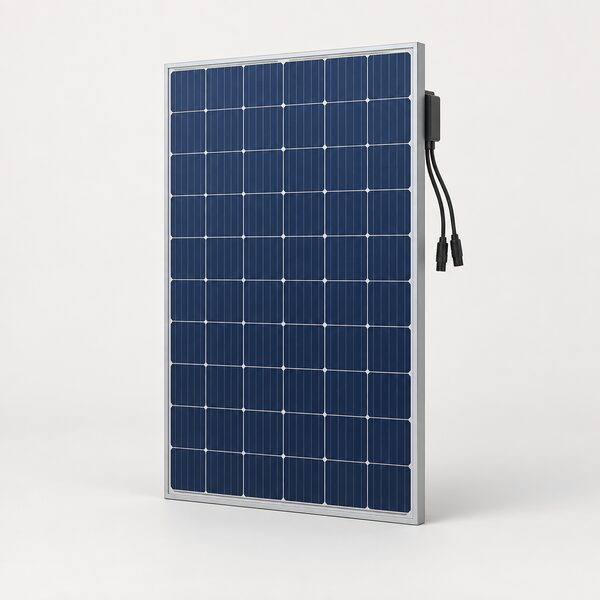
Tier 1 is a bankability classification, not an environmental rating. It is used in project finance to describe manufacturers whose products are considered acceptable to lenders, and it says nothing about embodied carbon, recycled content or end-of-life handling.
The classification is maintained by BloombergNEF, and manufacturers publicise their position on it. AlphaESS was reaffirmed as a BNEF Tier 1 global energy storage manufacturer for 2026, having been named in the Q1 2026 list3. Guides explaining the Tier 1 and Tier 2 distinction are published by installers and updated periodically, with one such guide updated on 31 March 202617.
What Tier 1 does tell a householder is something about the manufacturer's scale and its standing with financiers. A company that appears on the list has supplied enough projects of sufficient size to be counted. That is a signal about commercial durability, which has a bearing on whether a warranty will still mean something in year fifteen.
What it does not tell a householder is anything about the module's environmental performance. A Tier 1 manufacturer may hold a verified declaration for a product, or may not. The two facts are independent, and a page that presents Tier 1 status as an environmental credential is conflating a finance classification with an environmental one. For the bankability side in more detail, Tier 1 solar manufacturers and bankability ratings covers the classification on its own terms.
| Claim | What it is | What it tells a household |
|---|---|---|
| Environmental Product Declaration | Verified assessment to a published standard2 | Environmental impacts of the product, within a declared scope |
| Tier 1 status | Bankability classification used in project finance3 | Commercial scale and lender acceptance |
| Carbon saving figure | A calculation from system size and grid assumptions6 | Estimated displaced emissions, if the assumptions are stated |
| ESG report | Company disclosure about itself13 | Corporate targets and reported conduct |
Recycling duties and end-of-life: who is responsible for a retired panel
The waste electrical and electronic equipment rules are the operative duty at end of life. They place obligations on producers in relation to take-back and to the information supplied with the product, and the interim product specification for plug-in solar devices makes this explicit: the information supplied must be compliant with the Waste Electrical and Electronic Equipment Regulations5.
That requirement is about information, not about a collection service. A householder retiring a panel should not assume a free national take-back route exists for every product. The obligation sits with the producer, and how it is discharged varies between manufacturers and between installers.
The practical position is that the cost of removal and disposal falls to whoever holds the equipment when it is retired, unless the maker or the installer operates a scheme. This is why the documentation handed over at installation matters. A scheme specification for a solar panel installation requires the contractor to hand over record drawings, test and completion certificates, maintenance instructions, manufacturers' directory and colour product literature, a full description of works and commissioning certificates at practical completion18. Those documents are what allow a later owner to identify the product and approach the right party.
For a household, the independence question at end of life is straightforward. A panel that cannot be identified cannot be routed to a take-back scheme, and a manufacturer that has left the market cannot honour a collection commitment. Keeping the handover documentation is the practical step that preserves the option. The wider picture of what happens when a maker exits is covered in when an energy equipment manufacturer fails.
How to read a manufacturer's green claim: checks a householder can make

The Green Claims Code sets out the obligations that already apply. It helps businesses understand and meet their existing obligations under consumer protection law when making environmental claims, and it gives examples of how each of them applies1. The code is guidance on duties that predate it, not a new regime.
The checks below follow from that. None of them requires technical knowledge, and each one separates a substantiated claim from a slogan.
- Ask for the declaration, not the badge. A verified declaration has a registration number and a programme operator. If a claim rests on one, the document can be produced.
- Read the scope. Cradle to gate and cradle to grave are different claims. The declared scope determines what the figures cover.
- Check the expiry date. A declaration valid to 24 October 2029 is current today2. A lapsed one is not.
- Separate the product from the company. A declaration covers a product. An ESG report covers a company. A Tier 1 listing covers neither3.
- Look for the assumptions behind a carbon figure. The independent benchmark for a 4 kW system is around 3,500 kWh a year and around 0.5 to 0.6 tonnes of CO2 saved6. A larger claim needs stated assumptions.
- Check the end-of-life information. The product documentation should address decommissioning and disposal in line with the waste electrical and electronic equipment rules5.
Trading standards services enforce consumer protection law, and local authority guidance on environmental claims sits alongside the code19. Where a claim is made in an advertisement, the same rules apply as anywhere else: the energy performance indicator must be stated in any advertisement of the sale or rental in commercial media, which shows the pattern of mandatory disclosure in this area19.
The dependence that remains after all of this is worth stating plainly. A household can verify a declaration, read a scope and check an expiry date. It cannot verify a supply chain, audit a factory or compel a manufacturer to publish an assessment it has chosen not to commission. The declaration regime is voluntary, the ecodesign regime is still being extended, and the recycling duty is discharged by the producer in ways that vary. What a household controls is the documentation it keeps and the questions it asks before signing.
Sources19 cited
- Green claims code: making environmental claims, GOV.UK, 2021-09-20
- Environmental Product Declaration, Solarwatt
- AlphaESS reaffirmed as BNEF Tier 1 global energy storage manufacturer for 2026, AlphaESS, 2026-02-20
- Extended CE marking recognition for Ecodesign regulations: consultation document, GOV.UK, 2026-07-06
- Plug-in solar interim product specification, GOV.UK, 2026-06
- Are solar panels worth it?, Uswitch, 2026-09-16
- EPC reform: government response, Scottish Government, 2025-07-11
- EPC reform consultation: government response, Scottish Government, 2025-01-21
- Energy performance of buildings Scotland regulations 2025 update, Scottish Government, 2025-10
- FIT guidance for licensed electricity suppliers, Ofgem, 2024-09-06
- Guidance for FIT generators, Ofgem, 2026-04-01
- Extended CE marking recognition for Ecodesign regulations, GOV.UK, 2026-07-06
- Sigenergy 2025 ESG Report, Sigenergy, 2026-04-29
- Environmental Sustainability Vision 2050 revision, Mitsubishi Electric, 2026-06-17
- ESG: solar efficiency, LONGi, 2026-07-24
- Declaration of performance, Renusol, 2026-03-16
- Tier 1 vs Tier 2 solar panels, Heatable, 2026-03-31
- Solar panel installation tender specification, Sell2Wales, 2026-06-15
- Trading standards guidance on consumer problems, Isle of Anglesey County Council, 2025-09
 Panel RecyclingWhat actually happens to a solar panel when it stops working, and what can a household do with one?
 Where Energy Products Are MadeWhere are solar panels and heat pumps actually made, and does it matter where yours comes from?
 Certificates You Should ReceiveAfter work like solar panels or a new boiler, what paperwork should you actually be handed, and by when?
 Warranties and DegradationHow long do solar panels actually last, and what do the warranties really cover?
 Fuel Mix DisclosureWhere does your electricity really come from, and how much of it is green?
 Solar Export PaymentsIf you have solar panels, how do you actually get paid for the electricity you send back to the grid?