In this guide
Spare parts and technical support decide how long a home energy system actually lasts. A solar inverter, a battery, a heat pump controller or a hot water cylinder is a long-lived purchase, and the household's independence from the grid, from a supplier and from imported gas depends on being able to get a failed component replaced rather than replacing the whole system. The maker's parts scheme, its repair service and its technical help desk are what stand between a fault and a write-off.
The clearest published commitments come from Growatt, whose warranty terms state that it can generally dispatch a service replacement within 5 business days, and that post-warranty spare parts are supplied at a price not exceeding the previous order price on the contract1. RESOL runs a repair service that covers older devices and software updates, offers exchange devices during complex repairs, and provides an estimate of costs upon request2. Both are maker schemes, so they bind only those makers, and the wider picture is thinner: an official review of the heat pump transition found that owner-occupiers were particularly exposed once warranties expired3.
What follows sets out how parts schemes work, what to have ready before making contact, how repair charges are agreed, and where manufacturer support sits alongside installer warranties and certification. The lens throughout is household energy independence: what the maker guarantees, and what dependence on a single company, a single service centre or a single supply chain remains.
Why spare parts availability matters for energy independence
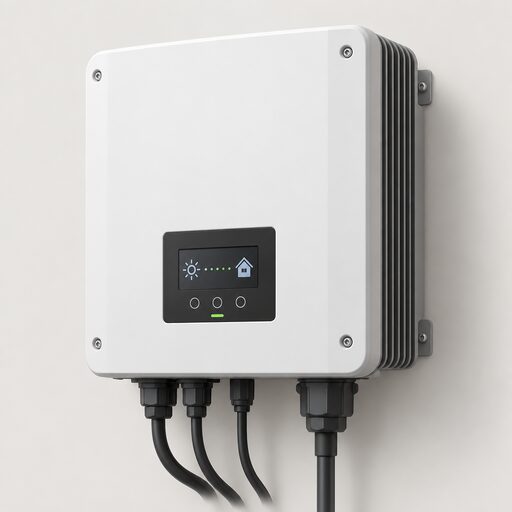
A home energy system is only as independent as its weakest replaceable part. A solar array with a failed inverter stops generating, a battery with a failed module stops shifting cheap or self-generated electricity into the evening, and a heat pump with a failed controller stops heating. In each case the household's exposure is not to the grid but to a manufacturer's willingness and ability to supply a component years after the sale.
Official advice in Northern Ireland is explicit that homeowners should seek independent advice on solar panels, heat pumps and other energy efficiency measures from organisations that are not selling them4. That advice is about choosing a system, but it applies just as sharply to keeping one running: the party that sold the system has an interest in the outcome, and the party that made it controls the parts. Where a maker holds stock, publishes dispatch times and commits to a notice period before discontinuing a product, the household keeps a route back to a working system. Where it does not, the household's only route is a third-party part of unknown provenance or a full replacement.
The tax system recognises the same principle from the other direction. Relevant supplies of energy-saving materials by a person who installs those materials in residential accommodation are treated under a reduced rate in the Value Added Tax Act 19945. The relief attaches to installation rather than to repair, which means a household weighing a repair against a replacement is comparing a standard-rated repair with a reduced-rated new installation, and the parts decision sits inside that comparison.
The practical test for a household is therefore not only what the warranty says but what the maker commits to after it ends. Growatt's terms address this directly, capping post-warranty spare parts at the previous contract order price and giving at least 6 months notice to the direct purchaser before a product is discontinued1. Those two commitments, a price ceiling and a discontinuation notice, are the kind of terms that determine whether a system can be kept alive into its second decade.
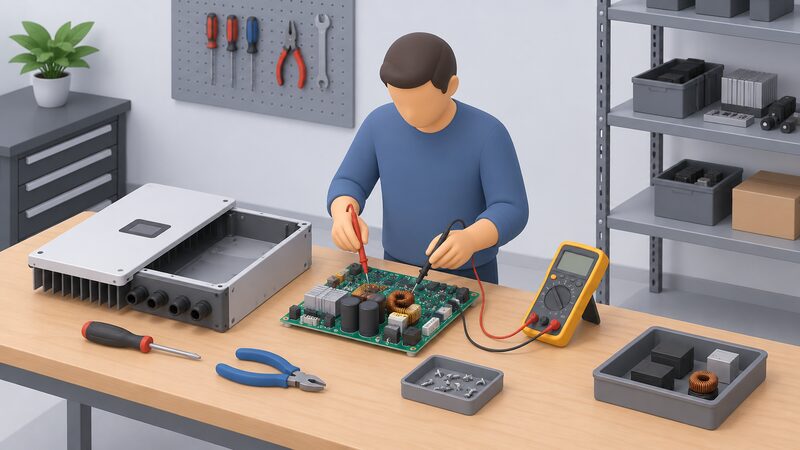
Growatt's spare parts scheme: dispatch times and post-warranty pricing
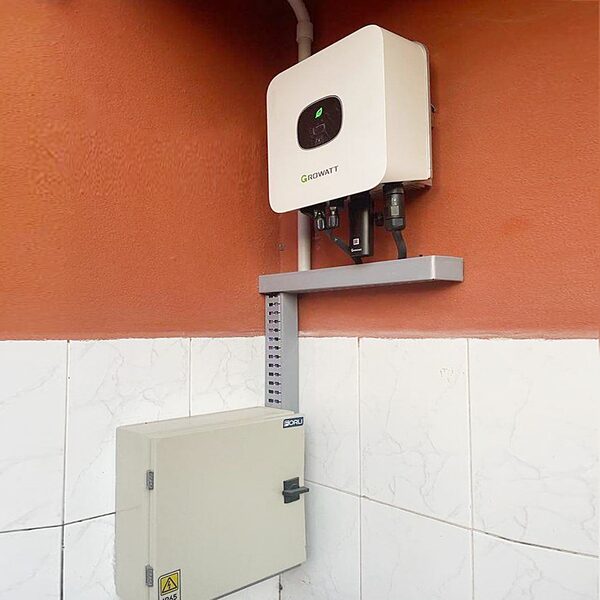
Growatt's warranty document is the most specific published parts commitment among the makers covered here. It states that Growatt can generally dispatch a service replacement out in 5 business days, and that it takes on the freight cost for products under warranty1. For a household whose inverter has failed, that combination matters more than the headline warranty length: the part is sent, and the household does not pay to have it shipped.
The scheme's coverage is broad. Growatt's product coverage under its warranty terms includes PV inverters, storage inverters, smart energy management devices, monitoring software, EV chargers, portable power stations, and Growatt batteries and accessories1. That is a single set of terms spanning generation, storage, charging and monitoring, which reduces the number of separate support routes a household has to find when something fails.
Two conditions shape what a household can expect. The standard warranty period runs from the date of installation on the installation certificate and no more than six months after the delivery date from Growatt1. That means the clock starts at installation, not at purchase, but it is capped by the delivery date, so a unit bought and stored for a long period before fitting does not carry an indefinite warranty. The second condition concerns the end of a product's life: Growatt states it would inform the direct purchaser formally with at least 6 months leading time before discontinuation1. A household that bought through an installer is not the direct purchaser, so that notice reaches the installer rather than the homeowner, and the household depends on the installer passing it on.
After the warranty expires, the terms state that spare parts are supplied with a price not exceeding the previous order price on the contract1. This is a ceiling tied to the original contract rather than to a current price list, which gives the household a reference point when a quote arrives. It is a maker's term, not a statutory right, and it applies to Growatt's own scheme.
RESOL Repair Service: what it covers and how to reach it
RESOL runs a repair service for its devices that goes beyond a straightforward warranty replacement. The service states that repair of older devices is possible and that software updates are possible2. For a household with a heating controller or a solar thermal controller that is several product generations old, that is a more useful commitment than a warranty period, because it addresses the years after the warranty has run out.
The service also states that it offers exchange devices during complex repairs2. A controller that has to travel to a service centre and back leaves a gap in the heating system, and an exchange unit fills it. The offer is attached to complex repairs rather than to every job, so the position is worth confirming when the repair is booked.
Costs are handled with a stated process. RESOL states that an estimate of costs is available upon request, and that where an error is detected during a software update, repair costs will be communicated in advance2. If a repair is not possible or not economic, RESOL states it will inform the customer2. Those three statements together give a household a decision point before money is committed: the fault is assessed, the cost is put in writing, and the household can decline.
The warranty period for RESOL repairs is 24 months from the day of purchase, and the cost estimate trigger is the expiry of that period or damage caused by overvoltage or other environmental conditions2. In other words, a repair inside 24 months of purchase is a warranty matter, while a repair outside it, or one caused by a surge or an environmental event, is a chargeable job that starts with an estimate.
Contact is direct rather than through an installer. The service is open Monday to Friday, 8:00 a.m. to 3:00 p.m., and can be reached by phone on +49 (0) 23 24/96 48-732, by fax on +49 (0) 23 24/96 48-769, and by email at service@resol.de2. These are German numbers and a German address, so a UK household is dealing with a European service centre, with the shipping and turnaround that implies.
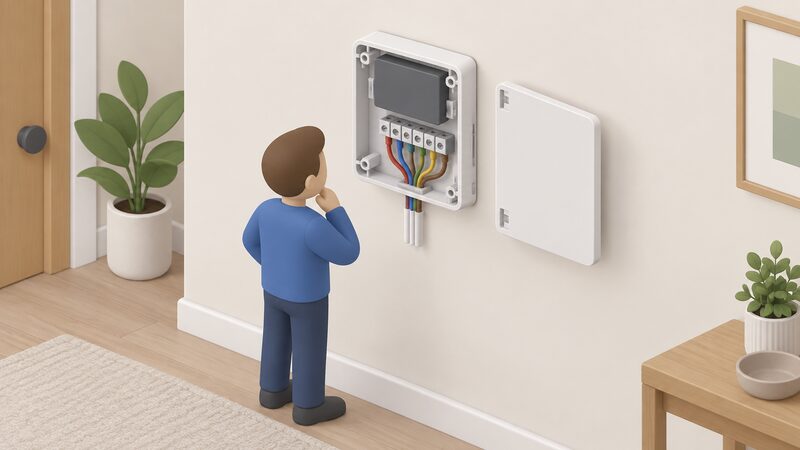
Repairs for older devices, software updates and exchange units
The three services RESOL lists, repair of older devices, software updates and exchange devices, address the part of a product's life that warranties do not reach. A warranty covers a defined period from purchase or installation. A repair service that accepts older devices extends the working life of equipment that is out of warranty, and a software update can restore function without any hardware change at all.
This matters for household independence because the alternative to repair is replacement, and replacement resets the household's exposure to whatever the current market offers. A controller that can be repaired and updated keeps the rest of the system, the cylinder, the pump, the sensors and the wiring, in service. A controller that cannot be repaired takes the surrounding system with it if the replacement is not compatible.
The same logic applies across the sector, and the evidence on warranties shows why it is not a theoretical concern. An official review of the heat pump transition found that owner-occupiers were particularly exposed once warranties expired3. That finding is about heat pumps rather than controllers, but the mechanism is general: the warranty is a fixed window, the equipment lasts longer than the window, and the household carries the risk in the gap.
Where a maker offers an exchange unit during a complex repair, the household avoids a second problem, which is the loss of service while the repair is in progress. RESOL states that exchange devices are offered during complex repairs2. The condition is that the repair is complex, so a straightforward job may not qualify, and the household should establish the position when the repair is arranged rather than after the unit has been sent away.
Software updates deserve separate mention because they are the cheapest form of support and the easiest to overlook. RESOL states that software updates are possible as part of its repair service2. A device that is functioning but behaving incorrectly may need a firmware change rather than a part, and a service that can carry out that change keeps a unit in service at a fraction of the cost of replacement.
Gledhill technical support and in-house design in Blackpool
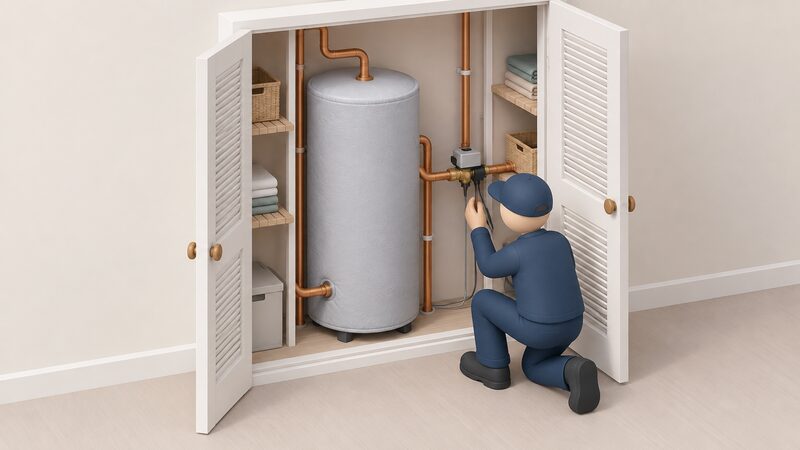
Gledhill designs and builds hot water cylinders and heating products in Blackpool, and its technical support sits behind those products rather than behind a distributed service network. The available material does not give a published technical support phone number for Gledhill, so a household should use the contact details supplied with the cylinder or its paperwork, or ask the installer who fitted it.
That gap is itself informative. For a hot water cylinder, the first point of contact is normally the installer, because the cylinder is part of a system that includes controls, a heat source and pipework, and a fault may lie in any of them. The maker's technical team is usually reached through the trade, and the household's route in is the installer or the merchant that supplied the unit. Where the installer is no longer trading, the maker's own support becomes the only route, which is why the contact details on the cylinder label and in the paperwork are worth keeping with the property's records.
The wider support landscape for households in this position is patchy and varies by nation. In Scotland, Home Energy Scotland operates as a free independent advice and referral scheme, and it can offer free advice on improving the energy efficiency of your home6. That is advice rather than repair, but it is a route to independent guidance when a household is deciding whether to repair or replace. In Northern Ireland, the NI Energy Advice service provides independent advice on solar panels, heat pumps and other energy efficiency measures4.
For a cylinder specifically, the practical position is that the maker's technical support is a trade-facing function. A household that needs it should have the model, the serial number, the installation date and the name of the installer to hand, because those are the details that let a technical team identify the unit and its production run. Where the cylinder is out of warranty, the same details determine whether a part is still held.
What to have ready before you contact a manufacturer
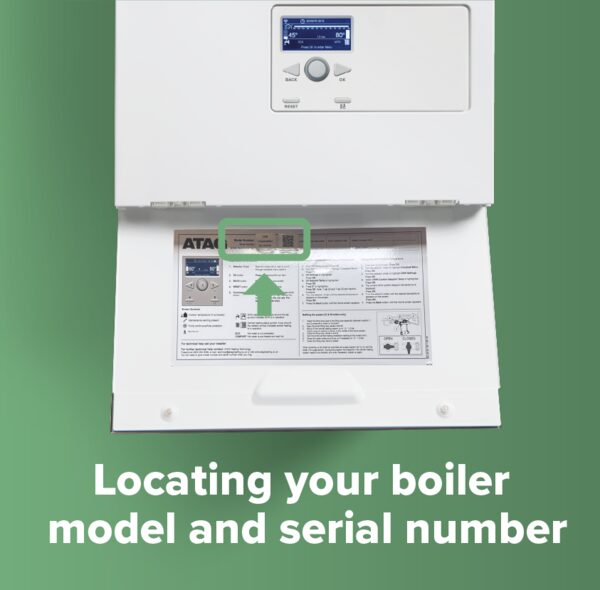
Manufacturer support moves faster when the household arrives with the right details. The pattern set by complaint routes across the energy sector is a useful guide, because the same information identifies an account, a product and a history.
For energy supply complaints, the Energy Ombudsman asks for the energy supplier's name, the name of the account holder, the account number and the date the complaint was first raised with the supplier8. For a manufacturer, the equivalent set is the product model, the serial number, the installation or purchase date, the installer's details and the date the fault first appeared. The installation certificate matters particularly for Growatt, because the standard warranty period runs from the date of installation on that certificate1.
The order of contact also matters. The Energy Ombudsman's guidance is consistent across its pages: before contacting it, a consumer should notify the supplier and work with them to try to resolve the issue9. The same principle applies to a manufacturer and its installer network. A household that has already raised the fault with the installer, in writing, with dates, has a record that supports any later escalation.
Where a household pays a landlord or a site owner for energy rather than a supplier, the first step is to contact that landlord or site owner11. Heat network customers are told to notify their heat supplier first, and the supplier has 8 weeks to resolve the complaint12. These are supply-side routes rather than product routes, but they show the general expectation: the party that sold the service gets the first opportunity to put it right.
For a product fault, the details worth assembling before making contact are:
- The make and exact model of the unit
- The serial number from the rating plate
- The installation date and the installation certificate
- The name and contact details of the installer
- The date the fault appeared and what the unit was doing at the time
- Any error code shown on the unit or in its app
- Whether the unit is inside or outside its warranty period
A household that has these to hand can be routed to the right scheme on the first contact, whether that is a warranty replacement, a chargeable repair or a software update.
Cost estimates and how repair charges are agreed
The clearest published repair pricing term in this area is Growatt's: post-warranty spare parts are supplied at a price not exceeding the previous order price on the contract1. That is a ceiling rather than a fixed price, and it is anchored to the original contract, so a household that keeps its paperwork has a reference figure to compare against a quote.
RESOL's process is built around an estimate. The service states that an estimate of costs is available upon request, and that where an error is detected during a software update, repair costs will be communicated in advance2. If a repair is not possible or not economic, RESOL states it will inform the customer2. The sequence is therefore assessment, estimate, decision, and only then work.
The trigger for a chargeable repair at RESOL is the expiry of the 24-month warranty period from the day of purchase, or damage caused by overvoltage or other environmental conditions2. A surge or a lightning strike is treated as a chargeable event even inside the warranty window, which is a common structure across the sector and one that household insurance may cover.
For households in financial difficulty, the support routes that exist for energy bills do not extend to equipment repairs, but they are worth knowing because a repair bill often arrives alongside a supply bill. Energy suppliers can agree a payment plan, payment break or reduction13, and supplier schemes and grants can fund energy costs, paying off energy debt, and making energy-saving improvements to your home14. The Green Deal offered loans for improvements such as adding insulation or solar panels15, and ECO Flex schemes are available to help fund necessary home energy improvements16. None of these pays for a spare part, but a household facing both a repair and a debt should deal with the supply side through the supplier and the ombudsman routes rather than letting the repair decision be driven by the bill.
How manufacturer support fits with MCS certification and installer warranties
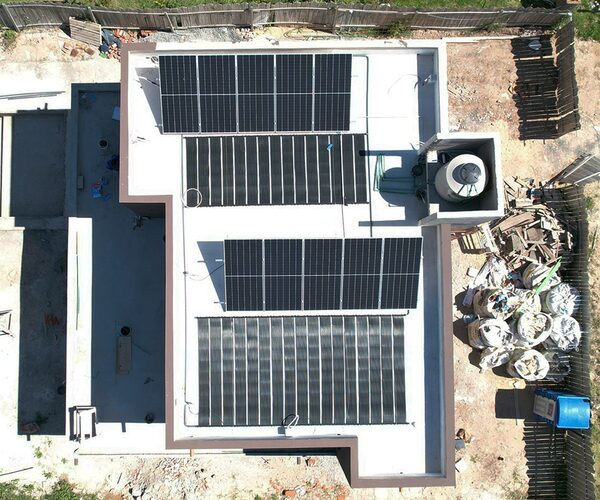
Manufacturer support and installer warranties are two different things, and households often treat them as one. The Microgeneration Certification Scheme certifies, quality assures and provides consumer protection for microgeneration installations and installers, covering small-scale renewable electricity technologies such as solar photovoltaic panels, biomass, wind, heat pumps and heat products17. That certification attaches to the installation and the installer, not to the parts supply chain behind the product.
The practical consequence is that a household with an MCS-certified installation has a route to consumer protection for the quality of the work, while the product itself is covered by the maker's warranty and parts scheme. When a fault appears, the first question is whether it is a workmanship fault or a product fault, because the two lead to different parties. A leak at a fitting is an installer matter; a failed inverter is a maker matter; a fault that could be either is best raised with both, in writing, on the same day.
The installer's own warranty is a separate commitment again, and its length and terms are set by the installer rather than the maker. Where an installer has ceased trading, the maker's support becomes the household's only route, which is why the maker's parts scheme and repair service carry more weight than they appear to at the point of sale. A maker that holds stock, publishes dispatch times and accepts older devices for repair keeps a system alive when the installer cannot.
Certification also has a product dimension. MCS reported that an appointment and further investment in its Product Scheme team would strengthen relationships with Product Certification Bodies, manufacturers, distributors and merchants17. That is about the certification of products rather than their repair, but it reflects the same chain: the household's protection runs through the installer, the certification body and the manufacturer, and a break at any point leaves the household carrying the risk.
For a household weighing a system, the useful question is not only whether the installer is certified but whether the maker commits to parts and repairs beyond the warranty. The two together determine how long the system can be kept working, and therefore how long the household's independence from the grid and from a single supplier lasts.
Sources17 cited
- Growatt warranty terms, Growatt, 2026-09-17
- RESOL repair service, RESOL, 2026-09-17
- Clean heat and heat pump transition report, Department for Energy Security and Net Zero, 2026-05
- Support to generate your own electricity, nidirect, 2025-09-22
- Value Added Tax Act 1994, Schedule 7A Part 2 Chapter 2, legislation.gov.uk, 2026-09-17
- Heat in buildings progress report 2025, Scottish Government, 2025-10-02
- Heat in buildings progress report 2024, Scottish Government, 2024-10-10
- Creating a case with the Energy Ombudsman, Energy Ombudsman, 2026-09-20
- How we can help: energy suppliers, Energy Ombudsman, 2026-09-20
- How we can help: network operators, Energy Ombudsman, 2026-09-20
- Alternative homes energy guidance, Ofgem, 2026
- Heat networks consumer protection guidance decision, Ofgem, 2026-01-13
- Getting help if you can't afford your energy bills, Ofgem, 2026-09-17
- Get help with your energy bills, Ofgem, 2026-09-17
- Green Deal energy saving measures, GOV.UK, 2026-09-17
- ECO Flex and GBIS Flex information document, Ceredigion County Council, 2026-09-20
- MCS consumer protection for microgeneration, MCS, 2026-09-20
 When an Installation Goes WrongYour solar panels have stopped generating.
 Buying Direct or Via InstallerCan you buy a heat pump yourself and still get the grant, or does it have to go through an installer?
 Buying Energy Equipment OnlineWho fits your solar panels, battery or heat pump when you buy them online, and who puts things right if they go wrong?
 Manufacturer WarrantiesHow long does a boiler, heat pump or solar panel warranty actually last, and what do you have to do to keep it valid?
 Workmanship WarrantiesIf something goes wrong with your solar panels, who actually fixes it and who pays?
 Warranties and DegradationHow long do solar panels actually last, and what do the warranties really cover?