In this guide
A solar panel warranty is not one promise but two, running on different clocks. The performance warranty is the long one: most solar panels come with a 25-year performance guarantee1, and Energy Saving Trust describes the usual package as a 25-year performance warranty alongside a five to 10-year product warranty2. The product warranty is the shorter one, covering defects in workmanship and materials rather than output, and it ranges from around 12 to 25 years across the market3.
The equipment around the panels is covered for less time. Most inverters have warranties of five years as a minimum, which can often be extended by up to 15 years4, and battery systems often come with a 10-year warranty5. That gap matters because inverters have a shorter lifespan than the panels, so a replacement during the 25-year life of the system is expected6.
For a household, the warranty is the main protection against a purchase that is meant to sit on a roof for decades. It is also the clearest limit on energy independence: the panels may be warranted for 25 years, but the box that converts their output, and the company that stands behind it, are the parts most likely to change first.
What a solar panel warranty covers: product and performance
The two warranties answer different questions. A product warranty covers defects related to workmanship and materials, so it pays for the repair or replacement of a panel that fails through no fault of the owner. A performance warranty guarantees a minimum output over time, expressed as a percentage of the panel's initial capacity after a set number of years.
SunPower's Performance range illustrates how a maker can merge the two. The company states that Performance panels have a comprehensive 30-year warranty covering everything from power, product and service, and that the cover extends to defects related to workmanship and materials for up to 30 years, with broader coverage for panel repair and replacement than other warranties7. That is a maker's own description of its own product, and it sits at the top of the market rather than the middle.
The independent picture is more modest. Energy Saving Trust puts the usual arrangement at a 25-year performance warranty and a five to 10-year product warranty2. Which? reports that most panels come with a product warranty ranging from around 12 to 25 years3, and elsewhere that panels often have warranties for 20 to 25 years8. The spread reflects brand, range and the confidence a manufacturer is prepared to put in writing.
The distinction has practical consequences. A cracked panel is a product claim; a panel that still works but produces less than the guaranteed percentage is a performance claim, and proving it usually requires measurement rather than a visual inspection. Both warranties sit alongside the installer's own workmanship cover, which is a separate promise about the fitting rather than the goods.

Product warranty: 10 to 25 years depending on brand and range

Product cover is where the market varies most, and where the brand on the label does the most work. Energy Saving Trust's five to 10-year figure describes the ordinary end of the market2. Which? puts most panels at around 12 to 25 years3, and a separate Which? review says panels often have warranties for 20 to 25 years8. The two Which? figures are not identical, and the difference is best read as the gap between the mass-market ranges and the premium ones.
At the top, well-known manufacturers offer warranties of 25 to 30 years, which the same guidance reads as a sign of confidence in longevity9. SunPower's Performance 7 panels carry a 30-year warranty, subject to terms and conditions and not available in all countries, and the same page notes that the 30-year term is not available for earlier generation Performance panels, where a 25-year warranty applies7.
Registration can decide which term applies. SunPower states that the 30-year warranty requires registration, otherwise a 25-year warranty applies7. That single condition is worth more than most of the marketing around warranty length, because it turns an administrative step into a decade of cover.
| Cover | Typical length | What it pays for |
|---|---|---|
| Product warranty | Five to 10 years typical; around 12 to 25 years across the market2 | Defects in workmanship and materials |
| Performance warranty | 25 years typical1 | A minimum percentage of initial output |
| Premium product cover | 25 to 30 years from well-known makers9 | As above, at the maker's discretion |
| Inverter | Five years minimum, extendable4 | The unit that converts DC to AC |
| Battery | 10 years typical5 | The storage unit |
Solar thermal sits on a different scale again: most systems come with a five or 10-year warranty10, and MCS-certified installations come with both workmanship and product warranties, typically several years of workmanship and longer warranties for the collectors11. A household weighing solar thermal against solar PV is comparing two different warranty cultures, not just two technologies.
Performance warranty: 25 years is the norm, 30 years at the top end
The performance warranty is the one that speaks to degradation, and 25 years is the standard term. Most solar panels come with a 25-year performance guarantee1, and Energy Saving Trust gives the same 25-year figure for the performance element of the usual package2. Which? records a typical warranty of 25 years for rooftop panels12.
The top end stretches to 30 years. SunPower's Performance panels carry a 30-year warranty covering power, product and service7, and the InstaGen plug-in kit pairs a 12-year product guarantee on its panels with a 30-year power warranty, alongside a 12-year inverter warranty12. That combination, a short product term and a long power term, is the pattern to look for on any datasheet.
The performance guarantee is not a promise that output stays flat. It is a floor: a minimum performance level, such as 88% of initial capacity after 30 years3. Most photovoltaic panels come with a guarantee that they will still be giving something like 90% of their maximum output after 25 years14. The two figures describe the same idea at different horizons, and both are floors rather than expectations.
For a household, the performance warranty is the part that protects the investment case rather than the hardware. A system sized on a modelled output assumes a certain production over 25 years; the guarantee is what stops a shortfall in that production from being the owner's problem alone. It is also the warranty most likely to be tested by measurement rather than by a visible fault, which is why some manufacturers require independent testing to prove a panel is not performing15.
Degradation: what the performance guarantee actually promises
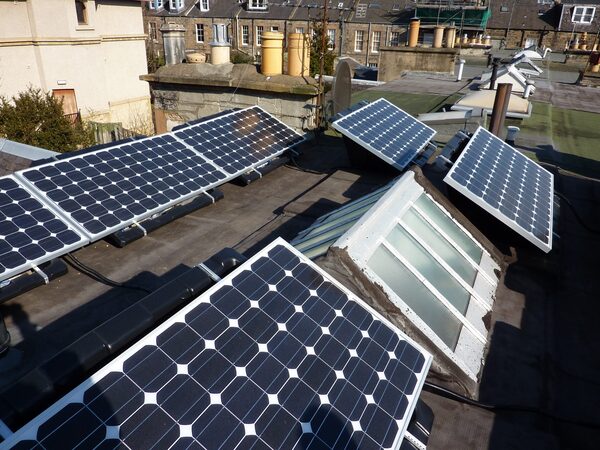
Degradation is the slow loss of output that every panel experiences, and the performance warranty is written around it. The guarantee sets a floor: a minimum performance level such as 88% of initial capacity after 30 years3. The older and more common formulation is a guarantee that panels will still be giving something like 90% of their maximum output after 25 years14.
Read together, those two figures describe a gentle decline. A panel warranted to 90% at 25 years, or 88% at 30 years, is losing output at a rate measured in fractions of a percent a year rather than whole percent. The exact annual rate is not stated in the guarantee itself; what the guarantee states is the endpoint, and the endpoint is what a claim would be measured against.
The practical consequence is that degradation is rarely the reason a system underperforms. Which? notes that some manufacturers require independent testing to prove a panel is not performing15, which tells you how unusual a genuine performance shortfall is compared with the more common causes: shading, soiling, a failing inverter or a fault in the wiring. A household seeing a drop in output is more likely to be looking at one of those than at degradation.
Degradation also interacts with the rest of the system. The panels may be warranted to hold most of their output for 25 years, but the inverter is expected to be replaced within that period6, and a battery carries a 10-year warranty5. The system's output over its life is therefore limited by its shortest-lived component, not by the panels.
Tier 1 manufacturers: what the label means and what it costs
"Tier 1" is a label a household will meet constantly when comparing quotes, and it is worth being precise about what it does and does not mean. The clearest published definition in the material available is a set of criteria that includes having been active for at least five years, with a track record of producing quality panels9. That is a test of corporate endurance as much as of product quality.
The label is not a warranty term. A tier 1 listing does not extend a product warranty, guarantee a performance figure or oblige a manufacturer to honour a claim. What it does bear on is the risk that a warranty becomes unenforceable because the company behind it has gone. A maker that has been active for at least five years has demonstrated a degree of staying power, which is the quality a 25-year performance guarantee actually depends on.
The cost side is harder to pin down. The material available does not give a published price premium for tier 1 panels, and prices in this market are installer-quoted rather than listed. What can be said is that the warranty term itself varies by brand and range, from the five to 10-year product cover described as usual2 to the 25 to 30-year terms offered by well-known manufacturers9, and that a longer term is one of the things a higher price may be buying.
For a household, the sensible reading is that tier 1 status is a proxy for the durability of the company, not of the panel. The warranty document, the registration condition and the identity of the entity that will honour the claim matter more than the label. A household comparing brands can look at the types of solar panel sold in the UK and the MCS certification route, both of which bear on what is enforceable.
Inverter and battery warranties: shorter, and often extendable
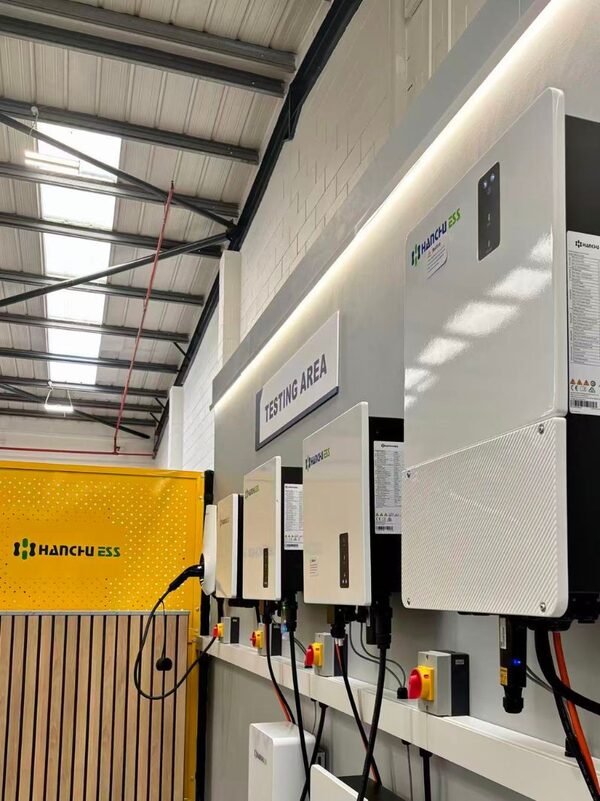
The inverter is the component most likely to need replacing, and its warranty reflects that. Most inverters have warranties of five years as a minimum, which can often be extended by up to 15 years4. Which? puts it more bluntly: panels can have warranties of up to 20 or 25 years, but inverters are not expected to last as long16.
The replacement expectation is explicit. Inverters have a shorter lifespan than solar PV panels, so a replacement during the 25-year life of the system is expected6. A household budgeting over 25 years is therefore budgeting for at least one inverter, and the warranty term determines how much of that cost falls inside the covered period.
Extensions are the main lever. Solplanet states that its warranty can be extended for up to 10 years, and that it offers end-users a standard warranty of up to five years without affecting the legal warranty provided by any wholesaler or retailer17. The same maker's terms include a logistics network that will deliver a replacement inverter directly if necessary17. The two Solplanet figures for standard cover, up to five years and up to 10 years, are not reconciled in the documents, and the extension term is the one stated as an extension.
Batteries sit between the two. Battery systems often come with a 10-year warranty5, which is longer than a basic inverter term but well short of a panel's performance cover. A household adding storage is adding a component with its own clock, and the battery storage decision is partly a warranty decision.
| Component | Typical warranty | Expected replacement within 25 years |
|---|---|---|
| Panel, product | Five to 10 years typical2 | Not expected |
| Panel, performance | 25 years typical1 | Not expected |
| Inverter | Five years minimum, extendable by up to 15 years4 | Expected6 |
| Battery | 10 years5 | Depends on cycle life and use |
What can invalidate a warranty: installation and tampering
Warranties are conditional, and the conditions are mostly about how the system was fitted and what has been done to it since. The clearest example is a physical one: fixings should not be screwed into the frame, as this will compromise the panel's warranty16. A mounting method that puts holes in the frame is a warranty risk, not just a workmanship question.
Installation standards carry the rest. Solar panels should be installed by MCS-certified professionals, which ensures compliance with UK standards and eligibility for schemes such as the Smart Export Guarantee; an installer who is not MCS-certified cannot offer access to those financial benefits18. Official guidance recommends an MCS certified installer for the fitting, with a full list on the MCS website19, and a council guidance document makes the same recommendation20. Energy Saving Trust advises checking that installers are MCS-certified4.
Some schemes go further. The Barcud Solar Panel Installation Scheme Specification requires the company providing the installation to carry a valid Trustmark and be MCS certified, and states that solar PV systems should only be installed and certified by MCS certified contractors working to the latest published MIS3002 standards21. The same document notes that MCS certified installers generally do not need to submit a Building Regulations Application, but should check with local Building Control21.
Maintenance conditions can also bite. Some installers require a full service within a specific period to keep the warranty valid22, and a full professional service inspects for small cracks or inverter issues22. Many parts of a solar panel system will be covered by a warranty from the installer, so warranty documents are worth keeping safe22.
What a warranty costs and how claims work
There is no published price for a solar panel warranty in the material available; the term is bundled into the price of the panel, and system prices are installer-quoted. What can be described is what a claim involves and what it may not cover.
The starting point is the installation warranty. Faults caused by poor workmanship should be covered, free of charge, by the warranty if the system is still within warranty for installation16. That cover sits with the installer rather than the panel maker, which is why the paperwork from the fitting matters as much as the datasheet.
Panel replacement claims come with caveats. The cost of labour for replacing the panel and any scaffolding may not be covered; the replacement panel may look different; and some manufacturers require independent testing to prove the panel is not performing16. A household should expect the warranty to cover the goods and not necessarily the access, which on a roof is often the larger cost.
Registration is the step that most often decides whether a claim is straightforward. SunPower states that its 30-year warranty requires registration, otherwise a 25-year warranty applies7. Plug-in solar guidance says to register the system with the manufacturer to activate any warranty and to be contacted about a problem or safety recall23. Separately, the system must be registered with the Distribution Network Operator, usually done by the installer24, and plug-in devices must be registered before use in the UK26.
For the inverter, the claim route is direct. Solplanet runs an online claim form and a customer support department, and can deliver a replacement inverter directly17. Scheme rules give a deadline that is worth knowing: inverter product registrations to activate guarantees and warranties are to be completed within 48 hours of commissioning21. That points to commissioning, not delivery, as the moment the clock starts.
How long panels actually last beyond the warranty
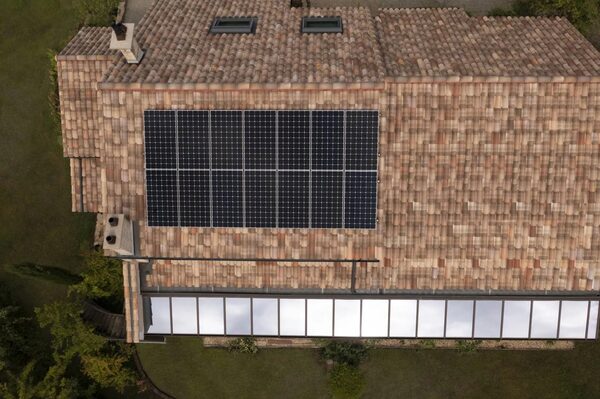
The warranty term is not the lifespan. Your solar panels should last 25 years or more4, and panels are made to last for 25+ years and need very little maintenance27. A separate source puts installations at over 20 years for the panels themselves28. The warranty is the period during which the maker carries the risk; the working life is longer.
The performance guarantee gives a sense of how much output remains at the end of the covered period. Most photovoltaic panels come with a guarantee that they will still be giving something like 90% of their maximum output after 25 years14, and a performance guarantee may offer a minimum performance level such as 88% of initial capacity after 30 years3. A panel that has reached the end of its warranty is not a spent asset.
What limits the system is the equipment around the panels. The inverter is expected to be replaced during the 25-year life of the system6, and a battery carries a 10-year warranty5. A household planning for the long term is planning for the panels to outlast at least one inverter, and possibly more than one.
The independence picture follows the same shape. A warranted panel is a generation asset the household controls, but the inverter, the battery and the connection to the grid are the parts that need replacing, monitoring and, in the case of export, registration with the network operator24. The warranty protects the part of the system least likely to fail first.
Sources28 cited
- Solar panels, Uswitch, 2026-09-16
- Buying a house with solar panels, Energy Saving Trust, 2026-08-13
- Could solar panels save you £500 a year?, Which?, 2026-06-17
- Solar panels, Energy Saving Trust, 2026-08-27
- Solar panel battery storage, Which?, 2026-05-14
- Solar panel add-ons you don't need, Which?, 2018-09-07
- SunPower Performance solar panel, SunPower, 2026-09-17
- Make the most of your solar panels, Which?, 2026-08-12
- Make the most of your solar panels, Uswitch, 2026-07-13
- Solar water heating with solar thermal panels, Which?, 2026-05-15
- Solar water heating, Energy Saving Trust, 2026-05-20
- Plug-in solar panels, Which?, 2026-09-15
- Plug-in solar panels vs rooftop systems, Which?, 2026-04-27
- Solar photovoltaic, CAT, 2026-03-10
- Solar panel problems and how to solve them, Which?, 2026-03-26
- Most common solar panel problems, Which?, 2026-09-20
- Solplanet warranty, Solplanet, 2024-05-22
- Can solar panels charge electric cars?, The CPA, 2026-04-15
- Building regulations renewables guidance, Bedford Borough Council, 2026-09-17
- Solar photovoltaic (PV) panels, London Borough of Bromley, 2026-09-17
- Barcud Solar Panel Installation Scheme Specification, Sell2Wales, 2026-06-15
- Solar panel cleaning and maintenance, Energy Saving Trust, 2026-08-25
- Plug-in solar consumer guide, Electrical Safety First, 2026-08
- Solar power facts, Energy Saving Trust, 2026-08-13
- Solar panel installation, Energy Saving Trust, 2026-09-07
- Plug-in solar, Electricity North West, 2026-09-20
- Solar PV panels, AgilityEco, 2026-09-20
- A guide to solar panels with Energy Saving Trust, MCS Certified, 2023-08-18
 Workmanship WarrantiesIf something goes wrong with your solar panels, who actually fixes it and who pays?
 Manufacturer WarrantiesHow long does a boiler, heat pump or solar panel warranty actually last, and what do you have to do to keep it valid?
 Home Battery WarrantiesHow long does a home battery warranty really last, and what does it actually promise?
 Solar InvertersWhat does the box on the wall next to your solar panels do, and how long will it last?
 When an Installation Goes WrongYour solar panels have stopped generating.
 The Full Solar Panels GuideHow much do solar panels cost, and what could they save you each year?