In this guide
A power optimiser is a small unit fitted at each solar panel that tracks that panel's own maximum power point and adjusts its output so the module produces as much energy as it can. It is a DC-to-DC converter, not an inverter: it sits between the panel and a central string inverter, which still does the conversion to mains alternating current1. The technology inside is Maximum Power Point Tracking, the same principle a string inverter applies to the whole array, but applied one panel at a time1.
The reason it exists is mismatch. A string inverter connects panels in series, so the weakest panel in the chain can drag the rest down. Shading, soiling, a different orientation on a complex roof, or simply panels of slightly different output all create that weakness. Optimisers break the electrical dependence between modules, so one panel's problem stays with that panel2. They also carry module-level monitoring, and on some models module-level safety shutdown and arc fault detection3.
Cost is the deciding factor for most households. Solar optimisers on the UK market run from about £40 to £150 per panel, and microinverters, which do a comparable job at panel level, are generally more expensive1. For a household weighing up module level power electronics, the question is rarely whether optimisers work, but whether the shading, the roof shape or the monitoring requirement justifies the units and the extra electronics on the roof.
What a power optimiser is and what it does
Put simply, solar optimisers work by monitoring the performance of each panel and adjusting its output to generate as much energy, as efficiently as possible1. Each unit is connected to a single solar panel and acts as a DC-to-DC converter, so the panel no longer presents its raw voltage and current to the string; the optimiser presents a managed output instead1. The string inverter downstream sees a steadier, more predictable input and can run closer to its own optimum.
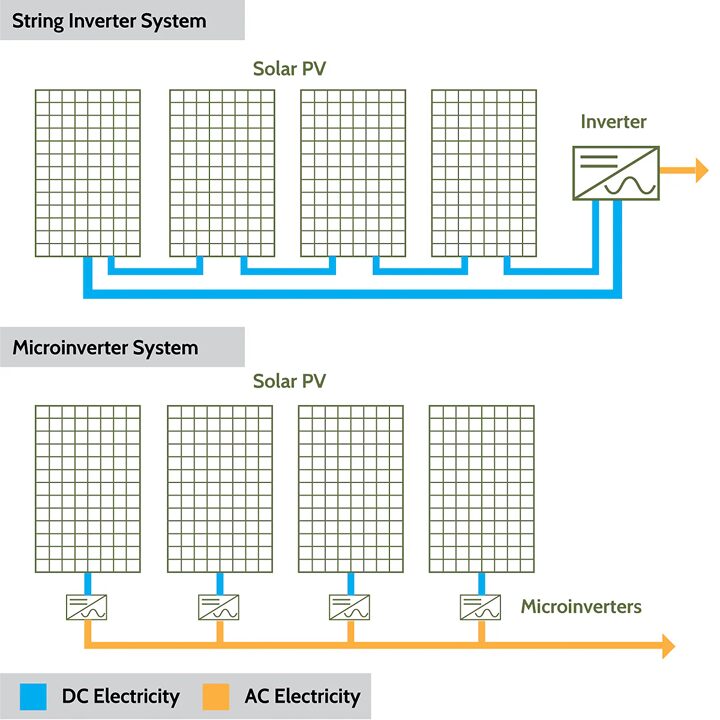
That is a different job from inversion. A string inverter connects multiple solar panels in a series, making it cost-effective and easy to install, and it remains the cheapest and most common option in UK homes4. Optimisers do not replace it. They work similarly to microinverters but are used with a string inverter, enhancing the performance of individual panels within that architecture4. The practical consequence is that a household keeps one central inverter to maintain and replace, while gaining panel-level control.
The gain is not unlimited. Optimisers reduce the losses of the overall system, but individual panel losses still affect performance: a panel that is shaded, dirty or failing still produces less, and the optimiser cannot manufacture energy that the module is not generating5. What it prevents is that shortfall being imposed on the panels around it. For a household, that distinction matters: optimisers are a mitigation for a known problem, not a general upgrade that lifts every array.
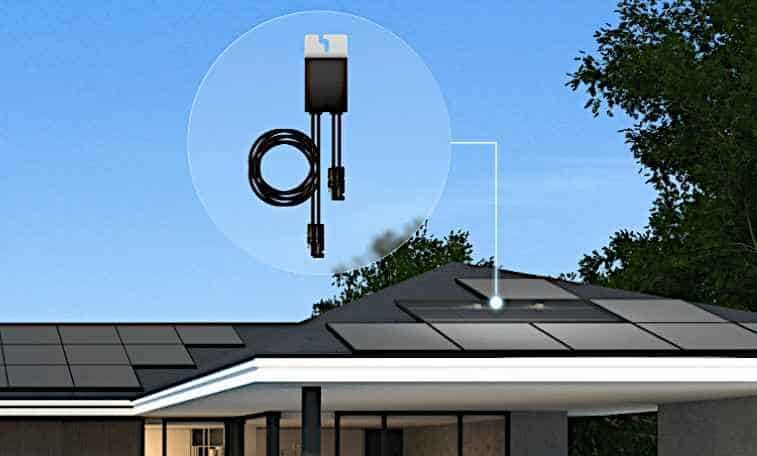
A small unit with its own MPPT on the back of each panel
The defining feature is that the tracking happens per module. Solar panel optimisers use Maximum Power Point Tracking for each panel, rather than relying on the inverter to find one operating point for the whole string1. Under uniform conditions the two approaches converge, because every panel wants the same voltage. Under anything other than uniform conditions they diverge sharply, and that is where the per-panel tracker earns its place.
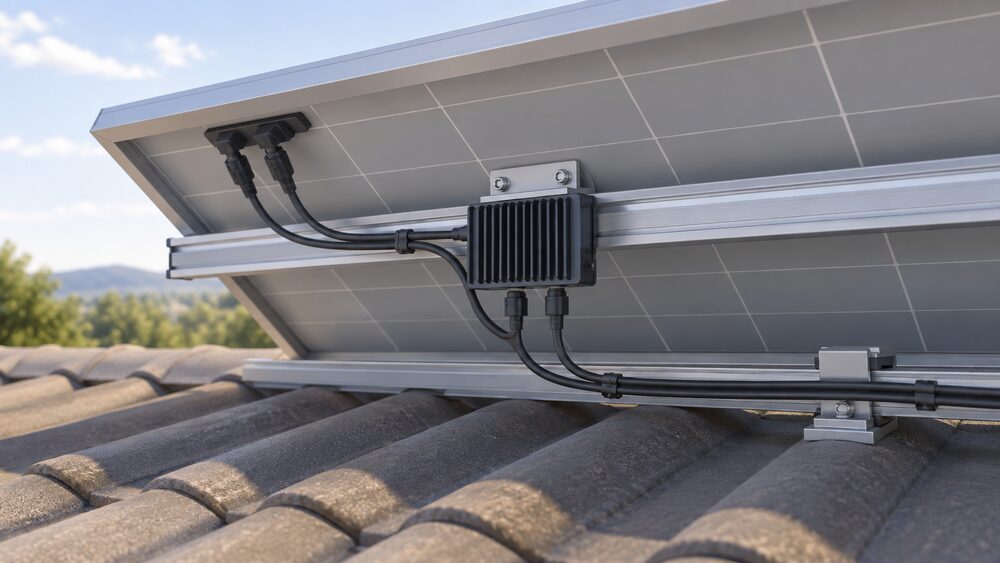
The unit itself is small and is mounted at the panel. Because each optimiser is connected to a single solar panel, it sits on the roof with the module, typically on the mounting rail behind or beside it1. That location is the source of both its strength and its weakness: it can act on the panel directly, and it is also exposed to the same weather, heat and access difficulty as the panel.
Some manufacturers have removed the separate mounting step altogether. UKSOL MCS certified monocrystalline solar PV panels with built in Tigo optimisers have optimiser units factory fitted during the manufacturer's assembly process, so the electronics arrive already attached to the module3. Anglo Solar PV MCS certified monocrystalline solar panels with built in Tigo optimisers follow the same approach, and the system will function without the need for any connection to the internet6. That last point matters for independence: a factory-fitted optimiser array does not depend on a live broadband connection or a cloud account to generate, even where an app is offered for monitoring.
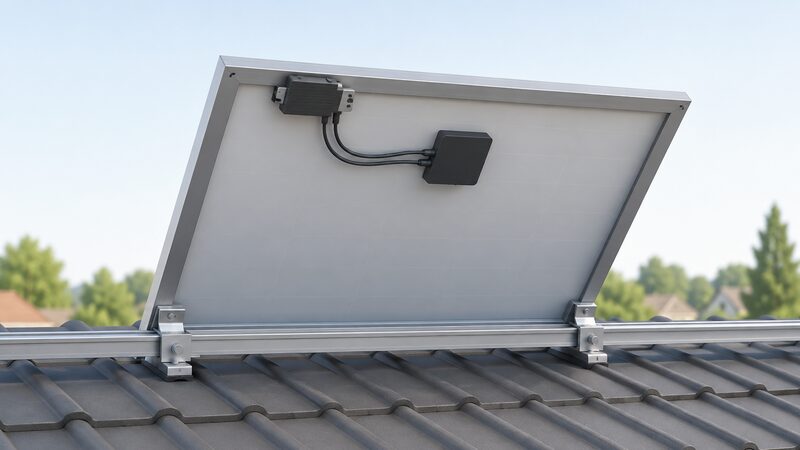
Shading and mismatch: the losses optimisers prevent
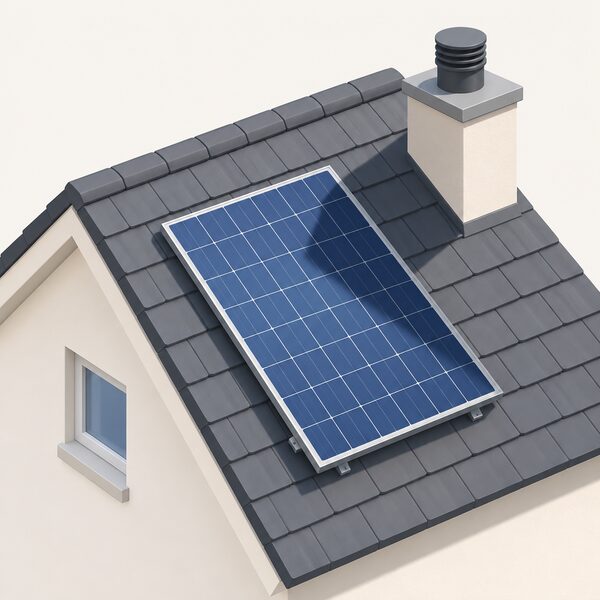
Shading is the problem optimisers were built for. Power optimisers enhance the performance of individual tiles by mitigating the effects of shading, which is precisely the failure mode a series string handles badly4. When one panel in a series string is shaded, its reduced current limits what the whole string can pass, so a small shadow can cost far more than the area it covers.
The scale of the loss depends on how much of the roof is affected. A roof that is more than 80% shaded can reduce output by as much as 50%7. That is the extreme case, and it is worth being clear that optimisers are not a fix for it: if your roof is heavily shaded, solar panels may not be the most suitable option at all8. The technology narrows the penalty from partial shading; it does not turn a shaded roof into a good one.
Mismatch is the quieter version of the same problem. Panels on different pitches, different compass orientations or simply of differing output all pull against each other in a series string. Optimisers separate panels so a single panel failure does not impact the whole system, and the same applies to a single panel underperforming for any reason2. The trade-off is stated plainly by the same source: microinverters and power-optimisers separate panels so this does not happen, but may be more expensive2.
Assessment of shading is not guesswork. MCS shade assessment uses a Shade Factor as a defined field, and the method is estimated to yield results within 10% of the actual annual energy yield for most systems9. That gives an installer a defensible basis for saying whether optimisers are needed, rather than a rule of thumb.
Yield gain: around 1% from mismatch, more when shading matters
The honest headline is that optimisers are not a general performance upgrade. Their value scales with the problem they are solving, and on a clean, unshaded, uniformly oriented array there is very little problem to solve. The gain from mismatch alone is small; the gain from shading can be substantial, because the alternative is a string dragged down to the level of its weakest panel.
Manufacturer estimates put the ceiling high. Some manufacturers estimate that an optimised system can produce up to 25% more generation than a non-optimised system1. That is a maker's estimate for an optimised versus non-optimised system, and it describes the best case, not a typical one. It should be read alongside the independent position that optimisers reduce the losses of the overall system but individual panel losses will still affect performance5.
The comparison that matters for a household is against doing nothing. Where shading is unavoidable, an installer might recommend microinverters or power optimisers, which let each panel work independently, alongside trimming trees causing partial shade12. Trimming is free and permanent; optimisers are a capital cost with electronics on the roof. Both are legitimate answers, and the choice depends on whether the shade is a tree that can be cut back or a chimney that cannot.
For context on what is being protected, the wider market figures are worth holding in view. The average solar system costs £10,270, while half of UK households have less than £5,000 in savings13. A solar package can start from £5,000 for a one to two-bedroom house14. Against those numbers, a per-panel optimiser cost is a modest addition, but it is an addition that only pays where there is a loss to recover.
Optimiser or microinverter: the choice and the cost gap
Both products put electronics at the panel and both break the series dependence between modules, but they sit at different points in the circuit. A microinverter converts DC to AC at the panel, so inversion happens at roof level. An optimiser is a DC-to-DC converter that conditions the panel's output and passes it to a central string inverter1. The choice between them is therefore partly a choice about where the inverter lives.
| Power optimiser | Microinverter | |
|---|---|---|
| Function | DC-to-DC conversion at the panel1 | DC-to-AC inversion at the panel1 |
| Works with | A string inverter4 | No central string inverter needed1 |
| Relative cost | Lower; about £40 to £150 per panel1 | Generally more expensive than optimisers1 |
| Maintenance access | At roof level, at the panel1 | At roof level, at the panel1 |
| Expansion | Additional optimisers can be added without complex rewiring or replacing the inverter15 | Easier to expand, as inversion takes place at panel level1 |
| Monitoring | Panel-level monitoring without the higher cost of microinverters4 | Panel-level by design1 |
The cost gap is the clearest differentiator. Microinverters are generally more expensive than solar optimisers, and optimisers allow for monitoring without the higher cost of microinverters1. For a household that wants panel-level visibility and shade mitigation but does not want to replace the central inverter architecture, optimisers are the cheaper route to the same two outcomes.
There is a maintenance consideration that applies equally to both. Like solar optimisers, microinverters are attached to each panel, so it is worth considering that if they need maintenance, it will be at roof level1. Neither product is serviceable from the ground. That is a real cost of module-level electronics, and it applies whichever of the two is chosen.
Around £40 per unit, roughly three times cheaper than microinverters
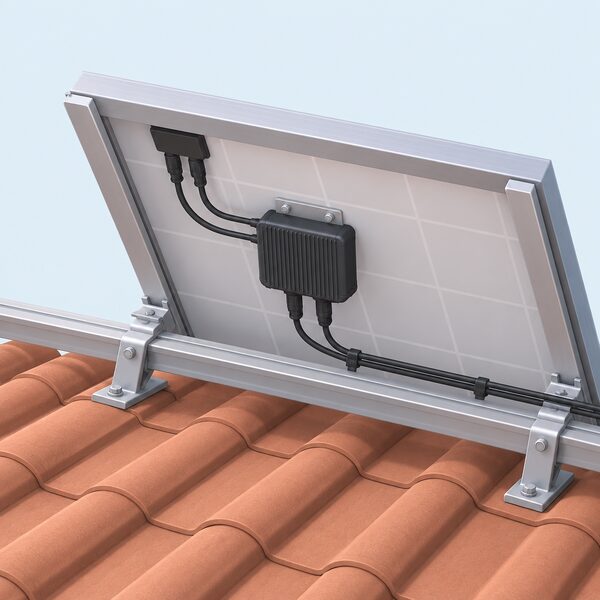
There is a range of solar optimisers on the market in the UK ranging from about £40 to £150 per panel1. That is the unit price band, and the spread reflects the difference between a basic unit and one carrying monitoring, rapid shutdown and arc fault features. It is a per-panel figure, so a ten-panel array multiplies it accordingly.
The comparison with microinverters is where the cost case is usually made. Microinverters are generally more expensive than solar optimisers, and optimisers provide monitoring without the higher cost of microinverters1. The SolarEdge S440 Power Optimizer appears at £51.71 and at £62.05 in distributor price lists dated 2026-09-17, and the two listings disagree1. Both figures are given here because the documents do not resolve which applies.
For scale, the surrounding hardware costs are worth knowing. Replacing a solar inverter usually costs around £800, and inverter replacement is put at about £500 to £1,00016. A solar panel cleaning kit is typically around £10016. Against those figures, a per-panel optimiser cost is comparable to a single maintenance item, which is why the decision usually turns on whether there is a shading or mismatch problem to solve rather than on the price alone.
String inverter plus optimisers: where this setup fits best
The combination of a string inverter and optimisers is the middle path between a plain string system and a full microinverter array. String inverters connect solar panels in series, making them cost-effective and easy to install, and they are the most common and cheapest option4. Adding optimisers keeps that cheap central inverter while removing the series dependence that causes most of the trouble.
This setup fits best where the roof is complex rather than simply bad. A roof with panels on more than one plane, a chimney or dormer casting a moving shadow, or a mix of module types will all create mismatch that a plain string handles poorly. It also suits households that want panel-level monitoring without moving to a microinverter architecture, since optimisers allow for monitoring without the higher cost of microinverters4.
It is not only a retrofit or problem-solving choice. Optimisers are included as standard on some residential solar offerings, described as a way to further maximise output18. Where an installer specifies them by default, the household is buying shade tolerance and monitoring as part of the package rather than as an upgrade. That is a design decision made at quotation stage, and it is worth asking whether the specification includes them and why.
The fit is poorest on a simple, unshaded, single-plane roof. There, the series string is already close to optimal, the mismatch losses are minimal, and the optimisers add cost and roof-level electronics for little return. The technology is a response to a condition, and where the condition is absent the case for it is weak.
Oversizing and longer strings: more panels through one inverter
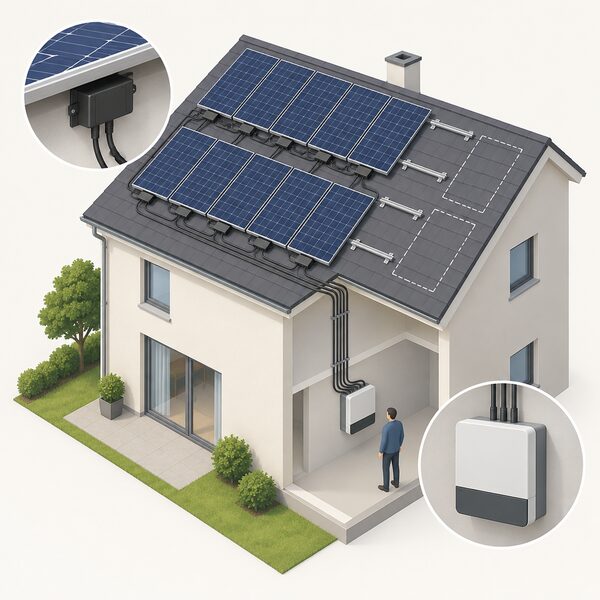
One practical benefit of optimisers is flexibility in how the array is built. If more solar panels are added later, additional optimisers can be added without complex rewiring or replacing the inverter15. That matters because the alternative, a plain string, is constrained by the inverter's input window and by the need for every panel in a string to match.
That flexibility supports oversizing, where the array's peak output exceeds the inverter's rating on the understanding that the array rarely reaches peak. It also supports longer strings and more panels through one inverter, because the optimisers manage the voltage and current each panel presents rather than leaving the inverter to cope with the raw sum. Aira solar panels, for example, are connected to Solar String Optimisers that regulate voltage and current across the system15.
The expansion advantage is real but should not be overstated. Systems with microinverters can also be easier to expand than systems using optimisers and a central string inverter, because current inversion takes place at panel level1. So optimisers improve on a plain string for expansion, while microinverters improve on optimisers. The ranking is consistent across the sources, and it is a matter of degree rather than a step change.
For a household planning to add panels or a battery later, the practical point is that the inverter choice constrains the future more than the optimiser choice does. Optimisers buy headroom within a string architecture; they do not remove the inverter's limits. Where expansion is likely, that is worth weighing at design stage rather than after the roof is loaded.
Safety features: rapid shutdown and arc fault protection on the DC side
Module-level electronics change the safety profile of a solar array, because they allow the DC side to be de-energised in a way a plain string cannot. Some optimiser systems provide automatic safety shutdown (Safe DC) with an Arc Fault Circuit Interrupter and heat detection at the module level3. That combination addresses the two hazards that matter most on a roof: an arc in the DC wiring and a hot spot at a module.
The same safety specification appears across successive versions of the ECO4 innovation measures documents, from 2023 through to 2026, which indicates it is a settled requirement rather than a one-off product claim3. The features are described at module level, meaning the detection and the shutdown happen at the panel rather than centrally. For a household, that means a fault can be isolated where it occurs.
Some models also offer features that allow monitoring for overheating, real time alerts for issues and easy ways to shut down whole solar systems at the flick of a switch1. The shutdown capability is the one that matters to firefighters and to anyone working on the roof, because it reduces the live DC risk that a conventional string presents during daylight.
For wider context on DC isolation and fire risk, see Solar PV safety.
Monitoring and remote diagnostics
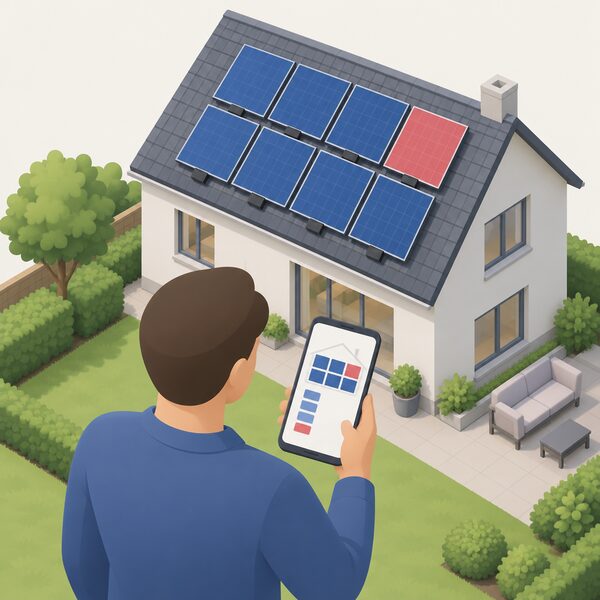
Monitoring is the benefit households notice most, because it turns a single system figure into a panel-by-panel picture. With the latest solar panel optimisers, you can monitor your solar setup performance via an app1. That means a shaded or failing panel shows up as an outlier rather than being averaged away in the total.
The diagnostics go further on some systems. Additional app connectivity features enable users to have a virtual layout of the system to aid fault detection and remediation, remote system monitoring and automatic fault notifications3. A virtual layout maps the readings onto the physical roof, so a fault notification points to a specific panel rather than to the array as a whole. That shortens the diagnostic process and can avoid a speculative visit.
The independence caveat is the app itself. Monitoring runs through a manufacturer's platform, which means the household's visibility depends on that company's software, its servers and its continued support for the product. The generation does not depend on it: Anglo Solar PV with built in Tigo optimisers will function without the need for any connection to the internet21. So the array keeps producing if the connection or the platform goes away, but the panel-level data does not.
For a household weighing up what monitoring is worth, the comparison is with a plain string system, where the inverter reports one figure for the whole array. Optimisers allow for monitoring without the higher cost of microinverters, which is the practical argument for them where visibility is the goal4. See Monitoring a solar PV system for how the data is used.
Compatibility: matching optimisers to panels and inverters
Compatibility is the constraint that decides whether optimisers can be used at all. Power optimisers work similarly to microinverters but are used with a string inverter, so the inverter must be one that supports them4. They are not a universal add-on that can be paired with any central inverter on the market.
Panel matching matters just as much. Optimisers can be retrofitted, as long as you choose optimisers that are compatible with your panels1. That condition is doing real work: an optimiser is specified against a module's voltage and current characteristics, and a mismatch between the two undermines the whole point of fitting it. Where modules ship with factory-fitted optimisers, that matching has already been done by the manufacturer3.
The retrofit route carries a cost that often settles the question. It is expensive to install optimisers on an existing system, as it requires scaffolding the whole roof, removing every panel, fitting the optimisers, refitting the panels and then replacing the inverter1. That is effectively a rebuild of the array. For most households with an existing unshaded system, the disruption outweighs the benefit; for a household already planning roof work, the calculation is different.
Where compatibility is uncertain, the assessment tools exist to resolve it. MCS shade assessment uses a Shade Factor and is estimated to yield results within 10% of the actual annual energy yield for most systems, which gives a basis for deciding whether optimisers are needed before any hardware is specified9. For the wider picture on matching modules to electronics, see Solar inverters explained and SolarEdge: inverters and power optimisers.
Sources21 cited
- Solar panel optimiser: is it worth it?, E.ON Next, 2026-09-17
- Solar panels, Electrical Safety First, 2026-09-17
- ECO4 Innovation Approved Innovation Measures v1.6, Ofgem, 2024-01
- What type of inverter is best for solar?, Marley, 2026-09-17
- What makes a good solar PV roof?, Renewables First, 2026-04-08
- ECO4 Innovation Approved Innovation Measures v1.17, Ofgem, 2026-02
- Buying advice for solar panels, Which?, 2026-08-12
- Solar photovoltaic (PV) panels, London Borough of Bromley, 2026-09-17
- MIS-3002 Solar PV Systems V4.0, MCS Certified, 2025
- MCS 032 2025 V1.0, MCS Certified, 2025-01-01
- Solar panels, Energy Saving Trust, 2026-08-27
- Solar panel installation, Energy Saving Trust, 2026-09-17
- How to decide if solar panels are right for your home, ivie, 2026-09-20
- Solar panel costs, Which?, 2026-08-03
- Solar panel cost UK, Aira, 2026-06-19
- Solar panel cleaning and maintenance, Energy Saving Trust, 2026-08-25
- A complete guide to solar PV, Centre for Sustainable Energy, 2025-11
- Residential solar PV, Renewables First, 2026-03-30
- ECO4 Innovation Approved Innovation Measures v1.5, Ofgem, 2023-10
- ECO4 Innovation Approved Innovation Measures, Ofgem, 2023-07
- ECO4 Innovation Approved Innovation Measures v1.11, Ofgem, 2024-11
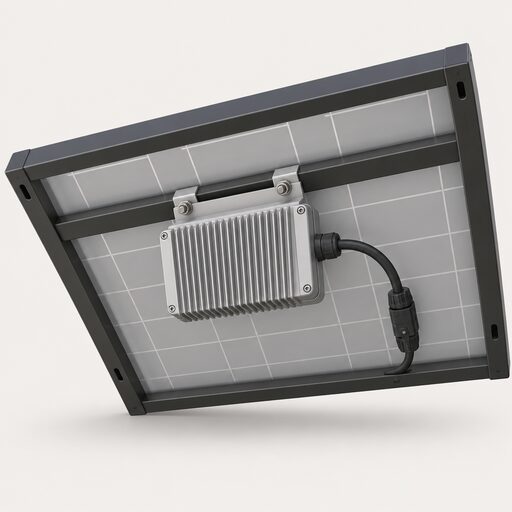 MicroinvertersMicroinverters sit behind each panel and turn its power into household electricity right there on the roof.
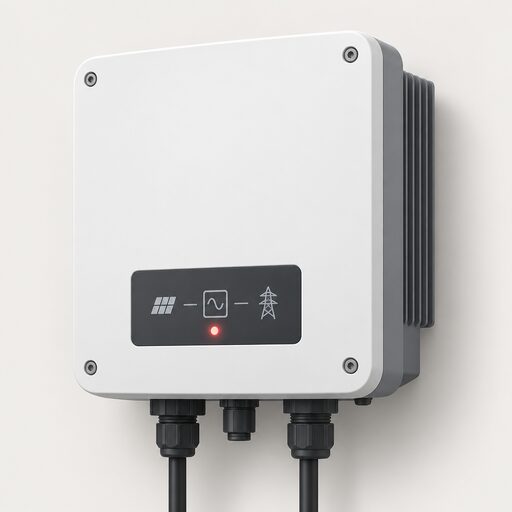 Islanding and Anti-IslandingWhy do solar panels switch off in a power cut, and can you keep the lights on anyway?
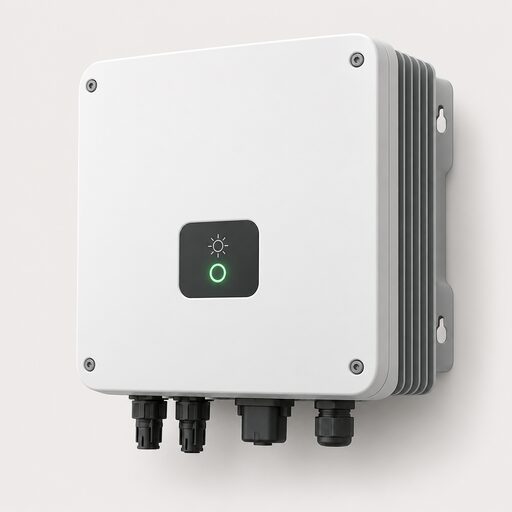 Cooling with Solar PanelsCan solar panels run an air conditioner, and will they cover the whole bill?
 Solar Mounting SystemsWill your roof take the extra weight of solar panels, and will it still keep the rain out afterwards?
 Roof Orientation and ShadingWhich way should your roof face for solar panels, and does it really matter if it is not south?
 Behind-the-Meter SystemsWhere does your meter sit, and what does that mean for the solar panels or battery you put in at home?