
In this comparison
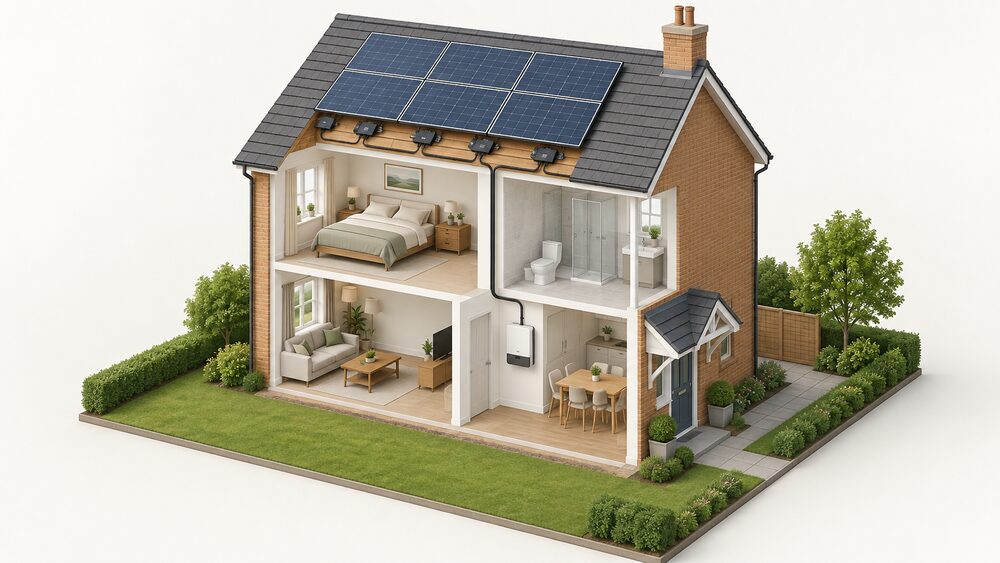
Enphase and SolarEdge are the two names a UK householder meets most often when a quote specifies module-level electronics rather than a plain string inverter. They solve the same problem, shade and panel mismatch, in opposite ways. Enphase puts a microinverter on every panel, converting DC to AC at the module. SolarEdge keeps one central inverter and fits a power optimiser to each panel, managing them individually on the DC side1.
The practical difference for a buyer is what sits on the roof and what sits on the wall. SolarEdge's optimised inverters are used with module optimisers connected to each module, and the company states the design adds an average of 4% more energy on simple unshaded roofs and up to 10.5% more per year on complex rooftops1. Enphase's IQ8+ microinverter is described as one microinverter per panel with detailed monitoring and a strong home-energy ecosystem, and the maker notes that one inverter per panel plus additional system equipment can increase total project cost4.
Both are module-level systems, so both separate panels: a single panel failure or a shaded panel does not drag the whole array down, which is the central reason buyers pay more for either5. The choice between them is therefore less about whether module-level electronics help and more about architecture, monitoring, battery and EV integration, warranty structure and price.
Enphase vs SolarEdge at a glance
The two brands occupy the same shelf but not the same design philosophy. SolarEdge describes its home solution as modular and scalable, starting with basic solar and adding batteries, EV charging or smart energy devices later, and sells solar panels, storage batteries, inverters and optimisers as a one-stop shop1. Its Home Hub inverter comes in three-phase and single-phase versions, and the company claims the inverters and optimisers together deliver more solar energy and more savings11.
Enphase's proposition is narrower at the panel and wider at the intelligence layer. The IQ8+ microinverter is one unit per panel with detailed monitoring, and the Enphase Assistant is an AI-powered energy advisor that knows the household's exact setup, including panels, battery, EV charger and gateway4. That assistant reports Solar Offset, Grid Dependence and Energy Independence alongside a five-day production forecast, which is a more explicit independence framing than SolarEdge's app language13.
| Enphase | SolarEdge | |
|---|---|---|
| Architecture | One microinverter per panel4 | Central inverter with a power optimiser per module1 |
| Monitoring | Live production; Solar Offset, Grid Dependence, Energy Independence, five-day forecast14 | Built-in module-level monitoring; real-time production and consumption2 |
| Scalability | Ecosystem of panels, battery, EV charger and gateway13 | Modular: add batteries, EV charging, smart devices later1 |
| Battery warranty | 10 years on the AC Battery10 | 25-year array warranty registered through the ECO4 innovation route16 |
| Cost signal | One inverter per panel plus extra equipment can raise project cost4 | Single-phase compact inverter listed at £405.0017 |
The cost line is the one figure that is directly comparable and it is not like for like: the £405.00 is a distributor price for a SolarEdge single-phase inverter with compact technology, designed for rooftop systems of four to eight modules, and it excludes optimisers, mounting, labour and VAT treatment17. Enphase pricing is installer-quoted.
Two different architectures: microinverters versus a central inverter with optimisers
SolarEdge's system is a DC-optimised design. The short string inverter is enabled with power optimisers that individually manage each solar panel, and the three-phase units are specifically designed to work with power optimisers on a fixed voltage design2. The single-phase HD-Wave inverter follows the same rule: it is specifically designed to work with power optimisers15. That is the constraint a household needs to understand. A SolarEdge inverter is not a generic box that will accept any array; it expects optimisers on the modules, and the optimisers are what deliver the panel-level management.
Enphase inverts at the panel instead. Each microinverter converts that panel's DC output to mains AC, so there is no high-voltage DC string running down the roof and no single central inverter to fail. The trade-off is component count: many small units rather than one large one, and the maker acknowledges that one inverter per panel plus additional system equipment can increase total project cost4.
The safety dimension is where the two architectures diverge most visibly. Electrical Safety First notes that microinverters and power optimisers separate panels so that a single panel failure does not impact the whole system, though they may be more expensive5. That separation is the shared benefit. What differs is where the conversion happens and therefore what an installer has to isolate, test and replace.
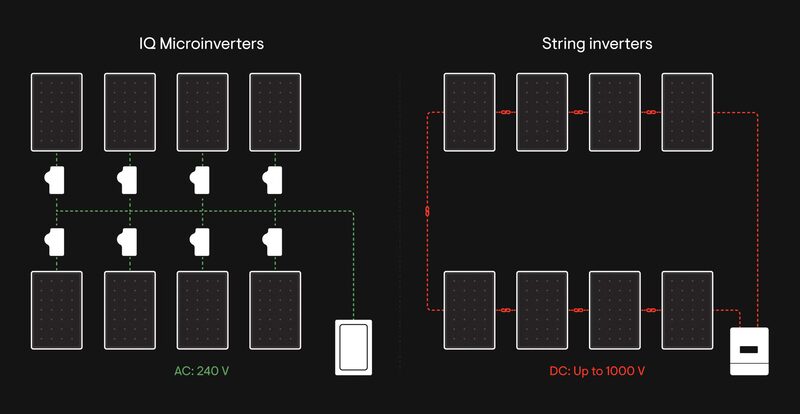
For a household, the architecture decides the failure mode. A central inverter is a single replaceable unit with a user-replaceable fan on the larger three-phase models7. Microinverters spread the risk but put electronics under every panel, where access for replacement means roof work. Neither is inherently more independent of the grid: both still need a grid connection, a registered installer and, in most UK homes, a distribution network operator notification. The relevant comparison pages are microinverters and power optimisers.
Which system fits which roof: shade, orientation and complexity
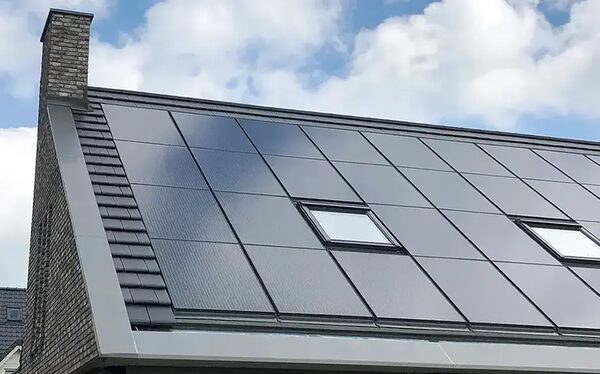
SolarEdge sizes its offer explicitly. The company states it is optimised whether a household has a small single-phase roof of 2 to 6 kWp or a large three-phase system up to 25 kWp1. The short string inverter is optimised for complex roofs including multi-facets and different orientations, and the compact single-phase inverter is specifically designed for rooftop systems of four to eight modules2. Design flexibility allows two different parts of a roof facing different directions to be used together to expand sun exposure, and arrays can combine mixed wattages and orientations3.
The independent baseline is simpler. An unshaded, south-facing roof is ideal for maximum performance, and a roof with 20% shading or less is best19. Installers assess roof pitch, orientation and any overshading from trees or other buildings before quoting21. So the honest framing is that a clean south-facing roof with no shading does not need module-level electronics to perform, and SolarEdge's own figure for that case is an average 4% gain over conventional systems1. The case for either brand strengthens as the roof gets harder: multiple facets, a chimney shadow, an east-west split, or a small four to eight module array where one shaded panel would otherwise take a disproportionate share of the output.
"An unshaded, south-facing roof is ideal for maximum performance."
Where shade is present, the evidence favours module-level management. An installer case study of a 4.8 kWp array with SolarEdge optimisers projected 4,713 kWh annually with a 3.5% yield reduction due to shading, which is a modest penalty for a shaded layout22. SolarEdge states that shading and soiling of one module will not affect the others17. Enphase publishes no equivalent UK yield figure in the material reviewed here, so the shade comparison rests on SolarEdge's own modelling and the general principle that both architectures isolate panels5. Roof suitability is covered in more depth under orientation, shading and roof suitability.
Monitoring and control: what each platform shows you
SolarEdge monitoring is built into the hardware. The three-phase and single-phase HD-Wave inverters both carry built-in module-level monitoring, and the power optimisers enable panel-level monitoring so each panel's performance is visible to the householder and the installer with remote diagnostics7. The mySolarEdge app monitors real-time production and consumption, and SolarEdge ONE provides full control of PV production, smart devices, EV and storage from the same app2. SolarEdge ONE draws on real-world data including utility rates and weather forecasts, and can automatically charge the battery from solar or from the grid when rates are low to save solar power for peak-rate hours12.
Enphase's app shows live solar production with 24/7 remote monitoring and management, and the Assistant adds Solar Offset, Grid Dependence and Energy Independence plus a five-day production forecast14. That independence framing is the clearest difference in what the two platforms tell a household: SolarEdge leads on export limitation and tariff optimisation, Enphase leads on self-consumption and independence metrics.
On export specifically, SolarEdge lists export limitation as a smart energy management function across its single-phase, HD-Wave and three-phase inverters, alongside StorEdge applications15. That matters where a connection agreement caps export, which is the subject of export limitation and G100. Enphase's published UK material reviewed here does not list an export limitation function, so a household needing one should confirm it with the installer.
On data, SolarEdge states its systems include encrypted communications, secure data hosting and multi-factor authentication, but names no hosting country1. Both platforms are cloud-dependent: monitoring, firmware updates and the smart features run through the maker's servers and app, so a household's visibility of its own system depends on a manufacturer's continued service. That is a real limit on independence, and it applies equally to both brands. General monitoring practice is covered under monitoring a solar PV system.
Batteries, EV charging and the wider ecosystem
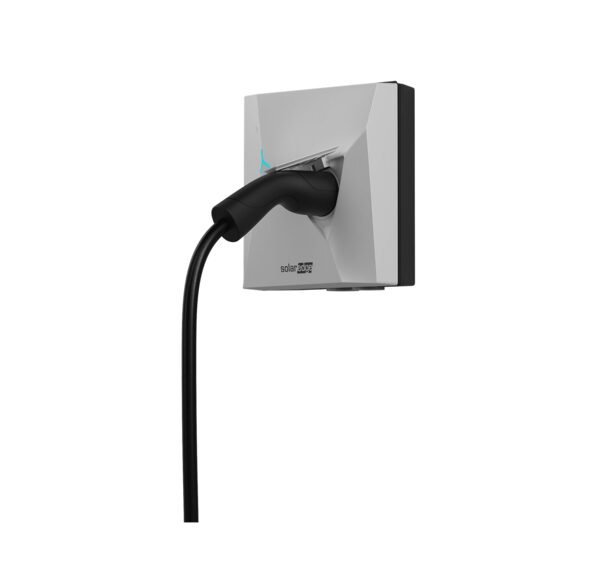
SolarEdge's ecosystem is the more developed on the EV side. SolarEdge Home includes battery storage, EV chargers and smart energy management devices, and the company describes the ecosystem as able to grow with the household24. The SolarEdge ONE EV Charger supports both single- and three-phase configurations, indoor and outdoor mounting, socket or tethered options, and up to three chargers per site for multi-EV households9. It can detect which phase has the most available solar or grid capacity and switch between phases during charging, and it can respond to utility signals in sync with the solar and battery system, enabling participation in demand response or virtual power plant schemes9. SolarEdge ONE can manage those revenue opportunities alongside selected battery modes23.
The charger's smart features include excess PV charging, load balancing, a smart schedule supporting dynamic time-of-use tariffs, automatic phase switching, MID metering and ISO15118 readiness9. It carries a 3-year product warranty, extendable alongside the broader SolarEdge system9. The ONE for EV platform is built on Wevo Energy technology, now integrated into the SolarEdge ecosystem, and is pre-integrated with SolarEdge's solar and storage systems25.
Enphase's ecosystem centres on the battery and gateway rather than the charger. The Enphase AC Battery carries a 10-year warranty, and the Assistant knows the household's battery, EV charger and gateway as part of its setup10. Enphase microinverters and all-in-one battery units are available through UK distribution, following a distribution partnership announced in March 20264.
Warranty terms and what they cover
Warranty is where the two brands are least comparable, because the terms attach to components rather than to a single system. SolarEdge modules carry a 25-year product warranty and a 30-year power output warranty at 89.4%, according to Which?8. The maker's own inverter datasheets quote 12 to 25 years depending on model, and the SolarEdge ONE EV Charger carries a 3-year warranty extendable alongside the wider system6. SolarEdge describes its warranties as industry-leading24.
The longest term in the material is a 25-year registered warranty covering the Solar PV array including system components, recorded through the ECO4 innovation route16. That is a scheme-specific registration rather than a standard retail term, so it should not be read as the default warranty on a privately bought system.
Enphase's published warranty figure here is the 10-year AC Battery term10. No comparable module or microinverter warranty figure appears in the material reviewed, so a household comparing the two on warranty should ask each installer for the current written terms on the specific models quoted.
The independence point is that a warranty is a manufacturer's promise, not a household asset. It depends on the company continuing to trade and honour claims. SolarEdge reaffirmed its first-quarter financial guidance in March 2026 and announced a CFO departure effective June 2026, both normal corporate events rather than distress signals, but they are the kind of disclosure a buyer should weigh when a 25-year promise is part of the pitch29. Warranty structure and degradation are covered under solar panel warranties and degradation.
Cost and efficiency in practice
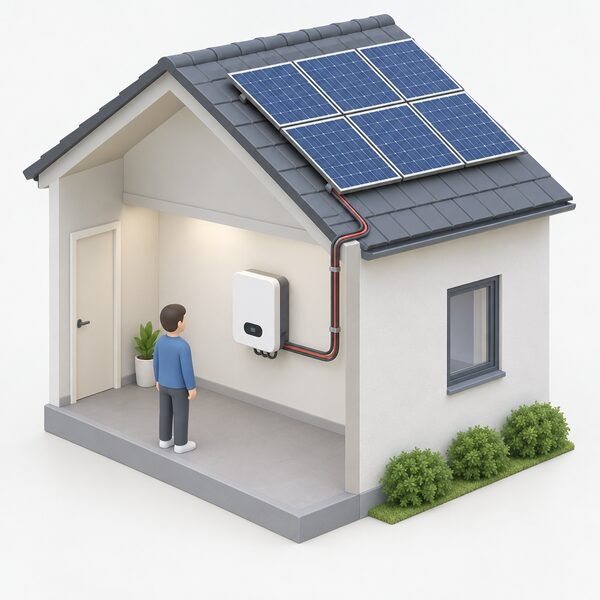
Efficiency figures for SolarEdge are published and specific. The single-phase SE2200 to SE6000 range has a maximum inverter efficiency of 97.6%, the three-phase SE12.5K to SE27.6K is quoted at 98%, and the SE30K at 98%6. The single-phase Home Wave inverter is described as having 99% efficiency17. These are inverter conversion figures, not system yields, and the gap between 97.6% and 99% is small in annual output terms compared with the effect of orientation, shading and array size.
The yield claims are the more useful numbers. SolarEdge states an average 4% more energy on simple unshaded roofs compared with conventional systems even with multiple maximum power point trackers, and up to 10.5% more per year on complex rooftops, attributed to a 2025 VDE Renewables report1. SolarEdge inverters generally come with 200% oversizing, so panels can be added up to that range beyond the inverter rating3. That headroom is a genuine independence feature: it allows a household to expand the array later without replacing the inverter, and the Home Hub inverter is marketed on boosting system rating later with no inverter swaps and minimal additional labour11.
On cost, the only published figure in the material is a distributor price of £405.00 for a SolarEdge single-phase inverter with compact technology, designed for four to eight module rooftop systems, with two models available17. That price excludes optimisers, mounting, cabling, labour and any VAT treatment, and it is a component price rather than an installed cost. Enphase pricing is installer-quoted, and the maker's own note that one inverter per panel plus additional equipment can increase total project cost is the only cost signal available for that architecture4. No installed system price for either brand appears in the material reviewed, so any comparison of total cost has to come from itemised quotes. Broader cost context sits under how much do solar panels cost in the UK.
Who makes each system: company background and UK availability
SolarEdge was founded in 2006 and states it has millions of systems installed in over 140 countries, and that it was named one of the Top 100 Most Sustainable Corporations by Corporate Knights1. It describes itself as a company innovating in solar technology for almost 20 years24. Its products are manufactured in various locations including Israel, China and the USA, and around 80% of the panels sold in the UK are made in China31. It is not a UK manufacturer.
UK availability is real but commercial rather than industrial. SolarEdge publishes UK-specific firmware, including version 4.20.34 for the Home Wave single-phase inverter, and its Home Backup Interface complies with the G100 regulation in the UK26. The company runs UK installer webinars and publishes UK blog content on the Future Homes Standard and solar requirements for new homes29. Its optimised inverters and module optimisers are stocked through UK distributors32.
Enphase's UK position rests on distribution and product launches. The IQ9N Microinverter, using gallium nitride technology, was launched for residential solar across key European markets including the United Kingdom in June 2026, with shipments beginning through distribution partners on 5 June 20264. Enphase microinverters and all-in-one battery units are available through UK distribution following a partnership announced in March 20264.
Which? has not yet lab-tested any SolarEdge solar panels, having started lab testing panels in 2026, so there is no independent performance test result for the modules8. The independent module figures available are a maximum power output of 440 W at 22.53% efficiency8. For a household, the independence question is straightforward: neither brand is a UK manufacturer, both depend on imported hardware, a distributor network and a cloud platform, and the household's energy independence comes from the array and battery on its own roof rather than from the brand on the inverter. The wider picture is set out under solar panels and household energy independence.
Sources32 cited
- SolarEdge Home, SolarEdge, 2026
- SolarEdge Home Short String Inverter, SolarEdge, 2026
- SolarEdge retrofit blog, SolarEdge, 2023
- Best microinverters for solar panels, SolaX Power, 2026
- Solar panels safety advice, Electrical Safety First, 2026
- Single Phase Inverter datasheet, SolarEdge, 2026
- Three Phase Inverter with SetApp Configuration datasheet, SolarEdge, 2026
- SolarEdge solar panels, Which?, 2026
- SolarEdge ONE EV Charger, SolarEdge, 2026
- Solar panel battery storage, Which?, 2026
- SolarEdge Home Hub Inverters, SolarEdge, 2026
- SolarEdge Home UK, SolarEdge, 2026
- Enphase support, Enphase, 2026
- Enphase App, Enphase, 2026
- Single Phase Inverter with HD-Wave Technology datasheet, SolarEdge, 2026
- ECO4 innovation approved measures, Ofgem, 2026
- SolarEdge optimised solution, Wind and Sun, 2026
- SolarEdge retrofit blog UK, SolarEdge, 2023
- Solar panels advice, Energy Saving Trust, 2026
- Buying advice for solar panels, Which?, 2026
- Solar PV panels, AgilityEco, 2026
- Installing solar panels on a roof, Spirit Energy, 2020
- SolarEdge ONE, SolarEdge, 2026
- Solar energy primer, SolarEdge, 2024
- SolarEdge ONE for EV, SolarEdge, 2026
- Residential inverters firmware, SolarEdge, 2024
- Connecting to the networks, Energy Networks Association, 2026
- Vehicle-to-grid best practice guide, Energy Saving Trust, 2026
- SolarEdge UK blog, SolarEdge, 2026
- Three Phase Inverter Extended Power datasheet, SolarEdge, 2026
- SolarEdge solar panels review, Which?, 2026
- SolarEdge at Wind and Sun, Wind and Sun, 2026
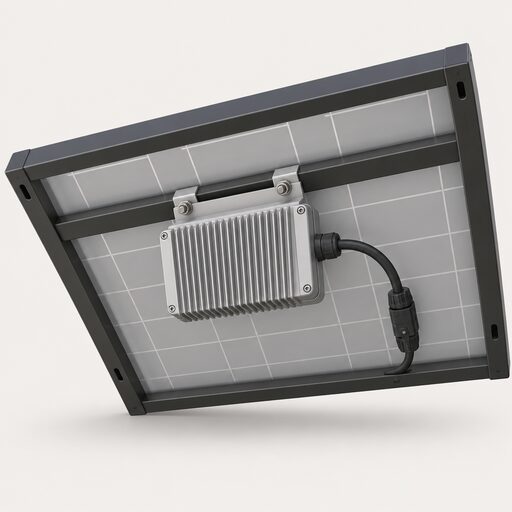 MicroinvertersMicroinverters sit behind each panel and turn its power into household electricity right there on the roof.
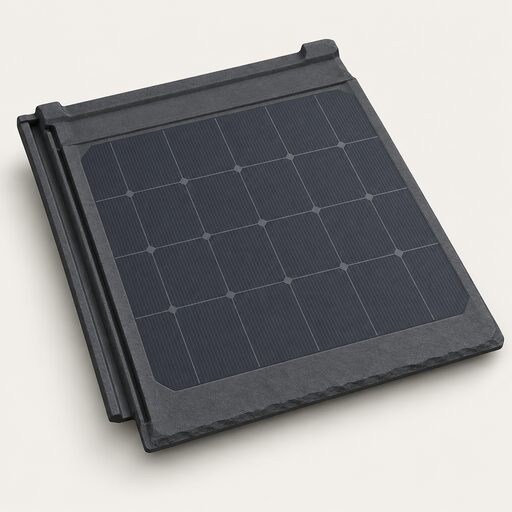 Roof-Integrated SolarSolar tiles replace your roof covering instead of sitting on top of it, so the finished roof looks like a roof.
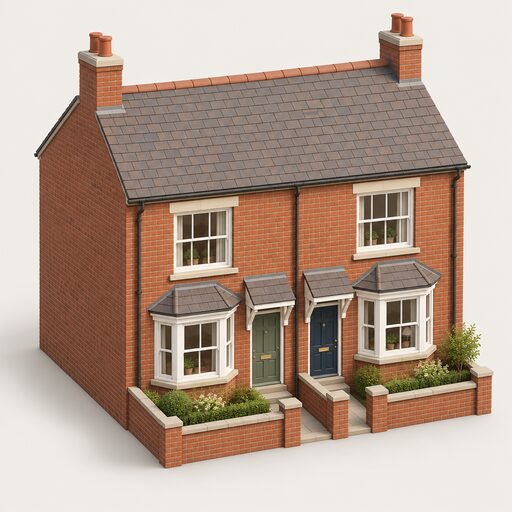 Panels by Home TypeCan your house have solar panels, and how many will fit?
 Solar InvertersWhat does the box on the wall next to your solar panels do, and how long will it last?
 Solar Mounting SystemsWill your roof take the extra weight of solar panels, and will it still keep the rain out afterwards?
 The Full EV Charging GuideCharging an electric car at home usually means a wallbox, but do you need one, and what will it cost to fit and run?