
In this comparison
SolarEdge and Enphase are the two names UK households meet most often when an installer offers panel-level electronics rather than a plain string inverter. They solve the same problem in opposite ways. SolarEdge keeps one central inverter on the wall and puts a power optimiser behind every panel; Enphase removes the central inverter altogether and puts a microinverter under each panel instead1.
The practical difference is what happens when one panel underperforms. Both approaches separate the panels so a single failure does not drag the whole array down, which the electrical safety charity Electrical Safety First notes is the point of the technology, and that it may cost more3. SolarEdge states that even on simple, unshaded roofs its optimised systems add an average of 4% more energy than conventional systems, including those with multiple MPPTs1. That is the maker's figure, not an independent measurement.
The most important thing a UK buyer needs to know is not in either product range. SOLAREDGE SUPPORT LTD, the UK support entity, was dissolved on 10 March 20264. SolarEdge the manufacturer continues, and its warranty terms still stand, but the dissolved company is no longer a route to support. Anyone weighing the two brands should read that alongside the product comparison, not after it.
SOLAREDGE SUPPORT LTD has been dissolved: what that means for UK owners
SOLAREDGE SUPPORT LTD was dissolved on 10 March 20264. That is a company event, not a product recall, and it does not cancel a warranty that SolarEdge the manufacturer granted. It does remove a UK-facing administrative entity, and it changes who an owner deals with when something goes wrong.
The direction of travel in SolarEdge's own documentation points the same way. Its residential power optimiser inter-compatibility technical note was updated in June 2026 to change the OP-Series contact detail to SolarEdge Support and to remove the earlier instruction to contact a local SolarEdge representative. An earlier revision in February 2026 added guidelines for inverter RMA and upgrade. The effect is that support is increasingly routed through a central function and through the installer who commissioned the system, rather than through a named local contact.
For a household, the practical consequences are these:
- Warranty claims and service requests run through the online SolarEdge account and the original installer, not through the dissolved entity.
- The installer relationship matters more than it did, because the installer holds the commissioning record and the registration.
- A system bought through a firm that has since stopped trading leaves the owner with the manufacturer route only.
That last point is the one to weigh. A solar array is a 25-year asset and the electronics inside it are not. The manufacturer failures and orphaned products page sets out what owners can do when a supplier disappears, and the SolarEdge inverters page covers the product range itself.
SolarEdge vs Enphase at a glance
The two systems are not sold as interchangeable boxes. SolarEdge sells an inverter plus an optimiser per panel, and builds outward from there into batteries, EV charging and load control. Enphase sells a microinverter per panel and an app that ties the array together. Both are modular, and both are sold in the UK through installers rather than direct.
| SolarEdge | Enphase | |
|---|---|---|
| Architecture | Central inverter with a power optimiser per panel9 | A microinverter on every panel2 |
| Panel compatibility | Optimisers and inverters support arrays of mixed wattages and orientations10 | IQ Microinverters compatible with virtually all panel makes and models2 |
| Phase options | Home Hub Inverters in three phase and single phase12 | Not stated in the material available |
| Monitoring | Panel-level monitoring visible to owner and installer, with remote diagnostics11 | Panel-level production detail, 24/7 remote monitoring13 |
| Safety shutdown | SafeDC reduces DC voltage to a touch-safe level on shutdown14 | Not stated in the material available |
| Warranty extension | To 20 or 25 years depending on model, one-time payment4 | Not stated in the material available |
| UK support entity | SOLAREDGE SUPPORT LTD dissolved 10 March 20264 | Enphase support portal and AI assistant15 |
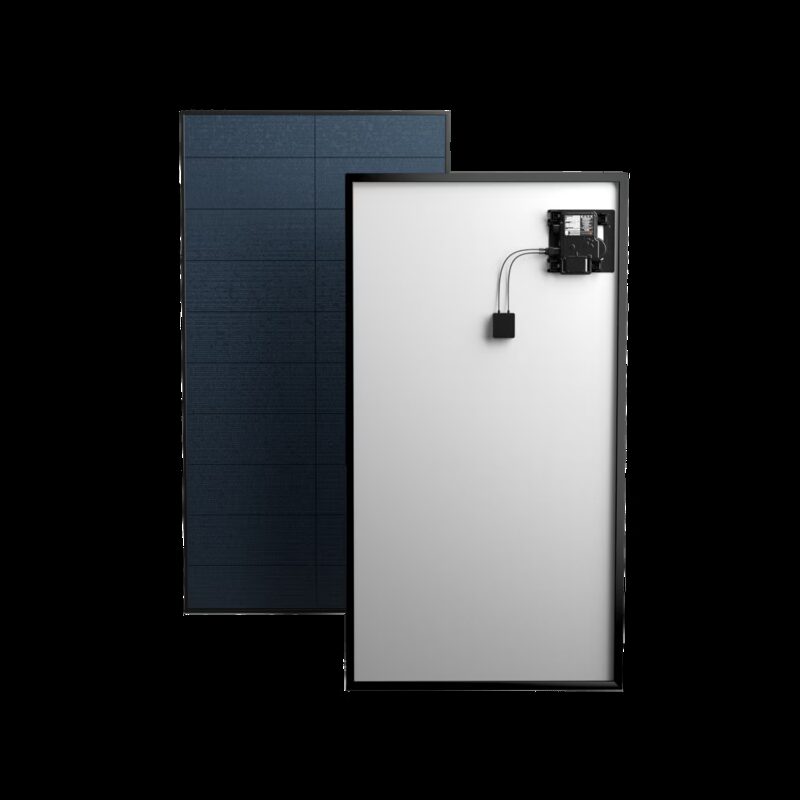
Two architectures: a central inverter with panel optimisers vs a microinverter under every panel
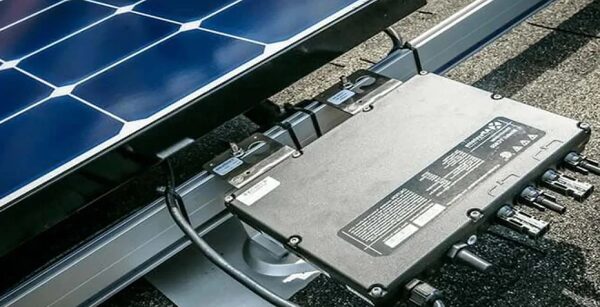
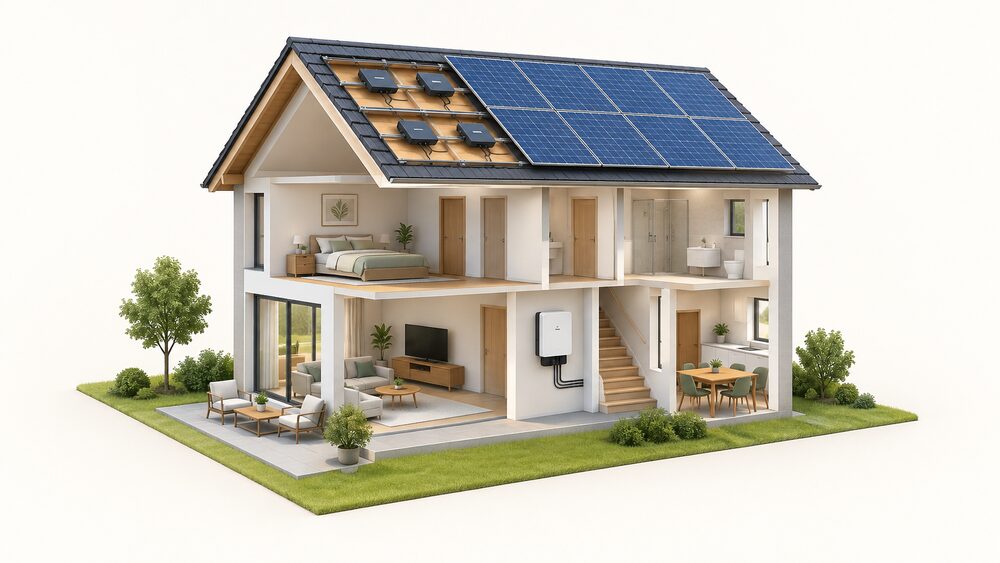
SolarEdge's approach is a DC-optimised inverter enabled with power optimisers that individually manage each solar panel9. The inverter does the conversion in one place, on a wall, indoors or outdoors14. Each optimiser adjusts the voltage and current for its own panel before the power reaches the inverter, so the string behaves as though every panel were identical even when they are not.
Enphase's approach removes the central inverter. Every solar panel is equipped with its own microinverter, so if one panel slips into the shade or experiences a rare glitch, the other panels keep generating power2. Conversion happens at the panel, and the output is mains AC by the time it reaches the consumer unit.
The trade-offs follow from that split. A central inverter is one accessible box to service or replace, and SolarEdge's three-phase units have a user-replaceable fan and optional field-replaceable surge protection16. A microinverter sits on a roof under a panel, which is harder to reach but spreads the electronics so no single failure takes the array offline. Electrical Safety First makes the same point in neutral terms: microinverters and power optimisers separate panels so a single panel failure does not affect the whole system, but may be more expensive3.
For a household's independence, the architecture decides what fails and what it costs to fix. A central inverter failure is a single replacement with a known labour cost, and the panels keep their value. A microinverter failure is a roof visit, but the rest of the array keeps producing while it waits. Neither design removes the household's dependence on the manufacturer for replacement parts, firmware and monitoring, and that dependence is the same in kind for both.
Which suits which roof: shade, mixed orientations and panel-level MPP tracking
The roof decides more than the brand does. An unshaded, south-facing roof is ideal for maximum performance6, and a pitch of around 30 degrees is best, with 30 to 40 degrees the working range for a south-facing, unshaded site7. A roof with 20% shading or less is best17. Where shading is unavoidable, the Energy Saving Trust notes that an installer might recommend microinverters or power optimisers, because they let each panel work independently, alongside trimming the trees causing the partial shade18.
That is where the two systems earn their premium. SolarEdge states that its short string inverter is optimised for installations with complex roofs, including multi-facets and different orientations9, and that its design flexibility allows an array of panels combining mixed wattages and orientations, including two roof parts facing different directions10. Enphase states that its IQ Microinverters are compatible with virtually all solar panel makes and models2.
The limits are worth stating as firmly as the benefits. If a roof is heavily shaded, solar panels may not be the most suitable option at all19. Panels can be installed on both pitched and flat roofs, but on a flat roof they need to be tilted and spaced to avoid shading20. Panel-level electronics improve the yield from an awkward roof; they do not turn a bad site into a good one.
Monitoring: panel-level data, alerts and export breakdown
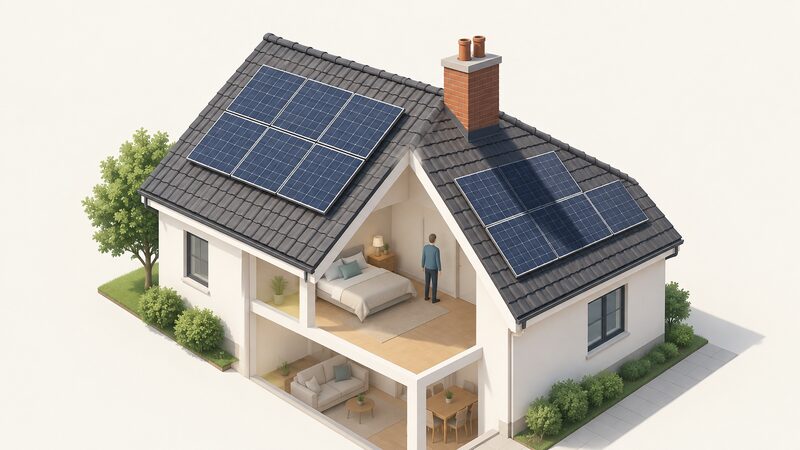
Both systems give the household panel-level data, which is the feature that justifies the electronics for many owners. SolarEdge's optimisers enable panel-level monitoring, so each panel's performance is visible to the homeowner and installer with remote diagnostics11. Enphase's app shows panel-level production detail with 24/7 remote monitoring and management13, and the Enphase Assistant gives daily or hourly breakdowns of solar production, home energy consumption, battery activity and grid usage15.
The difference is in how much interpretation is done for the owner. The Enphase Assistant is an AI-powered energy advisor that knows the exact solar setup, including solar panels, battery, EV charger and gateway, and it presents solar production, home energy consumption, battery activity and grid usage in daily or hourly breakdowns15. On the SolarEdge side, panel-level monitoring is built into the inverters themselves, so each panel's performance is visible to the homeowner and the installer, with remote diagnostics21.
What this means for independence is narrower than the marketing suggests. Panel-level monitoring tells a household what its array is doing, which is genuinely useful for spotting a failed optimiser or a soiled string. It does not reduce the household's reliance on the grid, a supplier or the manufacturer's cloud. Both platforms are cloud services: if the account lapses or the service changes, the data view goes with it. The firmware updates and product support life page covers how long that kind of support typically lasts.
Warranty and registration: 25-year product cover and the online registration requirement
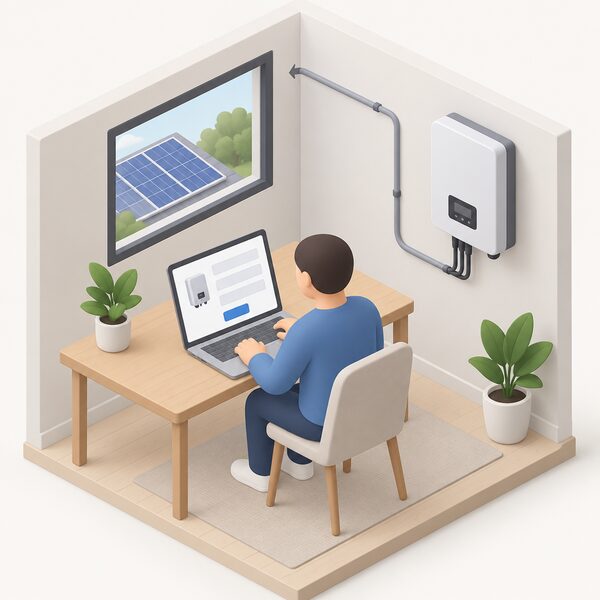
SolarEdge's warranty position has two layers, and the second one has a deadline. The base inverter warranty runs from shipment, and SolarEdge states that it is extendable to 20 or 25 years depending on inverter model, bought as a one-time payment fee and purchased within 24 months of inverter shipment from SolarEdge4. The single-phase SE2200 to SE6000 range is listed on its datasheet with 12 to 25 years of warranty depending on the term chosen22. An independent review of the brand records SolarEdge product warranty at 25 years23.
Registration is not optional for the extended cover. SolarEdge states that its services require registration to online services from 1 April 2025, and that from the same date customers must register and receive a customer number before extending their inverter warranty4. The extension form accepts a full or partial inverter serial number, or a CSV import with columns for serial number parts and the requested number of years5.
"The warranty extension is available with a one-time payment fee and must be purchased within 24 months of inverter shipm"
The 25-year figure also appears in a different context. Ofgem's ECO4 innovation guidance requires that a manufacturer warranty be registered for the solar PV array, including system components, covering at least a 25-year period24. That is a scheme condition for funded installations, not a statement about any one brand, and it is worth separating from a product warranty an owner buys.
Safety and data: SafeDC, Cyber Informed Engineering and where your data is stored
SolarEdge's safety story is built on reducing DC voltage when the system is not running. SafeDC automatically reduces DC voltage to a touch-safe level, and appears across the Home Hub, Home Wave and Smart Module ranges12. SolarEdge describes a holistic safety approach including SafeDC, Rapid Shutdown and Sense Connect1, and the Home Hub range adds module-level monitoring, Sense Connect, an arc fault circuit interrupter and ground fault detection and isolation testing12.
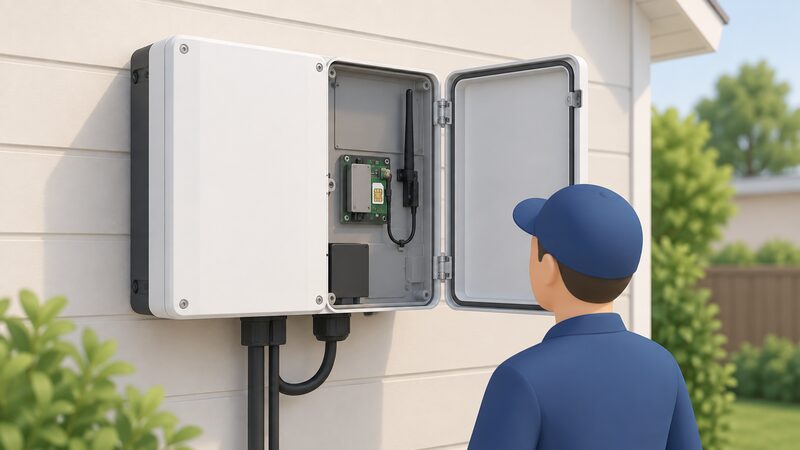
On data, SolarEdge states that its systems include encrypted communications, secure data hosting and multi-factor authentication1. It does not name a hosting country in the material available, so a household cannot tell from the published material where its monitoring data sits. What is clear is the dependency: the data leaves the property. The Cellular Plug-in with Data Plan uses available cellular networks such as LTE FDD with no need for internet infrastructure onsite, and its SIM card is installed within the inverter enclosure for outdoor resilience26. That is a genuine independence benefit for a property with poor broadband, but it substitutes one third party for another.
Enphase's published material in this area is thinner. Its support portal offers an AI assistant that answers general questions about Enphase products, solar energy and troubleshooting without logging in15, which is a lower barrier than an account-only route. Beyond that, the material available does not set out Enphase's data hosting or encryption position in comparable detail.
Cost, availability and what owning a SolarEdge system means for independence
Neither brand publishes a UK installed price, and prices for both are installer-quoted. What the material does show is the shape of the cost. SolarEdge's warranty extension is a one-time payment fee rather than a subscription4, and the extension window closes 24 months after shipment, so the decision arrives early in the system's life. SolarEdge inverters generally come with 200% oversizing, so panels can be added up to that range beyond the inverter rating10, which spreads the cost of a later expansion because the inverter does not have to be swapped.
Availability is mixed. The Home Wave Inverter is available in single phase and three phase14, and the Home Hub Inverters are available in three phase and single phase12. The Home Load Controller, which SolarEdge states increases savings and reduces grid dependency by maximising solar self-consumption, is sold through a distributor network rather than direct27. The SolarEdge ONE EV Charger supports both single- and three-phase configurations and is available in select EMEA markets28.
On the company itself, the picture is mixed and should be read as such. SolarEdge states it has millions of systems installed in over 140 countries1, describes itself as the world's number one solar provider with an award-winning inverter14, and states it was named one of the Top 100 Most Sustainable Corporations by Corporate Knights1. It has manufactured since 20061, and an independent review records manufacturing in Israel, China and the USA, with around 80% of the panels it sells in the UK made in China23. Against that, its UK support entity was dissolved on 10 March 20264, and it announced on the same date that its chief financial officer would step down and leave the company in June 2026, while reaffirming its first-quarter financial guidance4.
For a household, the independence question is straightforward. Either system reduces dependence on imported gas and on grid electricity for daytime load, and either leaves the household dependent on a manufacturer for firmware, monitoring and replacement electronics, and on the grid for everything the array cannot cover at the moment it is needed. A worked example in independent guidance puts a 4.6kWp ten-panel east-facing system on a 35-degree pitched roof with modest shading in Edinburgh at a payback of 18 years 0 months29. That is one modelled case, not a forecast for any particular home, and it shows how much the site and the tariff matter relative to the brand on the inverter.
The solar inverter and microinverter manufacturers page sets out where both brands sit among their competitors, and the Enphase microinverters page covers the Enphase range in more detail.
Sources29 cited
- SolarEdge Home, SolarEdge, 2026
- Enphase for homeowners, Enphase, 2026
- Solar panels safety advice, Electrical Safety First, 2026
- SolarEdge warranty, SolarEdge, 2026
- SolarEdge warranty, SolarEdge, 2026
- Solar panel installation, Energy Saving Trust, 2026
- Solar panel myths, Which?, 2026
- Solar panels advice, Energy Saving Trust, 2026
- SolarEdge Home Short String Inverters, SolarEdge, 2026
- Retrofit, SolarEdge, 2023
- Retrofit, SolarEdge, 2023
- SolarEdge Home Hub Inverters, SolarEdge, 2026
- Enphase App, Enphase, 2026
- SolarEdge Home Wave Inverters, SolarEdge, 2026
- Enphase support, Enphase, 2026
- Three phase inverter datasheet, SolarEdge, 2026
- Buying advice for solar panels, Which?, 2026
- Plumbing with renewables, CIPHE, 2026
- Solar photovoltaic panels, London Borough of Bromley, 2026
- Solar panels, London Borough of Hammersmith and Fulham, 2026
- SolarEdge Home, SolarEdge, 2026
- Single phase inverter datasheet, SolarEdge, 2026
- SolarEdge solar panels review, Which?, 2026
- ECO4 Innovation Approved Innovation Measures, Ofgem, 2023
- SolarEdge Smart Solar Modules, SolarEdge, 2026
- SolarEdge Cellular Plug-in, SolarEdge, 2026
- SolarEdge Home Load Controller, SolarEdge, 2026
- SolarEdge ONE EV Charger installation, SolarEdge, 2025
- Are solar panels worth it, Which?, 2025
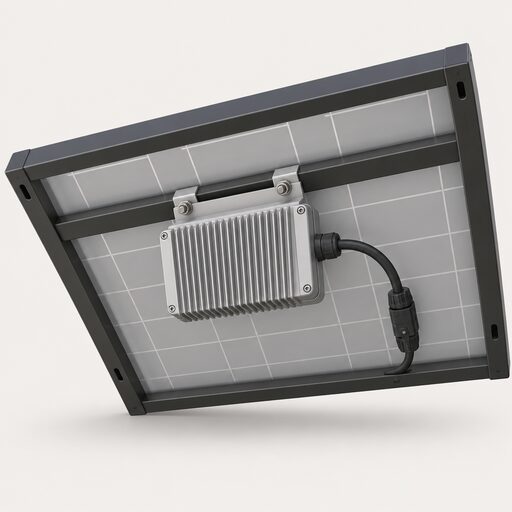 MicroinvertersMicroinverters sit behind each panel and turn its power into household electricity right there on the roof.
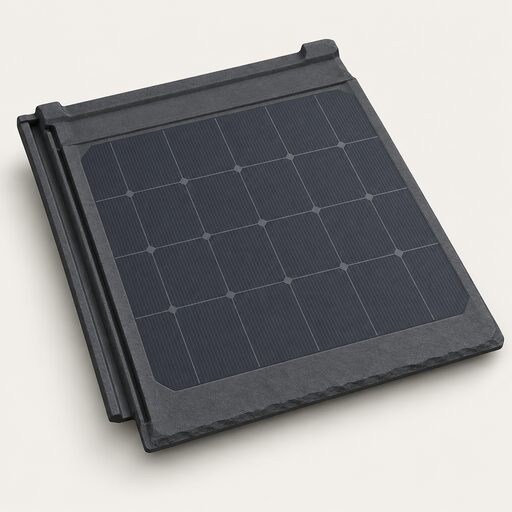 Roof-Integrated SolarSolar tiles replace your roof covering instead of sitting on top of it, so the finished roof looks like a roof.
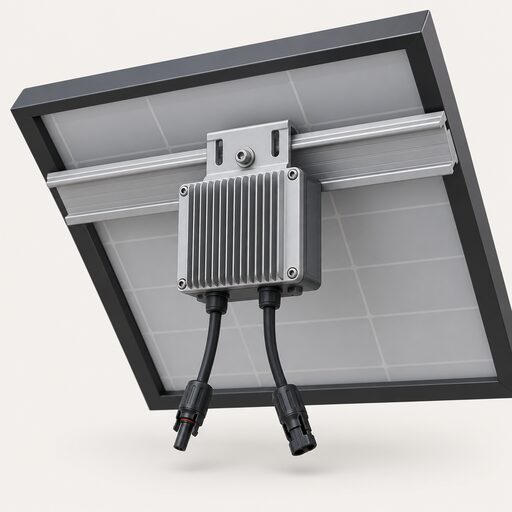 Power OptimisersIf one panel is shaded, does it drag the whole roof down?
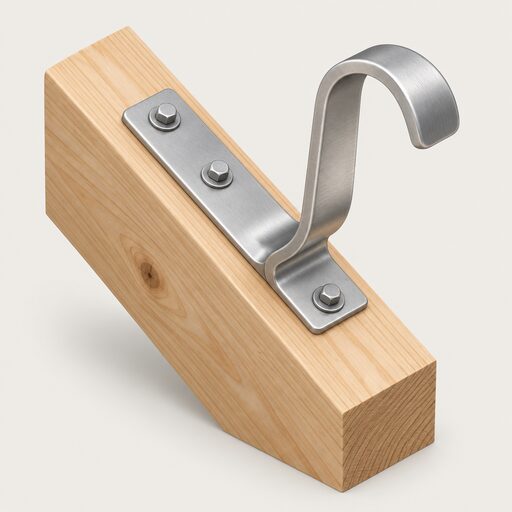 Solar Mounting SystemsWill your roof take the extra weight of solar panels, and will it still keep the rain out afterwards?
 Roof Orientation and ShadingWhich way should your roof face for solar panels, and does it really matter if it is not south?
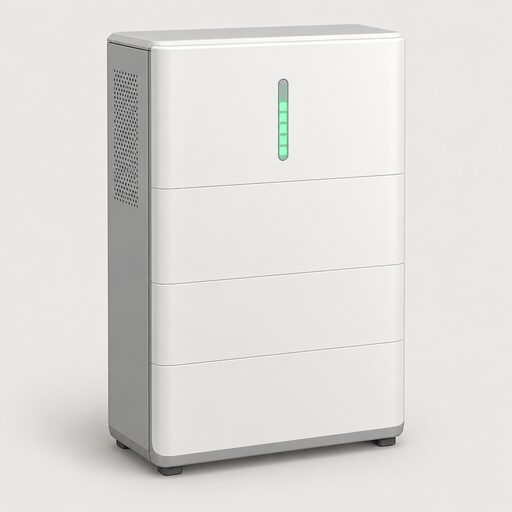 AC-Coupled vs DC-CoupledCan you add a battery to your existing solar panels without swapping the inverter, and does one kind waste more of your solar power than the other?