In this guide
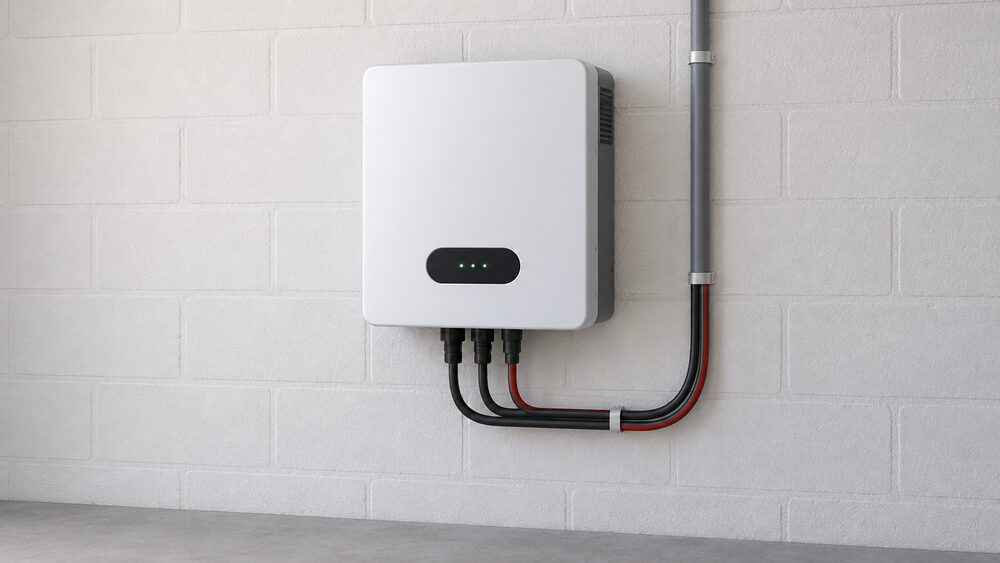
A solar inverter is the unit that makes solar electricity usable. Solar panels produce direct current (DC); homes run on alternating current (AC). The inverter converts one into the other, so without it the panels on a roof cannot power a kettle, charge a car or send anything to the grid. It is the working heart of every solar PV system, and in most installations it is a box mounted in a loft, garage or on an outside wall1.
It is also the part that wears out first. UK guidance expects an inverter to need replacing after about 10 to 12 years, at a typical cost of around £8002, while panels are expected to last 25 to 30 years3. Warranties are usually at least five years and can often be extended4. Independent testing and consumer bodies agree that inverter problems are the most common fault owners experience5.
For household energy independence, the inverter matters more than its size suggests. The type chosen decides whether a home can store its own power, whether it keeps running in a power cut, and how much of the system depends on a single manufacturer's hardware and software over two decades.
A solar inverter turns DC from the panels into usable AC
Every official and independent description of the inverter says the same thing. A local authority puts it plainly: the panels produce a direct current, "which needs to pass through a solar inverter to turn it into alternating current (AC) electricity"6. HMRC's VAT guidance describes the inverter as the part "which transforms direct current (DC) electricity generated from the solar panels into alternating current (AC) for mains" appliances7.
The difference matters because DC flows in one direction only, while household wiring and appliances are built for current that reverses direction many times a second. Marley, a maker of solar roof tiles, describes the process: the inverter uses a switching mechanism to change the flow of electricity, precisely controlled to mimic the wave-like form of AC, with the change of direction occurring at a rate of 50 or 60 Hertz depending on the location8. The output has to match the grid closely, because on a grid-connected system the inverter's AC runs through the same circuits as the mains supply.
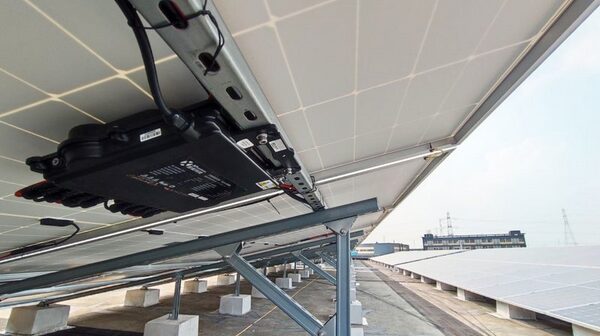
Where the conversion happens varies. On a conventional rooftop system, one central unit handles the whole array. On a plug-in or balcony kit, a micro-inverter, usually attached to the back of the panel, does the conversion at the panel itself9. Either way, the inverter is where the household's own generation meets the home's wiring and, through it, the grid. Electrical Safety First describes it as the part needed "to convert the direct current (DC) into alternating current" before solar electricity can be used at all10.
The inverter is therefore a point of dependence as well as a point of control. Panels have no moving parts and long warranties; the inverter is active electronics, and if it stops, generation stops with it.
String, micro, off-grid or hybrid: which type fits which home
Inverters sold for UK homes fall into a handful of families. The choice turns on roof layout and shading, whether a battery is wanted now or later, and whether the home is connected to the grid at all.
| Type | How it connects | Where it fits |
|---|---|---|
| String inverter | Panels wired in series to one central unit10 | The most common and cheapest option; roofs with even sun on all panels |
| Micro-inverter | One small inverter per panel, usually on its back9 | Shaded or split roofs; plug-in and balcony kits |
| Hybrid inverter | Handles solar and battery in one unit; can keep supplying the home when the grid fails11 | Homes with, or planning, battery storage |
| Off-grid inverter | Works without any grid connection | Cabins, boats and rural sites with no grid access11 |
String inverters
Electrical Safety First states that string inverters "are the most common and cheapest option as they connect solar panels in series"10. Because the panels are chained, the weakest panel can hold back the rest, which is why string systems suit unshaded roofs facing one way. Variants exist: SolarEdge sells a Home Short String Inverter, a three-phase unit for low-power residential systems that allows significantly shorter strings and can be mounted indoors or outdoors, the maker states12. More detail is on the string inverters page.
Micro-inverters
With a micro-inverter on each panel, the panels work independently. Maxeon, a panel maker, notes that if one panel has an issue, the rest of the array still performs efficiently13. That independence is the case for microinverters on shaded or complex roofs; the comparison with central units is set out in microinverters vs string inverters. Power optimisers offer a middle route with a central inverter; see power optimisers.
Hybrid and off-grid inverters
A hybrid inverter manages panels and a battery together. Off-grid inverters are for sites with no grid connection at all11; the wider setup is covered under off-grid solar. The differences between a standard grid-tied unit and a hybrid are set out in string inverter vs hybrid inverter and hybrid inverters.
Makers' ranges often span several families. Sungrow lists micro-inverters, residential inverters, string inverters, central inverters and modular inverters in its portfolio14.
Brands and ranges sold in the UK
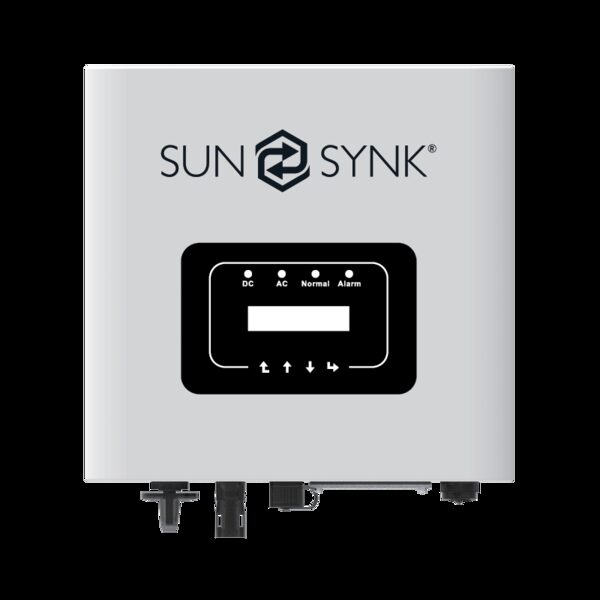
The UK market carries inverters from a broad set of manufacturers, each with its own ranges, warranty terms and monitoring apps. Brand pages on this site describe them individually, without ranking: Fronius, SolarEdge, SMA, Sungrow, SolaX, Fox ESS, Huawei, SOFAR, Deye, Sunsynk, Sigenergy, Solplanet, KACO and Delta, with micro-inverters from makers including Enphase and Hoymiles.
Two product descriptions give a sense of the range. SolarEdge describes its Home Short String Inverter as a three-phase PV inverter for low-power residential systems, designed for indoor or outdoor installation12. Sungrow states that its PV inverters offer seamless switching between grid following and grid forming, and can cut off a fault automatically and rapidly14. These are the makers' own descriptions of their products.
Brand matters for independence in a way panels rarely do. An inverter's warranty is only as good as the company behind it, its firmware and monitoring may run through the maker's cloud service, and a replacement years later may need to be compatible with an existing battery. Comparison pages such as Sungrow vs Fronius and Enphase vs SolarEdge set out the differences.
Sizing: when the inverter is too small or too large for the array
An inverter has a maximum power it can convert. Matching that to the output of the panels is part of system design, and getting it wrong in either direction has a cost. Marley sets out both sides15:
- Too small: the inverter "won't be able to handle the total power output" from the array during peak production, leading to what is known as inverter clipping and reduced overall system efficiency.
- Too large: the inverter may operate inefficiently, and an unnecessarily large unit means a higher up-front cost for no additional benefit.
Clipping is the loss of the output above what the inverter can pass. It happens at the brightest moments of the day, which in the UK means a limited number of hours in late spring and summer. A small amount of clipping on those peaks is a trade-off some designs accept; heavy clipping throws away generation the household has paid to capture.
The array itself should be sized first, from roof space, orientation and the home's demand; see what size solar system a home needs. The inverter is then chosen to suit it, and to suit the grid connection: a home's permitted export may be limited under network rules, covered in export limiting for solar and grid connection for solar (G98 and G99).
Sizing also bears on future plans. A hybrid unit chosen with headroom can take a battery later without replacing the inverter; a unit sized tightly to today's array may not. With micro-inverters, sizing is done panel by panel, and one underperforming panel does not drag the others down13. None of this can be read from a single number: sizing is installer-calculated for each home.
Efficiency: 95 to 98% in modern units
Converting DC to AC is never perfectly lossless, and inverter efficiency is the share of incoming power that comes out as usable electricity. The figures available are the makers' own guidance rather than independent testing. SolaX states that modern, high-quality solar inverters "should consistently operate at an efficiency rating between 95% and 98%", and that the most efficient on the market reach peak efficiencies between 98% and 99%16. For hybrid inverters, which also handle a battery, it gives around 96 to 98%16.
| Measure | Figure | Speaker |
|---|---|---|
| Modern, high-quality inverters in operation | 95% to 98% | SolaX guidance16 |
| Peak efficiency, most efficient on the market | between 98% and 99% | SolaX guidance16 |
| Hybrid inverters | around 96 to 98% | SolaX guidance16 |
Two points help read these numbers. First, "peak" efficiency is the best point on the curve, not the average across a day; an inverter spends much of its time at part load, early and late or under cloud, where efficiency is lower. That is one reason an oversized inverter can operate inefficiently15. Second, the gap between a good and an excellent unit is a couple of percentage points, which is small next to losses from shading, orientation or a failed inverter producing nothing.
In practice, efficiency is rarely what decides whether a household gets full value from its panels. Reliability, correct sizing and quick repair when a fault occurs weigh more over a system's life. Panel efficiency is a separate measure, explained in reading a solar panel datasheet.
Lifespan: around 10 to 12 years, shorter than the panels
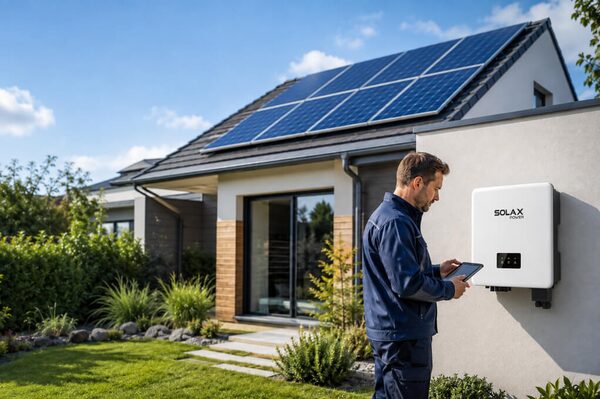
On one point the guidance is unanimous: the inverter will not last as long as the panels. Which? states that inverters "aren't expected to last as long as the solar panels" and that owners should expect to replace the inverter at some point during the life of the panels17. It also says a household is likely to have to replace the inverter at least once over the panels' lifetime17.
The exact figure varies between bodies:
| Speaker | Inverter life before replacement |
|---|---|
| Energy Saving Trust | after about 10 to 12 years2 |
| Energy Saving Trust (maintenance guidance) | every 10 to 15 years18 |
| Energy Saving Trust (buying a home with solar) | around 12 years1 |
| London Borough of Hammersmith and Fulham | around 12 years6 |
| NICEIC | 10 to 12 years19 |
| Plymouth Energy Community | about 10 years20 |
| Centre for Alternative Technology | every 10 years or so21 |
| EDF (supplier guidance) | around 10 years on average22 |
The central expectation across UK guidance is about 10 to 12 years.
Panels, by contrast, are given 25 to 30 years by the Parliamentary Office of Science and Technology, varying with their environment3. Other estimates run from about 25 years before significant degradation23 and 25 to 30 years24 to 30 to 40 years25. Which? puts it simply: "within 25 years, you'll need to replace the inverter"23. Over a panel life of 25 to 30 years, one or two inverter replacements is the realistic expectation.
For panel lifespans and degradation, see solar panel warranties, degradation and lifespan and how to know if solar panels need replacing.
Replacement cost: around £500 to £1,000
Replacing an inverter is the main running cost a solar system is expected to incur. UK guidance figures cluster tightly:
- Around £800, depending on the size and manufacturer of the system (Energy Saving Trust)2
- About £500 to £1,000 (Centre for Sustainable Energy)26
- Perhaps £500 to £1,000 (Centre for Alternative Technology)21
- £500 to £1,000, typical range (EDF)22
- Around £800, likely within a 25-year period (Consumer Protection Association, 2023)27
These are guidance estimates, not quotes, and no VAT basis is published for them; actual prices are installer-quoted. What drives the figure is the replacement model, whether it is a like-for-like swap or a change of type (for example a string unit replaced by a hybrid to add a battery), and the labour involved. A hybrid replacement combined with a new battery is a much larger job: a battery typically adds £2,500 to £5,000 to an installation26.
To put the replacement in context, the Energy Saving Trust gives an average installation cost for solar panels of around £6,10028, and a typical range of £6,000 to £10,000 is reported elsewhere29. One replacement at around £800 is a real, planned cost against savings; the effect on payback is covered in solar panel savings and payback and installation costs in how much solar panels cost.
Setting money aside for the inverter from the start is how many owners treat it: the cost is predictable, and a system that stops generating while a replacement is arranged also stops cutting bills.
Warranty: five years as a minimum, often extendable
The Energy Saving Trust's position is clear:
"Most inverters have warranties of five years as a minimum, which you can often extend by up to 15 years."
Low Carbon Hub gives a different baseline, stating "It is standard for inverters to have warranties for 10 years"30. The two documents disagree on what counts as standard, which reflects real variation between makers and products. Some products carry longer cover: Which? reports that the inverter in the InstaGen plug-in solar kit has a 12-year warranty31.
Set against a service life of about 10 to 12 years, the warranty term matters. A five-year warranty leaves years of likely life uncovered, while an extended warranty may cover most or all of the inverter's expected life. Terms differ on what is covered (parts, labour, a replacement unit) and on the conditions attached, which sit in each maker's warranty document.
This is the clearest dependence the inverter creates. Panels can be sourced from many makers; an inverter may be tied to a particular battery, app or firmware, and a warranty claim runs through one company for up to a decade or more. The panel side is covered in solar panel warranties.
Monitoring, grid interaction and backup switching
Modern inverters do more than convert power. Tigo, a maker of solar electronics, notes that depending on the system, the inverter may also play a role in monitoring, communications, grid interaction and other system functions32. That extra role shapes both what a household can see about its system and how it behaves when the grid changes.
Monitoring. Most inverters report generation to a display, an app or an online portal. This is how a fault is usually spotted. It is also a dependence: monitoring often runs through the maker's cloud, and Which? notes that an apparent loss of generation is occasionally just lost wifi communication after a router change33. More in monitoring a solar PV system.
Grid interaction. A grid-connected inverter must track the network's voltage and frequency. Electricity North West, a distribution network operator, lists solar inverter faults among the symptoms of voltage fluctuation, with grid voltage mismatch as the cause34. Sungrow states that its inverters offer seamless switching between grid following and grid forming14, the maker's description of how the unit behaves relative to the grid.
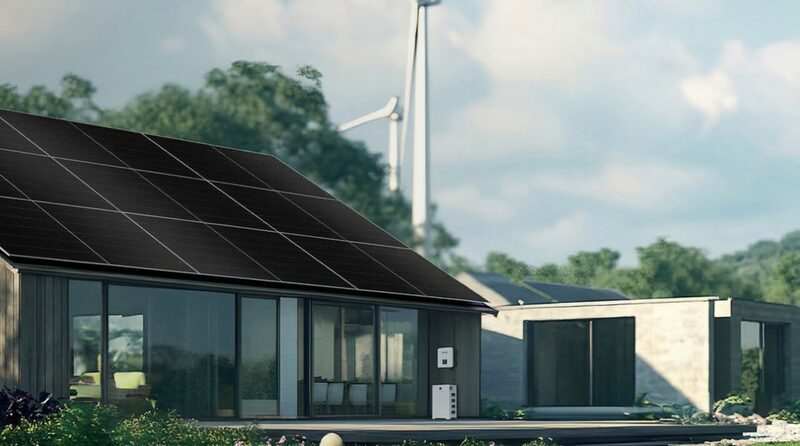
Backup switching. A standard grid-tied inverter shuts down in a power cut. A hybrid with a battery can do otherwise: SolaX states that when the grid goes down, the hybrid disconnects from the utility and continues powering the home from panels and battery11. Whether a given installation does this depends on how it is wired, including the switching that separates the home from the network. See do solar panels work in a power cut and adding battery storage to solar.
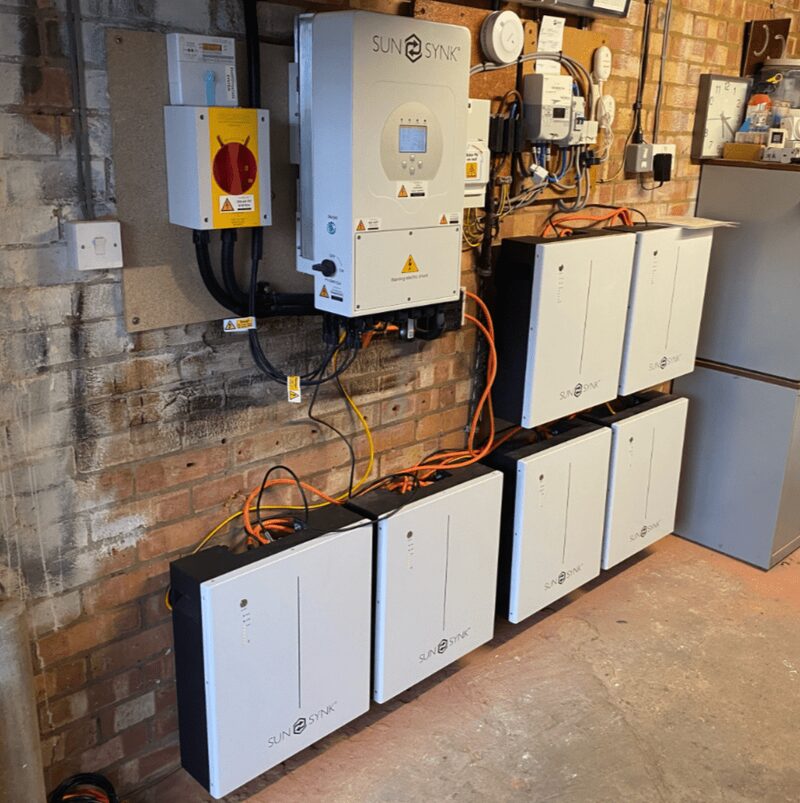
For independence, backup capability is the dividing line: a string inverter without storage keeps the household reliant on the grid at night and in a power cut, while a hybrid with a battery lets some of the home run on its own supply. The broader picture is set out in solar panels and household energy independence.
Mounting location and IP ratings
Inverters are mounted indoors (lofts, garages, utility rooms) or outside, and an ingress protection (IP) rating shows how well the case resists dust and water. SolaX states that "most modern outdoor solar inverters are designed with IP65 as a standard inverter IP rating, and some models reach IP66"33. For a fully outdoor installation exposed to rain, snow and dust, it recommends an inverter rated IP65 or IP66, and a battery rated at a minimum of IP6533.
Some models are designed for either setting; SolarEdge describes its Home Short String Inverter as offering flexible installation indoors or outdoors12. Location also affects heat, access for servicing and the length of cable runs, all decided at installation; DC cabling and isolation are covered in solar DC cabling, connectors and isolators.
Faults: the inverter is the most common one
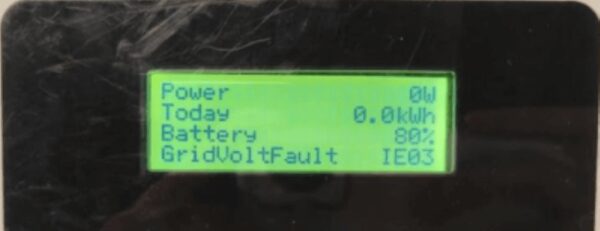
Which? states that "inverter problems tend to be the most common fault experienced"5, and describes the inverter as "the most common, and most serious, problem owners face"17. If a system produces no electricity at all, "it's most likely a fault with the inverter or a problem with the wiring", and occasionally a failed generation meter or lost wifi after a router change35.
Telling an inverter fault from a panel fault is usually a matter of what fails. A panel problem tends to reduce output (and with micro-inverters, only from that panel13); an inverter fault on a string system tends to stop generation altogether, often with an error code or warning light. Electrical Safety First advises regular visual checks for cracks, breaks, loose connections and cable damage from vermin and weathering10. When buying a home with solar, the Energy Saving Trust says to "get the system checked by a certified installer"36. Routine care is covered in solar panel maintenance and inspection.
Safety and servicing: diagnosis and replacement are professional work
An inverter sits at the junction of high-voltage DC from the panels and the home's AC wiring. Tigo states that "solar equipment can remain energized and should be serviced by qualified professionals", and that "a qualified solar professional should diagnose the system before anyone orders replacement equipment"32. Correct diagnosis avoids replacing an inverter when the fault lies in the wiring or a meter.
Official guidance is consistent on who does this work:
"Solar PV installations should always be carried out by a trained and experienced installer."
- Electrical Safety First stresses using a skilled, trained and qualified installer registered with a competent person scheme10.
- Installers who are members of a relevant competent person scheme can self-certify solar PV work, avoiding the need for separate building regulations approval38.
- MCS certification ensures compliance with UK standards and eligibility for schemes such as the Smart Export Guarantee; a non-certified installer cannot offer access to those benefits39.
- In rented homes, government guidance notes that for solar PV and battery storage "it may be necessary for a separate inspection to be carried out by an appropriately qualified person"40.
- Even for plug-in solar, a withdrawn government interim specification states that testing and modifications of a building's electrical system "shall only be performed by" professional electricians41.
Inverters also carry built-in protection. Maxeon notes that inverters provide ground fault protection13, and Sungrow states its units cut off a fault automatically and rapidly14. These features reduce risk; they do not make the equipment safe to open. Further detail is in solar PV fire and electrical safety and MCS certification for solar; DIY limits are set out in can you install solar panels yourself.
What the inverter means for a home's independence
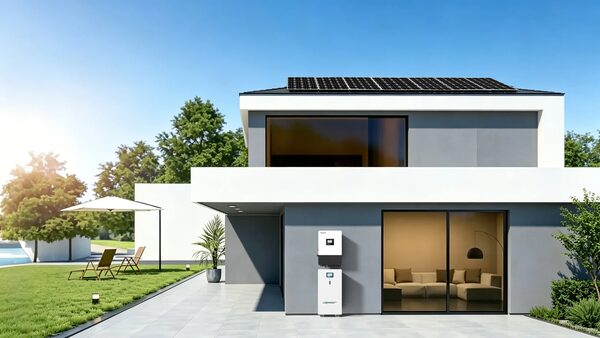
The inverter is what turns a roof of panels into electricity a household controls, and the type chosen sets the limits of that control. A grid-tied string inverter delivers daytime generation but leaves the home dependent on the grid after dark and during outages. A hybrid with storage extends self-supply into the evening and, where wired for it, through a power cut11. An off-grid inverter removes the grid entirely for sites without a connection11.
The dependence that remains is on the device itself and its maker: a component expected to last about 10 to 12 years2, replaced at around £8002, covered by a warranty from one company, and often monitored through that company's cloud. Planning for at least one replacement, and for the maker's long-term support, is part of owning solar.
Sources41 cited
- Buying a house with solar panels, Energy Saving Trust, 2026-08-13
- Solar power facts, Energy Saving Trust, 2026-08-13
- POSTnote 771, Parliamentary Office of Science and Technology, 2026-06-25
- Solar panels advice, Energy Saving Trust, 2026-08-27
- Solar panel myths debunked, Which?, 2026-06-09
- Solar panels, London Borough of Hammersmith and Fulham, 2026-09-17
- VAT energy-saving materials: VENSAV3330, HMRC, 2026-09-17
- How does a solar inverter work, Marley, 2026-09-17
- Plug-in solar panels guide, Uswitch, 2026-09-04
- Solar panels safety advice, Electrical Safety First, 2026-09-17
- Off-grid vs hybrid inverter, SolaX Power, 2026-03-13
- SolarEdge Home Short String Inverter, SolarEdge, 2026-09-17
- How do solar panels work, Maxeon, 2026-09-17
- PV inverters, Sungrow, 2026-09-17
- What size solar inverter do I need, Marley, 2026-09-17
- High-efficiency solar inverters, SolaX Power, 2026-05-27
- Most common solar panel problems, Which?, 2026-09-20
- Solar panel cleaning and maintenance, Energy Saving Trust, 2026-08-25
- Solar panel installation, maintenance and repair, NICEIC, 2026-09-17
- Solar photovoltaic panels, Plymouth Energy Community, 2026-09-20
- Solar photovoltaic, Centre for Alternative Technology, 2026-03-10
- Solar panel cost guide, EDF, 2026-09-17
- Solar panel installation, Which?, 2026-08-12
- Mythbusting: frequently asked questions, Low Carbon Hub, 2025-12-10
- Could solar panels save you £500 a year, Which?, 2026-06-17
- A complete guide to solar PV, Centre for Sustainable Energy, 2025-11
- Are solar panels a good investment, Consumer Protection Association, 2023-08-23
- Energy-saving upgrades for home renovation, Energy Saving Trust, 2026-05-05
- Do solar panels increase home value, Consumer Protection Association, 2026-01-20
- How to choose a good solar installer, Low Carbon Hub, 2025-10-20
- Plug-in solar panels, Which?, 2026-09-15
- Solar inverter replacement: homeowner guide, Tigo Energy, 2026-09-02
- Ingress protection ratings for inverters and batteries, SolaX Power, 2026-06-15
- Managing voltage changes in your property, Electricity North West, 2026-09-19
- Solar panel problems and how to solve them, Which?, 2026-03-26
- Moving house energy checklist, Energy Saving Trust, 2026-05-01
- Solar electricity (photovoltaics), Planning Portal, 2026-09-17
- Solar photovoltaics and planning in conservation areas, West Suffolk Council, 2026-09-17
- Can solar panels charge electric cars, Consumer Protection Association, 2026-04-15
- Electrical safety standards in the private and social rented sectors, GOV.UK, 2025-11-01
- Plug-in solar interim product specification (withdrawn), GOV.UK, 2026-06
 The Full Solar Panels GuideHow much do solar panels cost, and what could they save you each year?
 Warranties and DegradationHow long do solar panels actually last, and what do the warranties really cover?
 Solar Panel CostsA typical UK home pays somewhere between four and eleven thousand pounds for solar panels fitted, with most landing in the middle.
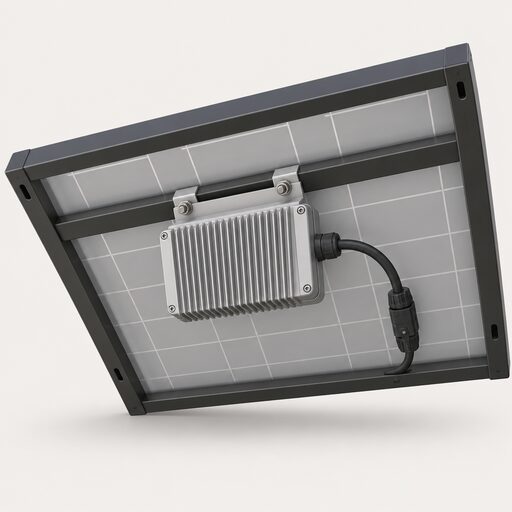 MicroinvertersMicroinverters sit behind each panel and turn its power into household electricity right there on the roof.
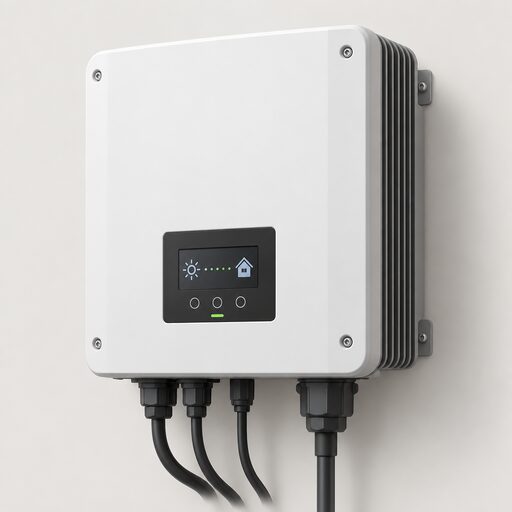 When an Installation Goes WrongYour solar panels have stopped generating.
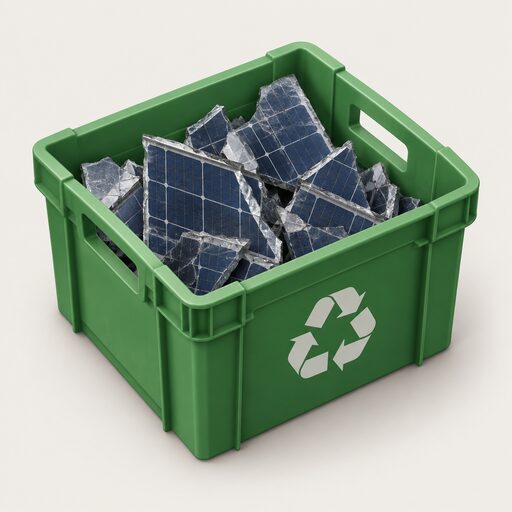 Panel RecyclingWhat actually happens to a solar panel when it stops working, and what can a household do with one?