In this guide
A manufacturer warranty on home energy equipment is a contractual promise from the maker, not a statement about how long the product will last. It commits the maker to repair or replace a defective unit within a set period, on conditions the maker sets. Myenergi, for example, states it will "at its sole discretion and free of material and labour charges, repair or replace the defective Product"1. Mixergy warrants its hot water cylinder against manufacturing defects for 25 years from installation, with cylinder components covered for 3 years2.
The periods vary enormously by equipment type, and so do the conditions attached. Inverters commonly carry 10 years as standard3. Solplanet offers end users a standard warranty of up to 5 years, extendable to up to 10 years4. Mixergy's 25-year cylinder cover depends on registration within 60 days of commissioning, an annual documented service, and water chemistry staying within limits2.
What matters for a household's energy independence is not the headline number but the conditions that keep it alive. A warranty that lapses through missed registration, an undocumented service or out-of-spec water leaves the household carrying the full replacement cost of equipment it depends on. This page sets out how the cover is structured, what voids it, how it transfers when a property is sold, and what a claim actually involves.
What a manufacturer warranty covers, and what it does not
A manufacturer warranty covers defects in the product itself. Mixergy's terms describe cover for "corrosion, material defects, and manufacturing faults" in the covered components, and state that the warranty covers replacement of the hot water cylinder or its components only2. Myenergi's product warranty commits the maker to repair or replace the defective product free of material and labour charges, at its sole discretion1. The myenergi libbi system warranty covers the battery pack, hybrid inverter and controller purchased for non-commercial, domestic use only6.
What sits outside is as important as what sits inside. Mixergy excludes third party components not supplied by Mixergy, licensed products, and failures caused by scale or water quality issues2. It also excludes consequential losses, including property damage or loss of earnings2. SolaX states its residential battery warranty does not include accessories and tool kit items provided with the product5. Myenergi excludes products installed for mass public charging, including supermarket or petrol station car parks and on-street parking1.
The distinction between a product warranty and a performance warranty matters most for solar. A product warranty covers the physical module or battery against defects. A performance warranty covers how much output it retains over time. The two run for different periods and are assessed differently, and a household reading a quotation should establish which one each figure refers to.
The two warranties that sit alongside it: statutory rights and retailer guarantees
A manufacturer warranty is one of three layers protecting a household, and it is not the strongest. The Consumer Protection from Unfair Trading Regulations and the Consumer Rights Act sit underneath everything, and MCS states plainly that guarantees "must not limit the statutory rights"7. Mixergy's own terms confirm that nothing on its warranty page affects statutory rights2, and Solplanet states its warranty does not affect the legal warranty provided by any wholesaler or retailer4.
The second layer is the installer's guarantee, which covers workmanship rather than equipment. MCS describes heat pump installations as typically carrying two layers: "a manufacturer's warranty covering the equipment itself, and an installer's guarantee covering the quality of the workmanship"8. The same split applies across home energy work: a manufacturer's guarantee covers the products used, while an installer's guarantee covers the workmanship and installation process9.
The third layer is the retailer's own obligations, which exist independently of anything the maker offers. A household that buys through an installer or merchant has rights against that seller regardless of the maker's terms.
Workmanship cover varies more than product cover. Some underfloor heating companies offer lifetime guarantees or cover accidental damage as well as systemic failures10. OFTEC states that a workmanship warranty is fully transferable between owners of a property and automatically passes to the new owner if the home is sold, for the duration of the warranty period11. The Northern Ireland Sustainable Energy Programme requires that all installations include a workmanship warranty and product warranties12.
For energy independence, this layering matters because the maker is not the only party standing behind the equipment. If a manufacturer fails or withdraws from the UK, the installer's guarantee and statutory rights against the seller remain, which is why the manufacturer failures and orphaned products question is worth understanding before purchase.
Warranty length by equipment type: inverters, cylinders and storage
Cover periods differ by equipment type and by maker, and the range is wide enough that a single figure is misleading.
| Equipment | Warranty period | Conditions | Source |
|---|---|---|---|
| Mixergy hot water cylinder | 25 years from installation | Registration, annual service, water chemistry limits | 2 |
| Mixergy cylinder components | 3 years from installation | As above | 2 |
| Mixergy X and iHP X stainless steel cylinder | 25 years with registration, excluding labour | Registration via the Mixergy Warranty Registration Form | 2 |
| Solplanet inverter | Up to 5 years standard, up to 10 years extended | End-user registration | 4 |
| Inverters generally | 10 years standard | Varies by maker | 3 |
| InstaGen plug-in solar kit inverter | 12 years | Kit-specific | 13 |
| SolaX residential battery | Starts from earlier of installation or 6 months after production | Registration within 90 days | 5 |
| Myenergi product | Extendable by a further 24 months | Purchased through My Account | 1 |
The cylinder figures are the longest on the page, and they come with the most conditions. Mixergy's 25-year cover applies to the stainless steel cylinder inner vessel including the sensor strip, with registration, and excludes labour2. The 3-year component cover is a separate and much shorter promise covering the parts that are most likely to need attention.
Inverter cover clusters around a decade. The Low Carbon Hub describes 10 years as standard for inverters3, while Solplanet's published position is a standard warranty of up to 5 years for end users, extendable to up to 10 years4. The two figures describe different things: one is a market norm, the other a specific maker's published terms. Where a quotation states an inverter warranty, the maker's own document is the figure that binds.
Battery cover is complicated by the start date rule. SolaX states the period begins from the earlier of the installation date or 6 months after the production date5. That means a battery sitting in a distributor's stock for a year can lose six months of cover before it is ever energised.
How the warranty start date is set
The start date is not always the day the equipment was switched on, and the difference can be substantial.
SolaX sets the start of its residential battery warranty at the earlier of the installation date or 6 months after the production date5. A unit installed quickly after manufacture starts its clock at installation. A unit that has been in storage starts its clock at the six-month mark regardless.
Mixergy's rule is different again. Where no other proof is available, the warranty start date may be calculated as up to 9 months after the date the appliance was tested on the Mixergy production line at end of line test2. That is a fallback rather than a default, but it means a household without paperwork can find the cover has already been running for months before the cylinder was fitted.
Registration timing feeds directly into the start date. SolaX states that if the system was not registered within 90 days, the warranty automatically starts 6 months after the battery left the factory5. Mixergy requires registration within 60 days of commissioning or first legal completion of the property2.
The practical consequence is that the date on the invoice is not necessarily the date the warranty began. For a household, the warranty period is a resource with a start point that can be set by production, dispatch or registration rather than by the day the system first ran. Establishing the actual start date at handover, and keeping the evidence, is what makes the remaining term knowable.
Registration and commissioning: the steps that make the warranty valid
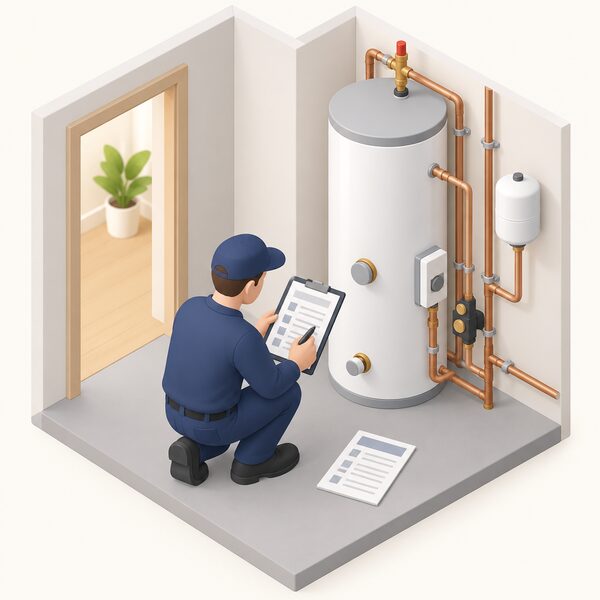
Registration is the step most often missed, and it is the one that converts a maker's promise into an enforceable entitlement.
Mixergy requires registration via its Warranty Registration Form within 60 days of commissioning or first legal completion2. The Barcud Solar Panel Installation Scheme, a Welsh scheme, requires inverter product registrations to activate guarantees and warranties to be completed within 48 hours of commissioning14. That is a far tighter window than most households would assume, and it shows how much registration deadlines vary between schemes and makers.
Commissioning is the second requirement. Myenergi requires the product to be correctly installed and commissioned by a competent person in accordance with the installation manual, local codes, relevant regulations, applicable regional legal requirements and industry standards1. Mixergy requires installation by a competent person in accordance with current UK Building Regulations and Mixergy installation instructions, and requires the Benchmark commissioning checklist to be completed and retained2.
The competence of the installer is not a formality. HHIC states that installers are supplied with the means, including documentation, training and technical support, to competently carry out and notify installation, commissioning and servicing work in accordance with manufacturer's instructions15. The Warm Homes Local Grant requires all installers working on the scheme to pass a rigorous vetting and onboarding process, including checks on qualifications, accreditations, insurance, health and safety standards and customer satisfaction16.
For a household, the registration certificate is part of the asset. It is the document that proves the warranty exists, and it is the first thing a claim will ask for. The warranty registration process is worth treating as part of the installation rather than an administrative afterthought.
Conditions that can void a warranty: servicing, water quality and installation standards
Warranties are conditional contracts, and the conditions are where most claims fail.
Servicing is the most common. Mixergy requires an annual service carried out and documented, either in the installation manual or supported by proof of payment from the servicing installer, and requires the servicing engineer to be registered with an appropriate competent person scheme, for example Gas Safe Register where applicable2. Myenergi requires the product to be used and maintained in accordance with the manufacturer's instructions in the Product User Manual1.
Water quality is the second. Mixergy requires water chemistry to remain within recommended limits, including chloride below 300 ppm, and states that in areas where hardness exceeds 200 ppm CaCO3, a water softener must be installed for the warranty to remain valid2. Where a plate heat exchanger is supplied with the cylinder for use with heat pumps, the property must be in a soft water area or the plumbing system must be deployed with a water softener17. For commercial installations requiring constant usage or reheat, Titanium immersion heaters must be fitted to comply with the warranty17.
Installation standards form the third group. Mixergy excludes products installed outside the United Kingdom and installations not carried out in accordance with Mixergy installation instructions2. Myenergi excludes products installed for mass public charging1. SolaX excludes accessories and tool kit items5.
Misuse is the catch-all. Mixergy states the warranty is invalidated if the cylinder has been misused, tampered with, or subjected to neglect17.
"If your hot water cylinder has been misused, tampered with, or subjected to neglect."
The pattern across makers is consistent: the warranty survives only while the equipment is serviced, the water is within specification, and the installation followed the maker's instructions. None of these are optional extras. For a household, the service record is not paperwork, it is the instrument that keeps the cover alive, and the manufacturer service plans question follows directly from it.
What happens to the warranty when you sell the house

Most manufacturer warranties on home energy equipment transfer with the property, which makes them part of what a buyer is purchasing.
Mixergy states the warranty is transferable if the property is sold, provided the service history is retained and passed to the new owner2. Myenergi states the warranty is transferrable to a new owner of the property if the product is left behind, and asks the seller to contact customer service to arrange it1. The libbi system warranty uses the same wording6.
Workmanship warranties transfer automatically. OFTEC states that a workmanship warranty is fully transferable between owners of a property and automatically passes to the new owner if the home is sold, for the duration of the warranty period11. That is a stronger position than the maker warranties, which require the seller to act.
The Energy Saving Trust advises buyers to request installation certificates, warranties and service records as part of a house purchase18. A handover pack for a home with energy equipment is expected to include product warranties19. For a seller, assembling those documents before a sale protects the value of the equipment; for a buyer, requesting them is the only way to establish what cover remains.
There is a wider point about independence here. A transferable warranty with a documented service history is an asset that survives the sale of the home. A warranty that lapses because the service record was lost is a liability transferred to the buyer, who inherits equipment with no cover and no way to reconstruct it.
Making a claim: what the process involves and what to have ready
The claim process is document-led, and the documents are the ones assembled at installation.
Mixergy publishes a claims line on 01865 595 875, open weekdays 09:00 to 17:00, and asks for the Product MX number, proof of installation and service history, and photos with a description of the issue2. Solplanet directs claims to its customer support department or an Online Claim Form, and states that if necessary its logistics network will deliver a replacement inverter directly4. Solplanet also provides an online tool to validate the current warranty status of an inverter, connection or monitoring device4.
Where a dispute escalates beyond the maker, the Energy Ombudsman requires that the complainant has already complained to the company, has sufficient evidence including the date the complaint was raised, and that the company name matches the account holder's bill20. Useful details for a case include the supplier's name, the name of the account holder, the account number and the date the complaint was first raised21. A complaints process expects the household to state what the problem is, when it happened, what outcome is wanted, and the first date the supplier was contacted, along with letters, emails and phone calls22.
For equipment connected to the network, there is a separate authorisation point. Guidance on registering energy devices states that the device owner must ensure the DNO has granted authorisation before the work is carried out23. Connect Direct is the route for applying to connect devices to the distribution network24.
The practical preparation is straightforward: keep the registration confirmation, the commissioning checklist, the service invoices and the original invoice together, and record the dates. A claim that arrives with those documents moves faster than one that arrives with a description alone.
Extended warranties: when paying for extra years makes sense
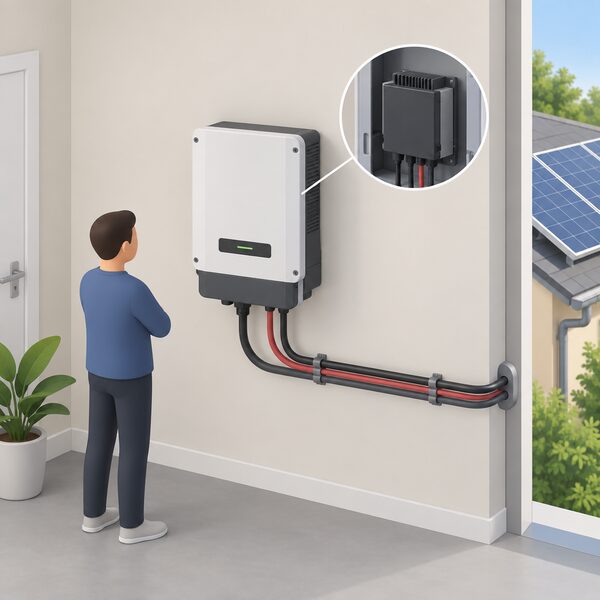
Extended warranties are sold by makers and by third parties, and the terms differ enough that the price is not the only consideration.
Myenergi offers the option to extend its warranty by a further 24 months by purchasing an extended warranty through My Account1. Solplanet states its warranty can be extended for up to 10 years4. Both are maker extensions of maker cover, which means they carry the same conditions as the original warranty, including servicing and installation requirements.
The value of an extension depends on what it covers and what the underlying period already is. A 25-year cylinder warranty has little room for extension. A 5-year inverter warranty extended to 10 years doubles the covered period, and inverters are the component most likely to need replacement within the life of a solar array. The Low Carbon Hub describes 10 years as standard for inverters3, which suggests an extension to 10 years brings a shorter warranty up to the market norm rather than beyond it.
Third-party extended warranties are a different product. They are insurance-like contracts rather than maker promises, and their terms, exclusions and claims processes are set by the provider. The maker's conditions on servicing and installation do not necessarily apply, but neither does the maker's obligation to repair or replace.
For a household, the question is what happens when the cover ends. An in-home display, for example, carries a 12-month warranty during which the supplier could repair or replace it, after which the supplier may apply a charge26. That is a small illustration of a general pattern: short cover on display and monitoring equipment, long cover on the structural components, and a gap in the middle where the household carries the risk.
Sources26 cited
- Myenergi Product Warranty, Myenergi, 2026-09-17
- Mixergy Product Warranty Terms and Conditions (after 3 June 2026), Mixergy, 2026-06-02
- How to choose a good solar installer, Low Carbon Hub, 2025-10-20
- Solplanet Warranty, Solplanet, 2026
- Solar Battery Warranty Guide, SolaX Power, 2026-06-23
- myenergi libbi-system warranty, Myenergi, 2026-09-17
- Insurance backed guarantee products, MCS Certified, 2026-05-13
- Heat pump certifications, The CPA, 2026-04-02
- Compare contractors fairly, The CPA, 2025-11-27
- Underfloor heating pros and cons, Which?, 2026-05-27
- Workmanship warranty, OFTEC, 2026-09-20
- Northern Ireland Sustainable Energy Programme, Energy Saving Trust, 2026-09-07
- Plug-in solar panels, Which?, 2026-09-15
- Barcud Solar Panel Installation Scheme Specification, Sell2Wales, 2026-06-15
- HHIC guidance, HHIC, 2026-09-17
- Warm Homes Local Grant, Oxfordshire County Council, 2026-03-30
- Mixergy hot water cylinder warranty (before 3 June 2026), Mixergy, 2026-06-02
- Energy saving house viewing tips, Energy Saving Trust, 2026-05-20
- Handover Pack, Flexi-Orb, 2024-06-24
- Creating a case with the Energy Ombudsman, Energy Ombudsman, 2026-09-20
- Energy Ombudsman dispute process, Energy Ombudsman, 2026-09-19
- Complaints process, Smart Energy GB, 2026-03-16
- Register energy devices in homes or small businesses, GOV.UK, 2021-03-31
- Connect Direct, Energy Networks Association, 2026-09-17
- Demand flexibility service, Electrical Safety First, 2026-09-19
- Myth busting smart meter problems, Smart Energy GB, 2026-09-17
 Boiler WarrantiesHow long does a boiler warranty actually last, and what do you have to do to keep it?
 The Full Brands GuideWhich boiler, heat pump or solar brand can you trust, and who actually owns it?
 Workmanship WarrantiesIf something goes wrong with your solar panels, who actually fixes it and who pays?
 Warranties and DegradationHow long do solar panels actually last, and what do the warranties really cover?
 Buying Energy Equipment OnlineWho fits your solar panels, battery or heat pump when you buy them online, and who puts things right if they go wrong?
 Home Battery WarrantiesHow long does a home battery warranty really last, and what does it actually promise?