

In this answer
Short answer
Fitting a thermostat yourself does not, by itself, void a boiler warranty. The risk sits with damage and with the boiler's own gas and combustion parts, not with the control. OFTEC, the trade body for liquid fuel heating, states that attempting repairs or a boiler installation yourself, or using someone who is not properly qualified, could void your boiler warranty in the likely event it causes damage1. A room thermostat is not a boiler installation, and a correctly wired control that leaves the boiler casing untouched sits outside that warning.
What matters is the split between the two guarantees that sit on a heating system. Independent guidance describes a manufacturer's warranty covering the equipment itself, and an installer's guarantee covering the quality of the workmanship and the installation as a whole2. A DIY thermostat touches the second of those, because there is no installer to carry it, and only touches the first if the work damages the boiler.
What a boiler warranty actually covers
A domestic boiler guarantee is narrower than most householders assume. Vaillant's own guarantee covers material and labour charges to repair or replace components within the boiler against manufacturing defects from the installation date, where the repair is carried out by Vaillant or a Vaillant authorised Gas Safe registered engineer3. The same document states that the guarantee applies only to boiler component failures and does not apply to any other central heating system component external to the boiler3.
That boundary is the whole answer to the DIY question. A thermostat, whether a dial model or a smart control, is external to the boiler. A fault in the thermostat is not a boiler component failure, so it falls outside the boiler guarantee in either direction: the manufacturer is not obliged to fix it, and a fault there does not automatically invalidate cover on the boiler itself.
Cover also varies in what it pays for. Which? reports that most warranties cover the cost of parts, but some may not cover labour costs to carry out repairs, and some take a deposit for a call out that is returned only if the fault is covered7. A guarantee that covers parts only changes the arithmetic of any claim, whatever caused the fault.
There is a separate condition that catches many households, and it has nothing to do with who fitted the thermostat. Boiler manufacturers offer generous product warranties on new appliances, but this is conditional on the heating system being effectively cleaned at the time of installation8. Sludge and debris from a system that was not cleaned is a common reason for a claim to be refused, and it is a condition the householder can check in the commissioning paperwork.
For a household's energy independence, the guarantee is a financial backstop rather than a control. It does not make the home any less dependent on gas, on a supplier or on the grid. What it does is cap the cost of a boiler failure, and that cap is what a DIY installation puts at risk if the work is done badly.
Why the manufacturer's terms matter more than the DIY work itself
The guarantee document, not the act of installation, decides what happens after a fault. Vaillant's terms are explicit that repair or replacement is carried out by Vaillant or a Vaillant authorised Gas Safe registered engineer3. That is a condition about who does the repair, not about who fitted the control.
Manufacturers also set conditions on the wider system. The requirement that the heating system be effectively cleaned at installation is a manufacturer condition attached to a generous product warranty8. A household that self-installs a thermostat on a system with no commissioning record is exposed on that point regardless of the thermostat.
Where a scheme or a grant has paid for work, the terms tighten further. The Warm Home Discount (England and Wales) Regulations 2026 require that the boiler or central heating system is installed by, or under the responsibility of, a person who is registered with TrustMark, with a certificate of lodgement issued by the operator of TrustMark9. That is a condition on funded installations, and it applies in England and Wales. Scotland and Northern Ireland run their own arrangements, so a household in those nations should check the scheme rules that funded its work rather than assume the same wording.
The practical reading is that a manufacturer's terms are written around the boiler and its combustion path. They say little about a control on the wall. Where a claim is refused, the reason given is usually a system condition, a missed service or damage traced to the installation, not the mere fact that the householder fitted a thermostat.
When DIY wiring can be argued to have caused a fault
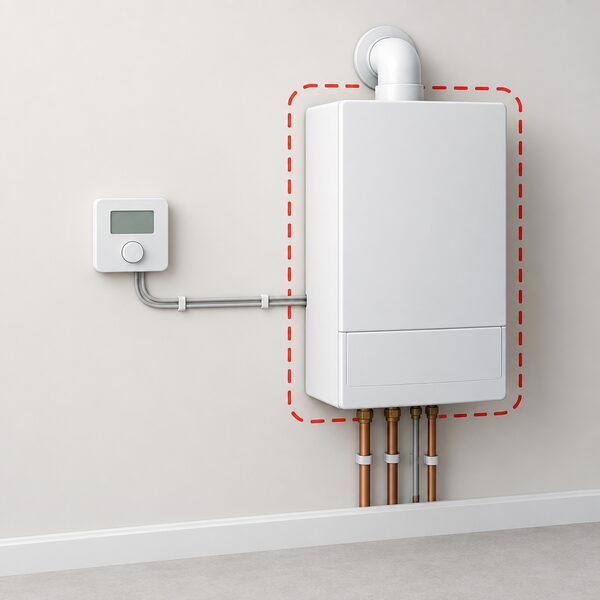
Causation is the hinge. A guarantee claim turns on whether the fault is a manufacturing defect in the boiler or something else, and control wiring is one of the "something else" candidates.
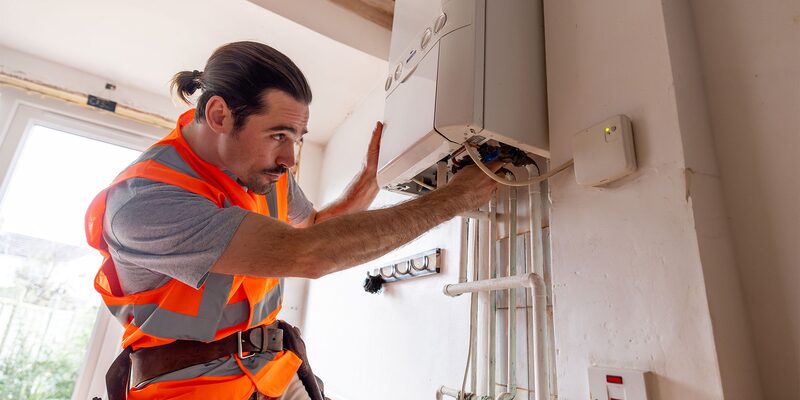
The clearest line is the boiler casing. Which? states that anyone who is not a trained heating professional should never attempt any repairs that involve removing the boiler casing, because it is dangerous and invalidates any remaining warranty5. That is a hard rule and it is not about thermostats. Any work that opens the casing, whether to reach a wiring centre or to trace a connection, crosses it.
Beyond the casing, the argument is technical. A thermostat that is wired incorrectly can leave a boiler running when it should be off, or prevent it firing when there is demand. Proving that a specific boiler fault followed from a specific wiring error is what a manufacturer's engineer would have to do to refuse a claim on those grounds. The evidence is usually the state of the wiring at the time of inspection.
There is also a safety dimension that sits outside warranty entirely. The Electrical Safety Council has warned about thermostat faults in electric heating products, noting a recall risk where the thermostat may become faulty and therefore not stop the product overheating10. That is a product recall matter rather than a warranty one, but it shows why control faults are treated seriously.
For a household, the honest position is that a neat, documented installation on existing wiring is unlikely to be challenged, and a botched one that disturbs the boiler or leaves a circuit miswired gives a manufacturer a defensible reason to refuse. The difference is not the DIY label. It is what the engineer finds.
Using a competent person or registered installer
Where the work involves new mains wiring, the building regulations route is the one to follow. Official guidance recommends hiring an installer who is registered with a competent person scheme, a registered competent person, who can self-certify that the work meets the required standards11. The Planning Portal puts it the same way: it is best to use an installer registered with a competent person scheme who can self-certify compliance with the building regulations12.
For gas work the position is settled. If you employ a registered installer with the relevant competencies to carry out the work on gas appliances, they should be able to self-certify the work without the need for close involvement of building control13. That is why boiler-side work is not a DIY task in practice, whatever the warranty says.
For finding an installer, official scheme rules point to searching a competent person register such as TrustMark, the government endorsed scheme for work done around the home, which will assess your circumstances and property to identify suitable measures14. The same register appears in the Warm Home Discount regulations as the qualifying body for funded boiler and central heating installations9.
Underfloor heating shows where the line falls for a control. The Centre for Sustainable Energy describes dry underfloor heating as an option for a skilled DIY-er, which would help keep costs down, but a qualified electrician would need to connect it to the mains electricity15. The control can be a household job; the mains connection is not.
Workmanship guarantees are the other half of the picture. Independent guidance states that the installer's workmanship should have a guarantee for two years16, and MCS Certified requires that you guarantee the workmanship of the installation for a minimum of two years following installation4. OFTEC's workmanship warranty covers liquid fuel-fired boiler, cooker, storage and supply installations, solid fuel-fired stove installations, renewable heating technology installations, heating and plumbing installations, ventilation installations not including air conditioning, and electrical work covered by building regulations Part P17. A household that self-installs a thermostat has no workmanship guarantee on that control, which is the trade-off.
How to protect your warranty if you install a thermostat yourself
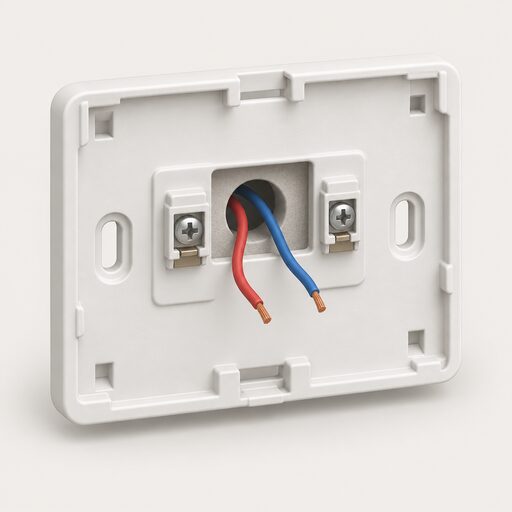
The protection is paperwork and restraint. Keep the maker's installation instructions, note the date of fitting, photograph the wiring before and after, and record any commissioning readings. Written records of maintenance work and observations are expected practice in the heating trades18, and official guidance on heat networks recommends that records of technical maintenance be kept for five years6. That file is what an engineer or a manufacturer will ask for if a fault is reported later.
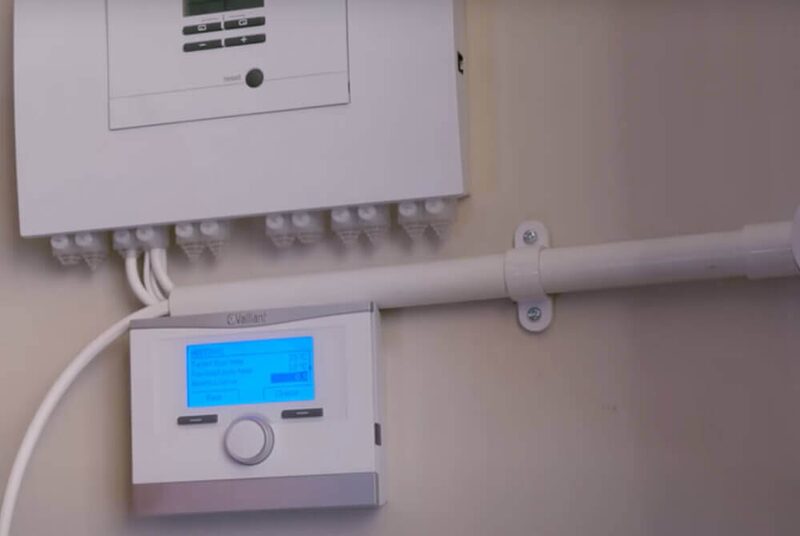
Choose the control that matches the work you can do. Netatmo notes that DIY installation is possible, especially for wireless models, saving on handyman installation costs19. Wireless models avoid new cabling to the boiler, though the receiver at the boiler is still a wired component: Smart Energy GB describes how a wireless thermostat usually sends a signal to a receiver connected to the boiler, which then tells the boiler when to turn the heating on or off20. Wired thermostats are more complex, because they need to be wired into the walls of the home21.
Where a maker's own guidance points to a trade, follow it. Hive recommends professional installation of its smart thermostats22, and Hive recommends finding a local tradesperson to install the smart thermostat, as it can be a bit of a task23. tado takes the other position: it says its thermostats can be self-installed and Which? found the guidance straightforward and simple to follow22. Warmup states that professional installation helps ensure the system operates safely, performs as intended, and remains covered by the manufacturer's warranty where applicable24. Those are maker positions on their own products, and they differ.
Component warranties on the control itself are short and separate. Heatrea Sadia's Titanium thermostat carries a two year warranty for the thermostat7. Where a control is supplied under a battery storage warranty, the remedy may be limited to replacement or repair using either new or refurbished goods at the supplier's sole discretion once a claim is approved25. Read the control's own terms, not just the boiler's.
"Attempting repairs or a boiler installation yourself, or using someone who is not properly qualified, could void your boiler warranty in the likely event it causes damage"
The independence picture is worth stating plainly. A thermostat gives a household local control over when heat is called for, and a wireless or battery model reduces the wiring it depends on. What remains is the boiler, the gas or fuel supply, the electricity that powers the control, and, for smart models, the maker's app and cloud service. A DIY installation changes none of that. It changes who is answerable if the control fails, and that is the warranty question in its entirety.
Sources25 cited
- Heat pump certifications, The CPA, 2026-04-02
- Programmable thermostat, Netatmo, 2026-09-20
- Domestic boiler guarantee, Vaillant, 2026-09-17
- Insurance backed guarantee products, MCS Certified, 2026-05-13
- Common boiler problems and repair costs, Which?, 2025-09-17
- Heat networks regulation: consumer protection guidance, Ofgem, 2026-01-13
- Common mistakes that can invalidate your boiler warranty, Which?, 2025-10-22
- HHIC guidance, HHIC, 2026-09-17
- Warm Home Discount (England and Wales) Regulations 2026, legislation.gov.uk, 2026-03-27
- Immersion heater advice from the Electrical Safety Council, Electrical Safety First, 2026-09-19
- Do I need building regulations approval for electrical alterations, Planning Portal, 2026
- Building regulations general information, Planning Portal, 2026
- Boilers and heating, Planning Portal, 2026
- ECO scheme home energy efficiency, Leeds City Council, 2026-09-20
- Underfloor heating, Centre for Sustainable Energy, 2025-11
- How to choose a good solar installer, Low Carbon Hub, 2025-10-20
- Workmanship warranty, OFTEC, 2026-09-20
- Your home guide to solar water heating, OFTEC, 2026-09-20
- Can I install a thermostat myself, Warmup, 2026-09-20
- What is a smart thermostat, Smart Energy GB, 2026-08-19
- Heating controller, Netatmo, 2026-09-20
- How to buy the best smart thermostat, Which?, 2026-09
- How to buy the best smart thermostat: Hive, Which?, 2026-09
- Titanium thermostat, Heatrea Sadia, 2026-09-17
- Single phase battery warranty document, GivEnergy, 2026-09-17
 Boiler WarrantiesHow long does a boiler warranty actually last, and what do you have to do to keep it?
 Installing Heating ControlsSwapping a thermostat or programmer looks simple, but which jobs can you safely do yourself and which need a registered installer?
 Manufacturer WarrantiesHow long does a boiler, heat pump or solar panel warranty actually last, and what do you have to do to keep it valid?
 Registering a WarrantyGetting a new boiler covered for longer usually means registering it quickly, often within a month of installation, or the long guarantee drops to a year.
 Buying Direct or Via InstallerCan you buy a heat pump yourself and still get the grant, or does it have to go through an installer?
 When Your Installer Goes BustWhat happens to deposits, part-completed work, workmanship guarantees and complaints when a home energy installation company fails, and how to claim on deposit protection, an insurance-backed guarantee, card or finance cover, and who honours the manufacturer's warranty.