In this guide
A product recall is a formal instruction that a specific product sold in the UK must be removed from use, and it usually comes with a free replacement, repair or refund from the manufacturer or a retailer1. For household energy equipment, that covers everything from a plug-in electricity saving device to a halogen heater, an inverter, a battery or a heating control. The government's Product Safety Alerts, Reports and Recalls service is the central register, and it does not cover food and drink, vehicles, or medicines and medical devices1.
The distinction that matters most to a household is between a recall and a safety notice. A recall requires action: the product is defective in a way that cannot be corrected by normal use, and the owner has to do something to get the remedy. A safety notice warns of a risk and may set out precautions, checks or a narrower remedy. Both are published, both name the product, and both are issued because a fault has been identified rather than suspected.
For a household pursuing energy independence, a recall is a reminder that self-sufficiency still runs through equipment someone else made, certified and supports. A battery, an inverter or a heat pump reduces dependence on the grid and on a supplier, but it adds dependence on a manufacturer's safety process, its spare parts and its willingness to honour a remedy years after the sale. The sections below set out how recalls work, how to check a product, what the remedy routes are, and where the limits sit.
What a product recall means for household energy equipment
A recall is a corrective measure applied to a product already in someone's home. The government's own definition is precise: recalls "are for specific products that have been sold in the UK and may require you to act to receive a free replacement, repair or refund from the manufacturer or a retailer"1. The action sits with the owner, which is why registration and record-keeping matter so much for installed equipment.
The scope of the register is deliberately bounded. It excludes food and drink, vehicles, and medicines and medical devices1. That leaves household energy equipment squarely inside it: heaters, chargers, batteries, inverters, controls and the plug-in devices sold as energy savers. One such product, an Electricity Saving Box Power Saving Device Smart Energy Saver, was subject to a notice requiring "the recall of the product from end users"6. The wording is worth noting: the recall runs to the end user, not to the retailer's shelf.
For a household, the practical meaning is that a recall converts a private possession into a product with an outstanding obligation attached. The unit may still work. It may show no fault at all. The recall exists because the risk has been assessed at population level rather than unit level, and the remedy is offered across the affected batch.
This is where energy independence meets product safety. A home battery or a solar inverter is bought to reduce reliance on imported gas and on a supplier's tariff. That independence is real, but it is contingent on a manufacturer continuing to exist, to hold spares and to honour a remedy. Where a maker has failed, the recall route narrows sharply, and the household is left with a product and no counterparty. The manufacturer failures and orphaned products page covers that position in detail.
Safety notices and how they differ from a full recall
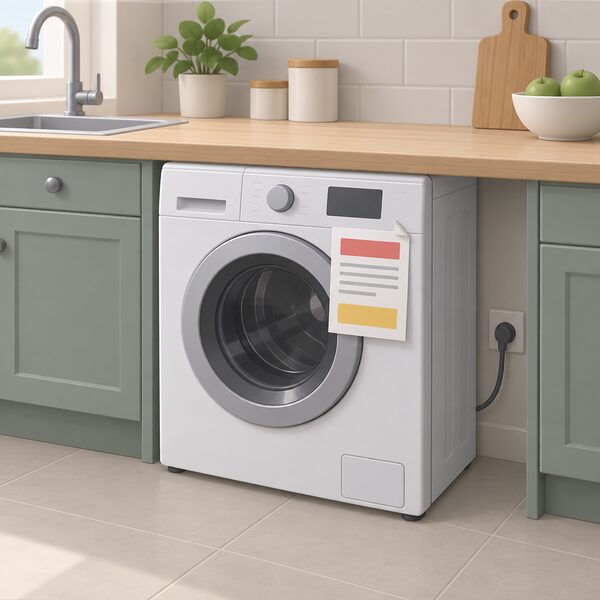
A safety notice and a recall are both corrective, but they sit at different points on the same scale. A recall requires the product to be withdrawn from use and a remedy provided. A safety notice may require a check, a precaution, or a specific action short of return. The legal framework behind both is the Electrical Equipment (Safety) Regulations 2016, and regulation 12 sets out what a notification must contain.
Under regulation 12, the notification must state "the respect in which the electrical equipment is considered not to be in conformity with Part 2"7. In other words, the notice has to say what is wrong, not merely that something is. The same regulation provides for the power to "recall the electrical equipment"7, which is the strongest corrective measure available and applies in England, Wales and Scotland.
The territorial position is not uniform across the UK. The energy-saving materials rules applying to Northern Ireland are framed with the purpose of "ensuring consistency across the whole of the United Kingdom"8, which signals that the Northern Ireland position is aligned rather than identical. Where a notice covers Great Britain only, or applies UK-wide, the notice itself will say so, and that is the wording to rely on.
There is also a live standards backdrop. The government has confirmed it "will proceed with new Ecodesign and Energy Labelling regulations for household tumble dryers in Great Britain, broadly as consulted upon, with a small number of refinements based on stakeholder feedback"9. Ecodesign rules of this kind set the conformity baseline that a recall notice measures a product against, so changes to them change what counts as non-conforming.
For a household, the distinction has one practical consequence. A safety notice may leave the product in place with conditions attached. A recall does not. Where a notice is ambiguous about whether the product can be used, the safe reading is the restrictive one, and the manufacturer's own instruction settles it.
How to check whether a product in your home has been recalled
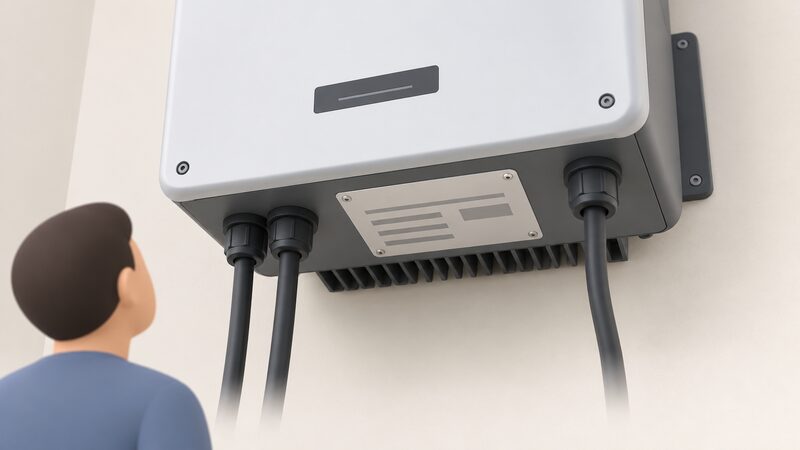
The check itself is straightforward, but it depends on having the right identifiers to hand. The model number and serial number are the two pieces of information a recall notice will name, and they are on the rating plate or data label on the product. For installed equipment, the same details appear in the commissioning paperwork and in the warranty record, which is one reason registering a warranty is worth doing properly.
The central place to look is the government's Product Safety Alerts, Reports and Recalls service1. It lists specific products sold in the UK and is the authoritative register. Consumer bodies also carry recall pages for electrical goods; Electrical Safety First, for example, publishes a page for the Tesco electric heater recall2. Checking both the register and the maker's own notice is the reliable approach, because a notice may appear on one before the other.
For households that want help with the wider energy picture at the same time, local advice services exist. The Local Energy Advice Programme offers a "FREE home visit from a qualified Home Energy Advisor" and will "help you check if you are on the cheapest tariff"10. That is a tariff check rather than a recall check, but the visit is a chance to inspect installed equipment and note model and serial details.
In Scotland, Home Energy Scotland runs a "Free independent advice and referral scheme"11, which can point households towards the right route for a product concern. In England and Wales, the Energy Saving Advice Service is reachable at www.direct.gov.uk/savingenergy or on 0300 123 123412. These services do not administer recalls, but they are a route to advice when a household is unsure who to approach.
What to do if your product is on a recall list
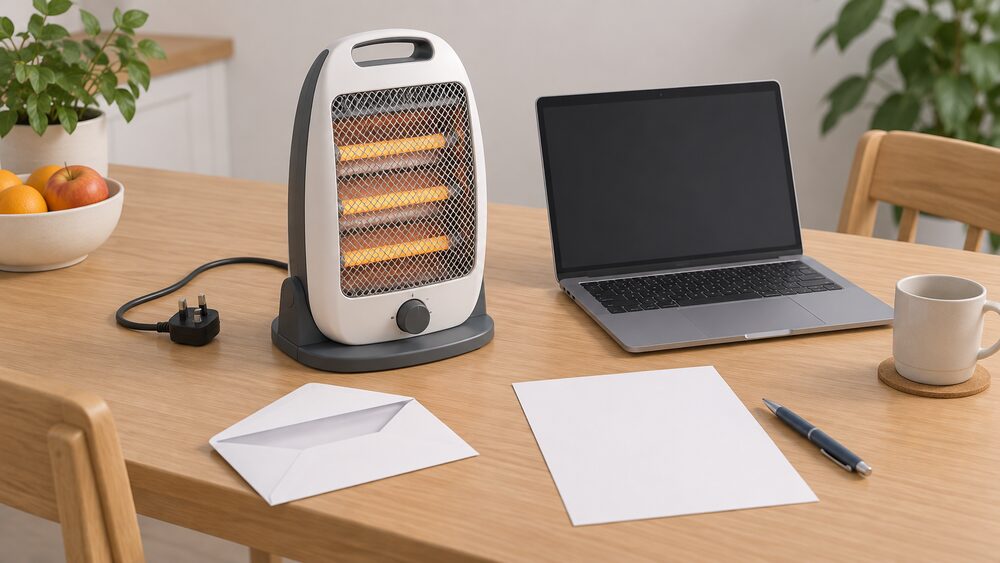
The first step is to stop using the product. The Tesco halogen heater recall states that owners should "stop using it until it has been checked by the manufacturer"2. That instruction is typical, and it applies even where the product appears to be working normally.
The second step is to contact the party named in the notice. Recall notices normally name the manufacturer or the retailer, and the remedy is described in the notice itself. The Tesco notice states that owners "will be given a full refund"2. Other notices offer a repair or a replacement part. The notice is the document that governs which applies.
Where the product was installed rather than bought over a counter, the installer is often the practical first contact, because they hold the commissioning record and the serial number. For complaints about installation quality, workmanship or installer behaviour under the Boiler Upgrade Scheme, the guidance is to "raise it with your installer in the first instance", then the installer's consumer code, which may be HIES or RECC, or the MCS installation quality complaints route13. The consumer codes are reachable directly: RECC on 0207 981 0850 and HIES on 0344 324 524214.
If the product is part of a government-funded installation, there are separate complaint routes. For the Energy Company Obligation, Ofgem publishes a complaints process page for complaints about an installation15. For the Boiler Upgrade Scheme, policy complaints go to DESNZ at boilerupgradescheme@energysecurity.gov.uk, and administration complaints to feedback@ofgem.gov.uk13.
Recalls in the UK: who issues them and where they are published
Recall notices in the UK come from three directions. Manufacturers and retailers issue them for their own products. Market surveillance authorities issue them where a product fails to meet conformity requirements, as with the electricity saving device notice, where "the authority are requiring the recall of the product from end users"6. And government publishes the consolidated register through the Product Safety Alerts, Reports and Recalls service1.
The register is the single most useful publication point, but it is not the only one. Consumer bodies carry recall pages, and manufacturers publish notices on their own sites. For energy equipment specifically, the scheme administrators also publish guidance and contact routes. Ofgem handles enquiries on the Energy Company Obligation at eco@ofgem.gov.uk, fraud reports at counterfraud@ofgem.gov.uk, and local authority flex compliance at laflex@ofgem.gov.uk15. Heat network regulation enquiries go to heatnetworksregulation@ofgem.gov.uk16, and the draft guidance gives HeatNetworksRegulation@ofgem.gov.uk17. Renewable scheme enquiries go to Renewable.enquiry@ofgem.gov.uk18.
Statistics on installed equipment are published separately and are useful for context. MCS certified domestic battery installation statistics direct enquiries to renewablesstatistics@energysecurity.gov.uk19. The Green Homes Grant Local Authority Delivery statistics monitor "the installation of energy efficiency measures in domestic properties", which is the kind of dataset that shows how many units of a given type are in homes when a recall is issued.
The territorial picture matters here. Green Homes Grant voucher scheme guidance signposts live national energy efficiency schemes through the Find ways to save energy in your home service20. In Wales, the Nest home energy support scheme sets out a customer service and complaints policy, including escalation and, "if relevant, advise you of the applicable appeals procedure"21. In Northern Ireland, scheme administration sits with named contractors: Better Energy Homes Cashback is managed by O'Kane Plumbing and Electrics Ltd, and Help to Insulate by Energystore Ltd22. Those are the parties a household in Northern Ireland would approach first.
Current recall and safety notice listings
The listings that matter most to households are the ones attached to products already installed or in use. Two examples show the range. The Tesco halogen heater recall was issued "as a precautionary measure"2, which is the language of a maker acting ahead of any confirmed incident. The electricity saving device notice was issued by an authority requiring recall from end users6, which is the language of enforcement.
The distinction between precautionary and enforcement matters for how a household reads a notice. A precautionary recall still requires action, but it often reflects a design or component concern identified through testing or a small number of reports. An enforcement recall follows a finding of non-conformity and is backed by the authority's powers under regulation 127.
Supplier conduct is a separate register of concern. Ofgem's supplier performance reporting identifies Home Energy Trading Ltd as having "the most with 12 recorded" category 4 incidents, covering January 2022 to December 2023, and notes the company "repeatedly failed to meet payment deadlines on the Renewables Obligation, Feed-in Tariffs and Green Gas Levy schemes"23. That is not a product recall, but it is the kind of record that bears on whether a household can rely on a counterparty.
Company failure is the harder case. A Green Deal complaint about Home Energy and Lifestyle Management Ltd is recorded on the basis that the company "has gone out of business"4. Where a maker or installer has failed, the recall route narrows to whatever the authority or a successor can offer, and the household may be left holding a product with no remedy. The manufacturer failures and orphaned products page sets out what owners face in that position.
| Notice type | Who issues it | What it requires | Example |
|---|---|---|---|
| Precautionary recall | Manufacturer or retailer | Stop use, then refund, repair or replacement | Tesco halogen heater, full refund2 |
| Enforcement recall | Market surveillance authority | Recall of the product from end users | Electricity saving device6 |
| Safety notice | Manufacturer or authority | Check, precaution or specific action | Conformity stated under regulation 127 |
Why energy products get recalled: faults, fire risk and electrical safety
The reasons energy products are recalled cluster around a small number of failure modes, and they are worth understanding because they explain why a notice can arrive years after purchase.
Electrical safety is the largest category. Regulation 12 requires a notification to state "the respect in which the electrical equipment is considered not to be in conformity with Part 2"7, which in practice means a specific defect: insulation, earthing, component rating, or a design that fails under sustained load. A plug-in device sold as an energy saver is a common candidate, because such products often sit outside the normal certification route and are sold through marketplaces rather than trade channels6.
Fire risk is the second category, and it is the one that drives precautionary recalls. A heater that can overheat, a charger that can fail under fault conditions, or a battery cell that can enter thermal runaway all fall here. The Tesco halogen heater recall was precautionary2, which indicates the maker acted on an identified risk rather than a confirmed incident.
Standards drift is the third. Ecodesign and energy labelling rules change, and a product that met the baseline at sale may not meet a later one. The government's confirmation that it "will proceed with new Ecodesign and Energy Labelling regulations for household tumble dryers in Great Britain"9 is an example of the baseline moving. Separately, the consultation on extended CE marking recognition notes that Energy Related Products which have the CE Mark "can currently be sold in Great Britain (GB) if they are compliant with GB's ecodesign standards, without the need to also affix a UK Conformity Assessment marking"24. That is a live and changing position, and it affects which products can lawfully be sold.
For a household, the practical lesson is that a recall is a normal feature of a regulated product market rather than a sign of a rogue sector. The volume of equipment installed under government schemes, monitored through datasets such as the Green Homes Grant Local Authority Delivery statistics, means recalls will continue to reach households through the register and through scheme administrators.
Registering a product so a recall reaches you

Registration is the mechanism that turns a public notice into a personal one. A manufacturer that holds a household's contact details and serial number can write directly to the affected owner. Without that record, the household depends on seeing the notice itself, which is why the register exists but is not sufficient on its own.
The registration route differs by product type. For boilers, heat pumps and other installed heating equipment, registration is normally handled at commissioning, and the installer holds the record. For consumer electricals, registration is usually a card or an online form completed at purchase. For solar, battery and inverter equipment, registration is tied to the warranty and to the commissioning certificate, and the warranty registration page covers how that record is kept valid.
There is a second reason registration matters: it establishes the counterparty. Where a maker later fails, the registration record is evidence of the purchase and the serial number, which is what an authority or a successor needs to identify affected units. The manufacturer warranties page sets out how warranty terms interact with that record.
Government schemes add their own registration and referral layers. Energy suppliers "can also use their own energy debt data to identify and refer eligible households through Great British Insulation Scheme local authority and supplier flex"25, which means the scheme administrator may already hold details of installed measures. In Wales, the Nest scheme's complaints policy includes escalation and, "if relevant, advise you of the applicable appeals procedure"21. In Northern Ireland, the named scheme managers hold the records22.
What a recall means for your energy independence plans
A recall does not undermine the case for home energy equipment, but it does define the terms on which independence is held. A home battery, a heat pump or a solar array reduces reliance on the grid, on a supplier and on imported gas. It does not reduce reliance on the manufacturer that made the equipment, the certification body that approved it, or the authority that polices it.
The dependence that remains is specific and worth naming. It is dependence on a maker continuing to exist and to hold spares. It is dependence on a firmware and app support chain, which the firmware updates and product support life page covers. It is dependence on an installer network that can carry out a remedy. And it is dependence on a register that a household has to check, because no notice reaches every owner automatically.
The wider policy direction reinforces the point. The government has confirmed its decision to "retain a single UK wide wholesale market and proceed with Reformed National Pricing"26, which keeps the market structure national while the equipment in homes is made and supported by individual firms. The Climate Change Committee's advice on Scotland's carbon budgets recommends "making electricity cheaper, through rebalancing prices to remove policy levies from electricity bills"27, which would strengthen the economics of electrified home equipment without changing who makes it.
For a household, the sensible reading is that a recall is a maintenance event, not a verdict on the technology. The remedy routes exist, the register is public, and the complaint deadlines are defined. What a recall exposes is the part of energy independence that was never self-contained: the supply chain, the warranty and the company behind the product. The manufacturers and energy independence page develops that trade-off, and the manufacturers guide covers the brands, warranties and certification behind the equipment itself.
Sources27 cited
- Product recalls and alerts, GOV.UK, 2022-04-07
- Tesco electric heater recall, Electrical Safety First, 2026-09-17
- Complain about your energy supplier or network operator, Ofgem, 2026
- Green Deal and energy efficiency complaints briefing, House of Commons Library, 2026-05-13
- Boiler Upgrade Scheme guidance for property owners, Ofgem, 2026-04
- Product safety report: Electricity Saving Box Power Saving Device Smart Energy Saver, GOV.UK, 2022-04-28
- Electrical Equipment (Safety) Regulations 2016, regulation 12, legislation.gov.uk, 2026-09-17
- VAT energy saving materials and grant funded heating supplies, HMRC, 2026-09-17
- Raising product standards for household tumble dryers, GOV.UK, 2025-07-17
- Leeds Home Upgrade Grant scheme, Leeds City Council, 2024-01-03
- Heat in buildings progress report 2025, Scottish Government, 2025-10-02
- Feed-in Tariff scheme factsheet, Ofgem, 2013-03
- Boiler Upgrade Scheme guidance for property owners, draft, Ofgem, 2026-03-25
- Boiler Upgrade Scheme guidance, Ofgem, 2023-09-25
- Energy Company Obligation contacts, guidance and resources, Ofgem, 2026-09-17
- Heat network consumer protections draft guidance, Ofgem, 2025-09-05
- DESNZ annual report and accounts 2025 to 2026, performance report, DESNZ, 2026-09-17
- Heat networks regulation: consumer protection guidance decision, Ofgem, 2026-01-13
- MCS certified domestic battery installation statistics, GOV.UK, 2025-05-29
- Green Homes Grant scheme collection, GOV.UK, 2021-03-31
- Nest home energy support scheme customer service and complaints policy, Welsh Government, 2024-04-01
- NISEP list of schemes 2026-27, Utility Regulator Northern Ireland, 2026-04
- Supplier Performance Report July to December 2023, Ofgem, 2023-12-31
- Extended CE marking recognition for ecodesign regulations, GOV.UK, 2025-12-09
- Domestic Renewable Heat Incentive review request form, Ofgem, 2021-09-02
- Scotland's carbon budgets, Climate Change Committee, 2025-05-21
- Local Energy Advice Programme, Tameside Council, 2026-09-17
 The Full Installers GuideHow do you find an installer you can trust, and what should you check before signing anything?
 Recalls and Safety NoticesWhich LG RESU home batteries have been recalled, and how can you tell if yours is one of them?
 Who to Call for Energy HelpA single reference to the right contact for each situation: gas escapes, power cuts, water leaks, meter faults, billing disputes, scams and free advice.
 The Full How To GuideSwitching supplier, sending meter readings, sorting an EPC, claiming a grant, complaining when something goes wrong, coping in a power cut: where do you start with any of it?
 Spot and Report an Energy ScamThe common approaches used in rebate texts, grant cold calls, doorstep sales and fake supplier emails, and the checks that confirm whether contact is genuine.
 Landlord Electrical ChecksWho is responsible for checking the electrics are safe in your rented home, and how often should it happen?