
In this guide
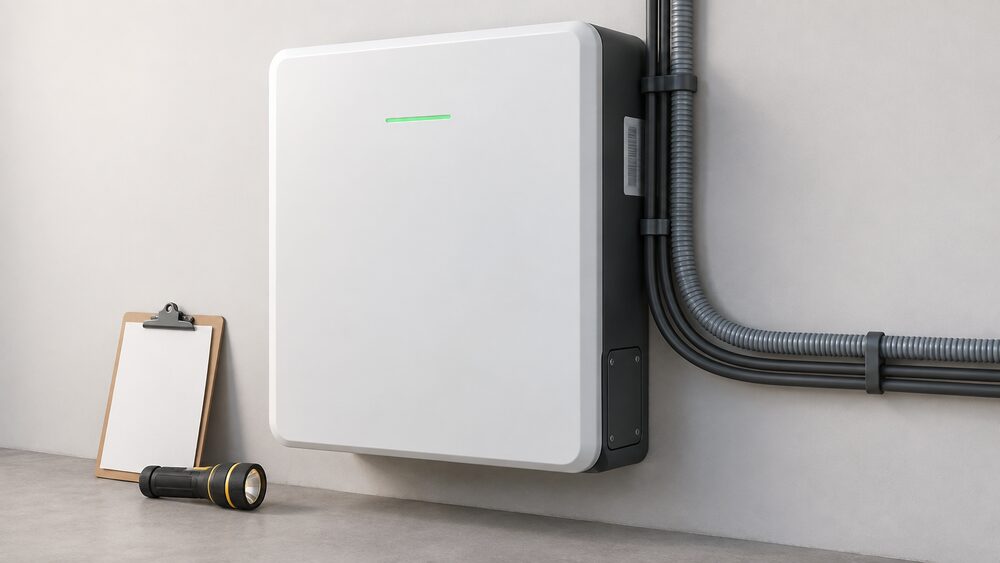
A home battery recall is a formal instruction to stop relying on a specific unit and to have it made safe, replaced or shut down. The largest one affecting UK households concerns LG Energy Solution ESS Home Batteries, sold under the RESU name. The maker states the hazard plainly: an affected battery "may overheat and catch on fire, which can result severe property damage or serious injuries", and that "incidents have occurred and caused damage to property"1.
The recall covers RESU3.3, RESU6.5, RESU10, RESU13, RESU7H Type C and Type R, RESU10H Type C and Type R, and RESU10M, and the maker states the recalls "have expanded to include additional models and batteries"1. Two remedies are offered: a free diagnostic software update intended to identify and shut down batteries at risk of overheating, and free replacement of affected batteries with removal from the property at no cost1.
The practical difficulty is that a recalled battery may not carry an LG badge at all. LG Energy Solution states that "affected batteries may be inside your energy storage system even if it is not LG-branded"1. That single sentence is why the recall reaches further than most owners expect, and why checking a serial number matters more than checking a brand name.
The LG ESS home battery recall: batteries that can overheat and catch fire
The recall is a voluntary corrective action run by the manufacturer, LG Energy Solution, rather than a government scheme. That matters for how it reaches people. There is no single UK register that a householder can search to find out whether their installation is caught; the route in is the maker's own serial number check, and the route out is a replacement or a software shutdown1.
The hazard described is thermal in nature. An affected battery may overheat and catch fire, which the maker says can result in severe property damage or serious injuries, and incidents have occurred and caused damage to property1. This is consistent with the wider picture on lithium-ion storage. The government's own report on domestic battery energy storage systems recorded that there have been "few recorded fires involving domestic lithium-ion battery storage systems", which is a statement about frequency rather than about severity when a failure does occur3.
Electrical Safety First, which publishes the recall on its product recall pages, frames the broader context: every year, half of accidental domestic fires in the UK are caused by electricity, and that figure is not changing4. Its stated causes are misuse of appliances, poor regulation of electrical safety checks, particularly in the private rented sector, and faulty appliances4. A manufacturing defect in a battery falls into the third category, which is the one a householder cannot control by behaviour.
The recall has widened over time. LG Energy Solution states that the recalls have expanded to include additional models and batteries, so a unit that was outside the scope when a householder last checked may now be inside it1. That is the strongest argument for re-checking rather than relying on an earlier all-clear.
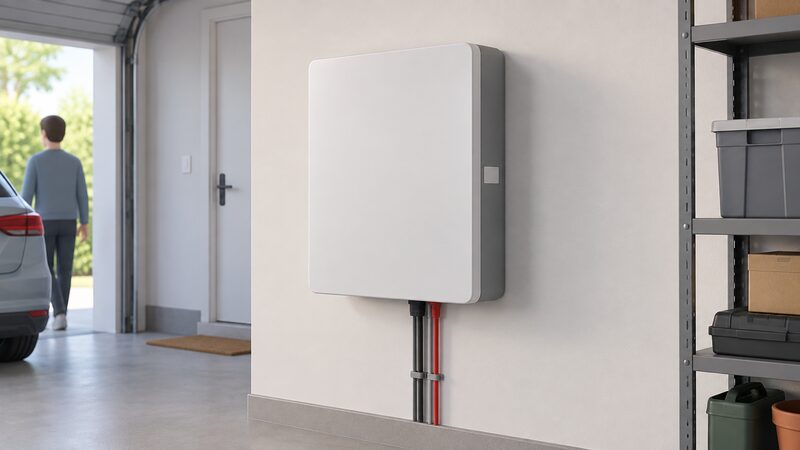
Affected models: RESU3.3, RESU6.5, RESU10, RESU13 and RESU7H Type C and R
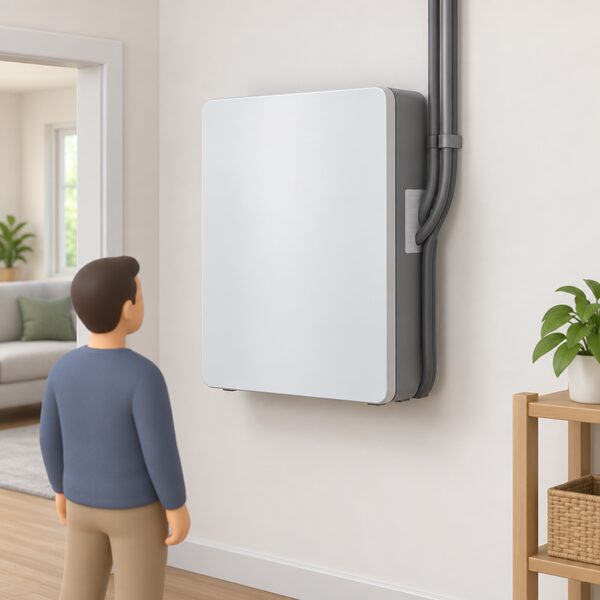
The affected range spans the small and mid-sized RESU units sold into UK homes, plus the higher-voltage 400V models. Electrical Safety First lists RESU7H Type R, RESU7H Type C, RESU10H Type R and RESU10H Type C as models subject to replacement of all potentially affected ESS Home Batteries2. The maker's own recall material covers RESU3.3, RESU6.5, RESU10, RESU13, RESU7H Type C and Type R, RESU10H Type C and Type R, and RESU10M1.
| Model family | Recall position | Serial number location |
|---|---|---|
| RESU3.3, RESU6.5, RESU10, RESU13 | Affected, replacement or diagnostic update1 | Right-hand side of the battery, label may be partly obscured by cables or conduit1 |
| RESU7H Type C and Type R | Affected, replacement of all potentially affected units2 | Underneath the battery next to the cable entry, or behind the access cover at the bottom right1 |
| RESU10H Type C and Type R | Affected, replacement of all potentially affected units2 | Underneath the battery next to the cable entry, or behind the access cover at the bottom right1 |
| RESU10M | Affected1 | Confirmed through the maker's serial number check1 |
One version of the maker's guidance names specific model codes alongside the model names, while another lists the model names alone, and the two have not been reconciled1. For a householder the practical effect is small, because the check is done by serial number rather than by model name, but it does mean a published list should not be treated as exhaustive.
The RESU range has been sold in the UK through a number of routes, including via Eon surveyors, which is how one independent review records its availability5. That distribution pattern is part of why the recall is not confined to one installer's customer base. Units went into homes through several channels, and the current occupier may have had nothing to do with the purchase.
How to check your serial number and register your battery
The check is done through the maker's UK serial number page, which takes the serial number and returns a status for that unit1. Registration follows the same route, and it is what puts an owner into the replacement or software update queue rather than leaving them outside it.
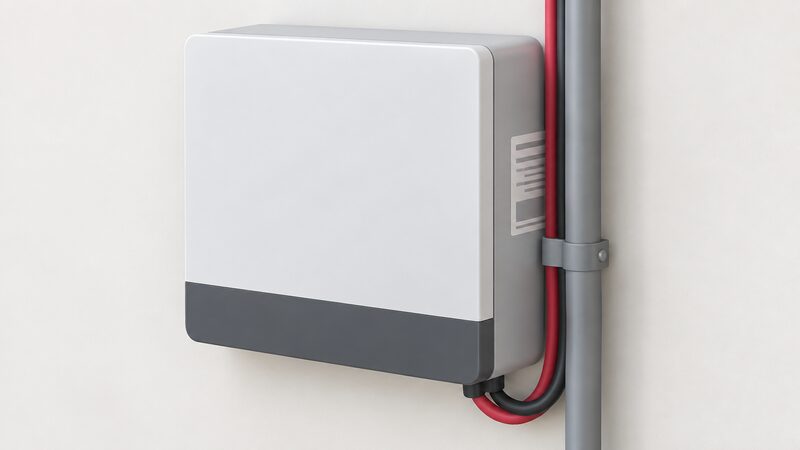
Finding the number is the awkward part, and the maker gives model-specific instructions. On RESU3.3, RESU6.5, RESU10 and RESU13, the label is on the right-hand side of the battery, and may be partially obscured by battery cables or conduit1. On RESU7H and RESU10H Type C, Type R and Type R Secondary, the number is either underneath the battery adjacent to the cable entry, or behind the access cover at the bottom right of the battery1.
That instruction is the one to hold on to. A serial number that cannot be read without opening the unit is a serial number to obtain through the recall process instead, by contacting the maker or the original installer.
Where an installer or qualified electrician needs to attend in connection with the recall, LG Energy Solution states it can provide technical guidance and arrange payment for their time1. For households looking for a competent person more generally, TrustMark is the government-endorsed register for finding an installer who will assess your circumstances and property to identify suitable measures6.
Two remedies: free replacement or a diagnostic software update
The recall offers two distinct outcomes, and which one applies depends on the unit and on what the diagnostic software finds.
The first is replacement. LG Energy Solution states it will replace your battery for free and remove the affected battery from your property at no cost to you, for batteries subject to recall1. The second is a software route: the company is rolling out a free diagnostic software update which is intended to identify and shut down batteries at risk of overheating1. Where the software diagnoses a battery as at risk, LG Energy Solution states it will replace batteries diagnosed by diagnostic software and remove those batteries from your property at no cost to you1.
The software is delivered in more than one way. LG Energy Solution states it is rolling out diagnostic software via technician site visit at no cost to you, and separately describes the update as free and diagnostic in purpose1. Both descriptions come from the same maker document, and the document does not resolve which units receive which route.
For comparison, remote assessment is a familiar pattern in UK energy schemes. Ofgem's Boiler Upgrade Scheme guidance describes two main audit types: desk audits carried out remotely by phone, email or post, and site audits involving a visit to inspect the installed system7. That is a different scheme with a different purpose, but it shows that a remote check followed by a physical intervention where needed is an established structure rather than an unusual one.
What the household gets either way is a battery that is either replaced or shut down. Neither outcome restores the original unit to service on the original terms.
What happens if the diagnostic software shuts my battery down

A shutdown is not the end of the matter. LG Energy Solution states it is providing compensation to affected consumers to cover any additional expenses incurred due to increased electricity bills or costs associated with using alternate energy sources after the shutdown of the affected batteries1.
That compensation is tied to costs actually incurred, so the evidence a household keeps matters: bills covering the period after shutdown, and records of any alternative arrangement used to cover the shortfall. The maker does not publish a rate per kilowatt hour or a lump sum in the recall material.
To put the scale in context, a battery that stops discharging changes what a household draws from the grid. Energy Saving Trust describes the normal operating pattern: when the battery gets down to a set level, maybe 20% of the total storage capacity, your system will stop taking electricity from it9. A shutdown removes the stored energy above that reserve entirely, so the household buys back the difference at retail rates.
For a sense of what grid electricity costs in the period covered by the recall, Ofgem's benchmark maximum charge tables give annual figures by region and metering arrangement. In the multi-register electricity table for Charge Restriction Period 15b, Yorkshire shows £1,239.92 at 3,900 kWh10. In a further set of benchmark tables, at 4,200 kWh on multi-register metering, Eastern shows £1,202.99 per annum, Northern £1,204.65, N Wales and Mersey £1,269.48, and Southern Western £1,228.3411. These are benchmark maximum charges for the charge restriction period, not a household's actual bill, and they are given here only to show the order of magnitude of the electricity a shutdown battery would otherwise have offset.
What to do while you wait: switch the battery off and do not dismantle it
The maker's instruction is specific and narrow: do not dismantle the battery or cabling for easier access to the serial number1. Beyond that, the recall material does not set out a step-by-step waiting procedure, so the general lithium-ion guidance published for households is what applies.
North Wales Fire and Rescue Service sets out the household rules for lithium-ion batteries. In the event of a fire, don't try and tackle it yourself, leave and call 99912. It also advises not to charge devices overnight when anyone is asleep or leave on charge when you've left the home, and to charge a device in a room that has a working smoke alarm, which doesn't compromise your escape route, keeping the door closed whilst it's charging and away from any heat source12. It notes that the average UK household has many rechargeable items containing lithium-ion batteries, such as laptops, mobile phones, e-scooters, e-cigarettes and mobility vehicles12.
Where a device or piece of equipment is stored without being used for any length of time, the same guidance states the battery should be removed12. That advice is written for portable devices rather than fixed storage, and it does not translate directly to a wall-mounted home battery, which is not a user-serviceable item.
The wider safety picture is worth holding alongside the recall. Electrical Safety First reports over five fires a day in England caused by white goods such as tumble dryers, washing machines and dishwashers, and is calling on the government to introduce mandatory five-yearly electrical checks in rented homes4. A home battery recall sits in the same category of risk: a manufactured product, installed in a home, whose failure mode is fire.
Affected batteries may be inside a system that is not LG-branded
This is the fact that makes the recall unusually wide-reaching. LG Energy Solution states that affected batteries may be inside your energy storage system even if it is not LG-branded1.
The reason is that battery modules are supplied into systems assembled and sold under other names. A householder who bought an installation from a UK installer, under that installer's own branding or under an inverter manufacturer's branding, may still have an LG ESS battery inside the cabinet. The badge on the outside does not settle the question.
The recall material does not name which third-party systems contain affected units, and no source in the recall documentation provides that mapping. The check is therefore done at the battery, by serial number, rather than at the system level1.
This has a direct consequence for how a household establishes its position. A system that has never been registered with the manufacturer, because the original purchaser dealt only with an installer, may not be in the recall contact list at all. Registration through the maker's portal is what closes that gap1.
For context on how common battery installations have become, the MCS domestic retrofit battery installation statistics for 2025 and 2026 are published by the Department for Energy Security and Net Zero, with enquiries directed to fitstatistics@energysecurity.gov.uk13. The scale of the installed base is what makes a recall of this kind a national rather than a niche matter.
Moved house? What former residents of affected properties should do
A recall attaches to the product, not to the person who bought it. A household that has moved into a property with a battery already installed inherits the unit and the risk, and may have no paperwork at all.
The first step is the same as for any owner: establish the model and serial number and run the check1. Where the unit cannot be identified from the outside, the recall process itself is the route to an answer, and the maker states it can provide technical guidance and arrange payment for an installer's or qualified electrician's time where a visit is needed1.
There is no separate UK scheme for former residents of affected properties. The recall is administered by the manufacturer, and the obligations that sit alongside it are the general ones. Regulation 12 of the Electrical Equipment (Safety) Regulations 2016 provides for the power to recall electrical equipment in England, Wales and Scotland14. That is the statutory backdrop to a voluntary corrective action, not a route a householder uses directly.
For households in the private rented sector, the position is different again, because the tenant does not own the installation. Electrical Safety First's stated concern is poor regulation of electrical safety checks, particularly in the private rented sector4. A tenant in a property with a recalled battery has no direct commercial relationship with the manufacturer, and the practical route is through the landlord or managing agent.
Where a property changes hands, the new occupier's interest is in knowing what is installed. The general direction of UK housing policy is that existing homes will all need to be retrofitted, which means more homes over time will contain equipment whose history is not documented at the point of sale15.
Compensation for extra electricity costs during the recall
The compensation offer is stated in the maker's recall material and is limited in scope: LG Energy Solution is providing compensation to affected consumers to cover any additional expenses incurred due to increased electricity bills or costs associated with using alternate energy sources after the shutdown of the affected batteries1.
Three things follow from that wording. It is triggered by a shutdown, not by the recall notice itself. It covers additional expenses, so it is a reimbursement model rather than a fixed payment. And it extends to the cost of alternate energy sources, which is wide enough to cover a temporary arrangement used to cover the shortfall.
The maker does not publish a rate, a cap or a claims deadline in the recall material. Households therefore have no published figure to work from, and the amount depends on the individual case.
For scale, the Ofgem benchmark tables give the maximum charges for the charge restriction period by region. On prepayment single-rate metering at 3,100 kWh in Charge Restriction Period 12b, Northern shows £853.25 and N Wales and Mersey £895.92, with N Wales and Mersey at £974.98 on standard credit single-rate16. In a further set of benchmark tables, Northern gas on prepayment shows £796.92 per annum at 12,000 kWh11. These are benchmark maxima for the charge restriction period, not compensation rates, and they are included only to show the size of the annual sums a shutdown could add to.
Who to contact: phone lines, email and the LG customer portal
The recall is administered by the manufacturer, and the contact routes are published with it. LG Energy Solution gives a European line on +49 (0) 6196 5719 660 and an Italian line on +39 02 3859 44201. Enquiries can be left through the LGES customer portal at gcp.lgensol.com1. For data protection matters, the company gives privacy.es@lgensol.com1.
The UK serial number check and registration page sits at recall.lgessbattery.com1. That is the entry point for a householder establishing whether a unit is affected.
Where the matter is not resolved through the maker, the general UK dispute routes apply. The Energy Ombudsman can take on disputes about products or services from named suppliers, and its registration line is 0330 440 162417. The Renewable Energy Consumer Code can be reached on 0207 981 085018. Ofgem's Enquiries Team takes renewable enquiries at Renewable.enquiry@ofgem.gov.uk19, and its contact centre for ECO and GBIS households is a freephone number, 0808 169 4447, open Monday to Friday excluding bank holidays from 9.30 am to 4.30 pm20.
| Route | Contact | Purpose |
|---|---|---|
| LGES customer portal | gcp.lgensol.com1 | Recall enquiries and registration |
| Europe phone line | +49 (0) 6196 5719 6601 | Recall enquiries outside Italy |
| Italy phone line | +39 02 3859 44201 | Recall enquiries in Italy |
| Data protection | privacy.es@lgensol.com1 | Personal data queries |
| Energy Ombudsman | 0330 440 162417 | Disputes about named suppliers |
| RECC | 0207 981 085018 | Consumer code matters |
On data, LG Energy Solution states that any data collected in the recall form will not be used for sales advertising purposes and will only be used for product support, campaign and recall purposes, unless the owner opts in to marketing1. It states that the General Data Protection Regulation (EU) 2016/679 applies to personal information it collects1.
Electrical Safety First guidance and how recalls are handled in the UK
Product recalls in the UK reach householders through a mixture of statutory power, manufacturer action and independent publication. The statutory element is Regulation 12 of the Electrical Equipment (Safety) Regulations 2016, which provides for the power to recall electrical equipment in England, Wales and Scotland14. That is the legal basis on which a recall can be required rather than merely offered.
Independent publication is the second channel. Electrical Safety First maintains product recall pages, and its listing for the LG ESS Battery Division RESU ESS home batteries records the affected models and the replacement remedy2. Its wider work sets out the scale of electrical fire risk: half of accidental domestic fires in the UK are caused by electricity each year, with over five fires a day in England caused by white goods4. It attributes these fires to misuse of appliances, poor regulation of electrical safety checks, particularly in the private rented sector, and faulty appliances4.
Certification is the third layer, and it operates before a product reaches a home rather than after. BSI offers a combined MCS and BSI Kitemark Certification for microgeneration products used to produce electricity and heat from renewable sources, describing the process as improving product and manufacturing procedures via testing, audit and certification21. Certification is not a guarantee against a defect emerging years later, but it is the point at which a product's design and manufacturing process are examined.
The fourth layer is the fire and rescue service, which publishes household guidance on lithium-ion batteries and responds when a failure becomes a fire12. North Wales Fire and Rescue Service's advice to leave and call 999 rather than tackle a lithium-ion fire is the operational end of the chain12.
For a household, the practical lesson is that a recall is not a single event but a process with several participants. The manufacturer runs it, the regulator's powers sit behind it, an independent charity publishes it, and the fire service deals with the consequences when it fails. The householder's part is to establish whether their unit is affected and to register it.
What the recall means for a household's energy independence
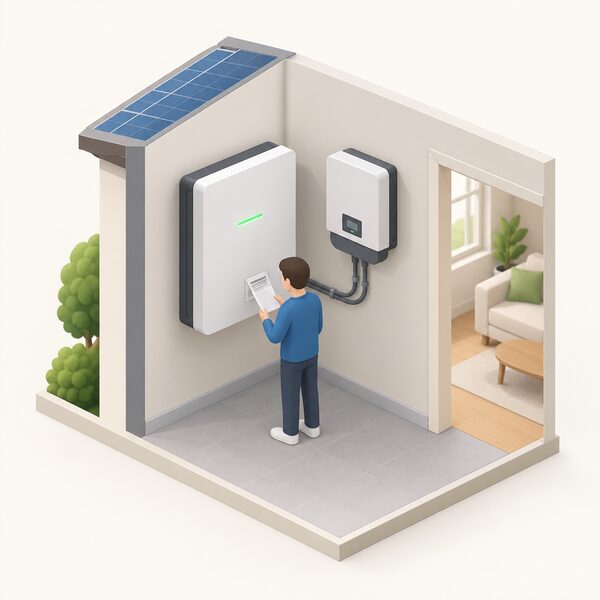
A home battery is bought for independence: it stores generation the household would otherwise export, and it discharges when grid electricity is expensive. A recall interrupts exactly that function, and it does so on the manufacturer's timetable rather than the household's.
The dependence that remains is worth naming. A recalled battery is dependent on the maker for diagnosis, replacement and compensation, and on the maker's portal for the information that establishes whether the unit is affected at all1. There is no independent UK body that will inspect a domestic battery and certify it as safe after a recall notice. The household cannot resolve the matter by switching supplier or installer.
There is also a data dependence. The diagnostic software route requires the unit to be connected and monitored, and the recall process collects personal information under the maker's privacy terms1. A household that has kept its battery offline, for whatever reason, may find that the software route is not available to it and that a technician visit is the alternative1.
The wider context is that domestic battery storage has a good safety record in absolute terms. The government's report on domestic battery energy storage systems recorded few fires involving domestic lithium-ion battery storage systems3. A recall of this kind is the system working as intended: a defect identified, a remedy funded by the manufacturer, and a route for owners to be told.
What a household can control is registration. A unit that is not registered is a unit the manufacturer may not be able to reach, and the recall material is explicit that affected batteries may sit inside systems that are not LG-branded1. Checking the serial number and registering the result is the step that converts an unknown installation into a known one.
Sources21 cited
- LG ESS Battery UK serial number check, LG Energy Solution, 2026
- LG ESS Battery Division RESU ESS home batteries, Electrical Safety First, 2026-09-17
- Domestic battery energy storage systems, UK Government, 2020-10-02
- 10 ways to avoid electrical fires in your home, Electrical Safety First, 2026-09-19
- Solar panel battery storage, Which?, 2026-05-14
- Energy Company Obligation (ECO) scheme home energy efficiency, Leeds City Council, 2026-09-20
- Boiler Upgrade Scheme guidance for property owners, Ofgem, 2026-03-25
- Boiler Upgrade Scheme guidance for property owners v5.1, Ofgem, 2026-07
- Battery storage, Energy Saving Trust, 2026-08-19
- Charge restriction period 15b cap tables, Ofgem, 2025-11
- Benchmark maximum charges for the charge restriction period 13a, Ofgem, 2025
- Lithium-ion batteries, North Wales Fire and Rescue Service, 2026
- MCS domestic retrofit battery installations 2025 to 2026, Department for Energy Security and Net Zero, 2026-05-28
- Electrical Equipment (Safety) Regulations 2016, regulation 12, legislation.gov.uk, 2026-09-17
- POST note 736: retrofit of existing homes, Parliamentary Office of Science and Technology, 2025-01-06
- Benchmark maximum charges for the charge restriction period 12b, Ofgem, 2024-05
- Raise a dispute, Energy Ombudsman, 2026-09-19
- Boiler Upgrade Scheme property owner guidance V2.3, Ofgem, 2023-09-25
- Smart Export Guarantee contacts, guidance and resources, Ofgem, 2026-09-17
- Retrofit measures, ECO4 and GBIS debate, Hansard, 2025-10-13
- MCS microgeneration certification, BSI, 2026-09-17
 Product RecallsHow recalls and safety notices work for energy equipment in UK homes, who issues them, how to check a product, and what replacement, repair and refund routes exist.
 Lithium Battery SafetyLithium batteries power phones, e-bikes, scooters and home storage, and any of them can catch fire.
 Maintenance and FaultsWhat does it mean when your home battery starts beeping or showing a warning, and can you fix it yourself?
 Home Battery Fire SafetyHow likely is a home battery to catch fire, and what keeps it safe if it does?
 Recycling and DisposalWhat happens to a domestic storage battery at end of life, who takes it back, the transport and handling rules for damaged lithium units, and the difference between recycling, refurbishment and second-life reuse.
 Home Battery WarrantiesHow long does a home battery warranty really last, and what does it actually promise?