In this guide
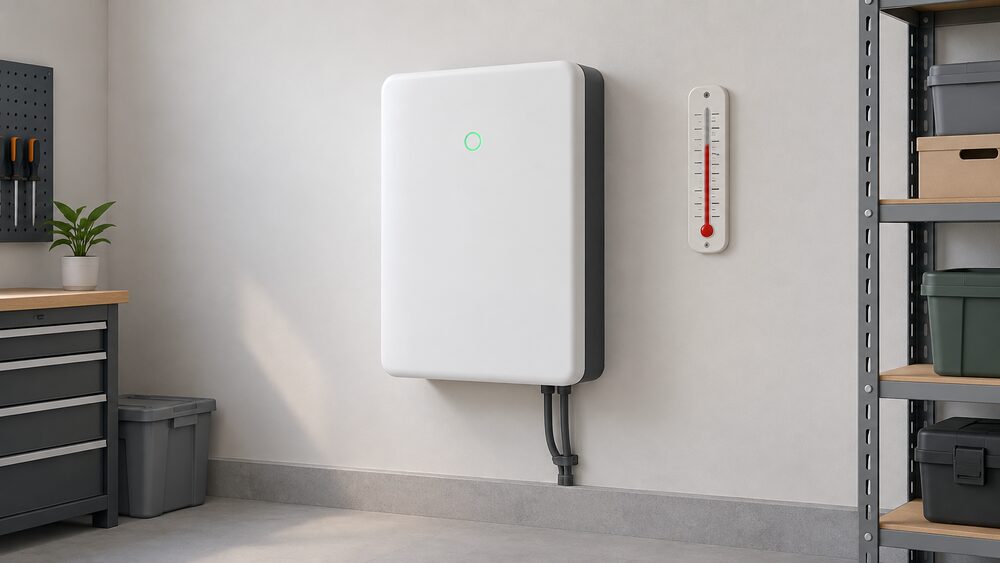
A home battery installed in a UK house is generally expected to last around 10 to 15 years, according to a parliamentary briefing on domestic energy storage, which also notes that this is a shorter lifetime than solar panels1. The Energy Saving Trust puts the typical lifespan at about 10 to 12 years2, and the Centre for Sustainable Energy gives 8 to 12 years3. Home Energy Scotland's figure is 10 to 15 years4. None of these figures means the battery stops working on a given date: they describe the point at which capacity loss, and the cost of replacement, become the deciding factor.
The second number that governs lifespan is the cycle count. One charge and one discharge of the usable capacity is one cycle. Lithium-ion home batteries are commonly rated at 6,000 to 10,000 cycles5, and 6,000 or more full charge cycles is quoted as typical of modern home batteries6. A maker's projection for one 6,000-cycle product is 16 years on a daily cycle of one charge and one discharge7, which shows how completely the year figure depends on the assumed daily pattern. Work the battery twice a day and the cycle count runs down twice as fast.
Degradation itself is rarely published as a percentage per year. It is stated instead as retained capacity at the end of the warranty: most manufacturers guarantee at least 70 per cent of original capacity after 10 years8. A household should therefore expect a battery near the end of its warranted life to store noticeably less than its nameplate figure, while still functioning normally.
The published lifespan figures, and why they disagree
The spread across sources is real, not a rounding difference. The official briefing and Home Energy Scotland both say 10 to 15 years1. The Energy Saving Trust narrows this to about 10 to 12 years2. The Centre for Sustainable Energy starts lower still at 8 to 12 years3. Maker guidance is generally more optimistic at the top end: lithium-ion systems are described as typically lasting between 10 and 15 years9, one guide gives around 8 to 15 years depending on chemistry, cycle life, temperature, depth of discharge and charging behaviour10, and another gives 7 to 10 years for one mainstream home storage technology11. Guidance aimed at householders sizing a system treats a battery as a 10 to 15 year investment12.
| Source type | Stated lifespan | Reference |
|---|---|---|
| Official briefing | around 10 to 15 years | 1 |
| Energy Saving Trust | about 10 to 12 years | 2 |
| Centre for Sustainable Energy | 8 to 12 years | 3 |
| Home Energy Scotland | 10 to 15 years | 4 |
| Maker, lithium-ion | 10 to 15 years | 9 |
| Maker, chemistry-dependent | around 8 to 15 years | 10 |
| Maker, one mainstream chemistry | 7 to 10 years | 11 |
The independent and official figures are the ones to build on. They tend to describe when a household would sensibly replace the unit, whereas maker figures describe how long cells can be expected to keep functioning. A separate strand of guidance says most home batteries come with a 10 year guarantee and will typically last 15 years or more8, which stretches the range further still. Set against a reported payback period in the region of 8 to 12 years3, a lifespan at the low end of these ranges leaves very little margin.
Cycle life: counting charges rather than years
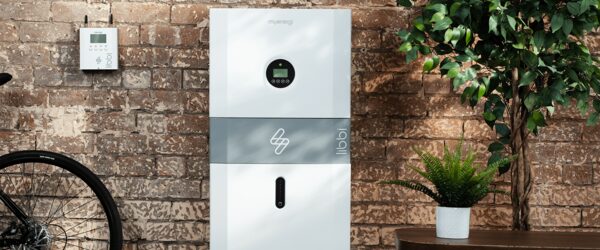
A cycle count is the more physical measure. Lithium-ion home solar batteries are quoted at 6,000 to 10,000 cycles5, with another maker giving 5,000 to 10,000 for lithium-ion including LiFePO413. The commonly cited benchmark for a modern home battery is 6,000 or more full charge cycles, described as roughly 15 to 20 years of daily use6. One product page projects 16 years from 6,000-cycle cells on a daily cycle of one charge and one discharge7.
"Based on a daily cycle of one charge and discharge, the 6,000-cycle battery cells are projected to last 16 years."
Two things follow. First, the year figure is derived, not measured: it is the cycle count divided by an assumed cycling rate. Second, a household that cycles more than once a day will reach the cycle limit sooner than the calendar limit. That is the practical tension for anyone charging from an off-peak tariff overnight and from solar during the day, as in one documented case where a household uses power from the home battery in the daytime, topped up by solar panels, and charges the battery on a cheaper off-peak tariff at night14. Two charging sources can mean more than one cycle on some days.
Cycle counts also sit behind the warranty. Warranties typically cover batteries for 10 years or a certain number of cycles15, and installer guidance suggests looking for at least 10 years and 6,000 or more cycles16. Where a warranty states a throughput figure in kilowatt hours instead, the arithmetic is the same idea expressed as total energy passed through the battery. Further detail sits on the page covering home battery warranties.
What actually wears the cells
Degradation is not a single mechanism. The factors named in the guidance are battery chemistry, cycle life, temperature, depth of discharge and charging behaviour10. Chemistry sets the baseline: better chemistry costs a little more but is described as usually paying off over a 10 to 15 year lifespan6, and the differences between types are set out on the page on home battery chemistries.
Depth of discharge is the factor a household can see. Systems do not run cells to empty: when the battery gets down to a set level, perhaps 20 per cent of total storage capacity, the system stops discharging2. That reserve both protects the cells and reduces the energy available, which is why nominal and usable capacity differ, covered under battery capacity and usable capacity.
Temperature matters enough to be listed alongside chemistry, and is the subject of ventilation and temperature guidance. Charging behaviour is the remaining lever, and it is largely set by the control strategy: whether the battery is filled once from solar, or twice from solar and an off-peak import window.
- Chemistry: determines the baseline cycle rating and how gracefully capacity falls10
- Cycle count: each full charge and discharge draws down a finite rated total5
- Depth of discharge: the 20 per cent floor limits usable energy but protects the cells2
- Temperature: named as a direct determinant of lifespan10
- Charging behaviour: multiple daily charges consume the cycle budget faster10
The battery management system enforces most of these limits automatically, and the household rarely sees them except as the difference between nameplate and usable kWh.
What degradation looks like in the house
A householder does not observe a percentage. What they observe is the evening running out earlier than it used to. The reference points are runtime figures for a full battery. A fully charged 10 kWh battery is described as providing roughly 5 to 10 hours of baseline household power, excluding electric heating loads17, and elsewhere as powering an average home for about 24 hours depending on usage18, while a 10 kW battery is given the same 24 hour figure18. A 5 kWh battery is given as powering an average UK household using 9.3 kWh daily for about 9.5 hours when fully charged19, and a 5 kW battery as storing enough to power an average home for 6 to 10 hours12. These figures differ because the assumed load differs, not because the batteries do.
| Battery | Stated runtime | Reference |
|---|---|---|
| 5 kWh, average UK household at 9.3 kWh/day | about 9.5 hours | 19 |
| 5 kW, average home | 6 to 10 hours | 12 |
| 10 kWh, baseline load, no electric heating | roughly 5 to 10 hours | 17 |
| 10 kW, average home | about 24 hours | 18 |
As retained capacity falls towards the guaranteed 70 per cent after 10 years8, every one of those hours figures shrinks in proportion. A battery bought to carry a household from a solar-filled afternoon through to the following morning may, late in its life, stop short of the morning peak. Typical home system sizes are 10 kWh2, with ranges given as 4 kWh to 13.5 kWh20 and 5 kWh to 15 kWh as covering evening and overnight demand for most homes21. Sizing for the capacity the battery will have in year ten, rather than year one, is the practical consequence, and is discussed under home battery sizing.
Standards: what IEC 63056 covers, and what it does not
The international safety standard for lithium cells in energy storage systems is IEC 63056:2020, titled "Secondary cells and batteries containing alkaline or other non-acid electrolytes - Safety requirements for secondary lithium cells and batteries for use in electrical energy storage systems"22. It is an International Standard, edition 1.0, published on 27 March 2020, with a stability date of 2026, and the contents of the corrigendum of June 2021 have been included in the current copy22. It runs to 37 pages and is maintained by technical committee TC 21/SC 21A22.
The standard specifies requirements and tests for the product safety of secondary lithium cells and batteries used in electrical energy storage systems with a maximum nominal DC voltage of 1 500 V, and it includes those requirements which are common and minimum to such systems, with additional or specific requirements for them22. It also applies to cells and batteries for uninterruptible power supplies, and does not apply to portable systems of 500 Wh or below22.
The point for a householder is what the standard is for: it is a safety category document, not a longevity one22. Nothing in it guarantees that a battery retains a given capacity after a given number of cycles. Cycle life and retained capacity are commercial terms set by the manufacturer in the warranty, not regulated minimums. The installation standards that do apply in UK homes are covered separately under battery installation standards.
Cycling on a smart tariff: the trade-off
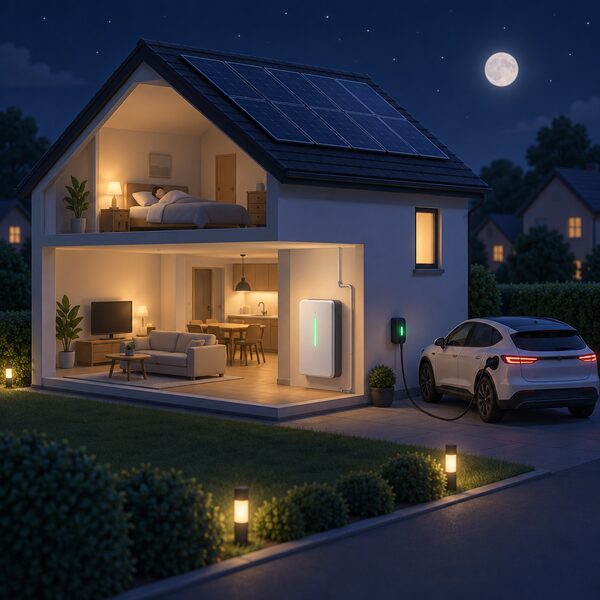
Charging overnight on an off-peak rate and discharging through the evening is the pattern that makes the arithmetic of a battery work, and it is also the pattern that consumes cycles fastest. A documented household uses battery power in the daytime, topped up by solar panels, and charges both the EV and the battery at night on a cheaper off-peak tariff14. That is a battery being worked hard by design.
The counterweight is that a harder-worked battery reaches payback sooner. Reported payback periods sit at 8 to 12 years for domestic battery storage, described as similar to the reported lifespan3. Maker estimates range more widely: 8 to 12 years for a battery-only install, shortening to 5 to 8 years when combined with new solar panels6, 5 to 12 years depending on electricity plan and usage6, 8 to 15 years for a 10 kWh battery depending on energy prices, battery cost, tariff choice and usage23, and for standalone battery systems without solar, 10 to 15 years as a realistic estimate against optimistic estimates of 6 to 9 years24. Whichever figure applies, it is close enough to the lifespan that the ordering of the two matters.
Batteries that also take part in flexibility markets cycle more again. A three-month trial run by EDF and Duracell Energy from June to August 2026 coordinated around 50 residential battery systems across England in local flexibility markets25. Participation adds cycles that are not driven by the household's own consumption, which is a consideration set out under batteries and grid services and smart tariffs.
Backup duration, and how ageing eats into it
Lifespan figures bear directly on backup. Official statistics describe batteries, both domestic and grid-scale, as storing electricity for up to eight hours26. Maker figures for whole-home backup vary: a 10 to 15 kWh battery is said to power essential appliances for at least 24 hours27, a home battery system to give around 8 to 10 hours of power to run a home28, and a 10 kWh battery powering a continuous 400 W essential load of fridge, lighting, router and boiler to keep a home running for approximately 21 to 22.5 hours29.
The consumer body Which? makes the more important point first:
"If you're looking to protect yourself against power cuts with a home battery, not all systems are suitable."
Its guidance is to ask the installer whether the battery will work in a power outage, and for how long30. Those questions are covered under battery backup power and EPS. A household planning around a backup duration should take the ageing into account twice over: the 20 per cent discharge floor already removes part of the nameplate2, and retained capacity of 70 per cent after 10 years removes more8.
Across the four nations
The physics does not change at a border, and neither do the published lifespan figures. Home Energy Scotland's figure of 10 to 15 years4 matches the parliamentary briefing for the UK as a whole1, and the Energy Saving Trust's England page gives about 10 to 12 years31, the same as its general guidance2. There is no separate Welsh or Northern Irish lifespan figure.
What differs is the surrounding policy and the market. The EDF and Duracell Energy flexibility trial ran across England only, with around 50 residential battery systems over three months from June to August 202625. Planning and consent rules do differ by nation, and are handled on the pages for England, Scotland, Wales and Northern Ireland. Householders in Scotland can take advice through Home Energy Scotland, whose battery guidance carries the 10 to 15 year figure4.
One structural difference cuts across all four: tenure. More than 10 million renting households in Britain have historically been outside the market for fixed home batteries32, which means the lifespan question has simply not arisen for a large share of homes.
What a finite lifespan means for household energy independence
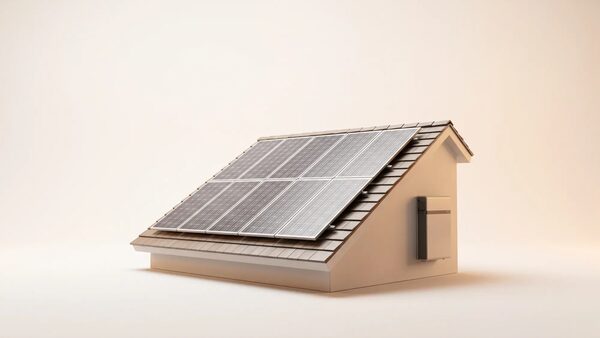
A battery raises the share of a household's electricity that comes from its own roof. Without a battery, homeowners typically consume only 30 to 40 per cent of the solar energy they produce33. Adding a battery is reported to lift self-consumption to 60 to 80 per cent, and over 90 per cent in smart, optimised setups34. Independent guidance puts it in terms of demand met: domestic battery systems can store as much electricity as a household typically uses in a day, enabling a PV system to provide up to 70 per cent of a household's annual electricity demand17. MCS defines the underlying measure precisely, as the percentage of electricity consumed in the property over a year which is met by either behind the meter solar or electrical energy storage35, the method behind the page on MCS self-consumption calculation.
All of those percentages decline as the battery ages. A unit holding 70 per cent of its original capacity after 10 years8 stores less surplus, exports more, and imports more in the evening. Independence bought with a battery is not permanent: it decays on a schedule, and restoring it means buying another battery.
The dependence that remains is worth stating plainly. A maker's own guidance concedes the central limit:
"There are a few cons, the first being that you are not independent of the grid."
A grid-connected battery still needs the grid, still needs a supplier and a tariff, and often still needs a manufacturer's cloud service for scheduling. Genuine independence needs far more storage: guidance for true energy independence in cabins, rural homes or areas with unreliable grid points to 5 to 12 or more batteries13, which is a different proposition entirely and is covered under off-grid battery systems. For a typical house, the honest framing is that a battery stores unused daytime electricity for evening use, reducing grid reliance1, and lets a household store renewable electricity to power a heat pump, making it less reliant on grid electricity36, for a decade or so before the question reopens.
Planning for replacement
Because the payback period of 8 to 12 years is similar to the reported lifespan of 8 to 12 years3, a household should treat replacement as part of the plan rather than a surprise. Three practical consequences follow from the figures above.
- Read the warranty for both limits, the year count and the cycle or throughput count, since whichever is reached first ends the cover15.
- Expect capacity at end of warranty to be around 70 per cent of nameplate, and size accordingly8.
- Expect the battery to need replacing well within the service life of the solar panels alongside it, because domestic battery storage has the shorter lifetime of the two1.
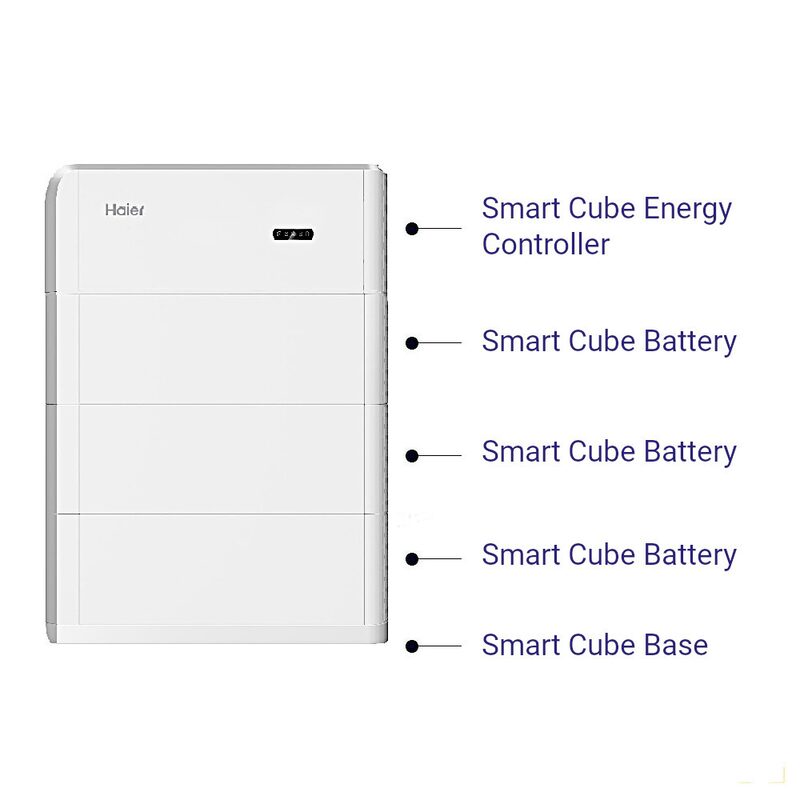
End of life also carries a disposal obligation, covered under battery recycling and disposal. Systems built from stackable modules can sometimes have capacity added later rather than replaced wholesale, which is discussed under modular and stackable battery systems. Background on the technology as a whole sits on the home battery storage guide.
Sources36 cited
- Domestic energy storage, POSTnote, UK Parliament POST, 2026-06-25
- Battery storage advice, Energy Saving Trust, 2026-08-19
- Battery storage, Centre for Sustainable Energy, 2025-10
- Battery storage, Home Energy Scotland, 2026-09-20
- Solar battery guide, Fuse Energy, 2026-06-30
- Solar battery cost, BLUETTI UK, 2026-08-03
- HomePower 2000 Plus v2, Jackery, 2026-09-19
- What is home battery storage in the UK, OVO, 2026-06-02
- Comparing home battery storage, Sunamp, 2025-11-13
- How long do solar panels last, Jackery UK, 2026-06-30
- How long do solar batteries last, Jackery UK, 2026-05-29
- How much battery storage should you get, Spirit Energy, 2026-08-07
- How many batteries does a home need, SAJ, 2026-07-22
- Beth Martin's story: solar panels and an electric vehicle, Energy Saving Trust, 2025-03-03
- Solar battery storage, Fuse Energy, 2026-04-13
- Why home battery storage will be key in 2026, Spirit Energy, 2025-11-07
- Making the most of your solar PV panels, Centre for Sustainable Energy, 2026-08
- Guide to solar panels and battery storage, EcoFlow UK, 2025-06-27
- Home battery storage without solar, EcoFlow UK, 2025-06-24
- Battery storage with solar, myenergi, 2024-01-03
- Heat pump and storage battery, Aira, 2026-02-22
- IEC 63056:2020, IEC, 2020-03-27
- 10 kW solar battery price UK, Jackery UK, 2026-06-04
- Home battery storage without solar, Jackery UK, 2026-05-29
- EDF and Duracell Energy launch home battery trial, EDF Energy, 2026-06-22
- Statutory Security of Supply Report 2025, GOV.UK, 2025-12-17
- Backup battery for home guide, Jackery UK, 2026-04-29
- Getting started with home battery storage without solar, Duracell Energy, 2024-02-24
- Home battery storage and energy independence, Jackery UK, 2026-06-25
- Solar panel battery storage, Which?, 2026-05-14
- Battery storage advice, England, Energy Saving Trust, 2026-08-19
- Octopus Energy launches the Nook range, Octopus Energy, 2024
- Why solar battery storage matters, SunPower, 2026-05-19
- Solar energy storage, Jackery UK, 2026-06-20
- MCS 032, MCS, 2025-01-01
- How to ensure a heat pump runs efficiently, Energy Saving Trust, 2026-05-19
 Home Battery WarrantiesHow long does a home battery warranty really last, and what does it actually promise?
 Payback and SavingsHow long until a home battery pays for itself, and why do quoted payback times vary so much?
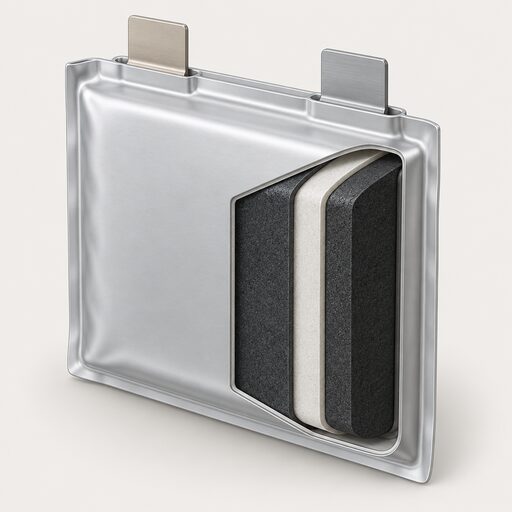 Solid-State BatteriesAre solid-state batteries on sale yet, and should you wait for one?
 Home Battery CostA home battery usually costs between one and a half and ten thousand pounds fitted, depending on size.
 The Full Home Batteries GuideA home battery stores cheap or solar power for later, but will it really cut your bills enough to be worth it?
 Round-Trip EfficiencyHow much of the electricity you put into a home battery do you actually get back?