
In this guide
A home battery fault rarely begins in the battery. The most useful first step in troubleshooting is to look at the electrical installation the battery is connected to: the circuits, the earthing and bonding, the isolation and the protection devices. An Electrical Installation Condition Report is the document that records that survey, and it is also known as a Periodic Inspection Report, or PIR1. It reveals whether circuits are overloaded, finds potential hazards, highlights any lack of earthing or bonding and carries out tests on the fixed wiring1.
The intervals are straightforward. For an owner-occupied home the recommendation is at least every 10 years; for tenanted properties it is every 5 years or at each change of occupancy, whichever is sooner2. Landlords have a legal duty that runs alongside this: every electrical installation in the residential premises must be inspected and tested by a qualified person at intervals of no more than 5 years3. In Northern Ireland the same five-year maximum applies to a private tenancy5.
What follows sets out what the inspection covers, who may carry it out, what happens when it finds a problem, and how alarm states on a battery system relate to the installation rather than to the cells alone.
Start with the installation, not the battery
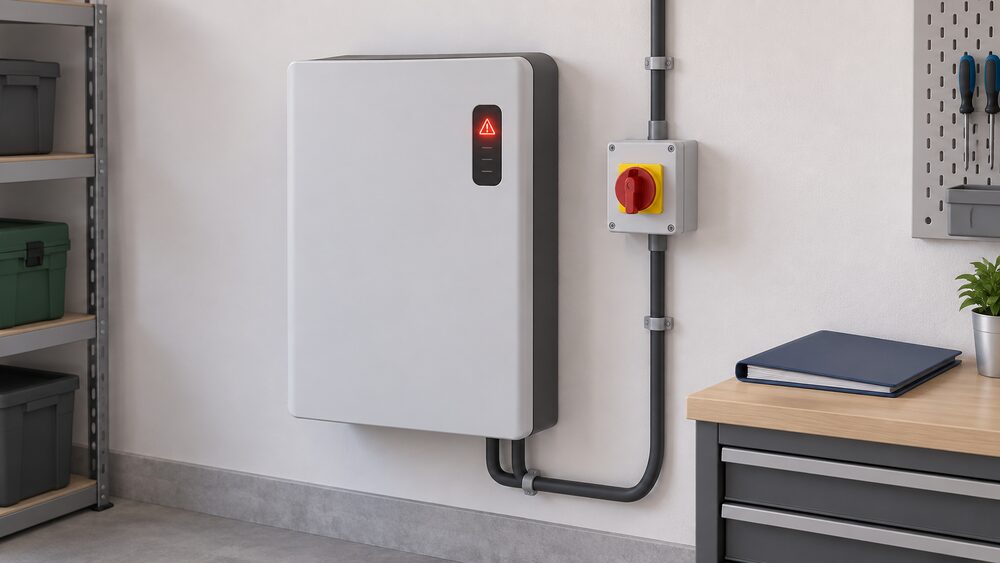
A battery can be installed in garages, on external walls or utility rooms, depending on which one you choose7. Wherever it sits, it is wired into the same installation that supplies the rest of the house, and that installation is what the periodic inspection examines. The point of starting there is that many symptoms a householder reads as a battery fault, such as a system that will not charge, will not discharge, or trips repeatedly, can originate in the supply, the earthing or a protective device rather than in the storage unit itself.
The inspection is not a battery test. It is an electrical survey of the fixed wiring, and its findings are recorded against the installation as a whole. That distinction matters when a fault is intermittent: a report that shows no observations on the circuits narrows the problem towards the battery, its inverter or its controls, while a report that flags earthing or overloading gives the installer somewhere concrete to begin.
The evidence for taking earthing seriously is not theoretical. A product safety report on the ROMADA New Energy Charging Pile found that the product failed the earth bond test, indicating that the continuity of the protective earthing path may be inadequate8. That finding concerned an EV charger rather than a battery, but the principle carries across every piece of mains-connected equipment in a home: the protective earthing path is what makes a fault trip a device instead of presenting a hazard.
The EICR: what the inspection covers and what it confirms
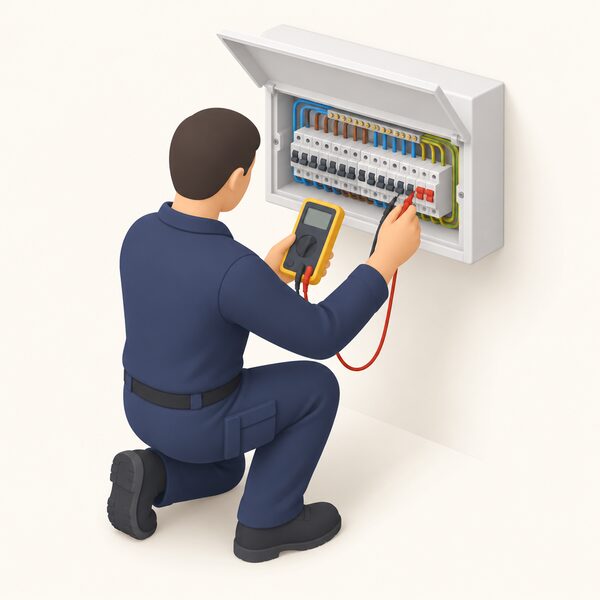
An EICR is an electrical survey to reveal if electrical circuits are overloaded, find potential hazards in the installation, highlight any lack of earthing or bonding and carry out tests on the fixed wiring1. It is the same document as a Periodic Inspection Report, the older name that many electricians and landlords still use1.
What the report confirms is the condition of the installation at the time of the inspection, with observations coded by urgency. It is not the same as an Electrical Installation Certificate, which provides the person responsible for the safety of an electrical installation with a declaration that the new installation, or alteration or addition, is safe to use at the time it was put into service1. A battery added to an existing system is an alteration, so the certificate route and the condition report route answer different questions: one declares new work safe when commissioned, the other surveys what is already there.
For a household with storage, the practical value of the report is that it establishes a baseline. If a battery later develops a fault, the report shows whether the circuits, earthing and bonding were sound beforehand. It also gives the installer a documented starting point for any remedial work, which matters where a warranty claim may later depend on whether the installation met the required standard.
The report does not assess the battery, its cells, its battery management system or its firmware. Those sit with the manufacturer and the installer. Reading the report as a clean bill of health for the storage unit is a misreading of what it covers.
Inspection intervals: 10 years for owners, 5 for rented homes
The recommended interval for an owner-occupied home is at least every 10 years2. For tenanted properties the recommendation is every 5 years or at each change of occupancy, whichever is sooner2. The legal duty for landlords is expressed as intervals of no more than 5 years, unless the most recent report requires a shorter interval3.
| Property type | Interval | Basis |
|---|---|---|
| Owner-occupied home | At least every 10 years | Recommended2 |
| Tenanted property | Every 5 years or at each change of occupancy, whichever is sooner | Recommended2 |
| Rented property, landlord duty | No more than 5 years, or shorter if the report requires | Legal maximum3 |
| Private tenancy, Northern Ireland | No more than 5 years | Legal maximum5 |
| Swimming pool | 1 year | Recommended2 |
The intervals sit alongside other periodic checks in a home, which is useful context for anyone building a maintenance calendar. A domestic oil tank should have its tanks, pipes and other equipment inspected for leaks, damage and interference once a month, with any problems fixed promptly9. Gas appliances and flues are regularly checked for safety at least once every 12 months, which the Health and Safety Executive strongly advises10. A battery installation does not replace any of these; it adds to the electrical installation that the EICR already covers.
The reason the rented interval is half the owner-occupied one is turnover rather than technology. A change of occupancy is a moment when the installation's condition needs to be known, and the five-year maximum keeps that knowledge current. For an owner-occupier, the 10-year recommendation assumes the installation is not altered in between. Adding a battery, an EV charger or a significant new circuit is an alteration, and it is reasonable to expect the installer to confirm the condition of what the new equipment connects to.
What the inspection looks for: overloading, earthing and bonding
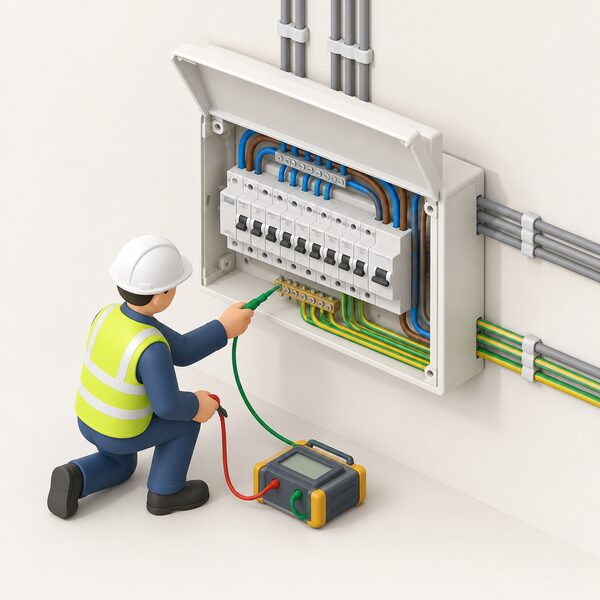
The survey has four stated purposes: to reveal if electrical circuits are overloaded, to find potential hazards in the installation, to highlight any lack of earthing or bonding, and to carry out tests on the fixed wiring1. Each of these bears directly on a home with battery storage.
Overloading is the one most likely to change when storage is added. A battery and its inverter draw and deliver significant current, and the circuits serving them need to be sized for it. The inspection tests the fixed wiring rather than the battery, so what it establishes is whether the circuits can carry what is connected to them.
Earthing and bonding are the safety backstop. The ROMADA charger case shows what a failed earth bond test means in practice: the continuity of the protective earthing path may be inadequate8. Where that continuity is in doubt, a fault in connected equipment has a path that is not the one intended.
Potential hazards in the installation are recorded as observations, and the report codes them so that a reader can tell what needs attention and how soon. That coding is what turns a survey into an action list, and it is why the report should be kept rather than filed away unread.
"An EICR is an electrical survey to reveal if electrical circuits are overloaded, find potential hazards in the installation, highlight any lack of earthing or bonding and carry out tests on the fixed wiring"
Rented properties: the legal duty and the five-year rule
A landlord must ensure every electrical installation in the residential premises is inspected and tested at regular intervals by a qualified person3. The maximum interval is 5 years, unless the most recent report requires a shorter one3. In Northern Ireland, a private landlord must ensure every electrical installation in the dwelling-house is inspected and tested at regular intervals by a qualified person, at intervals of no more than 5 years5.
There is a separate pre-tenancy duty. A landlord must ensure every electrical installation in the residential premises is inspected and tested by a qualified person before the specified tenancy commences3. That is in addition to the recurring interval, not a substitute for it.
Social landlords carry a further requirement: electrical equipment provided by the landlord must be checked at least every 5 years6. Guidance for landlords in Wales states that periodic inspection and testing must be carried out only by a qualified person, such as a registered electrician11.
The rented sector also has energy efficiency duties that interact with any retrofit work. Landlords of domestic private rented properties, including public sector landlords, may not grant a tenancy to new or existing tenants if the property has an EPC rating of band F or G, unless an exemption applies, and must not continue letting a domestic property already let if it has that rating, again unless an exemption applies12. Where an exemption is claimed on a temporary basis because a person has recently become a landlord, after 6 months the exemption will expire and the landlord must either have improved the energy efficiency of the property to at least EPC band E, or have registered another valid exemption if one applies, if they intend to continue letting13. None of this changes the electrical inspection duty, but it means a landlord planning battery or solar work is often planning it alongside an EPC question.
Who can carry out the inspection
Periodic inspection and testing should be carried out only by electrically competent persons, such as registered electricians2. Guidance for landlords in Wales puts it in the same terms: it must be carried out only by a qualified person, such as a registered electrician11. The Competent Persons Register exists to check whether an electrician is registered14.
For landlords, the requirement is more specific. Checks and work must be carried out by, or by an employee of, a member of a class of persons approved by the Health and Safety Executive for regulation 3(3)15. Approved Document P states that those undertaking electrical works must be considered competent, having a complete and proficient understanding of electrical fittings and are able to check safety circuits16. The competent person schemes authorised for fixed low or extra-low voltage electrical installations in dwellings as part of other work include APHC, BESCA, Blue Flame Certification, Certsure and NAPIT17.
There is also a route for checking work after the event. Any domestic electrical installation work notified by a NICEIC electrical contractor to the Local Building Control Body is searchable through checkmynotification.com, which covers England and Wales1. TrustMark is a government-endorsed competent person register for finding an installer that will assess your circumstances and property to identify suitable measures18.

Remedial work: the 28-day window for fixes
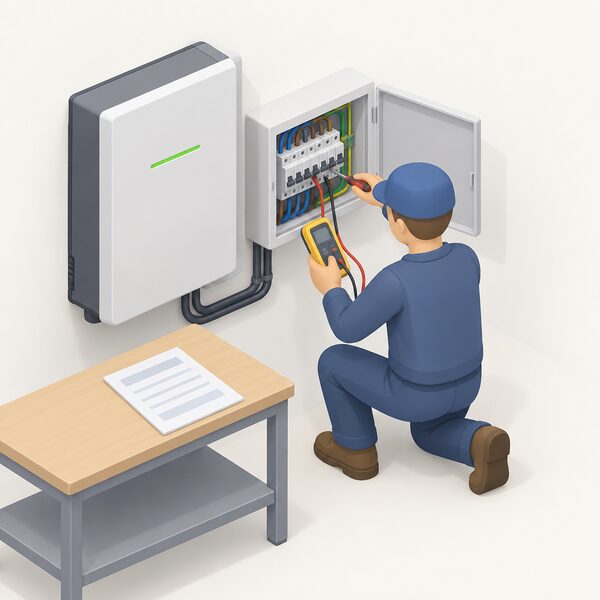
Where remedial or further investigative work is necessary, landlords must complete it within 28 days or any shorter period if specified as necessary in the report6. The regulations use the same structure: within 28 days, or the period specified in the report if less than 28 days, starting with the date of the inspection and testing3.
The 28-day figure recurs across energy regulation, which is worth knowing because it sets an expectation for how quickly formal processes move. A Domestic Renewable Heat Incentive participant must let the scheme know within 28 days of a repair or replacement taking place19. A broken meter must be reported to Ofgem within 28 days of discovering the fault20. Where a consumer accepts an Energy Ombudsman decision, the supplier has 28 days to implement the remedy21. A facilitated complaints resolution must be something the company can deliver in 28 days23.
For an owner-occupier, there is no statutory deadline attached to an EICR's observations, but the report's coding indicates urgency. The practical sequence is to read the observations, establish which are the most serious, and arrange the work. Where a battery is involved, the installer who fitted it is usually the right first contact, because remedial work on the circuits serving it may interact with the system's own protection settings.
Alarms and warning signs that point to an installation problem
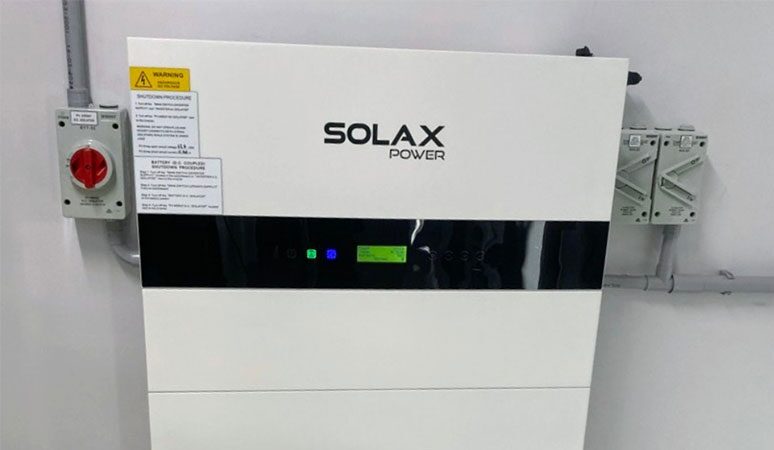
An alarm state on a battery system is a signal, not a diagnosis. The useful question is whether the alarm coincides with anything in the installation: a recent addition of load, a tripped protective device, a change in supply, or work carried out on the circuits. Where the EICR has flagged earthing or overloading, an alarm that recurs under load is consistent with that finding rather than with a cell failure.
Some warning signs are visible without instruments. An in-home display can help here: many models allow alerts that warn when you are getting close to your limits or when there are sudden increases in consumption and spending24. A sudden increase in consumption that coincides with a battery alarm is worth noting, because it points at what the system was doing at the time.
The causes of serious battery incidents are documented, and they are not all cell-level. Poor quality and substandard components, flawed design, physical abuse and improper charging or discharging can all cause thermal instability25. That list includes design and charging behaviour, which are system-level rather than cell-level matters, and it is why the installation and the way the system is operated both belong in a fault investigation.
Lithium-ion batteries are common in UK homes: the average UK household has many rechargeable items that contain them, such as laptops, mobile phones, e-scooters, e-cigarettes and mobility vehicles26. A home battery is a larger instance of the same chemistry, and the fire service guidance that applies to the smaller devices applies in principle to the larger one.
What the inspection does not cover, and where the limits lie
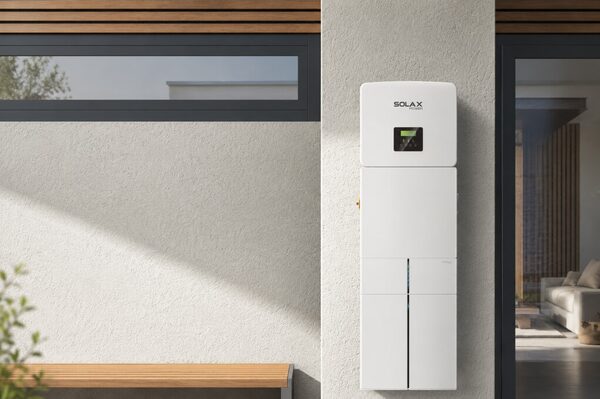
An EICR covers the fixed wiring and the installation. It does not cover the battery, its cells, its management system or its firmware, and it does not extend the manufacturer's warranty or substitute for it. A household relying on a battery for independence should hold both: a current condition report for the installation, and the manufacturer's documentation for the unit.
There is a wider caution about relying on any single document. Energy Performance Certificate ratings do not always capture the true efficiency of a retrofit, and measures such as PV panels or air-source heat pumps may improve an EPC score but fail to address fundamental building issues such as poor insulation or moisture risks27. The same logic applies to electrical paperwork: a report records what was tested on the day, and it is not a prediction.
For a household's energy independence, the position is this. A battery reduces dependence on the grid for the timing of electricity use, and it can keep selected circuits running when the supply fails, depending on how the system is configured. It does not remove dependence on the grid for supply, on a supplier for billing and export arrangements, or on the manufacturer for firmware, spares and warranty support. The periodic inspection is the part of that picture the household controls directly, and it is the part that keeps the installation itself in a known condition.
Where a fault is unresolved and the matter concerns the supplier rather than the installation, the complaint routes are separate. An energy supplier must try to fix any problems reported within 8 weeks and resolve the complaint28, and the Energy Ombudsman can become involved where that does not happen21. Those routes concern supply and billing, not the battery, and they run in parallel with the installer and manufacturer route for the equipment itself.
Sources28 cited
- How to work with your tradesperson, NICEIC, 2026-09-17
- Plug-in solar panels, Electrical Safety First, 2026-09-17
- The Electrical Safety Standards in the Private Rented Sector (England) Regulations 2020, regulation 3, legislation.gov.uk, 2026-09-17
- The Electrical Safety Standards in the Private Rented Sector (England) Regulations 2020, regulation 3 (made), legislation.gov.uk, 2026-09-17
- Private Tenancies (Electrical Safety Standards) Regulations (Northern Ireland) 2024, legislation.gov.uk, 2024-11-27
- Electrical safety standards in the private and social rented sectors: guidance, GOV.UK, 2025-11-01
- Battery storage, Energy Saving Trust, 2026-08-19
- Product safety report: ROMADA New Energy Charging Pile EV charger, GOV.UK, 2026-09-15
- Check your oil tank, nidirect, 2026-09-17
- Gas safety in the home: frequently asked questions for owner occupiers, Health and Safety Executive, 2026
- Fitness for human habitation guidance for landlords, Welsh Government, 2022-01-13
- Trading standards guidance: other consumer problems, Isle of Anglesey County Council, 2026-05
- Guidance on PRS exemptions and exemptions register evidence requirements, GOV.UK, 2026-05-05
- Building control application guidance notes, London Borough of Bromley, 2026-09-17
- Gas Safety (Installation and Use) Regulations 1998, legislation.gov.uk, 1998
- Approved Document P: Electrical safety, dwellings, Planning Portal, 2013-01
- Competent person scheme: current schemes and how schemes are authorised, GOV.UK, 2013-04-04
- Solid wall insulation installed under ECO4 and GBIS: statistical audit results, GOV.UK, 2026-09-17
- Domestic Renewable Heat Incentive: participants, Ofgem, 2026
- Domestic RHI: guide to metering, Ofgem, 2026
- We may be able to help resolve your energy dispute, Energy Ombudsman, 2026-09-20
- Energy Ombudsman FAQs, Energy Ombudsman, 2026-09-19
- Facilitated complaints resolution, Energy Ombudsman, 2026-09-20
- How do smart meters save energy?, Smart DCC, 2026
- Battery safety campaign, Electrical Safety First, 2026-09-17
- Lithium-ion batteries, North Wales Fire and Rescue Service, 2026
- Review of retrofit assessment in Scotland, Scottish Government, 2025-06-06
- Complain about your energy supplier or network operator, Ofgem, 2026
 Home Battery Fire SafetyHow likely is a home battery to catch fire, and what keeps it safe if it does?
 Battery Management SystemsWhat does a home battery's management system actually do, and why does a fault often show up as an inverter error?
 EV Charge Point Faults and FixesDescribes the common failure patterns on domestic charge points: tripped protective devices, lost connectivity, stuck cables and locks, error indications and charging that stops early.
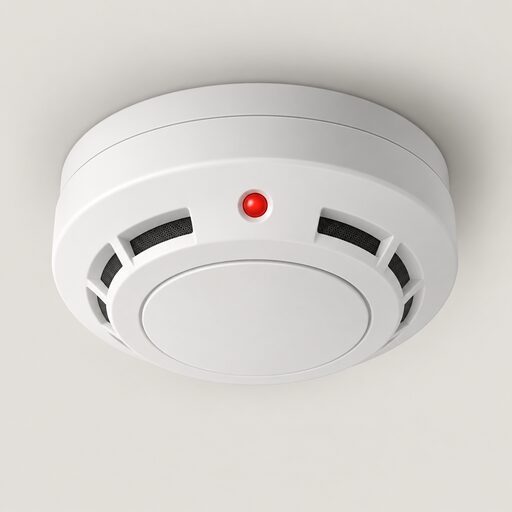 Siting and LocationWhere can a home battery actually go?
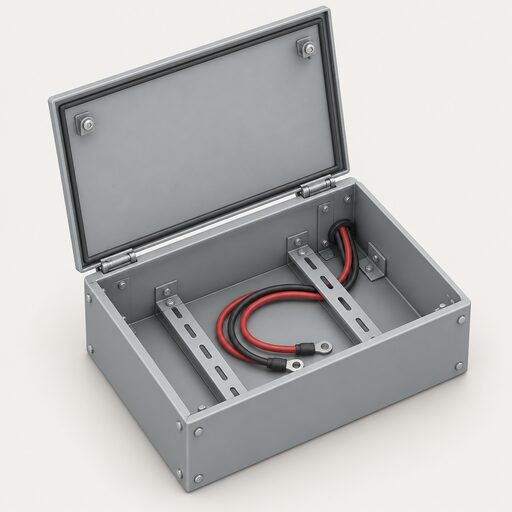 DIY Home Battery BuildsBuilding your own home battery?
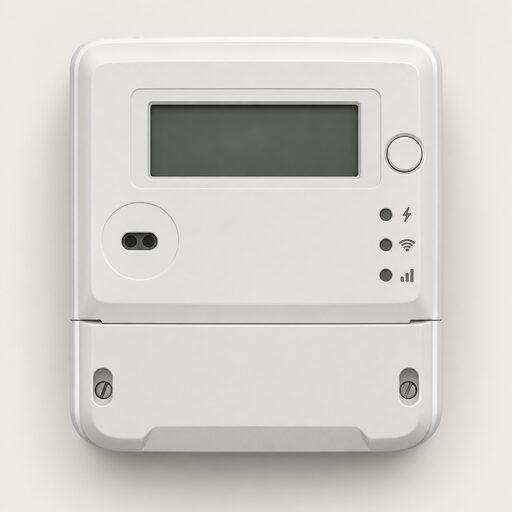 Smart Meter Faults and FixesYour smart meter has stopped working.