In this guide
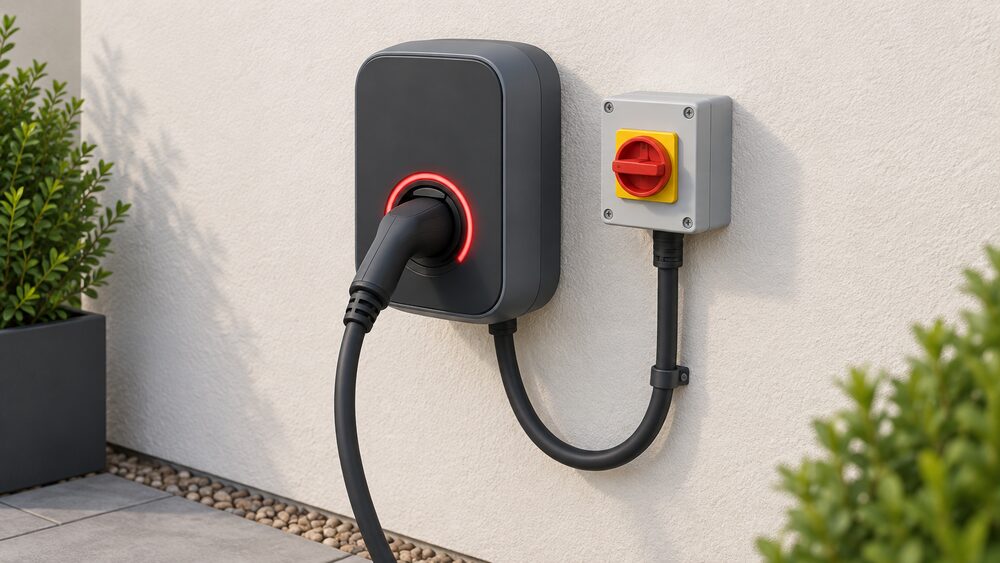
Most home charge point faults are not faults at all. They are the equipment doing what it was designed to do: a protective device has tripped, the supply voltage has moved outside the range the charger will accept, or a smart charger has lost the network connection it needs before it will start a scheduled session. A charger that stops and shows an error when voltage goes beyond the acceptable range is behaving correctly, and that behaviour protects both the charger and the vehicle1.
The first action is the same in almost every case. Speak to your installer or electrician to check there is not a problem with the equipment, and if the charger has latched into a voltage error, switch it off and on at the isolator switch1. A separate restart route exists at the consumer unit: turn off the circuit breaker powering the charger, wait 30 seconds, then turn it back on2.
What a householder should not do is open the unit. If an electric car charger is broken, the guidance is not to try to repair it yourself: it is a job for a professional electrician with the qualifications and certifications3. Everything below sets out what can be checked safely, what the common failure patterns look like, and where the boundary sits between a reset and a call-out.
First checks when your EV charger is not working
The order of checks matters, because the cheapest explanations are the most common. Start with the charger's own indication: a unit that will not function and displays a red ring or an error is telling you it has detected a supply condition it will not work through1. That is not a fault code in the sense of a broken component; it is a refusal.
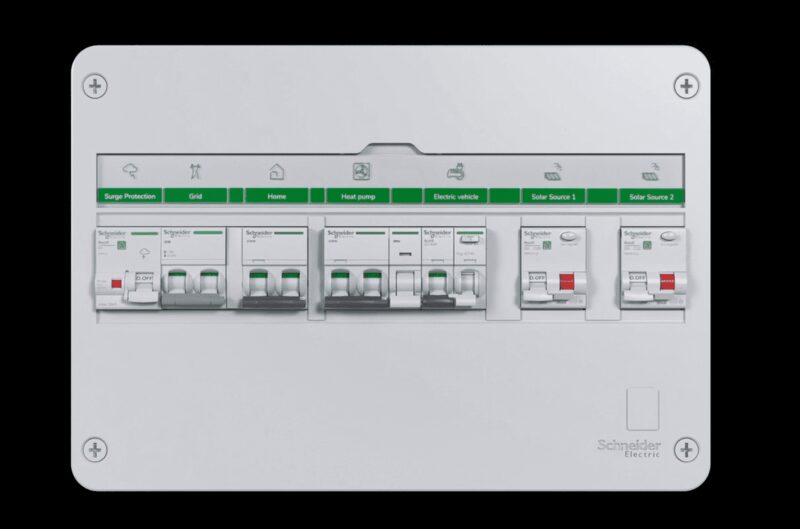
The second check is the isolator. Switching the charger off and on at the isolator switch is the documented recovery step for a voltage-related stop1. The third is the consumer unit, where a dedicated protective device sits. Circuit breakers break a circuit when tripped by short-circuit issues or power overloads, so a breaker that has tripped is reporting an electrical event rather than a software glitch8.
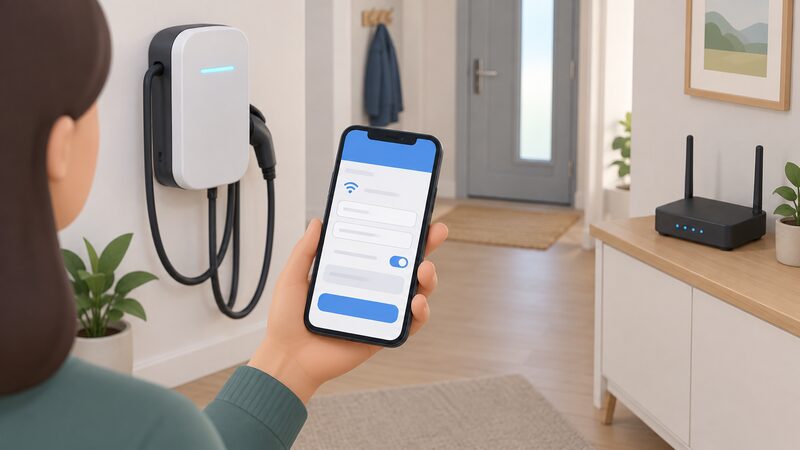
The fourth check is the network. A smart charger that has dropped off Wi-Fi may not appear in its app and may not accept a scheduled charge. One maker's troubleshooting sequence for a charger missing from the app is to check the charger is powered on, connected to Wi-Fi, that Bluetooth is enabled on the phone and that the firmware update has completed successfully9.
Power supply and the dedicated circuit: why a tripped breaker stops charging
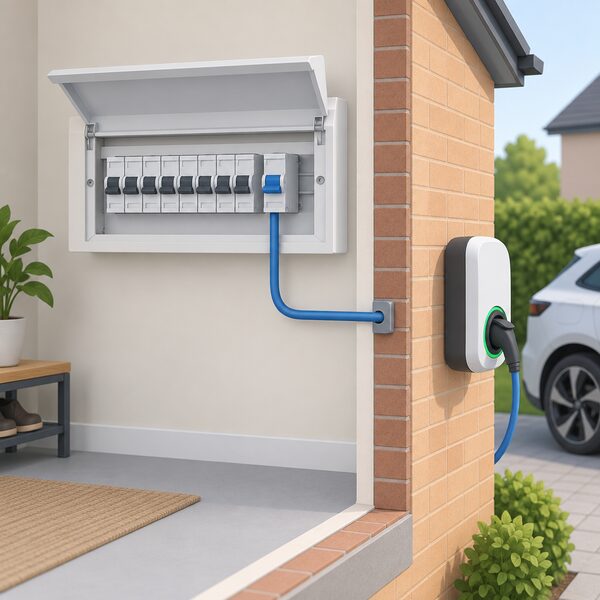
Every charge point should have its own circuit. The requirement is a separate MCB or RCBO at the distribution board for each charger, with no other loads sharing it11. That separation is what makes diagnosis possible: if the charger's device trips and nothing else on the board does, the problem is on that circuit.
The circuit also carries the protective devices that make the installation safe. Where an EV charger has built-in DC fault current detection to 6mA, a Type A RCD at 30mA is sufficient11. That matters for troubleshooting because an RCD that trips repeatedly is reporting a leakage or fault condition, and resetting it without finding the cause simply repeats the event.
Voltage is the other supply-side cause. Chargers operate within an acceptable voltage range, and if the voltage goes outside it the charger will stop working and show an error, a safety feature protecting the charger and the vehicle12. Voltage drop or surge is a recognised cause of EV charger errors12. This is not always a household problem: when neighbouring homes all export solar energy simultaneously, local network voltage rises, and some EV chargers respond by shutting down13.
Supply capacity is the deeper constraint. Homes sharing one electricity cable with a neighbour may not have a supply strong enough for an EV charger, and need a dedicated cable installed before the charger can go ahead14. In Northern Ireland the same position applies: a looped supply needs its own dedicated cable before the charger can proceed15. Where the supply cannot cope with new equipment, the network operator's process applies16.
Wi-Fi and smart features: when a disconnected charger will not start a charge
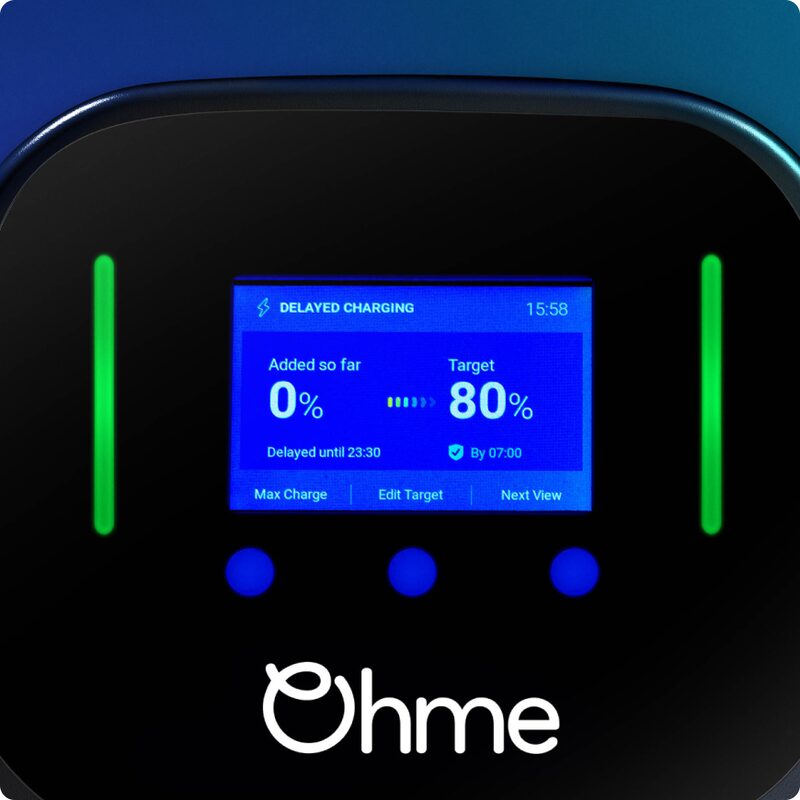
A smart charger is a networked appliance, and losing the network removes functions that a household may have come to rely on: scheduled charging, tariff-linked sessions, energy reporting and remote control. The connection requirement is specific. One maker's chargers connect only to a 2.4GHz Wi-Fi network, so a router that presents a single merged network name, or a 5GHz-only band, will not carry the charger2.
Reconnection is done through the maker's app. The documented route is to select "Wi-Fi Settings" and follow the on-screen instructions to connect the charger to the new Wi-Fi network2. That is the step to take after a router change or a broadband swap, and it is the step most often missed when a charger that worked for months stops accepting schedules.
Security and connectivity are linked on some units. One maker states its chargers can only be operated once the unique RFID card is swiped or the smart charging app is activated, so the household is protected from unauthorised use9. The trade-off is that a lost card or a failed app login is itself a reason a charge will not start, and it looks identical to a fault from the driver's seat.
The wider point for independence is that a cloud-linked charger depends on a manufacturer's servers, an app and a home network. The electricity comes from the grid as before, but the control layer sits with a company. Where the maker's platform changes or the app is withdrawn, the smart functions are the part at risk, not the charging circuit.
Weather and your charger: rain, cold and lightning
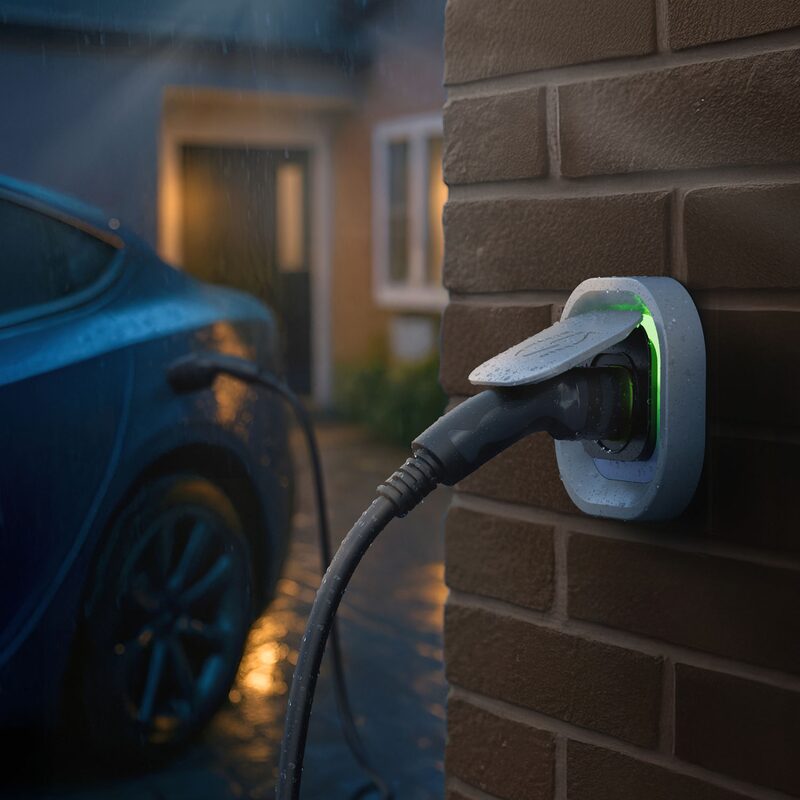
Chargers are built for outdoor mounting, and the certification regime tests for it. BSI Kitemark certification for EV chargers includes temperature testing in both very hot and very cold conditions, plus humidity and dust and water exposure testing17. Ordinary British rain is therefore inside the design envelope, and rain is not the mechanism behind a slow session.
Cold is. Charging takes longer in cold weather because extra power is needed to heat both the inside of the car and the battery, so it can take longer to charge18. That is a vehicle behaviour rather than a charger fault, and it is most visible on rapid charging, where the effect is described in those terms18.
Heat is the other end. An EV could lose charge if left out in the sun for too long19. For a home charger, the practical consequence is that a session which appears to have delivered less than expected may reflect conditions rather than a defect.
Lightning is a voltage event, and the charger's response to voltage events is already documented: outside the acceptable range it stops and shows an error12. There is no separate thunderstorm rule in the guidance, and no compensation route for the interruption. SSEN states plainly that it does not provide specific compensation for being unable to charge an EV or export electricity from solar panels during a planned outage20. That is the honest position on weather-related interruptions: the equipment protects itself, and the household absorbs the lost session.
Car and charger compatibility: why some pairings refuse to charge
Not every failure is at the charger end. Compatibility between vehicle and charge point accounts for a share of sessions that will not start, and the evidence from public charging shows how common connection problems are: in a survey of EV drivers who had to choose a different charging point, 42% could not connect, while 33% could not easily activate the charger21.
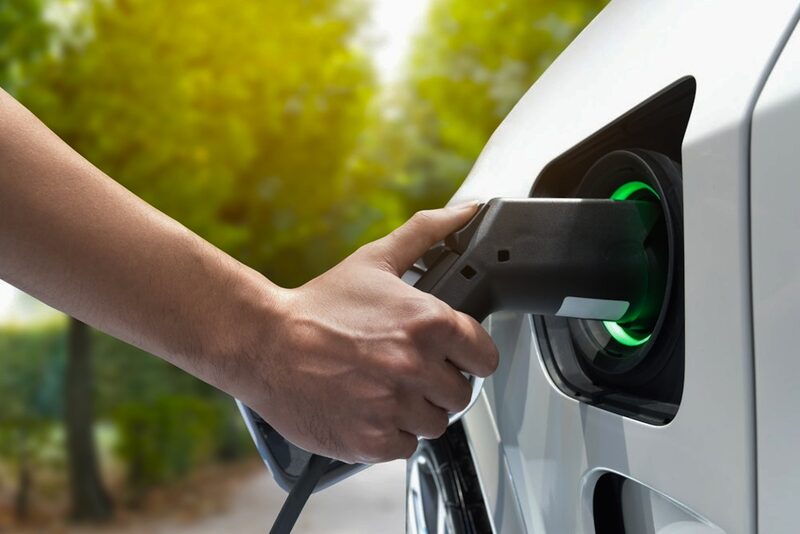
Connector type is the first variable. Some EV drivers may require a CHAdeMO or CCS charging adapter if the charging socket is not compatible with their EV, at ultra-rapid charge points22. At home the relevant connector is the one the vehicle accepts, and the choice between a tethered charger, which comes with a cable and connector installed, and an untethered charger, which has only a socket, follows from that3.
Plug-in hybrids sit outside part of the network by design. While PHEVs can use slow and fast public charging points, most are unable to utilise the growing network of rapid and ultra-rapid chargers23. On rapid chargers specifically, most hybrid batteries do not support high-speed charging, so rapid chargers offer little benefit24. A hybrid that will not accept a fast session is not faulty; it is outside its capability.
The emergency option is worth naming because it is sometimes mistaken for a fix. A UK 3-pin connector can be used to charge some EVs in an emergency but lacks the safety and speed of a dedicated charging point25. It is not a substitute for a working home charger, and it is not a diagnostic tool.
Charging speeds and what counts as a fault: 3kW, 7kW and 22kW compared
Speed is the area where households most often mistake normal behaviour for a fault. A 7kW AC unit is the standard domestic power level, and for most homes a 7kW charger is a good choice, costing around £900 to buy and install4. A 22kW charger is the most expensive option and requires a three-phase connection4. Where a household has a single-phase supply, 22kW is not available at all, and a charger delivering 7kW is performing as specified.
| Power level | What it suits | Key condition |
|---|---|---|
| 7kW AC | Most homes | Standard domestic choice; around £900 to buy and install4 |
| 22kW AC | Homes with three-phase supply | Most expensive chargers, requiring three-phase connection4 |
The distinction between a slow session and a fault turns on what the vehicle asked for. A car that accepts only a lower rate will draw only that rate, and the charger will report a normal session. Cold weather extends the time a session takes because power is diverted to heating the cabin and the battery18. A scheduled session that stops early may have been curtailed by a smart charging platform responding to a tariff window or a network signal rather than by a hardware failure.
The independence question sits here too. A home charger at 7kW gives a household control over when and how fast it charges, subject to the supply capacity of the property and the vehicle's own acceptance rate. What it does not give is independence from the grid: the energy still arrives through the same connection, and the speed available is capped by the fuse and the network, not by the charger's label.
When to call a qualified electrician and what they must certify
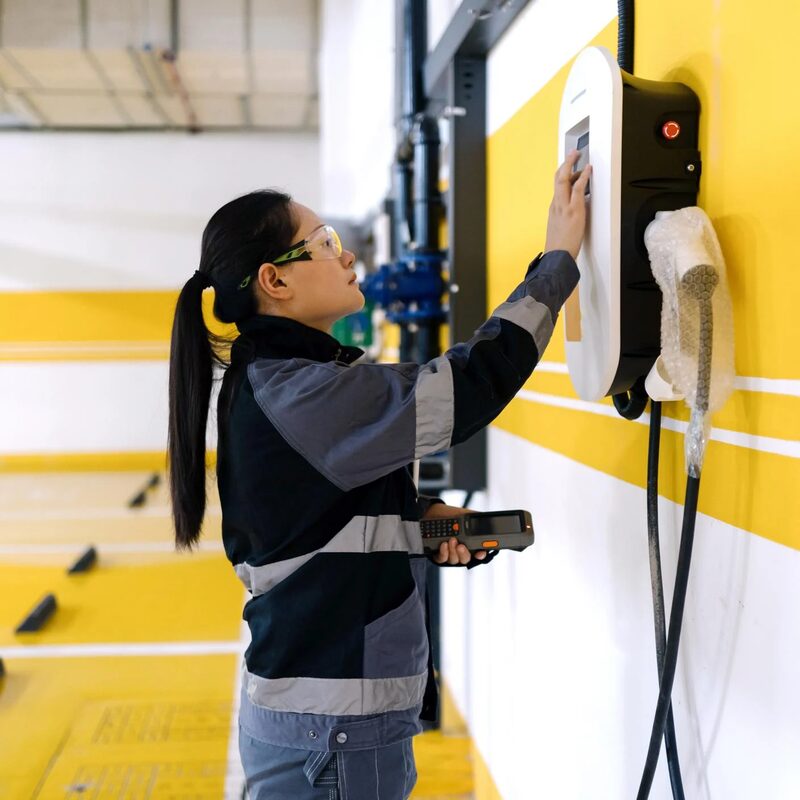
The boundary is clear in the guidance. If an electric car charger is broken, do not try to repair it yourself: it is a job for a professional electrician with the qualifications and certifications3. Installation should always be done by a qualified and certified electrician5, and it is recommended to use a reputable company and ensure the installer has the relevant qualifications26.
The competence standard is specific. To install EV chargers, an installer needs competence in the IET Code of Practice for Electric Vehicle Charging11. Chargers should be installed by a registered electrician with experience in this type of installation6, and by a qualified electrician with relevant experience, with compatibility between the charger, solar system and any battery storage considered from the outset27.
Certification is the household's protection. A compliance certificate proves the work complies with building regulations26. Electricians registered on a Competent Person Scheme, such as NICEIC's, are deemed competent to self-certify their own work, saving householders time and money3. Hiring an electrician registered with a recognised certification body is the recommended route3.
"Your EV charger must be installed in line with the current edition of BS 7671, the national standard for electrical installations."
The safety case for using a professional is not theoretical. A charging cable sold via eBay was recalled because the product presents a high risk of electric shock as it does not have a suitable earthing arrangement28. A ROMADA New Energy EV Charger and Cable was the subject of a product safety report because the supplied plug is missing the required accreditation markings29. Faults of this kind are not diagnosable by a householder and are not fixable by one.
Installation basics that explain many faults: DNO notification, surveys and certification
A proportion of faults trace back to the installation rather than the equipment, which is why the installer's obligations matter to a household trying to diagnose a problem. Under the IET Code of Practice, installers assess the adequacy of the supply capacity for the new EV's electricity consumption plus any existing demand, assess the adequacy of the earthing, and notify the electricity Distribution Network Operator once the charge point has been installed16.
Earthing is the obligation most likely to be behind an intermittent fault. The Easee One backplate safety report describes how incorrect labelling could cause an electrician to connect the PME conductor to the standard PE terminal instead of the dedicated PME terminal, potentially bypassing the charger's built-in PEN fault detection and automatic disconnection function required for UK PME installations10. That is an installation error with a safety consequence, and it is exactly the kind of issue a household cannot see.
Building regulations approval is always required when installing an EV home charger, and a competent and reputable installer should be used, with specific processes for notifying the local building control authority30. Planning permission is a separate question and usually not needed: a domestic charger falls within permitted development rights where the home has off-street parking and the criteria are met30. Permission is usually required for on-street parking, conservation areas, listed buildings, areas where installation is restricted, and more than one upstand per parking space30.
Where a household has no off-street parking, or the charger sits less than two metres from the highway, planning permission is required31. Cross-pavement solutions carry their own regime: unless the crossing is owned by the Highways Authority, separate planning permission is needed, and a pavement cable crossing is unlikely to be covered under householder permission where it sits outside the curtilage of the building on highway pavement32. Permission from the Highways Authority is required for permanent pavement crossing solutions33.
Grants and replacement costs: what funding is available if a charger needs replacing
Where a charger has to be replaced rather than reset, cost is the household's next question. A 7kW charger costs around £900 to buy and install4. A supply-only 7kW charger averages £62534, and the average cost of installing a home EV charger has been reported at £1,000 in parts and labour34. Prices are installer-quoted and vary with the cable run, the earthing arrangement and whether the consumer unit needs work.
Grant support exists for specific groups rather than for replacements generally. The Electric Vehicle chargepoint grant for households with on-street parking funds support towards the costs of the purchase and installation of EV chargepoints at residential properties when also installing a cross-pavement charging solution7. The Electric Vehicle chargepoint grant for renters and flat owners funds support towards the costs of the purchase and installation of EV charge points for drivers who are renters or own a flat7. All these grants offer eligible applicants up to 75% off the cost of installing an EV chargepoint6. Landlords and flat tenants are eligible for a government grant of up to £350 for home EV chargers, which can reduce the installation cost to as low as £65034.
The independence picture for a replacement is the same as for a first installation. A grant reduces the capital cost but does not change the underlying position: the household still draws from the grid, still depends on a manufacturer for firmware and app support, and still needs a qualified electrician for any work on the circuit. What a working home charger does provide is control over timing and cost per mile, which is the part of energy independence a domestic charge point can actually deliver.
Sources34 cited
- Voltage changes in your home or business, UK Power Networks
- My EV1i or EV1s is offline, waEV-charge, 17 September 2026
- Electric vehicle charger installation and maintenance, NICEIC, August 2025
- Electric car charging at home, Which?, 25 February 2026
- EV charging, Uswitch, 19 September 2026
- EV charger regulations in England: what's changed, NICEIC, 19 August 2026
- Funding schemes, OFTEC, 20 September 2026
- Consumer units and fuse boxes, NICEIC, September 2025
- Who is Axle Energy, waEV-charge, 17 September 2026
- Product safety report: Easee One EV Charger Backplate, GOV.UK, 6 May 2026
- Section 722 EV charging: complete guide, Elec-Mate, 2 July 2026
- Managing voltage changes in your property, Electricity North West
- Making home energy management work for consumers, Energy Systems Catapult, 12 February 2026
- If your electricity supply can't cope with the new equipment, NIE Networks, 19 September 2026
- EVs and heat pumps, NIE Networks, 19 September 2026
- Single EV connection, Electricity North West, 20 September 2026
- What makes BSI Kitemark certified EV chargers a smarter choice, BSI, 17 September 2026
- How long to charge an electric car, Uswitch, 26 November 2024
- Tips for electric cars in hot weather, Zapmap, 8 July 2025
- Planned power cuts, SSEN, 19 September 2026
- Consumer experience of electric vehicles in Scotland, Consumer Scotland, 11 August 2024
- Tethered vs untethered, Zapmap, 23 February 2026
- EV basics, Zapmap, 14 May 2024
- Does a hybrid car need an EV tariff, Uswitch, 2 July 2025
- EV glossary, Uswitch, 26 November 2024
- Building regulations, Planning Portal, 17 September 2026
- Can solar panels charge electric cars, The CPA, 15 April 2026
- Electric vehicle charging cable sold via eBay, Electrical Safety First, 17 September 2026
- Product safety report: ROMADA New Energy EV Charger and Cable, GOV.UK, 11 September 2026
- Electric vehicle chargers, Planning Portal, 2026
- Cross-pavement charging solutions, Energy Saving Trust, 18 July 2025
- Approved pavement crossings, Planning Portal, 2026
- Electric vehicle chargers, Planning Portal, 2026
- EV charging statistics, Uswitch, 15 December 2025
 EV Charger WarrantiesCovers typical warranty lengths on UK home charge points, what parts and labour are included, registration conditions and extended warranty options.
 EV Charger Safety and StandardsHow do you know a home charge point is safe to use?
 Charger Apps and ConnectivityHow a home charge point connects: Wi-Fi, Ethernet, 4G and Bluetooth, what the app controls, what happens when the network drops, and how much of the charger depends on the maker's cloud.
 Public EV ChargingWhat does public charging really cost when you cannot plug in at home, and how do you pay for it?
 Charging With a Home BatteryHow a home battery and an EV charger share one supply, whether a battery can usefully charge a car, and how combined systems are controlled so the battery is not discharged into the vehicle at a loss.
 Maintenance and FaultsWhat does it mean when your home battery starts beeping or showing a warning, and can you fix it yourself?