
In this guide
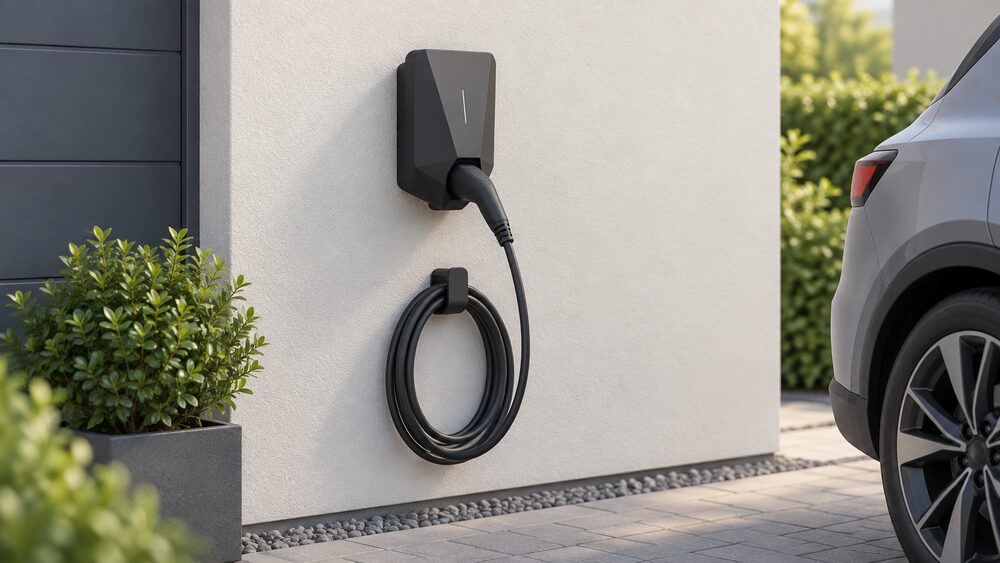
The Easee One is a 7.4 kW single-phase home charger made by the Norwegian company Easee, sold in the UK with installation through Fuse Energy and other OZEV-accredited installers1. It is the model most UK buyers meet first when they search for Easee, and it sits at the simpler end of a platform that also includes the Easee Charge and the Easee Charge Pro3.
The headline commercial facts are straightforward. Fuse Energy's Easee One installation is priced at £899 as a base cost, and that figure covers the charger, full installation with up to 15m of cabling, surge protection and a 3-year warranty5. Independent product listings put the charger at £899 plus installation, so the two readings of the price differ on whether fitting is inside the number6. The warranty is 3 years as standard, and Easee states that its chargers carry a manufacturer's warranty from the day the charger is installed7.
What the Easee One does for a household's energy independence is real but bounded. It moves the fuel for the car from petrol or diesel to electricity, and its smart charging and load balancing let that electricity be taken at the cheapest and least constrained times, including from a home solar array1. What it does not do is remove the household from the grid, from an electricity supplier, or from Easee's cloud: the charger is a connected device, and its remote features depend on WiFi, Easee's servers and the Easee app9.
What the Easee One is: a 7.4 kW single-phase charger from Norway
Easee describes the Easee One as a powerful 7.4 kW electric car charger, and the power figure is the one that matters most for a UK household1. A single-phase domestic supply in the UK supports 7.4 kW charging, which is the standard for home wallboxes; three-phase supplies, which are uncommon in British homes, are what allow the higher figures elsewhere in the range3. The Easee One is therefore a single-phase product by design, and its dynamic power range runs from 1.4 kW to 7.4 kW, meaning the charger can throttle down to a very low rate rather than switching on and off1.
That dynamic range is the technical basis for most of the charger's useful behaviour. A charger that can hold a steady 1.4 kW can follow a solar array's output through a cloudy afternoon, or stay inside a household's import limit without tripping the main fuse1. Easee builds load and phase balancing into all its chargers rather than offering it as an add-on9.
The wider Easee platform is worth understanding because it explains the model names. The Easee Charge is listed with the same 1.4 kW to 7.4 kW single-phase range and can reach up to 22 kW on a three-phase circuit3. The Easee Charge Pro runs from 1.4 kW at 6 A to 7.4 kW at 32 A on one phase, and Easee states it runs on a proven charger platform trusted by over 900,000 chargers with over 99% uptime4. The Easee One is the entry point to that platform rather than a separate design.
Easee itself was founded in Norway in 2018, designs, develops and manufactures smart connected EV chargers for homes, workplaces and other sites, and has now installed more than one million chargers across Europe12. The company exports to 23 countries across Europe, with close to 80 percent of revenue coming from exports and Sweden, the United Kingdom, Germany, the Netherlands, Switzerland and Denmark as its largest markets12. The UK is one of Easee's biggest markets, which matters for parts, support and installer familiarity.
Specifications at a glance: power, dimensions, connector and communications
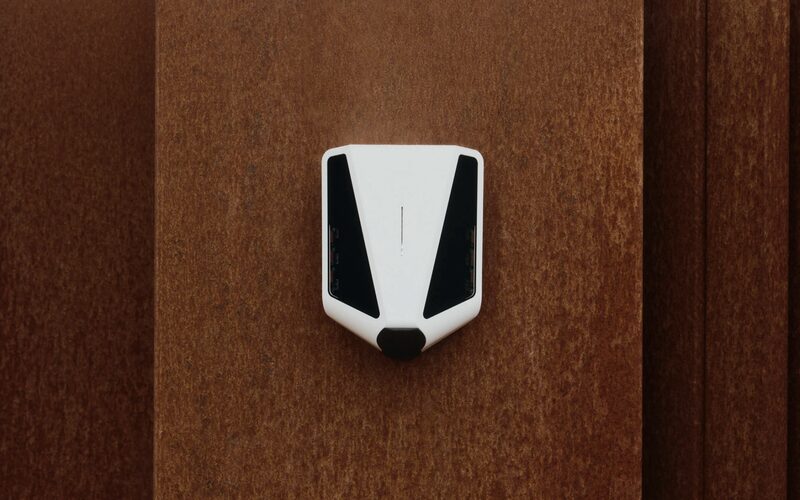
The Easee One's published specification is compact. Charging power is 7.4 kW single phase, fully dynamic between 1.4 kW and 7.4 kW1. Energy measurement is listed at plus or minus 2% for reading charge consumption, which is the figure a household would rely on if it wanted to bill a driver or check a tariff's accuracy1. Load balancing covers up to 3 units per fuse by integrated wireless communication1. The unit is available in five colours: white, red, dark blue, anthracite and black1.
The physical dimensions are not published for the Easee One specifically, but the sibling models give the shape of the enclosure. The Easee Charge measures H: 256 x W: 193 x D: 106 mm, and the Easee Charge Pro carries the identical dimensions of H: 256 x W: 193 x D: 106 mm3. The Easee One shares the same family housing, so a household can expect a unit of roughly that size, a small wall-mounted box rather than the larger pedestal some rivals use.
| Specification | Easee One | Easee Charge | Easee Charge Pro |
|---|---|---|---|
| Charging power | 7.4 kW single phase1 | 1.4 to 7.4 kW single phase, up to 22 kW three phase3 | 1.4 kW (6 A) to 7.4 kW (32 A) single phase4 |
| Dynamic range | 1.4 to 7.4 kW1 | 1.4 to 22 kW, one and three phase7 | 1.4 to 7.4 kW single phase4 |
| Energy measurement | plus or minus 2%1 | built-in meter plus or minus 2%3 | not stated |
| Dimensions | not stated | H 256 x W 193 x D 106 mm3 | H 256 x W 193 x D 106 mm4 |
| Warranty | 3 years5 | 3 years3 | 5 years4 |
| Colours | five facia options1 | black, other covers sold separately7 | black, white covers sold separately4 |
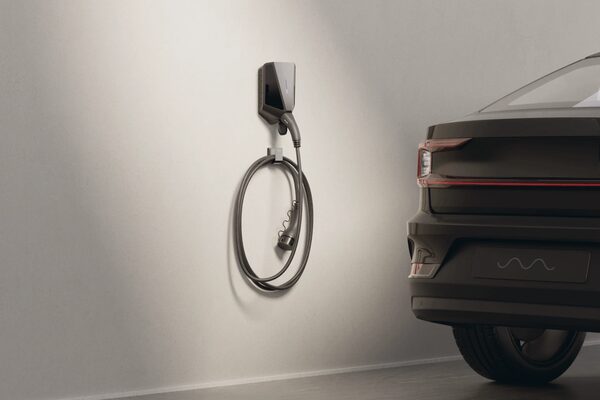
The connector is Type 2, the standard for home AC charging in the UK and Europe, and the cable itself is a separate item: Easee sells a charging cable in 7.4 kW, 11 kW or 22 kW versions supporting up to 32A13. Public AC chargepoints are mostly untethered, so a driver who wants to use both home and public AC points will need a cable in the car regardless14.
Tethered or untethered, and five facia colours
The Easee One is unusual in that the tethering decision is not fixed at purchase. Easee states that the owner chooses whether the charger is tethered or untethered by locking the cable using the Easee app1. In practice that means the unit has a socket, and a cable left permanently plugged in and locked behaves as a tethered charger, while an unlocked cable can be removed and stored.
The distinction matters more than it sounds. Tethered chargers come with a cable and connector installed, while untethered chargers have only a socket where a cable is plugged in15. Untethered chargers offer a detachable cable, and can appear tidier because the cable can be disconnected and stored out of sight when not in use16. The trade-off is that an untethered unit leaves the driver handling a wet cable in the rain, and a tethered unit leaves a cable coiled on the wall.
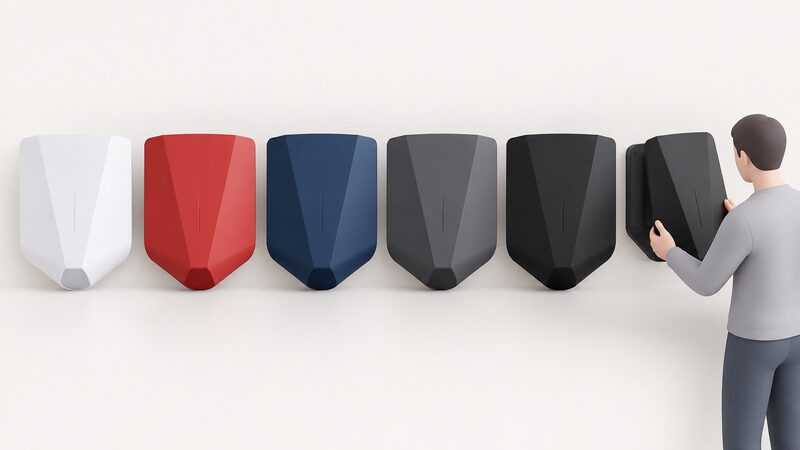
On appearance, Easee offers five different colour covers that the owner can change without an electrician17. The Easee One is available in a range of five colours: white, red, dark blue, anthracite and black1. Independent listings name the same five facia colours6. The wider range is more restricted: the Easee Charge is available in black with other colour front covers sold separately, and the Easee Charge Pro is available in black with white covers purchasable separately7. For a household that cares about how the unit looks on a rendered or brick wall, the Easee One is the most flexible of the three.
Smart charging, solar integration and load balancing
Smart charging on the Easee One is a UK and Ireland feature. Easee states that smart charging is only available in the UK and Ireland, and that it lets a household enjoy flexibility with a wide range of energy tariffs and charge the car when energy is cheapest1. Easee's Smart Charging syncs with the energy provider and charges the car when prices are lowest18. The company's own summary is that an Easee One with smart charging is good for the wallet and the planet18.
That matters because time-of-use tariffs are the main lever a household has over what an electric car costs to run. Some tariffs are only available if certain equipment is installed, such as an EV charger or solar panels, so the charger is the entry ticket to the cheaper rates rather than an optional extra19. The Energy Saving Trust's guidance on time-of-use tariffs sets out the general principle that shifting consumption to off-peak windows is what produces the saving19.
Load balancing is the other half of the picture, and Easee integrates it into every charger rather than selling it separately9. The Easee One supports load balancing of up to 3 units per fuse by integrated wireless communication1. Independent guidance describes three Easee units on a single fuse, allowing three cars to charge from one location at the same time with the power split evenly between them and access controlled by RFID cards6. Across the wider platform the ceiling is much higher: Easee states that its chargers enable load and phase balancing of up to 101 EV chargers on a single circuit, with an automatic queuing system7.
Where an Easee Equalizer is fitted, the arrangement becomes more capable still. The Equalizer is a small smart device designed to optimise the charging experience, and Easee states that even with limited grid capacity its technology will make sure the household is still able to charge at all times without tripping a fuse11. Communication between chargers and the Equalizer is handled entirely locally by Easee Link radio technology, with internet required only for app and software updates11. That local link is the part of the system that keeps working when the broadband drops.
On solar, Easee offers a solar charging service, and the general principle for solar-aware charging is well established: smart chargers monitor real-time solar electricity production, adjust charging speed accordingly, and switch between solar and grid supply depending on availability8. Independent guidance on solar integration names solar diversion, app control and dynamic scheduling as the features that matter, with solar diversion allowing the charger to prioritise solar power for EV charging and minimise reliance on the grid21. The Easee One's dynamic range down to 1.4 kW is what makes that diversion practical on a domestic array.
Price: £899 including installation, cabling and surge protection
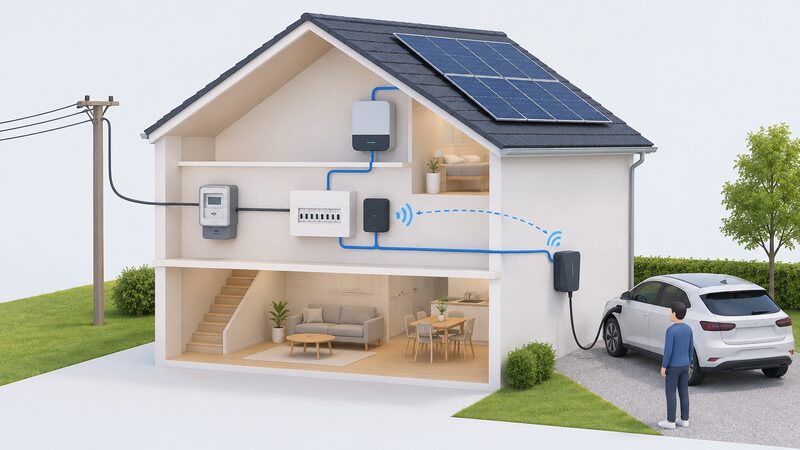
The Easee One's UK price is published in two forms, and they do not say quite the same thing. Fuse Energy's Easee One installation is priced at £899 as a base cost, and Fuse Energy states that this includes the charger, full installation with up to 15m of cabling, surge protection and a 3-year warranty5. An independent product listing gives the price from £899 plus installation6. The two figures agree on the number and disagree on what sits inside it, so a household comparing quotes should read the £899 as the charger and standard installation package where Fuse Energy is the installer, and as the hardware alone in the independent listing.
What is included in the Fuse Energy package is unusually specific for the market: the charger, up to 15m of cabling, surge protection and the 3-year warranty5. Surge protection is worth noting because it is often an extra on other quotes, and it protects the charger and the car's onboard electronics from transient overvoltage on the supply.
Installation is carried out by OZEV-accredited installers, and Easee states that a household can get an Easee One charger installed in under a week through Fuse Energy2. ScottishPower offers the same charger through a nationwide team of OZEV-accredited experts, with standard installation included and a 3-year warranty built in22. Fuse Energy is described as an OZEV-approved installer able to install the Easee One at a property23.
The grant position is separate from the price. The Electric Vehicle Chargepoint Grant for Households with On-Street Parking requires an OZEV approved installer to complete the installation of the chargepoint24. Northern Powergrid's household guidance on EV charging sets out the network side of the process for homes in its area25. Where a cross-pavement channel is involved, the householder must have a dedicated home charger or an external socket with an earth rod installed and provide photographic proof before the gulley is installed26.
Warranty: 3 years as standard
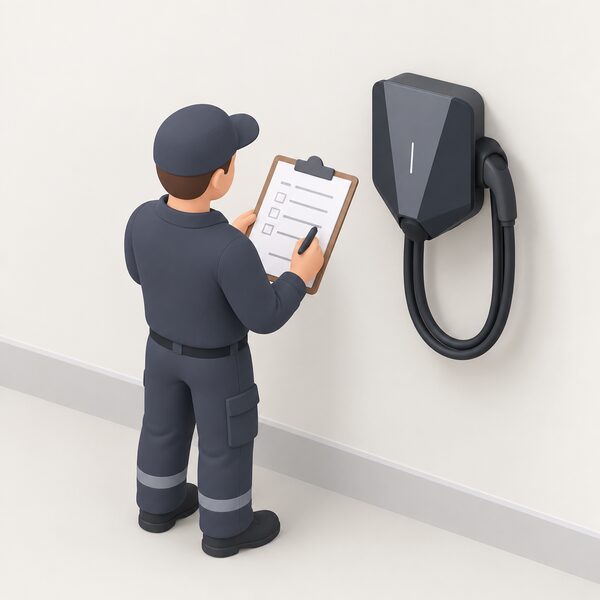
The Easee One carries a 3-year warranty, and it appears in three separate places in the published material. Fuse Energy's installation package includes a 3-year warranty5. Fuse Energy's Tonbridge installation page describes the Easee One as a 7.4 kW unit with a 3-year warranty27. ScottishPower's Easee home charger offer includes a 3-year warranty built in22.
The start date is the point worth reading carefully. Easee states that its chargers carry a manufacturer's warranty from the day the charger is installed, not from the day it was bought or delivered7. For a household that buys a charger ahead of an installation date, that distinction can be worth weeks or months of cover. The warranty is a manufacturer's warranty rather than an insurance-backed product, and Easee's charging cable is likewise listed with a manufacturer's warranty13.
The 3-year term is the entry point of the range rather than a uniform figure. The Easee Charge is listed with a 3-year manufacturer warranty, and the Easee Charge Pro with a 5-year manufacturer warranty3. The Easee Equalizer carries a three-year warranty28. Independent buying guidance puts the typical warranty on an entry-level smart charger at 3 years, which places the Easee One at the market norm rather than above it13.
For a household weighing independence, the warranty is a dependence as much as a protection. It is a claim against a single manufacturer, exercised through that manufacturer's process, and it assumes the company is still trading and still supporting the product in the UK. Easee's position is set out below.
Who makes it: Easee, ownership and scale
Easee was founded in Norway in 2018 and designs, develops and manufactures smart connected EV chargers for homes, workplaces and other sites12. The company develops and manufactures its products in Scandinavia and exports to 23 countries across Europe, with close to 80 percent of revenue coming from exports and Sweden, the United Kingdom, Germany, the Netherlands, Switzerland and Denmark as its largest markets12. Easee states that it has now installed more than one million chargers across Europe12. The company's chief executive is Øyvind Stavland Osjord12.
Ownership changed in 2026. Brødrene Jensen, a shareholder in Easee since 2019, acquired 100 percent of the company, with AWC providing financing and set to become majority owner pending regulatory approval29. Easee describes the change as strengthening its platform for global growth29. For a UK buyer, the practical reading is that the brand is under new ownership with a financing partner moving to majority control, subject to approval, rather than a company that has failed or entered administration.
On standards and grid work, Easee states that its charger range is in full compliance with the new Delegated Act of the Radio Equipment Directive, covering the One, Lite, Core, Up, Max and Pro chargers, and that its embedded team delivered seven certified products in four months30. Easee has become the first Electric Vehicle Supply Equipment manufacturer to receive Mercury certification for grid flexibility services, and has been an active participant in the Mercury Consortium since contributing to the development of its preliminary technical requirements for EV chargers29. The company joined ChargeUp Europe, the voice of the EV charging infrastructure industry in Europe, in July 202612.
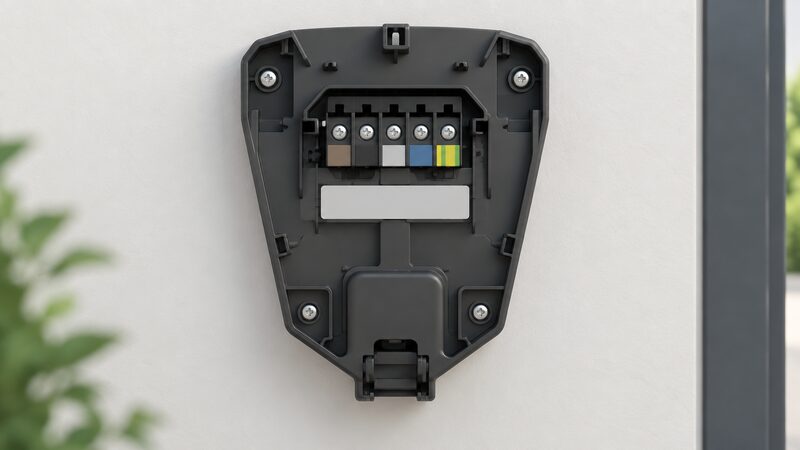
There is one safety matter a UK buyer should know about. GOV.UK published a product safety report covering Easee One EV Charger Backplate BP-AP-1/s01-01 units with an incorrect PME terminal label, sold between late September 2025 and 3 February 202628. The backplate's country of origin is listed as Norway28. A household with a charger installed in that window should check the backplate labelling against the report.
Buying and installing in the UK: Fuse Energy and OZEV-accredited installers
The UK route to an Easee One runs through accredited installers rather than retail. Fuse Energy is an OZEV-approved installer and can install the Easee One EV charger at a property23. Easee states that a household can get an Easee One charger installed in under a week through Fuse Energy2. ScottishPower offers installation by a nationwide team of OZEV-accredited experts with standard installation included22.
The accreditation is not a marketing label. The Electric Vehicle Chargepoint Grant for Households with On-Street Parking requires an OZEV approved installer to complete the installation of the chargepoint24, and independent guidance on the network side refers to OZEV-authorised charge point installers25. A household claiming that grant therefore has to use an accredited installer, and the same accreditation is what a household should look for even where no grant is involved.
The installation itself has a technical check built in. Easee states that the charger automatically checks the wiring during installation and notifies the electrician if there is a fault10. That is a commissioning aid rather than a substitute for the electrician's own testing, but it catches a class of error at the point it is made rather than months later.
On connectivity, Easee chargers use WiFi, and the Chargeberry is configured by connecting a smartphone to its integrated WiFi network7. All Easee chargers are connected to Easee's cloud and are continually updated with the latest software upgrades10. The Easee One is automatically updated with new software updates as soon as they become available1. Where an Equalizer is fitted, communication between chargers and the Equalizer is handled entirely locally by Easee Link radio technology, with internet required only for app and software updates11. The charger also carries 11 sensors and intelligent temperature measurement alongside IP54 certification17.
For a household thinking about independence, the honest summary is this. The Easee One shifts car fuel from petrol to electricity and gives the household the tools to buy that electricity at the cheapest times, or to take it from its own roof1. It does not remove the grid connection, the electricity supplier, or the dependence on Easee's cloud for remote features and firmware9. The 3-year warranty is a claim on one Norwegian manufacturer, and the longest useful life of the product depends on that company continuing to support it in the UK. Households weighing the alternatives can compare the Easee One against the Zappi, look at what a smart charger actually does, or start from the full guide to charging at home.
Sources30 cited
- Easee One product page, Easee, 2026-03-12
- Fuse Energy EV charging, Fuse Energy, 2026-03-18
- Easee Charge product page, Easee, 2026-03-12
- Easee Charge Pro product page, Easee, 2026-09-10
- EV charger grant Scotland, Fuse Energy, 2026-04-27
- Home electric vehicle chargers, Carwow, 2026-01-09
- Easee apartment blocks, Easee, 2026-03-13
- Easee solar charging, Easee, 2026-03-12
- Easee EV chargers, Easee, 2026-08-10
- Easee smart safety, Easee, 2026-08-10
- Easee Equalizer energy management, Easee, 2026-08-10
- Easee joins ChargeUp Europe, Easee, 2026-07-13
- Easee charging cable, Easee, 2026-03-13
- EV connector types, Zapmap, 2026-05-20
- Electric vehicle charger installation and maintenance, NICEIC, 2025-08
- Difference between tethered and untethered chargers, myenergi, 2026-04-10
- Easee home charging, Easee, 2026-04-21
- Set it and forget it, Easee, 2025-04-14
- Time of use tariffs: all you need to know, Energy Saving Trust, 2026-05-20
- Can solar panels charge electric cars?, CPA, 2026-04-15
- Integrating solar panels with EV charging, Uswitch, 2025-07-02
- ScottishPower EV bundle, ScottishPower, 2026-09-17
- EV charger installation Blackburn, Fuse Energy, 2026-08-16
- Electric Vehicle Chargepoint Grant for Households with On-Street Parking, GOV.UK, 2026-09-17
- Electric vehicles for home charging, Northern Powergrid, 2026-09-19
- Cross-pavement charging solutions, Energy Saving Trust, 2025-07-18
- EV charger installation Tonbridge, Fuse Energy, 2026-09-04
- Product safety report: Easee One EV Charger Backplate, GOV.UK, 2026-05-06
- Easee achieves Mercury certification, Easee, 2026-06-23
- Easee achieves EU cybersecurity compliance, Easee, 2025-09-16
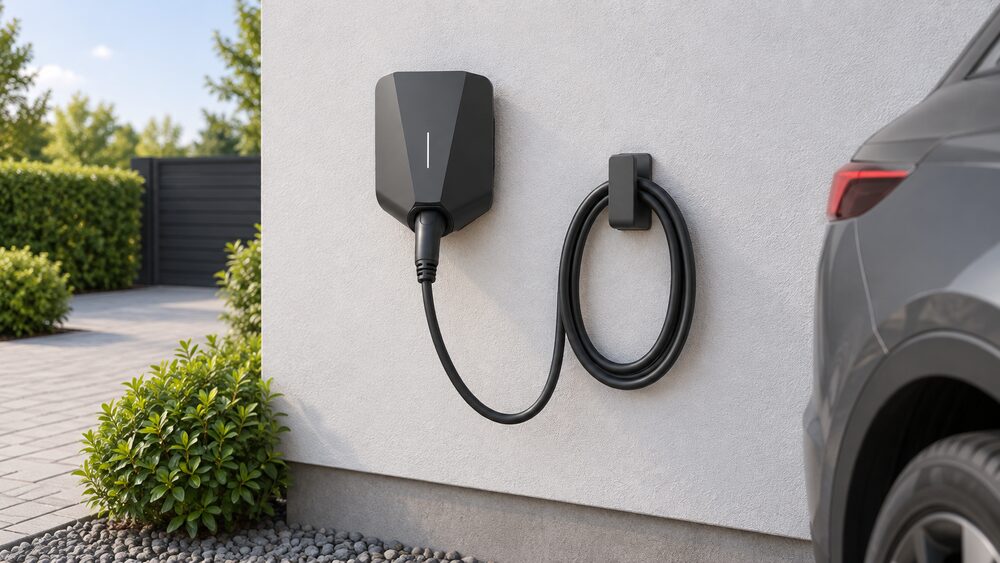 Easee home EV chargersThe Easee One is a small Norwegian-designed home charger sold in the UK, fitted through Fuse Energy for £899.