
In this comparison
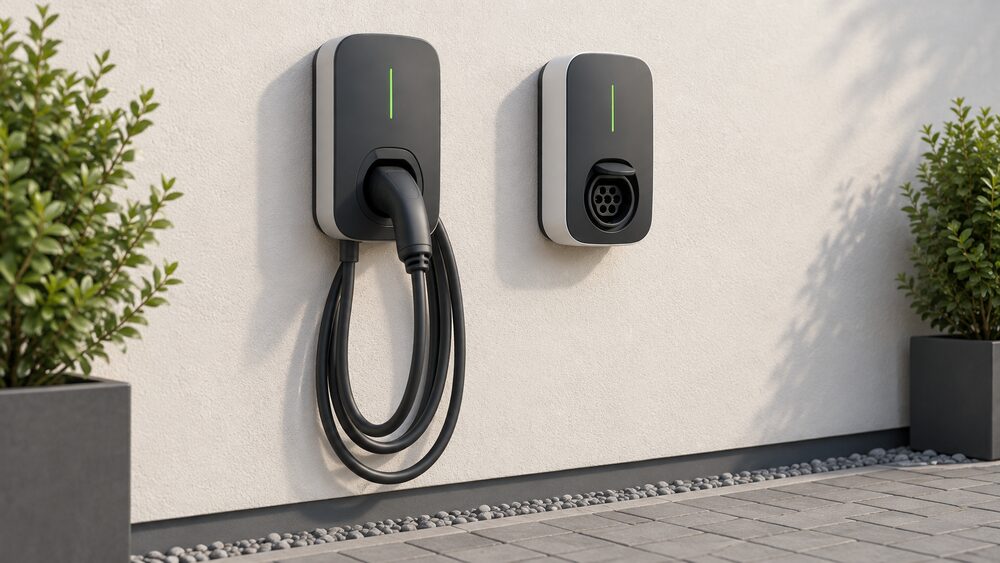
A tethered charger has a cable permanently attached to the unit, ending in a plug that goes straight into the car. An untethered charger is a socket only: you supply the cable and connect it at both ends each time you charge. That single difference drives almost everything else, from price to theft risk to how the unit looks on a wall.
For most homes with a driveway, the tethered unit is the more convenient choice, because the cable is always there and cannot be mislaid. Untethered units take up less space, tend to cost less, and accept any Type 2 compatible connector, which matters if the household runs more than one car or expects to change it1. The trade is a cable to buy, store and carry, and a detachable lead that is more susceptible to theft2.
Both types are sold as smart chargers, and both can integrate with home energy management systems and variable tariffs for scheduled off-peak charging3. The choice does not change what the charger can do to your bill; it changes what is bolted to the wall and what you have to remember.
Tethered chargers: a permanent cable, ready to plug in
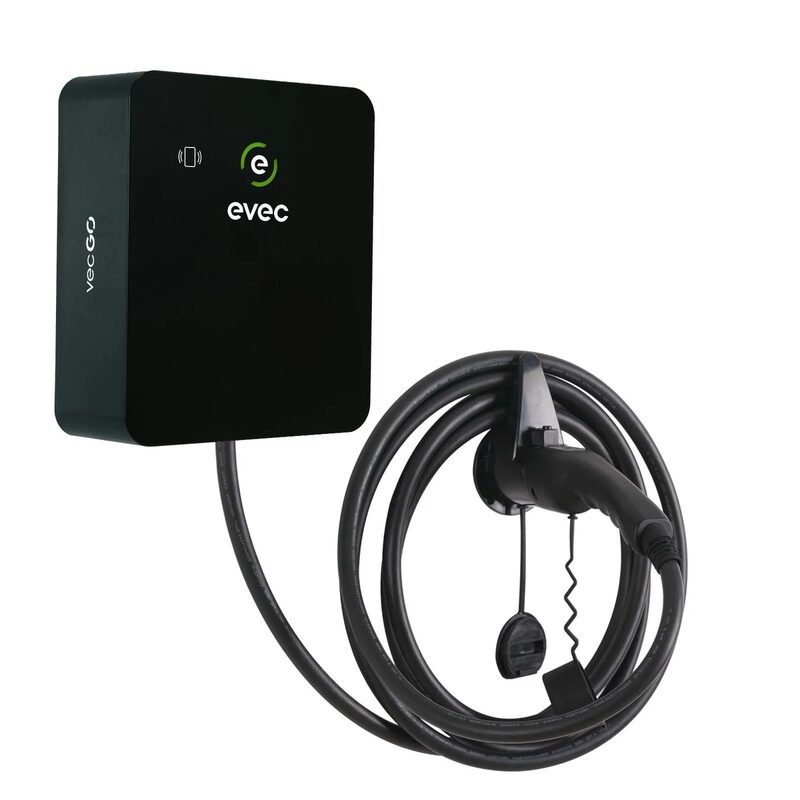
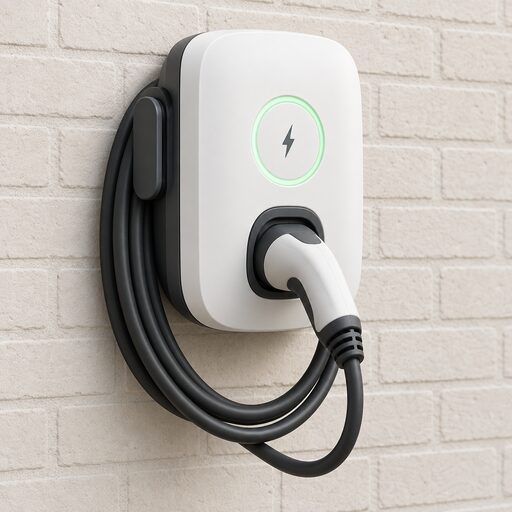
A tethered charger has a cable permanently attached to the charging unit, with a Type 2 plug on the end that goes into the car5. Nothing needs to be fetched, unwound or connected at the unit end. The cable is part of the hardware, so it is always ready to use4.
That permanence is the whole appeal. Tethered chargers are generally the most convenient option, since the cable is never lost, and for that reason they are the most popular choice for home chargers7. The same logic applies at the fastest public chargers: rapid and ultra-rapid units are tethered, with the cable permanently attached to the unit6.
The limits are real. A tethered home charger is restricted to either a Type 1 or a Type 2 connection, so the unit is tied to the connector type chosen at purchase2. It is also limited by cable length unless a replacement is paid for, and the unit takes up more room and generally costs more upfront1. If the household later buys a car with a different inlet, the charge point itself has to change8.
Security is the quiet advantage. Because the cable is permanently connected to the unit, it cannot be stolen, which makes a tethered charger less vulnerable to theft than an untethered one9. For a driveway that is visible from the street, or a parking space in a shared area, that is a meaningful difference rather than a theoretical one.
Untethered chargers: a socket only, with your own cable
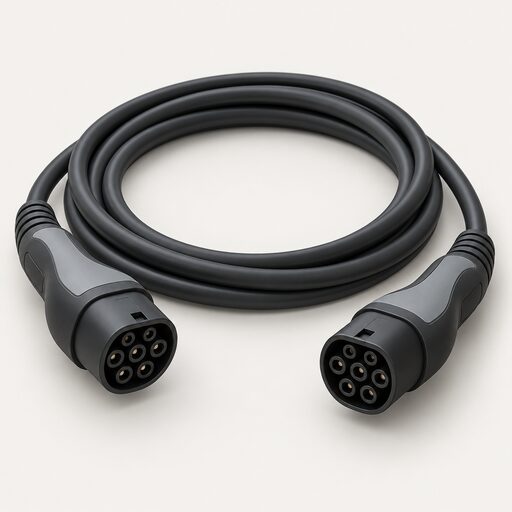
An untethered charge point has only a socket, and the driver uses their own cable to complete the connection1. In the UK that socket is usually a Type 2 socket, into which the cable is plugged at the unit end and at the car end3. The cable itself is kept loose rather than attached, and has to be connected to both the charging unit and the car to complete a charge10.
The advantages are flexibility and space. Untethered home chargers take up less space, tend to cost less, and give the option to connect any Type 2 compatible connector1. They are also more future-proof: a longer cable or a different connector type needs only a new cable, not a new charging unit2. The same detachable cable can be used at home and at public chargers2.
Untethered units also suit higher traffic areas, such as workplaces or public charging, and are cleaner and less obtrusive for homeowners7. That is why most slow and fast public chargers are untethered, requiring your own cable11, and why most standard and standard plus public AC units are untethered too6.
The cost of that flexibility is routine inconvenience. Untethered chargers are less convenient than tethered ones, because the cable has to be connected and disconnected every time you charge2. There is also the question of where the cable lives when it is not in use, and whether it is left out where it can be taken.
Convenience and security: where tethered wins
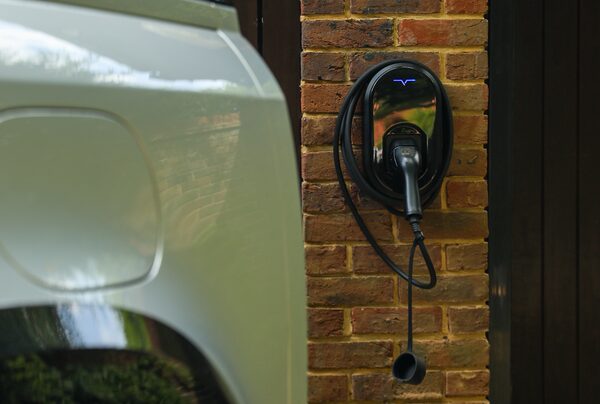
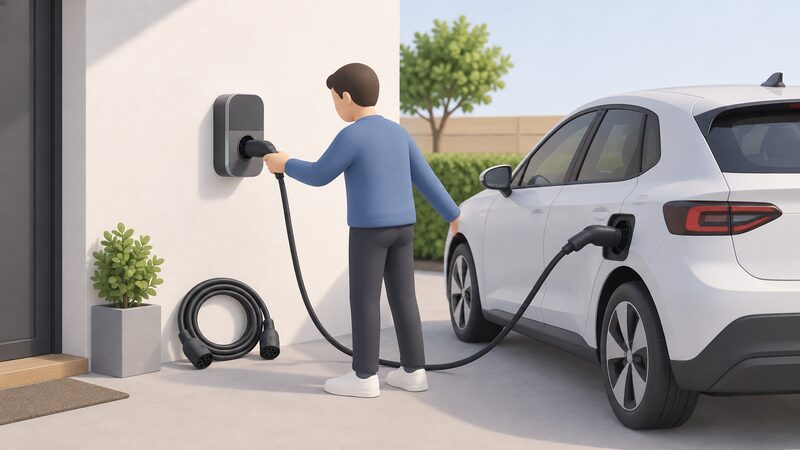
Convenience is the clearest dividing line. Tethered chargers have cables attached and can be a more convenient choice for home charging5, and they are generally the most convenient option overall because the cable is never lost7. Untethered units require the cable to be connected and disconnected on every charge2.
Security runs the same way. Tethered chargers are more secure than untethered chargers because the permanently attached cable prevents theft2. With an untethered unit, the detachable cable is more susceptible to theft2. Some untethered chargers carry security features such as PIN protection or cable locks, but the loose cable remains the exposed part9.
The evidence on vandalism points at cables rather than units. Cable cutting is the most common form of chargepoint vandalism, and theft of charging cables for the copper is a driver of it12. Vandalism carries the risk of chargepoints being repeatedly out of order or unusable for long periods12, and reports indicate the picture had not improved in 202512.
For a household, the practical question is where the car sits overnight. A charger inside a garage or behind a gate carries less exposure than one on an open driveway beside a pavement. Where the cable cannot be left connected and out of sight, a tethered unit removes the loose item from the equation altogether.
Cost: cheaper unit, but a cable to buy separately
Untethered charging units are generally cheaper than tethered chargers, but if a compatible cable is not already owned, one has to be bought, so the overall saving may be negligible9. Tethered chargers come with a built-in cable, which is why they are usually more expensive than untethered chargers9. The cable is included in the unit's overall cost2.
Installation cost is shaped by several factors, including charging speed, whether the unit is tethered or untethered, the complexity of the installation, and any grants or incentives available13. The unit is only part of the bill; the electrical work and any cable run are the rest.
There is a second cable to consider regardless of which unit is chosen. Most EV drivers get a separate charging cable, especially if they have a tethered home charging unit, to carry in the car for public charging points14. That cable is needed because most slow and fast public chargers are untethered11. A household that buys an untethered home unit can use the same cable in both places, which is where the flexibility argument becomes a cost argument as well.
| Tethered | Untethered | |
|---|---|---|
| Unit price | Usually more expensive, cable included9 | Generally cheaper, cable may be extra9 |
| Cable | Built in, part of the unit cost2 | Bought separately if not already owned2 |
| Overall saving | Not applicable | May be negligible once a cable is added9 |
| Cost factors at installation | Speed, tethering, complexity, grants13 | Speed, tethering, complexity, grants13 |
Prices for home charge points are installer-quoted, and no published unit prices are available for either type. Tethered chargers typically cost more upfront, as the cable is included in the price1, and are more expensive than untethered chargers2. The final cost depends on several factors, including charger type (tethered vs untethered), model choice, and any custom requirements like longer cables3. Tethered units are also limited by connector type and cable length unless paid replacements are fitted, and take up more room4. Most EV drivers get a separate charging cable, especially with a tethered home charging unit, to carry in the car for public charging points5.
Type 2: the connector both options rely on
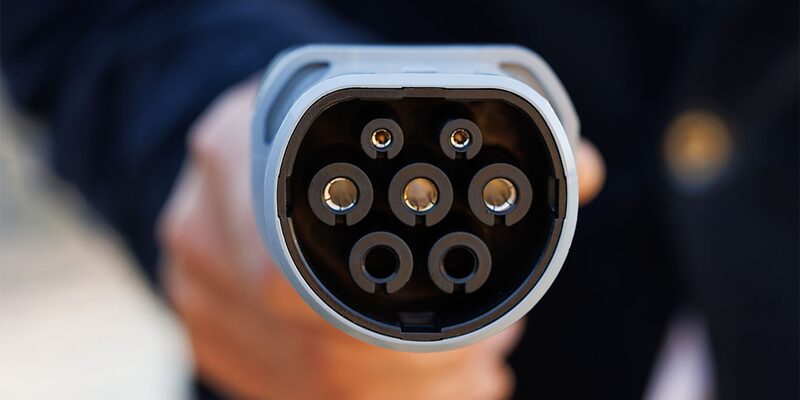
Both formats rest on the same connector. A tethered charger's cable ends in a Type 2 plug, which has become the worldwide industry standard and suits all modern EVs5. An untethered charger presents a universal socket, usually a Type 2 socket in the UK, into which your own cable is plugged3.
Home chargers are available either with a tethered Type 1 or Type 2 cable, which plugs straight into the car, or with a Type 2 socket for use with the vehicle's charging cable15. There are two connector types in play, Type 1 and Type 214, and the older Type 1 remains on some vehicles. A car with a Type 1 connector, more common on older models or some imports, needs either a tethered charger with a Type 1 cable or an untethered charger with a Type 2 socket plus a Type 2 to Type 1 adapter cable3.
That is the practical reason untethered units are described as more future-proof. A change of car with a different inlet needs only a new cable rather than a new charging point9. A tethered unit, by contrast, is restricted to the connection type chosen at purchase2.
Which suits which home: driveway, workplace or on-street
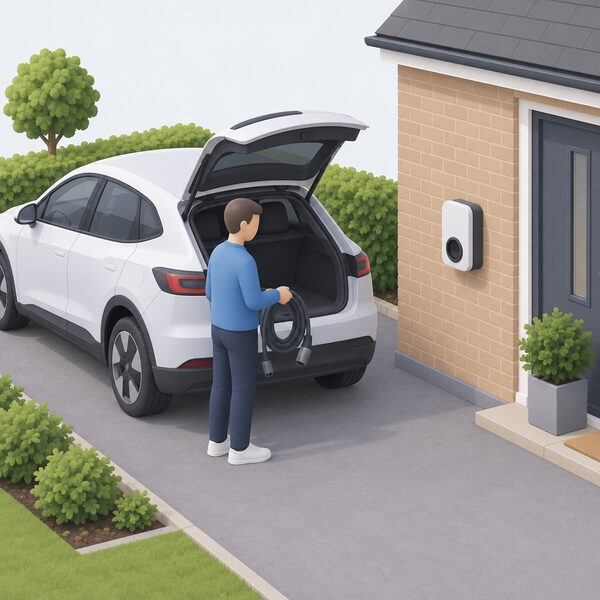
For a home with off-street parking, installation of a domestic EV charger is likely to fall under permitted development, with no planning application required where the criteria are met16. A dedicated home chargepoint is the cheapest way to charge an EV17, and the charger must be installed on your property without crossing public land, with off-street parking such as a driveway, carport or garage18.
Where the car is parked on the street, the picture changes. On-street charge points are mostly untethered, so your own cable is needed to use the charger19. Most residential on-street chargers are untethered, meaning no charging cable is attached20. In Scotland, around three quarters of drivers using a charging point attached outside their house, 73%, did so rather than a three-pin socket21.
The grant position differs by tenure and parking. The electric vehicle chargepoint grant for renters and flat owners requires a parking space that is off-street, private and clearly defined, and it does not have to be part of the property22. The grant for households with on-street parking is not available to those with access to a private driveway or other private parking place23.
| Setting | Usual format | Why |
|---|---|---|
| Home with driveway | Tethered common | Cable always ready, cannot be lost7 |
| Home with driveway, multiple cars | Untethered suits | Any Type 2 compatible connector accepted1 |
| Workplace | Usually untethered | Higher traffic, drivers bring their own cable24 |
| On-street residential | Mostly untethered | No cable attached to the unit19 |
For households without a driveway, 24% were within five minutes walk of a public charging device in 202425. That figure shapes the choice: where charging happens away from home, an untethered home unit and a cable carried in the car cover both settings with one lead.
Smart charging, whichever you pick
Smart capability is not tied to tethering. Entry-level smart chargers are available in both tethered and untethered versions, while premium smart chargers are usually untethered26. Both tethered and untethered smart chargers can integrate with home energy management systems and variable tariffs, allowing scheduled off-peak charging3.
That matters for energy independence because the scheduling, not the cable, is what shifts consumption to cheaper or greener hours. A household charging from its own solar or a home battery needs the charger to respond to surplus or to a tariff signal, and both formats do that. The unit's software and its connection to the home network carry that function.
The remaining dependence is the same for either format: the grid, a supplier, and the manufacturer's app and cloud service for scheduling and updates. A tethered or untethered charger does not change that. What it changes is the physical arrangement on the wall, the cable in the boot, and who carries the risk of a loose lead.
For a wider view of how the unit fits with tariffs, solar and load management, see EV charging at home, types of home EV charger and what a smart EV charger does. Installation requirements are covered in home EV charge point installation, and the grant rules in the chargepoint grant for renters and flat owners.
Sources26 cited
- Tethered vs untethered, Zapmap, 2026-02-23
- The difference between tethered and untethered chargers, myenergi, 2026-04-10
- Tethered vs untethered EV charger, Fuse Energy, 2026-04-26
- Types of EV chargers, Hive, 2026-08-05
- Your ultimate guide to EV charging cables, Evec, 2026-09-17
- EV connector types, Zapmap, 2026-05-20
- Choosing the right EV charger for your home, Rolec, 2026-01-06
- Questions to ask before getting a home EV charger, Good Energy, 2026-01-22
- Tethered vs untethered EV home chargers, E.ON Next, 2024-03-18
- FAQs, Ratio EV, 2026-01-13
- How to use electric car charging points, Which?, 2026-05-20
- EV charger vandalism, Energy Saving Trust, 2026-02-26
- Electric vehicle charger installation and maintenance, NICEIC, 2025-08
- Choosing an EV charging cable, Uswitch, 2022-02-04
- Home charging, Zapmap, 2025-06-19
- Electric vehicle charging: permitted development, Planning Portal, 2026
- Charging electric vehicles, Energy Saving Trust, 2026-04-23
- EV charging connector types, E.ON Next, 2026-09-17
- On-street charging, Zapmap, 2026-02-26
- How to use an untethered EV charger, Electroverse, 2026-09
- Consumer experience of electric vehicles in Scotland, Consumer Scotland, 2024-08-11
- Electric vehicle chargepoint grant for household, GOV.UK, 2026-09-17
- What does net zero mean for you, Citizens Advice, 2024-07-09
- How to charge an electric car, Uswitch, 2022-02-02
- Home and community charging statistics, Zapmap, 2024
- Home EV charger buying guide, So Energy, 2026-08
 Types of Home EV ChargerWhich home charger suits your car and your driveway?
 Home EV Charger ManufacturersWhich home EV charger brands are worth considering, and how do you choose between them?
 Charging With a Home BatteryHow a home battery and an EV charger share one supply, whether a battery can usefully charge a car, and how combined systems are controlled so the battery is not discharged into the vehicle at a loss.
 Charging Without a DrivewayParking on the street makes charging an electric car at home tricky.
 EV Charging Speeds and TimesHow long an electric car takes to charge depends on the charger and the car together, so a faster charge point will not always speed things up.
 Charging and Energy IndependenceCharging an electric car at home can cut your fuel costs, but how much does it really free you from the grid?