In this guide
A smart charging tariff is one where the energy company takes control of the chargepoint and charges when demand on the grid is lower, in return for a preferential rate on electricity used for EV charging1. The supplier is not simply publishing cheap hours and leaving the household to use them: it communicates directly with the charger in real time, based on live grid demand and capacity, and decides which half-hours the car actually draws power in2. What the household sets is the outcome, not the timing: the target state of charge and the time the car must be ready.
The headline rates are the reason people accept that arrangement. Intelligent Octopus Go is advertised at 8p/kWh, with 8.4p/kWh applying until 1st October3. Ohme describes off-peak rates on the same tariff of around 7 to 9p per kWh4. Octopus states charging for up to 69% less than average price cap rates and up to 85% less than public charging3. Indra's comparison, dated 20 August 2026, puts the smart-charging rate approximately 69% lower than the average capped standard-variable rate, while noting that tariffs, eligibility and actual savings vary5.
The limits matter as much as the rate. Intelligent Octopus Go provides up to six hours of super-cheap smart charging every 24 hours for EV charging, and once those six discounted hours are used any further smart charging is billed at the peak rate, even if it happens overnight6. A manual override exists, but it is always billed at the peak or standard rate6. And not every charger can join: waEV-charge states plainly that supplier-controlled smart tariffs such as Intelligent Octopus Go and OVO Anytime are not compatible with its own smart service, because they already control charging7.
How the supplier takes control of the charger
Two things are being handed over. The first is the schedule. On a supplier-controlled tariff the energy provider communicates directly with the charger in real time based on live grid demand and capacity, rather than the household picking a start time2. The second is the billing basis: smart time-of-use tariffs use half-hourly smart meter readings so that companies can charge lower rates when demand is lower and electricity is cheaper10, and they charge at least two different rates, one for peak hours and one for off-peak11.
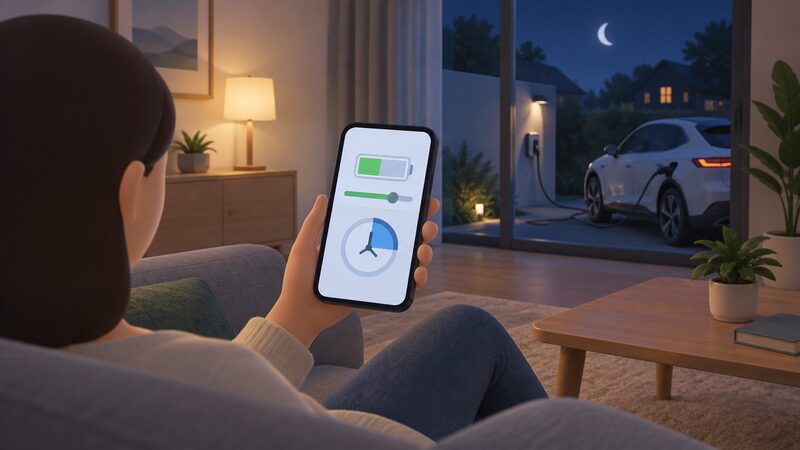
What stays with the household is the requirement. In the Andersen description of a smart tariff, the driver plugs the car in and tells the provider's app their requirements, such as needing an 80% charge by 7:00 AM2. EDF describes its smart charging EV tariff as automating smart charging for EVs while customers who sign up always remain in control of their charging preferences, including the level of charge in the car and what time of day they need their EV to be charged12. In other words the supplier owns the when, the household owns the by-when and the how-much.
There is also a layer of control that is not the supplier's at all. Under the UK smart charge point regulations, a charge point's default hours must be pre-set not to charge during times of peak electricity demand, between 8am and 11am and between 4pm and 10pm on weekdays, and a charge point must be configured to operate a default randomised delay of up to 600 seconds, that is 10 minutes, at each charging instance13. The randomised delay exists so that thousands of chargers do not all start on the same clock tick. It is why a session may not begin the instant a window opens.
The practical result is visible in real homes. Monitoring of EVs in Living Lab homes found that peak charging occurs between midnight and 6am, consistent with behaviour optimising for current time-of-use tariffs14.
Intelligent Octopus Go: 8p/kWh and a six-hour window
Octopus advertises Intelligent Octopus Go at as little as 8p/kWh, with 8.4p/kWh until 1st October3. Ohme's own guidance gives the same tariff as offering off-peak rates of around 7 to 9p per kWh4, and Indra lists it at from 8p/kWh for smart-scheduled charging plus an overnight off-peak window5. The figures are close enough that the difference is presentation rather than disagreement, but the dates differ and the rate is not frozen.
The scheduling is more flexible than a fixed night rate. The six hours of super cheap smart charging can be scheduled during the 11:30pm to 5:30am off-peak window, outside that window, or across a mix of the two6. That is the core of what supplier control buys: if the grid is cheap at 2pm, the car can take its discounted hours then, without the driver doing anything.
For comparison, the older non-intelligent Octopus Go structure is a plain window. It offers off-peak rates as low as £0.07/kWh from 23:30 to 05:30, and charging a 7kW wallbox during that window can add around 28kWh for just £1.96; at peak rates of around 28.69p/kWh, the same charge could cost £22.29 or more15. Those figures were published in July 2025.
The six-hour limit: what happens when you go over
The allowance is stated as up to six hours of super-cheap smart charging every 24 hours for EV charging6. A 7kW charger running for six uninterrupted hours therefore has a finite energy ceiling, and a large battery arriving close to empty can exhaust it.
Once the six discounted hours are used, any further smart charging is billed at the peak rate, even if it happens overnight6. That is the point most households are surprised by, because the overnight window and the discounted allowance are not the same thing: sitting inside 11:30pm to 5:30am does not by itself guarantee the cheap rate once the six hours are spent.
The manual override behaves the same way. Ohme describes Max charging as a setting that starts charging immediately at the fastest possible rate until the EV is full, does not use smart scheduling, and is always billed at the peak or standard rate6.
Other supplier-controlled products cap the benefit differently. On OVO's Charge Anytime, any charging beyond the monthly allowance is billed as normal home electricity use, so the customer is charged the unit rate on their home energy tariff16. The shape is consistent: a discounted quantity, then the ordinary rate, with the supplier's system deciding where the boundary falls. This is the same mechanism covered on EV charging bolt-ons and in the wider guide to time-of-use tariffs.
Which charger works with which tariff
Compatibility is the gate. A tariff that schedules charging must be able to speak to the specific hardware, and an integration that exists for one model may not exist for another from the same maker.
| Charger | Tariff integration stated | Source date |
|---|---|---|
| Andersen A2 (excluding 22kW units) | Integrated with Intelligent Octopus Go as of September 202517 | September 2025 |
| Andersen A2, Quartz, A3 (7kW) | Compatible with OVO Charge Anytime2 | September 2026 |
| Hypervolt Home 3 Pro | Supports Intelligent Octopus Go18 | June 2026 |
| Andersen Quartz | Smart tariff compatible19 | January 2026 |
| Ohme ePod and Home Pro | Compatible with all energy tariffs; also Energia Smart Drive and Power NI EV Nightshift in Northern Ireland20 | August 2026 |
| Simpson & Partners chargers | Will work with most current energy tariffs1 | September 2026 |
| waEV-charge (waEV-smart) | Supplier-controlled tariffs such as Intelligent Octopus Go and OVO Anytime not compatible7 | September 2026 |
Two details in that table carry weight. The Andersen A2 integration with Intelligent Octopus Go excludes 22kW units17, so a three-phase installation is not automatically covered by a single-phase integration. And the waEV-charge position is not a defect: it is a statement that two control systems cannot both own the schedule.
Northern Ireland is a separate market with separate tariffs, and Ohme names Energia's Smart Drive and Power NI's EV Nightshift as tariffs its chargers work with21. Households there should read the Northern Ireland tariffs page rather than assume a Great Britain tariff list applies.
Where the car rather than the charger holds the integration, the same logic applies in reverse: the supplier talks to the vehicle's telematics and the charger is a dumb supply point. Most EV tariffs require a smart meter as well as an electric vehicle charger22, and some smart time-of-use tariffs are only available if certain equipment is installed, such as an EV charger or solar panels23.
Ohme ePod, Home Pro and Andersen A2: specifications and price
| Specification | Ohme ePod | Ohme Home Pro | Andersen A2 |
|---|---|---|---|
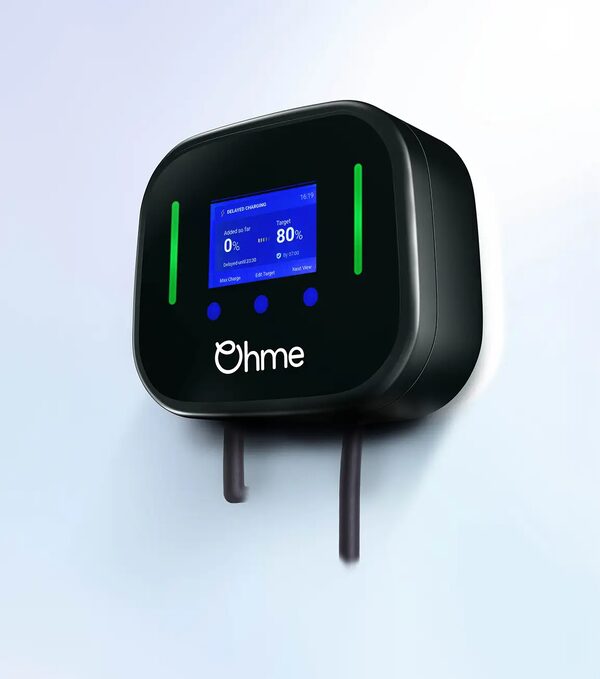
| Coupling | Untethered, Type 1 or Type 2 cable4 | Tethered, 5m Type 2 cable as standard, 8m upgrade optional25 | Hidden tethered charging cable17 |
| Dimensions | 230mm (H) x 140mm (W) x 100mm (D)25 | 170mm (H) x 200mm (W) x 100mm (D)25 | Not stated |
| Power | Not stated | 7.4kW / 32A25 | Configurable for three-phase, depending on the home's supply17 |
| Control | LED light bar for status updates20 | Built-in LCD screen, smartphone app, buttons on the charger9 | Not stated |
| Connectivity | Not stated | 3G / 4G multi-net sim card25 | Not stated |
| Smart features | Solar charging compatible, Solar Boost in the app25 | Dynamic smart charging, energy tariff integration, home power balancing, over-the-air updates25 | Over 200 colour and finish combinations26 |
| Warranty | Not stated | 3 years as standard25 | Not stated |
| Price | From £949 including standard installation9 | From £999 with standard installation and VAT included9 | Installer-quoted |
Ohme states that its chargers meet UK Smart Charge Point Regulations and that the Home Pro offers full compliance with UK smart charging regulations20, and lists the ePod as UK charging regulations compliant with standard installation included9. The Home Pro is CE marked and LVD, EMC, RED, RoHS and WEEE compliant, and is SEAI registered for the Irish grant scheme25.
The price gap between the two Ohme units is small: an independent review in January 2026 noted the Home Pro cost only £50 more than the ePod19, consistent with the maker's £949 and £999 figures9. The difference is tethered convenience and a touch screen against a more compact untethered body4. Andersen positions the A2 for three-phase properties or customers who require a longer charging cable26. No published UK price for the A2 or for waEV-charge hardware is available here, so those are installer-quoted.
On running cost, Ohme states that with its smart tariff integration a charge can cost less than £520. Its 2023 illustration put charging a Volkswagen ID. Buzz from zero to 100 per cent with an ePod at £7.70 on a smart off-peak tariff such as Octopus Intelligent at 10p/kWh, against more than £26 on the Standard Variable Tariff at 34p/kWh27. Those are maker figures at 2023 prices and are not current rates.
What the savings actually look like
The most useful number is the official one. The government response to the electricity distribution networks study states that an average-consumption household with an EV could already save around £330 annually by smart-charging on a time-of-use tariff when compared to a static one8. A parliamentary committee report noted that some innovative energy suppliers were able to offer tariffs, to consumers with smart meters, that could save up to two-thirds of the costs of charging electric vehicles if charging at certain times of day28.
Supplier and maker claims run higher and should be read as marketing, in their own terms. Octopus states charging for up to 69% less than average price cap rates and up to 85% less than public charging with Intelligent Octopus Go3. Ohme states that for most EV drivers smarter charging adds up to £500 or more in savings each year4. Indra's 69% figure carries its own caveat that tariffs, eligibility and actual savings vary5.
Savings depend on three things the household can see: how many kWh go through the charger, the gap between the discounted and peak rates, and whether the car's demand fits inside the discounted allowance. A household that drives little may never use six hours a night; one that drives a lot may routinely spill into peak-rate charging.
Adjacent savings exist but are small by comparison. Zapmap Premium gives a 5% saving on the cost of charging29. ev.energy notes that a household on a flat rate tariff can still save money by claiming smart rewards, with reward points redeemable against money-off vouchers30. For a fuller treatment of how the numbers compare, see EV tariffs and should EV owners choose a fixed or time-of-use tariff.
Solar charging and load balancing alongside a smart tariff

A smart charging tariff and solar generation pull in different directions unless the hardware can arbitrate between them. Smart chargers can monitor real-time solar electricity production and adjust charging speed accordingly, switching between solar and grid supply depending on availability31. Ohme lists the ePod as solar charging compatible, with a Solar Boost feature in the app that uses excess solar energy to charge the car25, and the Home Pro as offering home power balancing so the charger does not overload the property's supply25.
The tariff side of solar is usually a pairing. Solar-specific energy tariffs usually combine an export tariff with a smart time-of-use tariff, with different electricity prices based on peak and off-peak times32. For a home with solar and a battery, the Energy Saving Trust describes the options as a dedicated solar or battery tariff designed for that combination, or a good Smart Export Guarantee tariff matched with a dynamic import tariff or an Economy 7 tariff33. A battery is then set to charge up when electricity is cheap and discharge when it is expensive33.
The conflict to be aware of is control. If the supplier is scheduling the charger for grid reasons, it is not scheduling it for solar surplus, and a session may run at 2am on imported electricity while the roof exports at noon for a lower export rate. Some smart tariffs pay households to use up excess energy when there is more electricity being generated than can be stored34, which softens the tension without removing it. Households running both should read import tariffs designed for solar and battery homes and can I use an EV tariff with solar panels and a home battery.
Setting up: smart meter, linking, and the first month
Every part of this depends on half-hourly metering. Most EV tariffs require a smart meter as well as an EV charger22, a smart time-of-use tariff needs a smart meter installed35, and most flexibility participation requires one plus a smart tariff, with suppliers able to arrange free installation36. Installation is free37, and the standing charge depends on the tariff and supplier, not on whether a smart meter is fitted.
Smart meters remain optional [33 is wrong here] and the rules are clear on who may ask for one:
A tenant paying the gas or electricity bills can choose to have a smart meter installed39. Ofgem states that the data shared through a smart meter is used to bill for energy used, to offer new products and services such as new tariffs where permission has been given, and to help make the energy system more efficient by recording demand more accurately40.
The ordering of the practical steps:
- Confirm the charger or vehicle appears on the tariff's supported list, checking the exact model and power rating.
- Have a smart meter fitted or confirmed working, and switch onto the tariff.
- Link the chargepoint account or the vehicle account to the supplier, and grant the permissions the supplier asks for.
- Set the target state of charge and the ready-by time in the app2.
- Watch the first few bills to see how many discounted hours are actually being applied.
Timings vary. The Energy Saving Trust states that onboarding an installer onto its eligible list can take up to 15 days from application41, SSEN states that once a charger is installed the installer should submit the connection notification within 28 days42, and waEV-charge pays its £20 welcome credit after the first 30 days of smart charging7. None of these is the tariff sign-up itself, but they set expectations for how long the whole process runs.
What supplier control means for household independence
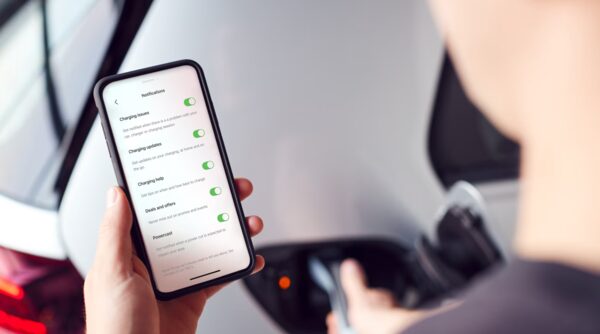
A smart charging tariff reduces the cost of grid electricity. It does not reduce dependence on the grid, and it adds dependencies. The household is dependent on the supplier's rate, which it does not set: except by switching, a customer does not control the tariff their energy supplier sets, though they can change how much energy they use43. It is dependent on a working internet or mobile connection between charger and supplier, because Max charging, at the peak rate, is what starts when the charger is offline6. It is dependent on a manufacturer's cloud service and app remaining supported, since the Home Pro receives over-the-air updates and communicates over a 3G or 4G multi-net sim card25. And it is dependent on the integration surviving: an integration added in late 2025 for one model18 is an integration that could be withdrawn.
Against that, the discretion left to the household is real and specific. The target charge level and ready-by time belong to the driver12. A manual override is always available, at a price6. ev.energy notes that even with no energy tariff selected, smart charging still works based on ready-by time and regional grid carbon intensity, though no prices or savings are shown30.
The honest framing is that a smart charging tariff trades timing autonomy for price. The household gives up the decision of when the car draws power, keeps the decision of what state it must be in by morning, and in exchange pays a rate that official modelling puts at around £330 a year less than a static tariff for an average-consumption EV household8. Where that trade sits against other options is covered in tariffs and household energy independence and the main guide to energy tariffs.
Sources44 cited
- What energy tariffs are supported, Simpson & Partners, 2026
- Tariffs and charging, Andersen EV, 2026
- Octopus Charge and Intelligent Octopus Go, Octopus Energy, 18 September 2026
- New to EVs, Ohme, 9 July 2026
- Ten things to check before choosing your first home charger, Indra, August 2026
- Intelligent Octopus Go 6-hour smart charging FAQs, Ohme, 2026
- waEV-charge savings calculator, waEV-charge, 8 September 2026
- Electricity distribution networks study: government response, UK Government, 7 July 2025
- Ohme ePod product page, Ohme, 21 May 2026
- How to switch energy supplier, Which?, 15 May 2026
- Time of use tariffs explained, Which?, 23 April 2026
- EDF and Hypervolt launch virtual battery service using EVs, EDF, 7 January 2025
- Guide to the Electric Vehicles (Smart Charge Points) Regulations 2021, UK Government
- Grid impacts of heat pumps, EVs and solar revealed, Energy Systems Catapult, 18 August 2025
- Electric car charging guide, Carwow, 16 July 2025
- OVO EV energy tariffs, Uswitch, 9 October 2025
- Andersen A2, Andersen EV, 2026
- Best EV charger for solar panels, Spirit Energy, June 2026
- Home electric vehicle chargers, Carwow, 9 January 2026
- Smart charging FAQs, Ohme, 11 December 2025
- Ohme and Energia partnership, Ohme, 2026
- How to choose the best energy company, Which?, 19 January 2026
- Time of use tariffs: all you need to know, Energy Saving Trust, 20 May 2026
- How installation works, Ohme, 13 August 2026
- Ohme ePod and Home Pro specifications, Ohme, 20 August 2026
- Why do I need a home charger, Andersen EV, 2026
- Ohme ePod: the new answer for untethered smart EV chargers, Ohme, January 2023
- Public Accounts Committee report on smart meters, UK Parliament, 20 October 2023
- What is live data, Zapmap, 26 February 2026
- Take charge without a smart meter, ev.energy, 2026
- Can solar panels charge electric cars, The CPA, 15 April 2026
- Solar panel installation, Energy Saving Trust, 7 September 2026
- Tariffs for renewable technology, Energy Saving Trust, 12 August 2026
- Smart homes and a lower carbon footprint, Energy Saving Trust, 21 January 2026
- Electric cars and energy bills, Uswitch, 27 April 2026
- Flexibility for homes, FlexAssure, 19 September 2026
- Cheaper bills with energy flexibility, Centre for Sustainable Energy, 15 September 2026
- Smart meters: your rights and expectations, UK Government, 8 August 2025
- Do I have to accept a smart meter, Which?, 12 May 2026
- Get help with your smart meter, Ofgem, 2026
- Domestic charge point funding, Energy Saving Trust, 27 August 2026
- EV connections, SSEN, 19 September 2026
- How do smart meters save energy, Smart DCC, 2026
- Electric vehicle charger installation and maintenance, NICEIC, August 2025
 Batteries and Smart TariffsA home battery can earn its keep if your electricity prices change through the day.
 Electric Vehicle TariffsCharging an electric car at home can cost far less overnight, but only on special electricity plans.
 What Is a Smart Charger?A smart EV charger is an internet-connected home charge point that schedules charging around tariff prices, grid demand and household load.
 EV Tariffs and Home ChargingHow EV-specific import tariffs and charging bolt-ons work, including supplier-controlled charging where the energy company decides when the car draws power, which charge points each scheme supports, and what a household needs in place.
 Time-of-Use Tariffs ExplainedCan you pay less for electricity by using it at different times of day?
 Solar and Battery Import TariffsWhat does a special import tariff actually get you when you have solar panels or a home battery?