
In this comparison
Both tariffs come from the same supplier and both are built around a cheap overnight window, but they ask different things of a household. Octopus Go is the simpler product: a fixed off-peak period between 00:30 and 05:30 every night, compatible with all EVs and chargers, and no requirement for a home charge point at all1. Intelligent Octopus Go is the controlled version: the supplier schedules the charging, the headline smart-charging rate is 8p/kWh (8.4p/kWh until 1 October), and the household gets 6 hours of cheap energy every night1.
The trade is control for price. Intelligent Octopus Go is described by the Energy Systems Catapult as a service model that promises lower pricing in exchange for handing over control of the EV2. Octopus Go keeps the household in charge of when the car charges, within a narrower window, and its off-peak rate has been quoted as low as 7p/kWh by independent guidance and 8.5p/kWh by another comparison3. The two figures come from different dates and different documents, and they disagree.
What follows sets out the rates, the windows, the eligibility rules, how the smart charging actually works, the 6-hour limit that now governs Intelligent Octopus Go, the savings claims, and the charger and vehicle compatibility picture, including the Ohme and Indra setups that most households will meet.
The difference in one line
Intelligent Octopus Go lets the supplier decide when the car charges, within a 6-hour allowance, in exchange for a lower smart-charging rate. Octopus Go gives the household a fixed five-hour window and leaves the timing alone.
The mechanism behind the first is a direct software connection with Kraken, Octopus's own energy technology platform8. That connection is what allows the supplier to schedule charging around grid demand and carbon intensity rather than at a fixed clock time8. Setup runs through the Octopus app: the household opens the app and selects the Intelligent Go tariff9. The tariff has been through a beta phase, and registration for that beta carried its own eligibility requirement10.
Octopus Go needs none of this. It is a time-of-use tariff with a stated off-peak period, and the household decides what runs in it. The supplier describes it as the smart tariff with cheap electricity between 00:30 and 05:30 every night1.
For a household's energy independence, the distinction matters in a specific way. Neither tariff reduces dependence on the grid or on Octopus as a supplier; both increase dependence on the supplier's app, and in the Intelligent case on the supplier's scheduling decisions. What they change is the price paid for electricity that is still delivered by the same network. The household gains control over cost, not over supply.
Rates compared: 8p/kWh overnight against a fixed off-peak rate
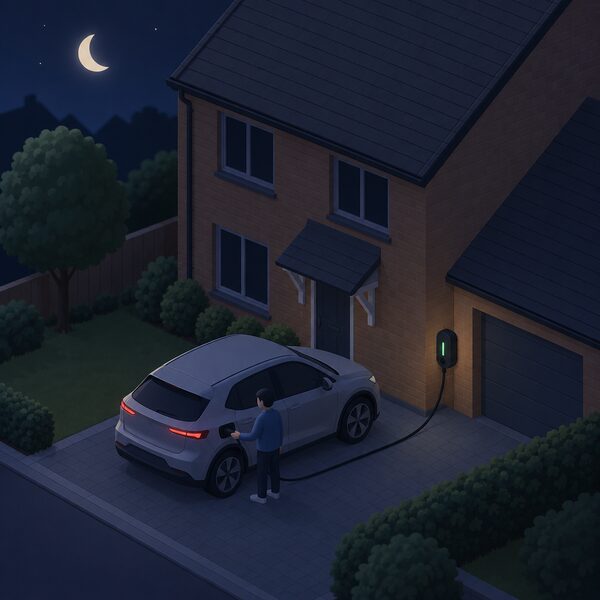
The headline figures are close, and the published rates differ between documents and dates.
Octopus states that Intelligent Octopus Go charges as little as 8p/kWh, with 8.4p/kWh applying until 1 October1. Its own guidance elsewhere gives the smart-charging rate as 8p/kWh and puts the average capped standard-variable electricity rate at 26.11p/kWh, based on the July 2026 Ofgem price cap for direct debit customers11. That makes the smart-charging rate approximately 69% lower, though the same guidance notes that tariffs, eligibility and actual savings vary11.
Independent comparison figures for the two tariffs are older and inconsistent. One guide lists Intelligent Octopus Go at 7p/kWh and Octopus Go at 8.5p/kWh, both as of 2 July 20253. Another lists Octopus Go off-peak rates as low as £0.07/kWh from 23:30 to 05:304. A third gives Intelligent Octopus Go at £0.07 per kWh at the time of publishing12.
| Tariff | Off-peak rate | Window | Source date |
|---|---|---|---|
| Intelligent Octopus Go | 8p/kWh (8.4p/kWh until 1 October) | 23:30 to 05:30 | September 20261 |
| Intelligent Octopus Go | 7p/kWh | 23:30 to 05:30 | July 20253 |
| Octopus Go | 8.5p/kWh | 00:30 to 05:30 | July 20253 |
| Octopus Go | as low as £0.07/kWh | 23:30 to 05:30 | July 20254 |
| Intelligent Octopus Go | £0.07/kWh | not stated | October 202513 |
The peak rate on Intelligent Octopus Go is 34.32p/kWh as of August 20265. That is the rate that applies to household electricity outside the cheap window, and to any EV charging beyond the 6-hour allowance.
The practical point is that the off-peak rate is not the whole bill. A household that charges mostly inside the window pays close to the headline rate for the car and the peak rate for everything else. A household that runs heavy appliances overnight shifts more of its consumption into the cheap period. The rate is a lever, not a total.
Off-peak windows: six flexible hours against a fixed slot
The windows differ in length and in who controls them.
Intelligent Octopus Go gives 6 hours of off-peak electricity for the whole home every day between 11:30pm and 5:30am14. The same 23:30 to 05:30 window appears across the supplier's support material15. The 6 hours are issued from midday to midday, so the allowance runs across a 24-hour period rather than resetting at midnight14.
Octopus Go runs 00:30 to 05:30 every night, a five-hour window1. Independent guidance gives the same 00:30 to 05:30 period3, and one comparison describes Octopus's original EV tariff as giving five hours of cheaper energy every night16.
The important difference is not the extra hour. It is that Intelligent Octopus Go's 6 hours of smart charging can be scheduled during the 23:30 to 05:30 window, outside it, or across a mix of both6. The household's own off-peak window stays fixed at 23:30 to 05:30 regardless6. So the car may charge at times the rest of the house is paying peak rates, and the household's appliances get the cheap rate whether or not the car is charging.
Two support articles describe the window slightly differently. One describes 6 hours of super cheap smart charging each day14; another describes up to 6 hours every 24 hours for the EV6. The distinction between a firm 6 hours and a maximum of 6 hours is not settled in the published material.
Eligibility and smart meter requirements
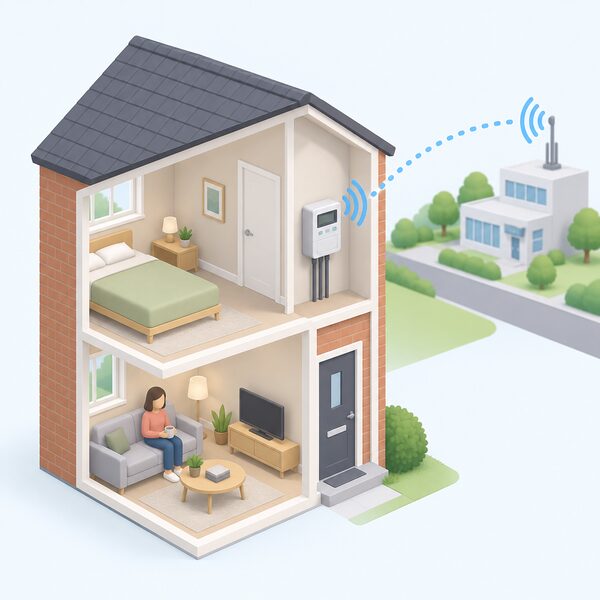
Octopus Go's conditions are short. The household must be an Octopus Energy customer, have an electric car charged at home, and have a smart meter the supplier can connect to1. No home charge point is required, and the tariff is compatible with all EVs and chargers1.
The meter rule is the binding one. Octopus states it can connect to second generation SMETS2 meters and some types of first generation SMETS1 meters, and that joining a smart tariff needs either a SMETS2 or a SMETS1 made by Secure1. Independent guidance is broader: a smart meter is needed to sign up to most, if not all, EV tariffs, because the supplier has to be certain about when electricity is used16.
Connection takes time. Octopus states it generally takes around 14 days to connect to a smart meter so it can be read remotely1. Once connected and receiving half-hourly readings, the supplier sends an email asking the household to accept the Octopus Go terms and conditions, and the tariff then changes automatically1.
Intelligent Octopus Go adds a compatibility condition on top. Octopus states that only certain chargers and EVs are currently compatible7. That is the gate that decides whether a household can use the tariff at all, and it is the reason the charger and vehicle sections below matter more than the rate.
Where a household is not yet an Octopus customer, the supplier can upgrade it to a smart meter, but it needs to be an Octopus customer for the installation or for the Home Mini energy tracker17.
How smart charging works on Intelligent Octopus Go
On Intelligent Octopus Go the supplier charges the car at times when energy is cheapest, rather than at a time the household picks16. Charging is scheduled intelligently around grid demand and carbon intensity8, and the tariff is designed to charge EVs when the grid is at its cheapest and usually greenest18. The app lets drivers set charging times and battery charge levels, and then optimises the charging18.
The connection can be made in more than one place. Octopus states that Intelligent Octopus Go can be connected to an Ohme charger, a compatible electric vehicle, a heat pump, a thermostat or a battery15. Where the car is not compatible, the supplier says the connection can be made to the charger instead19.
That choice has consequences. Where the tariff is connected to the EV rather than the Ohme charger, both Octopus Energy and Ohme may try to control charging at the same time, which can cause sessions to fail or behave unexpectedly15. Where the integration is with the Ohme charger, charging is managed through the Ohme app only15. Households with both a compatible EV and an Ohme charger will find the app offers the EV connection first and does not offer the charger option straight away; connecting the charger instead requires filling in Octopus Energy's request form first15.
The protocol underneath is OCPP, a smart charging protocol10. Egg-branded Smart PRO chargers can also be linked in this way19.
The 6-hour smart charging limit and when peak rates apply
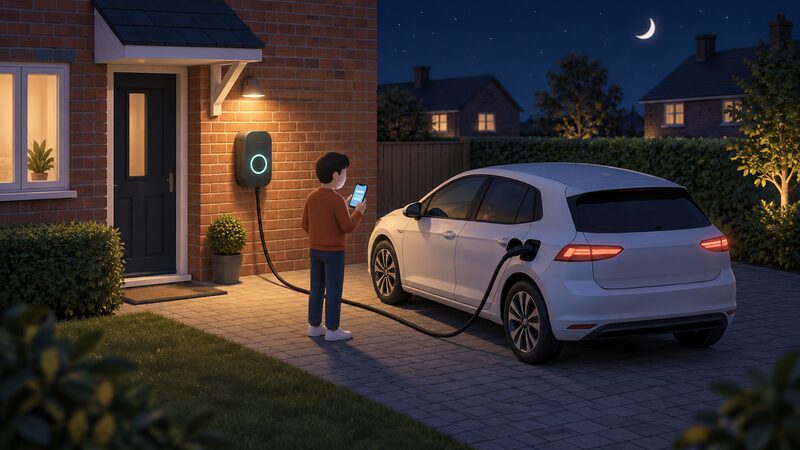
The 6-hour allowance is the constraint that shapes everything else on Intelligent Octopus Go.
Octopus states that the tariff provides up to 6 hours of super-cheap smart charging every 24 hours for the EV6. The limit applies only to smart charging for the car, not to the household's electricity6. The household still receives 6 hours of off-peak electricity for the whole home every day between 11:30pm and 5:30am6.
Once the 6 hours are used, any further charging is billed at peak rates, even inside the 23:30 to 05:30 window14. All Max charging is billed at peak rates, and the supplier states this is true even between 11:30pm and 5:30am14.
The app gives the household a choice: limit charging to stay within the 6 hours, or prioritise reaching the charge target even if that means some peak-rate charging6. That is the decision a high-mileage driver faces most nights. A car needing more than 6 hours of charging will either fall short of its target or pay peak rates for the difference.
"Once those 6 hours are used, any further charging is billed at peak rates, even inside the 23:30 to 05:30 window."
The limit is a real constraint on independence within the tariff. The household is not choosing when to charge; it is choosing whether to accept a partial charge or a higher bill. For most commuters the 6 hours is ample. For drivers covering long distances daily, the arithmetic changes.
Savings: up to £700 a year and how that compares with public charging
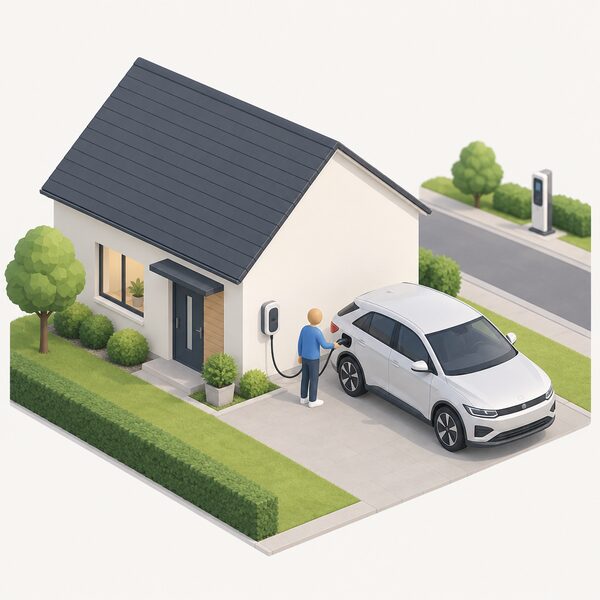
The savings claims come from several directions and should be read with their dates.
Octopus states that Intelligent Octopus Go saves up to 85% against public charging when the car is powered at home1, and separately that it saves 69% against a standard tariff1. Its own news material puts the potential saving for the average EV driver at up to £700 annually18. A charger maker's page puts the potential annual saving from using the tariff alongside a zappi charger at up to £20021.
Independent and official figures sit in a different range. Government guidance states that an average-consumption household with an EV could already save around £330 annually by smart-charging on a time-of-use tariff compared with a static one22. Independent guidance puts the annual EV charging cost on a time-of-use tariff such as Octopus Go at £500 per year for a typical UK household with an EV and a heat pump3.
One maker's worked example gives a cost of £185.36 per year at £0.07 per kWh on Intelligent Octopus Go, with an annual saving of £423.68 against a standard electricity tariff13. Another gives the same £185.36 figure12.
| Measure | Figure | Who states it |
|---|---|---|
| Saving vs public charging | up to 85% | Octopus1 |
| Saving vs standard tariff | 69% | Octopus1 |
| Annual saving, average EV driver | up to £700 | Octopus18 |
| Annual saving with a zappi charger | up to £200 | myenergi21 |
| Smart-charging saving vs static tariff | around £330 | Government guidance22 |
| Annual EV charging cost, time-of-use tariff | £500 | Independent guidance3 |
| Annual EV charging cost at £0.07/kWh | £185.36 | Maker example13 |
The spread is wide because the baselines differ. A saving against public charging is measured against a much higher reference price than a saving against a standard domestic tariff, and the £700 figure is a supplier's own claim about an average driver rather than a modelled household. The government's £330 figure is the most conservative of the set and the one least tied to a particular product.
For context on the public charging comparison, Octopus states that a slow or fast charge at one of the UK's public charging points costs an EV driver 54p/kWh on average, last checked June 202623. Against an 8p/kWh home rate that gap is the source of the 85% claim.
Charger and vehicle compatibility, including Ohme and Indra setups
Compatibility is the practical gate on Intelligent Octopus Go, and it is narrower than on Octopus Go.
Octopus Go is compatible with all EVs and chargers1. Intelligent Octopus Go is not: Octopus states that only certain chargers and EVs are currently compatible7, and independent guidance notes that some vehicles will not work with the tariff16.
Indra chargers support Intelligent Octopus Go alongside OVO Charge Anytime, E.ON Next Drive Smart and EDF's Smart Charging bolt-on11. The Indra Smart LUX is listed as smart tariff compatible with OVO and Octopus Intelligent Go24, and the Simpson & Partners Home Series V3 is listed as smart tariff compatible with Octopus Intelligent Go24.
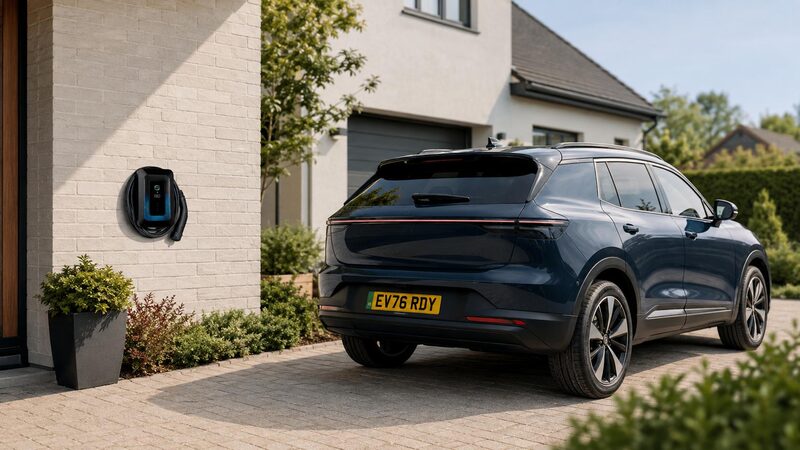
Once an Indra charger is linked, the division of labour changes. Indra states that your Indra schedules will be disabled, because Octopus controls charging now25. Scheduling in the Indra app will fail20. Solar integration, charger locking and fleet expense features remain available in the Indra app25. Where the connection is made through the vehicle rather than the charger, Indra advises setting the app schedule to charge anytime and as full as possible20.
"Your Indra schedules will be disabled (Octopus controls charging now)."
Vehicle-to-home is not supported. Indra states that Intelligent Octopus Go is not available for bi-directional EV charging25. A household wanting to run a V2H charger cannot do so on this tariff.
Where the two tariffs leave a household
Neither tariff removes the grid, the supplier or the meter. Both depend on a smart meter that reports half-hourly, on Octopus as the supplier, and on an app that sits between the household and the car. Intelligent Octopus Go adds a further dependence: on the supplier's scheduling decisions, on a compatibility list that can change, and on a 6-hour allowance that caps cheap charging.
What the household gains is a lower price for electricity it was going to buy anyway. Octopus Go gives a fixed five-hour window and works with any EV and any charger. Intelligent Octopus Go gives a longer cheap window for the home, a lower headline smart-charging rate, and a scheduling service that moves the car's charging to when the grid is cheapest, at the cost of control and of a hard 6-hour limit on the car.
For a household with solar, the export side matters too. Octopus states that Octopus Go can only be paired with certain export tariffs, and that the import tariff determines which export tariff applies7. Octopus Go and Intelligent Octopus pair with the Smart Export Guarantee, which the supplier limits to 4.1p per kWh7. Households wanting a higher export rate need a different import tariff: Intelligent Octopus Flux paid 23p per kWh to customers with solar panels and a battery as of April 202626, though that tariff was temporarily unavailable in September 2026 because of volatile energy prices27. Octopus offers some of the highest export rates, and households do not have to buy its solar products to use them28.
The wider tariff landscape, including how time-of-use products compare and how export rates are set, is covered in the UK energy tariffs guide and in EV energy tariffs. Households weighing a controlled tariff against a fixed one can read smart charging tariffs, and those with panels should look at import tariffs for solar and battery homes and the Smart Export Guarantee.
Sources28 cited
- Octopus Go and Intelligent Octopus Go, Octopus Energy, 2026-09-16
- Making home energy management work for consumers, Energy Systems Catapult, 2026-02-12
- Best tariffs for EV and heat pump, Uswitch, 2025-07-02
- Electric car charging guide, Carwow, 2025-07-16
- Compare EV tariffs, The Energy Shop, 2026-08-20
- Intelligent Octopus Go 6-hour smart charging FAQs, Ohme, 2026-09-17
- Smart Export Guarantee rates, Which?, 2026-04
- Octopus Intelligent Go EV charger, Simpson & Partners, 2025-06-24
- Connection to Octopus Intelligent, Simpson & Partners, 2026-09-17
- Hypervolt releases Octopus Intelligent Go support, Hypervolt, 2024-08-16
- Product brochures, Indra, 2026-09-17
- Andersen's £5,000 free miles, Andersen EV, 2025-10-31
- Pulsar Max integration with Intelligent Octopus Go, Wallbox, 2026-09-17
- Prioritise savings or your target with Intelligent Octopus Go, Ohme, 2026-08-04
- How do I charge with Intelligent Octopus Go, Ohme, 2026-08-26
- Home electric vehicle chargers, Carwow, 2026-01-09
- How to choose the best energy company, Which?, 2026-01-19
- Intelligent Octopus Go x Waev Charge partnership, Waev Charge, 2026-05-20
- Buying a 76-plate EV: 10 things to check, Indra, 2026-08-20
- Octopus EV tariffs, Uswitch, 2025-10-09
- Octopus partnership, myenergi, 2026-09-17
- Electricity distribution networks study: government response, GOV.UK, 2026
- Which? and Octopus Energy solar panel and heat pump offer, Which?, 2023-09-12
- Best energy tariff for Wondrwall, Wondrwall, 2026
- Intelligent Octopus Go, Indra, 2026-09-17
- Solar panel costs, Which?, 2026-08-03
- Response to Ofgem consultation on supplier Guaranteed Standards of Performance, Consumer Scotland, 2025-10-10
- Smart Export Guarantee Annual Report Year 5, Ofgem, 2025-12
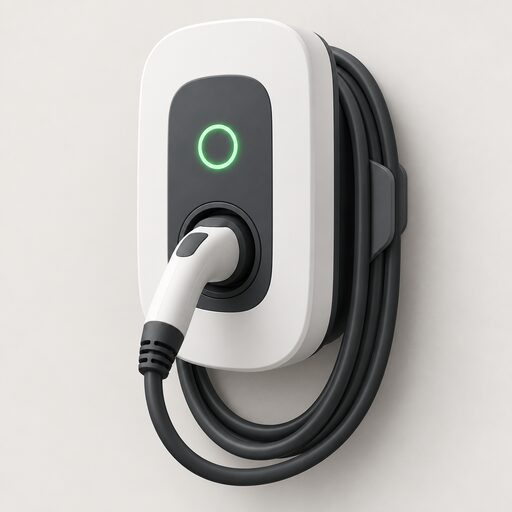 Supplier-Controlled ChargingSmart charging tariffs let your energy supplier decide when your car charges, usually overnight when electricity is cheaper.
 Types of Home EV ChargerWhich home charger suits your car and your driveway?
 Heat Pump Electricity TariffsA heat pump tariff gives you cheaper electricity for part of the day, so running your heating costs less than on a standard rate.
 Controls and Time-of-Use TariffsCheaper electricity at night only saves money if your heating actually uses it then.
 Batteries and Smart TariffsA home battery can earn its keep if your electricity prices change through the day.
 Electric Vehicle TariffsCharging an electric car at home can cost far less overnight, but only on special electricity plans.