
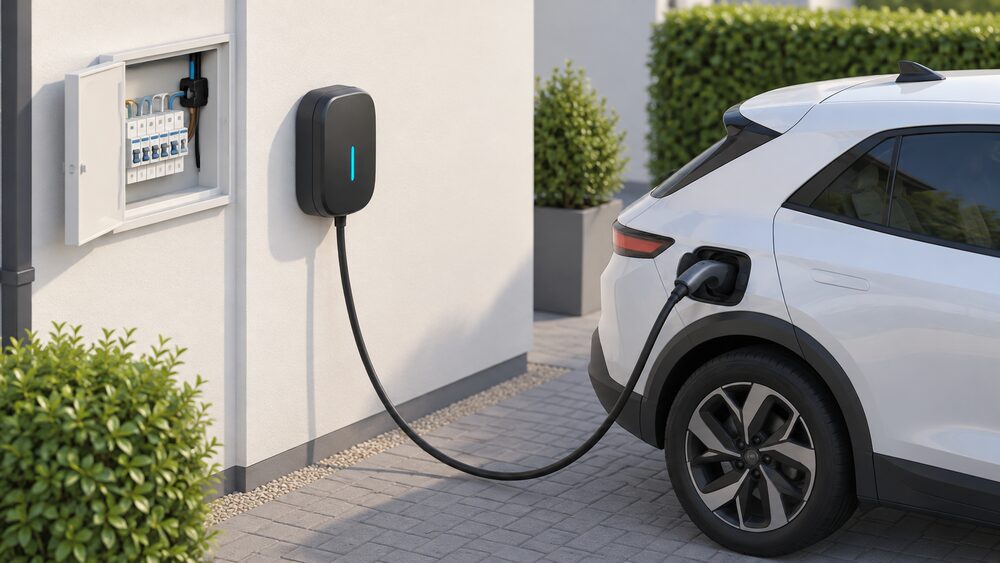
In this guide
An Ohme home charger is a smart electric vehicle charging point that uses live data connections to find the cheapest and greenest windows in which to charge a car1. It is compatible with all Type 1 and Type 2 EVs, works with all energy suppliers, and integrates with most smart tariffs, including Intelligent Octopus Go2. Ohme states that with its smart tariff integration a charge can cost less than £5, against around £15 to £20 for charging a 60kWh battery on a typical tariff3.
The company describes itself as the UK and Ireland's largest home EV charging company and the fastest growing EV charging company in Europe, and is based in Cork4. Its chargers are compliant with the UK's new smart charger regulations and are solar charging compatible1. Ohme does not supply electricity: it states it will never bill a user directly for the energy used to charge the car, and uses tariff information only to work out when charging is cheaper and to estimate costs5.
For a household, the independence question is narrow but real. An Ohme charger does not generate anything, and it does not remove the need for a grid connection or an electricity supplier. What it changes is when the car draws power and, with solar, whether it draws from the roof or the grid. The scheduling, price caps and cost tracking all run through a manufacturer's app, so remote control depends on broadband and Ohme's own systems.
What an Ohme charger is and how smart charging works
Ohme's chargers are described by the company as dynamic, using live data to automatically provide drivers with the greenest and cheapest energy9. The mechanism is a data chain rather than a piece of hardware trick: the charger uses data connections to find the best charging windows, and the car communicates with Ohme and the grid so that charging happens when it is greener and cheaper6. Ohme states its chargers use live data from the grid and are compatible with the UK's most affordable energy tariffs, adjusting automatically to optimise charging cost10.
That is the difference between a smart charger and a plain one. Independent guidance from the CPA sets out the contrast: smart chargers can monitor real-time solar electricity production and adjust charging speed accordingly, drawing more or less as generation rises and falls, and switching between solar and grid supply depending on availability. Standard EV chargers draw electricity from the home supply without distinguishing between solar-generated power and grid electricity11.
The regulatory backdrop matters for anyone buying now. Ohme's chargers are stated to be compliant with the new smart charger regulations1, which is the baseline a UK household should expect of any charger sold today. The practical effect is that the charger can be told to shift load away from peak hours, which is what makes the tariff integration meaningful rather than decorative.
| Feature | Smart charger (Ohme) | Standard charger |
|---|---|---|
| Solar monitoring | Adjusts speed to real-time generation11 | Draws from home supply regardless of source11 |
| Supply switching | Switches between solar and grid11 | No distinction between solar and grid11 |
| Tariff integration | Reads time bands, schedules into cheap windows2 | None stated |
| Smart charger regulations | Compliant1 | Not stated |
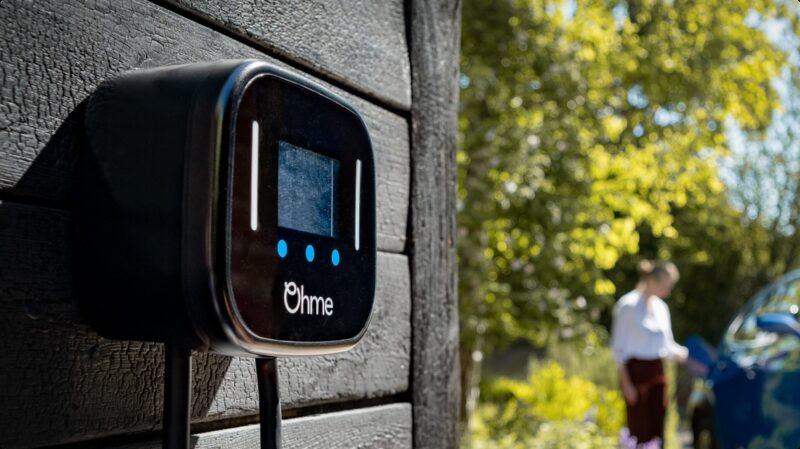
Costs: under £5 a charge on a smart tariff, £15 to £20 on a typical one

The running cost figures come from Ohme and are stated per charge rather than per mile. On a typical tariff, charging a 60kWh battery costs around £15 to £20. With Ohme's smart tariff integration, the same charge can cost less than £5, or as little as £5 to £83. Ohme puts the annual effect for most EV drivers at £500 or more in savings each year from charging smarter6.
Independent figures sit in the same territory but are not identical. The Energy Saving Trust gives home charging with an EV tariff or other time-of-use tariff, typically requiring a smart meter, at £8 per full charge12. E.ON Next, an energy supplier, states that on a smart tariff it costs £7.88 on average to fully charge an EV, with an average cost per 100 miles of £3.9413. The documents differ on the exact figure, and the spread reflects different assumptions about battery size, tariff and charging behaviour rather than a dispute about the principle.
The hardware cost is separate. Which? puts buying and installing a home EV charger at typically £500 to £1,20014. Independent guidance on slower chargers gives typical costs of £250 to £500 for a slow charger installation15. Ohme does not publish a list price for its chargers in the material available, so an Ohme quote is installer-quoted and should be read as such.
| Cost item | Figure | Source |
|---|---|---|
| Charge on smart tariff, 60kWh | less than £5, or £5 to £8 | Ohme3 |
| Charge on typical tariff, 60kWh | around £15 to £20 | Ohme3 |
| Full charge, EV or time-of-use tariff | £8 | Energy Saving Trust12 |
| Full charge, smart tariff | £7.88 average | E.ON Next13 |
| Cost per 100 miles, smart tariff | £3.94 average | E.ON Next13 |
| Charger plus installation | typically £500 to £1,200 | Which?14 |
| Slow charger installation | £250 to £500 | Electricity North West15 |
Tariff and supplier compatibility: all suppliers, most smart tariffs
Ohme's compatibility claim is broad and repeated across its product pages: compatible with all energy suppliers, and integrating with most smart tariffs including Intelligent Octopus Go2. The company's press material goes further, describing its dynamic chargers as compatible with any UK energy tariff including the UK's most affordable rates from Octopus and OVO10. An independent product page notes the Ohme Home Pro as one of the only chargers which can integrate with both Octopus and OVO's smart tariffs16.
The distinction between supplier compatibility and tariff integration is worth holding on to. Any charger can be plugged into any supplier's supply, because the electricity is the same. What Ohme adds is the ability to read a tariff's time bands and schedule charging into the cheap ones automatically, which is what the price cap feature in the app is for17. Ohme states its chargers connect with all electricity tariffs, including new EV type of use and off-peak plans18.
For a household, this is a partial independence. The charger does not lock a home to one supplier, which is a genuine advantage over hardware tied to a single energy company's tariff. But the smart scheduling depends on the tariff data being available and on the app working, so the household remains dependent on a supplier, a meter and a manufacturer's platform to get the cheap rate. Where a supplier changes its tariff structure, the integration has to follow.
Solar charging and prioritising your own generated energy
Ohme states plainly that its chargers let you prioritise self-generated energy, so you can charge greener and cheaper and make the most of a solar setup1. Solar charging compatibility is listed as a feature across the product pages2. This is the point at which an EV charger stops being purely a load and starts being a way of absorbing generation that would otherwise be exported.
The mechanism, as independent guidance describes it, is that a smart charger monitors real-time solar production and adjusts charging speed accordingly, switching seamlessly between solar and grid supply depending on availability11. A standard charger cannot do this: it draws from the home supply without distinguishing solar from grid electricity11.
In practice the limit is the size of the array against the size of the car battery. A domestic solar system generating a few kilowatts will charge a car slowly, and on a cloudy day the charger will fall back to the grid. Solar charging is therefore a supplement to grid charging rather than a replacement for it, and the household still needs a grid connection for the days and seasons when generation is low. What it does deliver is a genuine reduction in the amount of imported electricity a car consumes over a year, and a use for midday generation that might otherwise be exported at a lower rate.

The app: schedules, price caps, cost tracking and carbon savings

The Ohme app is the control layer. Ohme describes it as putting the user in charge, from setting schedules and price caps to tracking costs, carbon savings and charge history1. Features listed include setting up routines, scheduling one-off charging sessions, applying a price cap in price per kWh, and tracking energy costs and consumption6. Charging sessions can be started, stopped and scheduled, with one-off schedules for a desired charge and departure time2.
The usage centre tracks smart charging, CO2 and solar savings, and provides a detailed history of each charging session with estimated costs based on your energy tariff18. Energy monitoring covers car charging costs and every kWh used2. The price cap feature is described as maximising off-peak charging savings within a set price18, and Ohme states the app will only charge at the cheapest times when a cap is set18.
Two operational details are worth knowing. Ohme uses tariff information to estimate the cost of charging sessions and to enable features such as the price cap5. And where more than one vehicle is involved, Ohme will adjust its charging schedule to match the EV's battery size and maximum charging speed, and the selected vehicle can be changed after plugging in, with the schedule recalculated to the new vehicle's specifications19.
The dependence here is the clearest one the product creates. Scheduling, price caps, cost history and carbon reporting all live in a manufacturer's app, and the charger's smart behaviour is only as good as the tariff data behind it. Local charging continues without the app, but the intelligence does not.
Installation: survey, lead times and what a standard fit includes
Ohme states most installations are completed in one to two weeks, and that it can install even if the car has not arrived yet7. Standard installations are usually booked within one to two weeks20. Before a date is provided, the online home survey covering your home, your energy usage and your installation requirements must be completed8. The eligibility check takes about two minutes and the online home survey about ten minutes20.
On the day, Ohme states the installation will take around four hours8, though one page gives a standard fit as up to three hours20 and another as two to three hours3. The engineer arrives within a window provided on the installation date, and the work is carried out by an Ohme approved installation partner8. Power is turned off for a short while during the work8. Lead time varies with engineer availability in your area and the complexity of the installation8.
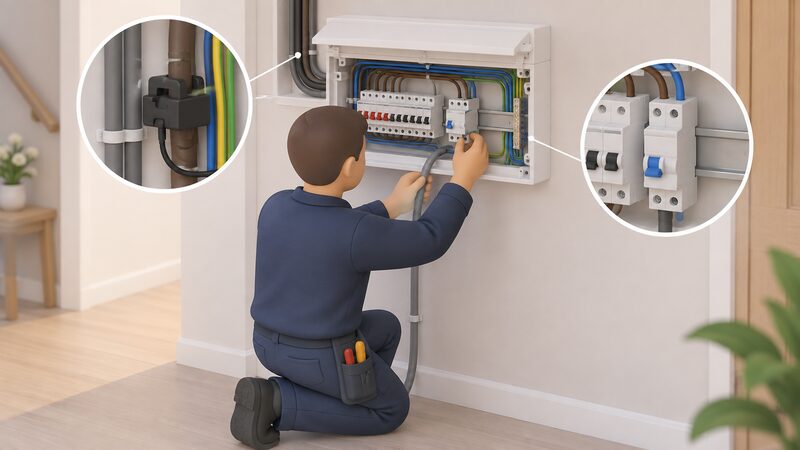
The standard fit is defined. It includes mounting the charger, up to 15 metres of cabling, connection to your fuse board, circuit protection, a CT clamp and app setup, plus testing and certification7. The installation certificate is ready around three to five working days afterwards7. Ohme states it registers the installation with your local District Network Operator so you do not have to7, and that providing your MPAN allows Ohme and its installation partners to assess the electrical setup, ensure compliance with local regulations and notify the DNO21.
| Stage | Detail | Source |
|---|---|---|
| Eligibility check | about 2 minutes | Ohme20 |
| Online home survey | about 10 minutes | Ohme20 |
| Booking to installation | usually 1 to 2 weeks | Ohme7 |
| Installation day | around 4 hours (other pages: up to 3, or 2 to 3) | Ohme8 |
| Certificate issued | 3 to 5 working days after | Ohme7 |
Where a standard installation is not enough, the cost changes. OVO, which sells an installation service, states that prices include a standard installation and that additional work identified by the survey would be included in the quote at additional cost. Its standard installation conditions require existing electrical connections and protections to be in good condition, all required main protective bonding to be installed and adequately sized before installation, and no groundworks, civil works, electrical remedial works or other trades needed24.
Who Ohme is: company background, partnerships and market position
Ohme describes itself as the UK and Ireland's largest home EV charging company and the fastest growing EV charging company in Europe, and is based in Cork4. It states it is the UK's largest home EV charging company and the fastest growing EV charging company in Europe25. These are the company's own characterisations of its market position rather than independently verified rankings.
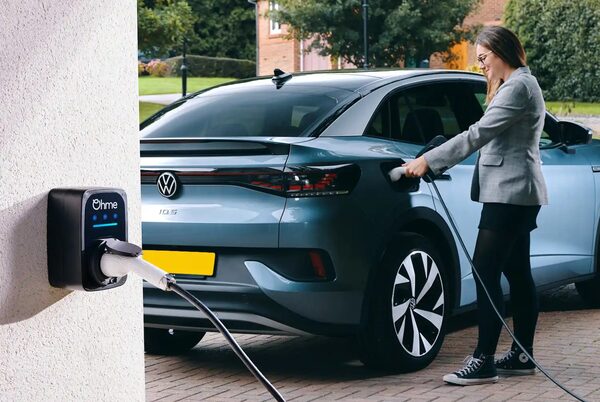
The partnership list is long and spans several vehicle makers. Ohme is the exclusive home EV charging partner for XPENG UK25, the preferred EV charging partner across Kia UK's PBV Centres for commercial vehicles10, and the official charger provider for the Volkswagen Group in the UK26. It is also the official EV charging partner for the Energy House 2.0 house of the future project26. In Northern Ireland, a Ford partnership is among the announcements the company has made4.
The most relevant partnership for a UK householder is with smart UK, which chose Ohme as its new and exclusive official home EV charging partner. Under that agreement smart will recommend Ohme chargers to customers who need a home charging solution, with chargers available to view in smart retailers and Ohme providing charger, installation, retailer training and support27.
For independence, the company structure matters less than the platform. Ohme is a charger maker and software provider, not an energy supplier, so it does not sit between a household and its electricity. What it does sit between is the household and the scheduling intelligence, and the partnerships mean the charger is often bought through a car maker or a retailer rather than direct.
Awards, trials and what the flexibility schemes pay
Ohme holds awards on both sides of the tariff question. The two are not ranked against each other here, and both are the company's own listings of awards it has received.
The wider context is flexibility, which is the mechanism that makes smart charging pay. FlexAssure, an independent flexibility assurance scheme, gives a worked example of a household reward of £8.40 in a month from energy flexibility28. That is a single illustrative figure rather than a forecast, and it shows the scale: flexibility payments are a modest supplement to the tariff saving, not a substitute for it.
Government support exists on the workplace side rather than the home side. The workplace charging scheme offers funding to employers for EV charging facilities29. For homes, the grant landscape has changed over time, and the material available does not set out a current domestic grant that an Ohme installation would qualify for, so any grant position should be checked against the scheme rules in force at the time of purchase.
The honest summary for a household is that the money comes from three places: the off-peak tariff rate, the solar the car absorbs instead of exporting, and small flexibility payments. None of them removes the standing charge, the grid connection or the supplier relationship. What an Ohme charger does is make the car a controllable load, which is the precondition for all three.
Where an Ohme charger falls short
The limits are worth stating as firmly as the benefits. An Ohme charger generates nothing. It cannot charge a car without a grid connection or, at minimum, a solar array and battery large enough to cover the load. It does not remove the standing charge, the meter or the supplier, and it does not insulate a household from tariff changes.
The smart features depend on systems outside the home. Scheduling, price caps, cost tracking and carbon reporting run through the Ohme app, and the charger's tariff integration depends on tariff data being available to it5. Where the vehicle data connection fails, Ohme's own guidance is to unplug and re-plug the cable, then unpair and re-pair, and if that does not resolve it, to continue using the charger as a smart charger without the API integration by selecting Unpair my EV and then Unpair now, adjusting the charge amount on the Charging page rather than meeting a target30. That is a workable fallback, but it is a reduction in function.
Installation is not universal either. A standard fit assumes existing electrical connections and protections in good condition, adequate main protective bonding, and no groundworks or remedial electrical work24. Where those conditions are not met, the quote changes. And the DNO notification threshold of 13.8 kVA Maximum Demand means some homes need the network operator involved before connection23, which Ohme handles on the customer's behalf7.
For a household weighing energy independence, the position is this: an Ohme charger is a load-shifting device, not a supply. It makes a car cheaper to run and better able to absorb self-generated solar, and it keeps the household free to change supplier. It leaves the household dependent on the grid, on a supplier, on broadband and on a manufacturer's app for the features that deliver the saving. A comparison with another UK charger brand is at Ohme vs Pod Point, and the wider market is covered in Home EV Charger Manufacturers.
Sources30 cited
- Ohme home EV chargers, Ohme, 2026
- Ohme product range, Ohme, 2026
- Smart charging FAQs, Ohme, 2025
- Ford and Ohme partnership in Northern Ireland, Ohme, 2026
- How do I set my tariff in the Ohme app, Ohme, 2026
- New to EVs, Ohme, 2026
- What to look for when buying a home EV charger, Ohme, 2026
- What to expect on your installation day, Ohme, 2025
- How our chargers work, Ohme, 2026
- Kia PBV and Ohme, Ohme, 2026
- Can solar panels charge electric cars, CPA, 2026
- Electric vehicles: debunking myths, Energy Saving Trust, 2025
- EV charger grants, E.ON Next, 2026
- Electric car charging at home, Which?, 2026
- Electric vehicles for home charging, Electricity North West, 2026
- Home electric vehicle chargers, Carwow, 2026
- Ohme ePod, Ohme, 2026
- Ohme app, Ohme, 2025
- How can I charge multiple vehicles, Ohme, 2025
- Can I get a home charger installed before my new EV arrives, Ohme, 2026
- Frequently asked questions about MPAN and MPRN numbers, Ohme, 2026
- Electric vehicle charger installation and maintenance, NICEIC, 2025
- Electric vehicle charging installations FAQs, IET, 2026
- EV charger installation questions, OVO Energy, 2026
- XPENG and Ohme partnership, Ohme, 2026
- Ohme EV charger house of future, Ohme, 2023
- Ohme smart UK partnership, Ohme, 2026
- What is flexibility, FlexAssure, 2026
- Electric vehicle charging, SMMT, 2025
- My car's battery status isn't showing in the Ohme app, Ohme, 2026
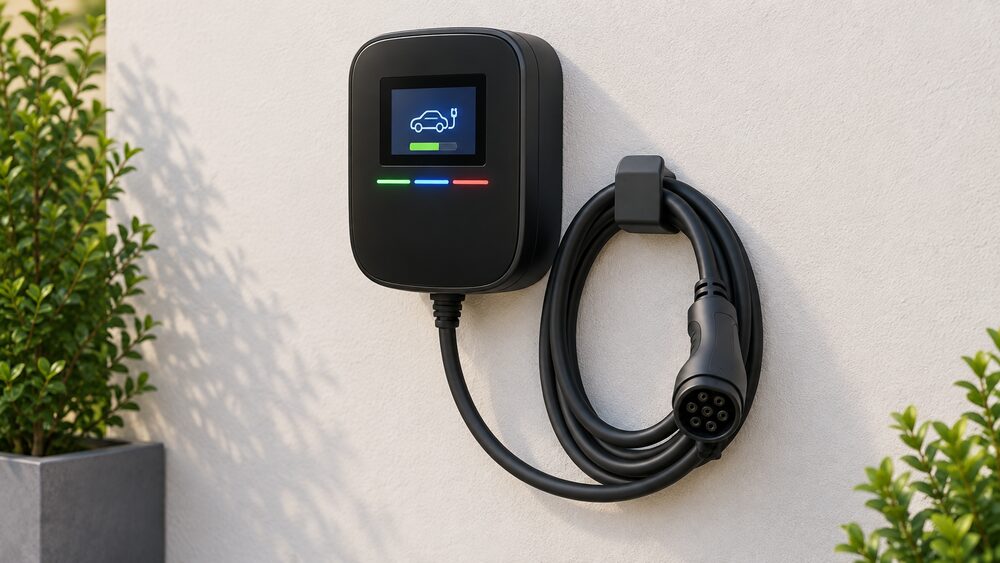 Ohme Home ProThe Ohme Home Pro is a tethered 7.4kW smart charger with a colour touch screen, a 5m Type 2 cable as standard and an 8m upgrade, priced from £999 with standard installation included.
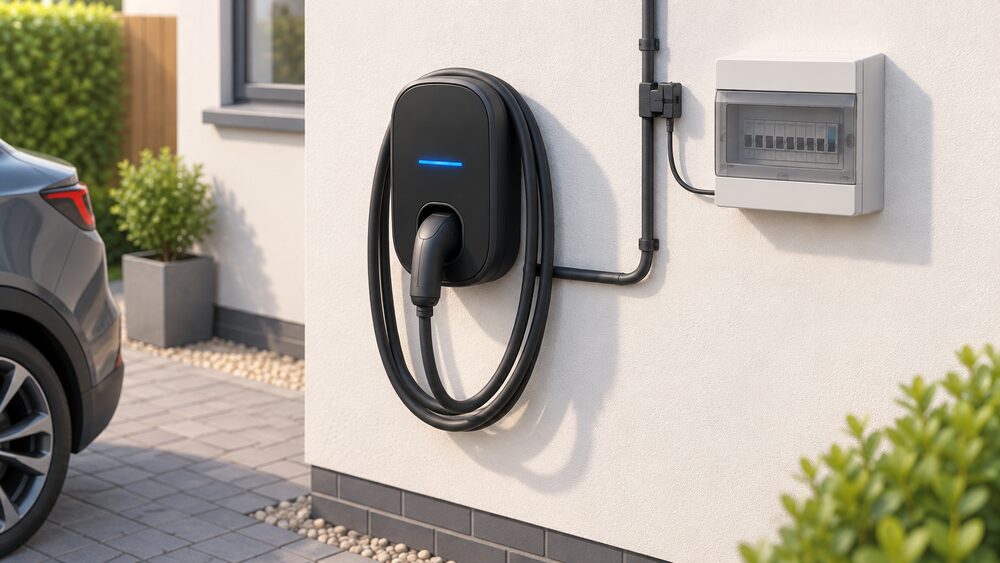 Ohme smart EV chargersLeading UK smart-charging brand householders buy direct or via energy tariffs.