
In this comparison
Two of the names that come up most often when UK households are choosing a home charge point are Ohme and Hypervolt. Both sell smart chargers built around the same idea: charge when electricity is cheap, and let the charger do the work rather than the driver. Ohme's chargers use live data from the grid and are compatible with the UK's most affordable energy tariffs, automatically adjusting to optimise charging cost1. The Hypervolt Home 3 Pro takes a similar approach on the OVO side, and is already compatible with OVO's smart tariff2.
The headline difference for most buyers is price and how it is sold. The Hypervolt Home 3 Pro has a published price: from £1,099 including standard installation and VAT with a 5m cable, or from £1,149 with a 7.5m cable3. Ohme does not publish a comparable price for the Home Pro, so its cost is installer-quoted. The other big difference is tariff reach: Ohme chargers integrate directly with smart tariffs like Intelligent Octopus Go4, and the Home Pro is described by an independent reviewer as one of the only chargers which can integrate with both Octopus and OVO's smart tariffs2, while the Hypervolt Home 3 Pro is confirmed as compatible with OVO's Charge Anytime3.
At a glance: where each charger differs
| Ohme Home Pro and ePod | Hypervolt Home 3 Pro | |
|---|---|---|
| Published price | Installer-quoted, no published figure | From £1,099 (5m cable) or £1,149 (7.5m cable), including standard installation and VAT3 |
| Smart tariffs | Compatible with all energy tariffs, including Intelligent Octopus Go and OVO Charge Anytime5 | Compatible with OVO's smart tariff2 and Charge Anytime3 |
| Solar charging | Solar Boost via the app and a CT clamp6; Solar Only listed as coming soon7 | Not documented in the maker's material cited here |
| Vehicle compatibility | All Type 1 and Type 2 EVs9 | Type 2 |
| Load balancing | Built in on all Ohme chargers10 | Not stated in the material cited here |
| Size | Home Pro is the larger of Ohme's two chargers; ePod has a more compact design11 | Wallbox unit with 5m or 7.5m cable options3 |
The comparison is not entirely symmetrical, and it is worth being upfront about that. Ohme publishes a great deal of detail about how its chargers behave with each tariff, how solar charging works and what to do when something goes wrong. For the Hypervolt Home 3 Pro, the citable material here covers price, cable options and OVO tariff compatibility. Where a behaviour is documented for one charger and not the other, this page says so rather than guessing, and our fuller Hypervolt Home 3 Pro specifications page and Ohme Home Pro page carry more detail on each product.
Smart charging: schedules, tariffs and solar
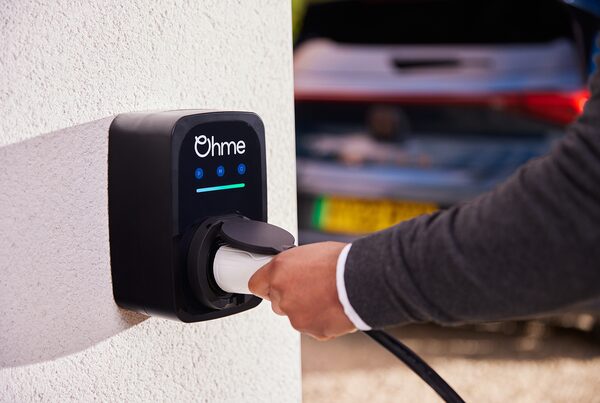
Both chargers exist to solve the same problem: electricity at night, or under a smart tariff, costs far less than electricity at 5 to 8pm, the period Ohme identifies as the energy demand peak its smart chargers help shift charging away from10. Ohme's approach is tariff-led. You choose your electricity tariff in the app during setup, and the charger then charges automatically during the off-peak hours that tariff provides13. With smart tariff integration, Ohme says charging a 60kWh battery can cost as little as £5 to £8 per charge1, and its own guidance puts it at less than £5 per charge11. Ohme also claims EV drivers charging at home on a smart tariff can save more than £90 a month compared with a standard variable tariff8. These are the maker's figures, not independent measurements.
The app is where the control sits. With the Ohme app you can set up routines, schedule one-off charging sessions, apply a price cap in pence per kWh, and track energy costs and consumption1. The Home Pro is compatible with all energy tariffs6, and Ohme stresses that its chargers work with every electricity supplier, so a household is free to switch whenever a better deal comes along14. That supplier independence matters: the charger does not lock you to one energy company, even though its deepest integrations are with the Octopus and OVO smart tariffs.
Solar is where the two diverge most clearly in the documented material. All Ohme chargers integrate with solar panels, using excess green energy to power your car15, via the Solar Boost feature and a CT clamp6. Solar Boost is available for most Home Pros and ePods installed from January 2023 onwards with a recent and complete setup7. In its grid-and-solar mode it can start charging with as little as 0.72kW of solar detected and make up the rest from grid power16. A Solar Only setting, which prioritises excess solar and keeps grid power to a minimum, is listed as coming soon7. For the Hypervolt Home 3 Pro, no solar charging behaviour is documented in the maker material cited here, so a household whose main aim is charging an EV from solar panels should treat that as an open question to put to the installer before ordering.
Tariff and app integrations, including Intelligent Octopus Go
The Intelligent Octopus Go integration is the most detailed part of Ohme's support material, and it is worth understanding how it works because it shapes day-to-day ownership. You can connect the tariff to either your Ohme charger, a compatible EV, a heat pump, a thermostat or a battery, but only one device at a time17. If you have both a compatible EV and an Ohme charger, the Octopus app will only offer to connect using the EV at first and will not offer the Ohme charger option straight away17. With the charger integration, charging is managed through the Ohme app only17.
There is a trap worth knowing about. If the tariff is connected to the EV instead of the charger, both Octopus Energy and Ohme may try to control charging at the same time, which can cause charging sessions to fail or behave unexpectedly17. Ohme's guidance for keeping the EV integration is to delete your Ohme account, which stops both companies trying to control the schedule at once17. If your EV is not compatible with Octopus, the app instead shows the Ohme login portal so you can connect the charger18. Note also that some vehicles will not work with the Intelligent Octopus Go tariff at all, as an independent guide to Octopus tariffs makes clear19.
Two rules govern the account side of the integration. Once integrated with Intelligent Octopus Go, you cannot change your tariff in the Ohme app; after disconnecting, you can20. The disconnect option itself sits in Settings, then My Charger, then Advanced Settings, then Disconnect charger21.
Since August 2026, Ohme and Octopus Energy have been rolling out a six-hour smart charging update together, with the new prioritise setting available to everyone who has the six-hour limit in place22. It gives two behaviours:
- Prioritise savings: Ohme limits smart charging to a maximum of 6 hours per day and stops once those hours are used, preventing any charging at peak rates22.
- Prioritise charge target (the default): Ohme aims to reach the charge target you have set, and charging may continue beyond 6 hours if needed, with the first 6 hours billed at off-peak rates and any charging beyond that at peak rates22.
On the Hypervolt side, the documented integrations are with OVO: the Home 3 Pro is already compatible with OVO's smart tariff2 and is listed as compatible with Charge Anytime3. There is no equivalent body of maker-published setup, prioritisation and disconnection guidance for Intelligent Octopus Go in the material cited here, which is a real difference in how much support documentation sits behind each tariff route.
Design, installation and day-to-day ownership
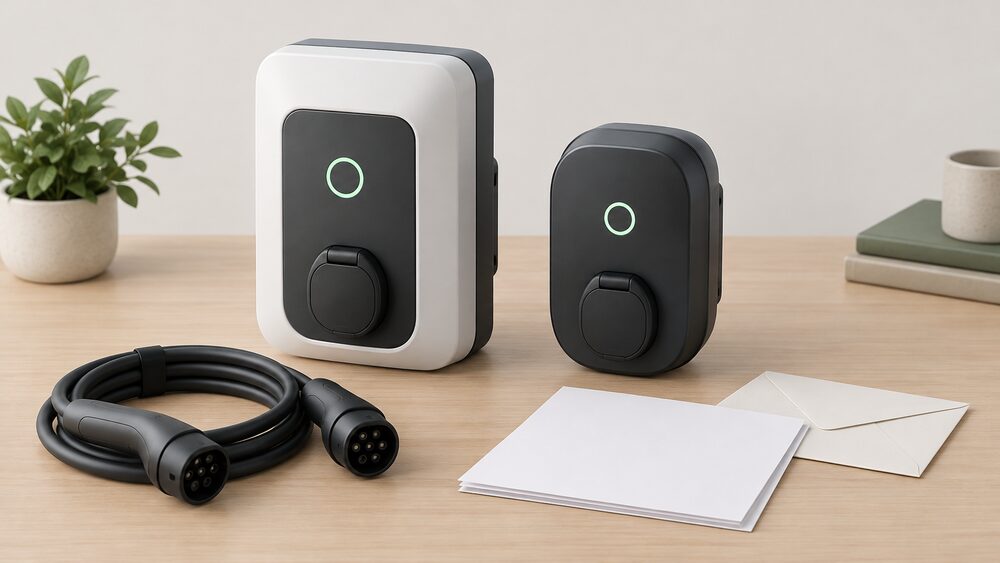
The Ohme range is two chargers. The Home Pro is the larger of the two11; the ePod has a more compact design and is ready for your Type 1 or Type 2 cable12. Both are compatible with all Type 1 and Type 2 EVs9, and the Home Pro is OZEV EVHS and WCS approved, UKCA marked and compliant with UK smart charging regulations6. The Hypervolt Home 3 Pro comes with a choice of 5m or 7.5m cable, at the two published prices above3. If you are still deciding between a fixed cable and a socketed unit, our tethered vs untethered charger guide covers the trade-offs.
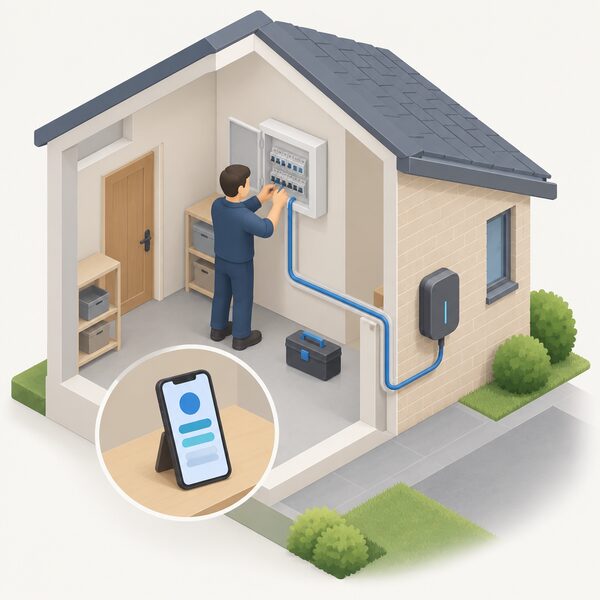
Installation follows the standard pattern for Ohme: clear the area around the distribution board or electricity meter, since that is where the cable runs, and make sure someone is at home23. After installation, the engineer connects the charger, pairs it with your app and walks you through how to schedule charging23. Some homes have quirks, so Ohme also offers custom installation for bespoke needs23. Our home EV charger installation guide covers the process in general terms.
Day-to-day, all Ohme chargers include built-in load balancing, which Ohme describes as a standard requirement for smart EV chargers in the UK that protects the home's electrical supply by automatically adjusting output alongside other appliances10. When things go wrong, the documented behaviours are specific. If voltage at the property rises above 253V or drops below 207V, the charger temporarily pauses charging and displays an error, resuming automatically once voltage returns to a safe level22. For persistent faults there is a firmware restore process for the Home Pro: afterwards the charger automatically checks with the Ohme server and updates itself on the next reboot, and if it was partway through setup screens such as language selection, max current or load balancing, it returns to the start of setup24.
One behaviour worth knowing before you buy: without the Ohme app, the charger is not linked to an account and works in plug-and-charge mode, charging immediately up to a full battery with no smart charging13. The smart features, and the savings they bring, depend on the app and the account.
Company partnerships and momentum
Ohme has built its UK position substantially through fleet and manufacturer partnerships, and these say something about the company's scale and staying power. It is the official charger provider for Motability Operations, the largest fleet operator in the UK, as well as the NHS5, and the official exclusive charger provider for customers on the Motability scheme25. On the manufacturer side, Hyundai will recommend Ohme chargers for its EV sales26, and Ohme is also the official charger provider for Genesis in the UK27. Going back further, it has been the official charger provider for Mercedes-Benz, Polestar and the Volkswagen Group in the UK28, and Volkswagen UK describes Ohme as its partner supplier of home chargers29.
The retail and housebuilding channels are covered too. Ohme is the official home EV charging partner for housebuilder Avant Homes28, and smart, the mobile network, recommends Ohme chargers to customers who need a home charging solution, with chargers viewable in smart retailers and Ohme providing the charger, installation, retailer training and support30. Ohme has also won Best Electric Charging Point Provider and Best Electric Van Charging Point Provider awards from Business Motoring31. In Ireland, Ohme's chargers connect with all of the Energia Group's electricity tariffs, including the Smart Drive tariff32.
For a buyer, this momentum cuts two ways. It suggests a company with volume, dealer-trained installers and manufacturer backing. It also means much of the public information about Ohme comes from Ohme itself, including the savings figures quoted above, so treat the maker's numbers as claims rather than measured averages. Hypervolt's partnerships are not documented in the material cited here, so no comparison can be drawn on that point.
Which one fits which household

Neither charger is a winner on the facts here, because they suit different starting points. A household already on, or attracted to, an Octopus smart tariff, particularly Intelligent Octopus Go, will find the Ohme route the one with documented integration, a six-hour charging update with a savings-or-target choice, and detailed setup and disconnection guidance4. A household on OVO, or planning to use Charge Anytime, has a confirmed price and compatibility on the Hypervolt Home 3 Pro2, and the Ohme Home Pro can also integrate with OVO's smart tariffs2.
For solar households the documented position favours Ohme: Solar Boost works today with a CT clamp and as little as 0.72kW of solar6, with a solar-only mode listed as coming soon7. One caution applies to battery owners: Ohme chargers cannot tell where your electricity is coming from, so if your home battery is set to discharge while the EV is solar charging, the two will work against each other, and Ohme advises setting the battery not to discharge when using the feature7. Our pages on EV charging alongside a home battery and solar vs grid charging go deeper.
For budget-led buyers, the position is simply that the Hypervolt Home 3 Pro has a published installed price and the Ohme Home Pro does not, so the only way to compare is to obtain an Ohme quote. For a fuller picture of the wider market, our pillar guide to home EV charging and our guide to charger types set both brands in context.
Buying considerations before you order
Before ordering either charger, a few checks are worth making, drawn from Ohme's own buying guidance and the documented behaviours above.
- Tariff first, charger second. The savings both brands are built around come from the tariff, not the hardware. Ohme's chargers meet the latest smart charger regulations14 and connect with all electricity tariffs, including EV type-of-use and off-peak plans15, so check which smart tariffs you could actually move to at your address. Our EV energy tariffs guide explains the options.
- Check your EV's compatibility with the tariff, not just the charger. Some vehicles will not work with the Intelligent Octopus Go tariff19, and if both your EV and charger could connect, the Octopus app will offer the EV first17.
- Confirm solar arrangements in writing. Ohme's solar charging needs a CT clamp and, for Solar Boost, a charger installed from January 2023 onwards with a complete setup6. If solar is the main reason for buying, confirm what the installer will provide.
- Ask about load balancing. All Ohme chargers include it as standard22; for the Hypervolt Home 3 Pro, ask the installer what arrangement will be used. Our load management guide explains why it matters.
- Get the price in the quote. The Hypervolt Home 3 Pro's published prices include standard installation and VAT3; an Ohme quote should state what is included, and whether your home needs the custom installation Ohme offers for homes with quirks23.
- Plan for the account. Ohme's smart features depend on the app and account13. Budget for the full cost of a fitted charge point rather than the hardware alone.
Sources32 sources
- New to EVs, Ohme, 2026-07-09
- Best home EV chargers, Carwow, 2026-01-09
- Hypervolt Home 3 Pro, OVO Energy, 2026-09-17
- Ohme chargers, Ohme, 2026-05-21
- Ohme Bells Motor Group partnership, Ohme, 2026-09-17
- Ohme Home Pro, Ohme, 2026-05-21
- How to charge with Solar Boost and Solar Only, Ohme, 2026-04-15
- Save £90 a month charging at home with Ohme, Ohme, 2026-09-17
- Our chargers, Ohme, 2026-05-21
- Ohme Energy, Ohme, 2026-03-16
- Smart charging FAQs, Ohme, 2025-12-11
- How installation works, Ohme, 2026-08-13
- Recharge intelligente avec l'application Ohme, Ohme, 2025-09-17
- What to look for when buying a home EV charger, Ohme, 2026-08-18
- How our chargers work, Ohme, 2026-08-13
- How to charge with Solar Boost and Solar Only, Ireland, Ohme, 2026-09-17
- Troubleshooting for Intelligent Octopus Go and Ohme, Ohme, 2026-08-18
- How do I set up Intelligent Octopus Go, Ohme, 2026-08-05
- Octopus energy tariffs for EV drivers, Uswitch, 2025-10-09
- How do I disconnect from Intelligent Octopus Go, Ohme, 2026-08-05
- How do I update my Ohme account details, Ohme, 2026-03-06
- Prioritise savings or your target with Intelligent Octopus Go, Ohme, 2026-08-04
- How installation works, Ohme, 2026-01-07
- How to restore firmware on the Ohme Home Pro, Ohme, 2026-09-17
- How you can drive an EV for just £10 a month, Ohme, 2025-09-29
- Ohme Hyundai partnership, Ohme, 2026-09-17
- Genesis Motor UK and Ohme, Ohme, 2026-09-17
- Ohme and Avant Homes partnership, Ohme, 2024-04-18
- Volkswagen charging and range, Volkswagen UK, 2026
- Ohme and smart UK partnership, Ohme, 2026-09-17
- Ohme Richmond Motor Group, awards, Ohme, 2025-07-23
- Ohme Energia partnership, Ohme, 2026-09-17