
In this comparison
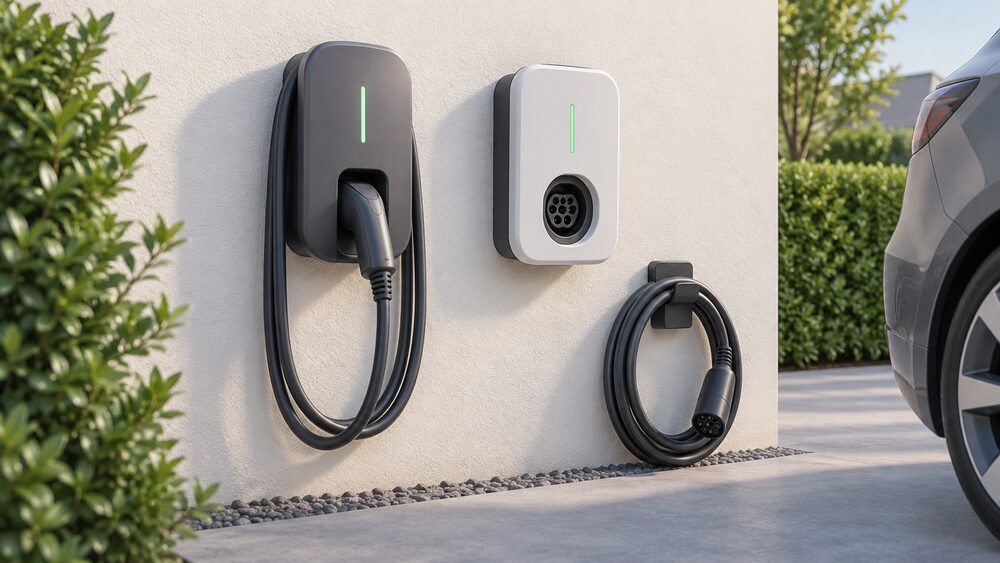
Both the myenergi zappi and the Hypervolt Home 3 Pro are 7kW-class smart AC chargers sold into the same UK market, and both are available in tethered or untethered versions1. They are one-way AC chargers, not bidirectional, so neither can send power back out of the car1. The practical differences sit in three places: how each handles surplus solar, which smart tariffs each has been integrated with, and what each maker publishes about price and warranty.
On price, myenergi states that installation costs typically start at £1,099 including the charger, and lists the zappi itself from £779 inc. VAT where applicable2. The untethered white multiphase unit was listed at £609.00 ex VAT on 17 September 2026, down from a previous £636.90 ex VAT, with 10 units available for immediate dispatch4. Hypervolt's own installed price is not published in the material behind this page, so no figure is given for it.
On solar, the zappi was brought to market as the world's first solar-compatible EV charger and can take power from the grid, from solar, or a combination of both5. Hypervolt's solar work is newer and reporting-led: a Solar Insights beta launched in July 2026 splits charging sessions into solar and grid energy for homes with solar generation.
Zappi and Hypervolt at a glance
The two chargers converge on the basics and diverge on the extras. Both are sold tethered or untethered, both are one-way AC units, and both support Intelligent Octopus Go1. The zappi is rated at 7.4kW or 22kW depending on variant, and myenergi sells it with a choice of power output, connection type and colour7. The zappi is available with Type 1 and Type 2 connectors, though Type 2 has become the go-to connector for most electric vehicles in the UK9.
The zappi carries a 3-year warranty from myenergi2. It offers three distinct charging modes, eco, eco+ and fast, and can take power from the grid, from solar, or a combination of both2. It is compatible with all domestic microgeneration technologies, including solar and wind, and myenergi describes it as solar-aware, able to prioritise self-generated energy with PV optional12.
Hypervolt's Home 3 Pro is the model that appears in the tariff compatibility lists, and it supports Intelligent Octopus Go, with the integration added in late 20241. Hypervolt describes itself as a UK headquartered technology company developing EV charging stations, ecommerce platforms and a cloud operating system for managing renewable assets, and it was launched in 202114. Its own installed price and warranty terms are not published in the material behind this page.
| myenergi zappi | Hypervolt Home 3 Pro | |
|---|---|---|
| Type | One-way AC, not bidirectional1 | One-way AC, not bidirectional1 |
| Power | 7.4kW or 22kW7 | Not stated here |
| Tethering | Tethered or untethered1 | Tethered or untethered1 |
| Warranty | 3 years2 | Not stated here |
| Intelligent Octopus Go | Yes, integrated longest15 | Yes, added late 20241 |
| OVO smart tariff | Not stated here | Compatible7 |
| Solar | Solar PV or wind, eco and eco+ modes13 | Solar Insights beta, July 2026 |
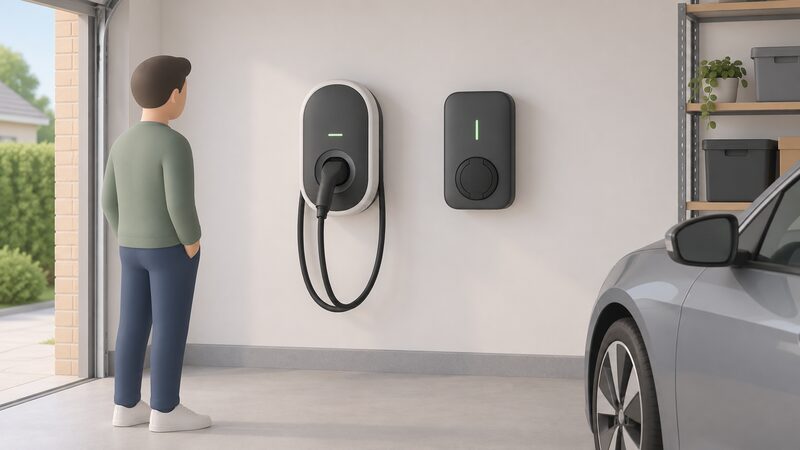
Who makes each charger: myenergi and Hypervolt compared
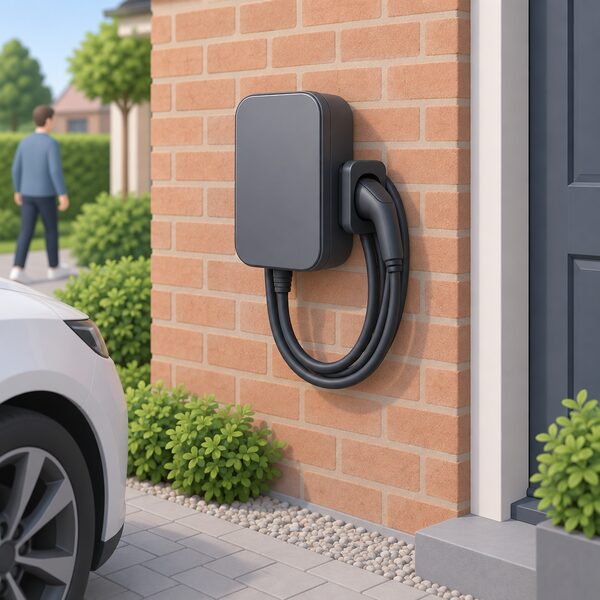
myenergi builds the zappi in the UK. The company states that the charger was conceived, evolved and manufactured in-house in the UK, and separately that it is made in the UK3. It also states that it brought the world's first solar-compatible electric vehicle charger, zappi, to market, alongside its eddi power diverter, which is designed to maximise self-consumption5. That matters for a household weighing energy independence: a charger made domestically with a documented solar lineage is a different proposition from one whose manufacturing location is not published.
Hypervolt is a UK headquartered technology company, launched in 2021, developing EV charging stations, ecommerce platforms and a cloud operating system for managing renewable assets14. Its own description places it at the forefront of the electric vehicle charging industry, and it states it sits atop Trustpilot as the highest rated EV charging manufacturer in the industry14. That is the maker's own claim about its own standing, not an independent rating, and it is reported here as such.
The two companies also differ in how they present themselves. myenergi publishes a product range that extends beyond the charger, including battery storage, and positions the zappi within a home energy ecosystem alongside eddi17. Hypervolt's published emphasis is on software and partnerships: it announced partnerships with OVO Energy, Octopus, EDF and more, and describes itself as leading the charge on tariff and renewable integrations, notably with OVO Energy and Octopus18.
For a household, the maker question comes down to what sits behind the box. myenergi's UK manufacturing claim is specific and repeated. Hypervolt's UK claim is about headquarters and software, not about where hardware is built, and the material behind this page does not state a manufacturing location for it.
Price: what each charger costs to buy
myenergi publishes two price points for the zappi. The charger alone is listed from £779 inc. VAT where applicable, and installation costs typically start at £1,099 including the price of the charger3. A zappi GLO variant is listed from £949 including standard installation and VAT19. A 22kW three-phase Type 2 tethered variant is listed at £865 inc. VAT where applicable20.
At distributor level, the untethered white multiphase unit ZAPPI-2H22UW-G was listed on 17 September 2026 at £609.00 ex VAT, reduced from a previous £636.90 ex VAT, with 10 units available for immediate dispatch4. Distributor pricing is a dated snapshot and moves with stock.
Hypervolt's own installed price is not published in the material behind this page, so no figure is given. Where a maker does not publish a price, the practical position for a household is that the cost is installer-quoted, and quotes vary with cable run, consumer unit work and any load management needed.
The wider cost context is that home charging is the cheap end of EV running. Zapmap estimated around 1.4 million EV chargers installed at UK homes with driveways as of the end of 2025, which is where most charging happens8. Public charging is the alternative, and Zapmap counted over 123,000 public EV chargers across the UK as of 4 September 202621. For a household doing most mileage at home, the charger purchase is a one-off against a running cost that is usually lower than public rates.
Solar charging: the area where zappi built its name

This is the clearest dividing line between the two products. myenergi states that zappi was the world's first solar-compatible electric vehicle charger, brought to market alongside the eddi power diverter5. The charger works in harmony with solar PV or wind generation, can take power from the grid, from solar, or a combination of both, and offers the option to charge using energy from Solar PV or wind generation13. It is compatible with all domestic microgeneration technologies, including solar and wind12.
The control side matters as much as the compatibility. The zappi offers eco, eco+ and fast charging modes, and myenergi describes it as solar-aware, able to prioritise self-generated energy with PV optional2. Where drivers have solar PV, zappi can prioritise self-generated energy9. It also integrates with a home battery, so the car can be charged with free solar energy or the energy stored for later10.
myenergi's own guidance sets out the no-battery case: without home battery storage, using zappi and eddi can maximise solar self-consumption by charging the EV in the day and diverting excess energy with eddi for heating10. That is a two-product approach, and it is worth being clear that the eddi is a separate device, not part of the charger.
Hypervolt's solar position is different in kind. It launched a Solar Insights beta in July 2026, splitting charging sessions into solar and grid energy for homes with solar generation. That is measurement and reporting: it tells a household how much of a session came from solar, rather than actively diverting surplus generation into the car in the way the zappi's eco+ mode is documented to do. The material behind this page does not document a Hypervolt battery-drain prevention feature.
"If you don't have home battery storage, using zappi and eddi can maximise solar self-consumption"
For energy independence, the distinction is real. A solar-aware charger lets a household convert its own generation into miles rather than exporting it, which reduces reliance on the grid and on whatever the export rate happens to be. A charger that reports solar share after the fact does not change where the energy went.
Smart tariffs and integrations: Octopus, OVO, EDF and Kraken
Both chargers are integrated with Intelligent Octopus Go, but the histories differ. myenergi states that the zappi is fully compatible with the Intelligent Octopus Go tariff, and myenergi guidance describes the zappi as having been integrated with it the longest and generally considered the most tried and tested combination15. An independent product listing records the Myenergi Zappi as smart tariff compatible with Octopus only7.
Hypervolt's Home 3 Pro supports Intelligent Octopus Go, with the integration added in late 20241. The same independent listing records the Hypervolt Home 3 Pro as already compatible with OVO's smart tariff, which is a point of difference: the zappi is listed as Octopus only in that comparison7. Hypervolt states it has partnerships with OVO Energy, Octopus, EDF and more, and describes itself as leading the charge on tariff and renewable integrations, notably with OVO Energy and Octopus18.
The EDF relationship goes beyond a tariff. In January 2025 EDF announced a strategic partnership with Hypervolt to explore a first-of-its-kind frequency response service from EVs using UltraGrid software and PowerShift, alongside access to EDF's smart charging EV tariff. That is grid-services work rather than a domestic charging feature, and it is the clearest example of Hypervolt's software-first positioning.
Octopus itself notes that there are some vehicles that will not work with the Intelligent Octopus Go tariff, so charger compatibility is only half the question22. On the supplier side, Octopus and E.ON Next are named among suppliers that simplify the switch from one tariff to another, offer clear guidance, handle most of the process and may help with smart meter installation23.
For a household, the tariff question is about which cheap windows a charger can be steered into. A charger integrated with a time-of-use tariff can shift charging into the cheap period without the driver thinking about it, which is the main financial lever on home charging. The zappi's longer integration history with Intelligent Octopus Go and Hypervolt's broader published partnership list, including OVO, are the two documented positions.
App and software experience
myenergi describes full control through an intuitive app and EV charger display, and the app supports switching to fast charging and monitoring devices16. The zappi is described as a charger designed for easy installs with app based commissioning9. That last point is an installer-facing feature: commissioning through the app rather than a separate tool.
Hypervolt's app development is documented in more detail. A published app release added new widgets, immersive LED animations and quality-of-life improvements25. Hypervolt states that LED modes are the most-used feature in the Hypervolt app, five times more popular than the next most-used feature25. That is the maker's own usage statistic about its own app.
The two apps therefore present differently. myenergi's published emphasis is on control of charging and monitoring, tied to the charger's display and its eco modes. Hypervolt's published emphasis is on interface features and visual feedback, with LED modes as the headline usage. Neither description in the material behind this page covers offline behaviour, local control when the cloud is unavailable, or what happens to scheduled charging during an internet outage.
That gap matters for independence. A charger whose scheduling lives in a cloud service depends on the maker's servers, the home broadband connection and the app continuing to work. A charger with local control through its own display and app commissioning has a shorter chain between the household and the car. The material behind this page documents local control for the zappi through its app and display, and does not document an equivalent local fallback for Hypervolt.
Customer support and Trustpilot ratings
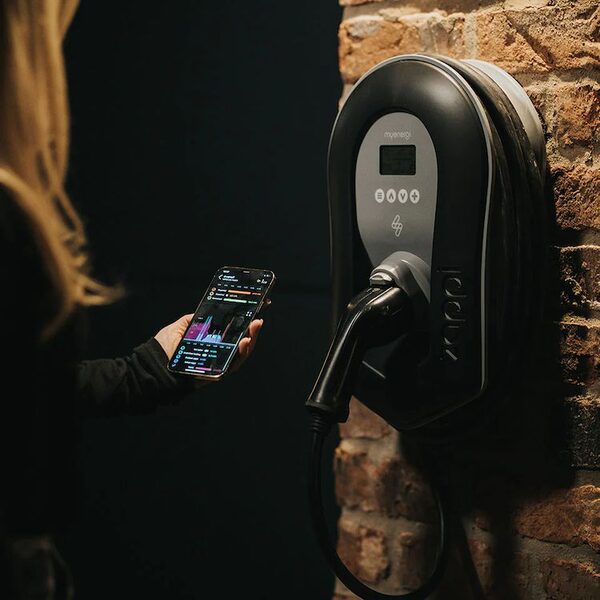
myenergi publishes contact details and a support claim. The maker lists sales@myenergi.com and 0333300 1303 as contact points, and describes friendly and knowledgeable UK based tech support12. It also states that the zappi supports both 7kW and 22kW applications, automatically detecting the power rating for seamless operation16.
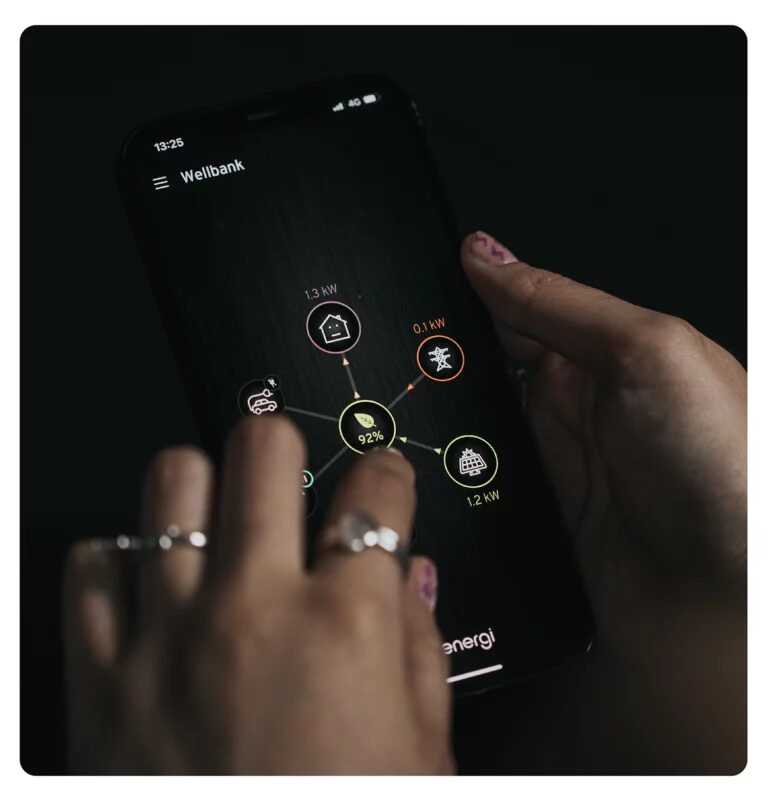
Hypervolt states it sits atop Trustpilot as the highest rated EV charging manufacturer in the industry14. That is the maker's own characterisation of its Trustpilot position, published in April 2025, and it is reported here as a maker claim rather than an independent rating. No independent Trustpilot score for either brand is given in the material behind this page, so no comparison of scores is made.
What is documented for Hypervolt is a pattern of software updates and customer-facing communication. Published app releases have added new widgets and immersive LED animations, and the company has published engineering blog posts about app versions, Ultra Mode and Solar Insights. That is a maker that communicates through its own channels. What is not documented here is a published support phone number or email address for Hypervolt, so the route to its support team is not stated on this page.
For a household, support matters most at the point of failure. A charger that stops charging overnight is a car that is not ready in the morning, and the difference between a maker with published UK phone support and one without is felt then. The zappi's published UK-based tech support and direct contact details are the documented position; Hypervolt's documented position is its Trustpilot claim and its update cadence.
Zappi or Hypervolt: which suits which household
Neither charger is a recommendation here; the question is which documented characteristics fit which circumstances.
A household with solar PV, or planning it, has the clearest case for the zappi on the evidence. It is documented as solar-aware, able to prioritise self-generated energy, compatible with all domestic microgeneration technologies including solar and wind, and able to integrate with a home battery so surplus solar charges the car or is stored13. Its eco and eco+ modes exist for exactly this2. Where there is no battery, myenergi's own guidance pairs it with eddi to divert excess energy to heating10.
A household with no solar and a straightforward off-street parking spot has a different calculation. Both chargers are one-way AC units available tethered or untethered, and both support Intelligent Octopus Go1. The zappi is listed as Octopus only for smart tariffs in one independent comparison, while the Hypervolt Home 3 Pro is listed as compatible with OVO's smart tariff as well7. A household on, or considering, an OVO smart tariff has a documented reason to look at Hypervolt; a household wanting the longest-established Intelligent Octopus Go integration has a documented reason to look at the zappi15.
On price, the zappi's published figures are from £779 inc. VAT where applicable for the charger and typically from £1,099 installed including the charger3. Hypervolt's installed price is not published in the material behind this page, so a household comparing on cost will need installer quotes for it.
On warranty, the zappi carries 3 years from myenergi2. Hypervolt's warranty term is not stated in the material behind this page.
On independence, the honest position is that both chargers leave the household dependent on things outside the home. Both are one-way AC units, so neither can use the car as home backup1. Both depend on the grid for any charging that solar cannot cover, on a supplier for the tariff that makes off-peak charging cheap, and on the maker's app and cloud service for scheduling and monitoring. The zappi's documented local control through its app and display shortens that chain slightly, and its solar and battery integration reduces grid draw where generation exists. Hypervolt's UltraGrid work points the other way, towards the car and charger as grid assets in frequency response services run with EDF.
For related detail, see types of home EV charger, charging an EV from solar panels, EV energy tariffs and the Hypervolt Home 3 Pro and zappi solar-aware charger pages. The EV charging at home pillar covers the wider picture.
Sources25 cited
- Best EV charger for solar panels, Spirit Energy
- Electric car charging at home, myenergi
- myenergi products, myenergi
- zappi Multiphase Datasheet, myenergi
- Opposition to energy bill won't slow down solar momentum, myenergi
- zappi, myenergi
- Home electric vehicle chargers, Carwow
- Home and community charging, Zapmap
- zappi car charger, myenergi
- Our chargers, myenergi
- zappi EV charger, myenergi
- zappi, myenergi
- zappi EV charger, myenergi
- Hypervolt and Innovation Automotive partner on joint EV offering, Hypervolt
- Octopus partnership, myenergi
- Electric car charger home installation UK, myenergi
- BT Openreach partnership, myenergi
- Hypervolt and Motorfinity unveil partnership, Hypervolt
- Works with Hive, myenergi
- Battery storage, myenergi
- Five ways Zapmap can help you find and pay EV charging, Zapmap
- Octopus EV energy tariffs, Uswitch
- Should EV owners get fixed or time-of-use tariff, Uswitch
- The app, myenergi
- App 6.2.0: a fresh new release, Hypervolt
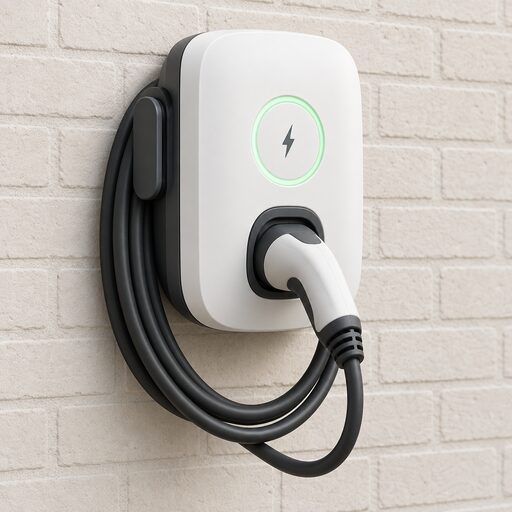 Home EV Charger ManufacturersWhich home EV charger brands are worth considering, and how do you choose between them?
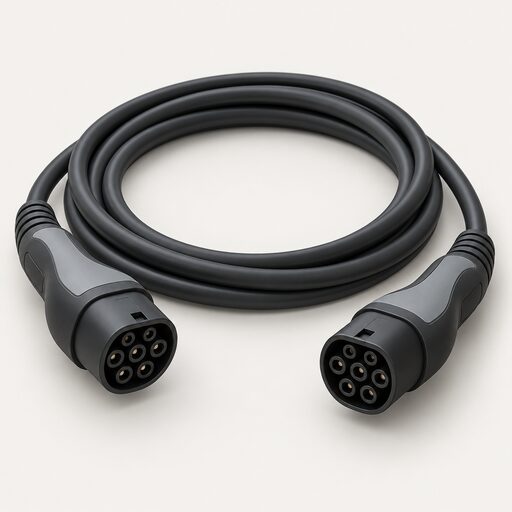 Types of Home EV ChargerWhich home charger suits your car and your driveway?
 AC-Coupled vs DC-CoupledCan you add a battery to your existing solar panels without swapping the inverter, and does one kind waste more of your solar power than the other?
 What Size Battery?How much electricity does your home use in a day, and how much of that falls in the hours when power is cheap or your solar panels are generating?
 Payback and SavingsHow long until a home battery pays for itself, and why do quoted payback times vary so much?
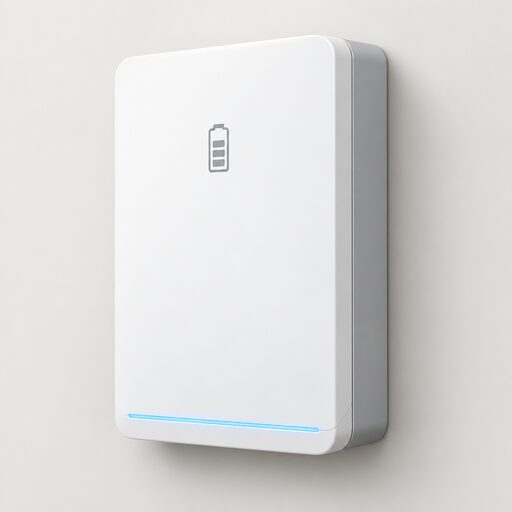 Charging With a Home BatteryHow a home battery and an EV charger share one supply, whether a battery can usefully charge a car, and how combined systems are controlled so the battery is not discharged into the vehicle at a loss.