In this guide
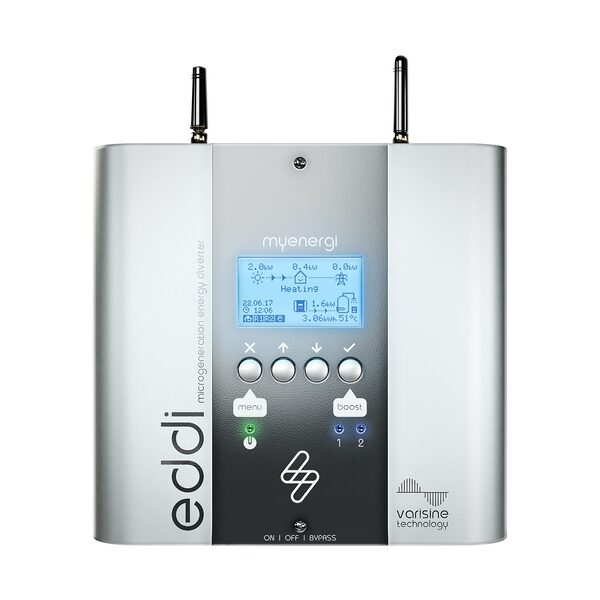
The myenergi eddi is a solar power diverter: a box wired into the immersion heater circuit that takes surplus generation from a grid-tied solar or wind system and sends it to hot water instead of exporting it1. It monitors photovoltaic performance and household consumption, then adjusts the voltage it feeds to the immersion to match whatever surplus is available at that moment2. myenergi states that with eddi a household can reach up to 95% power self-consumption3.
It is designed and manufactured at myenergi's UK production facilities, and the company's manufacturing base is in Lincolnshire1. The standard warranty is three years from the date of purchase against faults in material and workmanship, extendable by a further 24 months on some products5. There is no published list price for the eddi itself; the figures that exist are installer-quoted, and the wider myenergi range gives a sense of the level, with the zappi EV charger listed from £779 plus installation7.
The eddi is the hot water half of a wider ecosystem. The same app controls the libbi battery, the zappi charger and the eddi, and the harvi sensor that measures import and export is normally part of the installation8. What it does not do is take a household off the gas grid or off a supplier: it displaces gas or grid electricity used for hot water, and it depends on the immersion, the cylinder and a working internet connection for its remote features.
What the eddi does: turning surplus solar into hot water
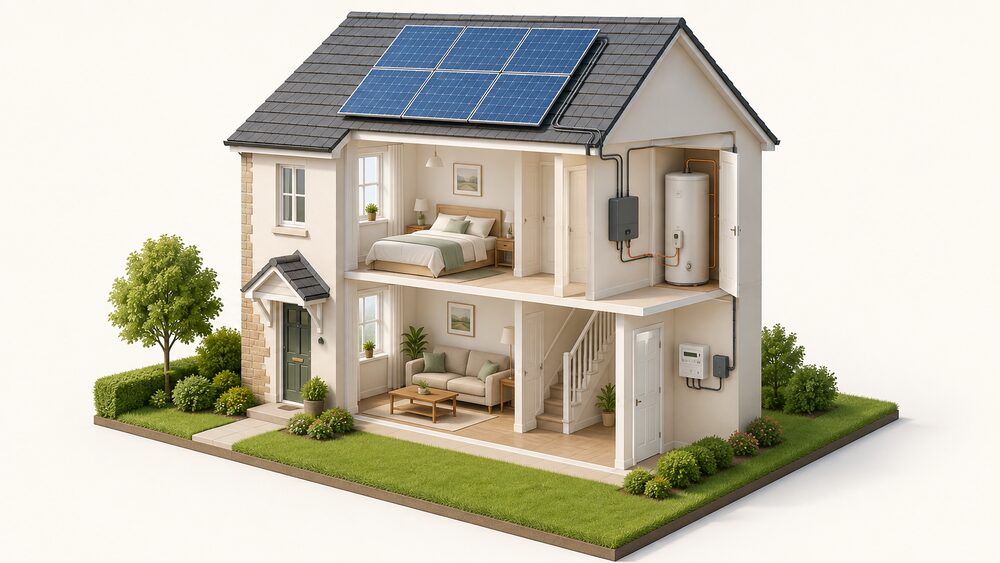
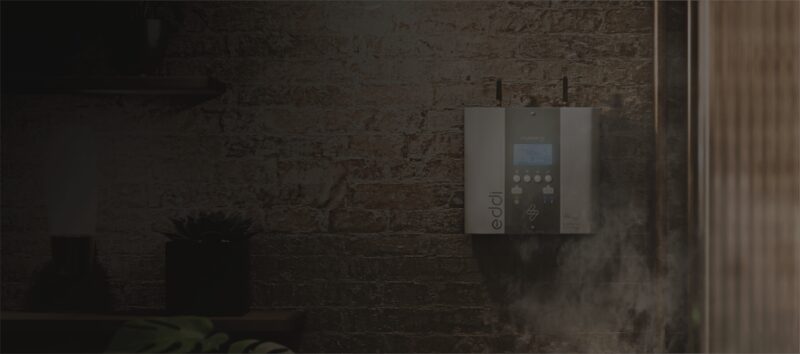
A solar array sized for a household will, on a bright midday in summer, generate more than the house is using. Without somewhere for that power to go it is exported, and under a smart export guarantee tariff it earns whatever the supplier pays for it. The eddi intercepts that flow. Rather than exporting surplus electricity back to the grid in periods of high generation and low demand, it redirects the energy to an immersion heater, a storage heater, underfloor heating or an electric heater9. The maker describes it as a power diverter that heats water with solar, using state-of-the-art technology to monitor PV performance and energy consumption1.
The loads it can drive are resistive: heating systems and water tanks, in the maker's words11. That is a real constraint. A diverter cannot run a heat pump, a washing machine or anything with an electronic controller, because it works by varying the voltage delivered to a simple resistive element. The classic destination is the immersion element in a hot water cylinder, and myenergi describes the eddi channelling surplus energy to warm the home's water tank3.
For a household's energy independence the effect is specific rather than general. The eddi converts an electricity surplus into a store of heat, which is a form of independence from the gas boiler for part of the year and from the grid for water heating. It does not store electricity, does not run during a power cut, and does not reduce the standing charge or the gas connection. A home with a gas combi and no cylinder has nowhere for the diverted power to go, which is the first thing to check before considering one. The wider picture of what diverters do sits alongside solar diverters and the alternative route of a battery is covered in adding battery storage to solar.
How it works: monitoring export and adjusting power to the immersion
The eddi does not simply switch the immersion on and off. Its distinguishing feature, in myenergi's description, is the ability to monitor the system's surplus power and adjust the voltage to suit the heater's requirements3. That means an immersion element can be run at a fraction of its rating when only a small surplus is spare, absorbing a trickle rather than waiting for a large surplus to build. The result is that more of the day's generation is captured, including the shoulders of the day either side of peak output.
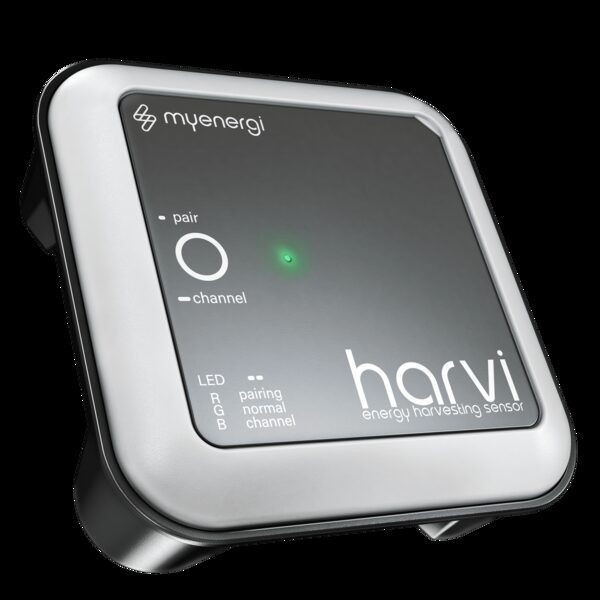
To know how much is spare, the system needs a measurement at the supply point. That is the job of the harvi, a wireless sensor that myenergi describes as simple to install with no complex wiring or additional equipment, pairing with existing myenergi devices in minutes12. Through the app it provides real-time insights, usage history and visual data on import and export information13. It is normally included in an eddi installation for that reason: without a measurement of flow at the meter, the diverter has no way to know what the house is importing and what the panels are exporting.
The eddi+ variant comes pre-equipped with myenergi app compatibility, enabling remote monitoring and control straight out of the box, with built-in energy monitoring and built-in WiFi and ethernet11. Firmware updates arrive over that Wi-Fi connection, and settings are customisable through the app1. The zappi, harvi and eddi are engineered to work in harmony together, so a household that already has a zappi charger can add the diverter to the same system rather than running two separate control regimes14.
"A unique feature of eddi is its ability to monitor your system's surplus power and adjust the voltage to suit the heater's requirements"
Self-consumption: up to 95% with eddi, against 27% without
The headline claim is that with eddi a household can achieve up to 95% power self-consumption3. That figure is the maker's, published in 2023, and it describes the proportion of generation used on site rather than exported. It is a claim about the diverter's effect on the solar system's own output, not a promise about bills, and it depends on there being a cylinder large enough and a household drawing enough hot water to absorb what is generated.
Independent modelling of self-consumption gives a sense of the range that storage of any kind can produce. MCS figures for a system with electrical energy storage show self-consumption of 69% with 5.1 kWh of usable capacity and 88% with 7.5 kWh of usable capacity15. Those are battery figures rather than diverter figures, and they are modelled rather than measured, but they show that the proportion of generation used on site rises with the amount of storage available and that the ceiling is not automatic. A diverter's storage is a cylinder of hot water, which is cheaper than a battery but limited by how much hot water a household can use before the next sunny day.
The comparison that matters for a household is against export. Surplus sent to the grid earns an export payment; surplus sent to the cylinder displaces a unit of gas or electricity that would otherwise have been bought. Which is worth more depends on the export rate on offer and the price of the fuel being displaced, and neither is fixed. The eddi does not choose between them on price; it captures what is spare at the moment it is spare. For a household whose cylinder is already heated by gas, the diverted power reduces gas use in summer, which is a modest but real step away from the gas supplier. For one on an electric cylinder, it displaces grid electricity directly.
Compatibility with libbi, the myenergi app and your wider setup
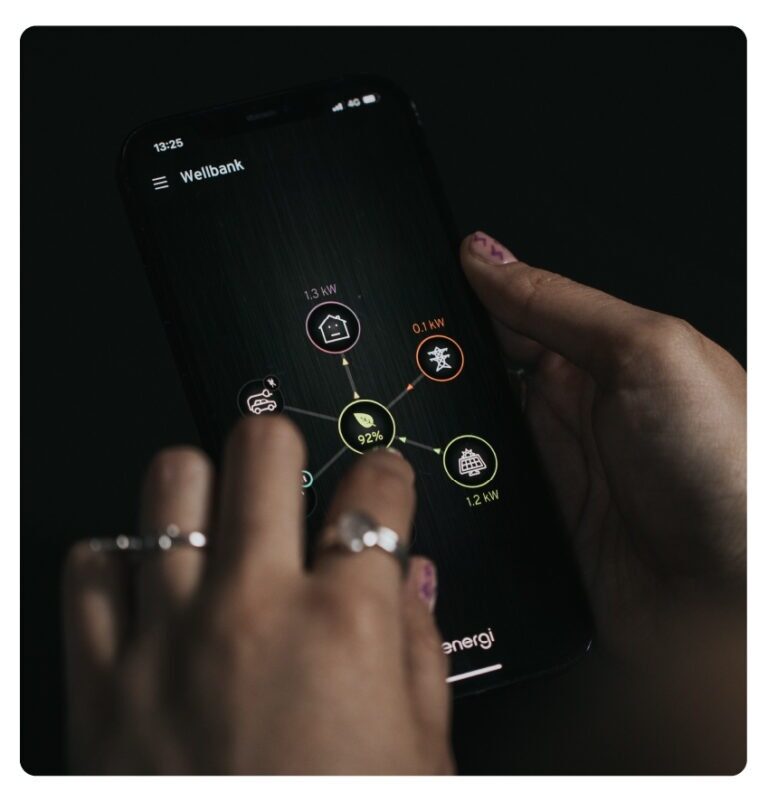
The eddi is one device in a set. The libbi battery is designed specifically to work with the zappi EV charger, the eddi solar diverter and the harvi wireless sensor, and myenergi states that the battery, solar, EV charger and hot water all work together through a single myenergi app8. Every product in the ecosystem is described as working seamlessly with the app16. The app itself is free to download and gives control of home energy, with consumption monitoring through intelligent data automation and real-time performance insight16.
What the app does in practice is let a household heat water, charge a car, load a battery, monitor generation, manage devices and export to the grid around a time of use tariff, with access from anywhere in the world in real time13. That is a genuine convenience and it is also the clearest dependence the system creates. Local operation continues without a connection, but scheduling from away, energy monitoring and remote diagnostics run through home broadband, myenergi's servers and a manufacturer's app.
myenergi publishes a support policy covering how long it will maintain that software. For the eddi, security updates are aimed at five years from the date of manufacture, and major software updates are aimed at least at the period of the warranty, except where a device is not capable of receiving them17. The same terms are stated for the hub, the zappi and the libbi17. That is a defined horizon rather than an open-ended commitment, and it is worth reading as one: a diverter bought today has a stated software life, and the hardware will outlast it.
The interoperability claim is narrower than it sounds. The zappi, harvi and eddi are engineered to work together14, and the libbi lists those three as its compatible products8. A household with a different brand of inverter, battery or charger should not assume the eddi will coordinate with it; the diverter works with the solar system's output at the supply, but the app-level integration is a myenergi ecosystem feature.
Cost: installations from £810 and what the price includes
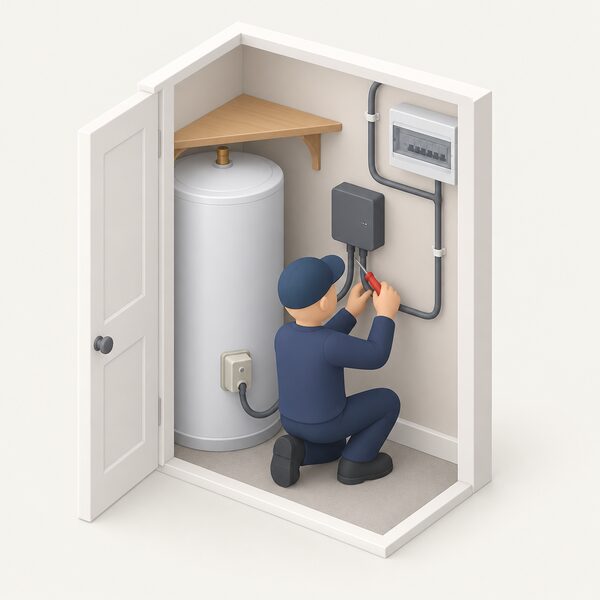
There is no published myenergi list price for the eddi. Prices are installer-quoted, and the figure that circulates for a fitted installation is from £810, which covers the unit and the labour to wire it to the immersion circuit. No manufacturer price for the eddi itself is published, so no range should be assumed beyond that installed figure, and any quote will vary with the age and layout of the cylinder, the distance to the consumer unit and whether a harvi needs mounting at the meter.
For context on the level of myenergi's other hardware, the zappi EV charger is listed from £779 plus installation7. The company's own shop lists accessories rather than the main units, with items such as a softshell jacket at £49.99, work trousers at £34.99 and a freedom tee at £19.99, all stated inclusive of VAT if applicable9. Those are not indicative of the diverter's price, but they show the shop's pricing convention.
The wider solar context is worth having when weighing the spend. Independent guidance puts EDF Energy solar installations starting from £5,775 and batteries from £3,99518. A diverter at the installed figure above is a small fraction of either, which is the argument for it as a first step: it uses the generation a household already has rather than adding capacity. What it does not do is reduce the cost of the panels, the inverter or the connection.
VAT treatment is not stated in the installed figure, so it should be read as quoted rather than as confirmed VAT-inclusive. The relief that applies to qualifying energy saving materials is set out below, and whether it applies depends on what is being installed and where.
VAT relief when fitted to an energy saving measure
VAT relief for energy saving materials is a live and changing area, and the dates matter. Installations of energy saving materials in residential accommodation benefit from a temporary VAT zero rate until 31 March 202719. The same end date appears in HMRC's internal manual, which states that the changes qualify for the temporary zero rate until 31 March 202720. The relief was expanded with effect from 1 February 202420.
The expansion is the part relevant to a diverter. The statutory instrument's stated intention is to expand the VAT relief for energy saving materials, and it adds electrical batteries that store electricity generated by certain energy saving materials and from the grid21. The 2022 order that preceded it introduced a temporary relief from VAT in the form of a zero rate applied to the supply of installation of energy saving materials in England and Wales and Scotland22. The relief also covers installation of qualifying energy saving materials in buildings used solely for a relevant charitable purpose20.
Two practical points follow. First, the relief attaches to the installation of qualifying materials, so the way a job is invoiced and who carries it out can affect whether it applies; further guidance sits in VAT Notice 708/6 and VENSAV300023. Second, the territorial position differs: the 2022 order is expressed for England and Wales and Scotland22, and Northern Ireland's treatment under the current rules is not set out in these documents. A household in Northern Ireland should expect to confirm the position rather than assume it matches Great Britain.
Warranty and returns: three years, 14-day policy and the RMA process
The standard warranty is three years from the date of purchase against faults in material and workmanship5. It can be extended by a further 24 months by purchasing an extended warranty, on some products, with details available on My Account6. The extended warranty is available to customers in the UK mainland and the Republic of Ireland, and can be purchased for zappi and eddi products24. The covered products under the product warranty include the zappi EV charger, the zappi pedestal, the eddi energy diverter, the harvi energy harvesting sensor, the hub internet connector and the libbi battery12.
The remedy is at the maker's discretion. If a product is found to be faulty or defective in materials or manufacture during the warranty period, myenergi will, at its sole discretion and free of material and labour charges, repair or replace the defective product12. Replacement products may be refurbished or contain refurbished materials and are covered only for the remaining term of the warranty period12. All claims must be reported within the warranty period, and myenergi reserves the right to reject claims reported after it12.
Installation conditions attach to the cover. The product must be correctly installed and commissioned by a competent person in accordance with the installation manual, local codes, relevant regulations, applicable regional legal requirements and industry standards6. Where a home visit is needed, myenergi appoints an approved myenergi warranty installer once it has assessed the problem and decided a visit is necessary24. If the product is removed and reinstalled, that must be done by an approved myenergi installer24.
On returns, there is a 14 day policy from the date the item was received, for a full refund10. Refunds are processed within 14 days after the day the product is received back or the day evidence of return is received, whichever is earlier10. The cost of returning the product is not refunded, and myenergi accepts no liability for loss or damage in transit back to it10. Cancellation can be made in writing with your name, address and order reference, or by completing the cancellation form on the website or by calling 0333300 130310.
myenergi the company: British manufacturing in Lincolnshire
myenergi designs and manufactures at a UK manufacturing facility in Lincolnshire, and states that its EV chargers are designed and manufactured in Britain4. The eddi is described as designed and manufactured at the company's UK production facilities1. Myenergi Ltd is a company incorporated and registered in England and Wales with company registration number 102612626. The company reports having shipped over 500,000 British-made home technology products worldwide, and separately reports over 350,000 myenergi products installed across 10 countries4.
The company runs a dedicated in-house team of specialist installers serving customers throughout the UK, complemented by a network of authorised subcontractors4. For developers, it offers an end to end supply and install service for smaller and larger developers, with a bespoke call off plan to meet timescales4. The eddi+ is sold and installed through the network of qualified installers11.
The wider product range is the zappi EV charger, the harvi sensor, the libbi battery and the eddi diverter, with the hub as the internet connector12. The zappi was the world's first solar car charger, invented by Robin Richard and Lee Sutton for myenergi in 201725. On VAT, myenergi states that zero-rated VAT is available on its solar EV charger when installed with its libbi home battery storage system, as long as it is installed from 1 February 202425.
For a household, UK manufacture shortens the supply chain for parts and service and keeps the warranty relationship domestic. It does not change the fundamental dependence: the eddi is a British-made device that still relies on a myenergi app, myenergi's servers and a broadband connection for its remote functions, and on the grid for everything the panels do not cover. The comparison with the other well-known UK diverter is at Solar iBoost+, and the wider case for using surplus generation on site is set out in solar panel savings and payback.
Sources25 cited
- eddi solar power diverter, myenergi, 2026
- Maximising the use of excess electricity with power diverters, myenergi, 2023
- Heat water with solar, myenergi, 2026
- Home builders, myenergi, 2026
- Customer support, myenergi, 2026
- myenergi Ltd Product Warranty v4.1, myenergi, 2026
- Home electric vehicle chargers, Carwow, 2026
- libbi battery storage, myenergi, 2026
- myenergi shop, myenergi, 2026
- Returns policy, myenergi, 2026
- eddi+, myenergi, 2026
- harvi, myenergi, 2026
- App energy monitor, myenergi, 2026
- What EVs are compatible with myenergi products, myenergi, 2025
- MCS 032 2025 V1.0, MCS, 2025
- The app, myenergi, 2026
- Product support policy, myenergi, 2026
- Solar panel costs, Which?, 2026
- Extension of VAT energy saving materials relief, GOV.UK, 2024
- VAT energy saving materials and grant funded heating supplies, HMRC, 2026
- VAT relief for energy-saving materials, legislation.gov.uk, 2024
- The Value Added Tax (Installation of Energy-Saving Materials) Order 2022, legislation.gov.uk, 2022
- Draft VAT guidance on changes to energy saving materials, GOV.UK
- Extended warranty, myenergi, 2026
- zappi home EV charger, myenergi, 2024
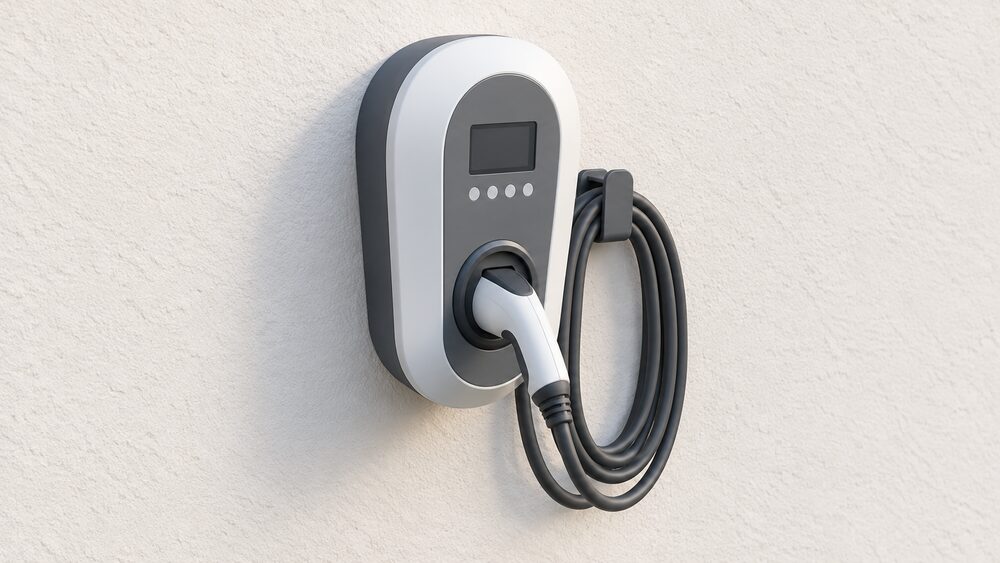 myenergi home EV chargersMaker of zappi, the UK's best-known solar-aware home charger; covers the full range, warranty and company status.
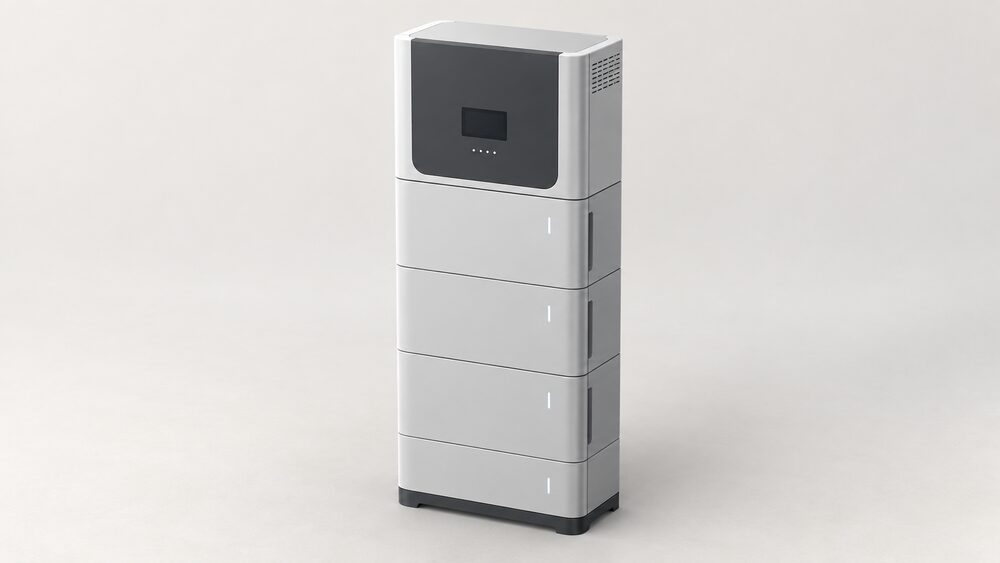 myenergi libbiHow much does a myenergi libbi cost, and how many units do you need to run a typical home?
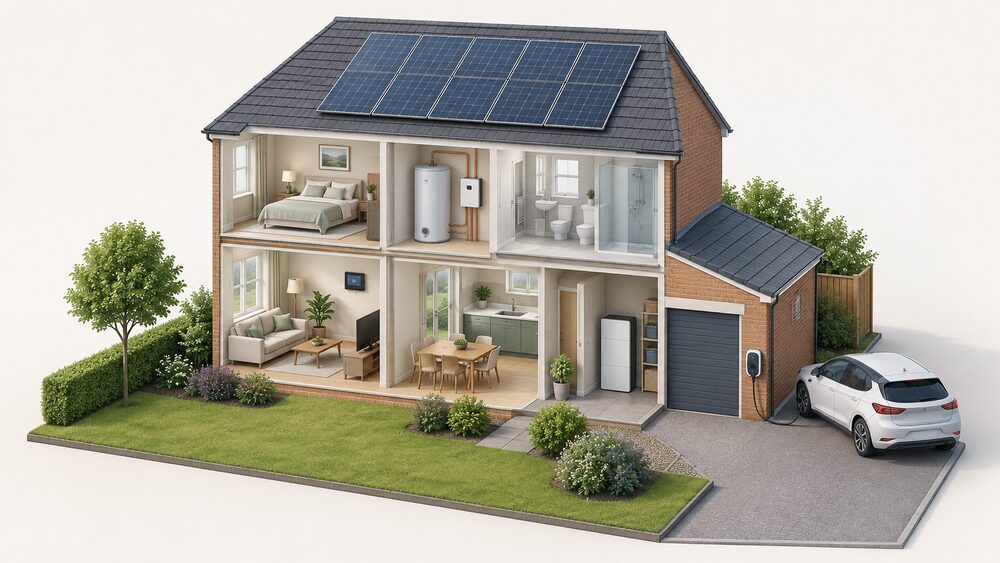 MyenergiMyenergi is a British company making home energy kit in Lincolnshire, best known for the zappi car charger.
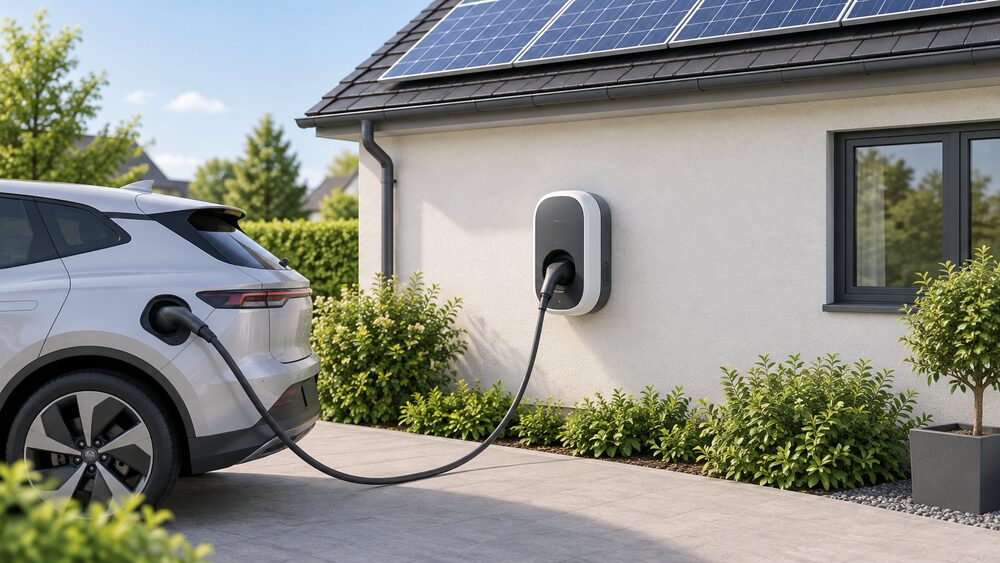 Zappi solar-aware EV chargerThe myenergi zappi is a UK-made solar-aware home EV charger sold in 7kW single-phase and 22kW three-phase forms, with ECO and ECO+ modes that divert surplus solar or wind generation into the car.