
In this guide
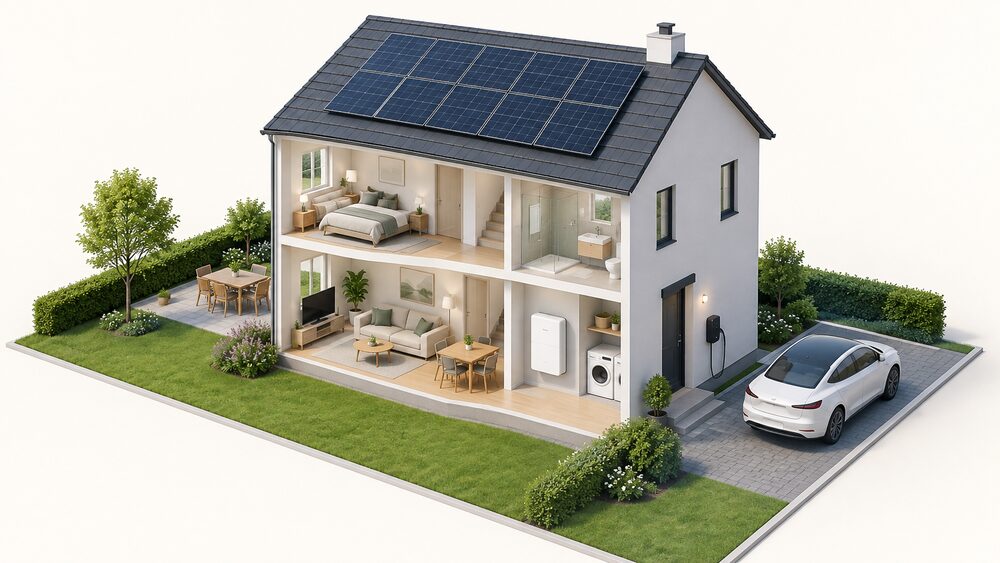
Tesla sells one home battery in the UK, the Powerwall 3, and one home charging product line, the Wall Connector. The Powerwall 3 is a 13.5 kWh unit with a built-in solar inverter, up to 11.04 kW of continuous output and a 10 year warranty with unlimited cycles1. It works with or without solar panels, and can store grid electricity, so a household without a roof array can still buy one2.
The commercial picture is less tidy than the specification. There is no single published UK price: independent guidance in May 2026 lists a Tesla Powerwall at £6,200 excluding installation3, while maker guidance in July 2026 puts a Powerwall 3 at around £6,700 to £7,600 per battery unit depending on installation requirements4. A rebate of £375 per Powerwall 3 or Powerwall 3 Expansion applies, claimable for up to two units per installation address, a maximum of £7505.
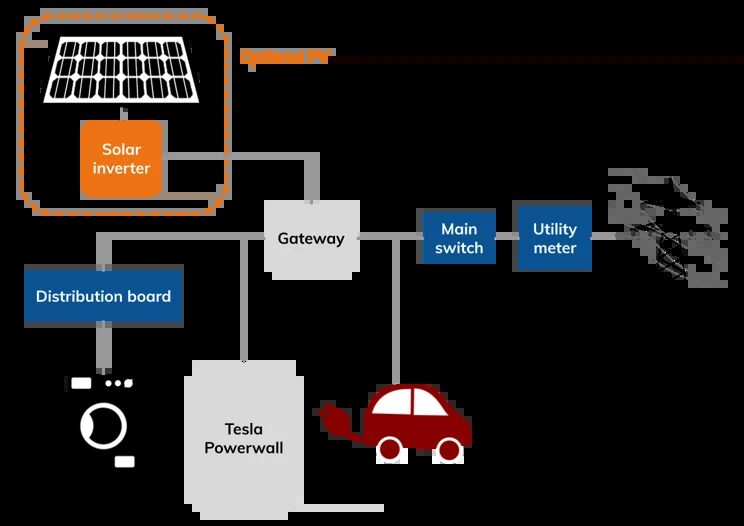
What the Powerwall does for independence is real but partial. It shifts when a home draws from the grid, and it keeps essential circuits running when the grid fails, but the household remains connected to a distribution network and, for grid charging, to a supplier. One measured case study found a Powerwall 3 system covering 56% of a home's electricity needs over a year6.
Tesla's home energy range: what a UK household can buy
The UK-facing range is narrow by comparison with the inverter and battery brands that fill the market. Tesla's home energy products sold here are the Powerwall 3 battery and the Wall Connector for electric vehicle charging. The Powerwall 2, which had been selling in the UK for over six years as of June 2024, is superseded by the Powerwall 3 and the two cannot be combined in the same system11.
Tesla positions the Powerwall for UK homeowners with solar panels looking to store and use their own energy, for homes prone to power cuts, and for households aiming to cut electricity costs through peak rate optimisation12. The suitability list is broader still: homes with or planning solar panels, those seeking lower bills, backup power during outages, control over energy use, or sustainability13.
Sizing guidance from a maker press release puts a 3 to 4 bedroom family home with typical daily use of 7 to 12 kWh in the 10 kWh to 13.5 kWh bracket, which is one Powerwall 314. A large home or a home with an EV, at 10 to 20+ kWh of daily use, is placed in the 13.5 kWh to 20+ kWh bracket14. The Powerwall 3 is modular up to 94.5 kWh in total across seven units, and additional units and expansion packs can be mounted to the front of a Powerwall 3, stacked up to 216kWh2.
For a household comparing this against the wider field, the home battery storage manufacturers page sets out the alternatives, and Tesla Powerwall vs Sigenergy SigenStor sets Powerwall against its closest all-in-one rival.

Powerwall 3: capacity, output and specifications
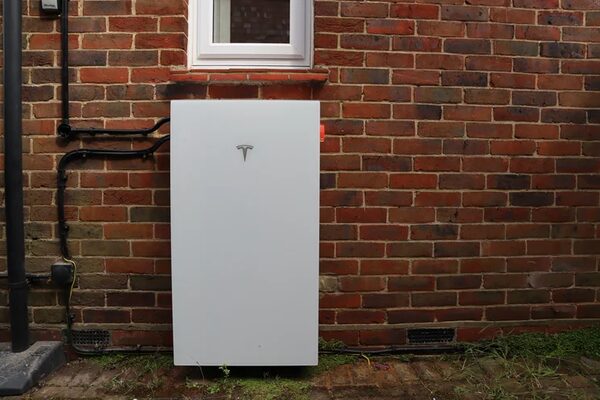
The headline figure is 13.5 kWh, and it is consistent across sources: the Powerwall 3 has a nominal capacity of 13.5 kWh per unit, and 13.5 kWh of usable storage8. The Powerwall 3 Expansion carries 13.5 kWh of usable battery energy7. The warranty describes the unit as having an energy capacity of 13.5 kWh on its initial installation date10.
Output is where the Powerwall 3 departs most sharply from its predecessor. Continuous power is 11.04 kW, against 5 kW for the Powerwall 2, and load start capacity is 185 A against 106 A11. The Powerwall 2 datasheet gives real power maximum continuous of 3.68kW/5kW for charge and discharge16. One maker guidance page states peak power of up to 11.04 kW4; a maker product page describes 11kW of discharge capacity2.
| Specification | Powerwall 3 | Powerwall 2 |
|---|---|---|
| Usable capacity | 13.5 kWh8 | 13.5 kWh11 |
| Continuous output | 11.04 kW8 | 3.68kW/5kW charge and discharge16 |
| Load start capacity | 185 A11 | 106 A11 |
| Solar inverter | Built in2 | Separate inverter required9 |
| Warranty | 10 years, unlimited cycles17 | 10 years16 |
Mounting is flexible: internal or external, wall-mounted or floor-mounted17. The unit does not accept a generator connection17. The Powerwall 2 datasheet describes worldwide grid connection compatibility16.
Efficiency and round-trip losses in practice
Round-trip efficiency for the Powerwall 2 is stated as over 90%9. Maker guidance for the Powerwall 3 gives efficiency of up to 97%4. These are not the same measurement, and the difference matters: a round-trip figure accounts for energy lost on the way in and on the way out, while a headline efficiency figure may describe a narrower conversion stage. Neither figure is a guarantee of what a particular installation delivers, because losses depend on how the battery is cycled, the ambient temperature and the load profile.
The warranty sets a floor rather than a ceiling. It states 80% energy retention at 10 years following the initial installation date, expressed as a percentage of 13.5 kWh rated capacity, and specifies 37.8 MWh of aggregate throughput measured at the battery AC output10. Unlimited cycles are permitted within that term10.
What this means in practice is that a household should expect the battery to hold most, not all, of its capacity across a decade, and to lose a slice of every kilowatt hour that passes through it. The value case rests on the price difference between the electricity stored and the electricity displaced. One measured case study system delivered over £1,800 in total value in year one under a time-of-use configuration6. That is a single home's result, not a forecast, and it depends on the tariff and the household's pattern of use.
Buying direct from Tesla versus an independent installer
Tesla sells the Powerwall direct, and independent guidance lists it as available direct from Tesla3. Installation, however, runs through certified installers. All quotes include installation by Tesla-certified engineers, and the installer named on the product page is described as a Tesla certified installer1. One UK installer, Good Energy, holds Tesla Powerwall Premium-Certified Installer status, a distinction held by just 3% of UK Tesla installers5.
The certification requirement is not only a manufacturer's preference. Installers under UK Government schemes must be TrustMark registered and/or Microgeneration Certification Scheme certified18. In Wales, Green Homes Wales requires installers to be registered with TrustMark as an approved PAS 2030 installer, or registered with TrustMark and certified with the Microgeneration Certification Scheme where the installation involves a low carbon technology such as a heat pump or solar panels19. Comparable self-certification schemes require registered installers to comply with detailed technical requirements, with installations subject to regular independent inspections and audits to ensure work complies with the Building Regulations20. Independent guidance on solid wall insulation makes the same point in plainer terms: it should be fitted by a professional installer21.
For the wider question of how manufacturer installer networks work, the manufacturer installer networks page covers accredited schemes, and buying direct from manufacturers explains the routes.
Wall Connector: charging an EV from the same system
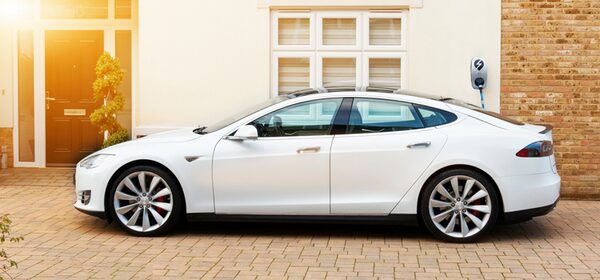
The Wall Connector is Tesla's home charging unit, and the Powerwall 3 lists EV charger support among its capabilities11. The pairing is the point: a home with a Powerwall and an electric vehicle can charge the car from stored energy rather than from the grid at peak times, which is the same load-shifting logic that applies to any other appliance.
The wider charging context is favourable. The UK EV charging network has almost one charger for every EV22. That is a network figure, not a household one, and it says nothing about the cost of charging at home or the capacity of a particular supply.
Two practical constraints sit alongside the battery. The Powerwall 3 does not accept a generator connection17, so a petrol or diesel standby generator cannot be tied into the system. And the Powerwall warranty states plainly that the unit is not intended for use as a primary or backup power source for life-support systems, other medical equipment, or any other use where product failure could lead to injury to persons or loss of life or catastrophic property damage10. A household with a medical dependency on electricity should read that clause before treating a Powerwall as a substitute for a network supply.
"YOUR POWERWALL IS NOT INTENDED FOR USE AS A PRIMARY OR BACKUP POWER SOURCE FOR LIFE-SUPPORT SYSTEMS, OTHER MEDICAL EQUIPMENT, OR ANY OTHER USE WHERE PRODUCT FAILURE COULD LEAD TO INJURY TO PERSONS OR LOSS OF LIFE OR CATASTROPHIC PROPERTY DAMAGE."
What a Powerwall means for household energy independence
The independence a Powerwall delivers is temporal, not structural. It changes when a home draws from the grid and whether it draws at all during an outage, but the home remains connected to a distribution network and, for grid charging, to a supplier. The battery does not generate. It stores.
Backup is the clearest gain. If the grid goes down, the Powerwall instantly switches to stored energy, keeping essential appliances running12. During a power cut a household can use up to 5kW of power at any one time, and a fully charged 13.5kWh Powerwall could last three or more days off-grid23. One case study home reports that a full battery could last several days24. Those figures assume a modest load; a home running heating, cooking and an EV will exhaust the same battery far sooner.
The measured limit is worth stating plainly. In a one-year case study, the system covered only 56% of the home's electricity needs6. That is a majority, but it is not independence, and it is one home's result under one configuration.
Control sits with the manufacturer's app. The Tesla Mobile App is the customer interface, and it provides real-time tracking of energy generated, stored and used, with insights and adjustable settings13. That is a dependence on a working internet connection, Tesla's servers and a supported app. The warranty makes the connection explicit: if the Powerwall is not connected to the internet for an extended period or has not been registered with Tesla, Tesla may not be able to honour the full ten year warranty, but will always honour the warranty for at least four years following first installation10.
The manufacturers and household energy independence page sets out how storage fits the wider picture, and firmware updates and product support life covers what happens to a battery when app support ends.
Warranty, registration and fault reporting
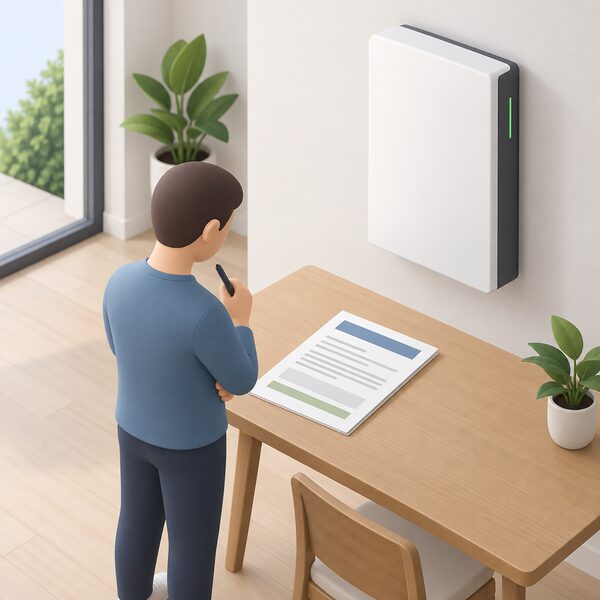
The Powerwall 3 carries a 10 year warranty with unlimited cycles17. Independent guidance lists the Powerwall at 13.5kWh with a 10 year term3, and the Powerwall 2 datasheet gives 10 years16. The warranty document, effective 27 January 2025, sets out the conditions10.
Registration and connection are conditions, not formalities. The warranty states that if the Powerwall is not connected to the internet for an extended period or has not been registered with Tesla, Tesla may not be able to honour the full ten year warranty, but will always honour the warranty for at least four years following the date the Powerwall was installed for the first time10.
A claim must include proof of the original purchase and any subsequent transfers of ownership, a description of the alleged defect, and the Powerwall's serial number and original installation date10. Before returning any product, an RMA number must be obtained from Tesla by submitting a Service Request Form10. Claims go to www.tesla.com/support/powerwall, by email to powerwallsupport@tesla.com, or by post to Burgemeester Stramanweg 122, 1101 EN, Amsterdam, Netherlands, marked for Powerwall Warranty Claims; the UK telephone number given is +44 800 098 806410.
Tesla's general remedy is to repair the Powerwall using new or refurbished parts, replace it with an equivalent product new or refurbished, or refund the market price of an equivalent product at the time of the claim10. UK consumers who purchased directly from Tesla have additional rights: the right to reject the Powerwall and either obtain a full refund or request Tesla to repair it, with no refurbished parts permitted for that repair, and a further rejection right if Tesla fails to repair10. Nothing in the warranty limits or excludes Tesla's liability for death or personal injury resulting from negligence10.
For the general mechanics, see registering a warranty and keeping it valid and manufacturer warranties on home energy equipment.
SolarCity and how Tesla came to make home batteries
Tesla's entry into home energy did not begin with a battery. SolarCity was acquired by Tesla in an all-stock deal in the fourth quarter of 2016, which is how a car maker came to sit inside the residential solar business25. The Powerwall line followed from that position: a battery sold to homes that were already generating their own electricity, and increasingly to homes that were not.
The product has moved with the market. The Powerwall 2 was AC-coupled and required a separate solar inverter9. The Powerwall 3 has a built-in solar inverter, more power output and better backup performance2. That integration is the commercial logic: fewer boxes on the wall, less labour, and one manufacturer's app rather than two.
The UK context has shifted too. Solar Energy UK argues there is potential for producing transformers, inverters and other components domestically26, and battery storage is credited in official guidance with maximising a household's use of solar generated electricity27. Plug-in solar panels are compatible with UK domestic electrical systems and are already being developed for the UK market28. None of that changes what a Powerwall is, but it explains why the category is growing around it.
For the wider field, the home battery storage manufacturers page covers the brands sold in the UK, and who owns which energy brand maps the parent groups.
Sources29 cited
- Tesla Powerwall UK, Tesla Powerwall UK, 2026
- Powerwall 3, Tesla Powerwall UK, 2026
- Solar panel battery storage, Which?, 14 May 2026
- The best solar batteries explained, Good Energy, 14 July 2026
- How to claim the Tesla Powerwall rebate, Good Energy, 10 March 2026
- Solar panel payback period, Spirit Energy, 19 June 2026
- Powerwall 3 Datasheet EN-UK, Tesla, 2026
- Hampshire Tesla Powerwall 3 case study, Spirit Energy, 23 April 2026
- Tesla battery solar, Spirit Energy, 2026
- Tesla Powerwall 3 Warranty, Tesla, 27 January 2025
- Tesla Powerwall 2 vs 3, Spirit Energy, 18 June 2024
- How Tesla Powerwall works in the UK, Tesla Powerwall UK, 2026
- Is Tesla Powerwall right for your home?, Tesla Powerwall UK, 2026
- Tesla and Sunsynk battery promo, E.ON Next, 17 September 2026
- Best solar batteries, SolaX Power, 12 May 2026
- Powerwall 2 AC Datasheet EN-GB, Tesla, 2026
- Residential solar energy storage overview, Spirit Energy, 2026
- Building for 2050: low cost, low carbon homes, UK Parliament, 13 May 2026
- Green Homes Wales, Development Bank of Wales, 17 September 2026
- CWISC and CIGA competent persons scheme, CIGA, 20 September 2026
- Energy saving upgrades for home renovation, Energy Saving Trust, 5 May 2026
- EV charging network can deliver half a billion miles of motoring every day, ChargeUK, 15 July 2024
- Steve and Gwen's solar panel and Tesla Powerwall review, Good Energy, 7 September 2026
- Solar panel myths busted, Good Energy, 10 July 2026
- Solar market insight report Q4 2016, REC Group, 2016
- Ignore the doubters: the UK is seizing the solar opportunity, Solar Energy UK, 1 July 2025
- Building for 2050, UK Government, 5 December 2022
- Plug-in solar explained, Low Carbon Hub, 9 July 2026
- Industry welcomes plug-in solar progress, Solar Energy UK, 16 June 2026
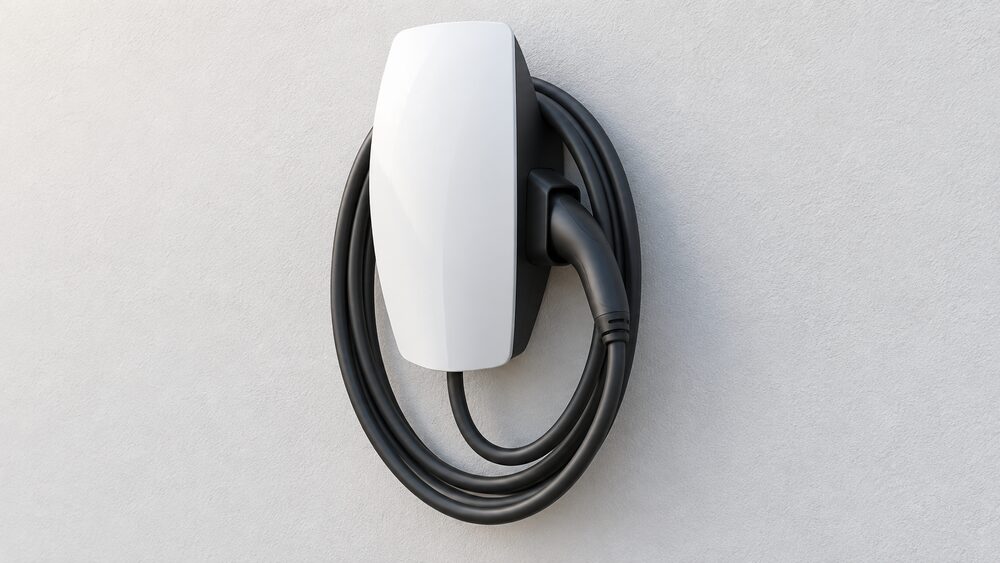 Tesla Gen 3 Wall ConnectorHow fast will a Tesla Gen 3 Wall Connector charge your car at home, and will it work with a non-Tesla electric car?
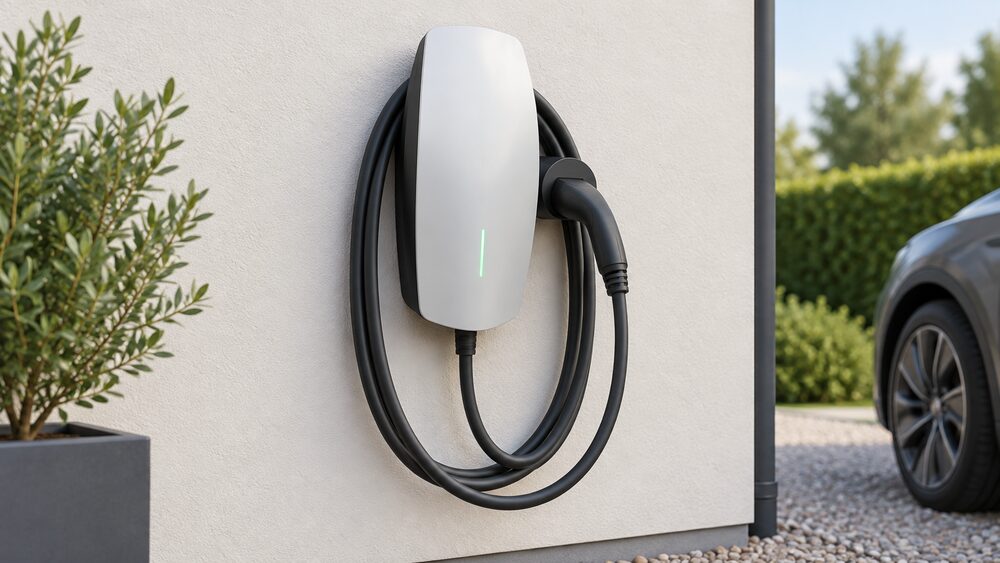 Tesla Wall Connector for home chargingCan you use a Tesla Wall Connector if your car is not a Tesla?
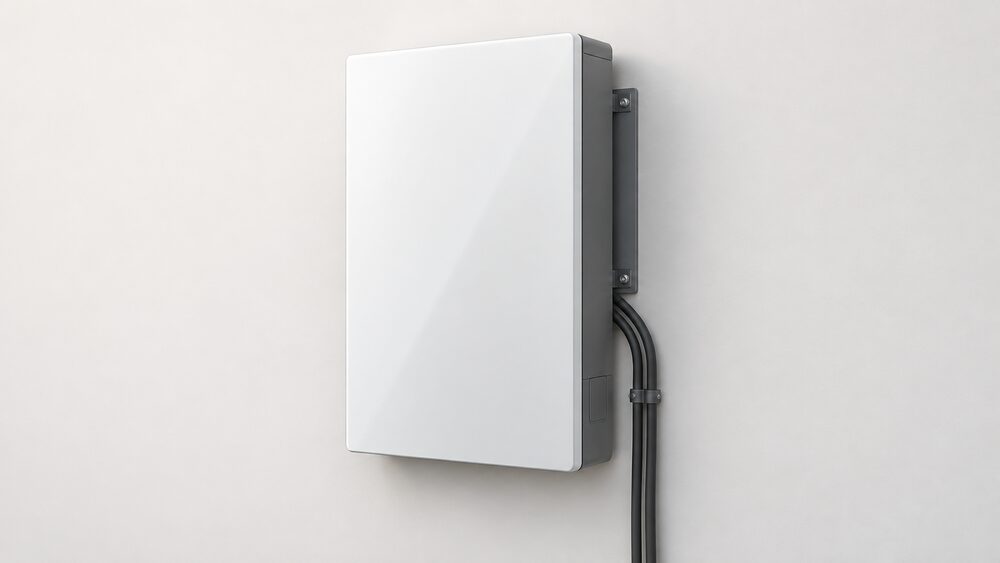 Tesla Home BatteriesHow much does a Tesla Powerwall cost to buy and install in the UK, and what does the warranty actually cover?
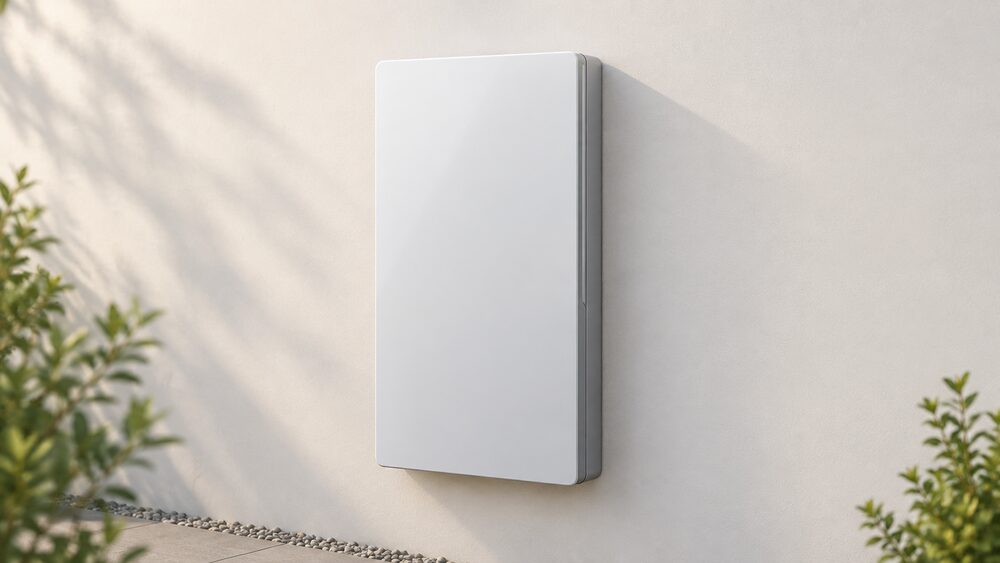 Tesla Powerwall 3How much does a Tesla Powerwall 3 cost installed in the UK, and what does it actually power in a blackout?
 The Tesla Energy PlanCan you still get the Tesla Energy Plan with a Powerwall, and what does it pay for power you send back?