
In this comparison
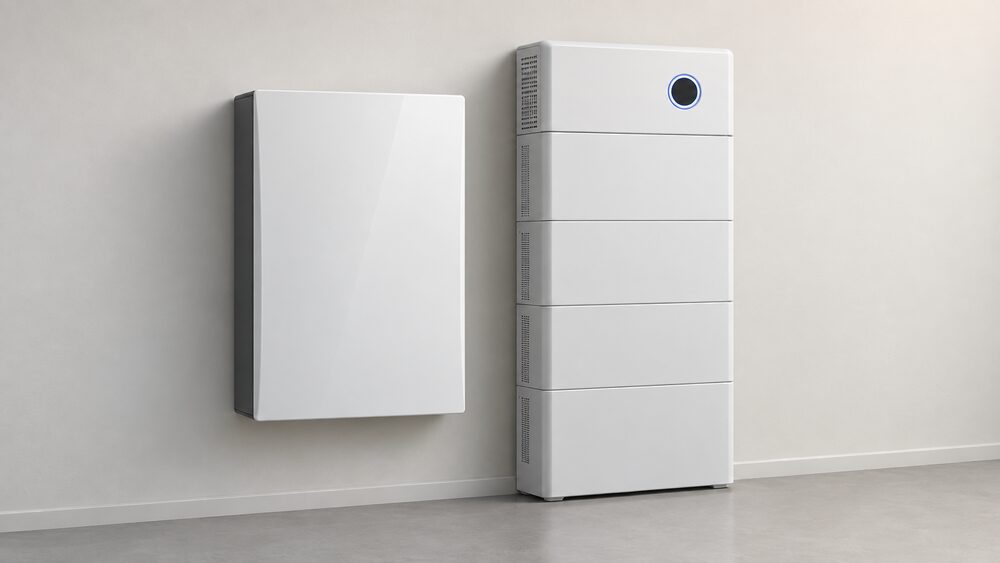
Tesla Powerwall 3 and Sigenergy SigenStor are the two all-in-one home batteries UK householders most often weigh against each other, and they answer the same question in different ways. The Powerwall 3 is a single 13.5 kWh unit with a built-in solar inverter, expandable to a stated total of 54 kWh across four packs1. The SigenStor is a modular stack: battery modules of 6 kWh or 9 kWh, up to six connected together, with the energy controller and gateway sized to the home2.
The headline numbers diverge sharply. Tesla's own datasheet gives 89% solar-to-battery-to-home efficiency for the Powerwall 34, while Sigenergy states up to 98% efficiency and up to 100% usable depth of discharge for the SigenStor2. Both are maker figures, and they are not measuring the same thing: one is a round-trip figure for a complete system, the other a maximum conversion efficiency for the controller. Read side by side without that context, the gap looks larger than it is.
For a household, the practical split is this. The Powerwall 3 is a sealed, certified-installer product with a published installed price of £7,495 including basic installation at 0% VAT5. The SigenStor is a configurable platform, sold through installers, with a maker-stated price range of £4,000 to £7,0002. Neither is a decision about brand preference so much as about how much capacity, output and control a home actually needs.
At a glance: Powerwall 3 vs SigenStor
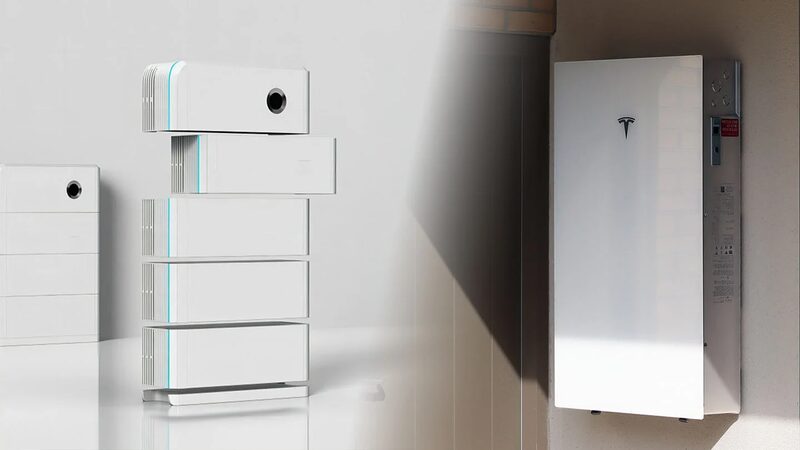
The two systems sit in the same market but are built on different assumptions. Tesla's Powerwall 3 is a single integrated unit: the battery, the inverter and the controls arrive together, and the maker's own product page describes it as having more power output, a built-in solar inverter and better backup performance than the Powerwall 2 it replaces1. Tesla states it works with or without solar panels, and can store grid electricity, which makes it viable for a home that has not yet added panels6.
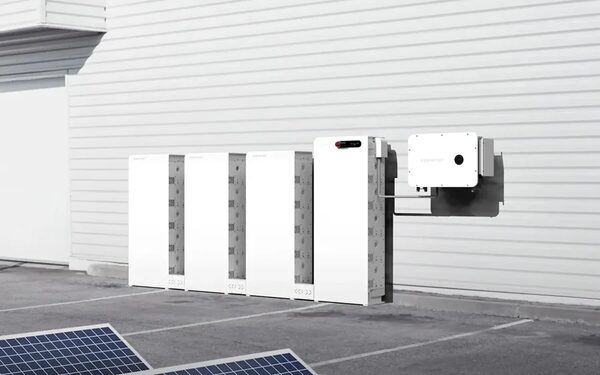
Sigenergy's SigenStor is a stack. The energy controller comes in 5.0 to 12.0 kW three-phase low voltage versions, the battery modules are 6 kWh or 9 kWh each, and up to six modules can be connected together3. The maker describes the platform as offering more granular and higher scaling options, and full three-phase support7. A Sigen Energy Gateway is required for the system, and the Home Three Phase and HomePro Three Phase gateways each support up to one SigenStor8.
The newer SigenStor Neo is described by Sigenergy as its next-generation, all-in-one residential energy storage system, with a modular design, a backup port and 200% peak power output capacity9. It connects to existing solar10.
| Tesla Powerwall 3 | Sigenergy SigenStor | |
|---|---|---|
| Architecture | Single integrated unit1 | Modular stack, controller plus battery modules2 |
| Solar inverter | Built in6 | Integrated solar inverter listed2 |
| Three-phase | Not stated | Full three-phase support stated7 |
| Gateway required | Not applicable | Sigen Energy Gateway required8 |
| Newer variant | Powerwall 3 Expansion, compatible only with Powerwall 34 | SigenStor Neo, all-in-one with backup port9 |
Capacity and scalability: 13.5 kWh units versus modular stacking
Capacity is where the two designs part company most clearly. The Powerwall 3 is a fixed 13.5 kWh unit, and Tesla states that up to three additional packs can be installed for a total of 54 kWh, with no additional grid permission needed for the expansion packs1. The Powerwall 3 Expansion is compatible only with the Powerwall 34. Independent guidance from Which? also gives the Powerwall at 13.5 kWh with a 10-year warranty11.
The SigenStor scales in smaller steps. Sigenergy's guidance gives battery modules of 6 kWh or 9 kWh, with up to six modules connected together2. Spirit Energy describes the platform as providing modular storage up to 54 kWh, multiple inverter sizes and EV DC charging capability12. That means a household can start with a single module and add capacity later without replacing the whole system, which is a different proposition from buying a second 13.5 kWh Powerwall.
Sigenergy gives two capacity figures at different levels. Its guidance states 6 kWh or 9 kWh per battery module, with up to 6 modules connected together, while a product page describes modular storage up to 54 kWh2. The two fit together: six 9 kWh modules make 54 kWh, although neither figure is published alongside the other as a stated sum. The per-module figure is the building block and 54 kWh is the top of the stack.
For energy independence, the difference matters at the margins. A modular system lets a household match capacity to actual consumption and grow it as an EV or a heat pump arrives. A fixed unit is simpler to specify and to quote, and Tesla's stated 54 kWh ceiling is high enough for most homes, but each step up is a full additional unit rather than a module.
Power output and backup: what each delivers in a cut
Backup is the feature most households are really buying, and both makers make claims that need reading carefully. Tesla states that during an outage the Powerwall 3 automatically switches to stored energy, keeping essential appliances such as a refrigerator, heating system or lights running, and that unlike a traditional generator it operates quietly and does not require fuel13. On whole-home powering, Tesla's answer is qualified: yes, depending on how much energy the home uses, and one or more Powerwalls may be needed1.
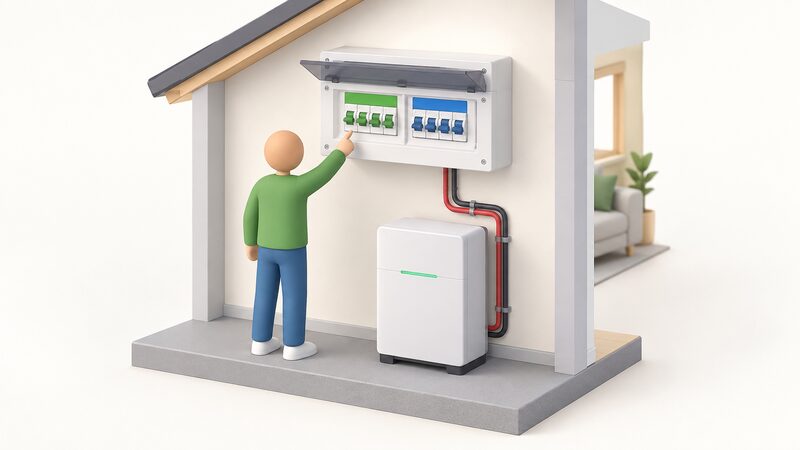
Sigenergy's approach is more granular. The maker states that the SigenStor, when paired with the Sigen Gateway, offers seamless switching between on-grid and off-grid modes, ensuring uninterrupted power supply even during prolonged outages, and that separate ports for critical and non-critical loads let users prioritise essential appliances such as refrigerators7. The SigenStor calculator returns backup energy, backup power and surge power figures for the home summary, and the system requires the Sigen Energy Gateway8. The SigenStor Neo adds a dedicated backup port10.
On raw output, Sigenergy's guidance gives up to 12 kW peak power for the system, system dependent, and up to 4.6 kW per module2. A Sigenergy press release describes a 250 kW power output in an on-grid commercial and industrial configuration of up to ten units, which is a different scale of installation entirely and not a residential figure14. Tesla's UK pages give no single agreed peak output number for the Powerwall 3: published discharge figures differ, at up to 11.04 kW and at 11 kW.
Efficiency: 89% round trip versus up to 98%
Efficiency is the most misread comparison between these two products, because the published figures measure different things. Tesla's UK datasheet gives the Powerwall 3 a solar-to-battery-to-home or grid efficiency of 89%4. Sigenergy's guidance states up to 98% efficiency for the SigenStor, with up to 100% usable depth of discharge2. Sigenergy's controller datasheet gives maximum efficiencies of 98.1%, 98.2%, 98.3% and 98.4% across different three-phase models15.
The 89% figure is a round-trip figure: energy in from solar, through the battery, back out to the home or grid. The 98% figures are maximum conversion efficiencies for the energy controller, which is a component-level measurement rather than a whole-system round trip. Tesla also gives its integrated solar inverter a 97.5% efficiency2. Placed beside each other, the inverter and controller figures are close; the round-trip figure is the one that reflects what a household actually gets back.
Depth of discharge is stated as up to 100% usable capacity by Sigenergy, and up to 100% for the Powerwall 3 in the same guidance2. Older figures in circulation are lower: a Powerwall 2 round-trip efficiency of 90% appears in a 2025 product page16. Those are different products and different measurements, and they are not a like-for-like comparison with either system here.
What this means in practice is that the efficiency gap between the two is smaller than the headline numbers suggest. A household choosing between them on efficiency alone would be comparing a whole-system round trip against a component maximum. The more useful question is how much of the stored energy the household can actually use, and both makers state up to 100% usable capacity.
Price and installed cost in the UK
Tesla publishes a UK installed price: £7,495 including the unit and basic installation, with 0% VAT5. The same page notes that while this includes the unit and basic installation, there may be additional costs based on the home setup or electrical upgrades, and that Powerwall works with an existing solar setup5. Tesla's UK site states that all quotes include installation by Tesla-certified engineers1.
Sigenergy's guidance gives a price range of £4,000 to £7,000 for the SigenStor2. That is a range rather than a fixed figure, and it reflects the modular design: a single-module system sits at the bottom, a larger stack at the top. Independent guidance from Which? gives the Tesla Powerwall at £6,200 excluding installation11, and a UK guide puts the Powerwall 3 at around £6,700 to £7,600 per battery unit depending on installation requirements2.
Distributor pricing for a Sigenergy SigenStor Energy Controller 12.0 SP is listed at both £1,524.06 and £1,828.87, depending on the listing2.

Smart features and app control: Tesla app versus mySigen
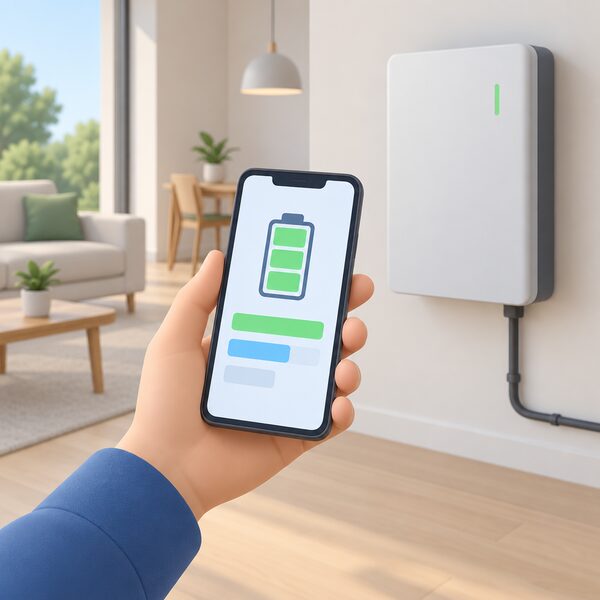
Both systems are app-controlled, and both depend on the maker's cloud for the features that make them smart. Tesla states that the Tesla app gives full control over the home's energy consumption, with real-time tracking of energy generated, stored and used, insights and adjustable settings, and that the app lets you manage the Powerwall from anywhere13. Tesla also states that the Powerwall 3 can automatically charge when electricity prices drop to low or negative rates overnight on smart tariffs, and can store low-cost electricity for when prices spike6.
Sigenergy's mySigen app covers solar panels, batteries, smart home devices, third-party equipment and Tigo optimizers17. All operations are accessible within the app, where smart loads are connected and operation modes and run times configured18. Loads can be controlled remotely and automated on time-of-use or AI schedules, and smart loads integrate with Shelly and the Sigen Gateway17. The Sigen Energy Gateway can be monitored and controlled through the app, including remote generator control8. The SigenMicro inverter feeds real-time solar production and consumption into the same app19.
The dependence is worth naming plainly. Tesla's warranty requires a reliable internet connection for the full 10-year term20. Sigenergy's warranty requires the equipment to be connected to the internet for remote firmware upgrades, and states that if it is disconnected for a month Sigenergy will notify the owner, with continued disconnection potentially meaning only a five-year warranty from first installation21. In both cases, the smart features and part of the warranty cover live in the cloud, not in the box on the wall.
Warranty and the small print that matters
Tesla's warranty position is straightforward but conditional. The Powerwall 3 carries a 10-year warranty, and to secure the full term it must be reliably connected to the internet to allow remote firmware upgrades from Tesla; if the connection is not established or is interrupted for an extended period and Tesla is unable to contact the owner, the warranty may be limited to 4 years20. Independent guidance also gives the Powerwall a 10-year warranty11.
Sigenergy's warranty terms are more detailed and carry more conditions. Sigenergy warrants that the battery system retains either 70% of usable energy for ten years, or a minimum throughput energy, whichever comes first21. The warranty starts on the earlier of the date the product is installed, activated and registered on site, or the 180th calendar day after shipment if it has not been installed, activated and registered within that window21. Claims must be made within 30 days from the failure date, otherwise Sigenergy treats the right to claim as abandoned21. Repairs or replacements carry the remaining warranty period or six months from the date of repair or replacement, whichever is greater21. Sigenergy's liability is limited to the purchase value of the battery system21.
There are exclusions worth knowing. Travel and accommodation fees for on-site service, costs related to the claimant's employees, and other costs including compensation for direct or indirect damages or loss of electrical power generated during downtime are excluded21. Vulnerable parts such as the light strips in the decorative cover carry a 2-year warranty rather than the main term21. Sigenergy's guidance summarises the warranty as typically around 10 years2, and the SigenMicro inverter carries 15 years19.
Where each system leaves a household
Both products reduce dependence on the grid at the margin, and both leave a substantial dependence in place. The Powerwall 3 stores energy from solar panels or the grid, charges from the grid during off-peak hours, and can sell stored energy back when prices surge6. Tesla claims it can cut bills by up to 50%, which is a maker claim rather than an independent finding1. The SigenStor offers backup protection alongside the Powerwall 3 and the SolarEdge battery, according to independent guidance23, and Sigenergy states the system can provide backup protection23.
What remains is the same for both. Each depends on a manufacturer's cloud for monitoring, scheduling and firmware, and each warranty is conditional on an internet connection20. Each depends on a certified installer network for commissioning and service. Sigenergy is headquartered in Shanghai and listed as 06656.HK, with 172 distributors and more than 17,600 registered installers worldwide by the end of 202524. Tesla's Powerwall line descends from the SolarCity acquisition in 2016, and the UK installation route runs through certified Tesla Powerwall 3 installers1.
For a household weighing the two, the documented differences are these: a fixed 13.5 kWh unit with a published installed price and a 10-year warranty conditional on connectivity, against a modular stack with per-module capacity, stated three-phase support, a wider price range and a warranty with a 30-day claim deadline and a 70% retention guarantee. Neither is a route to full independence from the grid or from a manufacturer's software.
Sources24 cited
- Powerwall 3 product page, tesla-powerwall.co.uk, 2026-07-01
- SigenStor product page, Sigenergy, 2026-07-14
- SigenStor EC datasheet, Sigenergy, 2026-09-17
- Powerwall 3 Datasheet EN-UK, Tesla Energy Library, 2026-09-17
- How much does it cost to install a Tesla Powerwall, tesla-powerwall.co.uk, 2026-09-17
- Tesla Powerwall UK, tesla-powerwall.co.uk, 2026-09-14
- What is Sigenergy SigenStor, Spirit Energy, 2025-02-06
- Sigen Energy Gateway, Sigenergy, 2026-09-17
- Sigenergy company news, Sigenergy, 2026-06-25
- SigenStor Neo, Sigenergy, 2026-09-17
- Solar panel battery storage, Which?, 2026-05-14
- Our storage systems, Spirit Energy, 2026
- Is Tesla Powerwall right for your home: 5 questions to ask, tesla-powerwall.co.uk, 2026-09-17
- Sigenergy company news, Sigenergy, 2026-06-23
- SigenStor EC three-phase datasheet, Sigenergy, 2026-09-17
- Best solar battery storage UK, EcoFlow, 2025-04-30
- mySigen app, Sigenergy, 2026-09-17
- Sigenergy smart home, Sigenergy, 2026-09-20
- SigenMicro inverter, Sigenergy, 2026-09-17
- Powerwall 3 Owner Manual, Tesla Energy Library, 2026-09-17
- SigenStor Factory Limited Warranty, Sigenergy, 2025-04-29
- Product safety report: Sigenergy SigenStor Energy Controller with quick connect AC plug, GOV.UK, 2026-04-23
- Are solar batteries worth it, Good Energy, 2026-06-29
- Sigenergy company news, Sigenergy, 2025-12-31
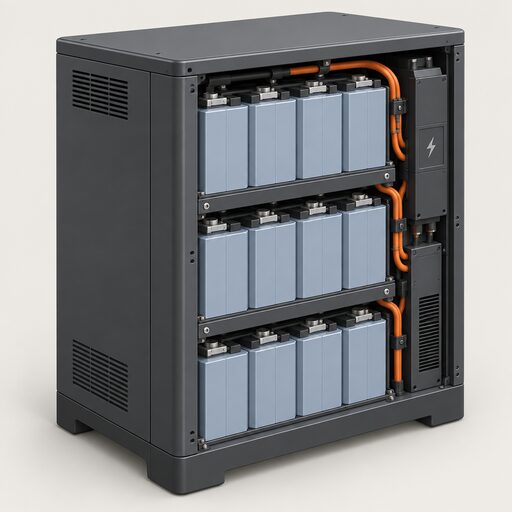 Sodium-Ion Home BatteriesSodium-ion cells are being offered for home storage in the UK, but almost all published performance data still comes from makers.
 Battery ChemistriesWhich home battery lasts longest, and is it the safest?
 Home Battery ManufacturersWho makes the home batteries sold in the UK, and what does a battery bought direct from a UK brand actually cost and cover?
 Home Battery Install StatisticsHow many homes in the UK actually have a battery, and is that number growing quickly?
 The Full Brands GuideWhich boiler, heat pump or solar brand can you trust, and who actually owns it?
 The Full New Technology GuideWhich new home energy ideas can you actually buy in the UK right now, and which are still stuck in trials?