In this guide
Tigo Energy is the main independent maker of module-level power electronics that UK householders meet alongside their panels. Its TS4 devices sit behind individual solar modules and, depending on the model, optimise output, report module-level data and provide rapid shutdown. The company describes itself as the worldwide leader in Flex MLPE, designing solar power conversion and storage products1.
The range splits into two families by module rating. The TS4-A series is rated to 725W per module, and the TS4-X series to 800W2. Tigo states its optimisers work with any solar modules up to 700W and are compatible with any panel and inverter, while also saying they work with most inverters, which is a narrower claim than the first3. The TS4-X-O, TS4-X-S and TS4-X-F are each described as fully compatible with thousands of inverter models from more than 50 inverter brands5.
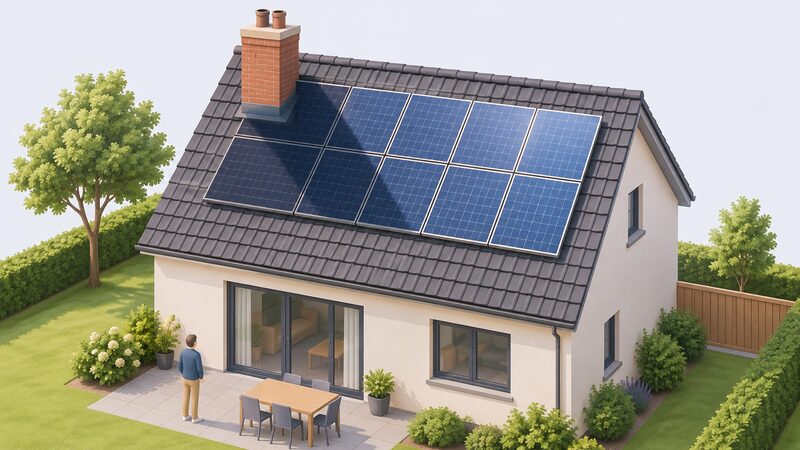
For a household, the appeal is specific: a shaded or mismatched panel drags down the rest of a string, and module-level electronics break that link. The limit is equally specific. Optimisers reduce system losses but individual panel losses still affect performance, and a heavily shaded roof may not suit solar at all8.
What Tigo optimisers do: module-level power electronics explained
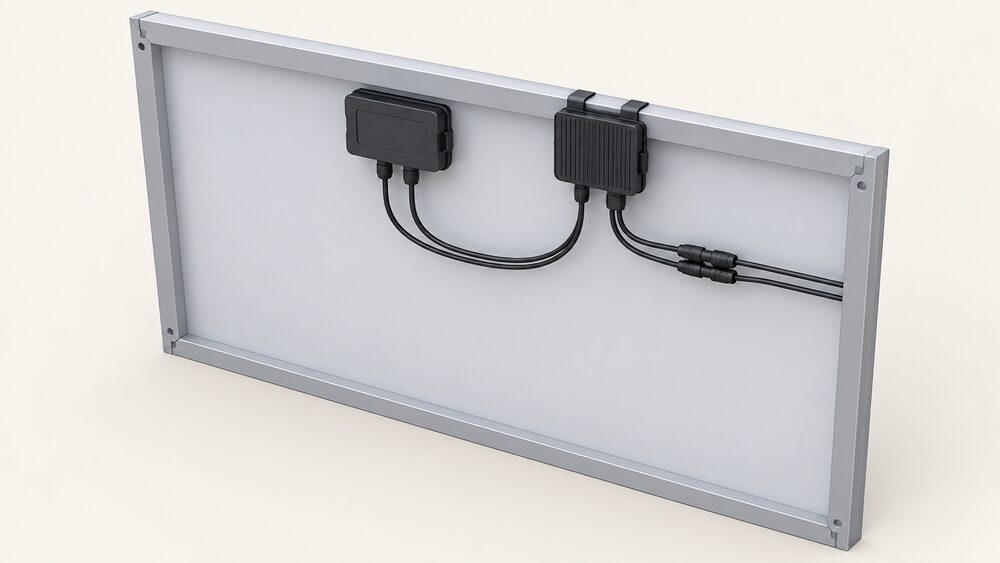
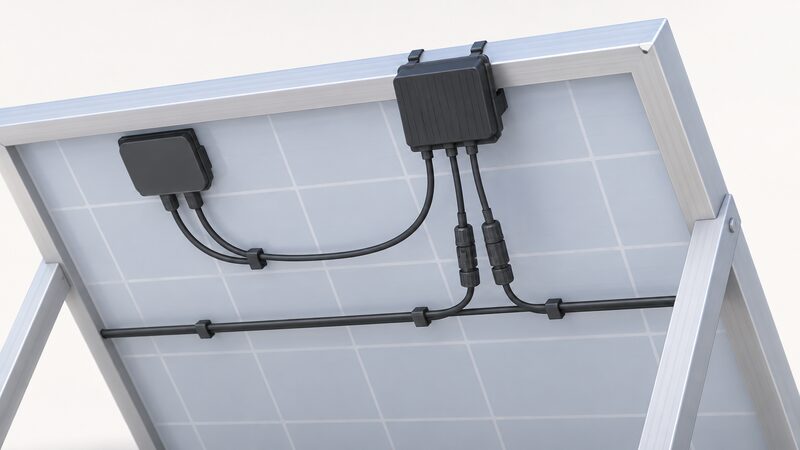
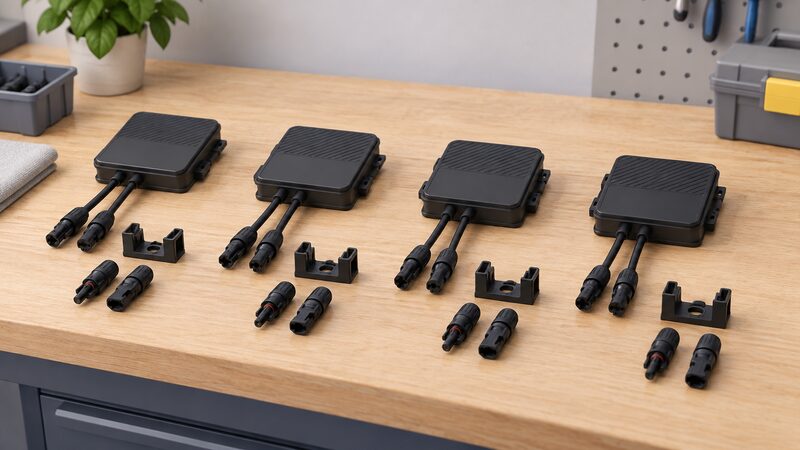
A power optimiser is a small device fitted at the back of a solar panel, between the module and the inverter. Tigo's TS4 module-level power electronics can support functions such as optimisation and module-level monitoring, depending on the product and the system design14. That conditional wording matters: not every TS4 device does everything, and what a household actually gets depends on which model is specified and how the system is put together.
The core function is power management at the module level15. In a conventional string, panels are wired in series, so the weakest panel sets the current for the whole string. An optimiser adjusts the output of each module independently, reducing the impact of shading, soiling or module degradation15. Tigo's own description of the TS4-X-O is that patented technology maximises energy production and minimises the impacts of mismatch and shade on an array5.
Three functions recur across the range. Optimisation is the headline. Module-level monitoring is optional and depends on the system design4. Rapid shutdown, which reduces voltage at the modules for firefighter safety, is built into the TS4 devices and described by Tigo as meeting safety code requirements3. Electrical Safety First notes that some systems use microinverters or power-optimisers to limit power generation when a fault develops16.
The devices fit quickly onto panels without special brackets, which keeps the mechanical side of an installation simple4. What they do not do is change the fundamental relationship with the grid: an optimised system is still a grid-connected system, still exporting through a metered connection, and still dependent on an inverter to convert DC to usable AC.
Why output rises: independent panel performance in shade or mismatch
The case for optimisers rests on what shading does to a string. Independent guidance is that where shading is unavoidable, an installer might recommend microinverters or power optimisers, because these let each panel work independently, alongside trimming trees that cause partial shade17. That is the mechanism in plain terms: independence per panel, rather than one weak panel setting the ceiling for all of them.
How much that matters depends on the roof. Which? puts the ideal at 20% shading or less11. Bromley Council's guidance is blunter: if a roof is heavily shaded, solar panels may not be the most suitable option9. Between those two positions sits the case optimisers are sold for, a roof that is partly shaded for part of the day rather than shaded throughout.
Tigo's own case study describes TS4-A-O optimisers chosen to maximise production throughout the day and helping to minimise the impact of temporary shadings on the southern pitch18. That is a maker's account of its own installation, so it illustrates the intended use rather than proving a figure. Independent guidance from Renewables First is more measured: the use of optimisers will reduce the losses of the overall system, but individual panel losses will still affect performance8. An optimiser recovers what a string would otherwise lose to a weak module; it does not restore the output that module would have produced in full sun.
For a household, the practical reading is that optimisers are a mitigation, not a cure. They make a partly shaded roof more productive than it would otherwise be, and they make panel-level monitoring possible so the effect is visible. They do not turn a shaded roof into an unshaded one, and no figure in the material here quantifies the gain for a UK domestic array.
The TS4 range: TS4-A-O and Flex MLPE up to 700W
Tigo's TS4 devices divide by module rating and by function. The TS4-A family is rated to 725W per module and the TS4-X family to 800W2. Within that, the models differ in what they do and how many modules each unit serves.
| Device | Module rating | Function | Notes |
|---|---|---|---|
| TS4-A-O | up to 725W19 | Optimisation, monitoring, rapid shutdown19 | Predictive IV Technology; selective deployment19 |
| TS4-A-F | up to 725W1 | Rapid shutdown | 1 module to 1 TS4 configuration1 |
| TS4-A-2F | 700W per channel20 | Rapid shutdown | Single MLPE connects to 2 PV modules20 |
| TS4-X-O | up to 800W5 | Optimisation, monitoring, rapid shutdown5 | Patented mismatch and shade mitigation5 |
| TS4-X-S | up to 800W6 | Rapid shutdown | Compatible with 50+ inverter brands6 |
| TS4-X-F | up to 800W7 | Rapid shutdown | 25A Isc, 20A Imp7 |
The TS4-A-O is the model most householders will encounter, because it is the one that optimises. Tigo describes it as the higher performance optimiser with Predictive IV Technology, and as the only optimiser with selective deployment, meaning it can be fitted to some modules rather than all19. That matters commercially: on a roof where only one pitch is shaded, selective deployment avoids the cost of a device behind every panel.
The TS4-A-2F covers two modules with one unit, at 700W per channel20. Tigo's own documentation gives a conflicting figure for the same device, up to 1400W, and the two are not reconciled, so the per-channel rating is the one to design against. The TS4-X family extends the ceiling to 800W, which Tigo says accommodates the higher wattage demands of modern solar installations3. Tigo announced the 800Wp figure for its TS4-X Flex MLPE in September 202421.
Panels with factory-fitted Tigo optimisers: the UKSOL route
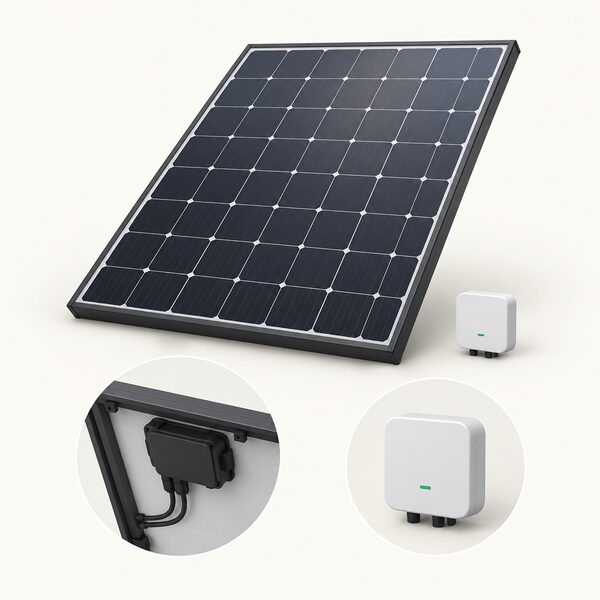
There is a second way to get Tigo electronics onto a roof: buy panels that already contain them. UKSOL's MCS certified monocrystalline solar PV panels with built in Tigo optimisers have optimiser units factory fitted during the manufacturer's assembly process22. The product was approved under an ECO4 innovation measure on 26/09/202323.
The scheme paperwork is unusually specific about what is included. The additional CCA/TAP modules are included at no cost to the homeowner12. The measure appears in successive versions of Ofgem's approved innovation measures list, from October 2023 through January 2024, November 2024 and January 202612. A related entry, InstaGen Solar PV, specifies Tigo optimisers and CCA/TAP modules25.
For a household, factory fitting removes the retrofit problem entirely. The optimiser is part of the module as delivered, so there is no second visit to lift panels and no separate device to mount. It also means the optimiser specification is fixed by the panel rather than chosen for the roof, which is a constraint as well as a convenience. The CCA/TAP modules are the communication and access point hardware that lets the optimisers report, and their inclusion at no cost is what makes monitoring possible without a separate purchase.
No published UK price exists for these panels in the material here, so the cost comparison against a standard monocrystalline module is installer-quoted. What can be said is that monocrystalline panels are described as more expensive to install than thin-film, which is the cheapest option but degrades much quicker and takes up more space26.
Compatibility and system design: inverters, batteries and the TS4 tool
Compatibility is the question that decides whether a Tigo optimiser is usable on a given system, and the maker's claims vary in strength. Tigo states its optimisers are compatible with any panel and inverter, and separately that they work with most inverters3. The TS4-X-O, TS4-X-S and TS4-X-F are each described as fully compatible with thousands of different inverter models from more than 50 inverter brands5. The TS4-A-2F is described as UL PVRSS certified with the largest network of inverters20.
On the software side, Tigo's SMART App supports over 2,000 inverter models, allowing selection from existing options or adding your own3. Tigo also states its solutions are designed for effortless integration with a wide array of inverters and modules3. In June 2025 Tigo announced that its TS4 MLPE devices are operationally compliant and compatible with hybrid inverter-battery systems from sonnen, when properly designed and installed27.
The TS4 devices also pair with Tigo's own hardware. Module-level optimisation and module-level monitoring are enabled when the devices are paired with a Tigo inverter through the EI platform13. That is the point at which a Tigo optimiser stops being a component in someone else's system and becomes part of a Tigo system, with the monitoring and control that implies.
Tigo released a TS4 Module Compatibility Tool in April 2026, a calculator for evaluating electrical and mechanical compatibility between PV modules and TS4 products during project planning. For a household, the practical sequence is that the installer checks module power and current ratings against the device limits, confirms the inverter pairing, and only then fixes the design. A power optimiser specification is not interchangeable between systems without that check.
Tigo's wider home energy range: GO Optimised ESS, GO Inverter and GO Junction
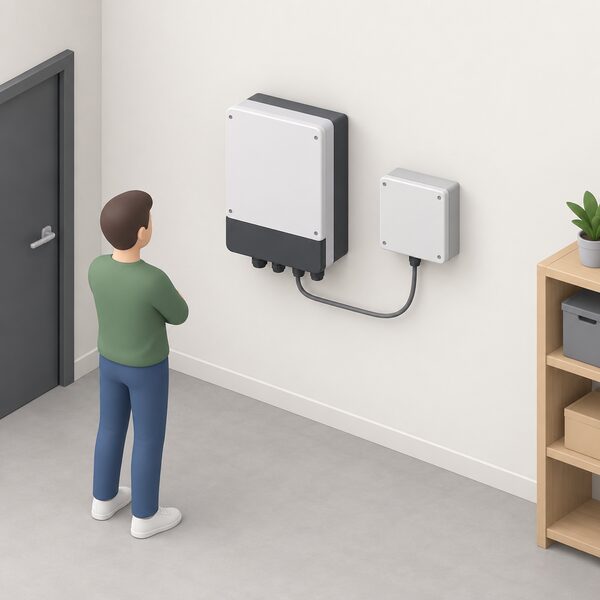
Tigo's residential offer extends well beyond optimisers, and the pieces connect. The GO Inverter is a battery storage ready hybrid inverter, available in 3.8, 7.6 kW and 11.4 kW models, with a 50V starting voltage and up to 200% DC oversizing, and it can be AC or DC coupled13. Tigo calls it the centrepiece of the GO ESS solution, and it orchestrates energy production and consumption13.
The GO Battery is the storage half, with efficient energy management through the Tigo EI app2. Tigo announced in June 2026 that the GO Battery, as part of the GO Optimised ESS, is now shipping for European market customers28. The EI Inverter (EU) is likewise described as a battery storage ready hybrid inverter29.
The GO Junction is the control layer. It connects to the EI Inverter via a communication cable, lowers costs by optimising solar energy usage, and enables custom scheduling for peak periods30. It connects to a heat pump and optional EV charger29. The Tigo EI mobile app enables balancing PV output, battery state of charge and power consumption from the grid, with manual and smart modes and comprehensive scheduling30.
Tigo added Dynamic Rate Management to its EI Residential solution in the EU in December 2025, available in Germany, the United Kingdom and the Netherlands, and held a webinar on dynamic rates in January 202631. For a UK household, that is the shape of the offer: optimisers at the panel, a hybrid inverter and battery in the middle, and an app that schedules against a tariff. Each layer adds capability and each layer adds a dependency, on Tigo's hardware, Tigo's app and a working internet connection.
What module-level optimisers mean for household energy independence
Module-level electronics change what a household can do with its own roof, and they also change what it depends on. The gain is generation: optimisers let each panel perform independently, which is most useful in shaded or mismatched setups, and they reduce the losses a string would otherwise carry4. On a roof where one chimney or one tree shades part of the array for part of the day, that is real production recovered from panels already paid for.
The dependence is in the monitoring and control layer. Module-level monitoring is enabled when Tigo devices are paired with a Tigo inverter through the EI platform13. The GO Junction's scheduling and the EI app's balancing of PV output, battery state of charge and grid consumption all run through Tigo's software30. A household that wants the data and the scheduling is relying on a manufacturer's cloud platform and a broadband connection, in the same way that any app-controlled energy system does.
There is a second dependence worth naming: the design decision. Optimisers reduce system losses but individual panel losses still affect performance, so the benefit is bounded by the roof itself8. Where shading is heavy, official guidance is that solar may not be the most suitable option9. Optimisers are a way of making a marginal roof work better, not a way of making a poor roof work well.
For a household weighing independence, the position is that Tigo optimisers improve the yield from a partly shaded or mismatched array and make panel-level performance visible, while leaving the home connected to the grid, to an inverter, and, for the monitoring and scheduling features, to a manufacturer's platform. The solar and energy independence page sets out where that sits in the wider picture, and the power optimisers page covers the technology across brands.
Sources31 cited
- Tigo Energy company and product overview, Tigo Energy, 2026
- GO Battery EU, Tigo Energy, 2026
- Tigo optimisers, UK distributor listing, Westech Solar, 2026
- Tigo optimisers, Midsummer Wholesale, 2026
- TS4-X-O optimiser, Tigo Energy, 2026
- TS4-X-S, Tigo Energy, 2026
- TS4-X-F, Tigo Energy, 2026
- What makes a good solar PV roof, Renewables First, 2026
- Solar photovoltaic panels, London Borough of Bromley, 2026
- Is a solar panel optimiser worth it, E.ON Next, 2026
- Buying advice for solar panels, Which?, 2026
- ECO4 Innovation Approved Innovation Measures v1.5, Ofgem, 2023
- GO Inverter, Tigo Energy, 2026
- Solar inverter replacement homeowner guide, Tigo Energy, 2026
- DC optimizers and DC-coupled batteries, Tigo Energy, 2025
- Solar panels safety advice, Electrical Safety First, 2026
- Solar panel installation, Energy Saving Trust, 2026
- Homeowner chooses Tigo to maximise energy production, Tigo Energy, 2026
- TS4-A-O optimiser, Tigo Energy, 2026
- TS4-A-2F, Tigo Energy, 2026
- Tigo at Solar and Storage Live 2024, Tigo Energy, 2024
- ECO4 Innovation Approved Innovation Measures v1.6, Ofgem, 2024
- ECO4 Innovation Approved Innovation Measures v1.10, Ofgem, 2024
- ECO4 Innovation Approved Innovation Measures v1.11, Ofgem, 2024
- ECO4 Innovation Approved Innovation Measures v1.17, Ofgem, 2026
- A complete guide to solar PV, Centre for Sustainable Energy, 2025
- Tigo and sonnen certify TS4 MLPE compatibility, Tigo Energy, 2025
- GO Optimised ESS shipping to Europe, Tigo Energy, 2026
- EI Inverter EU, Tigo Energy, 2026
- GO Junction EU, Tigo Energy, 2026
- Dynamic Rate Management for EI Residential, Tigo Energy, 2025
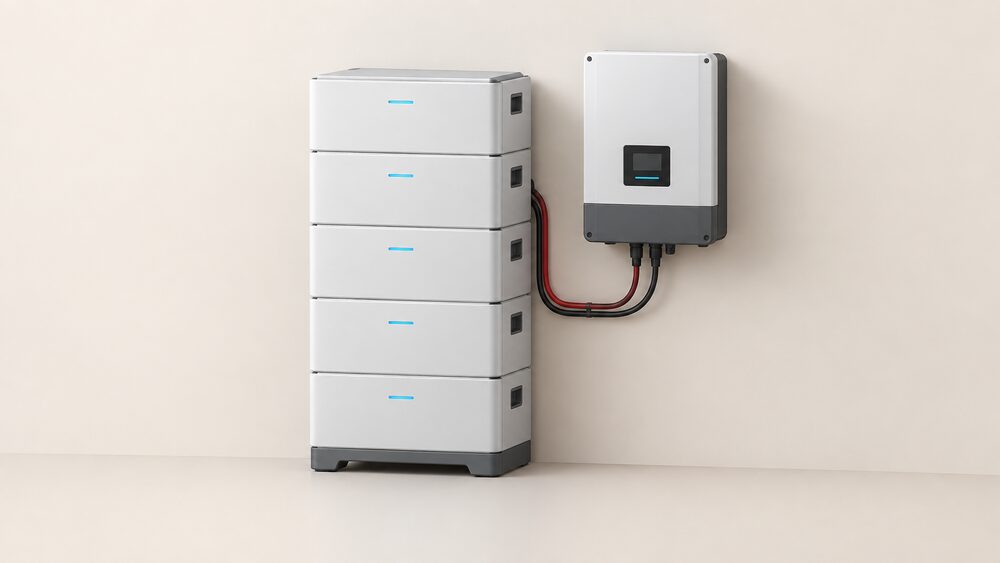 Tigo Energy StorageTigo's home battery comes in stackable modules, so you can start small and add more later as your needs grow.