
In this guide
MCS, the Microgeneration Certification Scheme, is the UK's quality mark for small-scale renewables such as heat pumps and solar panels1. It is an independent certification scheme for microgeneration installation companies and products, defining and maintaining consistent standards for the products used to produce electricity and/or heat from renewable sources1. It is not a grant, a warranty or a guarantee of performance. It is a certification route that determines whether an installation is eligible for many government incentives, and whether a household has a formal complaints route when something goes wrong.
The scheme covers microgeneration, defined as small-scale renewable technologies of 50kW or smaller3. Product certification is available for solar PV, solar mounting, small wind turbines, heat pumps, biomass, solar heating and micro CHP, with size limits of 50kW for electrical technologies and 45kW for heating4. Installers must be certified for the specific technology they fit, and must have been certified for it at the time they entered into a contract with the householder5.
For a household, MCS certification is the hinge on which access to public money turns. To be eligible for the Boiler Upgrade Scheme, installers must be MCS certified and meet the MCS standards, and all BUS installations must be MCS certified6. It is also a requirement for accessing many UK government incentives and is described as a route to many consumer grants and incentives1. What it does not do is guarantee that a heat pump will hit its predicted efficiency, or that a solar array will generate what a salesperson promised.
What MCS is: the UK's quality mark for small-scale renewables
MCS describes itself as the UK's quality mark for small-scale renewables like heat pumps, and as the UK's quality mark for renewable energy technologies like solar panels and heat pumps1. It is a mark of quality which demonstrates adherence to industry-recognised standards for renewable products, contractors and their installations11. The scheme is industry-led, focusing on ensuring the quality of micro-renewable technology and installations, a description the Scottish Government used when the scheme was younger12.
The organisation's own account of its role is broader than a badge. For the scheme, MCS' roles include setting and maintaining technical standards for installations and products, certifying installers and products against those standards, issuing MCS certificates for completed eligible installations, and assisting certification bodies to review and address cases and consumer issues relating to installers or products7. That combination matters: the certificate is not simply a marketing mark, it is the record that a specific installation by a specific certified company met a defined standard.
MCS is also the leading quality assurance organisation for microgeneration, which it defines as small scale renewable 50kW or smaller technologies3. The 50kW ceiling is the boundary of the scheme's remit, and it is why very large domestic or commercial installations fall outside it.
For a household's energy independence, MCS is a gatekeeper rather than a source of autonomy. It does not generate a unit of electricity or a kilowatt of heat. What it does is make an installation legible to government schemes, to certification bodies and to a complaints process. A home that installs a heat pump or solar array without an MCS certified installer may still generate its own energy, but it loses access to the incentives and the formal redress that the scheme underpins. That is the trade a household is making when it chooses an installer.
What MCS actually certifies: products, installers and installations
MCS certification operates on three levels, and conflating them is the most common misunderstanding. First, products are certified against MCS Standards. MCS product certification covers solar PV, solar mounting, small wind turbines, heat pumps, biomass, solar heating and micro CHP, and ensures compliance with UK regulations4. Second, installation companies are certified. Third, the completed installation receives an MCS certificate.
The product side is not limited to grant-funded work. MCS's product certification Scheme also certifies products against MCS Standards, ensuring installations are high-quality, and it covers self-funded installations and new builds as well as subsidised ones13. Certified installers use MCS certified ground and water source heat pumps, meaning the product being used has been tested for quality, reliability and performance2.
The installer side carries a condition that householders can check directly. The installer was MCS certified for the technology they installed when they entered into a contract with you5. If the company held certification for solar PV but not for heat pumps, or held it only after the contract date, the installation does not meet the scheme's requirement. MCS certification also ensures that installers install renewable technologies to industry-recognised standards1.
The installation itself is evidenced by a certificate. An MCS certificate is proof that the installation is MCS-certified, and certificates should only be issued once the installation is fully installed and commissioned; certificates issued before completion are ineligible14. That rule exists because a certificate issued early is a certificate issued against work that has not been tested in operation.
"These should only be issued once the installation is fully installed and commissioned. Do not accept MCS certificates th"
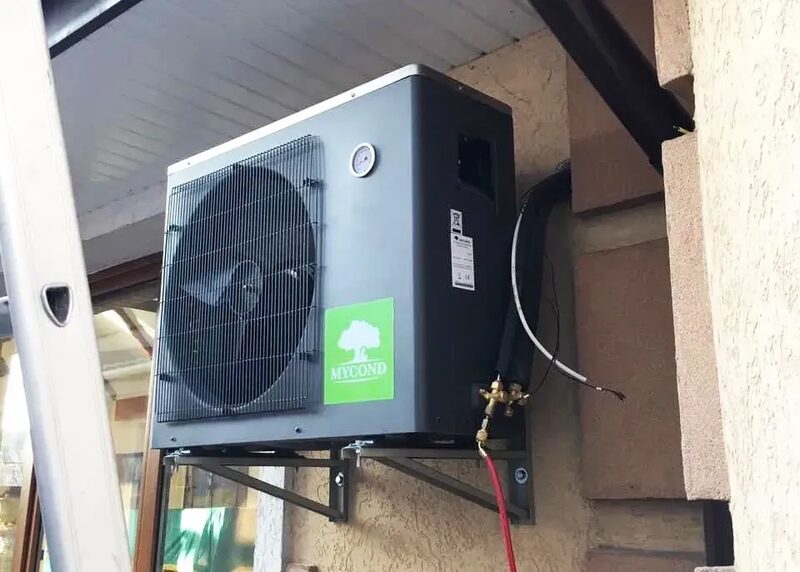
Which technologies fall under the scheme, and the size limits
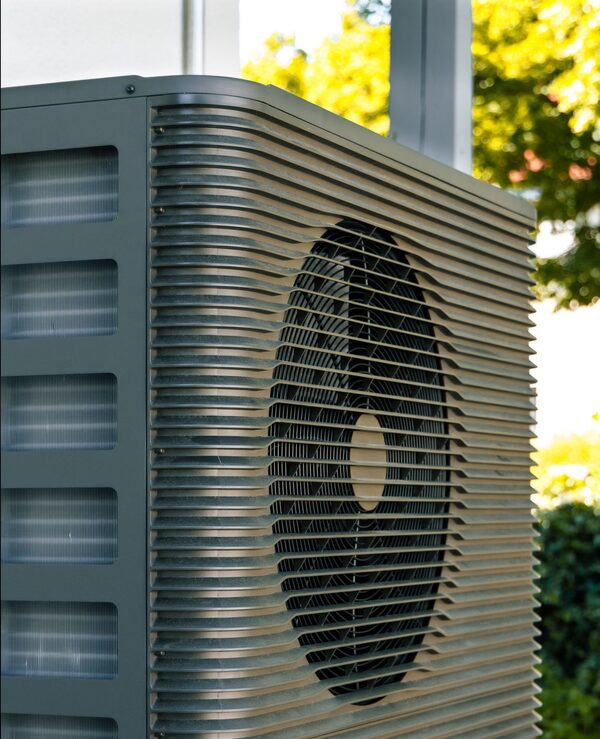
The scheme's technology list is defined by its product certification categories: solar PV, solar mounting, small wind turbines, heat pumps, biomass, solar heating and micro CHP4. The size limits are 50kW for electrical technologies and 45kW for heating4. MCS itself frames the remit as microgeneration, meaning small scale renewable 50kW or smaller technologies3.
The heat pump limits are stated more precisely in government statistics. The installations that would not be covered by MCS are heat pumps installed with a thermal output larger than 45kW and the majority of installations in new-build properties15. That second exclusion is significant and often overlooked: a new-build home fitted with a heat pump is, in most cases, outside the MCS route, because the compliance route for new dwellings runs through building regulations rather than through the certification scheme.
The Domestic RHI guidance gives a further layer. The MCS can certify products up to 45 kilowatts of capacity, which may be combined to meet larger heat demands16. So a single certified product tops out at 45kW, and larger heat demands are met by combining certified products.
For air source heat pumps specifically, the certification scheme itself has changed. From 28 May 2026, MCS 020 will be the only permitted certification scheme17. Planning guidance for air source heat pumps states that the heat pump complies with the Microgeneration Certification Scheme (MCS) Planning Standards (or equivalent)18. That "or equivalent" wording matters in planning contexts, where the standard is used as a proxy for acceptable noise and siting, not as a grant condition.
Air-to-air heat pumps sit outside the scheme for now. They are not eligible for the Warm Homes: Local Grant until they are able to be certified by MCS, which was expected in 202619. Implementation entered its next phase on 8 September 202620. Until certification exists for that technology, a household installing air-to-air units cannot use the MCS route to grant funding.
Why MCS certification matters for grants and government schemes
MCS certification is a requirement for accessing many UK government incentives and ensures access to robust protections, and it is described as a route to many consumer grants and incentives1. The clearest example is the Boiler Upgrade Scheme. To be eligible for the Boiler Upgrade Scheme, installers must be MCS certified and meet the MCS standards6. Installers must be MCS certified to participate in the BUS scheme21. All BUS installations must be Microgeneration Certification Scheme certified22.
The administrative rules around BUS certification are strict. Installers cannot use a temporary MCS certification number to create an account or apply for a voucher, and retrospective applications are allowed only after full certification, at the installer's risk23. That rule protects the household from a voucher being claimed against certification that does not yet exist.
The pattern repeats across other schemes. Under the Warm Homes: Local Grant, MCS certification is required for low carbon heating measures, with the exception of high heat retention storage heaters covered by PAS 203019. The Feed-in Tariffs scheme, now closed to new applicants, used the same definition: the MCS is a certification scheme for microgeneration installation companies and products24. Historic FIT rules also show how tightly certification was tied to payment: installations commissioning and having an MCS certificate issued on or before 31 March 2019 had until 31 March 2020 to apply to their FIT licensee for accreditation25.
| Scheme | MCS requirement | Source |
|---|---|---|
| Boiler Upgrade Scheme | Installers must be MCS certified and meet the MCS standards; all installations must be MCS certified | 6 |
| Warm Homes: Local Grant | MCS certification required for low carbon heating measures, except high heat retention storage heaters under PAS 2030 | 19 |
| Feed-in Tariffs (closed) | MCS certification scheme defined the eligible installer and product route | 24 |
| UK Government schemes generally | Installers must be TrustMark registered and/or MCS certified | 26 |
The independence point is that MCS certification is not itself a payment. It is the eligibility condition that lets a household apply for one. A home that wants to reduce its reliance on imported gas through a heat pump, or on grid electricity through solar, will usually find that the public contribution towards that equipment is conditional on the installer holding the right certification for the right technology at the right time.
Consumer protection: what the scheme covers and how it works
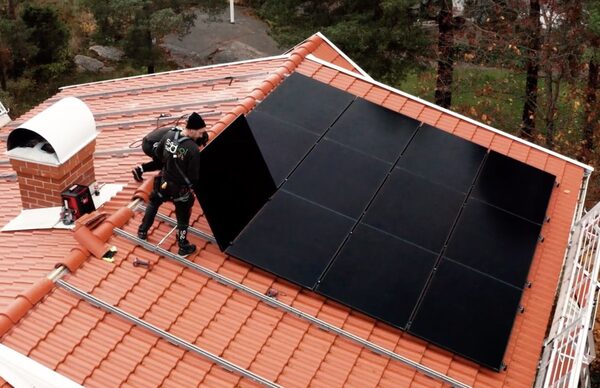
MCS certifies, quality assures and provides consumer protection for microgeneration installations and installers, covering small-scale renewable electricity technologies such as solar photovoltaic panels, biomass, wind, heat pumps and heat products27. The complaints scope is broad. MCS will consider complaints about system performance and design, quality of work, incomplete installation, delayed installation, commissioning and handover, installer conduct, damage to property, mis-selling, contractual issues, issues with product, and breach of the Customer Commitment5.
The route in is defined. MCS is the single point of contact for complaints about MCS certified installers or installations, after an issue is raised with your installer first5. Householders should contact MCS if they have issues with the installation process, the installer, or the MCS certificate or product9. If the complaint is not resolved, the household can approach the MCS Administrator, who will advise how to make a complaint about the MCS installer28.
There is a time limit. For MCS certified installations, it is no more than two years after the date that the system was commissioned9. That window is shorter than many householders assume, and it runs from commissioning rather than from the date a fault becomes apparent.
The ultimate sanction available to the scheme is withdrawal. If an installer is not willing or able to install to a high standard in compliance with MCS requirements, the ultimate sanction of MCS is to withdraw the installer's MCS certification5. That removes the company's ability to certify future installations and therefore its access to grant-funded work.
Complaining about an MCS certified installer: the process and time limits
The process runs in a fixed order. The household raises the issue with the installer first. If it is not resolved, MCS is the single point of contact for complaints about MCS certified installers or installations5. MCS handles issues with the installation process, the installer, or the MCS certificate or product9. Where the complaint remains unresolved, the MCS Administrator advises on how to make a complaint about the MCS installer28.
Two dates govern whether a complaint can proceed. The first is the two-year limit: for MCS certified installations, it is no more than two years after the date that the system was commissioned9. The second is the certification status at the time of the work. A complaint is limited in its help where the installer was not MCS certified for the renewable technology installed at the time of the installation5. In other words, the scheme's leverage depends on the installer having been inside the scheme when the contract was signed.
There is also a membership condition behind installer certification. A requirement of companies wanting to gain MCS certification is that they are members of a CTSI Approved Consumer Code of Practice scheme in the first instance29. That requirement has been changing, and the redeveloped scheme replaces it with MCS's own Customer Commitment30.
For a household, the practical sequence is: document the fault, raise it with the installer in writing, escalate to MCS within the two-year window, and keep the MCS certificate and commissioning records. The certificate is the evidence that the installation was certified, and it is the document the complaints process is built around.
What MCS certification does not guarantee

The limits of the scheme are as important as its coverage, and they are stated in government analysis. MCS requires installers to provide a design-stage prediction of system efficiency, not verify actual performance31. MCS does not require remediation of systems that are underperforming relative to their design31. So a heat pump that meets its design prediction on paper but delivers lower real-world efficiency is not, on that basis alone, a matter MCS requires to be put right.
The handover side is similarly bounded. MCS specifies handover documentation but not the quality of verbal explanation, household understanding, structured follow-up or ongoing support31. A household can receive a complete document pack and still not understand how to run the system well.
Two technical points illustrate the same boundary. Weather compensation is not mandatory under current requirements of the Microgeneration Certification Scheme31. Third party non-modulating controls are not prohibited31. These are design and control choices that affect running efficiency, and the scheme does not compel the better option.
There is also a governance limit. The Government acknowledges that the MCS Customer Commitment has not been approved by an independent body30. That is a meaningful difference from the CTSI-approved consumer code model it replaced, where an external body audited the code.
The redeveloped Installer Scheme and what is changing
MCS has redeveloped its installer scheme, which will be rolled out throughout 2026 and into early 20278. Installers move over to the new Scheme throughout 202613. The transition phase is due to end on 31 March 2027, by which date all MCS certified installers must operate under the redeveloped Scheme32.
The design intent is a shift in emphasis. The Scheme will focus more on how installers deliver quality to consumers, rather than administrative checks, and is described as simpler and more rewarding but just as robust13. MCS has replaced the requirement for contractors to be members of a Chartered Trading Standards Institute approved consumer code with their own Customer Commitment30.
Consumer protection arrangements are part of the change. MCS now manages complaints in-house and provides alternative dispute resolution where parties cannot reach a resolution33. MCS reported that its redeveloped installer Scheme was rolling out across the MCS installer base and described its new consumer protection arrangements33.
Product standards are moving on a separate timetable. MCS certified installers may use grace period products until 1 February 2027, and the grace period will not be extended34. Compliance with the updated MCS 007 heat pump product standard becomes mandatory on 24 April 2027 after a two-year transition35.
For a household, the practical effect is that the certification landscape is in motion. An installer certified today will be operating under different scheme rules by the end of the transition, and the consumer protection route is being brought in-house rather than routed through an external code. The certification mark remains the same; the machinery behind it is being rebuilt.
Who runs MCS: ownership, funding and independence
MCS is a charity-owned company, focused solely on improving quality and consumer protection13. That ownership structure is the basis of its claim to independence: it is not a trade body representing installers, and it is not a government department.
Its independence is nonetheless bounded. MCS is an independent certification scheme for microgeneration installation companies and products6. It sets and maintains technical standards, certifies installers and products, issues certificates, and assists certification bodies with cases and consumer issues7. But it operates within a framework where government schemes define what certification is required, and where the Government has acknowledged that the MCS Customer Commitment has not been approved by an independent body30.
The certification bodies are the other half of the structure. MCS assists certification bodies to review and address cases and consumer issues relating to installers or products7. Installers are audited by those bodies against MCS standards, and the certification mark is the output of that audit.
For a household's energy independence, the ownership question matters less than the accountability question. MCS is not a supplier, not an installer and not a manufacturer. It does not sell anything to the household, and it does not own the equipment. Its leverage is the ability to withdraw certification, which removes an installer's access to grant-funded work. That is a real sanction, but it is a commercial one rather than a guarantee of remedy.
How to find and check an MCS certified installer
Government guidance is direct: use the government-endorsed Microgeneration Certification Scheme to find certified installers, and get at least three quotes from reputable installers36. The MCS installer search is the starting point, and the certification record is the check.
The check itself has three parts. First, confirm the company is MCS certified for the specific technology being installed. The installer was MCS certified for the technology they installed when they entered into a contract with you5. Second, confirm the certification was in place at the contract date, not merely at the installation date. Third, confirm the certificate is issued after completion. An MCS certificate is proof that the installation is MCS-certified, and certificates should only be issued once the installation is fully installed and commissioned14.
Timing expectations are set out in guidance. An MCS commissioning certificate is expected within 10 days of completion8. One source states an MCS certificate is received within 10 working days of completion2. A Welsh scheme specification requires MCS Commissioning certification to be issued to the Employer within 14 days of commissioning37. The variation reflects different scheme rules rather than different certification standards.
MCS may also contact the household after installation. MCS may contact you for a short, routine verification on behalf of Ofgem either via email or phone on 0333 103 819838. Property owners should aim to respond within seven days4. MCS can be contacted at mcscertified.com or by calling 0333 103 813038.

Sources38 cited
- Why MCS certification matters, MCS Certified, 2026-08-17
- Ground and water source heat pumps, MCS Certified, 2026-06-09
- Warm Homes Scheme guidance addendum, GOV.UK, 2026-06
- Certifying your product, MCS Certified, 2026-05-18
- Consumer complaints, MCS Certified, 2026-09-07
- Boiler Upgrade Scheme, Ofgem, 2026-09-17
- Boiler Upgrade Scheme guidance for installers V5, Ofgem, 2026-04
- Find a heat pump installer, GOV.UK, 2022-07-05
- Who to contact, Ofgem, 2026-09-17
- Boiler Upgrade Scheme guidance for installers v5.1, Ofgem, 2026-07-02
- Heat pumps explained: experts answer your questions, GOV.UK, 2024-03-28
- Microgeneration strategy Scotland, Scottish Government, 2012-06-22
- MCS responds to consultation outcome, MCS Certified, 2025-10-31
- Feed-in Tariffs FAQ v5, Ofgem, 2018-12
- Heat pump deployment quarterly statistics, UK 2026 Q1, GOV.UK, 2026-06-11
- Domestic RHI essential guide, Ofgem, 2022-03
- Planning guidance for heat pumps, Richmond Council, 2026-05-28
- Air source heat pumps fact sheet, Pendle Council, 2026-09-17
- Warm Homes: Local Grant policy guidance, GOV.UK, 2026-07
- Notifying DNOs, MCS Certified, 2026-09-08
- BUS annual report 2024 to 2025, Ofgem, 2025-07
- Boiler Upgrade Scheme statistics July 2026, GOV.UK, 2026-08-27
- Summary of updates to BUS guidance for installers V5, Ofgem, 2026-04
- Feed-in Tariffs annual report, scheme year 13, Ofgem, 2023-12
- Feed-in Tariffs guidance for licensed electricity suppliers V15, Ofgem, 2021-12
- Energy efficiency grants and loans, Bristol City Council, 2026
- ECO4 Flex and GBIS Flex information document, Ceredigion County Council, 2025-11
- Feed-in Tariffs dispute resolution, Ofgem, 2026-09-17
- Renewable Energy Consumer Code, Chartered Trading Standards Institute, 2026-09-20
- Amendments to the Boiler Upgrade Scheme: government response, GOV.UK, 2025-11
- Clean heat and heat pump transition report, GOV.UK, 2026-05
- DESNZ recognises strength of consumer protections, MCS Certified, 2027-03-31
- How MCS is transforming consumer protection for renewables, MCS Certified, 2026-09-10
- Grace period for solar PV products, MCS Certified, 2027-02-01
- MCS publishes update to heat pump product standard MCS 007, MCS Certified, 2027-04-24
- Solar panels, London Borough of Hammersmith and Fulham, 2026-09-17
- Barcud Solar Panel Installation Scheme Specification, Sell2Wales, 2026-06-15
- BUS guidance for property owners V5 draft, Ofgem, 2026-03-25
 MCS CertificationWhy do so many installers and tariff schemes ask about MCS certification when you get solar panels?
 Certification and ApprovalsWhich certificates actually matter when you are choosing solar panels or a heat pump?
 Standards and CertificationHow do you know a heat pump will really perform as promised?
 Installer QualificationsWhat training and qualifications should a heat pump installer actually have?
 Standards for Emerging ProductsIf a heat pump or solar product is new, who checks it is safe and works properly?
 Appliance Standards and MarkingWhich marks should a boiler, heat pump or cylinder have before you buy, and what do they actually prove?