In this guide
The Future Homes Standard is the set of building rules that will govern how new homes in England are heated, insulated and powered. Its central effect is simple to state: new homes will not be built with fossil fuel heating, such as a natural gas boiler, and heat pumps will become the primary heating technology1. The government consultation is explicit that gas boilers, including hybrid and hydrogen-ready boilers, will not meet the proposed standards1.
The dates matter more than the ambition. Independent guidance puts the ordinary commencement date at 24 March 2027 for most properties, with a 12-month transition period and full compliance from 24 March 20283. Higher-risk buildings follow a later timetable, taking effect on 24 September 20273. The standard applies to new homes built in England, and the 2023 consultation relates to buildings in England only1.
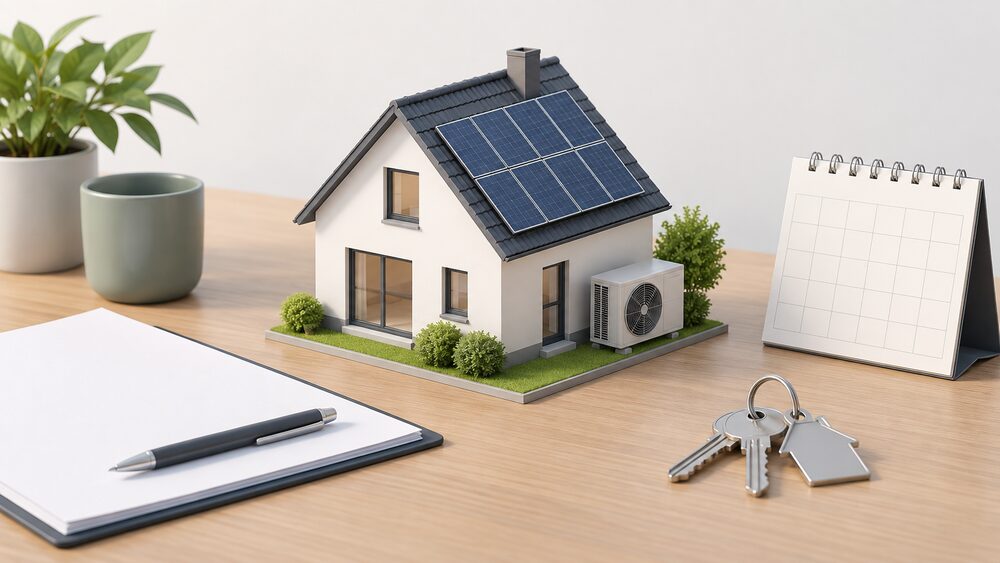
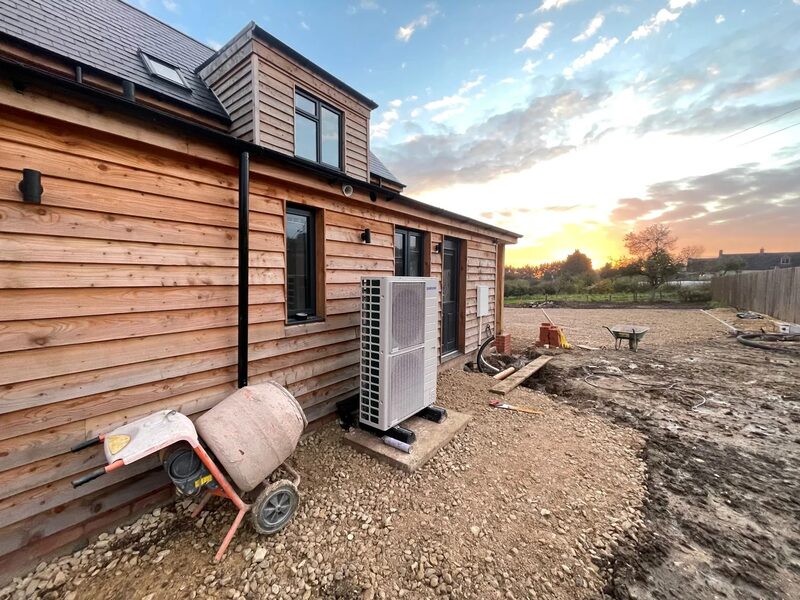
For a household, the practical content is a heat pump, solar panels on the vast majority of new build homes, much better insulation, and at least one place to charge an electric car4. Batteries are optional rather than standard4. The sections below set out what the standard is, where it applies, when it bites, what a compliant home contains, how compliance is calculated, and what remains outside its reach.
What the Future Homes Standard is
The Future Homes Standard is a performance standard for new dwellings, not a product list. Its stated purpose is to improve the energy efficiency and reduce the carbon emissions of new dwellings and non-domestic buildings so that they are zero carbon ready7. The 2022 policy paper put it in similar terms: the standard will ensure that new build homes are future-proofed with low carbon heating and high levels of energy efficiency8.
The policy has been through several rounds. The government consulted on a detailed specification from November 2023 to March 2024, and the 2023 consultation set out that the standards would come into force from 20251. Earlier documents gave different dates: legislation was to be introduced in 2024 ahead of full implementation in 2025, and a planning timeline records 2025 as the year the standard comes into force with all new build homes required to be carbon zero ready10. A press release from January 2026 described implementation in early 202612. The operative timetable now reported is the March 2027 and March 2028 sequence3.
What has not moved is the direction. The 2021 government response set the intention that new homes would not be built with fossil fuel heating, and the Climate Change Committee welcomed the commitment to new low carbon homes10. The standard is therefore best understood as the point at which the new-build market stops being a gas market.
For a household's energy independence, the significance is structural rather than incremental. A home built to the standard is designed around an electrically driven heat pump and on-site generation, so it depends on the electricity network and on a supplier rather than on a gas connection. That is a real reduction in exposure to gas prices, and it is not independence: the home still draws from the grid, and the heat pump, the controls and any monitoring app remain the manufacturer's and the supplier's.
England only: where the standard applies and who it affects
The Future Homes Standard is an England policy. The 2023 consultation states that it relates to buildings in England only1, and independent guidance describes it as setting new requirements for homes built in England from 20283. The Building Regulations 2010, Regulation 18, carries the same territorial limitation: this version of the provision applies to England only14.
That matters because housing and building standards are devolved, and the other three nations run their own routes.
| Nation | Position |
|---|---|
| England | Future Homes Standard applies to new homes; consultation relates to buildings in England only1 |
| Scotland | Separate energy performance and heat in buildings legislation; tenement phasing under its own review15 |
| Wales | Approved Document L Volume 1 published for Wales, with its own consultation version17 |
| Northern Ireland | Discussion document on building regulations next steps19 |
The England-only pattern is consistent across the wider policy landscape. The Warm Homes: Social Housing Fund, the Warm Homes: Local Grant, the Home Upgrade Grant and the earlier Local Authority Delivery scheme all state that they cover England only20. A householder in Scotland, Wales or Northern Ireland looking for the equivalent of the Future Homes Standard is looking at a different document set.
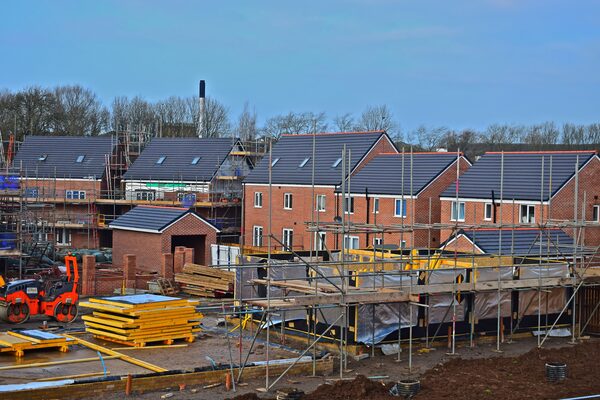
Who the standard affects is narrower than the name suggests. It binds developers and builders of new dwellings, and through them the buyers of those homes. It does not reach the existing stock. Independent guidance states that for existing homeowners the Future Homes Standard will not have any impact on a current property3. The retrofit of existing homes is a separate policy track, and the long-term ambition recorded in the Heat and Buildings Strategy is to set a date to ensure that all homes meet a Net Zero minimum energy performance standard before 2050, where cost-effective, practical and affordable23.
Key dates: commencement, transition and full compliance
The timetable has three moving parts: when the rules start, how long a home can be built to the old rules, and when every developer must comply.
Independent guidance gives the ordinary commencement date as 24 March 2027 for most properties, with the legislation taking effect from that date3. A 12-month transition period follows3. Full compliance begins on 24 March 2028, from which point all developers need to comply3. Higher-risk buildings are on a later track, with the new rules taking effect on 24 September 20273.
The transition is keyed to construction, not to planning permission. New homes with foundations laid between 24 March 2027 and 24 March 2028 can continue to be constructed under the previous standards3. That is the answer to the question developers ask most often: the clock runs from the foundations, so a site that has started before the commencement date can finish under the old rules within the window.
Earlier consultation documents described a different shape: a 6-month or up to 12-month period between the legislation being laid, in 2024, and coming into force, in 2025, followed by a 12-month transitional period1. The structure is similar, the years are not. The March 2027 and March 2028 sequence is the one now reported3.
For a buyer, the dates determine which rulebook a home was built to. A home completed in 2027 may still be a gas-heated home under the previous standards if its foundations went in during the transition window. A home completed after 24 March 2028 should be built to the standard. That distinction is worth checking against the completion certificate and the energy performance certificate rather than the marketing date.
What new homes must have: heat pumps, solar PV and EV charging
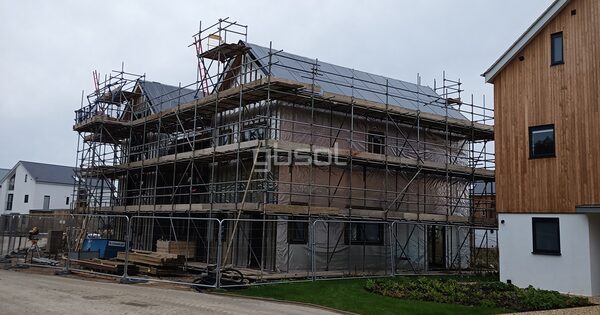
The package of measures is consistent across the sources. Independent guidance summarises it as a heat pump, solar panels and much better insulation required, gas boilers out, at least one EV charge point per new home, and batteries optional4. Government guidance states that the standard will ensure solar panels are installed on the vast majority of new build homes once it comes into force5, and a press release describes new rules that mean every new home will come with solar panels by default12.
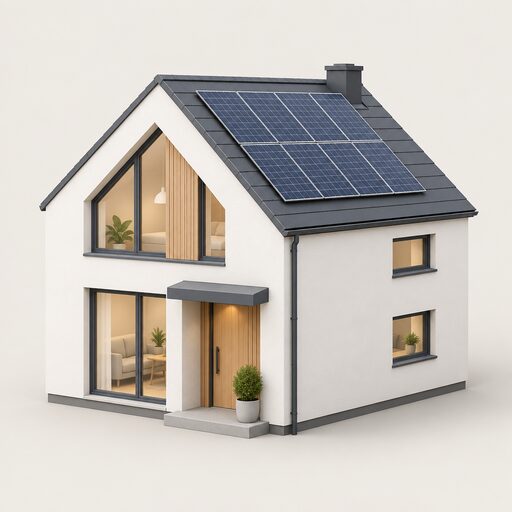
Solar is sized to the home rather than bolted on. Independent guidance reports panels mounted on the roof and sized to cover about 40% of the home's footprint4. There is an exception: solar is handled differently from the other metrics, and solar PV panels would not be required for blocks of flats over 15 storeys24.
Heating is the load-bearing change. Heat pumps will become the primary heating technology2. The 2022 policy paper described the standard as ensuring new build homes are future-proofed with low carbon heating and high levels of energy efficiency8, and the 2021 response set the intention that new homes would not be built with fossil fuel heating such as a natural gas boiler10.
The EV charge point requirement is the one element that reaches beyond the home's own energy use. It ties the dwelling to an electric vehicle, and therefore to the electricity network, rather than to a petrol station. For a household, the combination of a heat pump, roof solar and a charge point means the home's running costs are largely electricity costs, and the exposure to gas standing charges and gas unit rates falls away. What remains is dependence on the grid, on a supplier, and on the manufacturer of the heat pump and its controls.
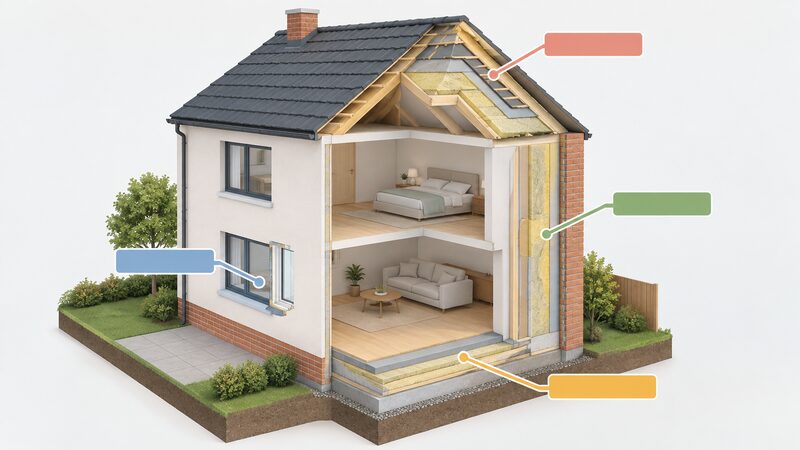
Fabric standards: insulation, airtightness and U-values
The fabric requirements are where the standard is most easily misread. The 2025 energy and buildings statistics state that the proposed new standard does not currently require an uplift to insulation requirements compared to existing standards25. Independent guidance nonetheless describes new building fabric requirements relating to insulation, ventilation and airtightness3. Both are true: the standard introduces a fabric metric and a set of limiting values, while the headline insulation levels are not a step up from what the current regulations already demand.
The limiting values in the current Approved Document L are the baseline a new dwelling must not exceed.
| Element | Maximum U-value |
|---|---|
| Roof | 0.13 W/(m2.K)18 |
| Wall, dwelling houses | 0.18 W/(m2.K)18 |
| Wall, flats | 0.21 W/(m2.K)18 |
| Floor | 0.15 W/(m2.K)18 |
| Party wall | 0.20 W/(m2.K)18 |
| Window or roof window | 1.4 W/(m2.K)18 |
| Roof-light | 2.2 W/(m2.K)18 |
| Swimming pool basin | 0.25 W/(m2.K)18 |
The indicative Future Homes Standard specification published with the 2021 response goes further on some elements, with an external wall U-value of 0.15 W/m2.K, a roof of 0.11 W/m2.K, a floor of 0.11 W/m2.K, a window of 0.8 W/m2.K and a door of 1.0 W/m2.K10. Those are indicative figures for the standard rather than the current legal limits, and the two sets should not be confused.
Airtightness is capped at a maximum air permeability of 8.0m3/(h·m2) @ 50Pa, and an air pressure test should be carried out on every dwelling22. A separate Welsh document gives the same figure alongside an alternative expression of 1.57m3/(h·m2)@4Pa, and both are recorded here18.
U-values should be assessed using the methods and conventions set out in the Building Research Establishment's BR 44321. The target fabric energy efficiency rate can be achieved only through fabric energy efficiency, including U-values, thermal bridging and airtightness21. That is the mechanism that stops a developer meeting the standard purely by adding generation: the fabric metric has to be met by the building itself.
Gas boilers and the gas grid: what the standard rules out
The exclusion of gas is the clearest line in the policy. The consultation states that gas boilers, including hybrid and hydrogen-ready boilers, will not meet the proposed standards, and repeats that fossil fuel heating will not meet this standard, including hydrogen-ready and hybrid boilers1. The 2021 response set the intention that new homes would not be built with fossil fuel heating such as a natural gas boiler10.
The connection itself is also in scope. Independent guidance states that from 2028, no new build home in England will be connected to the gas network3. That is a stronger statement than a heating appliance rule: it removes the gas connection from the new-build specification altogether.
Solid fuel is caught too. The consultation states that the standards proposed are also unlikely to allow the installation of biofuel systems, including wood and manufactured solid fuels1. A wood burner is therefore not a route to compliance in a new home under the standard.
For a household, this is the point at which the standard changes what a new home is. A gas boiler is not merely discouraged; it is a non-compliant specification. A hydrogen-ready boiler does not provide a hedge, because the consultation names it explicitly as failing the standard. The dependence that replaces gas is electrical: the home runs on a heat pump, and its heating cost is an electricity cost. That reduces exposure to gas prices and increases exposure to electricity prices, the standing charges on the connection, and the reliability of the network at peak times.
How compliance is calculated: the Home Energy Model and notional dwelling
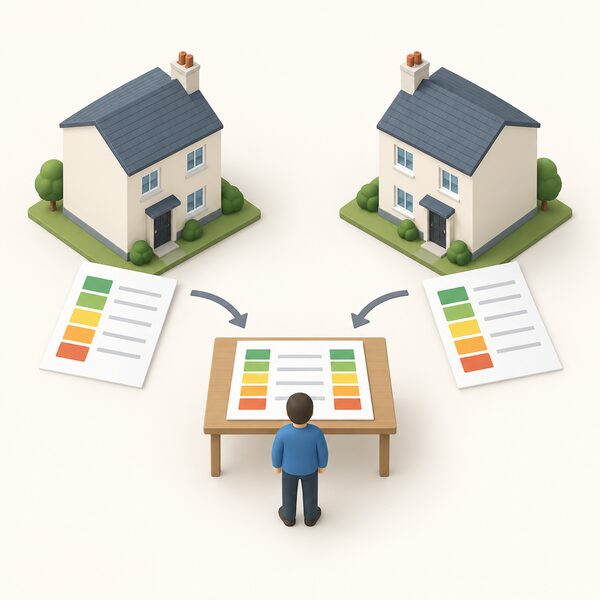
Compliance is demonstrated by calculation, not by inspection of a specification list. A new dwelling must be built to a minimum standard of total energy performance, and performance is evaluated by comparing calculations of the performance of the actual dwelling against calculations of the performance of a theoretical dwelling called the notional dwelling21.
The comparison happens twice: before work starts, using design values, and when work is complete, using figures for the building as constructed21. The dwelling primary energy rate, dwelling emission rate and dwelling fabric energy efficiency rate must not exceed their respective target rates at both stages21.
The metrics are set out in the regulations and the approved documents.
| Metric | Requirement |
|---|---|
| Target primary energy rate | Dwelling rate must not exceed it21 |
| Target emission rate | Dwelling rate must not exceed it21 |
| Target fabric energy efficiency rate | Achievable only through fabric energy efficiency21 |
| Target Energy Use Intensity | Required performance metric18 |
| Target fabric performance values | Elements of the fabric must meet them18 |
The calculation methodology is changing. The Home Energy Model is a calculation methodology designed to assess the energy performance of homes, and it is the intended replacement for the Standard Assessment Procedure in domestic energy performance certificates20. The 2026 edition of Approved Document L Volume 1 for dwellings still specifies the UK Government's Standard Assessment Procedure for energy rating of dwellings, version 10.3, for the target rates17, and a Welsh document specifies version 1018. A notice of approval dated 24 March 2026 approves the Home Energy Model and the Standard Assessment Procedure as the methodologies for demonstrating compliance26.
The notional dwelling is the mechanism that makes the standard bite. A developer cannot meet it by choosing a different mix of measures unless the actual dwelling's calculated rates come in at or below the notional dwelling's targets. The target primary energy rate can be met through fabric energy efficiency, efficient building services, and low and zero carbon technologies integrated in an appropriate mix, provided minimum fabric standards are satisfied21. The fabric rate cannot be met that way: it can be achieved only through fabric energy efficiency21.
Exemptions and special cases: higher-risk buildings, flats and solid fuel
Three categories sit outside or alongside the main timetable.
Higher-risk buildings are defined as buildings over 18 metres in height or having at least seven storeys, and a later implementation date of 24 September 2027 applies to them3. The definition and the date come from the same independent guidance, and the later date is consistent with the commencement date reported for higher-risk buildings3.
Blocks of flats have a solar exception. Solar PV panels would not be required for blocks of flats over 15 storeys24. The government response notes that the exception is solar, which is handled differently from the other metrics24.
Solid fuel and biofuel systems are addressed in the consultation, which states that the standards proposed are unlikely to allow the installation of biofuel systems, including wood and manufactured solid fuels1. That covers wood burners and manufactured solid fuels in a new home under the standard.
In Scotland, a separate review has looked at tenements specifically. At phase 1, individual flats within tenement buildings would be required to meet new energy efficiency standards where this is feasible and cost-effective, alongside the rest of the housing stock, and some tenement types may not initially be asked to replace fossil fuel systems until more suitable options are offered16. That is a Scottish position and does not apply in England.
That distinction is worth holding on to. The regulations set rates a dwelling must not exceed; they do not mandate a particular appliance. In practice, the rates are set at a level that a gas boiler cannot meet, which is why the effect is a heat pump, but the legal mechanism is a performance target rather than a product ban.
What it means for householders: bills, existing homes and net zero
The bill figures are estimates, and they differ. Independent guidance puts the saving at up to £830 per year for families3. A parliamentary briefing cites the Microgeneration Certification Scheme and Solar Energy UK saying the standard would save the average household around £1,000 a year6. Both are modelled rather than metered, and actual bills depend on occupancy, tariff, the heat pump's performance and how the home is run.
The existing stock is untouched. Independent guidance states that for existing homeowners the Future Homes Standard will not have any impact on a current property3. The long-term ambition for existing homes is recorded separately: the Heat and Buildings Strategy sets a date to ensure that all homes meet a Net Zero minimum energy performance standard before 2050, where cost-effective, practical and affordable23. A householder in an older home is therefore looking at retrofit policy, not at this standard.
The net zero framing is deliberate. Government guidance describes the aim as ensuring that new-build homes in England are ready for net zero from 202527, and the impact assessment records the aim of improving energy efficiency and reducing carbon emissions so that new dwellings and non-domestic buildings are zero carbon ready7.
For energy independence, the balance is worth stating plainly. A home built to the standard has no gas connection, generates some of its own electricity from the roof, and heats itself with a heat pump. That removes exposure to gas prices and to the gas standing charge, and it reduces the amount of energy the household has to buy. What it does not remove is dependence on the electricity grid, on a supplier and its tariff, on the heat pump manufacturer for parts and controls, and on any app or cloud service the system uses. The standard shifts where the dependence sits; it does not end it.
Sources27 cited
- The Future Homes and Buildings Standards: 2023 consultation, GOV.UK, 2026-09-17
- The Future Homes Standard, House of Commons Library
- What the Future Homes Standard means for homeowners, NICEIC, 2026-04-23
- Future Homes Standard for your home's future, Low Carbon Hub, 2026-09-01
- UK Solar Roadmap, DESNZ, 2025-06
- Future Homes Standard: bill savings, Parliamentary Office of Science and Technology, 2026-06-25
- RPC opinion: Future Homes and Buildings Standards impact assessments, GOV.UK, 2026-03-25
- Building for 2050: low cost, low carbon homes, GOV.UK, 2022-12-05
- Future Homes Standard: detailed specification consultation, House of Commons Library
- Government response to the Future Homes Standard consultation, GOV.UK, 2021-01
- The Future Homes Standard timeline, Planning Portal
- Families to save in biggest home upgrade plan in British history, GOV.UK, 2026-01-20
- CCC welcomes government commitments to new low carbon homes and green gas, Climate Change Committee, 2019-03-13
- The Building Regulations 2010, Regulation 18, legislation.gov.uk
- Energy Performance of Buildings (Scotland) Regulations 2025 update, Scottish Government
- Tenements short life working group: energy efficiency and zero emissions heating final report, Scottish Government, 2023-11-28
- Building Regulations Approved Document L Volume 1 (Wales), Welsh Government, 2026-04
- Approved Document L Volume 1 consultation version (Wales), Welsh Government
- Building Regulations discussion document and pre-consultation on next steps, Northern Ireland Department of Finance, 2023-10-11
- Home Energy Model: heat pump methodology, GOV.UK, 2026-01
- Approved Document L Volume 1: Dwellings, GOV.UK, 2026
- Approved Document L Volume 1: Dwellings, 2021 edition incorporating 2023 amendments, GOV.UK
- Heat and Buildings Strategy, GOV.UK, 2021-10
- Future Homes and Buildings Standards consultation response, GOV.UK, 2026-03
- Energy in buildings 2025: heat and buildings, GOV.UK, 2025-06
- Notice of approval of the methodologies of calculation of the energy performance of new buildings, GOV.UK, 2026-03-24
- Research briefing: net zero and new-build homes, House of Commons Library, 2026-09-20
 Future Homes Standard FabricWill a new home be cheaper to heat than an older one?
 New Build Heat StandardScotland's New Build Heat Standard means gas and oil boilers are no longer allowed in new homes from April.
 Gas Boilers GuideMains gas boilers heat around 23 million UK homes.
 Refrigerants and F-Gas RulesWhat refrigerant does your heat pump use, and is propane safe at home?
 Policy, Targets and Coming RulesHeat pumps are central to the government's plans for greener home heating.
 Climate TargetsScotland aims to stop adding greenhouse gases by 2045, five years before the rest of the UK.