

In this guide
An Energy Performance Certificate is the first document to read when a house is on the market, because it is the only standardised statement of what the building will cost to heat and how it could be improved. Provision of an EPC is a statutory requirement whenever a property is bought, sold or rented, introduced in 2007, and the certificate must be provided to the purchaser free of charge1. It explains how energy efficient a building is and how it could be improved2.
The certificate gives information about the energy efficiency of a property, as well as its heating source, estimated carbon emissions and estimated energy cost3. It is produced using standard information about buildings, which is what allows a buyer to compare one house with another before entering a contract1. The rating must be included in the property advertisement, so the headline band is visible before a viewing4.
What the EPC cannot do is tell you the condition of the boiler, the state of the loft insulation or whether the solar panels carry a legacy payment. Those come from the seller's paperwork, a physical inspection and, in some cases, a fresh assessment. This page sets out what to read, what to ask for and where the certificate's limits lie.
Start with the EPC: what it tells you and where to find it
The EPC is a good starting point for understanding a property's energy performance, and looking at it is the recommended first step to improving energy efficiency10. It is needed whenever a property is built or marketed for sale or rent1. In Scotland, EPCs must be provided when a building is advertised for sale or for let to a new tenant, and are also required upon completion of construction of a new building6.
Finding the certificate is straightforward. In Northern Ireland, dwellings are recorded on the register at www.epbniregister.com, and all other properties at www.ebpniregisternd.com11. The EPC should be made available to you at no cost, and should you choose to buy the property, you will be given a copy by the seller that can be reused within the period of validity1. The EPC must be provided to the purchaser free of charge, and this is a legal requirement4.
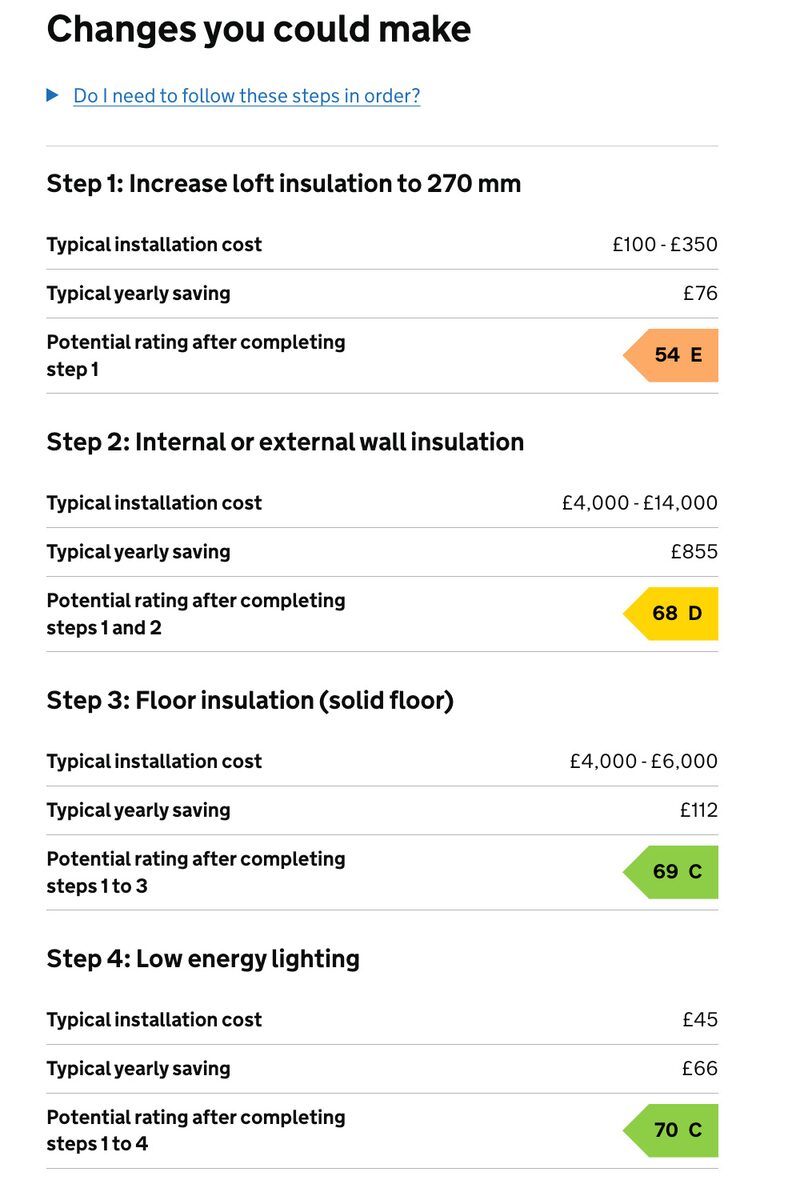
The certificate is accompanied by a recommendations report which provides more detailed information about improvement measures2. With each EPC is a report that sets out the cost effective measures that homeowners or businesses can take to improve the energy efficiency and energy rating, such as low energy bulbs or upgrading insulation1.
Reading the rating: what A to G means and what counts as good
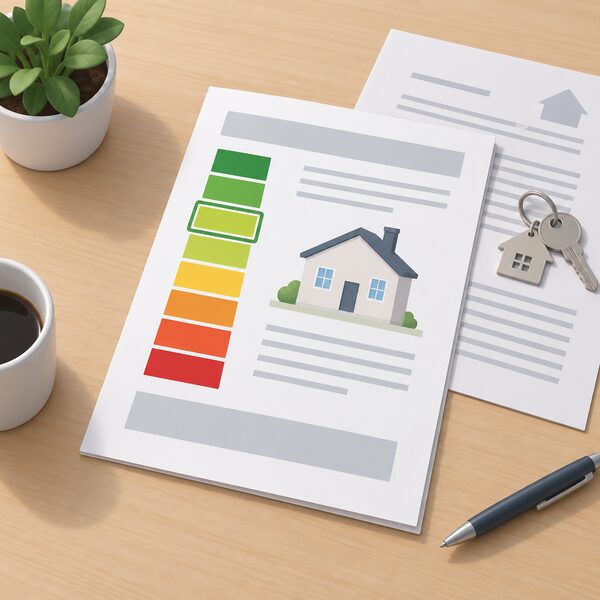
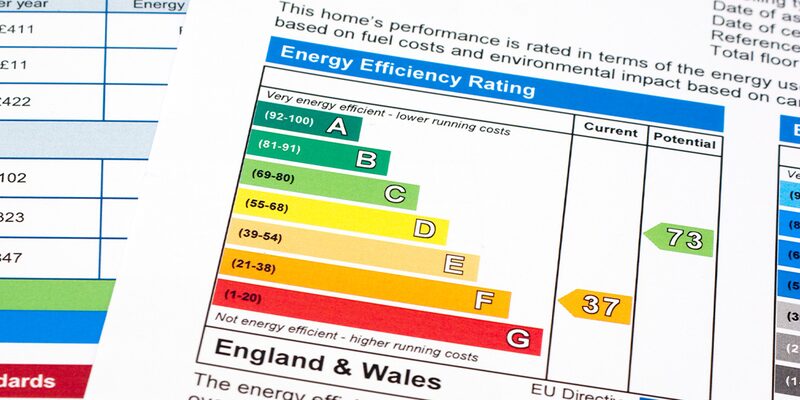
Buildings are rated on a scale from A to G, with A being the most efficient and G the least efficient13. The same scale appears in the Northern Ireland guidance, which describes a scale of A to G where A is very good and G is very poor14. The underlying legislation defines an energy performance rating as an indication of the energy efficiency of a building, expressed on a scale of A+ to G, or A to G in the case of a dwelling, with G representing the least energy efficient rating15.
What counts as good depends on the purpose. For a rental property, no property which has not at least got an Energy Performance Certificate rating of E or above can be rented out unless an exemption applies, and if the rating is F or G it must be improved to at least an E7. For a purchase, the Climate Change Committee has recommended that by 2028 all homes for sale should be at EPC C or higher9. In Scotland, the Heat in Buildings Bill consultation defines good efficiency as EPC C, achieved when a home requires less than 120kWh/m2/year of energy needed to maintain a comfortable temperature for space heating only8.
The band is not the whole story. The reformed domestic EPC format will include a Heat Retention Rating, a Heating System Rating and an Energy Cost Rating, alongside carbon dioxide emissions associated with the building and the type of heating system used17. The Heat Retention Rating will be set out on an A-G scale and will show a current and potential rating18. The Heating System Type Rating will display information on current and potential emissions, thermal efficiency, and running costs18.
| Rating element | What it measures | Scale |
|---|---|---|
| Heat Retention Rating | How well insulated the home is | A to G, current and potential18 |
| Heating System Rating | Type, emissions and efficiency of the main heating system | A to G, ranked 1 to 6 for system type19 |
| Energy Cost Rating | Running cost of the home | A to G17 |
| Feature rating | Individual energy efficiency features | 1 (Very Poor) to 5 (Very Good)21 |
How the rating is calculated, and why heating dominates it
The current EPC is built from standard information about the building, which is what makes certificates comparable between properties1. The reformed metrics go further. The Climate Change Committee has recommended that domestic EPCs should include four primary metrics, using real-world units, and clear simple names: Energy, meaning total energy use intensity in kWh/m2/yr; Fabric, meaning space heating demand intensity in kWh/m2/yr; Heating, meaning heating system type, with categories of heating system ranked from 1 to 6; and Cost, meaning energy cost intensity in £/m2/yr19.
Heating sits at the centre of the calculation because the type of system drives both emissions and running cost. The Heating System Type Rating will show the current and potential emissions category of the main heating system, thermal efficiency and running costs18. The efficiency of the system in terms of thermal efficiency is expressed on an A-G scale, based on the ratio between energy input and heat output18.
The Scottish regulations set out that the final reformed EPC format and design for domestic buildings will include a Heat Retention Rating, a Heating System Rating and an Energy Cost Rating, as well as carbon dioxide emissions associated with the building and the type of heating system used17. The legislation provides that, in respect of a domestic property, the certificate carries the heat retention rating, the heating system rating and the energy cost rating6.
There is a live question about what the fabric metric should include. A majority of the respondents to the Domestic EPC Metric Reform Proposals consultation thought the fabric rating should not include domestic hot water heat demand22. That matters to a buyer because it determines whether a home with a large hot water demand is judged on its insulation alone or on its hot water system as well.
What the EPC does not cover: the limits of the certificate
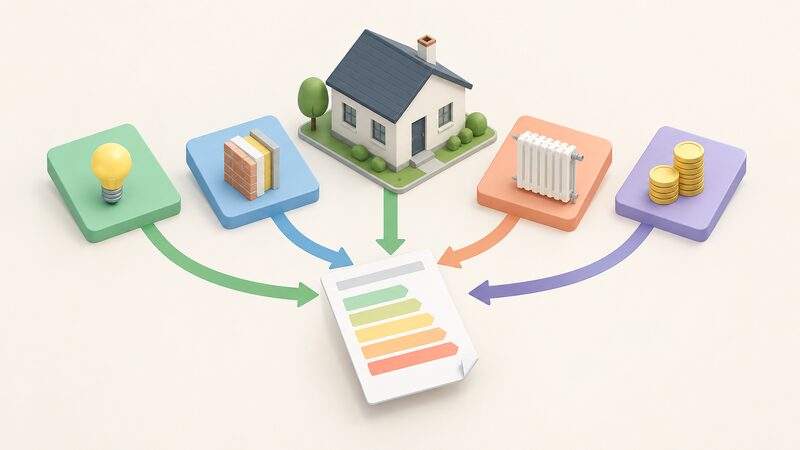
The certificate is a modelled assessment, not a survey. Its cost figure is an estimate of annual expenditure on regulated energy, excluding plug-in appliances, and therefore excluding cooking and plug-in appliances21. That means the running cost on the certificate will not match a household's actual bills, because it leaves out the appliances that a household plugs in and the way the occupants behave.
There are also buildings for which no EPC is required at all. EPCs are not required for protected buildings, places of worship, temporary buildings of two years or less, low energy demand industrial and agricultural buildings, seasonal residential buildings, stand-alone buildings under 50 m2, and buildings suitable for demolition5. A buyer looking at a listed cottage or a small outbuilding should not expect a certificate to exist.
The certificate also says nothing about the physical condition of the heating system, the age of the boiler or whether it has been serviced. Those are questions for the seller and the installer. The Domestic Renewable Heat Incentive guidance illustrates how specific the certificate's data can be: applicants had to check their EPC had a heat demand figure at the bottom of page four, and if not, they had to get another EPC to apply, though they did not need a Green Deal Assessment23. A missing figure on the certificate can therefore block a scheme application, which is worth checking before purchase if any incentive is planned.
The heating system itself: boiler age, type and expected lifespan
The certificate records the heating source, but the age of the boiler is a separate question. Scheme rules give one benchmark: the Affordable Warmth Scheme applies where a boiler is at least 15 years old and the householder meets the other conditions24. That is a grant eligibility threshold rather than a statement about lifespan, but it is a useful reference point when a seller says the boiler is "recent".
The type of system matters as much as its age. The reformed EPC will rank heating system type in categories from 1 to 6, which allows a buyer to see where a gas boiler, a heat pump, a biomass system or direct electric heating sits relative to one another19. The Heating System Type Rating will display the current and potential emissions category of the main heating system, thermal efficiency and running costs18.
For a household thinking about independence, the heating system is the single largest determinant of both running cost and future retrofit cost. A home on mains gas is dependent on the gas network and on a supplier. A home on an off-gas fuel, such as oil or LPG, is dependent on deliveries and on storage. A home with a heat pump is dependent on electricity, and therefore on the grid and a supplier, but not on a combustion fuel. The EPC records which of these applies, and the recommendations report sets out the options.
Running costs and heat demand figures: what they mean and how current they are
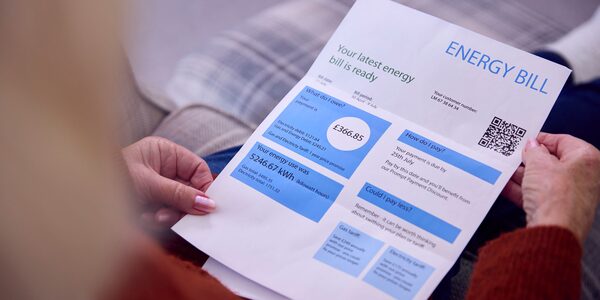
The cost figure on an EPC is an estimate of annual expenditure on regulated energy, excluding plug-in appliances21. It is modelled from standard assumptions about the building, not from the current occupier's bills. A buyer should treat it as a comparison tool between properties rather than a forecast of their own spending.
Heat demand is the other figure to read. In Scotland, the Heat in Buildings Bill consultation proposes an alternative option of meeting the standard based on the result of an EPC assessment, where an EPC demonstrated a home required less than 120kWh/m2/year for space heating8. That is the same threshold used to define good efficiency, and it gives a buyer a concrete number to look for on the certificate.
Where a home is supplied through a heat network rather than an individual supplier, the billing arrangements are different and worth checking. Minimum requirements for billing information on metered heat networks include current charges, consumption information, a comparison with the same period in the previous year, terms of supply, contact details for the relevant consumer advice body, the supplier and billing agent, complaints and emergencies, energy saving information, support mechanisms, the authorised person's identification number and Energy Ombudsman details25. Bills and billing information must be accurate and based on actual consumption26.
If the home is supplied through a business energy contract, the checks before moving in are different again: who holds the energy contract, how energy charges are calculated, how much residents typically pay, whether charges are metered or estimated, whether you can choose your supplier or tariff, and whether it is possible to switch to a domestic contract27.
| Supply arrangement | What to check before exchange |
|---|---|
| Domestic supplier | Tariff, meter type and whether the supply is live27 |
| Heat network | Billing content, metering and consumption comparison25 |
| Business contract | Contract holder, charge basis, ability to switch to domestic27 |
The recommendations report: what improvements the EPC proposes
Every EPC comes with a recommendations report. It provides more detailed information about improvement measures2, and sets out the cost effective measures that homeowners or businesses can take to improve the energy efficiency and energy rating, such as low energy bulbs or upgrading insulation1.
The reformed certificate will go further. Where a polluting heating system is present in a home, the EPC will set out potential improvement options to move to a non-polluting heating system on a technology-neutral basis18. A new Property Report will set out potential improvement measures that could improve the energy efficiency and low carbon performance of the home, ranked by lowest installation cost and greatest heat saved, plus alternative heating systems with potential installation and running costs10.
The consultation evidence supports that emphasis. A majority of respondents agreed that more prominence should be given to the energy efficiency features of a home22. EPCs could also be expanded to provide information on risks posed by climate change and ways to reduce these19.
For a buyer, the recommendations report is the document that turns a rating into a work plan. It is also the document that shows whether a heat pump is among the options the assessor considered, and what the assessor thought it would cost to install and run compared with the existing system.
Solar panels and legacy payments: checking for Feed-in Tariff arrangements before you buy
Solar panels on a roof may carry a legacy payment, and that is a paperwork question rather than a technical one. The Feed-in Tariffs scheme requires participating licensed electricity suppliers to make payments on electricity generated or exported by accredited installations28. Ofgem publishes quarterly reports on the total Feed-in Tariff payments made by FIT licensees, most recently covering the quarter from April to June 202629.
The scheme is closed to new applicants, so an existing accreditation is an asset attached to the installation rather than something a buyer can create. Whether the payments transfer on sale depends on the accreditation and the supplier's records, and the seller should hold the accreditation paperwork. A buyer should ask for it before exchange rather than after completion.
The same principle applies to any other legacy arrangement. The Domestic Renewable Heat Incentive guidance shows how tightly scheme eligibility can be tied to the certificate itself: applicants had to check their EPC had a heat demand figure at the bottom of page four, and if not, they had to get another EPC to apply23. A missing figure on the certificate can therefore block a scheme application, which is worth checking before purchase if any incentive is planned.
Renting versus buying: minimum ratings and what could change

The rules differ between a home being bought and a home being rented. For the private rented sector, no property which has not at least got an Energy Performance Certificate rating of E or above can be rented out unless an exemption applies, and if the property's rating is F or G, then it must be improved to at least an E7.
That standard is under review. The Scottish Government consulted on a potential minimum energy efficiency standard for the private rented sector which would use the reformed domestic EPC's new Heat Retention Rating as a basis for setting the standard, with the consultation closing at the end of August 2025 and the responses under analysis10. The Heat in Buildings Bill consultation states that private rented properties would still be required to meet the minimum energy efficiency standard even if a clean heating system had already been installed8.
For owner occupiers, the direction of travel is set out in advice rather than regulation. The Climate Change Committee has recommended that by 2028 all homes for sale should be at EPC C or higher9. The UK Government will consult on increasing the minimum energy efficiency rating to C or its equivalent by 203031. A buyer weighing a property at band D or E should read those dates as the horizon against which the purchase is being made.
| Tenure | Current minimum | Proposed direction |
|---|---|---|
| Private rented | E or above, unless exempt7 | Consultation on a standard based on the Heat Retention Rating10 |
| Owner occupied | No minimum | CCC recommendation of C or higher for sales by 20289 |
| Owner occupied | No minimum | Consultation on C or equivalent by 203031 |
When to commission a new EPC and what it costs
A new EPC is needed when a building is advertised for sale or for let to a new tenant, and upon completion of construction of a new building6. It is also needed whenever a property is built or marketed for sale or rent1. If the existing certificate is more than ten years old, or a newer one has been lodged for the same address, a fresh assessment is required5.
The cost of the EPC will vary from one company to another and you will have to shop around for the best price5. The price depends on the size, location and age of the building, so there is no single published figure. In London, SHINE London offers limited funding towards the cost of getting a new home energy certificate3. Prices are installer-quoted and no range can be given.
Commissioning a new EPC before purchase is most useful where the existing certificate is old, where the property has been altered since it was issued, or where a scheme application will depend on a specific figure being present. The Domestic Renewable Heat Incentive guidance is the clearest example: a missing heat demand figure on page four meant applicants had to get another EPC to apply23. A buyer who intends to apply for any grant should check the certificate carries the figures the scheme requires before exchange.

What this means for a household's energy independence
The EPC is a map of a home's current dependence. It records the heating source, which tells a buyer whether the home depends on mains gas, on delivered fuel, on a heat network or on electricity3. It records the fabric, which tells a buyer how much of that dependence is fixed by the building rather than by the system. And it records the cost, which tells a buyer what the dependence costs at the time of assessment21.
What it cannot do is remove that dependence. A home on mains gas remains connected to the gas network and to a supplier. A home on a heat network remains dependent on the network operator, with the billing protections set out in the consumer guidance25. A home with solar panels and a legacy payment remains dependent on the supplier that administers the accreditation28. A home with a heat pump remains dependent on electricity and on the grid.
The certificate's value to independence is that it makes the starting point visible before money changes hands. The recommendations report sets out the measures that would reduce the dependence, ranked by cost and heat saved10. The buyer who reads both documents, checks the boiler age against the scheme thresholds24, confirms the supply arrangements27 and asks for the solar accreditation paperwork is in a position to plan the work rather than discover it.
Sources31 cited
- Energy Performance Certificates, nidirect, 2026-02-26
- Energy Performance Certificates guide, Scottish Government, 2026-08-24
- How energy efficiency data can help reduce our carbon footprint, Office for National Statistics, 2020-09-23
- Buildings for sale, Scottish Government, 2026-08-24
- Energy Performance Certificate guidance, Isle of Anglesey County Council, 2025-09
- Energy Performance of Buildings (Scotland) Regulations 2025, legislation.gov.uk, 2025-10-10
- Minimum Energy Efficiency Standards, Planning Portal, 2026
- Delivering net zero for Scotland's buildings: Heat in Buildings Bill consultation, Scottish Government, 2023-11
- Environmental Audit Committee report, UK Parliament, 2026-09-20
- EPC reform consultation government response, Scottish Government, 2025-10
- EPC leaflet, Building Control Northern Ireland, 2014
- Sale and rent EPB leaflet, Building Control Northern Ireland, 2013
- Domestic EPC reform consultation, page 4, Scottish Government, 2021-07-23
- EPB guidance, Building Control Northern Ireland, 2013-09
- Energy Performance of Buildings Regulations 2012, legislation.gov.uk, 2012-12-17
- Energy Performance of Buildings Regulations 2014, legislation.gov.uk, 2014-04-06
- Energy Performance of Buildings (Scotland) Regulations 2025: children's rights impact assessment, Scottish Government, 2025-10-10
- EPC reform consultation government response, Scottish Government, 2025-01-23
- Letter on reform of domestic EPC rating metrics to Lee Rowley MP, Climate Change Committee, 2026-09-19
- Letter on reform of domestic EPC rating metrics to Patrick Harvie MSP, Climate Change Committee, 2026-09-19
- Technical annex for chapter 2: what EPCs measure, UK Government, 2026-03-09
- EPC reform consultation analysis, page 4, Scottish Government, 2025-01-23
- Domestic Renewable Heat Incentive factsheet, Ofgem, 2015-02
- Affordable Warmth Scheme, Northern Ireland Housing Executive, 2026-09-17
- Heat networks consumer protection draft guidance, Ofgem, 2025-09-05
- Heat networks consumer protection draft guidance, Ofgem, 2025-09-05
- If you live in a home with a business energy contract, Ofgem, 2026
- Feed-in Tariffs quarterly report, issue 63, Ofgem, 2026-03-30
- Feed-in Tariff levelisation report, April to June 2026, Ofgem, 2026-08-31
- EPC reform consultation government response, page 1, Scottish Government, 2025-10-10
- Heat in Buildings progress report 2025, page 6, Scottish Government, 2025
 Energy Performance CertificatesAn Energy Performance Certificate rates how energy efficient your home is, from A down to G.
 Get an EPC for Your HomeSelling or renting out a home means you need an Energy Performance Certificate.
 Read an EPCA walk through each part of an EPC: the A to G rating and potential rating, the estimated costs, the fabric and heating assumptions and the recommendation table, plus what the assessor did and did not inspect and how the rules differ across the UK.
 EPC Regulations and ReformSelling or renting out a home means you need an Energy Performance Certificate.
 EPC StatisticsHow energy efficient are UK homes, and is it getting better?
 Housing Stock Data for WalesHow energy efficient are Welsh homes, and how many have a rating?