
In this guide
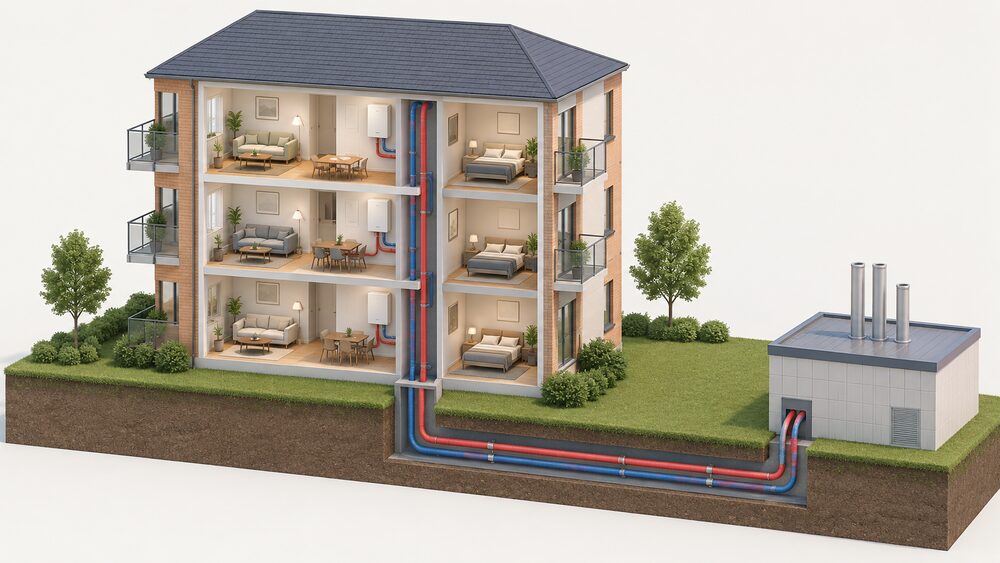
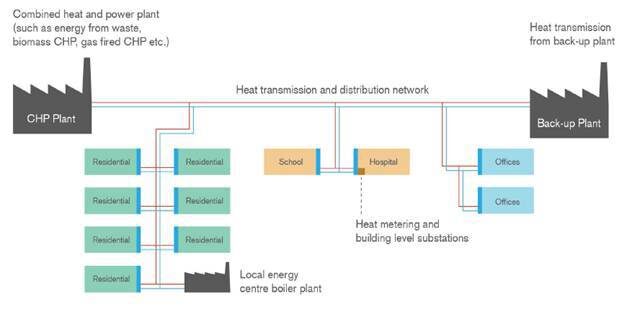
A heat network supplier is the entity that sells heating, cooling or hot water into your home through a communal or district system. Under the regulatory guidance, an authorised person is considered a supplier if they supply heating, cooling or hot water to heat network consumers by means of a relevant heat network1. The heat itself arrives from a central plant through a network of underground pipes carrying hot water2.
The defining feature of the relationship is that there is no market. Heat networks are natural monopolies, one entity is the supplier for all homes and businesses on the network, and most consumers cannot switch suppliers or move to a different tariff3. That single fact shapes everything else on this page: how complaints work, what protection exists, and why regulation rather than competition is the mechanism for holding a supplier to account.
Since 1 April 2025, all heat network suppliers have been bound by the Energy Ombudsman's scheme rules and are required to be members of it4. From the same date, the Ombudsman can help consumers and small businesses resolve heat network disputes5. The service is free to consumers4.
What a heat network supplier is, and who supplies your home
The supplier is not the same thing as the operator, though on many networks one organisation holds both roles. The supplier is the party that bills you for heat; the operator runs the pipes, plant and equipment. Where the authorised person is both supplier and operator, they are required to meet the expectations of the Supplier Standards of Conduct, which are higher than for authorised persons who are operators only2. Operators are also required to share information with the supplier where that sharing is necessary for the supplier to comply with those standards2.
Finding out who supplies your home starts with your bill, because the supplier's name must appear on it. Where that is not clear, the Energy Ombudsman directs people to the Energy Networks Association website to identify the network provider8. If the network is not registered on the Ombudsman's own site, the Ombudsman can be contacted on 0330 440 1624 to raise the dispute9.
The scale of the sector is mixed. Some networks are run by housing associations and named as heat networks in the Ombudsman's register, including River Clyde Homes10, Cynon Taf Community Housing Ltd11 and Sanctuary Housing Association6. Others are commercial heat suppliers, among them Theodore Stevenage Limited12, Metropolitan Infrastructure Limited13, London Square (Spitalfields) Management Company Ltd14, ESP Heat Ltd15, Theodore Bracknell Limited16, Vivid Housing Limited17, Beardvale Ltd18 and Greenhill Housing Association19. Membership of the scheme is what makes each of them reachable through the Ombudsman.
For a household, the independence question is stark. A heat network can remove exposure to a domestic gas boiler and to the gas grid, and it can run on heat sources a single home could not access. What it does not remove is dependence on a supplier: there is no switching route, no competitive tariff, and no alternative provider on the same pipes. The household's leverage is regulatory and procedural, not commercial.
Suppliers that are also landlords: the double duty
A large share of UK heat networks sit inside social housing, purpose-built blocks and managed developments, which means the supplier is frequently also the landlord. The guidance is explicit that where the supplier is also the landlord for the property on the heat network, they should follow both the authorisation conditions and relevant housing legislation20. Two regimes apply at once, and neither cancels the other.
That matters because the two roles create different obligations and different routes of complaint. As a supplier, the organisation owes the consumer protection duties set out in the authorisation conditions. As a landlord, it owes duties under housing law, including on the safety and condition of the home. In Wales, for example, landlords' duties under the fitness for human habitation regime include providing controllable heating systems21.
The practical consequence is that a householder with a problem may need to be clear about which hat the organisation is wearing. A billing error is a supplier matter. A heating system that cannot be controlled, or a home that is cold because of the fabric of the building, may be a landlord matter. Where the same body is both, the complaint can legitimately raise both, but the escalation routes differ: supplier disputes go to the Energy Ombudsman, while housing disputes follow the landlord's own complaints process and, ultimately, the relevant housing ombudsman for the nation.
The double duty also raises the stakes on record-keeping. Where a landlord charges for heat through rent or a service charge rather than a separate heat bill, the guidance states that when individual metering comes into effect for networks covered by the Landlord and Tenant Act, suppliers would be expected to charge for heat separately and unbundle the heat charge from service charges or rent2. That separation is what makes a heat charge visible, and therefore disputable, as its own item.
What your supplier must do: billing, outages and vulnerability support
The obligations on a heat network supplier go well beyond sending a bill. Heat network suppliers are obliged to identify occupants in vulnerable situations and to provide them with any relevant additional support, including offering to put them on the Priority Services Register3. Those protections apply to domestic consumers; the guidance states they are not relevant to non-domestic consumers2.
Support during an interruption is a specific duty. Operators are expected to offer appropriate alternative sources of heat to consumers in vulnerable situations during interruptions to supply, to maintain a priority register and to proactively check in with affected consumers2. Vulnerability support also includes being able to raise and progress a complaint through a third party, such as carers, guardians and advocacy bodies2.
On money, suppliers must signpost and refer to external debt advice services, such as Citizens Advice and National Debtline2, and are required to provide for the setting of payment plans over a longer than normal period where the consumer is in a vulnerable situation2. The guidance also expects authorised persons to consider their consumers' needs and the scale and complexity of their heat network in order to allocate resources accordingly2.
Suppliers must tell consumers how to contact the relevant consumer advice organisation, whether Citizens Advice or Consumer Scotland1. For consumers in Scotland, the relevant consumer advice bodies are Citizens Advice Scotland and Consumer Scotland, and any related, qualifying consumer advice bodies3.
What your bills must show on a metered network
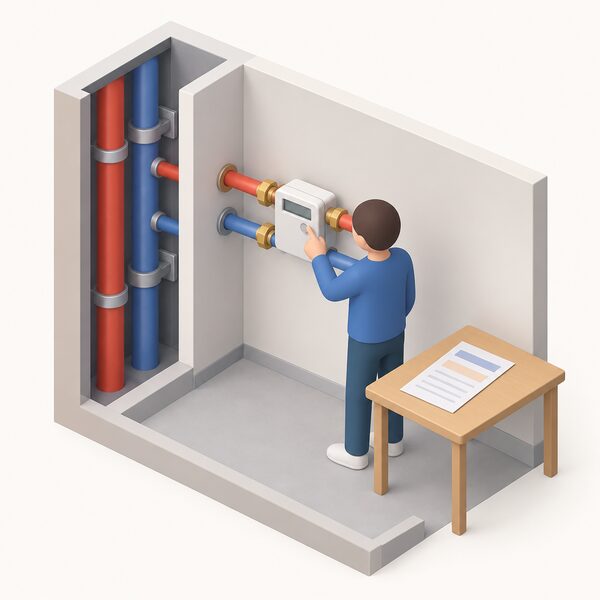
Bills and billing information provided to the relevant consumer for the consumption of heating, cooling or hot water on metered heat networks must be accurate and based on actual consumption3. The same standard appears in the draft guidance: accurate, and based on actual consumption1.
At a minimum, at least once a year a bill must be issued to the relevant consumer using a supply meter on the basis of actual rather than estimated consumption, provided a reasonably accurate meter reading has been provided or taken3. The Heat Network (Metering and Billing) Regulations require that, where cost effective and technically feasible, heat network suppliers must provide individual meters to heat network customers, and provide them with bills based on the meter readings22.
The minimum content of billing information is long and specific. It includes current charges, consumption information, a comparison with the same period in the previous year, the terms of supply, contact details for the relevant consumer advice body, supplier and billing agent contact details, complaints contact, emergencies contact, energy saving information, support mechanisms, the authorised person's identification number allocated by the Authority (if any), and Energy Ombudsman details1. Consumption comparisons should, if possible, be displayed in a graph and use estimates of consumption where necessary, alongside estimates of the charges the consumer is likely to pay in future2.
Unmetered consumers are not left out. As a minimum, unmetered heat network consumers must be provided with the charges for the relevant period, a clear and understandable explanation of how their bill has been calculated, and the final due date for payment together with the acceptable methods of payment3. The guidance states that if the relevant consumer is on an unmetered heat network, the supplier should employ the same billing and billing information requirements as for metered networks1.
| Requirement | What it means in practice |
|---|---|
| Accuracy | Bills must be accurate and based on actual consumption3 |
| Annual actual bill | At least one bill a year on actual, not estimated, consumption where a reasonable reading exists3 |
| Year-on-year comparison | Current consumption compared with the same period the previous year, in a graph if possible2 |
| Advice signposting | Contact details for the relevant consumer advice body must appear1 |
| Ombudsman details | Energy Ombudsman contact information must be included1 |
| Unmetered networks | Charges, a clear explanation of the calculation, the due date and payment methods3 |
The Heat Interface Unit: how heat enters your home
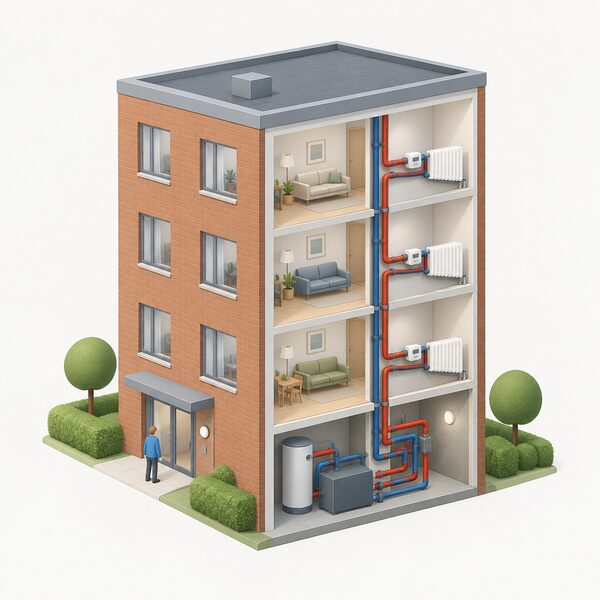
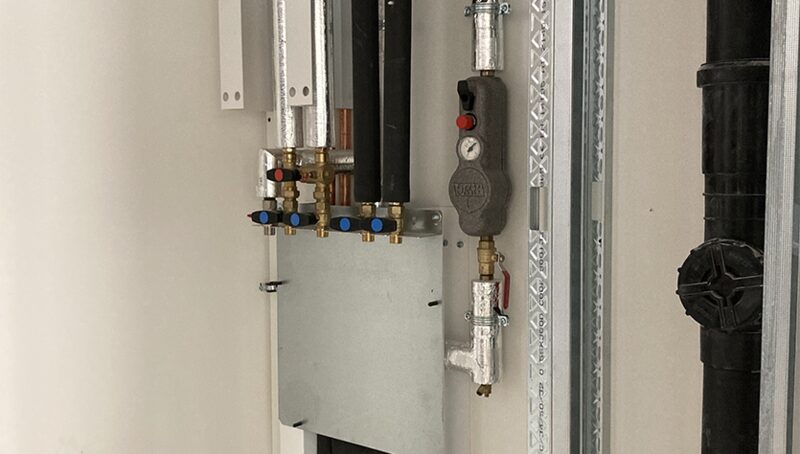
The heat interface unit, usually shortened to HIU, is the piece of equipment inside the home that takes hot water from the network and transfers it to your heating and hot water. It is the domestic boundary of a system whose pipes are shared, and it is the part of the network a resident actually interacts with.
The guidance places a duty on the operator to explain it. Heat network operators should ensure that consumers are proactively and regularly informed about how to interact with key parts of the network infrastructure, such as heat interface units, at regular intervals or during key events like tenancy changes or maintenance visits2. In other words, the explanation is not supposed to wait until something breaks.
Responsibility for the HIU is a common source of confusion, and the split generally follows the boundary. The network side, including the pipework and plant that serve the whole building, sits with the operator. The unit inside the home is where the two responsibilities meet, and the practical answer to who fixes it depends on the terms of supply and, where the supplier is also the landlord, on the tenancy. Because the guidance requires operators to inform consumers about how to interact with the HIU, the first step for a householder is to check what the supplier or landlord has already told them about the unit and its controls.
When things go wrong: complain to your supplier first
Every route starts in the same place. Customers who believe they have been unfairly treated by their heat network provider should complain to their provider in the first instance22. Ofgem's advice is equally direct: if you are on a heat network, contact your heat network supplier about the problem23. The Energy Ombudsman's own instruction is to speak to your energy supplier first to raise a complaint, and if they cannot help, the Ombudsman will aim to fairly and impartially resolve the dispute24.
The party responsible for handling complaints is the Energy Ombudsman, but before contacting the Ombudsman, consumers should first notify their heat supplier and try to resolve the issue1. The heat supplier has eight weeks to resolve the complaint1. The decision document confirms that the period after which a complaint can be escalated to the Energy Ombudsman remains eight weeks for heat networks3.
Where a landlord or site owner resells energy, the same first step applies: contact them first25. Where a household has its own contract with an energy supplier, the supplier's complaints procedure applies, and the details should be on the bill or on the supplier's website25. Typical complaint subjects include late, incorrect or missing bills, back billing, being overcharged, a faulty meter, poor customer service, and refusing to refund credit from an account26.
"Consumers need to know that before contacting the Energy Ombudsman, they should first notify their heat supplier and work to resolve the issue."
Escalating to the Energy Ombudsman: the 8-week rule and deadlock letters

The Energy Ombudsman provides an independent escalation route for consumer complaints27. It describes itself as an independent service, separate to Ofgem, for problems with an energy supplier, an energy broker, a network operator or a heat network supplier23. Its dispute scope covers energy suppliers, energy brokers, network operators, Green Deal providers and heat network suppliers28.
Eligibility for a heat network dispute turns on two things: having complained to the supplier already, and either holding a deadlock letter or having waited eight weeks. The standard wording is that it has been at least eight weeks since the issue was first raised with the supplier, or a deadlock letter has been received6. The same condition appears across the Ombudsman's heat network pages12. A deadlock letter is described as a letter stating that the problem cannot be fixed or that the supplier believes there is no more it can do26.
The evidence requirement is specific. A complainant must have sufficient evidence to support the case, including the date the complaint was raised with the supplier12, and the supplier name on the dispute must match the account holder's bill15. The Ombudsman can be reached on 0330 440 1624, pressing option 3 for Heat Networks when prompted9, and by post at Energy Ombudsman, P.O. Box 966, Warrington, WA4 9DF29.
What the Ombudsman can and cannot do, and what awards look like
The Ombudsman's powers are remedial, not punitive. It states that it cannot punish companies, dictate how companies operate, or issue fines7. What it can do is tell suppliers to take practical action, such as crediting or cancelling an account or changing a tariff, to make an apology, or to offer a financial award, or a combination of these, and it may make recommendations to prevent the issues happening again7.
Financial awards are based on the cost of putting things right, such as ensuring the consumer has been charged accurately, clearing unfair charges or fixing faults7. The maximum is up to £10,000 for domestic energy disputes or up to £20,000 for small business disputes, and the same ceilings apply to heat networks and to energy networks7. The level of maximum financial award may vary depending on the type of energy company and the Terms of Reference that cover that scheme7.
On timing, most disputes are resolved within six weeks of the Ombudsman receiving evidence from both parties7. The service is free to consumers looking to resolve energy disputes4. It can process complaints for both domestic and small business consumers in the energy sector28, and from 1 April 2025 it can help consumers and small businesses resolve heat network disputes5.
Small business eligibility has thresholds. A microbusiness is defined as a company with an annual consumption of electricity of not more than 100,000 kWh, or gas consumption of not more than 293,000 kWh4. There are also exceptions to scheme membership: disputes that relate to heat suppliers who were members of Heat Trust prior to 1 April 2025 and are specifically about Heat Trust scheme rules, or that concern certain issues relating to the Energy Bills Relief Scheme or Energy Bills Discount Scheme4.
What the Ombudsman can do about EBRS and EBDS pass-through

The Energy Ombudsman can review disputes with any heat network if the heat network supplier has not done what is required of them by the Energy Bill Relief Scheme and Energy Bill Discount Scheme legislation30. This is a distinct route from the general heat network dispute service, and it exists because support schemes for heat network customers depend on suppliers passing benefits through.
Under the EBRS, a complaint can be made on grounds that the supplier has not notified the customer that it has benefited from the scheme, has not notified how it will pass through the benefit, has not passed on the benefit within the timeframe required by the regulations, or has not otherwise complied with pass-through requirements30. Under the EBDS, the grounds cover a supplier provided with the higher level of heat network EBDS support failing to notify the customer of the benefit, failing to notify how and when it will pass on the higher discount rate, failing to pass on the benefit within the required timeframe, or otherwise failing to comply with pass-through requirements30.
The background is that these schemes require third party intermediaries to pass on benefits to end users22. Where a heat network is not registered on the Ombudsman's website, the Ombudsman asks that it be contacted on 0330 440 1624 to raise the dispute30.
Free help: Citizens Advice and Consumer Scotland
Advice is free and separate from the supplier. Suppliers must tell consumers how to contact the relevant consumer advice organisation, whether Citizens Advice or Consumer Scotland1. For consumers in Scotland, the relevant consumer advice bodies are Citizens Advice Scotland and Consumer Scotland, and any related, qualifying consumer advice bodies3.
Energyadvice.scot runs a free service for Scottish citizens who have questions about their energy supplier, want to understand their supplier's complaints process, or have problems with their energy bills26. In Scotland, the Heat Network Support Unit is sponsored by the Scottish Government and delivered in partnership with Scottish Futures Trust and Zero Waste Scotland27.
The wider consumer landscape differs by nation. The Consumer Council for Northern Ireland covers electricity, oil and gas switching matters in Northern Ireland, and publishes comparison tables and tariff change notices for the separate Northern Ireland market. Households in England, Wales and Scotland are served by Citizens Advice, with Consumer Scotland and Citizens Advice Scotland taking the Scottish role.
For a household on a heat network, these bodies are the practical first stop for understanding what a supplier owes, before any formal dispute begins. They do not decide disputes and cannot compel a supplier, but they can explain the standards, help frame a complaint, and point to the correct escalation route.
Sources30 cited
- Heat networks consumer protections draft guidance, Ofgem, 2025-09-05
- Heat networks consumer protections draft guidance, Ofgem, 2025-09-05
- Heat networks regulation consumer protection guidance decision, Ofgem, 2026-01-13
- Energy Ombudsman FAQs, Energy Ombudsman, 2026-09-19
- How we can help, Energy Ombudsman, 2026-09-19
- Raise a dispute: Sanctuary Housing Association, Energy Ombudsman, 2026-09-19
- What to expect, Energy Ombudsman, 2026-09-19
- Network operators, Energy Ombudsman, 2026-09-20
- Raise a dispute, Energy Ombudsman, 2026-09-19
- Raise a dispute: River Clyde Homes, Energy Ombudsman, 2026-09-19
- Raise a dispute: Cynon Taf Community Housing (2007) Ltd, Energy Ombudsman, 2026-09-19
- Raise a dispute: Theodore Stevenage Limited, Energy Ombudsman, 2026-09-19
- Raise a dispute: Metropolitan Infrastructure Limited, Energy Ombudsman, 2026-09-19
- Raise a dispute: London Square (Spitalfields) Management Company Ltd, Energy Ombudsman, 2026-09-19
- Raise a dispute: ESP Heat Ltd, Energy Ombudsman, 2026-09-19
- Raise a dispute: Theodore Bracknell Limited, Energy Ombudsman, 2026-09-19
- Raise a dispute: Vivid Housing Limited, Energy Ombudsman, 2026-09-19
- Raise a dispute: Beardvale Ltd, Energy Ombudsman, 2026-09-19
- Raise a dispute: Greenhill Housing Association, Energy Ombudsman, 2026-09-19
- Heat networks policy guidance and resources, Ofgem, 2026-09-17
- Fitness for human habitation guidance for landlords, Welsh Government, 2022-01-13
- Heat networks research briefing, House of Commons Library, 2026-09-17
- Complain about your energy supplier or network operator, Ofgem, 2026
- Facilitated complaints resolution, Energy Ombudsman, 2026-09-20
- Alternative homes energy guidance, Ofgem, 2026
- Complain about your energy supplier, Ofgem, 2026
- Heat networks, Scottish Government, 2026-09-17
- We may be able to help resolve your energy dispute, Energy Ombudsman, 2026-09-20
- Creating a case with the Energy Ombudsman, Energy Ombudsman, 2026-09-20
- Heat networks affected by the Energy Prices Act 2022, Energy Ombudsman, 2026-09-20
 Check Supply Capacity FirstAdding a heat pump, car charger or home battery can push your electricity supply past what it can safely handle.
 Rented Homes and Landlord MetersWho is responsible for the energy in your rented home?
 Electricity Supply and WiringWill your fuse box cope with a heat pump, and will the mains supply need upgrading?
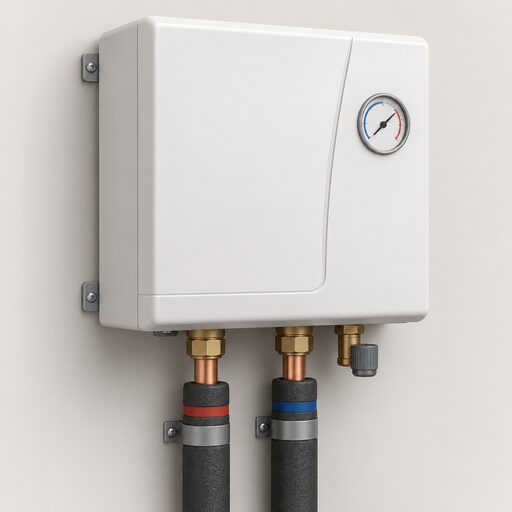 Heat Network RegulationYour home is heated by a shared network instead of your own boiler.
 Gas Distribution NetworksWho actually owns the pipes under your street, and who do you call when gas smells or the supply fails?
 Controls in Rented HomesCan you change the heating controls in a rented home, and who pays if they break?