

In this guide
Switching energy supplier is meant to be a five working day process, and when it goes wrong the Guaranteed Standards of Performance require the supplier at fault to pay compensation automatically rather than waiting to be asked. The core figures are £40 for a switch that is not completed on time, £40 if your supply is switched by mistake, and a further £40 in each of four situations where a supplier drags its feet afterwards. Payment should arrive by cheque or bank transfer within 10 working days of the date the supplier agrees a mistake was made1.
The same framework covers final bills and credit refunds. Your old supplier must refund any credit left on the account when you switch, and compensation is available if it does not2. Separately, and often confused with supplier compensation, power cut payments come from your local electricity network operator rather than your energy supplier, and run at £100 for a cut lasting more than 24 hours, plus £45 for every additional 12-hour period without electricity4.
This page sets out what the standards require, the deadlines that trigger each payment, the four ways a supplier can owe you more than the basic sum, the storm rules that stretch restoration deadlines to 24 or 48 hours, and the exclusions that mean no payment is due. It also covers the smart meter standards now being tightened, and where the rules are heading.
What the Guaranteed Standards of Performance are and who pays them
The Guaranteed Standards of Performance are minimum service standards that all energy suppliers must meet, with automatic payments issued to affected consumers when they are not met7. Ofgem describes them as setting out minimum performance standards which all energy suppliers must meet and, when they do not, automatic compensation follows7. The design principle is that the household does not have to notice the failure, work out what it is owed and ask: the payment is triggered by the breach itself.
The standards sit in two layers. The supplier standards cover the relationship between a household and the company that bills it: switching, final bills, credit refunds, reconnection and, increasingly, smart meters. The distribution standards cover the relationship between a household and the electricity distribution network operator that owns the wires in its area, and they specify what that operator must pay a customer or relevant authority if it fails to meet specified standards of performance8. Ofgem's guidance for the 2026 to 2027 regulatory year sets out those network payment amounts, calculated by adjusting the values on or after 1 April 2025 by the percentage change in the Consumer Prices Index including owner occupiers' housing costs published for the month of January, with distribution network licensees required to put them into place by 1 April 20268.
The distinction matters for a household trying to work out who owes what. A switch that never completes is a supplier matter. A power cut that lasts three days is a network operator matter, even though the payment may reach you through your energy account. Ofgem's own guidance directs households with a power cut or connection issue in their area to the network operator, and everything else about billing and service to the supplier9.
The standards are enforced through the licence conditions that suppliers hold, and the compensation is a payment rather than a discount or a credit note, though it can be delivered in several ways. Network operators may pay through a cheque, cash or bank transfer, automatically if they have your bank details, or via your energy supplier added to your energy account or prepayment meter4. That flexibility is practical rather than generous: it means a household in credit on its energy account can see the money absorbed into the balance rather than arriving as cash.
For a household's energy independence, the standards are a modest but real protection. They do not reduce dependence on the grid or on a supplier, and they do nothing about the price of a unit of gas or electricity. What they do is put a cost on a supplier's failure to perform a task the household cannot do for itself, which is the closest thing the retail market has to a service guarantee.
Switching compensation: what suppliers owe you when a switch goes wrong
Suppliers must switch your electricity or gas supply from your old supplier to your new supplier within 5 working days1. If they do not, your new supplier must pay you £401. The obligation sits with the gaining supplier, which is the company that will be billing you afterwards, so the payment is not something the household has to chase across two companies.
The eligibility rule is broad. If you pay a supplier directly for the electricity or gas you use at home, you can choose to switch to a different supplier or tariff at any time1. That covers the ordinary domestic case. It does not cover households on a heat network, which cannot switch supplier at all1, nor residents in certain alternative arrangements where the contract sits with a landlord or site owner rather than the household. Where a resident has their own contract with an energy supplier, they may be able to switch their business energy supplier, and where they do not have a contract they can still make a complaint directly to the supplier10.
There are two switching restrictions that are about debt rather than performance. You cannot switch if you have been in debt to your supplier for more than 28 days, and a prepayment meter customer can switch while owing up to £5001. Those rules sit alongside the compensation regime rather than inside it: a blocked switch caused by debt is not a breach of the switching standard.
The final bill is part of the same picture. When you switch to a new supplier, your old supplier will refund any credit in your final bill, and you could get compensation if it does not11. The same wording appears across Ofgem's billing guidance, which treats the credit refund as an obligation with a compensation consequence rather than a favour2.
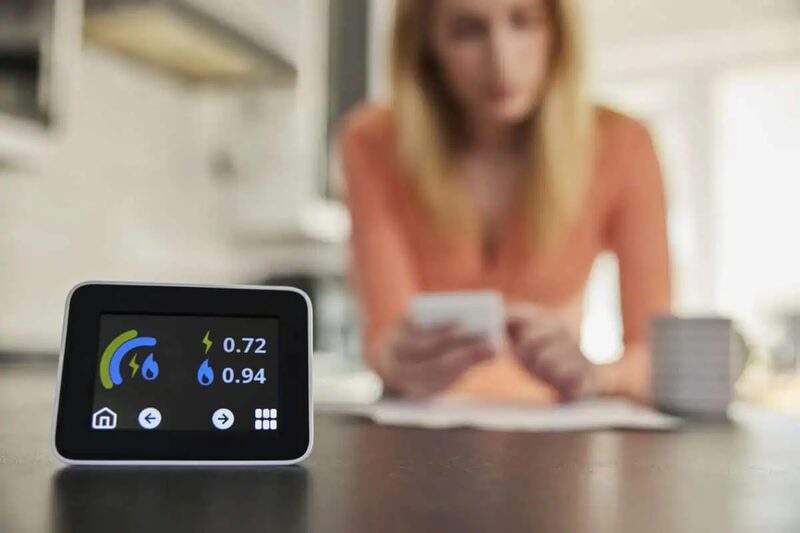
The £30 payment and the 10-working-day deadline

The £30 figure has a specific and narrow role in this system, and it is easy to misread. It is not the standard switching payment, which is £40. It is the sum that has been awarded where a supplier fails to make the initial guaranteed standards payment within 10 working days: the Energy Ombudsman has required a further £30 for failing to make the initial guaranteed standards payment within that window12.
The underlying deadline is the one that matters most in practice. Where a switch has gone wrong, the supplier should pay by cheque or into your bank account within 10 working days of the date they agree a mistake was made1. The clock therefore starts on agreement, not on the date of the error, which is why a supplier that disputes a mistake for weeks can delay payment without breaching the payment deadline itself.
The £30 also appears in an older context. Ofgem's 2018 vulnerability report records that where a customer is disconnected for non-payment and not reconnected within 24 hours, the supplier must pay the customer £30 compensation13. That is a different guarantee from the switching regime, and the two should not be conflated: one is about a failed switch, the other about a failure to restore supply after a disconnection.
There is an unresolved point in the record on the level of the standard payment. Ofgem's 2018 consultation on the switching standards states that the existing standard compensation payment of £30 is an appropriate level of compensation for a breach of the guarantee14, while the same consultation document also refers to a £30 or £15 standard payment14.
Extra £40 payments: the four ways a supplier can owe you more
Beyond the basic £40 for a late or mistaken switch, the standards add a further £40 in four defined situations. Each is a separate breach with its own trigger, and they can in principle stack.
| Situation | Trigger | Payment |
|---|---|---|
| Late reply | Supplier takes more than 20 working days to reply after you report the switching mistake | £40 extra1 |
| Suppliers cannot agree | Old and new suppliers take more than 20 working days to agree whether the switch was correct | £40 each1 |
| Slow re-registration | Old supplier takes more than 21 working days to re-register your supply once it knows about the mistake | £40 extra1 |
| Switch by mistake | Your energy supply is switched without your agreement | £401 |
The structure is deliberate. The first two triggers put a price on delay in communication and on disagreement between companies, both of which leave the household in limbo without any decision being made. The third covers the specific mechanics of putting a wrongly transferred supply back where it belongs, which requires the old supplier to re-register the meter point. The fourth compensates the erroneous switch itself.
Where the two suppliers cannot agree, both pay. That is unusual in a compensation regime, and it reflects the fact that the household has no visibility into which company is at fault and no ability to resolve the disagreement. The £40 each is a cost imposed on the pair rather than a finding about either.
The Energy Ombudsman's casework shows how these payments combine with wider remedies. In one switching case, the Ombudsman required the supplier to provide a payment equal to the difference between what the consumer was charged and what they would have been charged from the date the supply should have transferred up until the date the supply transferred12. That is a remedy for the harm caused by the delay, on top of the standard payment for the breach. The Ombudsman's general position is that where a mistake has been made or a consumer has been treated unfairly, it can require the supplier to put things right15.
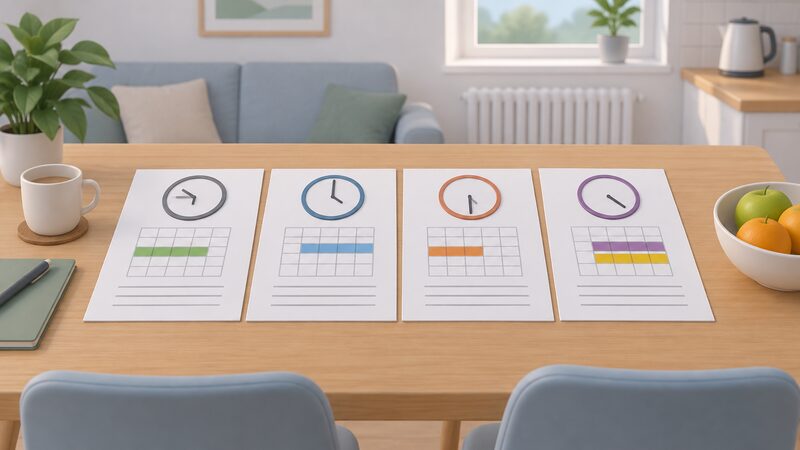
Power cut compensation from your network operator, not your supplier
Power cut payments come from the local electricity network operator, not from the energy supplier that bills you. Ofgem's guidance is direct on the routing: contact your network operator if you have a power cut or connection issues in your area9. The supplier handles late, incorrect or missing bills, back billing, overcharging, a faulty meter, poor customer service and a refusal to refund credit from your account16.
The payment levels are set out in Ofgem's power cut guidance and are the same across the network areas it covers. A cut lasting more than 24 hours attracts £100, and an extra £45 is payable for every additional 12-hour period without electricity4. The worked examples make the arithmetic concrete: a power cut lasting more than 12 hours and interrupted for 36 hours could produce 2 additional £45 payments, adding up to £90, while a cut lasting more than 24 hours and interrupted for 72 hours could produce 4 additional £45 payments, adding up to £1804.
Businesses are treated differently. For planned and unplanned power cuts, a business can get £1204. That is a single figure rather than a scale, and it reflects the different guarantee that applies to non-domestic premises.
There is also a payment for repeated interruptions. You could get an extra £100 if your power has gone off more than 4 times between 1 April and 31 March the following year, with each cut lasting at least 3 hours4. This one covers homes and businesses but has to be claimed, which makes it the exception to the automatic principle that runs through the rest of the regime.
The amounts are not fixed forever. Ofgem states that it reviews and updates the amount you will be paid for a power cut each year based on inflation17. That is why the figures should be read with their date: the £100 and £45 levels are those published in current guidance, and the network operator standards for 2026 to 2027 were adjusted using the January CPIH figure8.
For a household, the practical significance is that a long outage is one of the few grid failures that carries a cash consequence. It does not restore the supply, and it does not reduce dependence on the network, but it puts a defined cost on the operator for leaving a home without power beyond the deadline.
How much you get for a power cut: £100 plus £45 for each extra 12 hours
The power cut scale is worth setting out in full because the interaction between the headline payment and the additional periods is where most confusion arises.
| Duration of unplanned cut | Payment |
|---|---|
| More than 24 hours | £1004 |
| More than 12 hours, interrupted for 36 hours | 2 additional £45 payments, adding up to £904 |
| More than 24 hours, interrupted for 72 hours | 4 additional £45 payments, adding up to £1804 |
| More than 4 cuts in a year, each at least 3 hours | An extra £100, claim required4 |
| Planned or unplanned cut, business premises | £1204 |
The additional payments are calculated per 12-hour period without electricity, so the total rises with the length of the outage rather than being capped at a single sum5. A household without power for three days is therefore looking at the £100 base plus a series of £45 additions, not a flat payment.
The frequent interruptions payment works on a different logic. It is an annual test rather than a single-event test: more than four cuts between 1 April and 31 March the following year, each lasting at least three hours, triggers an extra £1004. Because it requires a claim, a household that suffers repeated short outages needs to keep its own record of dates and durations. The network operator will hold data on interruptions, but the claim has to be made.
The annual review point bears repeating here because it affects how a household should read any figure it finds. Ofgem reviews and updates the amount paid for a power cut each year based on inflation17. A figure quoted in an older article may therefore be out of date even if it was correct when published.
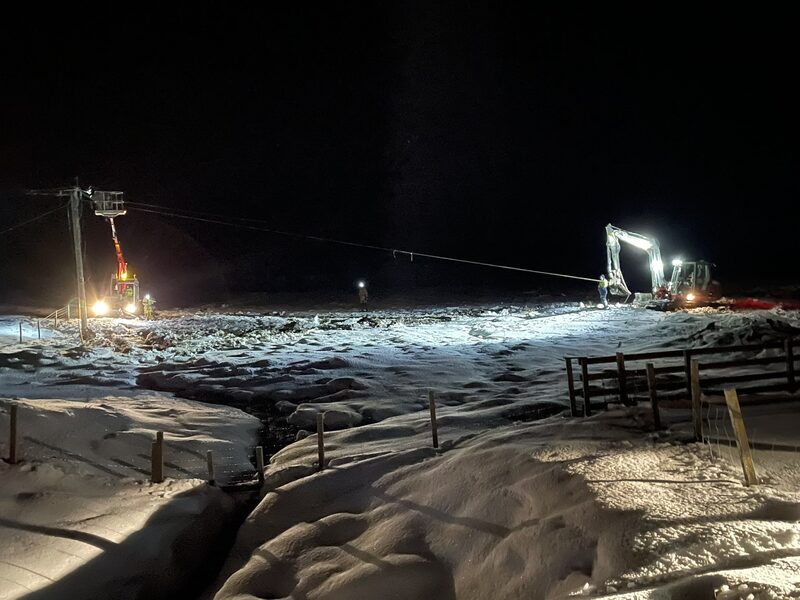
Storms and severe weather: when the deadlines stretch to 24 or 48 hours
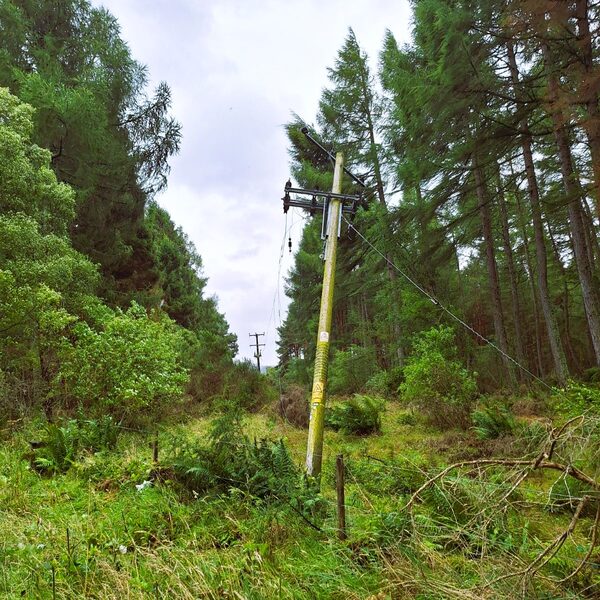
Severe weather changes the deadlines rather than removing them. Outside severe weather, the restoration deadline for an electricity supply interruption is 12 hours4. In severe storm category 1 weather it stretches to 24 hours, and in severe storm category 2 weather to 48 hours4.
The compensation scale changes with the category. For storm category 2, a household or business can get £90 for the first 48 hours and an extra £45 for every 6 hours after5. That is a different structure from the ordinary power cut scale, where the additional payments run per 12-hour period. The storm scale is more generous per unit of time because the disruption is expected to be longer and more widespread.
The legal framework behind these exemptions sits in the Electricity and Gas (Standards of Performance) (Suppliers) Regulations 2015, which set out the grounds on which a supplier is exempt from a standard. Those grounds include severe weather conditions, the act or default of a person who is not an officer, employee or agent of the supplier, the inability of the supplier to obtain any necessary access to any premises, likely breach of an enactment, emergency regulations under Part 2 of the Civil Contingencies Act 2004, and other exceptional circumstances beyond the supplier's control6.
That list is worth reading carefully, because it defines the boundary of the whole regime. Severe weather is a recognised excuse, which is why the deadlines stretch rather than the payments disappearing. Access failure is a recognised excuse, which is why a household that refuses entry for a repair may find no payment is due. And the catch-all for exceptional circumstances beyond the supplier's control is broad enough that disputes about whether a particular event qualifies are likely to end up with the Ombudsman rather than being resolved by the wording alone.
For a household in an area prone to winter storms, the practical implication is that the clock a network operator is working to depends on a weather classification the household cannot see. The payment follows the classification, so a cut that feels severe may fall under the ordinary 12-hour deadline if it has not been categorised as a storm.
Automatic payment versus making a claim
Most of the regime is automatic by design. The Guaranteed Standards set out minimum performance standards which all energy suppliers must meet and, when they do not, automatic payments are issued to the affected consumers7. The switching standards were built on the same principle: Ofgem's consultation described new Guaranteed Standards requiring suppliers to automatically provide consumers with compensation when switches go wrong18.
The automatic principle has limits, and the Energy Ombudsman has said so. The Ombudsman supports automatic compensation but notes it does not resolve all issues and sometimes creates new issues, such as disputes from consumers who believe they are entitled to it but have not received it19. That is a candid assessment from the body that handles the resulting complaints, and it explains why a household that expects a payment and does not receive one should treat it as a dispute rather than an oversight.
Where a payment is not made, the Ombudsman's approach is to make it happen. In circumstances where a supplier has not made the standard compensation payment, the Ombudsman will make an award that ensures the consumer is compensated in line with the regulations15. That is a stronger position than a discretionary goodwill payment: the award is calibrated to the regulatory entitlement.
The route to that point runs through the supplier first. The first thing a household needs to do is log a dispute with the supplier15. The Ombudsman can then review the complaint once the household has received a deadlock letter or eight weeks have passed without the complaint being resolved20. Complaints the supplier handles include late, incorrect or missing bills, back billing, being overcharged, a faulty meter, poor customer service and refusing to refund credit from your account16.
The outcomes available are wider than cash. A complaint can result in financial compensation, an apology, an agreement to fix the problem, a refund, or an affordable payment plan16. For a household whose real problem is a wrong bill rather than a missed deadline, the correction may matter more than the payment.
Exclusions and limits: when no payment is due

The exclusions fall into two groups: events that are not the supplier's or operator's responsibility at all, and circumstances in which the supplier is legally exempt from the standard.
On power cuts, no payment is due for blackouts caused by a national power shortage, damage to electrical equipment or appliances, or a low supply after a power cut4. The first of those is the significant one: a national shortage is a system event rather than a network failure, and the compensation regime does not reach it. The other two cover cases where the supply was restored but the household's own equipment was affected, or where voltage remained low after restoration.
On billing, the exceptions are narrower than they first appear. Standard Licence Condition 21BA, which governs the back billing protections, has exceptions, for example where the supplier had already sent an accurate bill before but the customer has not paid the relevant charges21. That is a common-sense carve-out: the protection against unexpected back bills does not extend to a bill the household has already received and ignored.
The statutory exemptions in the 2015 Regulations apply across the supplier standards and include severe weather conditions, the act or default of a person who is not an officer, employee or agent of the supplier, the inability of the supplier to obtain any necessary access to any premises, likely breach of an enactment, emergency regulations under Part 2 of the Civil Contingencies Act 2004, and other exceptional circumstances beyond the supplier's control6. Access is the one households most often trigger without realising: a missed appointment caused by nobody being home can remove the entitlement.
There is also a structural limit that has nothing to do with fault. The energy price cap applies where a customer has not signed up for a fixed-term contract with their supplier22, and the compensation regime sits alongside the price rules rather than inside them. A household on a fixed-term contract has different protections on price, but the same Guaranteed Standards on service.
Finally, the regime does not cover every household. Heat network customers cannot switch supplier1, and residents who pay a landlord or site owner rather than a supplier directly are in a different relationship with the companies involved, though they can still complain to the supplier where they do not have a contract with it10.
Smart meter standards and where the rules are heading
The newest layer of the regime concerns smart meters, and it is being tightened. The government's guide sets out the standards energy suppliers should follow at each stage of the customer's smart meter journey23. Ofgem's consultation proposes that energy suppliers take all reasonable steps to ensure smart meters are operating in smart mode as soon as possible and within 90 days7, and the policy framework sets a recovery deadline of no later than 90 days from the date energy suppliers are first aware that a meter has dropped out of smart mode24.
The enforcement has already begun to bite. Following reforms brought forward by Ofgem, suppliers will have no more than 90 days to repair faulty smart meters6. The same announcement records that the reforms were brought forward by Ofgem, with the £40 smart meter compensation administered by Ofgem6. That places smart meter failures inside the same automatic payment logic as switching failures.
The legal basis for the next stage is a change to licence conditions. Implementation of the proposals will require amendments to conditions in the Standard Licence Conditions for Gas and Electricity respectively24. Until those amendments take effect, the standards described in the government's guide are expectations rather than enforceable payment triggers, which is why the smart meter element of the regime is best described as heading in the same direction as switching rather than having arrived.
There is a limit on how far a household can push back. Only under exceptional circumstances would a supplier be expected to change a smart meter to a traditional meter, and the supplier may charge the costs if it agrees25. A household that wants to return to a traditional meter is therefore asking for something the framework does not generally provide, and may be asked to pay for it.
For energy independence, the smart meter rules matter more than they look. A meter stuck in traditional mode cannot support time-of-use tariffs, export payments or the detailed consumption data that lets a household match its use to its own generation. The 90-day repair obligation is, in effect, a rule about keeping the data layer of a home's energy system working. The Energy Ombudsman's own guidance on smart meters sits alongside this, and the dispute route is the same as for any other supplier failure25.
Sources25 cited
- Switch your home energy supplier, Ofgem, 2026
- Understand your electricity and gas bills, Ofgem, 2026
- Check if you are owed money on your energy bill, Ofgem, 2026
- Check if you can get payment for a power cut, Ofgem, 2026
- Plan for a power cut, Ofgem, 2026
- Tough new rules force suppliers to fix faulty smart meters, GOV.UK, 2026-03-10
- Smart Meter Guaranteed Standard Statutory Consultation, Ofgem, 2025-08-08
- Adjustments to Guaranteed Standards of Performance 2026, Ofgem, 2026-03-13
- Complain about your energy supplier or network operator, Ofgem, 2026
- Alternative homes energy guidance, Ofgem, 2026
- How your electricity or gas bill is calculated, Ofgem, 2026
- Switching case study, Energy Ombudsman, 2026-09-20
- Vulnerability report 2018, Ofgem, 2018
- Way forward on supplier Guaranteed Standards for switching, Ofgem, 2018-12
- Understanding your rights, Energy Ombudsman, 2026-09-20
- Complain about your energy supplier, Ofgem, 2026
- Check if you can get payment for a power cut, Ofgem, 2026
- Supplier Guaranteed Standards of Performance switching final decision, Ofgem, 2019-02-13
- Review of Ofgem call for evidence, Energy Ombudsman, 2025-02-28
- Raise a dispute with Energy Swap, Energy Ombudsman, 2026-09-19
- Open letter on Standard Licence Condition 21BA, Ofgem, 2020-05-07
- Energy price cap research briefing, House of Commons Library, 2026-09-20
- Smart meters: your rights and expectations, GOV.UK, 2025-08-08
- Smart metering policy framework post 2025 consultation, GOV.UK, 2025-08
- Smart meters, Energy Ombudsman, 2026-09-20
 Switching SupplierHow long does switching energy supplier actually take, and what happens if you owe money?
 Final Bills and Credit RefundsHow final bills and credit refunds work when you leave an energy supplier: the six-week deadline for the final bill, the ten-working-day deadline for refunding credit, the twelve-month back billing limit, and the automatic compensation that applies when suppliers miss these standards.
 Supplier Licensing and FailureWhat happens when your energy supplier goes bust?
 Erroneous TransfersSomeone else has switched your gas or electricity without asking you.
 Prepayment Meters and DebtCan your energy supplier force you onto a prepayment meter because you owe them money?
 Smart Meter InstallationCan your supplier make you have a smart meter, and how long should you wait for an appointment?