

In this guide
Ofgem's financial resilience rules are a set of obligations carried in the gas and electricity supply licences, backed by the regulator's power to direct, fine or modify a licence. They sit alongside the consumer standards in the same licences: Ofgem's own description of the regime refers to "licence obligations in relation to both consumer standards and supplier financial resilience", naming supply licence conditions 4B.23 and 4B.8d1. The modern shape of the regime dates from the wave of supplier collapses: in December 2021 Ofgem published an action plan on financial resilience setting out how it would improve its collection and reporting of information on suppliers, and introducing stress tests2.
For a household, the practical points are narrower than the policy debate. Every domestic supplier in Great Britain holds a licence from the Gas and Electricity Markets Authority, the statutory body whose day-to-day functions Ofgem performs3. Households on standard variable and default tariffs are protected by the default tariff cap, made under the Domestic Gas and Electricity (Tariff Cap) Act 20185. Ofgem reviews and sets that cap every three months7, having moved from six-monthly to quarterly updates in August 20222. Three energy companies are exempt from the cap on default tariffs, on the basis that they proved higher costs from supporting renewables8.
What the rules do not do is make an individual household's money safe by name. Ofgem generally does not intervene in individual disputes between consumers and energy businesses9; that work falls to the supplier's own complaints procedure and then to the Energy Ombudsman, which Ofgem approves to handle service disputes in the energy sector10. The regime is a system of conditions on companies, enforced after the fact, not an individual guarantee.
What the financial resilience rules are and who they apply to
The financial resilience regime applies to licensed gas and electricity suppliers, and the consumer-facing rules that sit beside it apply across the domestic and microbusiness market. The back billing ban, for example, was decided in March 2018 for all domestic and microbusiness suppliers12, and today means a supplier cannot charge domestic or microbusiness consumers for energy used, or for charges, more than 12 months old where the fault was the supplier's13.
The December 2021 action plan is the pivot point. It set out how Ofgem would improve its collection and reporting of information on suppliers, and it introduced stress tests2. That is the substance of what is often loosely called capital adequacy: rather than a single published ratio a household can look up, it is a reporting and testing relationship between the regulator and each licensee, with the results held by Ofgem.
The same architecture is used wherever Ofgem needs money to move reliably through suppliers. Under the proposed Debt Relief Scheme, licence condition SLC 24B.18 of the gas and electricity supply licences would require suppliers to comply with reporting, assurance and auditing requirements, with data requested under existing powers in SLC 5 of both licences14. Ofgem states it takes a zero-tolerance approach to fraud in that scheme, and requires suppliers to mitigate fraud risk with senior manager oversight, accurate reporting processes and processes for handling suspected fraud, whistleblowing and allegations14.
For households the honest summary is that the rules are about the supplier's condition, not the customer's balance. Nothing published here promises that a credit balance is held separately from a supplier's working capital. What a household can rely on is the wider licence framework: rules on affordable repayment, on billing accuracy, and on the appointment of a replacement supplier when a company fails. The pages on energy supplier failures and the supplier of last resort deal with what happens after a collapse.
The supply licence: the legal basis for supplier obligations
The supply licence is the instrument that turns policy into a legal duty. It carries both the financial conditions and the conduct conditions, and breach of a condition is what triggers enforcement.
Several of the household-facing duties sit here. Ofgem's Ability to Pay principles require suppliers to give due consideration to having appropriate credit management policies and guidelines, proactive contact with customers, understanding individual customers' ability to pay, setting repayment rates based on ability to pay, ensuring the customer understands the arrangement, and monitoring arrangements after they have been set up15. Put simply, Ofgem's rules mean a supplier must work with a customer to agree a payment plan that they can afford16.
Guaranteed standards are another licence-derived duty: for some common problems the regulator has set out what payment a supplier should automatically make to the consumer17. Ofgem sets both the standards and the level of compensation payable where a supplier breaches one18. Those are covered in more detail under switching compensation and guaranteed standards.
The licence also carries obligations that are administrative rather than consumer-facing but bear on a supplier's finances. Ofgem's scheme role includes calculating suppliers' obligations and tracking performance against them, processing notifications, auditing suppliers, counter fraud work, and reporting to the Secretary of State for the Department for Energy Security and Net Zero19. A supplier carrying a large environmental or social obligation carries a real liability, and how it is discharged is monitored.
Ofgem describes its broader debt strategy in four parts: resetting debt through a proposed Debt Relief Scheme, reforming how suppliers manage debt by increasing debt standards, preventing debt by looking at billing and access to credit, and energy affordability support20. Each part lands, eventually, as a licence condition.
The Gas and Electricity Markets Authority: the regulator behind the rules

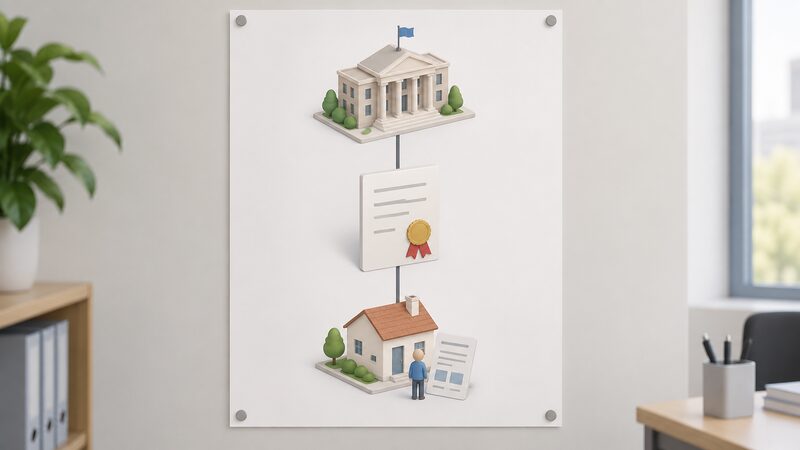
Decisions attributed to Ofgem are formally decisions of the Gas and Electricity Markets Authority. Ofgem performs the day-to-day functions of the Authority, which is the statutory body responsible for administering schemes such as the Domestic Renewable Heat Incentive in Great Britain3. The Feed-in Tariff scheme is described the same way: administered by the Authority, with Ofgem performing its day-to-day functions4. In Ofgem's own consultation documents the Authority is named as the data controller, with Ofgem used for ease of reference21.
The statutory base is older than the cap. The Gas Act 1986, its subordinate legislation and related statutory instruments, namely licences and industry codes, together form a regime of economic regulation for gas transporters which Ofgem monitors and enforces22. The same pattern of Act, licence and code runs through electricity.
In supervision terms, Ofgem states that it monitors energy suppliers and network operators closely to make sure they meet the rules set out in licences, regulations and law, provide good customer service, and reply quickly to customers who contact them23. That monitoring duty is distinct from adjudication: the regulator watches the market and enforces against companies, rather than settling individual accounts.
The Authority's remit has itself been under change. In April 2026 the UK Government announced reforms to the regulator's remit to focus on economic and consumer protection and to ensure every energy consumer is protected, including the ability to regulate in new areas of the market if needed25. Households should expect the boundaries of the regime to keep moving, particularly into areas such as heat networks and flexibility services that were outside the traditional supply licence.
The price cap protects standard variable and default tariffs
The default tariff cap is set in accordance with the Domestic Gas and Electricity (Tariff Cap) Act 2018, which protects households on standard variable and default tariffs5. It covers existing and future domestic customers on those tariffs26. In the Welsh Government's plain description, the cap exists to protect people from a loyalty penalty27.
Two features of the Act shape everything else. First, Ofgem cannot set different cap levels for different suppliers, and must protect default tariff customers28. A financially weak supplier therefore cannot be given a higher cap to trade out of trouble, which is precisely why financial resilience has to be regulated separately. Second, the cap is a cap on unit rates and standing charges, not on bills: the published figures are the maximum unit rates suppliers can charge for tariffs subject to the cap29.
| Feature | Position | Source |
|---|---|---|
| Legal basis | Domestic Gas and Electricity (Tariff Cap) Act 2018 | 5 |
| Who is covered | Domestic customers on standard variable and default tariffs | 26 |
| Supplier-specific levels | Not permitted under the Act | 28 |
| What is capped | Maximum unit rates for tariffs subject to the cap | 29 |
| Review frequency | Every three months | 7 |
| Exempt companies | Three | 8 |
A household on a fixed tariff is outside the cap for the term of that contract. A household that has never switched, or has rolled onto a default rate after a fix ended, is inside it. The page on deemed contract rates covers the rate that applies before a tariff is chosen.
How the cap is set and reviewed

Ofgem reviews and sets the cap every three months based on the cost of wholesale energy7, and updates it on that quarterly cycle27. The move to quarterly reviews was announced in August 2022, replacing six-monthly updates2. Each level is published as a summary of changes for a defined period, such as 1 April to 30 June 2025 and 1 October to 31 December 202530.
The cap is built from components, and the ones that connect to financial resilience are the allowances. Ofgem has run separate reviews of wholesale costs26, of operating cost and debt allowances28, of historical debt-related costs6, and of methodology questions such as backwardation and the deadband5. Each of these is consulted on before decision. The effect is that the cost of running a supply business, including bad debt, is recognised in the cap rather than left to erode a supplier's balance sheet without limit, which is itself a resilience mechanism.
One worked example shows how costs already incurred are recovered. In December 2023 Ofgem set out proposals on debt-related costs including a one-off price cap adjustment of £16, to be paid between April 2024 and March 202520. That is money recovered across customers through the cap, not a charge shown separately.
Compliance with the new level is not assumed. In both the April 2025 and October 2025 summaries Ofgem stated that it "will be closely monitoring supplier compliance and will continue to take firm action against suppliers who fall short of their requirements"30.
Suppliers exempt from the cap
Three energy companies are exempt from the price cap on default energy tariffs8. The basis of exemption is that those companies proved to Ofgem that they have higher costs because they support renewables, that they go further than existing subsidies, and that customers have actively chosen them8. That finding comes from an independent consumer body rather than from Ofgem's own published register.
The consequence for a household is simple: on an exempt supplier's default tariff there is no capped maximum unit rate, and the protection of the Act does not apply to it. What is being bought instead is the supplier's renewable claim, a subject dealt with under green energy tariffs and fuel mix disclosure.
How costs are shared between suppliers
Several industry mechanisms move money between suppliers rather than between a supplier and its customers, and they matter to resilience because they create obligations that a weak supplier must meet.
The clearest documented example is Feed-in Tariff levelisation: Ofgem manages the levelisation process, ensuring that each participating licensed electricity supplier pays or receives the right amount of money, so the costs of the scheme are shared fairly among suppliers32. A similar claims architecture is proposed for the Debt Relief Scheme, which Ofgem says will closely align with the approach used in the Supplier of Last Resort levy claims framework, with suppliers submitting claims to Ofgem and validated claims presented to network operators for payment14. The Supplier of Last Resort levy is the route by which the costs of a failed supplier's customers, including honoured credit balances, are spread across the market.
Switching is regulated separately in conduct terms: Ofgem introduced guaranteed standards as part of its work to improve customer experience when switching supplier33. Those give automatic compensation for switching failures, which is a cost falling on the supplier that causes the failure.
None of these appears as a line on a domestic bill. Where costs reach households at all, the documented route is an allowance in the cap, as with the £16 one-off adjustment20.
Enforcement: penalties, directions and licence modification

Ofgem's enforcement toolkit against a licensee includes issuing directions, imposing financial penalties, and modifying licence conditions where necessary35. The regulator maintains a published statement of policy in respect of financial penalties and consumer redress, revised following consultation by the Authority36.
The best-documented recent example is a redress payment rather than a fine: Ofgem previously used its enforcement powers for smart meters to require one energy supplier, OVO Energy, to contribute more than £1 million to a redress fund, and has been reported as considering more severe financial penalties11. Parliamentary reporting of the same action describes it in the same terms37.
Breach can be defined by outcome as well as conduct. Failure to achieve the annual smart meter installation targets is a breach of a supplier's licence, and Ofgem can take enforcement action against the supplier37. In scheme administration, Ofgem states that where a supplier fails to meet the requirements of the ECO4 Order it may take enforcement action38. Under the Debt Relief Scheme, where suppliers are in persistent breach of the licence conditions, Ofgem may take enforcement action and record non-compliance on its Supplier Performance Report14. In the Feed-in Tariff scheme, Ofgem says it takes compliance with scheme rules extremely seriously and investigates where there are concerns with supplier performance or generator compliance, taking action where necessary32.
Two things follow for a household. Enforcement is retrospective and directed at the company, so it does not prevent a failure, and redress funds are not the same as refunds to affected individuals. But the record of enforcement, together with published non-compliance, is one of the few public signals of how a supplier is being judged.
How disputes are referred to and determined by the Authority
There are two distinct dispute routes, and they should not be confused.
The first is between a supplier and the Authority, over money. Under the Debt Relief Scheme's standard condition 24B, if the licensee disputes the relevant amount determined by the Authority it follows a dispute process set out in guidance, in which it can provide further evidence, and the Authority makes the final determination39. Ofgem states that suppliers may meet it and submit further evidence for reconsideration, but the final decision on all claims rests solely with Ofgem14. Timescales are scheme-specific: for ECO4 supplier administration, Ofgem has said it will notify all suppliers of its final determination no later than 30 June 202738.
The second is between a household and a supplier, and Ofgem is not the decision-maker. Ofgem generally does not intervene in individual disputes between consumers and energy businesses, including heat suppliers and operators9. The Energy Ombudsman is approved by Ofgem to handle service disputes in the energy sector10, and can consider complaints where suppliers obligated under the Feed-in Tariff scheme do not follow the rules set by Ofgem. Its Facilitated Complaints Resolution route covers disputes against a participating energy supplier, energy broker or heat network, residential or business40.
Eligibility is procedural and strict. The supplier named must be the correct one to raise the dispute against and must match the company name written on the account holder's bill; the complainant must already have complained to the supplier; and there must be sufficient evidence, including the date the complaint was raised41. For newer areas such as flexibility services, the Ombudsman can consider disputes where the consumer became aware of the problem on or after 8 December 2025 and the provider was a member of the Flex Assure Domestic and Microbusiness Scheme at that time40.
The Gas and Electricity (Consumer Complaints Handling Standards) Regulations 2008 require suppliers to provide eight week and deadlock letters42, which is the trigger for the Ombudsman's involvement. On remedies, the Ombudsman treats regulator-set payments such as Ofgem's guaranteed service standards payments as normally fair recognition of the problems experienced, with awards above them only in exceptional cases17. More detail sits on complaining about an energy supplier and the Energy Ombudsman.
Judging whether a supplier is financially stable

There is no public solvency score for a domestic supplier. Ofgem holds the stress test results introduced by the December 2021 action plan2 and does not publish an individual pass or fail. What is visible to a household is second-order evidence: the regulator's non-compliance records under schemes such as the Debt Relief Scheme's Supplier Performance Report14, enforcement actions of the kind taken over smart meters11, and customer service signals. Ofgem proposed in December 2023 to make it easier for consumers to see how good suppliers' customer service is by publishing information on their Citizens Advice star rating20. The pages on energy supplier customer service ratings and energy supplier profits and margins collect what is published.
Behaviour on debt and billing is also indicative, and it is regulated. A supplier must work with a customer to set up an affordable payment plan27, must give due consideration to the Ability to Pay principles including understanding individual customers' ability to pay15, and must offer extra prepayment credit for households in vulnerable circumstances to provide more breathing space while alternative payment arrangements are worked out43. The grounds on which a household typically complains, late, incorrect or missing bills, back billing, being overcharged, a faulty meter, poor customer service, or a refusal to refund credit24, are also the symptoms most often visible before a supplier fails.
What the rules mean for a household's energy independence
The regime protects the terms of dependence rather than removing it. A household on mains gas and grid electricity still depends on a licensed company for supply, billing and refunds, and on the market as a whole to absorb the cost when one of those companies fails. The cap limits the unit rate on a default tariff29 but gives no protection on a fixed tariff or with an exempt supplier8, and it cannot be tilted to rescue a particular company28.
Where the rules do reduce exposure, they do it narrowly and usefully. Back billing means a supplier's own error cannot produce a bill for energy used more than 12 months ago13. Guaranteed standards convert some failures into automatic payments17. Affordability duties constrain how debt is collected15. Delivery schemes shift money towards fabric and heating measures: the Energy Company Obligation places legal obligations on larger energy suppliers to deliver energy efficiency measures to low income and vulnerable households, funding domestic energy efficiency measures through local criteria.
Two structural gaps are worth naming. Households without a direct relationship with a domestic supplier, including those on a commercial contract or off-grid, sat outside the main support route and needed the Energy Bills Support Scheme Alternative Funding in England, Scotland and Wales44; and tenants depend on landlords passing discounted payments on appropriately, in line with Ofgem rules45. Northern Ireland runs a separate market with its own arrangements, covered under energy suppliers in Northern Ireland.
Reducing the exposure itself, through efficiency, on-site generation and storage, is the only route that shrinks the amount at stake. The regulatory regime decides how fairly the remaining dependence is priced and what happens when a company behind it stops trading. Both matter, and neither substitutes for the other. The broader picture is set out on energy suppliers and household energy independence and on the suppliers guide.
Sources45 cited
- Customer credit balance explanatory note, Ofgem, March 2024
- Energy supplier failures: Public Accounts Committee report, UK Parliament
- Domestic RHI annual report, scheme year 11, Ofgem, July 2025
- Guidance for Feed-in Tariff generators, Ofgem
- Energy price cap methodology: backwardation and deadband decision, Ofgem, 21 November 2025
- Energy price cap review of historical debt-related costs, Ofgem, 25 March 2026
- Electricity prices in Great Britain, House of Lords Library, June 2026
- Differences between green energy suppliers, Which?, 16 June 2026
- Heat networks regulation: consumer protection guidance decision, Ofgem, 13 January 2026
- Energy Ombudsman FAQs, Energy Ombudsman
- Public Accounts Committee report on smart meters, UK Parliament, 20 October 2023
- Ofgem bans suppliers from back billing beyond 12 months, Ofgem, 5 March 2018
- How to understand your electricity and gas bills, Energy Ombudsman, 24 April 2025
- Debt Relief Scheme delivery guidance, Ofgem, 6 November 2025
- Energy prices and Ability to Pay principles briefing, UK Parliament, 14 December 2022
- Worried about your energy bills, Energy Ombudsman
- Time and trouble awards, Energy Ombudsman
- Problems with services: consumer advice, Isle of Anglesey County Council, October 2025
- Energy Company Obligation, Ofgem
- Proposals to support customers at risk of debt, Ofgem, 15 December 2023
- Improving debt standards in the domestic retail market, Ofgem, 12 December 2024
- Call for input on disconnections, Ofgem, 13 January 2025
- Complain about your energy supplier, Ofgem
- Complain about your energy supplier or network operator, Ofgem
- Ofgem transformed to strengthen protections for energy consumers, GOV.UK, 22 April 2026
- Energy price cap wholesale costs review, Ofgem, 15 December 2023
- Energy price cap explained, Welsh Government, 4 March 2026
- Energy price cap operating cost and debt allowances decision, Ofgem, May 2025
- Energy Price Guarantee regional rates, April to June 2023, GOV.UK
- Summary of changes to the energy price cap, 1 April to 30 June 2025, Ofgem, 25 February 2025
- Summary of changes to the energy price cap, 1 October to 31 December 2025, Ofgem, 27 August 2025
- Feed-in Tariffs annual report, scheme year 13, Ofgem, December 2023
- New guaranteed standards from 1 May 2020, Energy Ombudsman
- Advice for consumers when suppliers cease trading, Energy Ombudsman, 27 September 2021
- Tesla Energy Ventures granted an electricity supply licence, Ofgem, 12 March 2026
- Decision on Ofgem's statement of policy on financial penalties and consumer redress, Ofgem, 6 November 2014
- Smart meters briefing paper, UK Parliament, 26 September 2023
- ECO4 guidance: supplier administration, Ofgem, 6 July 2026
- Debt Relief Scheme working paper, Ofgem, August 2025
- Facilitated Complaints Resolution, Energy Ombudsman
- Raise a dispute: eligibility checks, Energy Ombudsman
- Eight week and deadlock letters supplier guidance, Ofgem, February 2020
- Tackling fuel poverty in Scotland: a strategic approach, Scottish Government, 23 December 2021
- Help with energy bills for millions more homes, GOV.UK, 19 December 2022
- £400 energy bills discount to support households this winter, GOV.UK, 29 July 2022
 OfgemOfgem sets the rules energy suppliers and network companies must follow, including the price cap on standard tariffs.
 Supplier Licensing and FailureWhat happens when your energy supplier goes bust?
 Tariff Rules and ProtectionsOfgem decides which energy tariffs suppliers can offer you, so it's worth knowing what they must provide.
 Switching and Supplier MarketWhat is the Ofgem price cap and does it limit what you actually pay?
 Typical Household FigureThe energy price cap limits unit rates and daily standing charges, not the total bill.
 Challenger and Small SuppliersSmall energy suppliers can be cheaper, but are they safe to switch to?