
In this answer
Short answer
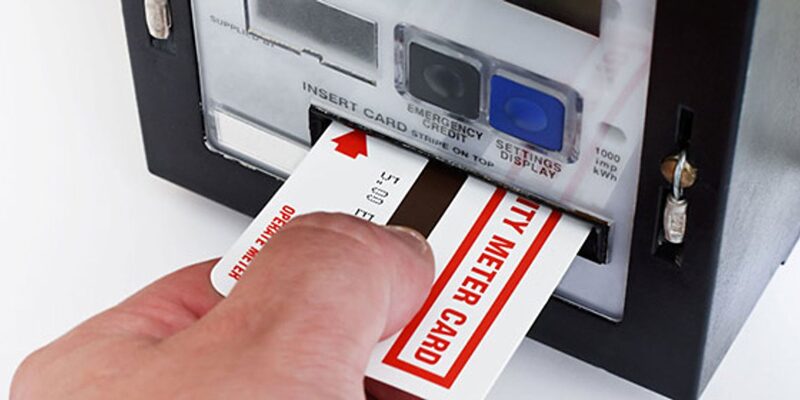
A supplier can change how a household pays, but only within rules that are set out in the supply licence and enforced by Ofgem. The clearest example is the prepayment meter: a supplier can move a customer onto one without permission where that customer is building up debt and has not responded to the supplier's attempts to help1. Before doing so, the supplier must make reasonable efforts to agree another way for the debt to be repaid and must offer support where the household is struggling to pay2.
What a supplier cannot do is treat a change of payment method as a substitute for an affordable repayment arrangement. Ofgem's rules state that a supplier must work with a household to agree a payment plan that it can afford3. Where a household pays by direct debit or on receipt of a bill and has owed money for less than 28 days, the debt is added to the final bill rather than blocking a switch4.
The practical effect is that debt changes the options available, but it does not remove them. A household in arrears can still switch supplier in some circumstances, can still ask for a repayment plan, and can escalate a dispute to the Energy Ombudsman if the supplier's handling is unsatisfactory5.
What suppliers can and cannot change when you owe them money
The payment method itself is not the lever a supplier reaches for first. The rules distinguish between changing how a household pays and recovering money that is owed. A supplier can install a prepayment meter without permission where a household is building up debt and has not responded to attempts to help1. That power is conditional: the supplier must first make reasonable efforts to agree another repayment route and offer support if the household is struggling2.
Switching is governed separately. A household cannot switch supplier if it has been in debt to its supplier for more than 28 days1. Where the debt is younger than that, the money owed is added to the final bill and the switch proceeds4. Independent guidance puts the same 28 day barrier in plain terms: where money has been owed for more than 28 days, it needs to be paid before switching7.
For prepayment customers the position is different again. A household with a prepayment meter that owes up to £500 can switch, repaying the debt to the new supplier instead4. Independent guidance confirms the £500 figure for gas and electricity combined, describing it as the limit set under the Debt Assignment Protocol8.
Your supplier's obligation to agree a payment plan you can afford

The obligation that matters most to a household in arrears is not about the meter but about the plan. Ofgem's rules state that a supplier must work with a household to agree a payment plan that it can afford3. That is a duty, not a discretionary gesture, and it shapes what a supplier can reasonably do about the payment method.
The plan has to be built on the household's circumstances. A supplier must take into account how much the household can afford to pay and how much energy it will use in future10. Independent guidance is blunt that a supplier is required to help set up an affordable repayment plan where a household is in debt11. Ofgem's own advice to households lists the options a supplier can offer: a payment plan, a payment break or reduction, and a review of current payments and debt repayments12.
Where a prepayment meter is involved, emergency credit and any supplier credit must be repaid when the customer next tops up, with an affordable payment plan agreed with the supplier13. That links the meter and the plan: the credit is not free, but the repayment terms are meant to be set with the household rather than imposed.
"Ofgem's rules state that they must work with you to agree on a payment plan that you can afford."
For households in Northern Ireland, the advice route differs. The devolved guidance is that it is better to agree a payment plan with the supplier rather than cancelling direct debits and letting debt build up14. That is a statement of what works, not a rule, but it reflects the same principle: the plan is the mechanism, and abandoning payment entirely is what triggers the harder recovery steps.
How Ofgem's rules and monitoring apply to suppliers
Ofgem sets the licence conditions and monitors whether suppliers meet them. It does not adjudicate individual household disputes, but it can act where a supplier is persistently in breach. Under the Debt Relief Scheme, where suppliers are in persistent breach of the licence conditions, Ofgem may take enforcement action and record non-compliance on its Supplier Performance Report15. That reporting is the mechanism by which a pattern of poor practice becomes visible.
The rules also constrain what a supplier can do about switching. Ofgem's guidance is explicit that a supplier cannot prevent a household from switching to another supplier, for any reason or at any time, and cannot object to a transfer on grounds of debt or contract16. That sits alongside the 28 day rule, which is about the household's own eligibility rather than the supplier's right to object.
The wider framework includes the Debt Relief Scheme itself, which is being delivered under guidance published in November 202515. Ofgem has also set out a debt strategy update covering support to reduce energy debt, and has said its review of the involuntary prepayment meter rules would conclude in the first half of 2026, with interim findings expected beforehand17. That review is the live policy question behind the current rules.
| Rule | What it provides | Source |
|---|---|---|
| Involuntary prepayment installation | Allowed where debt is building and the household has not responded to help | 1 |
| Prepayment switching limit | Up to £500 per meter, repaid to the new supplier | 4 |
| 28 day switching barrier | Debt older than 28 days must be paid before switching | 1 |
| Supplier objection to switching | Not permitted for debt or contract reasons | 16 |
| Enforcement | Persistent breach recorded on the Supplier Performance Report | 15 |
Where to get help: Citizens Advice and the Energy Ombudsman route
The complaint route starts with the supplier. Ofgem's guidance directs households to contact their energy supplier about late, incorrect or missing bills, back billing, being overcharged, a faulty meter, poor customer service, and refusing to refund credit from an account18. Those are the categories that cover most payment method disputes.
If the supplier's handling is unsatisfactory, the Energy Ombudsman can consider the complaint19. The Ombudsman's powers are practical rather than advisory: it can tell suppliers to take action such as crediting or cancelling an account or changing a tariff, to make an apology, to offer a financial award, or a combination of these, and it may make recommendations to prevent the issue recurring5. Where a mistake has been made or a household has been treated unfairly, the Ombudsman can require the supplier to put things right19. Complaints about prepayment meter installation follow the same escalation route20.
The Ombudsman also handles complaints about Feed-in Tariffs where obligated electricity suppliers do not follow the rules set by Ofgem21. To register a dispute, the starting point is to search for the name of the energy supplier22.

Can my supplier backdate charges onto a deemed contract?
A deemed contract arises where a household uses gas or electricity without agreeing a contract, typically after moving into a property. The rates that apply are set out in the supplier's own terms, and the Ombudsman publishes guidance on deemed contracts and rates16. The question of backdating is governed by the back billing rules rather than by the payment method.
Where a supplier has not followed the back billing rules, it must refund any money taken in error6. That is the remedy, and it applies regardless of how the household pays. Separately, where a household switches with credit on the account, the old supplier refunds any credit in the final bill, and compensation may be available if it does not24.
The practical point for a household in debt is that a change of payment method does not reset what is owed or create new charges. The debt figure, the plan and the meter are separate questions, and each has its own rule.
What this means for your energy independence and household budgeting
The dependence in this area is not on the grid but on the supplier relationship. A household that pays a supplier directly for the electricity or gas it uses can choose to switch to a different supplier or tariff at any time1. Debt narrows that choice: a household in arrears may not be able to switch supplier, though it may be able to fix its tariff with its current supplier25. That is the trade-off, and it is worth stating plainly.
The budgeting consequence is that the payment method and the repayment plan interact. Ofgem's advice to households is to review current payments and debt repayments12, and suppliers are expected to offer a payment plan, a payment break or reduction12. Where a household is on benefits, Fuel Direct is a further route, and the amount paid can be changed by contacting the supplier26.
Support funds exist alongside the rules. Energy supplier schemes and grants can cover energy costs, paying off energy debt, and making energy-saving improvements to the home27. Those are discretionary schemes rather than entitlements, and eligibility varies.
The independence question is therefore about information as much as money. A household that knows the 28 day rule, the £500 prepayment limit and the Ombudsman route is in a stronger position than one that does not, because each of those is a defined point at which the supplier's discretion ends and the household's options begin. The remaining dependence is structural: the supplier sets the tariff, the meter records the usage, and the plan is agreed rather than dictated. What the rules do is make that agreement enforceable.
Sources27 cited
- Switching your home energy supplier, Ofgem, 2026
- Installing a prepayment meter without your permission, Ofgem, 2026
- Worried about your energy bills, Energy Ombudsman, 2026
- How to switch energy supplier, Which?, 2026-05-15
- What to expect, Energy Ombudsman, 2026
- What to do if you get a back bill, Ofgem, 2026
- Dual fuel, Confused.com, 2026
- Is a prepayment energy meter right for you?, Which?, 2026-08-27
- Energy debt factsheet, National Energy Action, 2026-09-10
- You haven't received a gas or electricity bill in a while, Citizens Advice, 2026-09-20
- Your home energy checklist, National Energy Action, 2026-09-10
- Get help with your energy bills, Ofgem, 2026-09-17
- Prepayment meters consumer guidance, Ofgem, 2026
- Advice if you're struggling to pay your energy bills, nidirect, 2026-09-17
- Debt Relief Scheme delivery guidance, Ofgem, 2025-11-06
- Deemed contracts and rates, Energy Ombudsman, 2026-09-20
- Debt strategy update: supporting reduction in energy debt, Ofgem, 2026
- Complain about your energy supplier or network operator, Ofgem, 2026
- Understanding your rights, Energy Ombudsman, 2026-09-20
- Installing a prepayment meter without your permission, Ofgem, 2026
- Feed-in tariffs, Energy Ombudsman, 2026-09-20
- Raise a dispute, Energy Ombudsman, 2026-09-19
- Energy supplier out of business, Uswitch, 2026-05-29
- Check if you are owed money on your energy bill, Ofgem, 2026
- Avoiding the price cap, Act on Energy, 2026
- Bills and benefits, GOV.UK, 2026-09-17
- Getting help if you can't afford your energy bills, Ofgem, 2026-09-17
 Energy Complaints and RedressMaps the routes a householder has when an energy supplier, network operator, broker or heat network gets something wrong, which body handles which dispute, and what the Energy Ombudsman can and cannot do.
 Supplier Licensing and FailureWhat happens when your energy supplier goes bust?
 Complaining About a SupplierHow do you complain about your energy supplier, and how long should it take?
 Financial Resilience RulesYour supplier going bust raises two questions: who takes over and what happens to your credit balance?
 Prepayment Meters and DebtCan your energy supplier force you onto a prepayment meter because you owe them money?
 Energy Debt Repayment PlansOwe money to your energy supplier?