
In this answer
Short answer
Yes, a supplier can force you onto a prepayment meter, but only under strict conditions. The supplier must first make reasonable efforts to agree another way for you to repay your debt and offer support if you are struggling to pay, and it must make at least 10 attempts to contact you using different methods, such as phone calls, letters or text messages1. It must also visit your home to understand your circumstances and check whether a prepayment meter is safe and suitable for your household3.
Only then can the supplier apply for a warrant to enter your property and install a prepayment meter, or remotely switch your existing smart meter to prepayment mode3. Where a smart meter is switched remotely, the supplier must give you 7 working days' notice4. Suppliers cannot force you to switch to a prepay meter, or remotely switch you, unless they have taken all reasonable steps to agree a repayment plan with you5.
The rules tightened after a period when suppliers were increasingly forcing customers onto prepayment meters6. Energy suppliers must now show Ofgem, the energy regulator, they can follow the new prepayment rules before they are permitted to do so4. As of August 2026, only eight named firms are allowed to forcibly install prepayment meters7.
When a supplier is allowed to install without your consent
The gateway condition is debt, not a missed payment. Your supplier can install a prepayment meter without your permission if you are building up an energy debt and other ways of recovering your debt have not worked3. Ofgem's consumer guidance puts it the same way: suppliers can move you to a prepayment meter without your permission if you are building up debt and have not responded when they tried to help11.
That second limb matters as much as the first. A household in arrears that engages with the supplier, agrees a repayment plan and keeps to it is not in the position the rules describe. The risk point is a plan that is agreed and then defaulted on: if you sign up to a plan but find yourself forced to default, your energy supplier may decide to install a prepayment meter in your household13.
Before any installation, the supplier should explain why they have made their decision, tell you when they plan to install the meter, explain what will happen during the installation, and tell you how to contact them if your circumstances have changed or you think they made the wrong decision1. That letter is the point at which a household can put its circumstances on the record.
The safety test is separate and absolute. The supplier must not proceed with the installation of the prepayment meter or switching to a prepayment meter unless they have made the necessary arrangements to ensure it would be safe and reasonably practicable for a relevant consumer to use a prepayment meter14. Ofgem states that they can only switch a meter to prepay mode where it is safe to do so15.
How suppliers do it: warrants, smart meter switches and remote switching
There are two mechanisms, and they carry different levels of intrusion. Your supplier can get a warrant to enter your property and install a prepayment meter, or remotely switch your existing smart meter to prepayment mode3. The first involves a physical visit under legal authority; the second happens without anyone coming to the door.
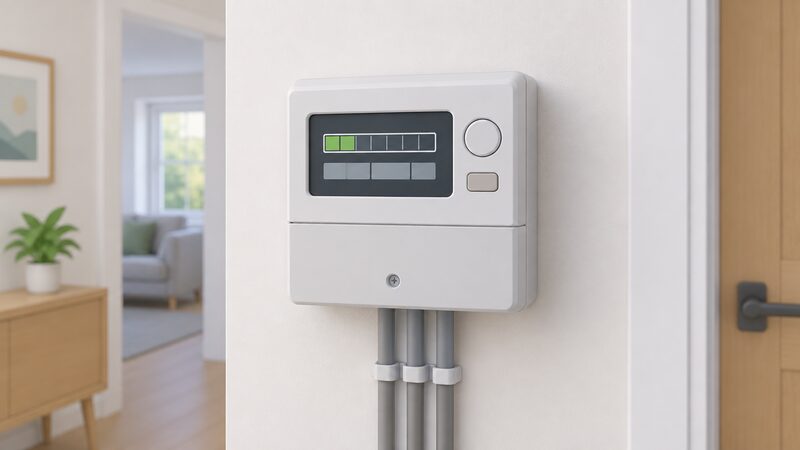
Remote switching is the newer and quieter route. With smart meters, energy suppliers can switch consumers from credit to prepayment mode without the cost of a new meter being added to their existing debt17. The protection attached to it is the notice period: your supplier must give you 7 working days' notice before they remotely switch your smart meter to prepayment mode4.
The same technology works in reverse. If you have a smart meter your supplier can switch your meter to credit mode remotely18. That symmetry is the practical heart of the subject: a smart meter is a meter that can be moved between payment modes by remote instruction, in either direction, and the rules govern when each direction is permitted.
Tenants face a particular version of this. Your energy supplier might want to install a smart meter in prepayment mode, and if you already have a smart meter, they might switch it to prepayment mode19. The tenancy itself does not change the supplier's obligations, but it does mean the household may not be the party who chose the supplier.
Heat networks sit outside this regime entirely. A heat network supplier is not allowed to install a prepayment meter, install a smart meter in prepayment mode, or remotely switch a smart meter to prepayment mode without your permission20. Where an authorised heat network supplier does switch an existing supply meter to prepayment mode without consent, it must ensure the consumer receives prepayment meter credit, unless that is technically infeasible or otherwise outside the supplier's control14.
The protections: vulnerability rules, the £500 debt limit and safety exemptions
The strongest protection is a prohibition, not a condition. Suppliers cannot force-fit a prepayment meter under warrant for people in very vulnerable situations if they do not want one, or charge them for warrant costs on debts, nor use warrants on people who would find the experience very traumatic21. That ruling came from Ofgem in December 2022 and remains the clearest statement of who is out of scope.
The £500 figure is widely misunderstood, and it is worth being exact about what it does. It is a supplier switching limit, not a threshold below which a forced installation is barred. You can switch supplier while on a prepayment meter if you owe up to £50010. Where switching is possible, the debt transfers with you: you can only switch supplier if you owe your current provider less than £50022. Separately, suppliers dealing with customers in debt can only switch a meter to prepay mode where it is safe to do so15, and a prepayment meter customer cannot be asked for a security deposit as a condition of supply16.
There is also a deposit protection that catches people out. You may have to pay your supplier a security deposit as a condition of giving you a supply, but you cannot be asked for a security deposit if you have a prepayment meter installed23.
On the heat network side, the consumer protections are more generous than the electricity market in one respect: the supplier is obliged to offer a reasonable amount of Emergency Credit and Friendly Hours Credit to any consumer who is using a prepayment meter, unless it is technically infeasible14. The prepayment price cap itself rests on a licence condition, SLC28.A, which sets supplier obligations25.
Compensation for forced prepayment meters: who qualifies and how to claim
Ofgem has set compensation of £1,000 for inappropriate installation, switch or use of a prepayment meter8. The eligibility window is specific: you may be able to claim compensation if you were forced to have a prepayment meter between 1 January 2022 and 21 January 2023 and your supplier did not follow the rules properly3.
Both limbs must be satisfied. Being moved onto prepayment in that period is not enough on its own; the supplier must also have failed to follow the rules properly. The window reflects the period when the practice was at its most widespread, and when suppliers were increasingly forcing customers onto prepayment meters6.
| Element | Detail |
|---|---|
| Compensation level | £1,0008 |
| Qualifying period | 1 January 2022 to 21 January 20233 |
| Second condition | Supplier did not follow the rules properly3 |
| Who sets it | Ofgem, the energy regulator8 |
For households outside that window, the route is a complaint to the supplier and, if unresolved, to the energy ombudsman. The evidence that matters is the same in either case: the date of installation or switch, the notice given, the contact attempts made, and whether a home visit and safety check took place.
Moving from prepayment back to a credit meter
The exit route is a right in substance, though it is exercised through the supplier. If it is not safe and practical for you to be on prepayment, your supplier should move you to paying by credit, which means you pay for your energy after you use it26. If you have a smart meter, the supplier can switch your meter to credit mode remotely, or replace a non-smart prepayment meter with a smart meter in credit mode18.
The conditions sit on the supplier's side of the transaction. The supplier may require proof of address and/or a credit check28. When moving from a prepayment meter, most will perform a hard check, which can adversely affect your credit score22. That is a real cost of the move and worth knowing before applying.
Some suppliers add their own conditions, for example that you have a current account or have been debt free for at least 3 months29. These are commercial terms rather than regulatory ones, and they vary between suppliers.
The practical sequence is:
- Ask the supplier to move you to credit mode, stating why prepayment is not suitable for the household.
- Expect a proof of address request or a credit check, and ask which type of check will be run22.
- If you have a smart meter, the change can be made remotely without a visit18.
- If the supplier refuses, ask for the decision in writing and escalate through the supplier's complaints process.
For a household pursuing energy independence, the payment mode is the one part of the arrangement that remains wholly dependent on the supplier. A smart meter in prepayment mode still depends on the supplier's systems, the top-up channel and the communications network that carries the mode instruction. The meter measures the home's energy, but the supplier controls how it is paid for, and the rules above are what constrain that control.
Which suppliers can force-fit, and what to do about a threat letter
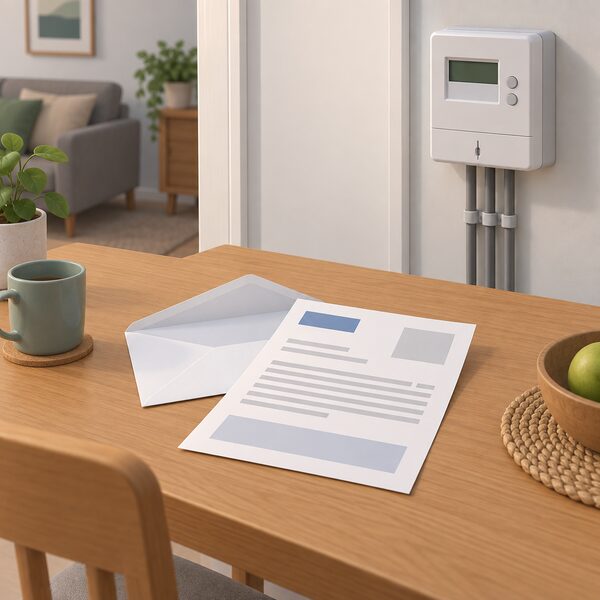
As of August 2026, only these firms are allowed to forcibly install prepayment meters: EDF Energy, E.ON Next, Good Energy, Octopus Energy, Ovo Energy, Scottish Power, Utilita and Utility Warehouse7. The list is short because permission is conditional: energy suppliers must show Ofgem, the energy regulator, they can follow the new prepayment rules4. A supplier not on that list is not permitted to force-fit, whatever a letter may imply.
If a letter arrives, the useful response is to engage with the process the rules create. The supplier must make at least 10 attempts to contact you using different methods, for example phone calls, letters or text messages, and must visit your home to understand your circumstances and check whether a prepayment meter is safe and suitable for your household3. Tell your supplier and they will check if a prepayment meter is suitable for you30.
Vulnerability is the point to raise first. Suppliers cannot force-fit a prepayment meter under warrant for people in very vulnerable situations if they do not want one, nor use warrants on people who would find the experience very traumatic21. Household circumstances that bear on safety, such as medical equipment, young children or a condition that makes topping up difficult, belong in that conversation.
There is also a standards route when a prepayment meter fails. The electricity supplier pays the prescribed sum where an appropriate person fails to attend the premises within the prescribed period to repair or replace a pre-payment meter not operating as designed. That is a guaranteed standard with a payment attached, separate from the compensation scheme.
Where the household is on a heat network rather than a licensed supply, the consent rule is simpler and stronger: the supplier is not allowed to install a prepayment meter, install a smart meter in prepayment mode, or remotely switch a smart meter to prepayment mode without your permission20.
"Energy suppliers cannot force you to switch to a prepay meter, or remotely switch you, unless they have taken all reasonable steps to agree a repayment plan with you"
Sources30 cited
- Installing a prepayment meter without your permission, Ofgem, 2026
- Struggling to pay your energy bills, Citizens Advice, 2026-09-17
- Check if energy suppliers can install prepayment meters without household permission, Ofgem, 2026
- Stop your energy supplier installing a prepayment meter, Citizens Advice, 2026-09-17
- Advice for those worried about energy bills, Smart Energy GB, 2026-08-19
- Out of the cold: helping people on prepayment meters stay connected this winter, Citizens Advice, 2022-09-30
- Is a prepayment energy meter right for you, Which?, 2026-08
- Compensation for installing prepayment meters without permission, Ofgem, 2025-05-28
- Installing a prepayment meter without your permission, Ofgem, 2026
- Get help with your prepayment meter, Ofgem, 2026
- Prepayment meters consumer guidance, Ofgem, 2026
- Get help with your prepayment meter, Ofgem, 2026
- Energy consumer rights, Uswitch, 2025-08-19
- Heat networks consumer protections draft guidance, Ofgem, 2025-09-05
- Troubleshooting smart meter issues, Smart Energy GB, 2026-04-01
- Heat networks regulation consumer protection guidance decision, Ofgem, 2026-01-13
- Can a smart meter cut off power, Smart Energy GB, 2026-04-24
- You can't afford to top up your prepayment meter (Wales), Citizens Advice, 2026-09-17
- Switching energy supplier if you're a tenant, Citizens Advice, 2026-09-17
- Struggling to pay your heat network bills, Citizens Advice, 2026-09-17
- Energy pricing and bills: prepayment meters, House of Commons Library, 2022-12-14
- Change prepayment meter to credit meter, Confused.com, 2026-04-20
- If you've been told your energy supply will be disconnected, Citizens Advice, 2026-09-17
- If you've been told your energy supply will be disconnected (Welsh), Citizens Advice, 2026-09-20
- TDCVs 2019 open letter, Ofgem, 2019-10-18
- Problems getting to or topping up your prepayment meter, Citizens Advice, 2026-09-17
- What if you can't pay your energy bill, Centre for Sustainable Energy, 2026-06
- Moving house gas and electricity guide, Uswitch, 2026-08-26
- Energy meters, Age UK, 2026-09-10
- Your home energy checklist, National Energy Action, 2026-05-20
 Prepayment Meters and DebtCan your energy supplier force you onto a prepayment meter because you owe them money?
 Disconnection and WarrantsCan your energy supplier force you onto prepayment or cut you off for debt?
 Prepayment and Vulnerable RulesThe licence obligations on energy suppliers when a household falls into debt: when a prepayment meter may be installed without consent, the warrant process, the ban covering highly vulnerable households, remote switching of smart meters, and the free help available.
 Smart Meter InstallationCan your supplier make you have a smart meter, and how long should you wait for an appointment?
 Prepayment Meter DebtHow debt repayment is set on a prepayment meter, the limits on the share of a top-up that can be taken, and how to have a rate reviewed.
 Smart Meter RulesCan your supplier make you have a smart meter?