


In this guide
The Energy Ombudsman is the free, independent dispute resolution service for energy complaints in Great Britain, approved by Ofgem to handle service disputes in the energy sector1. It investigates when a household or small business remains dissatisfied with how an energy company has handled a complaint, and it can require the company to put things right2. It is separate from Ofgem, and it is not a regulator: it does not issue fines or dictate how companies operate1.
The route in is a waiting period. A supplier has eight weeks to resolve an issue, unless it sends a deadlock letter that lets the consumer escalate sooner4. Once a case is accepted, most disputes are resolved within six weeks of the Ombudsman receiving evidence from both parties3. Financial awards run up to £10,000 for domestic energy disputes and up to £20,000 for small business disputes, though the average award is around £503.
The service has been in place since its appointment by Ofgem in 2008, and in July 2026 it marked having helped one million consumers, with Ed Dodman as Chief Ombudsman5. This page sets out what the scheme covers, who can use it, what it can decide, and where its powers stop.
What the Energy Ombudsman is and who runs it
The Energy Ombudsman is an independent service, separate to Ofgem, for problems with an energy supplier, an energy broker, a network operator or a heat network supplier6. It is approved by Ofgem, which ensures it has the requirements in place to operate its various schemes while allowing it to remain fully independent and impartial7. Its appointment by Ofgem dates to 20085.
Its function is to investigate disputes between consumers and energy suppliers when consumers remain dissatisfied with the way their energy company has handled their dispute8. Ofgem's own consumer guidance points households to it as the escalation route once a supplier's internal complaints process has been exhausted6. The Ombudsman describes its role as providing an independent escalation route for consumer complaints10.
The governance position is worth stating precisely, because it explains the limits that follow. Being approved by Ofgem means the Ombudsman meets the requirements to run its schemes, but it does not make the Ombudsman part of the regulator. In a 2025 consultation response, the Ombudsman said it would be cautious of assuming that increasing its own power directly is the best way to solve consumer issues, and stressed the importance of maintaining its independence and clear roles between Ofgem and itself7. It has also argued that joined-up data and insight is best achieved by having a single Energy Ombudsman whose remit is closely aligned to that of Ofgem7.
That independence cuts both ways for a household. The Ombudsman is not captured by the companies it judges, and its decisions bind the energy company but not the consumer11. But it is also not a regulator with market-wide powers: it decides individual disputes, one case at a time, and cannot change how a supplier runs its business.

What it can decide: the powers and the limits

Where a mistake has been made or a consumer has been treated unfairly, the Ombudsman can require the supplier to put things right9. The remedies available are an apology, an explanation of what went wrong, a practical action to correct the problem, and a financial award12. Practical action can include crediting or cancelling an account or changing a tariff, and the Ombudsman may also make recommendations intended to prevent the same issue happening again3.
The limits are as clearly stated as the powers. The Ombudsman cannot punish companies, dictate how companies operate, or issue fines2. Its own FAQ puts the boundary in a single line: "We do not issue fines or dictate how companies operate, this is the responsibility of the companies' trade body or regulator"1. A household expecting a supplier to be penalised for a systemic failure will not get that from this route; what it can get is its own case corrected.
The process itself has a defined shape. Once a complaint is escalated, the Ombudsman asks for information and evidence, reviews evidence from both the consumer and the energy company, informs the consumer of its decision, and gives the energy company a set of actions to resolve the problem9. Ofgem's consumer guidance describes the same sequence, with the decision given within six weeks6.
There is one further boundary that matters for anyone weighing this route. The Ombudsman has said it thinks it is right to review the assurance, monitoring and redress landscape for low carbon technologies, where there is currently a patchwork of standards, codes and dispute resolution coverage7. It has also acknowledged that too many consumers who could use its service either cannot or choose not to, for reasons including being unaware of who the Ombudsman is or being daunted by the process7. Both statements are the service describing its own reach, not a household's experience, but they set expectations about what a single dispute can achieve.
What it covers: suppliers, brokers, networks, Green Deal and heat networks
The scheme's scope runs across five categories: energy supplier, energy broker, network operator, Green Deal or heat network supplier2. For network operators, the Ombudsman can consider disputes where there is a loss of service or a problem with a connection or repair8. Complaints about prepayment meter installation sit within the supplier route: Ofgem's guidance states that a household can contact the Energy Ombudsman if it is not happy with the way the supplier has handled the complaint13. Smart meter guidance from the government takes the same position, directing consumers to the Ombudsman if an issue is not resolved to their satisfaction14.
Heat networks are the fastest-changing part of the remit. From 1 April 2025, new legislation requires all heat network suppliers to be signed up to the Energy Ombudsman in order to remain compliant10. The Ombudsman can help consumers and small businesses resolve heat network disputes from that date10. It can also review disputes with any heat network where the supplier has not done what is required of it by the Energy Bill Relief Scheme and Energy Bill Discount Scheme legislation15.
The heat network route has its own conditions. Consumers should first notify their heat supplier and try to resolve the issue, and the party responsible for handling complaints is the Energy Ombudsman16. Heat network customers can access the Ombudsman if their provider is signed up to Heat Trust17. The draft consumer protection guidance for the sector covers standards of conduct, quality of service, billing and transparency, back-billing, heat supply contracts, protections for vulnerable consumers, and security of supply16. Named schemes listed by the Ombudsman include Greenhill Housing Association, Metropolitan Infrastructure Limited, Edmunds House Management Company Ltd, Theodore Stevenage Limited and VIVID Housing Limited18.
Flexibility service providers are a newer and narrower category. From 8 January 2026 only a number of flexibility service providers became members of the scheme4. For those that are members, the maximum award is up to £10,000 for domestic energy disputes or up to £20,000 for micro business consumers only3.
Who can complain: domestic, microbusiness and small business eligibility

Only domestic consumers, micro-businesses and small businesses may apply to the Energy Ombudsman22. The Ombudsman states it can process complaints for both domestic and small business consumers in the energy sector2. For heat networks, the eligible group is consumers and small businesses10.
The microbusiness definition is specific: a business that employs fewer than ten employees, or their full-time equivalent, and has an annual turnover or balance sheet no greater than the threshold set in the scheme rules18. A larger commercial user falls outside the scheme entirely and has to pursue a dispute through the courts or the terms of its contract.
Feed-in Tariff generators have their own route. A domestic or micro business FIT generator whose complaint has not reached a mutually agreeable outcome after eight weeks can apply to the Ombudsman, and the FIT licensee then has up to 28 days to action any recommendations the Ombudsman makes23. That 28-day implementation window is one of the few places where the scheme's timescales are set out for a specific market segment.
For ordinary household complaints, the practical eligibility test is documentary as much as categorical. A case needs sufficient evidence, including the date the complaint was first raised with the supplier21. Useful details to have to hand are the energy supplier's name, the name of the account holder, the account number and the date the complaint was first raised5. The same evidence requirement appears across the heat network scheme pages, which is a reasonable guide to what any case needs20.
The 8-week rule and the deadlock letter
The eight-week rule is the gate on the whole process. A supplier has eight weeks to resolve an issue unless it sends a deadlock letter enabling the consumer to come to the Ombudsman sooner7. If eight weeks pass without a resolution, or the supplier sends a deadlock letter sooner, the dispute can be brought to the Ombudsman for free and independent review4. The eligibility wording used across the scheme's case pages is consistent: at least eight weeks since the issue was first raised with the supplier, or receipt of a deadlock letter21.
A deadlock letter is therefore not a rejection, it is an acceleration. It is the supplier's written confirmation that the complaint cannot be resolved between the parties, and it allows escalation before the eight weeks elapse7. Once a deadlock letter has been received, the dispute must be escalated within 12 months of receiving it1.
The eight-week period has a history. The Energy Ombudsman Eight Week and Deadlock Letter Working Group was initiated in December 2013, and Ofgem published updated guidance on the eight-week and deadlock letter process in February 202028. Older consumer material from 2014 described the same trigger: a complaint that had not received a satisfactory answer within eight weeks of contacting the energy company, or a deadlock29.
The rule is also under active review. In August 2026 the Ombudsman reported a proposal to reduce the complaint escalation timeframe from the current eight weeks to six weeks, and noted that consumers had been informed about their right to refer unresolved complaints after eight weeks or once a deadlock had been reached30. Until that change takes effect, eight weeks remains the operative figure.

How to escalate a dispute, step by step
The first requirement is not procedural but substantive: a household needs to follow the company's dispute process to give it an opportunity to fix the issue9. Escalation to the Ombudsman comes after that internal route has been used and either eight weeks have passed or a deadlock letter has arrived5.
- Raise the complaint with the supplier and keep the date. The date the complaint was first raised is a required piece of evidence21.
- Allow the supplier eight weeks to resolve it, or accept a deadlock letter if one is issued sooner4.
- Register the dispute with the Ombudsman through the website, by telephone, email or post2. Creating a case on the website is described as the fastest way to escalate a dispute for investigation5.
- Search for the name of the energy supplier to begin the registration4.
- Supply evidence. The Ombudsman asks for information and evidence relating to the complaint, then reviews evidence from both parties6.
- Receive the decision, which is given within six weeks, and the set of actions the energy company must take6.
For heat network cases where the supplier cannot be found, the Ombudsman's number is 0330 440 1624, pressing option 3 for heat networks when prompted4. Registration channels for other disputes are the website, telephone, email or post2.
Contact details are published in several places. The email address is enquiry@energyombudsman.org9. The postal address is Energy Ombudsman, P.O. Box 966, Warrington, WA4 9DF5. The telephone number has been published in more than one form, so the number on the official website at the time of a case is the one to use4.
What the Ombudsman can award and how remedies are implemented

The award ceilings depend on who the company is and which scheme covers it. For energy suppliers, the maximum is up to £10,000 for domestic energy disputes or up to £20,000 for small business disputes3. For flexibility service providers, the same figures apply, with the £20,000 ceiling limited to micro business consumers3. The Ombudsman notes that the level of maximum financial award may vary depending on the type of energy company and the Terms of Reference that cover that scheme3.
The average award is far below the ceiling: around £502. That gap between the maximum and the typical outcome is the single most useful figure for calibrating expectations. A household should read the £10,000 figure as a cap for serious cases, not as a likely result.
Remedies are not only financial. The available redress types are an apology, an explanation of what went wrong, a practical action to be taken to correct the problem, and a financial award12. The Ombudsman has also changed how it delivers remedies, adopting the use of direct language when delivering remedies to suppliers8. In July 2026 it introduced compensation for consumers when remedies are not implemented on time, a mechanism aimed at the gap between a decision being issued and a supplier acting on it5.
Implementation is where the scheme's leverage is tested. The Ombudsman gives the energy company a set of actions to resolve the problem, and its decisions bind the energy company but not the consumer6. For Feed-in Tariff disputes, the licensee has up to 28 days to action any recommendations23. The on-time compensation mechanism introduced in 2026 exists precisely because a decision that is not implemented is worth little to the household that won it5.
How long a dispute takes and what it costs
There is no charge to the consumer. The Ombudsman describes the review as free and independent, and registration is free4. The cost of the scheme falls on the companies within it, not on the household bringing the case.
On timing, the Ombudsman states that on average most disputes are resolved within six weeks of it receiving evidence from both parties3. Ofgem's consumer guidance gives the same six-week figure for the decision stage6. That clock starts when evidence is in from both sides, not when the case is first registered, so the total elapsed time from escalation to outcome is longer than six weeks in most cases.
Adding the stages together gives a realistic picture. Eight weeks with the supplier, then registration and evidence gathering, then up to six weeks for a decision, then whatever period the supplier takes to implement the remedy. The 2026 reform adding compensation for late implementation is a recognition that the final stage has historically been the weakest link5.
For a household, the practical implications are straightforward. The service is free, the ceilings are high but the average award is modest, and the process is documentary: what determines the outcome is the evidence of what was raised, when, and what the supplier did in response. A case built on dated correspondence and a clear account of the loss will fare better than one built on frustration alone.
Where the scheme has limits
Three limits are worth stating plainly. First, the Ombudsman cannot fine a supplier or force it to change its business practices; it can only require that supplier to put an individual case right1. Second, it will not consider disputes against a supplier that has ceased trading, because that supplier cannot act on a decision, and it cannot progress cases already open on its systems when a supplier ceases trading31. Third, its remit is bounded by company type and consumer type: only domestic consumers, micro-businesses and small businesses may apply, and only against companies within the relevant scheme22.
The supplier failure limit has a workaround. When an energy supplier ceases trading, Ofgem appoints another supplier to prevent a drop in service to customers1. If a complaint to the new supplier is unresolved after eight weeks, the consumer can pursue dispute resolution through the Energy Ombudsman31. The case against the failed company does not survive, but a fresh case against the supplier of last resort can be built.
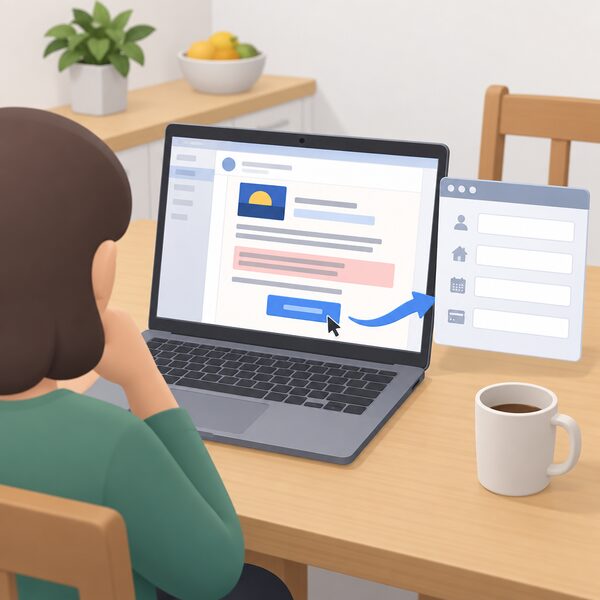
Scams are a separate risk that has grown around the Ombudsman's name. In February 2026 the service reported a recent increase in fraudulent emails targeting energy consumers that falsely claim to be from the Energy Ombudsman32. The characteristics it lists are use of the Energy Ombudsman or a broker name and logo without permission, reference to a complaint or review the consumer has not raised, links to fake forms or websites, pressure to act quickly, a free email service such as Gmail, and a misspelling of a company name32. The forms often request sensitive personal information such as full name, address, date of birth or bank details32.
For a household's energy independence, the Ombudsman changes nothing about where power comes from or who supplies it. It is a redress mechanism, not a supply option: it sits downstream of the supplier relationship and depends on that supplier still trading and still within the scheme. What it does offer is a free, independent route to a binding decision on a company, which is a form of consumer leverage that does not depend on the household's own bargaining position. The dependence that remains is on the supplier's continued existence, on the scheme's Terms of Reference, and on the company actually implementing what it has been told to do.
Sources32 cited
- FAQs, Energy Ombudsman
- How we can help, Energy Ombudsman
- What to expect, Energy Ombudsman
- Raise a dispute, Energy Ombudsman
- Creating a case with the Energy Ombudsman, Energy Ombudsman
- Complain about your energy supplier or network operator, Ofgem
- How we can help: energy suppliers, Energy Ombudsman
- How we can help: network operators, Energy Ombudsman
- Understanding your rights, Energy Ombudsman
- Heat networks affected by the Energy Prices Act 2022, Energy Ombudsman
- Theodore Stevenage Limited, Energy Ombudsman
- Eight week and deadlock letter guidance, Ofgem, February 2020
- Installing a prepayment meter without your permission, Ofgem
- Smart meters: your rights and expectations, GOV.UK
- Metropolitan Infrastructure Limited, Energy Ombudsman
- Heat networks consumer protections draft guidance, Ofgem, 5 September 2025
- Heat networks, Scottish Government
- Edmunds House Management Company Ltd, Energy Ombudsman
- Greenhill Housing Association, Energy Ombudsman
- VIVID Housing Limited, Energy Ombudsman
- The Energy Titans Limited, Energy Ombudsman
- Dispute resolution, Ofgem
- Luminex Power Limited, Energy Ombudsman
- Information for disputes with flexibility service providers, Energy Ombudsman
- Supplier of last resort information, Energy Ombudsman
- One million consumers helped by Energy Ombudsman as service marks 20 years, Energy Ombudsman, 7 July 2026
- Energy Ombudsman H1 data 2026, Energy Ombudsman, 24 August 2026
- Review of Ofgem call for evidence, Energy Ombudsman, 28 February 2025
- EV tariffs and home charging: what consumers need to know, Energy Ombudsman
- Guidance: scam emails claiming to be from Energy Ombudsman, Energy Ombudsman, 9 February 2026
- Complain about your energy supplier, Ofgem
- Biennial assessment of Ombudsman Services under the Alternative Dispute Resolution (ADR) Regulations 2021-2023, Ofgem