

In this answer
Short answer
The Energy Ombudsman is the independent escalation route for a household energy complaint that a supplier has not settled. It is approved by Ofgem to resolve disputes between consumers and energy suppliers, and it has held that approval since its appointment by Ofgem in 20081. Its service is free to consumers, and once a case is accepted it reviews the evidence from both sides and informs the consumer of its decision within six weeks3.
What a household can expect at the end of that process is a decision that sets out actions the supplier must take. Those outcomes can include financial compensation, an apology, an agreement to fix the problem, a refund, or an affordable payment plan5. Where both sides accept the decision, the supplier is legally bound to implement it, and the Ombudsman has been given powers to fine companies that do not comply with a ruling6.
The route is not open immediately. A supplier has eight weeks to resolve the issue unless it sends a deadlock letter allowing the consumer to escalate sooner, and the Ombudsman will not consider a dispute against a supplier that has ceased trading4. Heat network customers gained access to the same service from 1 April 20254.
Who the Energy Ombudsman is and who appoints it
The Energy Ombudsman provides an independent escalation route for consumer complaints, and it is approved by Ofgem, the UK energy regulator, to handle service disputes in the energy sector3. Its appointment by Ofgem dates to 2008, and the service has since handled complaints for more than a million consumers across two decades2. Ofgem's own consumer guidance treats the Ombudsman as the next step when a household is not happy with the way a supplier has handled a complaint, which makes it the practical end of the domestic complaints chain5.
Its remit is wider than domestic supply alone. The service describes itself as separate to Ofgem and able to look at problems with an energy supplier, an energy broker, a network operator or a heat network supplier5. It will also accept complaints about deemed contracts for investigation, the arrangements that apply when a property is supplied without a live contract in place11. For households on the Feed-in Tariff scheme, it can consider complaints where obligated electricity suppliers do not follow the rules set by Ofgem12.
The Ombudsman is not a regulator and does not set policy. It is approved by Ofgem to independently resolve disputes between consumers and energy suppliers, and its appointment by Ofgem dates to 200813. Government has consulted on fairer, faster redress in the energy market, covering complaints against domestic energy suppliers, complaints by small enterprises against non-domestic suppliers and complaints against heat networks14. In a separate licensing consultation, government plans to appoint the Energy Ombudsman as the sole ADR provider for consumer disputes with flexibility service providers15.
For a household's energy independence, the Ombudsman is a counterweight rather than a source of supply. It cannot restore a failed supplier, force a cheaper tariff or remove a household's dependence on the grid. What it does is give a consumer a route to a binding remedy without going to court, which is the main protection available when the commercial relationship with a supplier breaks down.
The resolution process: evidence, review and decision

A consumer has a right to an independent review of their complaint, but the route into it is conditional16. The household must first follow the company's dispute process to give it an opportunity to fix the issue3. Escalation becomes possible when a reported problem is not fixed within eight weeks, when the two sides cannot agree how to fix it, when a deadlock letter arrives stating the problem cannot be fixed or that the supplier believes there is no more it can do, or when the consumer is simply not happy with the decision received4.
Once a case is accepted, the Ombudsman asks the consumer to send information and evidence, reviews evidence from both the consumer and the energy company, informs the consumer of its decision within six weeks, and gives the energy company a set of actions to resolve the problem5. The evidence threshold is stated consistently across the supplier pages: a complainant must have sufficient evidence to support the case, including the date the complaint was raised with the supplier17. The same wording appears for cases against Business Utility Services Ltd, VIVID Housing Limited and Theodore Stevenage Limited18.
There is an intermediate stage before a formal investigation. Suppliers may make an offer to the consumer to resolve the complaint as an alternative to an investigation, and consumers are free to choose whether to accept the offer or ask for an investigation21. That matters because an offer is not a decision: accepting it ends the case, while asking for an investigation puts the matter to the Ombudsman's own review.
"a consumer has a right to an independent review of their complaint."
The practical preparation is straightforward. A household that can produce the complaint reference, the date the complaint was raised, the correspondence, the bills or statements in dispute and any meter readings is in a stronger position than one relying on recollection. The Ombudsman looks at evidence from both sides and decides what should happen, and it can require the company to correct the problem, apologise, explain what happened, and make a financial award21.
What kinds of outcome and resolution you can expect
The outcomes available are remedial rather than punitive in the first instance. Ofgem's consumer guidance lists what a resolution could be: financial compensation, an apology, agreeing to fix the problem, a refund, or providing an affordable payment plan5. Older Ombudsman Services: Energy guidance, published in 2014, described the same shape of powers in similar terms, saying the service could require the company to correct the problem, apologise, explain what happened, and make a financial award22.
The Ombudsman states its own position plainly: if a mistake has been made or a consumer has been treated unfairly, it can require the supplier to put things right3. Where a guaranteed standard applies and the supplier has not made the standard compensation payment, the Ombudsman will make an award that ensures the consumer is compensated in line with the regulations23. Industry-mandated payments exist for some failures; in a switching case study the figure was £30 for the failure to complete the transfer24.
Enforcement has been strengthened. The Ombudsman is empowered to fine companies if they do not comply with their ruling, with new measures set to clarify the route for consumers to go through the courts as a last resort7. That sits alongside the binding nature of an accepted decision: if both the consumer and the supplier accept it, the supplier is legally bound to implement it6.
Complaint volumes give a sense of what the service handles. Billing dominates: billing complaints represented almost 60% of all domestic complaints received by the Energy Ombudsman25. Complaints handled by the service fell by 14% in 2025 compared with 202426. For a household, the practical expectation is a written decision within six weeks of escalation, an action list for the supplier, and a remedy that is usually financial or corrective rather than a change to the underlying tariff or contract.
Heat network complaints: a newer route into the scheme
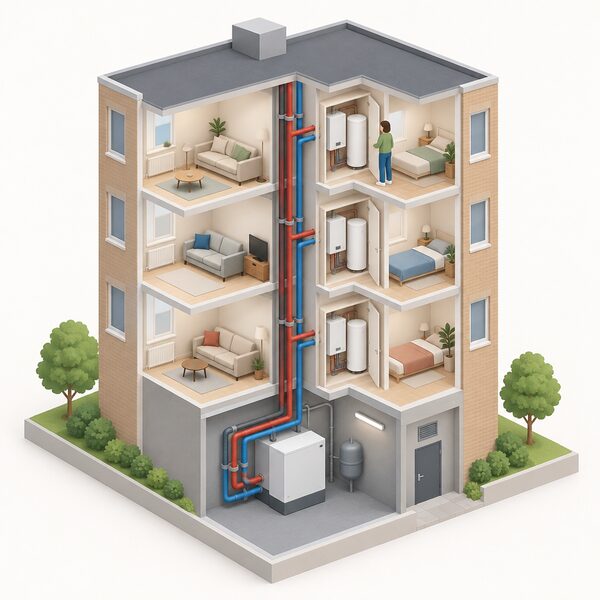
Heat networks, the shared heating systems that serve blocks and estates, were brought into the Ombudsman's remit from 1 April 2025. From that date the Energy Ombudsman can help consumers and small businesses resolve heat network disputes4. The legislation behind it ensures that heat network consumers can access a free and independent dispute resolution service27. The Energy Ombudsman also provides an independent escalation route for consumer complaints in this sector, alongside its supplier work9.
The process mirrors the supplier route. The party responsible for handling complaints is the Energy Ombudsman, but before contacting it consumers should notify their heat supplier and try to resolve the issue28. The period after which a complaint can be escalated to the Ombudsman remains eight weeks for heat networks29. Eligibility follows the same evidence test: a complainant must have sufficient evidence, including the date the complaint was raised with the supplier, as set out on the Metropolitan Infrastructure Limited dispute page30.
Regulation of the sector is still developing. Ofgem's heat networks consumer protection guidance recommends that authorised persons consider producing and publishing an annual complaint report, and suggests that report include the number of complaints in a given time period that were not resolved by the end of the next working day31. The Scottish Government sets out its own heat networks policy, which matters because heat network regulation and support are devolved and the customer experience can differ between nations9.
For a household on a heat network, this is a meaningful shift in independence. Before April 2025 there was no equivalent free escalation route for a shared heating system; now there is one, with the same eight week clock and the same evidence expectations as the supplier scheme. The dependence that remains is structural: the household still buys heat from the network operator, and the Ombudsman can remedy a service failure but cannot change the fact of a single supplier.
The Ombudsman's role when a supplier fails
When an energy supplier ceases trading, the Ombudsman's role changes. The Energy Ombudsman will not consider disputes against a supplier that has ceased trading, because that supplier is not able to respond or act on a decision8. Households in that position are moved to a supplier of last resort, and the Ombudsman publishes separate information on that process rather than accepting a dispute against the failed company8.
That limit is worth understanding before relying on the scheme. The Ombudsman's powers run against a trading company: it can require the supplier to put things right, and it can fine a company that does not comply with a ruling3. None of that is available against a company in administration or wound up. The protection in a failure is the supplier of last resort transfer, not an Ombudsman decision.
Where a supplier is still trading, the position is different. The Ombudsman's remit covers energy suppliers, brokers, network operators and heat network suppliers, and it can consider complaints about deemed contracts and about Feed-in Tariff obligations5. Its wider function is investigating disputes between consumers and energy suppliers when consumers remain dissatisfied with the way their energy company has handled the dispute, a role Ofgem assessed as important to consumer outcomes and trust in the energy market13.
For a household's energy independence, this is the clearest limit on the whole complaints route. The Ombudsman can correct a billing error, order compensation or require an apology, but it cannot keep a supplier solvent or preserve a contract. The dependence on a trading counterparty remains, and the fallback when that counterparty fails is a transfer to another supplier rather than a remedy from the Ombudsman.
Sources31 cited
- Energy Ombudsman FAQs, Energy Ombudsman, 2026
- One million consumers helped by Energy Ombudsman as service marks 20 years, Energy Ombudsman, 2026
- Understanding your rights, Energy Ombudsman, 2026
- How we can help, Energy Ombudsman, 2026
- Complain about your energy supplier or network operator, Ofgem, 2026
- How do I make a complaint to my energy supplier?, Centre for Sustainable Energy, 2025
- Greater protections to restore families' trust in home upgrades, GOV.UK, 2026
- Supplier of last resort information, Energy Ombudsman, 2026
- Heat networks policy, Scottish Government, 2026
- Energy Ombudsman H1 data 2026, Energy Ombudsman, 2026
- Deemed contracts and rates, Energy Ombudsman, 2026
- Feed-in Tariffs, Energy Ombudsman, 2026
- Biennial assessment of Ombudsman Services under the ADR Regulations 2021 to 2023, Ofgem, 2024
- Fairer, faster redress in the energy market, GOV.UK, 2025
- Annex D: Load control consumer protection guidance, Ofgem, 2026
- Disputes where a company believes it has acted appropriately, Energy Ombudsman, 2026
- British Gas Trading dispute page, Energy Ombudsman, 2026
- Business Utility Services Ltd dispute page, Energy Ombudsman, 2026
- VIVID Housing Limited dispute page, Energy Ombudsman, 2026
- Theodore Stevenage Limited dispute page, Energy Ombudsman, 2026
- Estimated meter readings lead to £2,200 electricity bill dispute, Energy Ombudsman, 2026
- How to leaflet, Ofgem, 2014
- New guaranteed standards, 1 May 2020, Energy Ombudsman, 2026
- Switching case study, Energy Ombudsman, 2026
- Energy Consumer Outcomes: proposed implementation, Ofgem, 2026
- Energy Ombudsman publishes complaint data and shares advice for households, Energy Ombudsman, 2025
- Industrial Dwellings Society dispute page, Energy Ombudsman, 2026
- Heat networks consumer protections: draft guidance, Ofgem, 2025
- Heat networks regulation: consumer protection guidance decision, Ofgem, 2026
- Metropolitan Infrastructure Limited dispute page, Energy Ombudsman, 2026
- Heat networks consumer protections: draft guidance, Ofgem, 2025
 Energy Complaints and RedressMaps the routes a householder has when an energy supplier, network operator, broker or heat network gets something wrong, which body handles which dispute, and what the Energy Ombudsman can and cannot do.
 Complaining About a SupplierHow do you complain about your energy supplier, and how long should it take?
 Scams and Mis-SellingHow energy supplier scams present, what the doorstep and phone selling rules require, the redress available when a contract was mis-sold, and how the Energy Ombudsman handles a dispute.
 Complain About Energy SupplierThe order of a complaint: the supplier's own procedure, the eight-week point or deadlock, and referral to the Energy Ombudsman in Great Britain or the Consumer Council in Northern Ireland.
 Customer Service RatingsWhich energy suppliers answer the phone quickly and deal with complaints properly?
 Report a Faulty MeterWhat to do when a meter over-records, stops recording or produces impossible readings: the evidence to gather, how to raise it with the supplier, the 5 working day and 8 week deadlines, and how the Energy Ombudsman handles meter disputes.