

In this answer
Short answer
A deadlock letter is a supplier's written statement that it has decided there is nothing else it can do about a complaint. Consumer guidance describes it as a decision letter or a letter of deadlock, and it marks the end of the supplier's own complaints process1. Its practical value is timing: it lets a household take the dispute to the Energy Ombudsman before the usual eight-week wait has run2.
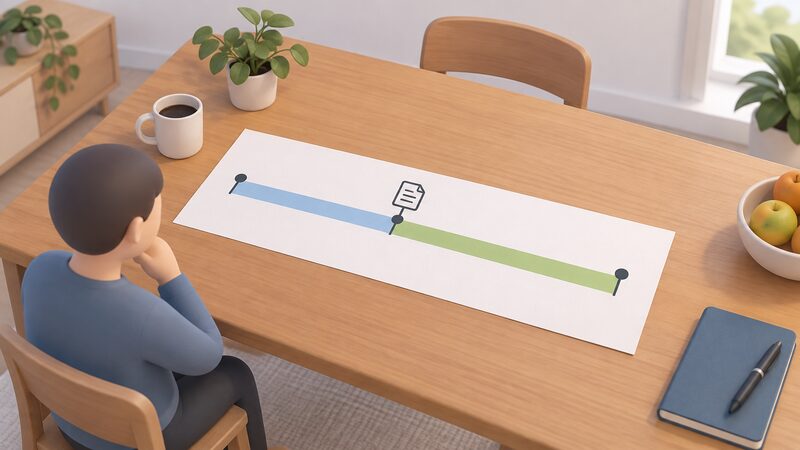
The Energy Ombudsman states that a supplier has eight weeks to resolve an issue unless it sends a deadlock letter enabling the consumer to come to the service sooner3. The same gateway appears across the Ombudsman's dispute pages: a deadlock letter received, or eight weeks without resolution, is what allows a case to be registered4. Once the letter arrives, the clock changes: the dispute must be escalated within 12 months of receiving it5.
What follows is the process, the deadlines, the outcomes the Ombudsman can order, and who is eligible to use it. The service is free to the consumer, and it is separate to Ofgem6.
What a deadlock letter is and when a supplier must send one
A deadlock letter is not a rejection of the complaint in the sense of a refusal to engage. It is the supplier's formal acknowledgement that its internal process has reached its limit. Consumer guidance puts it as a letter called a decision letter or a letter of deadlock, sent when the supplier has decided there is nothing else it can do1. Ofgem's consumer guidance describes the same document as a deadlock letter stating the problem cannot be fixed, or that the supplier believes there is no more it can do2.
The letter matters because of what it unlocks. Without it, a household has to let the eight-week period run before the Ombudsman will take the case. With it, that wait is waived. The Ombudsman's own wording is that a supplier has eight weeks to resolve an issue unless it sends a deadlock letter enabling the consumer to come to the service sooner3. The same rule is repeated on the Ombudsman's pages for network operators and for flexibility service providers, where the provider has eight weeks to resolve the complaint unless it issues a deadlock letter allowing earlier escalation9.
In practice, a supplier sends one when it has exhausted its options: it has investigated, it has given its final answer, and it does not intend to move further. The letter is the trigger for the next stage rather than a dead end.
"A letter of deadlock means your energy supplier has decided there is nothing else they can do about your complaint."
The 8-week rule and the 12-month deadline

Two clocks run on an energy complaint, and they are easy to confuse.
The first is the eight-week rule. A supplier has eight weeks to resolve the issue, and if that period passes without resolution, the dispute can go to the Ombudsman3. The Ombudsman's eligibility wording is consistent across its dispute pages: the complainant must have received a deadlock letter, or it must have been at least eight weeks since the issue was first raised with the supplier4. The same condition is set out for heat network disputes and for named suppliers on the Ombudsman's raise a dispute pages11.
The second is the deadline that starts when the letter arrives. The Ombudsman states that the dispute must be escalated within 12 months of receiving the deadlock letter5. Consumer guidance frames the same limit from the other direction: the step must be taken in less than 12 months from when the decision letter or letter of deadlock is received1.
So the letter does two things at once. It removes the need to wait out the eight weeks, and it starts a 12-month window in which the case has to be brought. A household that sits on the letter past that window loses the route.
How to escalate to the Energy Ombudsman after a deadlock letter
The route has a fixed order. A complaint has to go to the supplier first, and only then can it move to the Ombudsman. The Ombudsman's guidance is that a consumer must raise a complaint with the supplier in the first instance, and that the service is free if the issue is not resolved after eight weeks or a deadlock letter is received8. Ofgem's consumer guidance lists the same triggers: a problem not fixed within eight weeks, a failure to agree how to fix it, receipt of a deadlock letter, or dissatisfaction with the decision received2.
When a case is registered, the Ombudsman's eligibility checks require sufficient evidence to support it, including the date the complaint was raised with the supplier, and the supplier name must match the account holder's bill13. The same evidence condition appears on the Ombudsman's pages for individual suppliers and heat networks14.
The Ombudsman describes itself as an independent service, separate to Ofgem, for problems with an energy supplier, an energy broker, a network operator or a heat network supplier6. Since 1 April 2025, new legislation has required all heat network suppliers to be signed up to the Energy Ombudsman, which extends the same deadlock and eight-week gateway to communal heating disputes16.

What the Ombudsman can decide: outcomes, awards and limits
The Ombudsman's powers are corrective rather than punitive. It states that it can tell suppliers to take practical action, such as crediting or cancelling an account or changing a tariff, to make an apology, or to offer a financial award, or a combination of these, and it may make recommendations to prevent the issue happening again7.
The financial ceilings are set out in the same guidance: up to £10,000 for domestic energy disputes or up to £20,000 for small business disputes7. Those are the maximum awards for energy supplier cases.
The limits are stated just as plainly. The Ombudsman cannot punish companies, dictate how companies operate, or issue fines7. That distinction matters to a household expecting a penalty: an award is compensation to the consumer, not a fine on the supplier. Where a case involves a business that is larger than a microbusiness, the Ombudsman's supplier guidance notes that a case from a larger business would not be accepted unless the supplier explicitly requested the Ombudsman to do so12.
| What the Ombudsman can do | What it cannot do |
|---|---|
| Direct practical action, such as crediting or cancelling an account or changing a tariff7 | Punish companies7 |
| Require an apology7 | Dictate how companies operate7 |
| Make a financial award, up to £10,000 domestic or £20,000 small business7 | Issue fines7 |
| Recommend changes to prevent the issue recurring7 | Accept cases from businesses larger than a microbusiness, unless the supplier requests it12 |
How long resolution takes and what it costs you
The eight-week figure is the supplier's window, not the Ombudsman's. The Ombudsman's guidance is that the supplier has eight weeks to resolve the issue unless a deadlock letter is issued3. The same eight-week period applies to flexibility service providers, again unless a deadlock letter allows earlier escalation10.
For the consumer, the service is free. The Ombudsman states that it is free if the issue is not resolved after eight weeks, or a deadlock letter is received, provided the supplier was complained to first8. There is no charge to the household for registering or pursuing a case.
The Ombudsman's own reporting gives a sense of volume rather than speed. Its H1 2026 data release records that consumers were informed about their right to refer unresolved complaints to the Ombudsman after eight weeks or once a deadlock had been reached17. The guidance documents summarised here do not set out a fixed resolution timescale for the Ombudsman's own handling, so the practical expectation is that the case runs after the supplier's eight weeks or the deadlock letter, not instead of them.
Who qualifies: domestic, small business and microbusiness consumers
Eligibility is narrower than many households assume. Ofgem's dispute resolution guidance states that only domestic consumers, micro-businesses, and small businesses may apply to the Energy Ombudsman18. The Ombudsman's own guidance for flexibility service providers puts the boundary the same way: a business consumer that does not meet the microbusiness definition cannot have its dispute considered10.
The microbusiness test is set out in that guidance: fewer than ten employees, or their full-time equivalent, and an annual turnover or balance sheet no greater than the stated threshold10. The supplier guidance adds that a case from a larger business would not be accepted unless the supplier explicitly requested the Ombudsman to do so12.
There is a known mismatch between the two definitions. A business may be treated as a microbusiness by its supplier but not meet Ofgem's definition, and the supplier guidance addresses that gap directly12. Standard Licence Condition 21BA, in the version dated 17 December 2020, requires suppliers to comply with the domestic customer protections for Micro Business Consumers, reading references to a Domestic Customer as a Micro Business Consumer19.
For domestic supply, the 150,000-customer threshold appears in the supplier obligation rules: a licence-holder supplying electricity or gas to 150,000 or more domestic customers at the end of the qualification year20. The same threshold is recorded in the ECO statistics, where the number of domestic customers must be 150,000 or more, unchanged between ECO3 and ECO421.
Northern Ireland sits apart. The Energy Ombudsman describes its scope as covering energy suppliers, brokers, network operators and heat network suppliers6, but Northern Ireland has its own electricity and gas market and its own consumer body, the Consumer Council for Northern Ireland. The guidance summarised here does not set out a separate Northern Ireland supplier list, so a household there should check which body covers its supplier before relying on the deadlock route.
Sources21 cited
- Complaints process easy read, Smart Energy GB, 2026-03-16
- Complain about your energy supplier, Ofgem, 2026
- Energy suppliers: how we can help, Energy Ombudsman, 2026-09-20
- Worried about your energy bills, Energy Ombudsman, 2026-03-24
- We may be able to help resolve your energy dispute, Energy Ombudsman, 2026-09-20
- Complain about your energy supplier or network operator, Ofgem, 2026
- What to expect, Energy Ombudsman, 2026-09-19
- FAQs, Energy Ombudsman, 2026-09-19
- Network operators, Energy Ombudsman, 2026-09-20
- Information for disputes with flexibility service providers, Energy Ombudsman, 2026-09-20
- Sanctuary Housing Association dispute, Energy Ombudsman, 2026-09-19
- Eight week and deadlock letter guidance, Ofgem, 2020-02
- Cynon Taf Community Housing dispute, Energy Ombudsman, 2026-09-19
- Digital Power Energy Supply UK Ltd dispute, Energy Ombudsman, 2026-09-19
- British Gas Trading dispute, Energy Ombudsman, 2026-09-19
- London Square Spitalfields Management Company Ltd dispute, Energy Ombudsman, 2026-09-19
- Energy Ombudsman H1 data 2026, Energy Ombudsman, 2026-08-24
- Dispute resolution, Ofgem, 2026-09-17
- Open letter on expectations for energy suppliers undertaking charge recovery action, Ofgem, 2020-12-17
- Creating a case with the Energy Ombudsman, Energy Ombudsman, 2026-09-20
- HEE statistics detailed release, March 2023, Department for Energy Security and Net Zero, 2023-03-30
 Complain About Energy SupplierThe order of a complaint: the supplier's own procedure, the eight-week point or deadlock, and referral to the Energy Ombudsman in Great Britain or the Consumer Council in Northern Ireland.
 Complaining About a SupplierHow do you complain about your energy supplier, and how long should it take?
 Switching SupplierHow long does switching energy supplier actually take, and what happens if you owe money?
 Report a Faulty MeterWhat to do when a meter over-records, stops recording or produces impossible readings: the evidence to gather, how to raise it with the supplier, the 5 working day and 8 week deadlines, and how the Energy Ombudsman handles meter disputes.
 Energy Complaints and RedressMaps the routes a householder has when an energy supplier, network operator, broker or heat network gets something wrong, which body handles which dispute, and what the Energy Ombudsman can and cannot do.
 Final Bills and Credit RefundsHow final bills and credit refunds work when you leave an energy supplier: the six-week deadline for the final bill, the ten-working-day deadline for refunding credit, the twelve-month back billing limit, and the automatic compensation that applies when suppliers miss these standards.