

In this guide
When a household leaves an energy supplier, two separate deadlines apply. The old supplier must issue a final bill within six weeks of the date it stopped being responsible for the supply, and it must refund any outstanding credit balance within 10 working days of issuing that final bill1. Both are licence conditions, not courtesies, and both carry compensation when they are missed.
The credit itself is usually the household's own money. It builds up when payments exceed usage, most often through a fixed monthly Direct Debit, and it typically accumulates over the summer months when less energy is used before helping to reduce bills in winter2. Ofgem's guidance is direct on the point: you can contact your supplier to claim this credit back at any time, not only when the account closes3.
Where a supplier has failed to bill accurately, a separate protection applies. Ofgem's back billing rules mean a household does not have to pay for energy used more than 12 months ago if it has not had an accurate bill, has not been told what to pay through a statement of account, or had a Direct Debit set too low4. The rules apply to households and microbusinesses5.
What a final bill is and when it must arrive
A final bill closes the account. It reconciles the energy used against the payments made, applies the standing charge for the period supplied, and states whether a balance is owed in either direction. Under Regulation 6CA of the standard supply licence conditions, the old supplier must issue it within six weeks of the supplier no longer having responsibility for the supply of electricity or gas, or within six weeks of the later of that date and notification where responsibility has otherwise terminated1.
That six-week window is the outer limit, not a target. Ofgem's proposed Energy Consumer Outcomes work describes the same requirement as requiring suppliers to issue final bills within six weeks, and pairs it with a second obligation to refund credit balances within 10 working days of issuing a final bill7. The two deadlines are deliberately sequenced: the refund clock does not start until the bill exists.
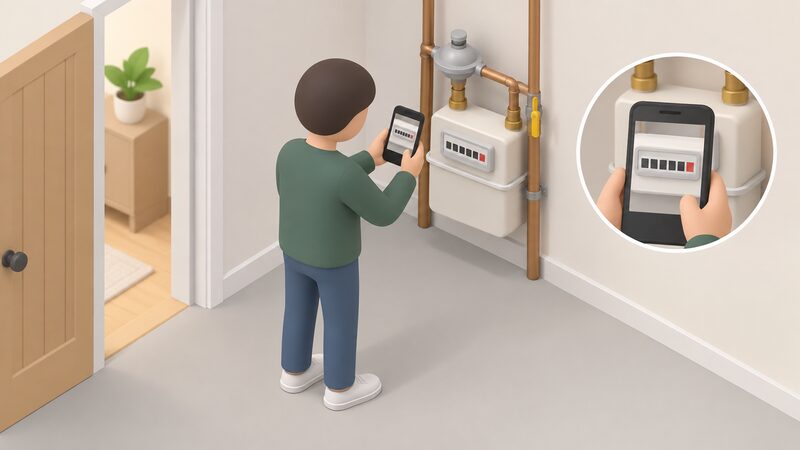
In practice the closing figure depends on an accurate meter reading. Where a smart meter is functioning, the reading is taken remotely. Where it is not, the household supplies one at the point of switching, and the final bill is built from it. A final bill that looks wrong can be challenged, and a corrected final bill restarts the 10-working-day refund clock on the corrected figure1.
The independence point is straightforward. A final bill is the moment a household's account with one company ends and its money stops sitting on that company's balance sheet. Until the refund is paid, the household is an unsecured creditor of a business it no longer buys from, which is why the deadlines exist and why compensation attaches to them.
Credit on your account: what it is and why it builds up
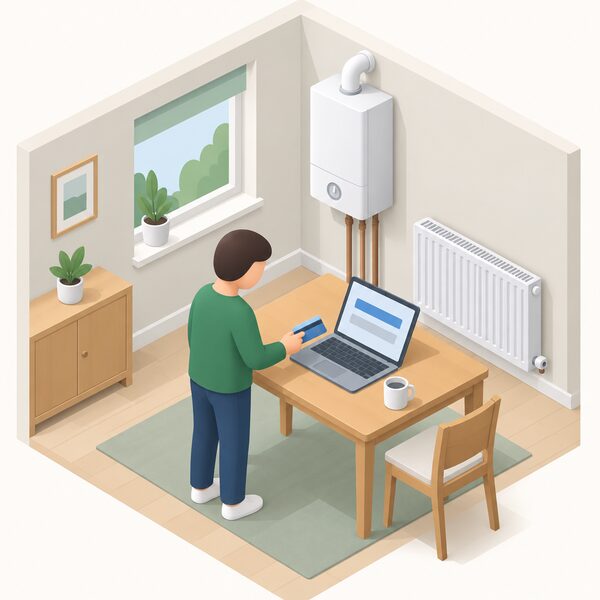
Credit is the balance that arises when a household has paid for more energy than it has used. Ofgem describes it plainly: this happens when you pay for more energy than you have used, for example because you pay a set amount by Direct Debit every month3. The pattern is seasonal. Typically credit builds over the summer months when less energy is used, and can then help reduce bills in the winter months2.
That seasonal shape is the reason a credit balance is normal rather than a sign of error. A level Direct Debit spreads the cost of a winter-heavy consumption profile across twelve equal payments, so the account runs ahead in the warm months and behind in the cold ones. A balance in September is expected; the same balance in March is more likely to be a billing problem.
Credit is not the household's only route to money back. Ofgem's guidance confirms that a household can contact its supplier to claim credit back at any time, and the same applies to the closing balance on a closed account3. Ofgem's customer credit balance note states that suppliers should actively refund these balances, and that customers could be entitled to compensation if it is not timely9.
Two qualifications matter. First, a credit balance can be offset against debt on the same account, so a household that owes money on a closed account may see the credit absorbed rather than returned. Second, credit held by a supplier that later fails is recovered through the supplier of last resort process rather than from the failed company, which is a slower route. Households that want their money out of a supplier's hands can ask for it at any point rather than waiting for the account to close.
"Suppliers should actively refund these balances, and you could be entitled to compensation if it is not timely."
Refunds after switching: the 6-week final bill deadline
The switching sequence has fixed points. Ofgem's guidance states that when you switch to a new supplier, your old supplier will refund any credit in your final bill, and you could get compensation if they do not8. The same wording appears across Ofgem's switching and billing pages, which makes it the settled position rather than a discretionary gesture3.
The statutory backing is Regulation 6D. A supplier must, within 10 working days of issuing a customer's final bill, or if applicable a corrected final bill, refund any outstanding credit balance. Where the refund is made by cheque, the cheque must be dispatched so that the customer receives the refund within those 10 working days1. The obligation is on the supplier to act, not on the household to chase, although chasing is what makes the deadline visible.
| Stage | Deadline | Source |
|---|---|---|
| Final bill issued | Within 6 weeks of the supplier losing responsibility for the supply | 1 |
| Credit balance refunded | Within 10 working days of issuing the final bill | 1 |
| Corrected final bill | Restarts the 10-working-day refund clock | 1 |
| Cheque refunds | Dispatched so the customer receives it within 10 working days | 1 |
The practical failure mode is not refusal but drift. A supplier that issues the final bill late pushes the refund late with it, and a household that does not diarise the six-week point may not notice until the money has been sitting elsewhere for months. The compensation route exists precisely for that gap, and it is discussed below.
For households weighing a switch, the credit position is one of several timing questions. The energy switch guarantee sets out what suppliers promise on transfer, and how long a final bill takes after switching covers the same ground from the household's side. Where a supplier has failed altogether, the route is different again: getting credit back after a supplier failed explains the supplier of last resort process.
Back billing rules: the 12-month limit on old charges
A back bill is a bill a supplier asks a household to pay when it has not accurately charged for energy already used4. The rules that govern it are among the strongest consumer protections in the retail energy market, and they are simple in outline: a supplier cannot charge domestic or microbusiness consumers for energy used, or for charges, more than 12 months old due to the supplier's error10.
Ofgem's own guidance sets out the conditions. A household does not have to pay for energy used more than 12 months ago if it has not had an accurate bill for it before, has not been told what it needed to pay through a statement of account before, or had a Direct Debit amount previously set too low to cover what was needed4. The rules apply to households and microbusinesses5.
Where a supplier has not followed the rules, the remedy is a refund. Ofgem states that the supplier will refund any money taken in error4. That is a stronger position than a credit against future bills, and it is worth knowing when a back bill arrives with a demand for immediate payment.
The limit is not a general amnesty. Ofgem is explicit that a household needs to pay any accurate bill it has been sent by its supplier, including back bills5. The protection bites on the supplier's failure to bill accurately within the year, not on the household's willingness to pay a correct charge. A household that has received accurate annual statements and simply not paid them is in a different position from one that was never billed at all.

When the back billing rules do not apply
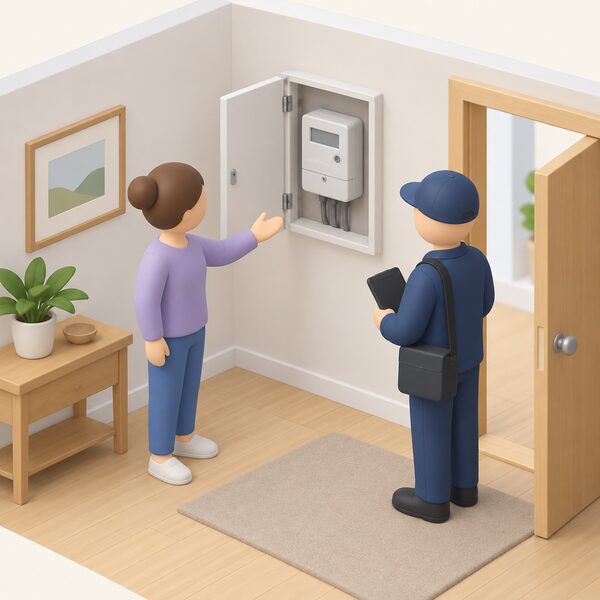
The 12-month limit has defined edges, and households should know where they are before relying on it.
- Unreasonable behaviour. A household will have to pay for energy used more than 12 months ago if it has acted unreasonably, for example by stopping the supplier from billing accurately, including by blocking access to the meter5. Ofgem's fuller list adds ignoring requests for payment from the supplier and stealing electricity or gas4.
- Non-domestic consumers. The back-billing authorisation condition applies only to domestic and micro-business consumers, so non-domestic consumers are not covered11.
- Heat networks. Ofgem states that it cannot currently apply the 12 months back-billing limit to networks covered by the Landlord and Tenant Act 198512. Where charges are recovered through a Service Charge, they are not covered by the 12-month limit, and under Section 20B of the Landlord and Tenant Act 1985 a landlord has 18 months within which to notify the consumer of Service Charge costs once incurred, in England and Wales11.
- Heat network consumers generally. The intended protection for authorised heat network suppliers is to prevent back-billing for heating, cooling or hot water consumed more than 12 months prior to the date of the bill, where the customer is not at fault12.
The heat network position is the clearest example of a household falling outside the standard rules. Homes on communal or district heating are supplied under a different framework, and the 12-month protection that applies to a conventional gas or electricity account does not map onto a Service Charge arrangement in the same way. Households in that position are covered separately in heat network suppliers and households.
There is also a timing asymmetry worth noting. The back billing limit protects against old charges; it does not accelerate a refund. A household that has been overcharged and paid can still wait for the money to come back, and the compensation route for late refunds is the same one that applies to a closing credit balance.
Guaranteed Standards of Performance: compensation when service fails
Guaranteed Standards of Performance are the minimum service levels that all energy suppliers must meet, and the mechanism is automatic. Ofgem describes them as setting out minimum performance standards which all energy suppliers must meet and, when they do not, automatic payments are issued to the affected consumers13. The same principle applies to the switching standards, which require suppliers to automatically provide consumers with compensation when switches go wrong14.
The standards are being extended. Ofgem's final decision on smart meter Guaranteed Standards confirms that consumer compensation will commence under the new Guaranteed Standards from 23 February 202615. The accompanying consultation sets a five-working-day timeframe for a supplier to complete an initial assessment, take an appropriate action and offer to update the consumer where smart meter operational issues arise13.
Awareness is the weak point. Ofgem's research on customer service standards found low awareness of Guaranteed Standards of Performance among participants, and views on the appropriate level of compensation varied widely amongst the sample16. The same research found widespread agreement that compensation is an important element of responding to service failings, and that service failings related to loss of supply were typically seen as the most severe16.
For a household, the practical consequence is that the payment may arrive without being claimed, but it will not arrive without the failure being recorded. Reporting the failure to the supplier is what starts the clock. Where a supplier misses the payment deadline itself, the Energy Ombudsman has awarded a further £30 for failing to make the initial guaranteed standards payment within 10 working days17.
Compensation for power cuts: amounts and restoration deadlines

Power cut compensation is set by Ofgem and reviewed annually. The amounts are £100 for homes or £195 for businesses where fewer than 5,000 properties are affected for more than 12 hours, or more than 5,000 properties are affected for more than 24 hours6. An extra £45 applies for every additional 12-hour period without electricity, and the maximum payable is £400 where the power cut affects 5,000 or more properties6.
The worked examples make the arithmetic clear. A cut lasting more than 12 hours and running to 36 hours attracts two additional £45 payments, adding up to £90. A cut lasting more than 24 hours and running to 72 hours attracts four additional £45 payments, adding up to £1806.
| Situation | Payment |
|---|---|
| Fewer than 5,000 properties affected for more than 12 hours | £100 for homes, £195 for businesses6 |
| More than 5,000 properties affected for more than 24 hours | £100 for homes, £195 for businesses6 |
| Each additional 12-hour period without electricity | £456 |
| Cut of more than 12 hours running to 36 hours | 2 additional £45 payments, £90 in total6 |
| Cut of more than 24 hours running to 72 hours | 4 additional £45 payments, £180 in total6 |
| Maximum where 5,000 or more properties are affected | £4006 |
| More than 4 cuts between 1 April and 31 March, each at least 3 hours | An extra £100, on claim6 |
Restoration deadlines vary with the weather. Ofgem sets 12 hours for interruptions outside severe weather, 24 hours in severe storm category 1 weather, and 48 hours in severe storm category 2 weather18. The repeated cuts payment requires more than four cuts between 1 April and 31 March the following year, each lasting at least 3 hours, and it is not automatic: a household must make a claim with its local network operator, who decides whether the payment applies6.
Some events are excluded. Ofgem lists no payment for blackouts caused by a national power shortage, damage to electrical equipment or appliances, or a low supply after a power cut6. The amounts are reviewed and updated each year based on inflation6.
Who pays power cut compensation, my supplier or the network operator?
The network operator pays, not the supplier. Citizens Advice states that your gas or electricity network operator is responsible for fixing power cuts and paying you compensation, and that this company is separate from the one that bills you20. That distinction matters when a household is trying to work out who to contact: the supplier handles the account, the network operator handles the wires and the payment.
Payment is normally automatic. Citizens Advice states that households get an automatic payment from their electricity network operator within 10 working days, with an extra £40 if a claim is needed20. Where a claim is required, the household has 3 months to claim after the end of March, and payment follows within 10 working days if accepted20.
The territorial position is uneven. Ofgem states that these rules cover England, Scotland and Wales6. Northern Ireland operates a separate electricity market with different network arrangements, so the Guaranteed Standards figures above should not be assumed to apply there. Households in Northern Ireland are covered separately in energy suppliers in Northern Ireland.
For a household thinking about resilience, the compensation is a partial offset rather than a solution. A £100 payment for a 12-hour outage does not cover spoiled food, a night in a hotel or lost working time, and the maximum of £400 is reached only in the largest incidents. The independence question a power cut raises is about backup, not about redress, and the compensation framework exists to make the failure visible rather than to make the household whole.
Compensation when a switch goes wrong
An erroneous transfer is a switch that happens without the household's authority, and it carries its own compensation. Ofgem states that you could get £40 if your energy supply is switched by mistake21. The same page sets two further payments: an extra £40 where the supplier takes more than 20 working days to reply after being told about the switching mistake, and an extra £40 where the old supplier takes more than 21 working days to re-register the supply once it knows about the mistake21.
The framework behind these payments is the Erroneous Transfer Customer Charter, which all energy suppliers must follow. Ofgem's terms page confirms that all energy suppliers must follow the charter, and that a household could get compensation if an erroneous transfer happens22. The charter predates the current standards and the two sit alongside each other.
The Energy Ombudsman has decided cases in this area. One case study records a further £30 for failing to make the initial guaranteed standards payment within 10 working days17. A separate case study records £30 for the failure to complete the transfer17. The two figures are not reconciled in the documents, and the amounts awarded depend on the facts of the individual case.
The credit refund sits inside the same switching framework. Ofgem's guidance links the two directly: your old supplier will refund any credit in your final bill, and you could get compensation if they do not3. Where a switch has gone wrong, the household may therefore have two separate claims running, one for the erroneous transfer and one for the late refund of the closing balance.
What to do if your supplier does not refund or comply
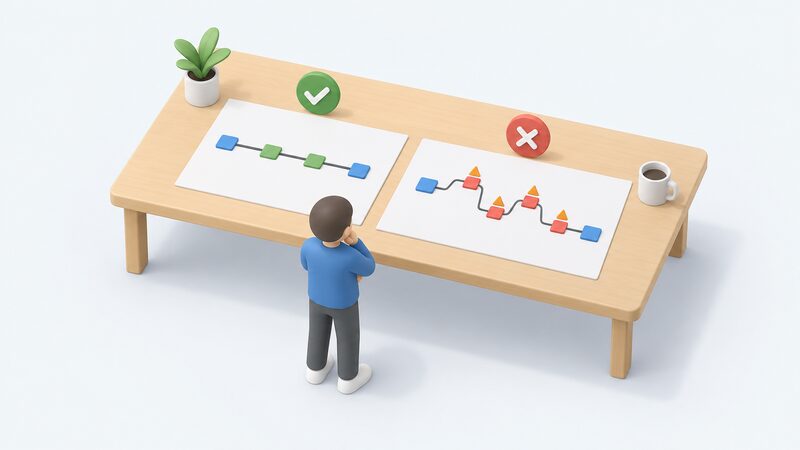
The first step is a complaint to the supplier. Ofgem advises contacting your energy supplier about late, incorrect or missing bills, back billing, being overcharged, a faulty meter, poor customer service, and refusing to refund credit from your account23. The list is deliberately broad: a refusal to refund a closing balance is treated as a complaint topic in its own right, not as an administrative query25.
Suppliers have an interest in resolving these cases. Ofgem's Debt Relief Scheme consultation states that any supplier who fails to demonstrate compliance with the licence changes, including by failing to respond, will be ineligible to submit a claim and will not be reimbursed26. That is a separate scheme, but it shows the direction of travel: compliance with billing and refund obligations is being tied to a supplier's access to support mechanisms.
If the supplier does not resolve the complaint, the Energy Ombudsman is the next stage. The Ombudsman's case studies show the range of outcomes: a consumer struggling to meet ongoing energy payments under an agreed 12-month debt payment plan whose changing financial circumstances were not reviewed by the supplier27, and a supplier that failed to make an initial guaranteed standards payment within 10 working days17. The complaining about an energy supplier page sets out the process and the Energy Ombudsman page covers what it can decide.
Where a household is struggling more broadly, suppliers are expected to review current payments and debt repayments, and to agree a payment plan, payment break or reduction28. Those routes sit alongside the refund process rather than replacing it: a household can pursue a credit refund and a payment arrangement at the same time.
Sources29 cited
- The Electricity and Gas (Standards of Performance) (Amendment) Regulations 2015, legislation.gov.uk, 2019
- Understand your electricity and gas bills, Ofgem, 2026
- Check if you are owed money on your energy bill, Ofgem, 2026
- What to do if you get a back bill, Ofgem, 2026
- What to do if you get a back bill, Ofgem, 2026
- Check if you can get payment for a power cut, Ofgem, 2026
- Energy Consumer Outcomes: proposed implementation, Ofgem, 2026
- How your electricity or gas bill is calculated, Ofgem, 2026
- Customer credit balance explanatory note, Ofgem, 2024
- How to understand your electricity and gas bills, Energy Ombudsman, 2025
- Heat networks regulation: consumer protection guidance decision, Ofgem, 2026
- Heat networks consumer protections: draft guidance, Ofgem, 2025
- Smart Meter Guaranteed Standard Statutory Consultation, Ofgem, 2025
- Supplier Guaranteed Standards of Performance: switching final decision, Ofgem, 2019
- Final decision: smart meter GSOPs, Ofgem, 2026
- Energy consumer experiences of customer service standards, Ofgem, 2026
- Switching case study, Energy Ombudsman, 2026
- Check if you can get payment for a power cut, Ofgem, 2026
- Plan for a power cut, Ofgem, 2026
- Get compensation if you have a power cut, Citizens Advice, 2026
- Switch your home energy supplier, Ofgem, 2026
- Energy terms explained, Ofgem, 2026
- Complain about your energy supplier or network operator, Ofgem, 2026
- Complain about your energy supplier or network operator, Ofgem, 2026
- Complain about your energy supplier, Ofgem, 2026
- Debt Relief Scheme statutory consultation, Ofgem, 2025
- Debt and payment case study, Energy Ombudsman, 2026
- Get help with your energy bills, Ofgem, 2026
- Getting help if you can't afford your energy bills, Ofgem, 2026
 Switching SupplierHow long does switching energy supplier actually take, and what happens if you owe money?
 Back Billing RulesCan a supplier really charge you for energy you used years ago?
 Switch Energy SupplierThe practical sequence of a domestic energy switch: the details and readings needed, the five working day transfer, cooling-off periods, exit fees and the final bill.
 Energy Debt Repayment PlansOwe money to your energy supplier?
 Supplier Licensing and FailureWhat happens when your energy supplier goes bust?
 Reading an Energy BillA line-by-line walk through a domestic gas and electricity bill: unit rate, standing charge, kWh consumption, meter readings, tariff name and balance, plus the 12-month back billing limit and the guaranteed standards payments that apply when a supplier or network operator gets it wrong.