

In this answer
Short answer
If you have switched energy supplier and left a credit balance behind, the rule is straightforward: your old supplier must refund any credit in your final bill, and you could get compensation if they do not1. The standard deadline is 10 working days after the final bill is sent2. Suppliers have six weeks after a switch to produce that final bill in the first place2.
The Energy Switch Guarantee, the voluntary code most large suppliers sign, tightens the refund window to 14 days from the final bill date3. Its members also commit to issuing at least 90% of credit refunds within 10 working days of a final statement being produced4. So the practical answer is: expect your money within 10 working days of the final bill, and no later than 14 days if your supplier is a Guarantee signatory.
What matters for a household's energy independence is that the credit is your money, not the supplier's working capital. It sits on the supplier's balance sheet until you claim it, and the rules exist to stop it staying there. This page sets out the deadlines, the process from final meter reading to refund, and what to do when the money does not arrive.
How long a credit refund takes after switching
The headline figure is 10 working days after the final bill. Citizens Advice states that suppliers must refund you within 10 working days of sending you the final bill2, and Uswitch gives the same window, describing suppliers as having 10 working days after the final bill to refund any credit that remains on the customer's account2. Confused.com adds that the refund should happen automatically within that period, rather than waiting for a separate request6.
That 10 working day clock does not start on the day you switch. It starts when the final bill is produced, and the supplier has up to six weeks from the switch to produce it2. In the worst case, then, a household could wait six weeks for the bill and a further 10 working days for the money, though in practice most final bills arrive sooner.
The Energy Switch Guarantee sets a shorter, clearer promise for its signatories: you will be refunded any money within 14 days of your final bill date3. Uswitch's guide to the Guarantee repeats the 14 day figure7. The Guarantee also commits members to a performance target, with at least 90% of credit refunds issued within 10 working days of a final statement being produced4.
Where the two figures differ, it is because they measure different things. The 10 working day rule is the regulatory expectation that applies to suppliers generally. The 14 day Guarantee figure is a contractual promise made by signatories, expressed in calendar days from the bill date. A household on a Guarantee supplier can point to the 14 day promise; a household elsewhere relies on the 10 working day standard.
"your old supplier will refund any credit in your final bill. You could get compensation if they do not."
The Energy Switch Guarantee: refunds within 14 days of the final bill
The Energy Switch Guarantee is a voluntary code that most of the larger suppliers have signed. Its refund promise is explicit: you will be refunded any money within 14 days of your final bill date3. Energy UK, which runs the scheme, publishes the supporting performance data, including the target that at least 90% of credit refunds are issued within 10 working days of a final statement being produced4.
The Guarantee covers more than the refund. It promises that your final bill will arrive within six weeks3, that there will be no interruption to your energy supply, and that if you change your mind within 14 days you can return to your old supplier7. The switching process itself is meant to complete within five working days for signatories4, a marked improvement on the 15 working days suppliers previously had, when only Guarantee members aimed for five days8.
For a household, the Guarantee's value is that it converts a general regulatory expectation into a specific, dated promise. If a signatory misses the 14 day refund window, the household has a clear breach to point to when complaining. The Guarantee does not, however, create a separate compensation scheme of its own; the compensation route runs through the standard guaranteed standards.

How the refund process works, from final meter readings to the final bill
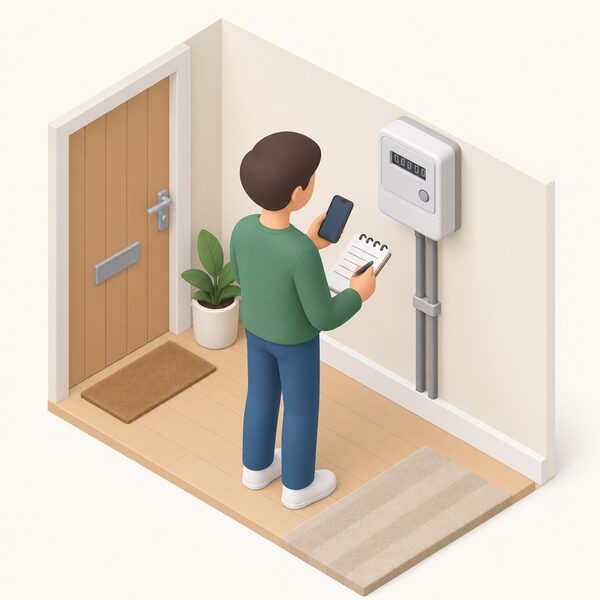
The process begins before the switch completes. When you switch, your new supplier contacts your existing supplier on your behalf, arranges the switch date and asks for a final meter reading9. That reading is what allows the old supplier to close the account on actual usage rather than an estimate.
You will need to give your supplier an up-to-date meter reading so it can calculate the actual amount of credit you are entitled to10. Without a recent reading, the supplier may refuse to refund, because it cannot confirm the balance is genuinely in credit. Confused.com lists the grounds on which a supplier may decline a refund: that Direct Debit payments will not cover future bills without a credit balance in place, or that no recent meter reading has been supplied or the smart meter is not working correctly6.
Once the final bill is produced, the refund should follow automatically. Confused.com states that the supplier must then automatically refund you within 10 working days of sending the bill6. If you want to chase it, the route is to contact the supplier directly, check the online account for a refund option, or phone or email, with a recent meter reading on the account6.
Some suppliers run their own faster processes. EDF states that for account numbers starting with '67', it will take a payment for the final bill or automatically refund any credit within three working days of the final bill, as long as the bill is based on an up to date meter reading11. That is a maker's own commitment and applies only to its own accounts, but it shows the 10 working day figure is a ceiling rather than a target.
Do you have to switch to get your credit back? No
You do not have to switch suppliers to get your credit returned to you10. A credit balance is your money whether you stay, move home or change tariff, and the refund duty applies whenever an account closes in credit.
That matters because many households assume the refund is tied to switching. It is not. If you close an account because you are moving home, the same 10 working day rule applies once the final bill is issued2. StepChange notes that you might be due a refund if you closed old energy accounts when you moved home or switched suppliers during the past five years12, which is a useful prompt for anyone who suspects an old balance was never returned.
There is also a separate route for requesting credit back while still with your current supplier. You can contact the supplier directly, check the online account for a refund option, or phone or email, provided there is a recent meter reading on the account6. Suppliers may refuse if the credit is needed to cover future bills, which is the main condition attached to an in-contract refund6.
For prepayment customers, the position is slightly different. EDF states that if you are staying with it at the new home, credit is transferred to the new prepayment meter; if you are moving to another supplier, a cheque is sent to the new address13. It asks for at least two days' notice to arrange a credit refund or transfer when moving out13.
What happens to my credit balance if I close my account without switching?
Closing an account without switching, usually because you are moving home, triggers the same refund duty. The supplier must refund you within 10 working days of sending you the final bill2. The account closure is the trigger, not the switch.
The practical difference is who initiates the final reading. When you switch, the new supplier arranges the final meter reading as part of the process9. When you simply close an account on moving out, you are responsible for giving the supplier an up-to-date reading so it can calculate the actual credit10.
There is one important limit. A supplier may refuse a refund where the Direct Debit payments will not cover future bills without a credit balance in place6. That condition is designed for accounts that remain open, not for accounts being closed, but it explains why some in-contract refund requests are declined while a closure refund is not.
If you are on a prepayment meter and your credit runs out, you will not be able to use any energy until you top up again14. That is a separate issue from a refund, but it is why prepayment customers moving out should arrange the refund or transfer in advance rather than after the meter empties.
What if my old supplier goes out of business before refunding my credit?

Credit balances are protected when a supplier fails. Ofgem's guidance states that your old supplier will refund any credit in your final bill, and you could get compensation if they do not1. When a supplier ceases trading, customers are moved to a new supplier through the Supplier of Last Resort process, and the credit balance is carried across rather than lost.
The treatment of debt is different, and the distinction matters. Energy debt does not transfer to the new supplier; the customer may still need to pay it off to the old supplier, and the administrator will contact them15. Credit, by contrast, is money the household is owed, and it follows the customer.
For anyone whose supplier has already failed, the practical step is to keep the final statement and any record of the balance. The new supplier holds the account, and the credit should appear on it. Where a balance is disputed, the complaint route runs through the new supplier first and then the Energy Ombudsman.
What to do if your credit refund does not arrive
If the 10 working days pass without the money, the first step is a direct complaint to the supplier. Ofgem's position is that you could get compensation if the supplier does not refund the credit1. Age UK puts a figure on it: £40 if your old supplier does not refund a credit balance within 10 working days of the final bill deadline5.
The complaint should be in writing where possible, quoting the final bill date and the amount owed. If the supplier does not resolve it, the complaint can go to the Energy Ombudsman once eight weeks have passed or the supplier issues a deadlock letter. The Ombudsman can order a remedy, and its decisions are binding on the supplier.
There is a parallel route where the switch itself went wrong. If you were switched to a new supplier without your agreement, you will not have to pay the new supplier anything, and you will still get bills from your old supplier16. In those cases the supplier must confirm your return to the original supplier within 20 working days9.
For a household, the wider point is that the credit refund rules are one of the few places where the supplier's incentive and the customer's interest align cleanly. The money is owed, the deadline is fixed, and the compensation is specified. Chasing it is not a favour asked of the supplier; it is a standard being enforced.

Sources16 cited
- How your electricity or gas bill is calculated, Ofgem, 2026
- Energy refunds, Uswitch, 2025-10-29
- Energy Switch Guarantee, Uswitch, 2026-07-20
- Energy Switch Guarantee, Energy UK, 2026-07-08
- Getting the best energy deal, Age UK, 2026-09-10
- Energy credit, Confused.com, 2026-07-03
- Get compensation if you have a power cut, Citizens Advice, 2026-09-17
- How to switch energy supplier, Which?, 2026-05-15
- How to switch gas and electricity, Uswitch, 2026-09-03
- What happens to credit if I switch, Uswitch, 2026-05-29
- What happens to my Direct Debit when I move, EDF Energy, 2026-09-17
- Government help with gas and electric bills, StepChange, 2026-09-20
- How do I get a credit refund from my prepayment meter, EDF Energy, 2026-09-17
- Get help with your prepayment meter, Ofgem, 2026
- Energy supplier out of business, Uswitch, 2026-05-29
- You've been switched to a new energy supplier without your agreement, Citizens Advice, 2026-09-17
 Final Bills and Credit RefundsHow final bills and credit refunds work when you leave an energy supplier: the six-week deadline for the final bill, the ten-working-day deadline for refunding credit, the twelve-month back billing limit, and the automatic compensation that applies when suppliers miss these standards.
 Switching SupplierHow long does switching energy supplier actually take, and what happens if you owe money?
 Consumer Rights for Faulty WorkIf an installer does shoddy work, can you make them come back and put it right, and can you get money back if they won't?
 Back Billing RulesCan a supplier really charge you for energy you used years ago?
 Erroneous TransfersSomeone else has switched your gas or electricity without asking you.
 Complaining About a SupplierHow do you complain about your energy supplier, and how long should it take?