
In this guide
EDF Energy is the UK's fifth-largest energy supplier, French-owned and part of the big six alongside British Gas, E.ON Next, Octopus Energy, OVO Energy and ScottishPower1. It began operating in the UK in 2002 and supplies over 3.7 million buildings, covering homes and businesses2. The company is owned by Electricity of France, a French government-owned company headquartered in Paris, and trades in the UK under the licence held by EDF Energy Customers Ltd2.
For a household, EDF is a conventional grid supplier: it buys and resells electricity and gas, bills for what is used, and offers fixed, variable, prepayment and specialist tariffs. It does not make a home self-sufficient. The dependence it creates is on the grid, on a gas supply where gas is used, and on the supplier's billing and support systems. What it does offer is a large supplier with a formal complaints route, a Priority Services Register, hardship support and a prepayment fixed tariff that few competitors match.
EDF at a glance: ownership, size and status
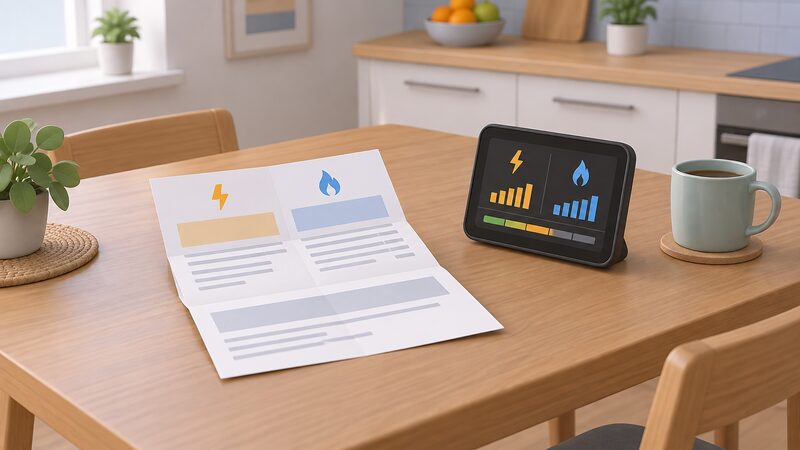
EDF Energy is a French-owned supplier that started operating in the UK in 2002, and it is the UK's fifth-largest energy supplier1. Its scale is domestic as well as industrial: it powers over 3.7 million buildings across homes and businesses2. The parent is Electricity of France, a French government-owned company headquartered in Paris, which means the ultimate owner is a foreign state rather than a private shareholder group2.
That ownership structure matters for how the supplier behaves. A state-owned parent is not exposed to the same takeover or collapse dynamics as a privately held challenger, and EDF has not been through the supplier failures that removed dozens of smaller brands from the market. It is also a member of Energy UK, the industry trade body that represents firms including British Gas, Scottish Power and EDF Energy5. Alongside supply, EDF holds a Mandatory FIT Licensee role, which places it among the suppliers that administer Feed-in Tariff payments6.
The company's compliance record is not spotless. Ofgem's review of how suppliers support customers in vulnerable situations placed EDF in a first group of suppliers with minor weaknesses, alongside British Gas, Bulb, E.ON, Ovo, Scottish Power and Utility Warehouse7. Separately, in the Smart Export Guarantee annual report for Year 5, EDF and ScottishPower submitted their annual data after the 30 June deadline, recorded as incidents8. Both are administrative findings rather than supply failures, but they are part of the picture for a household weighing a large supplier against a smaller one. The wider market context is set out in UK energy suppliers.
| Attribute | Detail |
|---|---|
| Market position | Fifth-largest UK energy supplier1 |
| UK operation since | 20022 |
| Buildings supplied | Over 3.7 million2 |
| Parent | Electricity of France, French government-owned2 |
| UK licence holder | EDF Energy Customers Ltd2 |
| Trade body | Energy UK5 |
| FIT role | Mandatory FIT Licensee6 |
Tariffs: fixed, variable, EV, heat pump and prepayment
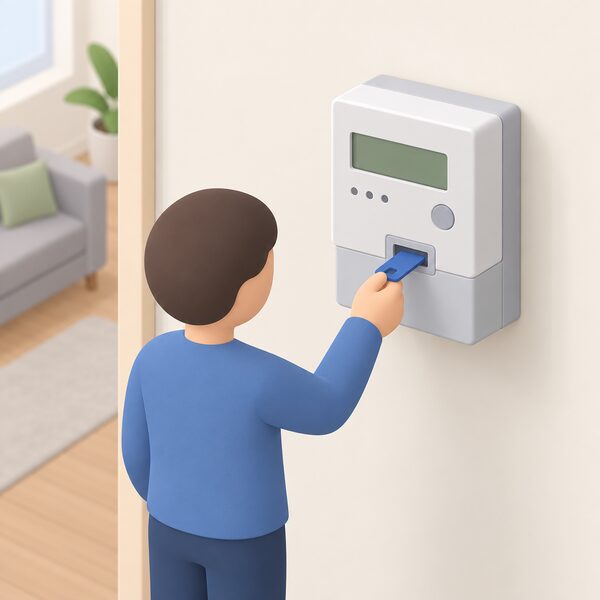
EDF's tariff range follows the standard supplier menu. Tariffs offered by energy suppliers may include a standard variable tariff, a renewable energy tariff, an electric vehicle tariff, a fixed price and prepayment energy tariffs on a pay-as-you-go basis9. EDF's own range includes other tariffs for heat pumps and electric vehicles2. Fixed deals typically run for 12 months and lock in the price of energy for the length of the contract10.
The distinction that matters most is between fixed and variable. A fixed tariff sets a unit rate and standing charge for its term; a standard variable tariff moves with the price cap and is the default a household lands on when a fixed deal ends. Most fixed tariffs include exit fees for each fuel, payable if a customer switches to a different deal before the end of the contract11.
EDF has also been an active participant in collective switching. The USWCSS-JUL26-01 scheme ran from 13 to 20 July 2026 with winning tariffs from EDF Energy and Fuse Energy, and the USWCSS-JUL26-02 scheme ran from 24 to 29 July 2026 with two winning EDF Energy tariffs. In August 2026, the USWCSS-AUG26-01 scheme ran from 11 to 17 August with EDF Energy's EDF Collective Switch Aug28v3 as the winning tariff. A two-year fixed tariff from EDF carried 100 hours of free electricity when switching via Uswitch12. Collective schemes of this kind are explained in collective energy switching.
| Tariff type | What it does | Term |
|---|---|---|
| Fixed price | Locks unit rates for the contract length | Typically 12 months10 |
| Standard variable | Moves with the price cap, no exit fee | Open-ended9 |
| Prepayment | Pay as you go, fixed option available | Fixed term where chosen4 |
| EV tariff | For electric vehicle charging | Not stated |
| Heat pump tariff | For heat pump households | Not stated |
Prepayment customers: the one supplier offering fixed tariffs
Prepayment is where EDF stands out. Most energy suppliers have at least one prepayment tariff, so the payment method itself is widely served11. But on fixed deals for prepayment customers, EDF is the only supplier found offering fixed tariffs for pre-payment customers4. That is a meaningful difference for a household on a prepayment meter that wants price certainty rather than a rate that moves with the cap.
Moving between payment methods is possible but conditional. A switch from prepayment to credit requires the energy account to be debt-free, and some suppliers may run a credit check for a direct debit plan13. EDF's own position is that there is no credit check, but switching payment method is based on an assessment of each customer's circumstances4. The two statements are not contradictory so much as differently scoped: the general market rule allows a credit check, and EDF states it does not run one.
EDF's compliance on restricted meters has been examined by the regulator. Ofgem's decision on supplier compliance with price cap requirements for customers with restricted meters records three overcharged EDF Energy customers14. That is a small number in the context of 3.7 million buildings, but it is an official finding and belongs in the record. Prepayment debt and switching are covered further in supplier conduct on prepayment and debt and the debt assignment protocol.
Customer service: satisfaction scores and complaints ratings

The official satisfaction data is mixed. In Ofgem's supplier-level findings for July to August 2025, EDF Energy recorded 79% of respondents satisfied or very satisfied overall, with 9% dissatisfied or very dissatisfied, from a sample of 323 respondents3. On customer service specifically, 70% were satisfied or very satisfied, and a significantly lower proportion of EDF Energy, E.ON / E.ON Next, OVO Energy and Scottish Power customers reported they were satisfied with customer service than the average3.
The January 2026 findings show a similar pattern: 75% overall satisfaction, 7% dissatisfied or very dissatisfied, and 72% satisfied or very satisfied with customer service. In that round, a significantly lower proportion of EDF Energy, E.ON / E.ON Next and OVO Energy customers reported they were satisfied with customer service than the average15. The two rounds disagree slightly on which suppliers fall below average, but EDF appears in both.
| Measure | Jul to Aug 2025 | Jan 2026 |
|---|---|---|
| Overall satisfaction | 79%3 | 75%15 |
| Dissatisfied or very dissatisfied | 9%3 | 7%15 |
| Customer service satisfaction | 70%3 | 72%15 |
| Sample | 323 respondents3 | Not stated |
Independent review scores tell a different story. EDF holds a 4.5-star rating with an 'Excellent' score from over 14,000 Trustpilot reviews, and a Trustpilot score of 4.6 out of 52. Which? scores EDF 3 out of 12 for contacting your supplier and 7 out of 15 for complaints, but 9 out of 10 for help for customers who need it16. The gap between official survey data and review-site scores is common: review platforms attract customers with a strong experience at either end, while the regulator's survey samples the customer base. Both are worth reading together, and the wider comparison is in energy supplier customer service ratings.
Contacting EDF: phone, WhatsApp, text and accessibility support
EDF runs several contact routes, and the hours differ by channel. The main telephone number is 03330 069 9506. The phone line is staffed Monday to Friday 8am to 6pm and Saturday 8am to 2pm5. For customers with hearing difficulties there is a text telephone on 0800 096 29295. WhatsApp is available on 07480 802 942, staffed on weekdays from 7am to 11pm and at weekends from 8am to 8pm5. The company also advertises 24/7 support2.
| Channel | Number | Hours |
|---|---|---|
| Main phone line | 03330 069 9506 | Mon to Fri 8am to 6pm, Sat 8am to 2pm5 |
| Refund line | 0333 200 510017 | Mon to Fri 8am to 6pm, Sat 8am to 2pm17 |
| Text telephone | 0800 096 29295 | Same as phone line5 |
| 07480 802 9425 | Weekdays 7am to 11pm, weekends 8am to 8pm5 | |
| hello@edfenergy.com6 | Not stated |
For refunds specifically, the number is 0333 200 5100, or 0800 096 2929 for the text telephone, with the same weekday and Saturday hours17. Refunds are one of the standard complaint categories: Ofgem lists late, incorrect or missing bills, back billing, being overcharged, a faulty meter, poor customer service and refusing to refund credit from an account among the problems a customer contacts a supplier about18. Where a refund is not resolved, the supplier's complaints process comes first, and the route beyond it is set out in complaining about an energy supplier.
EDF's account features include online billing, direct debit, smart meters, a mobile app, flexible payment options and monthly billing2. Contact hours and channels across the market are compared in supplier call waiting times.
Priority Services Register and support for vulnerable customers
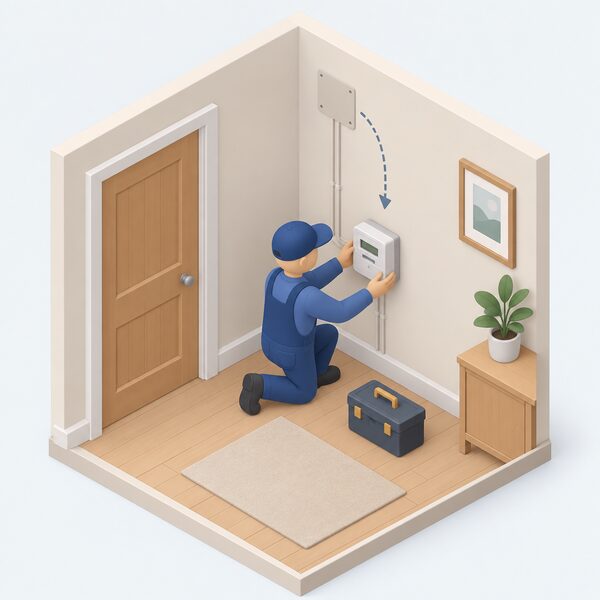
The Priority Services Register is a free service provided by water and power suppliers, giving extra help to households that need it19. Signing up brings priority calls, engineer passwords and help with moving a prepayment meter20. Registration is made directly with each utility supplier, so a household contacts all its utility suppliers directly rather than applying through a single central body21. Once registered, the gas network operator and the energy supplier should contact the customer to confirm they have been added to their register22. Where the electricity network is known, a form on the network operator's website is another application route22.
EDF's wider support goes beyond the register. EDF works with various third-party organisations to support customers with managing their money, increasing income through financial benefits and helping with energy debts via a Customer Support Fund23. That sits alongside the Priority Services Register itself. All of the UK's major energy providers offer some kind of hardship fund, including EDF Energy24. Which? scores EDF 9 out of 10 for help for customers who need it16.
The register is a system designed and overseen by Ofgem to ensure that individuals with special requirements can access additional support1. Each energy supplier and network operator maintains its own register, and energy suppliers and distribution network companies are responsible for protecting customers in vulnerable situations3. The register informs energy suppliers and distribution network operators about people who might need additional support, so that tailored support can be provided5. The scheme's supplier-by-supplier detail is in the Warm Home Discount and suppliers, and support routes generally in supplier support for vulnerable customers.
Beyond supply: heat pumps, solar, batteries and boiler cover
EDF's non-supply activity is mostly at grid scale rather than in the home. In August 2026 the company signed battery optimisation agreements with Trinasolar ISBU, covering new grid-scale battery storage projects in England and Scotland. In September 2026 it launched Flextras, a loyalty scheme rewarding customers for flexible electricity use. Both point to a supplier positioning itself around flexibility and storage rather than only around meter points.
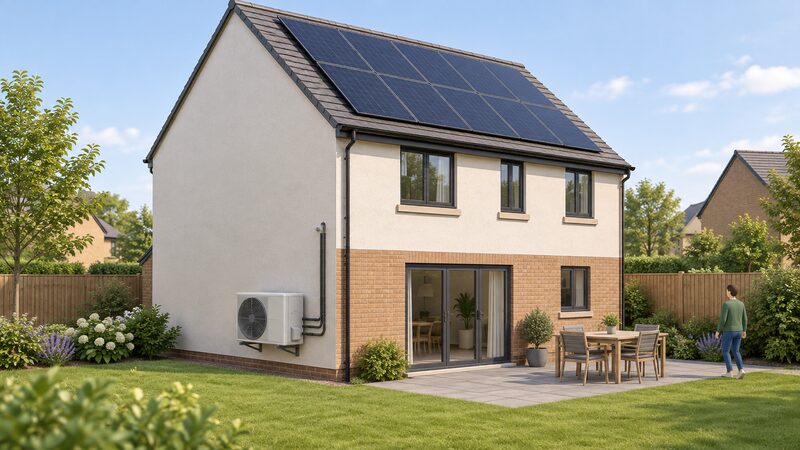
For households, the relevant routes are tariffs rather than hardware. EDF offers other tariffs for heat pumps and electric vehicles2, which is the main way a domestic customer interacts with the company's low-carbon offer. On solar, the Smart Export Guarantee requires licensed suppliers above a size threshold to offer export payments, and EDF appears in the Year 5 export data with Export 12m, Export Exclusive 12m V3, Export Variable Value and Export Variable products8. The scheme's rules are set out in the Smart Export Guarantee.
Group buying schemes extend the same logic. Such schemes have covered upgrades from solar panels and battery storage to heat pumps and EV chargers26. That is a route to hardware rather than a supply contract, and it does not change the underlying dependence: a heat pump still runs on electricity from the grid, and a solar array without a battery still exports when it generates and imports when it does not. The household-level picture is in energy suppliers and household energy independence.
Switching, renewal and exit fees: what happens when your tariff ends
A fixed tariff ends on a set date, typically 12 months after it starts10. If no new deal is chosen, the account moves to the standard variable tariff, which is not fixed and follows the price cap. That is the default outcome of doing nothing, and it is the reason renewal decisions matter more than the initial switch.
Exit fees apply to leaving a fixed tariff early. A customer may have to pay the previous supplier an exit fee if they were on a fixed rate tariff and chose to leave before it ended27. Most fixed tariffs include exit fees for each fuel, payable on switching before the end of the contract11. The waiver is time-limited: the fee does not apply once the customer has entered the final 49 days of the tariff10. That window is the point at which a switch can be arranged without penalty, and it is worth diarising rather than relying on a reminder.
Switching itself is a regulated process. Ofgem sets out the steps for changing home energy supplier, and the practical sequence is covered in how to switch energy supplier and exit fees when switching. EDF has also run referral promotions: from 14 September 2026, successful referrals earned £100 for the referrer and £75 for the friend, with the offer running to 6 October 2026. Referral and loyalty schemes across the market are compared in energy supplier rewards and referral schemes.
Sources27 cited
- Big six energy suppliers guide, Uswitch, 2026-07-17
- EDF Energy supplier profile, Energy Helpline, 2026-09-20
- Customers' satisfaction with their supplier: July to August 2025, Ofgem, 2025-12
- Is a prepayment energy meter right for you?, Which?, 2026-08
- How to contact your energy supplier, Uswitch, 2026-02-09
- FIT licensee contact details, Ofgem, 2026-09-17
- Ofgem completes review of how suppliers support customers in vulnerable situations, Ofgem, 2022-11-22
- Smart Export Guarantee annual report, Year 5, Ofgem, 2025-12
- Problems with services: consumer advice, Isle of Anglesey County Council, 2025-10
- How to switch energy supplier, Confused.com, 2025-12-15
- Energy tariffs explained, Uswitch, 2026-02-17
- Energy market resilience: fixed tariffs edge down in price, Uswitch, 2026-03-06
- Prepayment meter change to credit meter, Uswitch, 2026-04-23
- Supplier compliance with price cap requirements for customers with restricted meters, Ofgem, 2025-05-09
- Customers' satisfaction with their supplier: January 2026, Ofgem, 2026-05
- EDF Energy review, Which?, 2026-08-03
- Energy refunds, Uswitch, 2025-10-29
- Complain about your energy supplier or network operator, Ofgem, 2026
- What to do in a power cut, Met Office, 2026-09-20
- Grants and benefits to help you pay your energy bills, Citizens Advice, 2026-09-17
- Getting extra support from your energy supplier, Citizens Advice, 2026-09-17
- Heating your home, Carmarthenshire County Council, 2026-04-04
- Informal carers and energy bills, Uswitch, 2025-10-08
- What are energy hardship funds and how do they work?, British Gas Energy Trust, 2026-02-26
- Debt strategy update: supporting reduction of energy debt, Ofgem, 2025-11-06
- Group buying, Switch Together, 2026-09-17
- Switch your home energy supplier, Ofgem, 2026
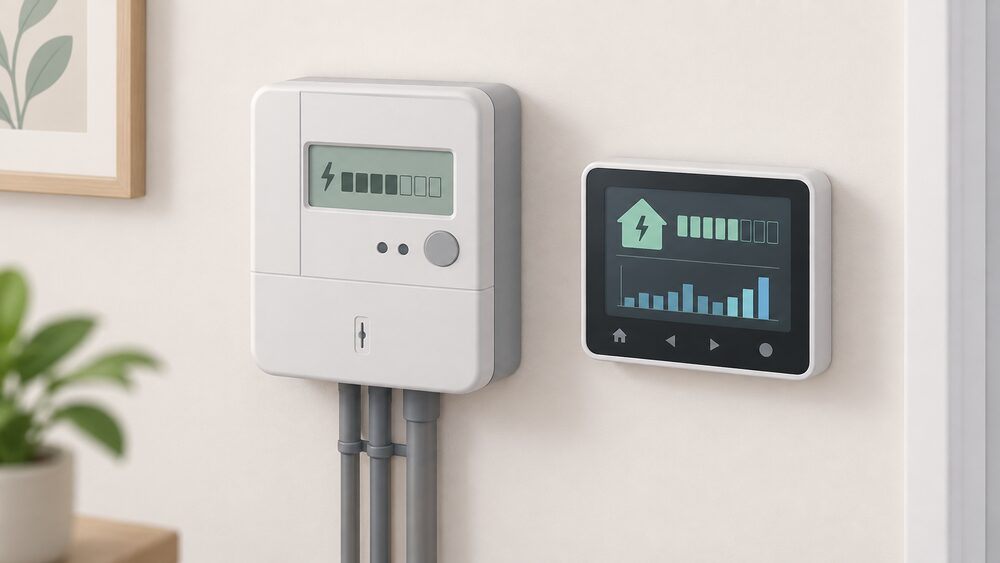 EDF Smart Meters and Smart Pay As You GoHow do you top up an EDF smart meter when you pay as you go, and what happens if the credit runs out?
 EDF TariffsEDF's fixed, variable, EV and export tariffs for UK households, with exit fee rules, off-peak rates and deemed tariff terms.
 EDFEDF is one of the Big Six suppliers, serving around 5 million UK households.