
In this guide
EDF Energy has been a member of the Big Six since 2002 and supplies electricity and gas to households across Great Britain1. It is one of six large suppliers named in Ofgem's own explanation of the market, alongside Centrica (British Gas), E.ON UK, SSE, RWE npower and ScottishPower2. For a household, EDF is a supplier of last resort in the sense that it is large enough to be present in every region, offers a full range of tariff types, and participates in the Warm Home Discount scheme.
The tariff range covers fixed, variable, tracker, EV, solar and heat pump deals. Fixed tariffs are priced at roughly £1,549 a year for a typical household, though the cheapest two-year fixed tariff from EDF was priced at £1,772 as of March 20263. Variable and tracker tariffs carry no exit fee and no tariff end date. EV and off-peak rates range from 6.49 to 6.99p/kWh, with the longest off-peak window on the market.
The price cap stands at £1,755 today, against EDF's own forecast of £1,640. Customer service scores are mixed: EDF received a 58% overall score in Which?'s assessment, with the lowest contacting score in that assessment4. Ofgem's own survey found 72% of EDF customers satisfied or very satisfied, but a significantly lower proportion than the average5.
EDF at a glance: a Big Six supplier with 5 million customers
EDF Energy has been a staple of the Big Six since 20021. The Big Six are Centrica plc (parent company of British Gas), E.ON UK, Scottish and Southern Energy (SSE), RWE npower, EDF Energy and ScottishPower2. EDF is included in the quarterly smart meter statistics release as one of the larger energy suppliers, alongside British Gas, E.ON, Npower, Scottish Power and SSE9.
The supplier serves around 5 million customers, making it one of the largest in the UK. It offers electricity and gas, and participates in the Smart Export Guarantee, the government scheme that requires large suppliers to pay for electricity exported to the grid from solar panels and other renewable sources10. EDF's export tariffs include Export Variable, Export Variable Value and Export and Earn Flex, all variable with no fixed end date10.
EDF also sells what Which? describes as "zero carbon" tariffs, alongside other firms11. Its Renewables tariff is powered from 100% renewable sources12. For a household, this means the choice between a standard tariff and a renewable one is available from the same supplier, though the underlying grid mix is shared across all suppliers.
Tariff range: fixed, variable, tracker, EV, solar and heat pump deals
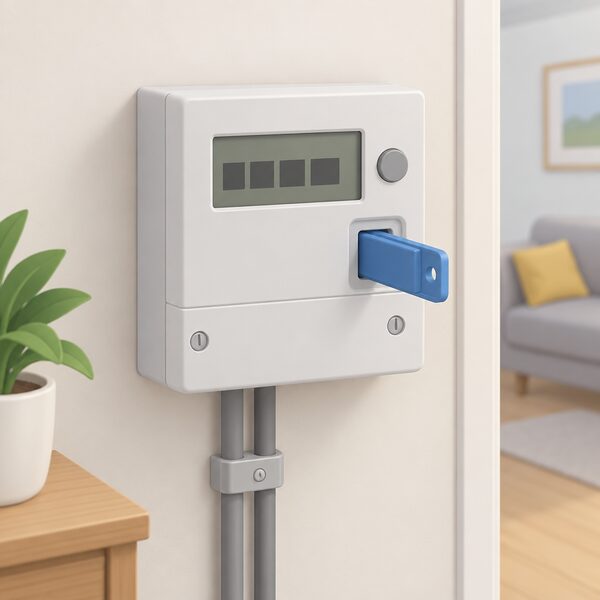
EDF's tariff range covers the main types a household is likely to encounter. Fixed tariffs lock a unit rate and standing charge for a set period. Variable tariffs follow the price cap and can change quarterly. Tracker tariffs follow wholesale prices more closely, and EDF's tracker deals reduce daily standing charges14. EDF also offers tariffs for heat pumps and electric vehicles14.
The full list of tariff types available across the market includes standard variable, renewable energy, electric vehicle, fixed price and prepayment tariffs15. EDF is the only provider Which? found offering fixed tariffs for prepayment customers11. That matters for households on prepayment meters who want price certainty.
EDF Essentials is a fixed unit price tariff with a smart meter required, and multiple contract lengths are available14. EDF Ensure offers a standing charge discount with tracker unit rates that change every three months14. The Renewables tariff is powered from 100% renewable sources12.
For households with an EV, heat pump or home battery, time-of-use tariffs are more valuable16. The Energy Saving Trust notes that these technologies make smart tariffs much more valuable16. A report on solar PV with electric heating looked at smart time-of-use electricity tariffs suited to storage heaters, heat pumps, solar PV and batteries, and electric vehicles17.
| Tariff | Type | Key feature |
|---|---|---|
| EDF Essentials | Fixed | Smart meter required, multiple contract lengths14 |
| EDF Ensure | Tracker | Standing charge discount, rates change every 3 months14 |
| EDF Renewables | Renewable | 100% renewable sources12 |
| Export Variable | Export | No fixed end date10 |
| Export and Earn Flex | Export | Variable, no fixed end date10 |
Fixed tariffs: roughly £1,549 a year, with exit fees that can apply
Fixed tariffs are the main product for households wanting price certainty. The cheapest two-year fixed tariff from EDF was priced at £1,772 annual cost as of March 20263. With levies removed, that tariff was estimated to cost £1,644 from April3. The difference reflects the removal of policy costs from the headline figure, not a change in the underlying unit rate.
Exit fees apply to most fixed tariffs. Most fixed tariffs include exit fees for each fuel, payable if switching before the end of the contract18. Exit fees are typically £100 or more19. For a dual-fuel household, that can mean £200 to leave a fixed deal early.
The price cap provides the backdrop. The current cap is £1,641, and a 13% increase was forecast from July7. The cap level for 1 July to 30 September 2026 sets maximum charges by region: in the Midlands, £207.57 standing charge and £810.72 annual bill at 2,500 kWh single-rate, or £206.15 standing charge and £977.09 annual bill at 3,400 kWh multi-rate6. These are cap maxima, not EDF's prices.
Variable and tracker tariffs: no exit fee and no tariff end date
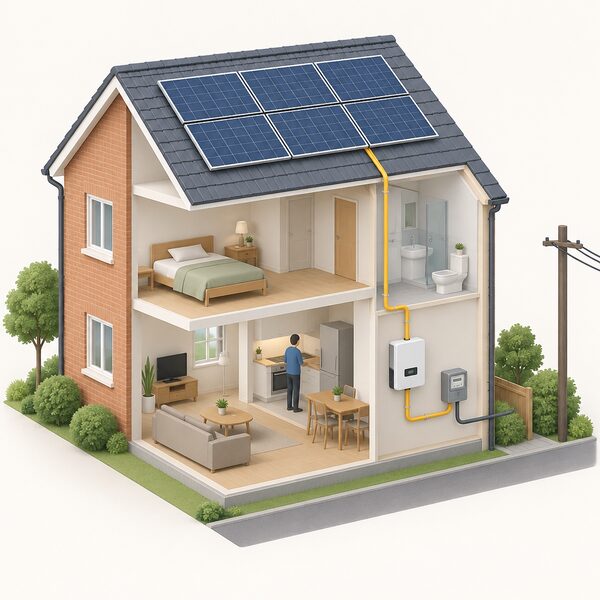
Variable and tracker tariffs carry no exit fee and no tariff end date. EDF's export tariffs, Export Variable, Export Variable Value and Export and Earn Flex, are all variable with no fixed end date10. The same principle applies to standard variable tariffs: a household can leave at any time without penalty.
The trade-off is exposure to price changes. Variable tariffs follow the price cap, which is set quarterly by Ofgem. Tracker tariffs follow wholesale prices more closely, which can mean lower prices when wholesale costs fall but higher prices when they rise. EDF Ensure offers tracker unit rates that change every three months, with a standing charge discount14.
For households with solar panels, the Smart Export Guarantee requires large suppliers to pay for exported electricity. EDF's export tariffs are variable, so the rate paid can change. The SEG annual report for Year 5 records that EDF and ScottishPower submitted their annual data after the 30 June deadline13.
The choice between fixed and variable is a trade-off between certainty and flexibility. A fixed tariff locks a rate but carries an exit fee. A variable tariff carries no exit fee but exposes the household to price changes. Neither is universally better; the right choice depends on how much price certainty a household wants and how likely it is to move or switch.
EV and off-peak rates: 6.49 to 6.99p/kWh and the longest off-peak window on the market
EDF's EV tariffs offer off-peak rates of 6.49 to 6.99p/kWh, with the longest off-peak window on the market. The off-peak window is seven hours of lower-priced off-peak electricity every night, from 11pm to 6am6. That window is longer than most competitors offer, which matters for households charging an EV overnight.
The number of suppliers offering EV tariffs has grown over the past couple of years, from smaller suppliers to members of the Big Six6. EDF is among the Big Six offering these tariffs. For a household with an EV, the off-peak rate can make a significant difference to running costs. With an off-peak tariff, it can cost less than £10 for a full charge20.
The value of a time-of-use tariff depends on whether the household has the technology to use it. An EV charger, heat pump or home battery makes smart tariffs much more valuable16. Without one of those, a time-of-use tariff may not save money, because the household cannot shift enough consumption into the off-peak window.
EDF also offers tariffs for heat pumps and electric vehicles14. The combination of an EV tariff and a heat pump tariff means a household with both technologies can access off-peak rates for both. The off-peak window is the same seven hours, 11pm to 6am6.
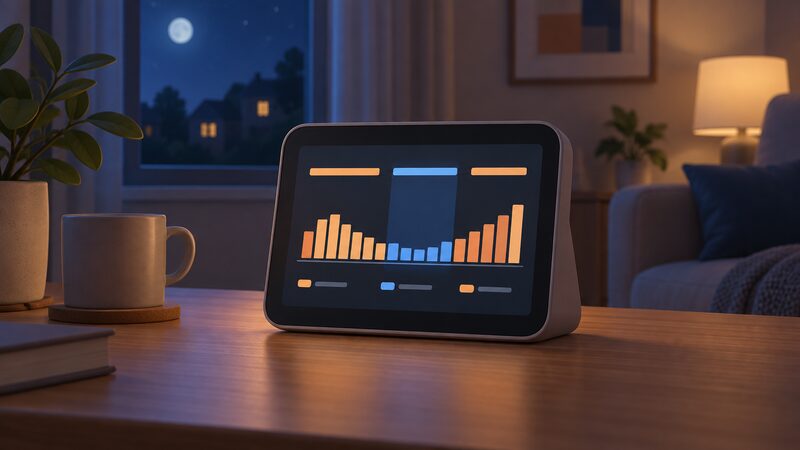
Price cap context: £1,755 today against EDF's £1,640 forecast
The price cap stands at £1,755 today, against EDF's own forecast of £1,640. The current cap is £1,641, and a 13% increase was forecast from July7. The cap level for 1 July to 30 September 2026 sets maximum charges by region6. These figures are cap maxima, not the price a household necessarily pays.
The cap limits the unit rate and standing charge a supplier can charge on a standard variable tariff. It does not limit the total bill, because a household that uses more energy pays more. The cap figure is based on a typical household using a set amount of gas and electricity. A household using more will pay more; one using less will pay less.
EDF's own forecast of £1,640 is lower than the current cap of £1,755. The difference reflects EDF's view of where wholesale prices are heading. Both figures are reported, and the disagreement is unresolved.
For a household, the cap provides a ceiling on unit rates but not on the total bill. The standing charge is also capped, but it is a fixed daily charge that applies regardless of usage. The cap level for the Midlands, for example, sets a standing charge of £207.57 and an annual bill of £810.72 at 2,500 kWh single-rate6.
Customer service record: 58% overall score and the lowest contacting score in the assessment

EDF's customer service record is mixed. Which?'s assessment gave EDF a 58% overall score, with a contacting score of 3 out of 12, the lowest in that assessment4. The same assessment gave a switching score of 1 out of 5 and a complaints score of 7 out of 154. These are independent statistics from January 2026.
Ofgem's own survey found 72% of EDF customers satisfied or very satisfied with customer service, but a significantly lower proportion than the average5. The survey, covering January 2026, found 9% dissatisfied or very dissatisfied5. A separate Ofgem survey covering July to August 2025 found 70% satisfied or very satisfied21. EDF, E.ON, OVO Energy and Scottish Power all had a significantly lower proportion of customers satisfied or very satisfied with customer service than the average21.
Citizens Advice's comparison gives EDF a customer service overall rating of 2.90 out of 5 and a complaints rating of 2.0 out of 5, covering January to March 202622. These are independent statistics. The picture is of a supplier that performs below average on customer service, particularly on contacting and complaints.
"a significantly lower proportion of EDF Energy, E.ON / E.ON Next, OVO Energy and Scottish Power customers reported they were satisfied"
Priority Services, accessibility and alternative bill formats
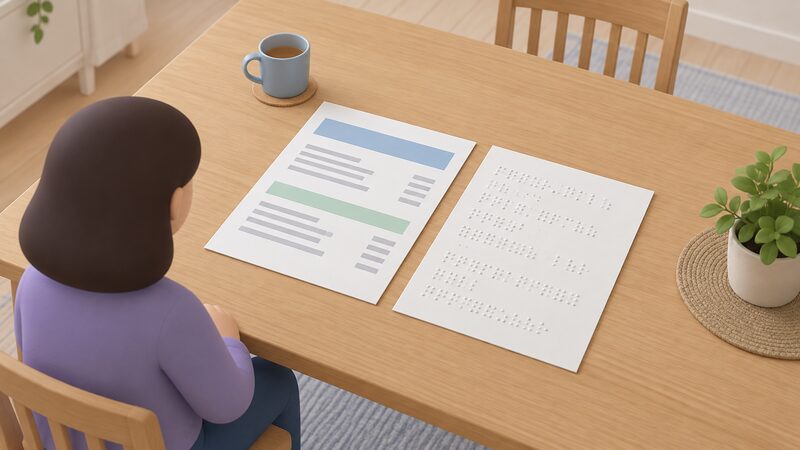
EDF offers a range of Priority Services Register provisions. The register is not a single national list; a household must contact all its utility suppliers directly to sign up23. The services offered include large-format or Braille bills, advance notice of service interruption, priority in a power cut, quarterly meter readings, yearly gas safety checks and meter relocation for better access, though these vary by supplier and circumstances23.
EDF specifically offers bills and letters in large font, Braille or talking bills24. The supplier outlined the availability of large-print and alternative bill formats following accessibility reviews of billing and written communications25. EDF also outlined how its website is designed to meet WCAG (Web Content Accessibility Guidelines) standards, with regular external audits to support accessibility, including a dementia-friendly web review supported by the Alzheimer's Society25.
The Priority Services Register also covers nominating a person to act on behalf, regular meter reading services, accessible communication formats, priority support in emergencies, and ID and password schemes for visits26. These services address a range of needs, from sight loss to dementia to temporary illness.
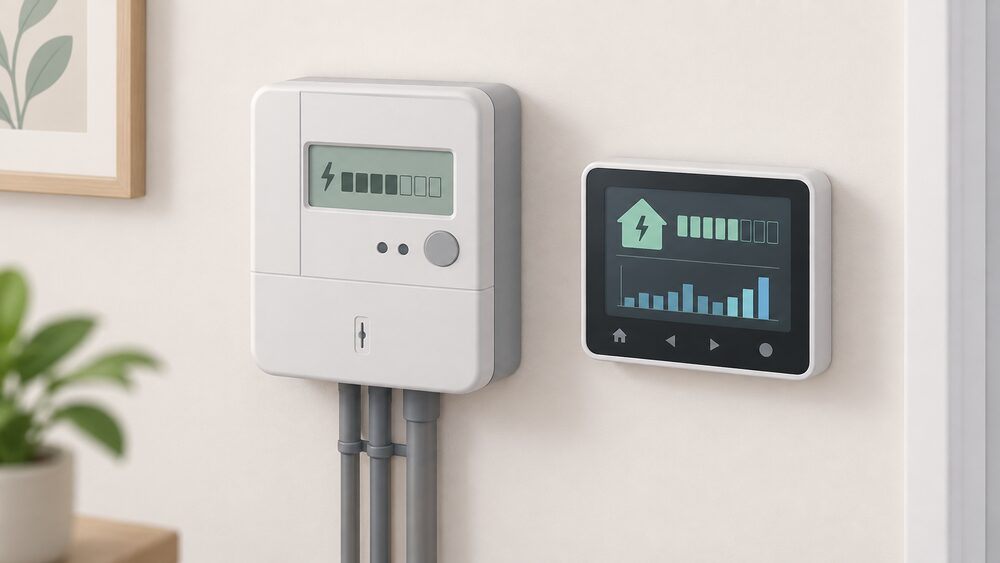
For households with sight loss, EDF's provisions include regular meter readings or smart meter installation24. Smart meter installation typically takes about 90 minutes and is free of charge8. EDF requires a smart meter for its Essentials tariff14.
Contacting EDF: phone, WhatsApp and text
EDF's general customer service line is 0333 200 5100, open Monday to Friday 8am to 6pm and Saturday 8am to 2pm27. A separate number, 03330 069 950, is listed for Feed-in Tariff enquiries28. A textphone number, 0748 058 9950, is available for customers with hearing difficulties29. Relay UK users can reach the same team on 18001 0333 200 510029.
EDF operates a WhatsApp number, 07480 802 942, for customer contact27. A local rate phone number, 0333 006 99 50, is also published29. EDF lists 24/7 support as part of its service offering, though the standard phone hours are Monday to Friday 8am to 6pm and Saturday 8am to 2pm14.
For refunds, EDF's refund line is 0333 200 5100, or 0800 096 2929 for text telephone users with hearing difficulties, open weekdays 8am to 6pm and Saturday 8am to 2pm30. Credit balances can build up on direct debit accounts, and a refund can be requested by phone. If a supplier will not refund credit, a formal complaint can be raised.
EDF's email address is hello@edfenergy.com28. The supplier's website includes a Feed-in Tariff section at edfenergy.com/energy-efficiency/feed-in-tariff28. For households with sight loss, EDF offers regular meter readings or smart meter installation as a Priority Services provision24.
Warm Home Discount and the EDF Customer Support Fund
The Warm Home Discount scheme requires that your energy supplier is part of the scheme, that you or your partner receive certain means-tested benefits, and that your name or your partner's name is on the electricity bill31. EDF is a participating supplier. The scheme operates across England, Wales and Scotland, with different eligibility rules in Scotland31.
The EDF Customer Support Fund helps EDF customers who are experiencing financial difficulties and struggling with their energy bills33. It is administered through Charis Grants. The fund is separate from the Warm Home Discount and from any referral discount scheme. Households in financial difficulty can contact EDF directly or visit the EDF Customer Support Fund page to check eligibility and apply.
For households in Wales, the Welsh Government provides guidance on smart meters and green energy choices8. For households in Scotland, the Warm Home Discount rules differ from England and Wales31. In Northern Ireland, the scheme does not operate, and the energy market is separate.
The Priority Services Register is available to households that need it, regardless of whether they receive the Warm Home Discount. Registration is made directly with each utility supplier23. The services available include large-format or Braille bills, advance notice of service interruption and priority support in a power cut23.
Sources33 cited
- Big Six energy suppliers guide, Uswitch, 2026-07-17
- Energy terms explained, Ofgem, 2026
- Energy market resilience, Uswitch, 2026-03-06
- Which? energy survey results, Which?, 2026-01-19
- Customers' satisfaction with their supplier, January 2026, Ofgem, 2026-01
- EV energy tariffs, Uswitch, 2025-09-17
- Latest forecast shows a hard winter on the horizon, End Fuel Poverty Coalition, 2026-05-19
- Smart meters, Welsh Government, 2026
- Retail energy markets in 2016, Ofgem, 2016-03
- Smart Export Guarantee, Solar Energy UK, 2026-05-12
- How to choose the best energy company, Which?, 2026-01-19
- Where does my energy come from?, Uswitch, 2026-08-03
- Smart Export Guarantee annual report Year 5, Ofgem, 2025-12
- EDF Energy, Energy Helpline, 2026-09-20
- Problems with services, Isle of Anglesey County Council, 2025-10
- Should I switch to a time of use tariff, Energy Saving Trust, 2026-01-23
- Evaluating solar PV with electric heating, National Energy Action, 2025-07-03
- Energy tariffs explained, Uswitch, 2026-02-17
- Energy price cap levels 1 July to 30 September 2026, Ofgem, 2026
- Should I buy an electric car, Which?, 2026-04-16
- Customers' satisfaction with their supplier, July to August 2025, Ofgem, 2025-07
- Compare domestic energy suppliers customer service, Citizens Advice, 2026
- Heating your home, Carmarthenshire County Council, 2026-04-04
- Energy for those with sight loss, Uswitch, 2026-04-09
- Consumer vulnerability strategy progress report, Ofgem, 2026-07-21
- Heat networks consumer protections draft guidance, Ofgem, 2025-09-05
- How to contact your energy supplier, Uswitch, 2026-02-09
- Feed-in Tariff licensee contact details, Ofgem, 2026-09-17
- Supplier free phone number, Smart Energy GB, 2026-03-16
- Energy refunds, Uswitch, 2025-10-29
- The Warm Home Discount scheme: if you live in Scotland, GOV.UK, 2026-08-23
- The Warm Home Discount scheme: if you live in England and Wales, GOV.UK, 2026-09-17
- EDF Customer Support Fund, Charis Grants, 2026-09-17
 EDF Smart Meters and Smart Pay As You GoHow do you top up an EDF smart meter when you pay as you go, and what happens if the credit runs out?
 EDFEDF is one of the big six energy suppliers in the UK, owned by the French government.
 EDF TariffsEDF's fixed, variable, EV and export tariffs for UK households, with exit fee rules, off-peak rates and deemed tariff terms.