

In this comparison
EDF and E.ON Next are two of the largest remaining names in British household supply, and they are the pair most often weighed against each other by households already with one of the big six and wondering whether the other is worth the paperwork. Both are Energy Switch Guarantee signatories, so a switch between them follows the same protected process as any other1. EDF supplies over 3.7 million buildings and is the only supplier Which? found offering fixed tariffs to prepayment customers2. E.ON Next is majority owned by E.ON SE of Germany and traces its UK lineage to Powergen in 19894.
The two are closer than the marketing suggests. Ofgem's January 2026 supplier-level findings put both in the same group: a significantly lower proportion of EDF Energy and E.ON / E.ON Next customers reported being satisfied or very satisfied with customer service than the average, and both recorded 72% satisfied or very satisfied5. Citizens Advice's complaints rating for EDF over January to March 2026 was 2.0 out of 56.
Where they diverge is in what sits around the tariff: collective switch results, export tariffs, loyalty offers and hardship funds. This page sets out what the published evidence shows for each, and what either supplier can and cannot do for a household's energy independence.
EDF and E.ON Next at a glance
The two suppliers differ in ownership, scale and the shape of their product range. EDF Energy is the UK household arm of the French state-owned EDF group, and its reach is broad: over 3.7 million buildings supplied, covering homes and businesses2. E.ON Next is the household supply business of E.ON SE, a German company, and its UK licences sit alongside E.ON Energy Solutions, E.ON UK plc and Npower Commercial Gas4.
| EDF Energy | E.ON Next | |
|---|---|---|
| Ownership | EDF group, France | Majority owner E.ON SE, Germany4 |
| UK lineage | Long-standing big-six supplier | Founded 1989 as Powergen, acquired 20024 |
| Scale | Over 3.7 million buildings supplied2 | More than 5 million homes and businesses, per the company |
| Fuel mix, coal | Not stated in the material | 2.1% of electricity fuel mix11 |
| Prepayment fixed tariffs | Only supplier found offering them3 | Not identified as offering them |
| Boiler cover partner | Domestic & General12 | HomeServe12 |
| Vulnerable customer score | 9 out of 108 | Not scored in the same review |
Both are Energy Switch Guarantee signatories, alongside British Gas, Ecotricity, Fuse Energy, Octopus Energy, Outfox Energy, Ovo Energy, Scottish Power and So Energy1. That guarantee covers the switching process itself rather than the tariff, and it applies equally whichever of the two a household moves to. For a household weighing the pair, the practical differences lie in tariff design, service performance and the extras each attaches to an account.
Tariffs and pricing: what each supplier offers
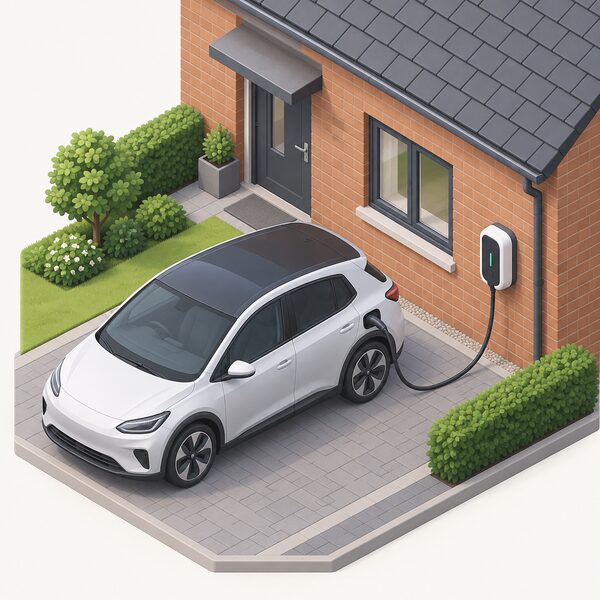
EDF's tariff range is the broader of the two on the evidence available. Which? found EDF to be the only supplier offering fixed tariffs for prepayment customers, a distinction that matters to households on prepayment meters who want price certainty rather than a variable rate3. EDF also offers tariffs designed for heat pumps and electric vehicles, moving beyond the standard single-rate domestic product2.
E.ON Next's headline product for households with an electric vehicle is Next Drive, a dedicated EV tariff14. The supplier also runs a Next Home Confidence tariff, which bundles import and export into a single blended rate rather than paying separately for exported electricity15. That structure suits a household that wants simplicity, but it removes the option of a separate export payment.
Both suppliers appear in Ofgem's lower standing charge pilot. British Gas, EDF, E.ON Next and Octopus will offer eligible customers a lower standing charge tariff to test the effect of shifting costs away from fixed daily charges16. Standing charges are the fixed daily amount a household pays regardless of how much energy it uses, so a lower standing charge tariff can benefit low-usage homes while raising the unit rate.
On export payments, both appear in Smart Export Guarantee listings: EDF through Export 12m and E.ON Next through Next Export Premium v317. The number of suppliers offering EV tariffs has grown over the past couple of years, from smaller suppliers to members of the big six, which has widened the choice available to households with a charger18.
Collective switch wins: EDF in August, E.ON Next in September
Collective switching works by customers registering interest, suppliers competing through an auction, customers being notified of the winning deal, and the switch then completing like any normal switch19. The model was fairly popular in the mid-2010s but had fallen out of favour by the time the energy market crisis began in the autumn of 202119. Its recent revival has produced a run of results in which both EDF and E.ON Next have featured.
The Great Energy Savings Switch has run a sequence of windows through 2026. EDF won the USWCSS-AUG26-01 round, which ran from Tuesday 11 August to Monday 17 August 2026, with its EDF Collective Switch Aug28v3 tariff20. Earlier EDF wins include USWCSS-JUL26-02, running from Friday 24 July to Wednesday 29 July 2026, and USWCSS-May26PC, running from Wednesday 27 May to Monday 1 June 202620. Collective switching itself is not new: it was fairly popular in the mid-2010s but had fallen out of favour by the time the energy market crisis began in the autumn of 202121.
Both suppliers sit inside the same collective mechanism rather than outside it. Customers register their interest, suppliers compete through an auction, customers are notified of the resulting deal, and the switch then completes like any normal switch21. Both EDF Energy and E.ON Next are Energy Switch Guarantee signatories22.
Community-level schemes follow a similar auction logic. Solar Together Norfolk states that the installer with the most competitive package will win the auction23. The pattern across all these schemes is that the deal on offer depends on the round, not on a standing advantage held by either supplier.
Customer service and complaints: what the performance data shows
The official satisfaction data places both suppliers below average, and it does so consistently. Ofgem's January 2026 supplier-level findings record that a significantly lower proportion of EDF Energy, E.ON / E.ON Next and OVO Energy customers reported being satisfied or very satisfied with customer service than the average5. Both EDF and E.ON Next recorded 72% satisfied or very satisfied5. EDF additionally had a significantly higher proportion of customers dissatisfied or very dissatisfied with customer service than the average, at 9%5.
The pattern is not a single-quarter result. Ofgem's July to August 2025 findings recorded the same group, EDF Energy, E.ON / E.ON Next, OVO Energy and Scottish Power, as having a significantly lower proportion of customers satisfied or very satisfied with customer service than the average24. EDF and OVO also had significantly lower than average proportions of customers satisfied or very satisfied overall in the January 2026 data5.
Citizens Advice's complaints rating for EDF over January to March 2026 was 2.0 out of 56. The survey bases behind the official data are large enough to be meaningful: the Energy Consumer Satisfaction Survey used 371 EDF Energy respondents and 556 E.ON / E.ON Next respondents, including Sainsbury's Energy customers, in July 202421.
"a significantly lower proportion of EDF Energy, E.ON / E.ON Next, and OVO Energy customers reported they were satisfied or very satisfied with customer service than the average"
For a household, the practical reading is that neither supplier stands out on service in the official data, and both sit in the same below-average band. Which? records a switching score of 1 out of 5 for EDF, suggesting customers who join are not notably more inclined to stay or move than the average8. E.ON Next's own published performance data for the second quarter of 2026 shows 59,276 complaints opened and 59,138 resolved, with customer service the top complaint reason at 32.28%.
Smart meters, EV chargers and solar: how each supports home energy independence
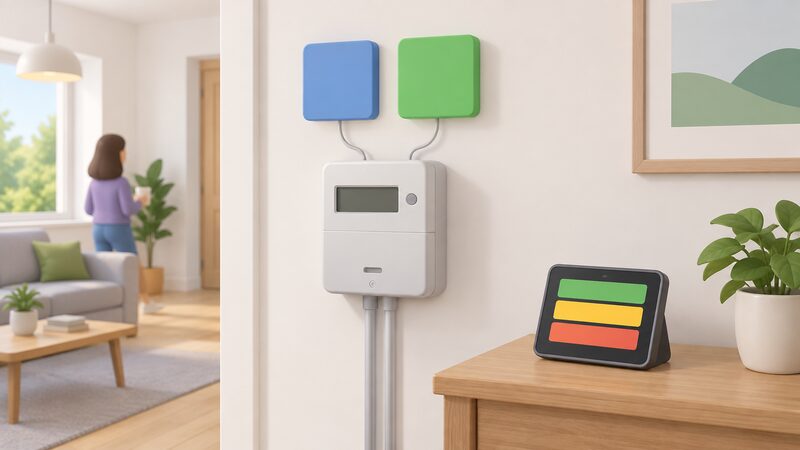
Smart meters are the foundation of a smarter energy system, helping integrate renewable power such as wind, solar and hydropower and reduce reliance on fossil fuels25. For a household, the meter is the enabling device: without one, time-of-use tariffs, export payments and accurate in-home monitoring are not available.
Both suppliers support smart meter installation and in-home displays. An accessible in-home energy display can be requested from various suppliers, including Bristol Energy, EDF Energy and E.ON Next22. Where an in-home display is more than a year old and develops a fault, the suppliers named as providing help include E, E.ON Next, Good Energy, Octopus Energy, OVO Energy, Scottish Power, Utilita Energy and Utility Warehouse26.
On electric vehicles, E.ON Next offers a range of home chargers and a dedicated EV tariff called Next Drive14. Chargers bought from E.ON Next come with access to the E.ON Home app, giving full control of the charger from scheduling to tracking energy use14. Eligibility for an EV tariff requires a smart meter that works alongside a home EV charger18.
On solar, the position is more nuanced. E.ON Next's Next Home Confidence tariff does not offer the Smart Export Guarantee export tariff that would be required to get paid for excess energy; instead, excess energy is sold by E.ON Next as part of the blended import and export tariff15. E.ON Next does appear in Smart Export Guarantee listings through Next Export Premium v3, and EDF through Export 12m17. Some export tariffs are reserved for a supplier's own customers, and E.ON Next Premium is named as an example of that category27.

Loyalty schemes, refer-a-friend offers and other customer perks
EDF launched a loyalty scheme called Flextras on 7 September 2026, rewarding customers for flexible electricity use. EDF also ran a Refer a Friend promotion from 14 September to 6 October 2026, paying £100 to the referrer and £75 to the referred friend28. Both figures are promotional amounts tied to a defined window, so a household joining outside those dates would not receive them on the same terms.
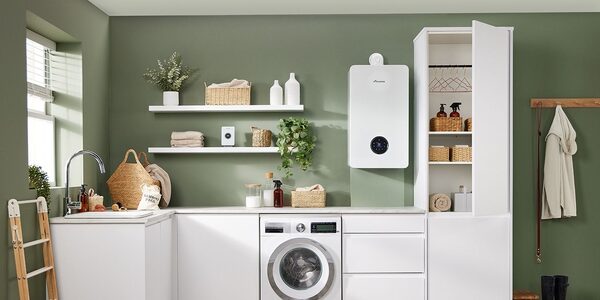
E.ON Next's customer perks are structured differently, leaning on product bundling rather than cash referral. The supplier sells boiler cover, central heating cover, electrics and plumbing cover from HomeServe12. EDF Energy sells boiler maintenance and insurance plans from Domestic & General12. Neither is an energy tariff feature; both are separate service contracts with their own terms.
The wider pattern in the market is that loyalty and referral offers change frequently and are tied to specific dates. EDF's tariff terms and conditions were updated on 1 September 2026, which is the document that governs the terms a household actually signs up to28. For a household weighing the two, the referral amounts and loyalty mechanics are worth less than the standing charge, unit rate and contract length, because the perks are one-off while the tariff runs for the length of the fix.
Support for vulnerable customers and community initiatives
Both suppliers run hardship funds, and both route them through external administrators rather than paying grants directly. The EDF Customer Support Fund helps EDF customers who are experiencing financial difficulties and struggling with their energy bills29. It is managed in collaboration with Charis, which specialises in the distribution of financial and product grants29. The fund awards grants to some of EDF's most vulnerable customer households30.
E.ON Next's equivalent is the E.ON Next Energy Fund, which provides help with energy bills and replacement appliances to E.ON Next customers experiencing financial difficulties and health challenges, and struggling with their energy bills31. The E.ON Energy and E.ON Next Funds are available to help existing and previous E.ON and E.ON Next customers32.
Beyond the funds, EDF works with various third-party organisations to support customers with managing their money, increasing income through financial benefits and helping with energy debts through a Customer Support Fund, alongside the Priority Services Register33. Which? records a score of 9 out of 10 for EDF on help for customers who need it8.
Community energy schemes also draw on supplier funding. The Energy Industry Voluntary Redress Scheme's Small Project Fund lists its priority as supporting energy consumers in vulnerable situations34. EDF has also run targeted support outside the standard funds: its £1 million Heatwave Relief initiative reported that 92% of requests came from customers with a high-risk Priority Services Register condition.

Which supplier fits which household
The evidence does not produce a winner, and the choice turns on which features a household actually needs. EDF is the stronger option on prepayment flexibility: it is the only supplier Which? found offering fixed tariffs for prepayment customers, which gives households on prepayment meters a route to price certainty that the market otherwise does not provide3. EDF also offers tariffs for heat pumps and electric vehicles, and its vulnerable customer support score of 9 out of 10 is the highest single service figure in the material2.
E.ON Next's case rests on EV integration and bundled products. Next Drive is a dedicated EV tariff, chargers come with the E.ON Home app for scheduling and tracking, and the supplier sells boiler, heating, electrics and plumbing cover through HomeServe14. Its standards of service commitment is explicit: once a household is ready to switch its supply over, everything is sorted within 5 working days7.
On service performance, the two are effectively level in the official data, both recording 72% satisfied or very satisfied and both below the survey average5. A household that weights complaints handling heavily has little to separate them on the published figures, and EDF's Citizens Advice complaints rating of 2.0 out of 5 over January to March 2026 does not favour either side strongly6.
What neither supplier changes is the underlying dependence. A household supplied by EDF or E.ON Next still relies on the national grid, on a supplier for billing and metering, and on gas for heating in most homes. Smart meters, EV tariffs and export payments reduce cost and improve control, but they do not remove the connection. For the wider picture of what supplier choice can and cannot deliver, see energy suppliers and household energy independence, and for the ownership structures behind both brands, who owns which energy supplier.
Sources34 cited
- Which energy suppliers are British?, Uswitch, 2026-06-26
- Where does my energy come from?, Uswitch, 2026-08-03
- Is a prepayment energy meter right for you?, Which?, 2026-08
- How do I read my E.ON Energy bill?, Uswitch, 2025-09-10
- Customers' satisfaction with their supplier: supplier level findings, January 2026, Ofgem, 2026-01
- Compare domestic energy suppliers' customer service, Citizens Advice, 2026
- Standards of service, E.ON Next, 2026-09-17
- EDF Energy review, Which?, 2026-08-03
- E.ON Next review, Energy Helpline, 2026-09-20
- FiT licensee contact details, Ofgem, 2026-09-17
- How to choose the best energy company, Which?, 2026-01-19
- EDF Energy tariffs, Energy Helpline, 2026-09-20
- The Great Energy Savings Switch, Uswitch, 2026-09-19
- How to choose the right EV charger, E.ON Next, 2026-09-17
- Home Confidence tariff, E.ON Next, 2026-09-17
- Should I get a no standing charge tariff?, Uswitch, 2026-08-26
- Smart Export Guarantee, Solar Energy UK, 2026-05-12
- EV energy tariffs, Uswitch, 2025-09-17
- Collective energy switch, Confused.com, 2026-01-14
- Solar Together Norfolk, South Norfolk and Broadland Council, 2026-09-17
- How to get a smart meter, Smart Energy GB, 2026-03-16
- Fixing problems with your smart meter in-home display, Citizens Advice, 2026-09-17
- Customers' satisfaction with their supplier: supplier level findings, July to August 2025, Ofgem, 2025-07
- Customers' satisfaction with their supplier: supplier level findings, July 2024, Ofgem, 2024-07
- Smart meters explained, Uswitch, 2026-07-29
- Can I switch energy supplier if I have solar panels?, Uswitch, 2026-06-04
- EDF Customer Support Fund, Charis Grants, 2026-09-17
- EDF Energy Customer Support Fund, Swansea Council, 2022-03-07
- Charis Grants for individuals, Charis Grants, 2026-09-17
- Informal carers and energy bills, Uswitch, 2025-10-08
- Energy bills help, Scope, 2026-07-24
- Energy industry voluntary redress scheme, Community Energy England, 2026-09-20
- E.ON case study, Energy Saving Trust, 2026-09-17
- How to switch energy supplier, Which?, 2026-05
 Home EV Charger ManufacturersWhich home EV charger brands are worth considering, and how do you choose between them?
 The Full Smart Meters GuideDo smart meters really save you money, and how do you use one to cut your bills?
 Electric Vehicle TariffsCharging an electric car at home can cost far less overnight, but only on special electricity plans.
 Meters and Energy IndependenceDo smart meters really save you money, and can you still get one fitted for free?
 Export Rates Per kWhHow much will your supplier pay you for the solar power you send to the grid, and why do rates vary so much from one company to another?
 SMETS1 and SMETS2 MetersIs your smart meter an old first generation model or a newer one, and does it matter?