

In this guide
E.ON Next sells a small number of tariff shapes rather than a long list: fixed deals of 12 months or more, a variable standard tariff called Next Flex, a dedicated electric vehicle tariff called Next Drive, and export tariffs that pay for surplus solar. The headline rates are the ones householders search for. Next Drive pays 7.5p per kWh between 12am and 6am1, and Next Export Premium v3 pays 17.5p per kWh of exported electricity to customers who have had solar panels or a solar and battery system installed by E.ON2.
What separates these tariffs is not the fuel but the shape of the price. A fixed tariff locks unit rates and standing charges for the whole term, whether that is 12 months, 24 months or occasionally longer3. A variable tariff moves with the wholesale market and the Ofgem price cap. A time-of-use tariff such as Next Drive charges less overnight and more at peak. An export tariff pays for electricity going the other way. Each shape suits a different pattern of household demand, and each carries a different kind of dependence on the supplier.
The tariff range at a glance
E.ON Next's fixed range runs to terms of up to 24 months, and the supplier describes fixed prices for up to two years as the peace-of-mind option8. Within that, Next Fixed 12m and Next Optimise are both 12 month fixed tariffs9. Next Flex is the standard variable tariff, where electricity and gas prices can go up or down with the wholesale market10. Next Smart Saver is a time-of-use product offering cheaper electricity rates during off-peak hours and higher rates during peak hours, defined as 4pm to 7pm11.
The EV side is Next Drive, described as a dedicated EV tariff, and Next Drive Smart, which requires a compatible EV and a smart home charger12. The export side has two named products: Next Export Premium v3 and Next Export Exclusive v3. Eligibility differs sharply between them. Next Export Exclusive v3 requires an E.ON Next import tariff, excluding time-of-use tariffs such as Next Drive, and is open to new and existing customers13. Next Export Premium v3 is reserved for customers who have had solar or solar and battery installed by E.ON2.
| Tariff | Type | Key rate | Eligibility |
|---|---|---|---|
| Next Fixed 12m | Fixed, 12 months | Fixed unit rates and standing charge9 | Domestic |
| Next Optimise | Fixed, 12 months | Fixed unit rates and standing charge9 | Domestic |
| Next Flex | Variable | Moves with wholesale market10 | Domestic |
| Next Smart Saver | Time of use | Cheaper off-peak, higher 4pm to 7pm11 | Domestic |
| Next Drive | EV | 7.5p per kWh, 12am to 6am1 | EV and compatible charger |
| Next Drive Smart | EV | 8.5p per kWh, 12am to 6am4 | Compatible EV and smart charger12 |
| Next Export Premium v3 | Export | 17.5p per kWh2 | E.ON-installed solar or battery |
| Next Export Exclusive v3 | Export | Up to 13p per kWh5 | E.ON Next import tariff, excluding time of use13 |
The distinction that matters for a household is between tariffs that change what energy costs and tariffs that change when it is bought. Fixed and variable tariffs change the price. Next Drive, Next Drive Smart and Next Smart Saver change the price by time of day, which only helps if the household can move demand into the cheap window. Export tariffs change the direction of payment entirely. More on how these shapes compare is set out in time-of-use electricity tariffs and fixed-rate energy tariffs.
Fixed tariffs: 12 and 18-month deals designed to beat the price cap
A fixed tariff from E.ON Next locks unit rates and standing charges for the entire term, whether that is 12 months, 24 months or occasionally longer3. The supplier's own framing is that a household knows what energy price it is paying for the duration of the contract10. That is the whole proposition: certainty of rate, not certainty of bill, because the amount paid still changes with usage14.
The case for fixing rests on the relationship between fixed deals and the price cap. Independent guidance published in January 2026 notes there are fixed tariffs available that are cheaper than the energy price cap, and that households still paying out-of-contract rates are worth checking15. Fixed deals typically run 12 months16. The price cap itself is calculated and updated once every three months17, and one independent forecast put the February 2026 cap level at £1,63318.
Exit fees are the condition attached to that certainty. E.ON Next advises checking them, noting that some traditional fixed tariffs often have exit fees if a household leaves early3. The supplier also states there are no extra costs for switching tariffs within E.ON Next, but that an exit fee may apply for leaving E.ON Next before the term ends14. All fixed tariffs come with a one-off donation to the Woodland Trust on the customer's behalf8. The mechanics of leaving early are covered in exit fees and energy tariff contract terms.
EV tariffs: Next Drive and Next Drive Smart at 7.5p/kWh
Next Drive is E.ON Next's dedicated EV tariff, and the published off-peak rate is 0.075, or 7.5p per kWh, in the 12am to 6am window1. The same source gives an estimated cost per charge of £3.00 and an estimated annual charging cost of £180.181. Next Drive Smart is the variant requiring a compatible EV and a smart home charger, and its off-peak rate is fixed at 8.5p per kWh between 12am and 6am daily, applying to EV charging and whole home electricity use4.
The saving case is stated by the supplier in specific terms. Next Drive Smart is described as equivalent to £423 saved, or a saving of up to 67.45%, assuming an EV driving 8,000 miles a year at 3.33 miles per kilowatt, charging at 8.5p per kWh during off-peak hours compared with a standard variable tariff rate of 26.110p per kWh from 11 September 202619. Those assumptions are the supplier's own and the figure depends on them entirely.
There is a conflict in the published rates that a household should be aware of. One E.ON Next page describes Next Drive Smart V7.4 as offering lower-priced electricity at 10p per kWh when charging between 12am and 6am20, while another states 8.5p per kWh during off-peak hours on the same tariff version19. EV tariffs generally fall into two-rate time-of-use structures21, and the wider comparison is at electric vehicle energy tariffs in the UK.

Export: Next Export Premium v3 pays 17.5p/kWh for surplus solar
E.ON Next's export products sit under the Smart Export Guarantee, the scheme that pays households for electricity exported to the grid. Next Export Premium v3 pays 17.5p per kWh of electricity exported and is available to E.ON Next energy customers who have had solar panels or a solar and battery system installed by E.ON2. The same rate appears in the supplier's savings calculations as 17.5p per kWh22, and independent statistics list Next Export Premium v3 on a 12 month fixed term at 17.5p23.
Next Export Exclusive v3 is the broader product. E.ON Next describes it as giving up to 13p per kWh for every unit exported5, and independent statistics list it on a 12 month fixed term at 13p23. Independent guidance identifies Next Export Premium v3 as one of the SEG tariffs reserved for a supplier's own customers, alongside Octoplus Flux and So Energy So Bright24. Independent guidance also records that Next Export Premium v3 applies to E.ON customers who have their solar panels or battery storage system installed by E.ON Energy Installation Services after 10 November 202525.
The gap between 17.5p and 13p is the whole story of E.ON Next's export offering. The higher rate is tied to buying the installation from the supplier; the lower rate is available to any E.ON Next import customer not on a time-of-use tariff13. That is a commercial bundling arrangement rather than a market rate, and it means the best export rate is only reachable by taking the installation as well. The scheme's rules and rates are set out at the Smart Export Guarantee and Smart Export Guarantee rates.
Standing charges, VAT and the price cap: how E.ON Next bills are built
E.ON Next does not currently offer a tariff with zero standing charge, so the charge applies for any meters a household has with the supplier7. On the Next Flex variable tariff, the standing charge is capped at the energy price cap level set by Ofgem7. That is the protection: on a variable tariff the standing charge cannot exceed the cap, while on a fixed tariff it is set for the term.
Bills are built from more than the unit rate. Ofgem lists the components as VAT at 5%, wholesale costs, network costs, operating, debt and industry costs, EBIT, policy costs, the type of energy used, the type of meter installed and how the bill is paid26. The tariff name, whether it is fixed or variable, exit fees, unit rates and standing charges all appear on the bill itself27.
Two changes affect the arithmetic. A temporary cut in VAT on domestic electricity from 5% to 0% runs from 1 October 2026 to 31 March 2027, applied automatically by E.ON Next4. Separately, an Ofgem pilot beginning in April 2026 involves British Gas, EDF, E.ON Next and Octopus offering eligible customers a lower standing charge tariff, with a further trial phase from June 202628. E.ON Next's own position remains that it does not offer a zero standing charge tariff7. The rules suppliers must follow are covered in tariff rules and consumer protections.
Collective switches: how E.ON Next keeps winning them
E.ON Next has been the winning supplier in several collective switch rounds run through Uswitch. The USWCSS-APR26 scheme ran from 1 to 13 April 2026 with Next Fixed 14m Collective v1 as the winning tariff, at a winning average bill size of £1,711.54 at launch28. The USWCSS-MAY26 scheme ran from 12 to 18 May 2026 with Next Fixed 12m Collective v1 winning at £1,620.3528. The USWCSS-Jun26 scheme ran from 9 to 17 June 2026 with Next Fixed 12m Collective v4 winning at £1,658.9828. A further round, USWCSS-SEP26-01, ran from 11 to 17 September 2026 with E.ON Next and Ecotricity winning28.
Collective switches work by aggregation. Uswitch and other groups run schemes offering tariffs that are usually exclusive to consumers who have signed up in advance29. That exclusivity is the mechanism: the supplier gets a block of committed customers, and the household gets a rate not available on the open market. The trade-off is timing. A household has to register before the scheme opens and accept the winning tariff when it is announced, which means committing without knowing the rate in advance.
The winning average bill sizes above are launch figures for named schemes on named dates, not a general price for E.ON Next supply. They also move between rounds: £1,711.54 in April, £1,620.35 in May, £1,658.98 in June28. A household comparing a collective tariff against a standard fixed deal is comparing a time-limited exclusive against an open offer, and the gap between them is not fixed. The wider picture is at comparing energy tariffs.
Switching to E.ON Next: process, timescales and taking your tariff when you move

Switching supply to E.ON Next takes up to five working days for electricity, gas or both to move over6. The supplier describes the whole process as taking around five working days with a 14 day cooling off period, available to domestic customers only and not business customers10. Arranging the switch online takes about five minutes30. There are no extra costs for switching tariffs within E.ON Next, though an exit fee may apply for leaving the supplier before a fixed term ends14.
Moving home raises a separate question. Independent guidance notes a supplier might let a household keep the same contract and tariff at a new home without charging a fee31. E.ON Next's own advice is to check exit fees, since some traditional fixed tariffs often carry them if a household leaves early3. The position is not automatic and depends on the contract and the supplier's agreement. Households with solar panels or other microgeneration receiving Feed-in Tariff payments are contacted separately by E.ON Next when their new FiT account is ready32.
New connections follow a default path. A new residential gas connection is placed on the Next Flex tariff while the account is set up, and Next Flex carries no exit fees33. When renewing through an online account, E.ON Next always quotes for both electricity and gas together, and a household can start the new tariff right away or at the end of the current one34. The moving-home process is covered at can I take my fixed energy tariff with me when I move home.
Service, complaints and what owning the tariff means for energy independence
E.ON Next publishes contact routes for home customers: 0808 501 5200 by phone and hi@eonnext.com by email, with business enquiries to hellobusiness@eonnext.com35. Email and WhatsApp support runs 8am to 10pm, seven days a week32, though phone line hours are not stated on the same page. Independent guidance lists live chat as available35. On variable tariffs, the tariff name changes but nothing else does, and prices may change with the regular price cap review32.
Compensation for missed appointments is set by regulation rather than by the supplier. Under the Electricity and Gas (Standards of Performance) (Suppliers) Regulations 2015, E.ON Next compensates domestic and microbusiness customers £40 if it fails to meet the standards, and pays another £40 if the first payment is not made within 10 working days, known as a Guarantee of Guarantee payment6. If a household contacts E.ON Next instead of the correct supplier after an erroneous switch, the supplier must tell them who should be supplying them within 20 working days6.
For a household's energy independence, the position is straightforward and worth stating plainly. Every E.ON Next tariff keeps the home connected to the grid and dependent on a single supplier for both import and, where held, export payments. A fixed tariff removes price uncertainty for its term but not the dependence. An EV tariff lowers the cost of overnight charging but requires a compatible car and, for Next Drive Smart, a smart charger12, which adds a dependence on the charger and its connectivity. An export tariff pays for surplus solar but the best rate, 17.5p per kWh, is tied to having the installation done by E.ON2, so the household's return depends on a continuing commercial relationship with the supplier. The tariff shapes and what they mean for self-sufficiency are set out at tariffs and household energy independence.
Sources35 cited
- Next Drive EV tariff, E.ON Next, 2025-11-10
- Solar panels and export tariffs, E.ON Next, 2026-09-17
- Is your energy tariff ready to lower your winter bills, E.ON Next, 2025-12-30
- E.ON Next homepage, E.ON Next, 2026-09-11
- 45 solar panels: why should I get them, E.ON Next, 2025-10-08
- Standards of service, E.ON Next, 2026-09-17
- Standing charges, E.ON Next, 2026-09-17
- Switch home energy provider, E.ON Next, 2026-09-17
- E.ON Next tariffs, E.ON Next, 2026-09-17
- New home tariff, E.ON Next, 2026-09-17
- How to choose the best energy company, Which?, 2026-01-19
- How to choose the right EV charger, E.ON Next, 2026-09-17
- Smart Export Guarantee, E.ON Next, 2026-09-17
- Tariffs help, E.ON Next, 2026-09-17
- Cheap ways to stay warm this winter, Which?, 2026-01-29
- How to switch energy supplier, Confused.com, 2025-12-15
- Energy tariffs explained, Uswitch, 2026-02-17
- February 2026 energy price cap final predictions, Uswitch, 2026-02-18
- Electricity tariffs, E.ON Next, 2026-09-17
- Save with E.ON Next, E.ON Next, 2026-09-17
- EV energy tariffs, Zapmap, 2024-09-16
- Renew your tariff, E.ON Next, 2026-09-17
- Smart Export Guarantee, Solar Energy UK, 2026-05-12
- Can I switch energy supplier if I have solar panels, Uswitch, 2026-06-04
- Smart Export Guarantee rates: the best and worst SEG tariffs, Which?, 2026-04
- How your electricity or gas bill is calculated, Ofgem, 2026
- How do I read my E.ON energy bill, Uswitch, 2025-09-10
- The great energy savings switch, Uswitch, 2026-06-09
- Last chance: more than five million homes at risk of overpaying, Uswitch, 2026-06-25
- Energy gas supply, E.ON Next, 2026-09-17
- Moving home: dealing with your energy supply, Citizens Advice, 2026-09-20
- E.ON and E.ON Next, E.ON Next, 2026-09-19
- Next Solar Storage Steady, E.ON Next, 2026-09-17
- Fixed Direct Debits, E.ON Next, 2026-09-17
- How to contact your energy supplier, Uswitch, 2026-02-09
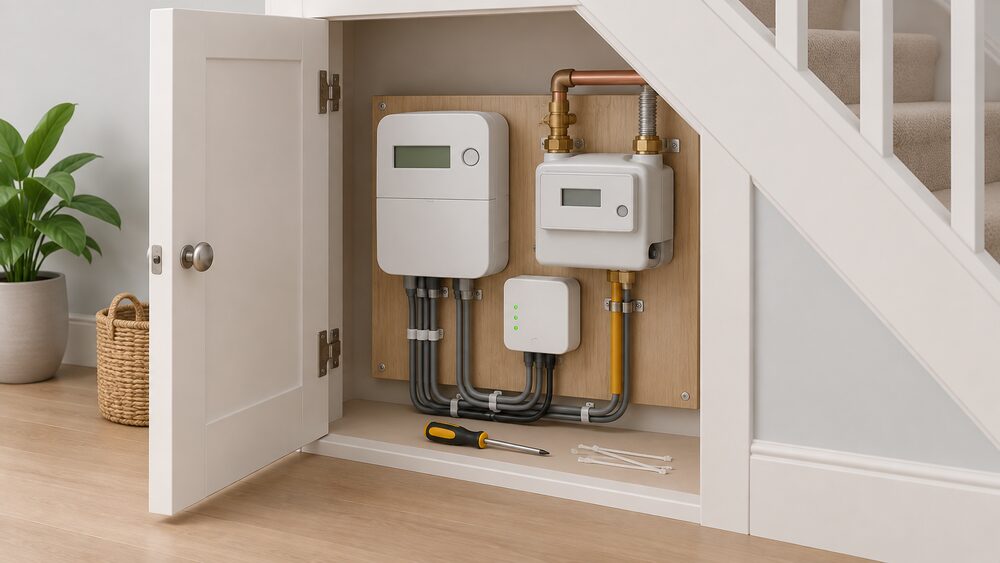 E.ON Next Smart MetersE.ON Next smart meters are fitted free, and most homes get both gas and electricity done in one visit of a couple of hours.
 E.ON NextE.ON Next supplies gas and electricity to millions of UK homes, so what are its fixed and variable tariffs like, and how do they compare on price?