
In this guide
Ofgem's tariff rules are the licence conditions that decide which tariffs a supplier may put in front of a household, how many of them, and what has to be said about them. They are not a price-setting scheme in themselves. The price cap limits the unit cost of energy and standing charges which firms can charge, not the total bill1, and it sits alongside structural rules built up since the Retail Market Review of 2013.
The most active area is standing charges. Ofgem consulted on a requirement that suppliers offer at least one lower standing charge tariff in all regions of England, Scotland and Wales, proposing a standing charge priced £150 below the price cap nil consumption level per annum2. That consultation closed on 23 October 2025 and is recorded as closed and awaiting decision3. The proposal would be made under the standard licence conditions3.
For a household, these rules set the floor of what is available rather than the ceiling of what is cheap. They guarantee a minimum choice, a route out of a fixed term, protection from old back bills, and equal access to single-rate tariffs for homes on restricted meters. What they cannot do is remove dependence on a supplier, on the grid, or on the wholesale market that sets the shape of every price a supplier offers.

What Ofgem's tariff rules cover
The rules reach four distinct things: how many tariffs exist, what a supplier must offer, what a contract may do at its end, and what a supplier must tell a customer. The Retail Market Review set the structural limits. Ofgem's informed choices principles require that a supplier's tariffs are easily distinguishable from each other6, which is the communication half of the same policy.
Enforcement runs through standard licence conditions rather than through separate consumer law. The default tariff cap itself rests on the Domestic Gas and Electricity (Tariff Cap) Act 2018, which requires licence conditions giving effect to the cap7. The Feed-in Tariff scheme, a different regime, is contained in the Feed-in Tariffs Order 2012 and the Standard Conditions of Electricity Supply Licence8, and Ofgem states that it takes compliance with scheme rules extremely seriously and investigates matters where there are concerns with supplier performance or generator compliance, taking action where necessary9. The same licensing architecture carries the household protections.
Two rules sit slightly apart from tariffs but shape what a household actually pays. Ofgem banned all domestic and microbusiness suppliers from issuing backbills for energy used more than 12 months ago5, and the rules apply to households and microbusinesses10. Separately, the Energy Ombudsman cannot look into the tariff prices of a deemed contract because it is not privy to information relating to the costs and risks associated for each supplier to serve customers on deemed contracts11. That is a real limit on redress: a household that never chose a tariff has fewer places to take a complaint about its price.
For energy independence, the picture is mixed. The rules widen the range of structures a household can choose from, including time-of-use and export arrangements, but they operate entirely inside a supplied model. A home that generates and stores its own electricity still depends on a licensed supplier to buy the export and to sell the top-up, and on the licence conditions to keep that supplier's offer honest.
The price cap: how it works and what it limits
The cap is a maximum on unit rates and standing charges, not a cap on the bill. Ofgem's own framing is that the price cap limits the unit cost of energy and standing charges which firms can charge, not the total bill1. A household that uses more pays more, and the cap does nothing about that.
The cap is set with reference to the 2018 Act, which requires Ofgem to put in place and maintain the licence conditions which give effect to it7. The legislation created a new statutory role for Ofgem to deliver the measure for Government, with a new duty to design and implement the default tariff cap12. The Act requires only one cap across the market, so allowances cannot differ by supplier size13.
The cap level is reset periodically, and the methodology behind it is published. Ofgem has issued decisions on the process for updating the default tariff cap methodology and setting maximum charges7, and a decision on backwardation and deadband in the cap methodology13. The nil consumption element of the cap, which is the standing charge component with no energy used, is published by region and payment method.
| Nil consumption gas cap, 1 April to 30 June 2024 | Region | Figure |
|---|---|---|
| Other Payment Method | Northern | £109.79 |
| Other Payment Method | North West | £109.93 |
| Other Payment Method | London | £111.39 |
| Standard Credit | Eastern | £122.40 |
Those figures come from Ofgem's published cap level for the quarter14. Coverage is broad. The cap applies to prepayment customers, who numbered 5 million in Great Britain, alongside 3 million standard credit customers1. Around 11 million households were on fixed tariffs as of August 2026, so they were unaffected by the change1. The Energy Price Guarantee, which ran alongside the cap, held average standing charges for customers on default tariffs at the levels set in Great Britain by Ofgem between April and June 202315.
Standing charges: the proposed lower standing charge tariff requirement
Standing charges are the fixed daily amount a household pays whatever it uses, and they are the part of a bill that a low-usage home cannot reduce by changing habits. Ofgem's consultation on a requirement to offer lower standing charge tariffs was filed under energy pricing rules with the subtopic standing charges, and it closed on 23 October 2025 with the status closed and awaiting decision3.
The proposal is specific. Ofgem proposed to amend the standard licence conditions to require suppliers to offer a tariff with a standing charge priced £150 below the price cap nil consumption level per annum2. It also considered going further, for example requiring suppliers to offer tariffs representing a £200 discount from the nil consumption dual fuel cap level2. The £150 would be split between fuels as a reduction of £65 to £90 for electricity consumers and a reduction of £85 to £100 for gas consumers, broadly reflecting the ratio of non pass-through costs in the cap2.
The design rests on a distinction between pass-through and non pass-through costs. Ofgem defines pass through costs as the sum of policy costs, network costs, industry costs and the levelisation allowance2. The reduction is aimed at the non pass-through element, which is why the split between fuels is not even.
Ofgem is explicit that this is not an affordability measure. Lower or zero standing charge options are not designed to be an affordability measure or intervention, and any reduction in standing charge will likely imply an increase in the unit rate2. A household that takes such a tariff and uses more than the threshold would pay more overall, not less. The regulator also ran domestic consumer research and an online behavioural experiment to understand consumers' attitudes towards standing charges3.
Lower standing charge tariffs: what suppliers would have to offer
The obligation, as consulted on, is a floor on availability rather than a price control. Suppliers must have available, at all times, in all regions, at least one lower standing charge offer2. The technical working paper repeats the same formulation: suppliers must have available at all times, in all regions, at least one lower or zero standing charge offer16. Ofgem would implement a requirement that suppliers must have a lower or zero standing charge offer at all times and in all regions16.
Three conditions shape who is caught and who benefits.
- Supplier threshold. Such as 50,000 domestic customers, which would ensure that over 99.5% of current customers would be with suppliers that are eligible suppliers2.
- Sunset clause. The requirement initially applies for a limited period, such as two years, with the option to review and extend2.
- Pricing discipline. Suppliers must ensure the unit rate is reasonable, including by having regard to the cost of supplying energy to the customer, comparative tariffs and their costs, and any other relevant matter2.
The tariffs would be prescribed for all payment types, and for consumers on both smart and traditional meters2. Suppliers would also need to clearly explain what the tariff rates and charges are to their customers so they can make informed decisions3. One supplier proposed that the tariffs commence from April 20262.
The coverage is not universal, and the exclusions are the part a household should read closely. Ofgem proposed minimum consumption thresholds at 666kWh and 2,836kWh per annum for electricity and gas respectively2, calculated on what an average consumer would have consumed over 90 days2. Households below those levels would be excluded, and Ofgem estimated the effect by group.
| Group excluded by the proposed threshold | Households | Share of group |
|---|---|---|
| Low-income households | 169,000 | 4% |
| Households in receipt of disability benefits | 116,000 | 3% |
| Prepayment consumers | 62,000 | 2% |
| Standard credit consumers | 99,000 | 7% |
That is the central tension. The households with the strongest reason to want a low standing charge, very low users, are the ones the threshold removes from the offer. Ofgem's own position is that the measure is not an affordability intervention2, and the exclusion table is consistent with that.
The four core tariffs limit: how many tariffs a supplier may offer
The Retail Market Review capped choice by design. Ofgem proposed to limit each supplier to offering no more than four core tariffs at any point in time4, and to limit to four the number of core tariffs that a supplier can offer, per meter type or mode, at any point in time4. A supplier may offer no more than four core time-of-use tariffs for each meter that can support such tariffs4. Under the amended proposal, the supplier must ensure that no more than four core tariffs are available to a consumer for each category17.
The reason was comparison failure. Ofgem's analysis showed that any individual customer looking to compare the market would be faced with 117 core tariff choices from the incumbent suppliers, including white labels but excluding small suppliers, on direct debit non-time-of-use tariffs in the London region4. The reform was announced as limiting the number of tariffs that suppliers can offer to four per fuel, to be in place by the end of the year18. The implementation deadline is not settled in the documents: 31 December 2013 and 31 March 2014 both appear, and that conflict is unresolved.
White label providers were treated differently. The exempted rules covered the tariff cap; applying the same surcharges, bundles, reward points, dual fuel discount and online discount as the parent supplier; moving customers to the parent supplier's cheapest evergreen tariff at end of fixed term; moving customers from expensive dead tariffs; and the supplier narrow Cheapest Tariff Messaging17.
There is also a route around the cap for genuine innovation. A supplier may apply to Ofgem for a derogation to test and trial new innovative tariffs without being deemed to have introduced a tariff, if certain conditions are met4. That matters for households watching time-of-use and dynamic products: the four-tariff limit is not an absolute bar on new structures, but it does mean a supplier cannot flood the market with variants.
Ban on acquisition-only tariffs: why existing customers must see the best rates

The principle behind the acquisition-only ban is that a supplier should not reserve its best rate for households that have not yet signed up. The Retail Market Review's informed choices principles put the requirement plainly: a supplier's tariffs are easily distinguishable from each other6. Combined with the four-tariff limit, that leaves little room for a parallel set of deals visible only to new customers.
The same logic runs through the treatment of dead tariffs. White label providers were required to move customers from expensive dead tariffs and to move customers to the parent supplier's cheapest evergreen tariff at end of fixed term17. A tariff that a household cannot leave without penalty, and that no new customer would ever be offered, is the problem the rules target.
The export side shows how the principle is applied elsewhere. The Smart Export Guarantee annual report notes tied tariffs, which are only available if specific conditions are met, for example if import electricity is purchased from the same supplier, or the generator purchases or uses certain products19. Tied export rates are permitted, but they are disclosed as a category rather than hidden.
For a household, the practical effect is that the rate on offer should be the rate on offer, not a rate that depends on being new. The limit is that this governs structure, not level. A supplier can still price its four core tariffs as it wishes within the cap, and the cap itself limits unit cost and standing charges rather than the total bill1. Independence from a supplier's pricing decisions is not something the rules deliver; they deliver visibility and a minimum spread of choice.
Fixed-term contracts: no auto-rollover and no lock-ins
A fixed-term contract is a period with agreed terms, and the rules govern what happens at the end of it. The Retail Market Review removed automatic rollover, so a fixed deal does not silently renew into a new term. Around 11 million households were on fixed tariffs as of August 2026, and those customers are unaffected by price cap changes while their deal runs1.
The end of a fixed term is where households most often lose track. The default position is a move to a variable or default arrangement unless the household chooses otherwise, and the price cap then applies to that arrangement. The cap limits the unit cost of energy and standing charges which firms can charge, not the total bill1, so a household moving onto a capped default is protected on rates but not on usage.
Export tariffs illustrate the alternative shape. A long list of named export products, including Export and Earn Flex, So Export Flex, Next Flex Export v1, SEG Beyond Exclusive, Export Variable, SmartGen, SEG Install Exclusive, Outgoing Agile, Export Variable Value, SmartGen Premium and the Octopus SEG Tariff, are all recorded with no fixed end date20. That is the opposite of a lock-in: the arrangement continues without a term to expire.
The rules also reach the meter itself. Ofgem proposed that meters should be included in the definition of other goods and services in suppliers' licences, allowing a payback period within a fixed term contract21, and published the key licence conditions that apply to any suppliers seeking to recover additional costs from the installation of domestic smart meters22. Where a supplier installs equipment and recovers the cost across a term, the licence conditions set what that recovery may look like.
Restricted meters: SLC 22G and equal access to single-rate tariffs
Restricted meter customers, typically on non-Economy 7 arrangements, were historically steered away from the cheapest single-rate tariffs because switching was conditioned on replacing the meter. Standard Licence Condition 22G changed that. It required all suppliers with over 50,000 electricity customers to make all their single-rate tariffs available to domestic customers on restricted meters without conditioning switching on meter replacement, to ensure access to information on switching options, and it gave consumer bodies power to request information from suppliers22.
The condition is a direct answer to a structural disadvantage. A household with a restricted meter could previously be told that the best single-rate tariff was unavailable until the meter was changed, which put the cost and disruption of the change on the household. SLC 22G removes that condition and puts the tariff within reach.
The wider metering rules sit alongside it. Ofgem's response to the consultation on draft licence conditions for a code of practice for the installation of smart electricity and gas meters was published under the topic metering and subtopic smart meters23, and the Consumer First Panel work examined the potential limitations of smart billing24. The Priority Services Register arrangements were modified across electricity and gas supply, electricity distribution and gas transporter licence conditions25.
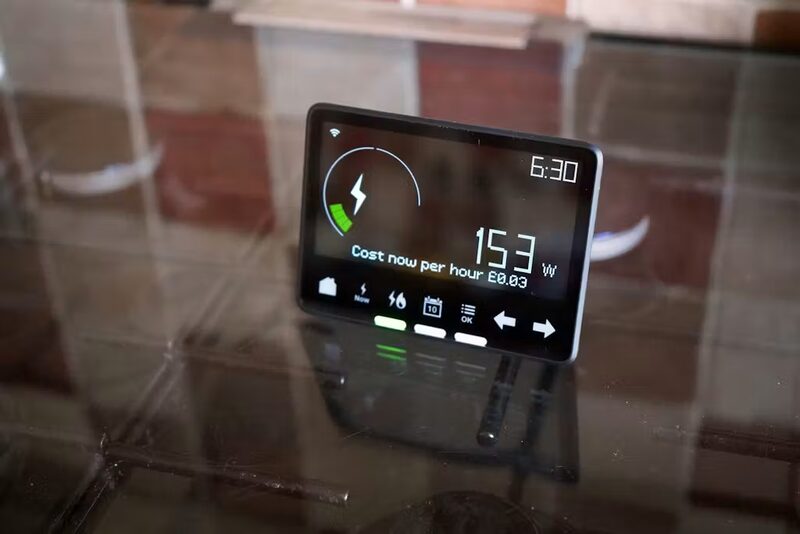
Data access is the live edge of this. Ofgem may change the rules to ensure half-hourly data is universally accessible to suppliers, rather than the current opt-in arrangement, to enable half-hourly settlement26. For a household with a smart meter, that determines whether a time-of-use or dynamic tariff can be offered at all, and it is the mechanism by which a restricted or legacy meter stops being a barrier.
How the rules are enforced through standard licence conditions

Enforcement is by licence condition, which means the obligation attaches to the supplier's licence rather than to a separate consumer contract. The lower standing charge requirement would be made under the standard licence conditions3, and the default tariff cap rests on the 2018 Act requiring licence conditions giving effect to the cap7.
The regulator's enforcement posture is stated in the Feed-in Tariff context and reflects the general approach: Ofgem takes compliance with scheme rules extremely seriously and investigates matters where there are concerns with supplier performance or generator compliance, taking action where necessary9. It conducts annual audit programmes to ensure that suppliers and generators comply with the scheme requirements9. The Feed-in Tariff scheme's legal framework is contained in the Feed-in Tariffs Order 2012, as amended, and the Standard Conditions of Electricity Supply License27, and the scheme is administered by Ofgem27.
Where a supplier fails on service rather than on tariff structure, the guaranteed service standards apply. These are payments the regulator requires suppliers to automatically make to consumers for some common problems28. The Energy Ombudsman handles disputes that escalate, though it cannot look into the tariff prices of a deemed contract because it is not privy to information relating to the costs and risks associated for each supplier to serve customers on deemed contracts11.
The gas side has its own statutory base. The Gas Act 1986, its subordinate legislation and related statutory instruments, namely licences and industry codes, form a regime of economic regulation for gas transporters which Ofgem monitors and enforces29. Tariff rules for households sit inside that wider licensing structure, which is why changes to them arrive as licence condition modifications rather than as new consumer legislation.
Where the rules leave a household's independence
The rules widen what is available and make the terms of it visible. They do not change the underlying position: a household on a supplied tariff depends on a licensed supplier for both import and, where it exports, for payment. The Smart Export Guarantee permits tied tariffs, available only if specific conditions are met, for example if import electricity is purchased from the same supplier, or the generator purchases or uses certain products19, which ties an export income to an import relationship.
The standing charge proposal shows the limit clearly. A lower standing charge is paired with a higher unit rate, and Ofgem states that lower or zero standing charge options are not designed to be an affordability measure or intervention2. A household that generates most of its own electricity and buys little has the most to gain from a low standing charge and is the most likely to fall below the 666kWh and 2,836kWh thresholds that would exclude it2.
What the rules do deliver is a floor: a minimum number of distinguishable tariffs, a route out of a fixed term, protection from back bills beyond 12 months5, and equal access to single-rate tariffs for restricted meter homes22. For a household building its own generation and storage, those protections matter most at the points where it still has to deal with a supplier, which is the export relationship and the residual import. The energy tariffs pillar sets out how the resulting products differ, and tariffs and household energy independence covers what self-generation changes about that dependence.
Sources29 cited
- About fuel poverty: the Ofgem price cap, End Fuel Poverty Coalition, 26 August 2026
- Requirement to offer lower standing charge tariffs: supporting document, Ofgem, 24 September 2025
- Requirement to offer lower standing charge tariffs, Ofgem, 24 September 2025
- The Retail Market Review: final domestic proposals, Ofgem, 27 March 2013
- Ofgem bans suppliers backbilling customers beyond 12 months, Ofgem, 5 March 2018
- Helping consumers make informed choices, Ofgem, 27 July 2017
- Energy price cap wholesale adjustment decision, Ofgem, 23 February 2024
- Guidance for FIT generators V18, Ofgem, 1 April 2026
- Feed-in Tariffs annual report, scheme year 13, Ofgem, December 2023
- What to do if you get a back bill, Ofgem, 2026
- Deemed contracts and rates, Energy Ombudsman, 20 September 2026
- Default tariff cap working paper 3: our thinking including headroom allowance, Ofgem, 9 April 2018
- Energy price cap methodology: backwardation and deadband decision, Ofgem, 21 November 2025
- Default tariff cap level: 1 April 2024 to 30 June 2024, Ofgem, February 2024
- Energy Price Guarantee regional rates, April to June 2023, GOV.UK, 17 September 2026
- Mandating lower or zero standing charge tariffs: technical working paper, Ofgem, September 2025
- The Retail Market Review: statutory consultation on RMR domestic proposals, Ofgem, 20 June 2013
- Tenants' energy rights explained, Ofgem, 12 September 2013
- Smart Export Guarantee annual report, year 5, Ofgem, December 2025
- Smart Export Guarantee, Solar Energy UK, 12 May 2026
- Statutory consultation: extending protections for non-E7 restricted meter customers (SLC 22G), Ofgem, August 2020
- Suppliers' responsibilities and restrictions on domestic smart meter installation costs, Ofgem, 27 July 2017
- Ofgem's response to DECC's consultation on draft licence conditions for a code of practice for the installation of smart electricity and gas meters, Ofgem, 2 December 2011
- Ofgem Consumer First Panel, year 6, wave 3: smart billing, Ofgem, 24 March 2015
- Decision to modify licences for PSR arrangements, Ofgem, 25 October 2016
- Data protection and smart meter data, Open Energy, 20 September 2026
- Feed-in Tariffs (FIT), Ofgem, September 2015
- Time and trouble awards, Energy Ombudsman, 20 September 2026
- Call for input: disconnections, Ofgem, 13 January 2025
 Financial Resilience RulesYour supplier going bust raises two questions: who takes over and what happens to your credit balance?
 OfgemOfgem sets the rules energy suppliers and network companies must follow, including the price cap on standard tariffs.
 Switching and Supplier MarketWhat is the Ofgem price cap and does it limit what you actually pay?
 Supplier Licensing and FailureWhat happens when your energy supplier goes bust?
 How Tracker Tariffs WorkTracker tariffs move your unit rate with wholesale prices or the Ofgem price cap, so what you pay can change daily.
 Supplier-Controlled ChargingSmart charging tariffs let your energy supplier decide when your car charges, usually overnight when electricity is cheaper.